Goldendoodles are extremely good at disguising symptoms of pain and discomfort, so it can be extremely difficult to tell when your pet is hurting.
One Goldendoodle trait is its happy-go-lucky nature and love of fun times with its owners. Although that aspect of its temperament is undoubtedly appealing, it can also make it extremely difficult to tell if your dog is in pain. However, if you know your dog well, you should be able to pick up on subtle signs of discomfort and take action early to help your poorly pet.
This guide explains what behavioral changes in Goldendoodles can indicate pain, offers practical advice on pain management, and provides an overview of the conditions that can cause pain in dogs.
Keep reading to learn how to spot dog pain behavior and what you can do to help your pet.
Table of Contents
What Are Behavioral Changes Indicating Pain in Goldendoodles?

Behavioral changes indicating pain in Goldendoodles may include decreased activity, restlessness, changes in appetite, increased aggression or irritability, hiding or withdrawing from social interaction, and excessive licking or chewing.
Decreased Activity or Reluctance to Play
Goldendoodles are generally fun-loving, playful pups. Even older dogs of this breed love to run, jump, and play with their owners, so if your dog suddenly loses interest or is reluctant to join the games, that’s a clear sign that something’s not right.
Restlessness or Difficulty Settling
When my elderly dog found it hard to settle and fidgeted constantly, I immediately knew something was wrong.
That, along with other behavioral changes, told me that a visit to the vet clinic was in order. The vet diagnosed my old girl with canine dementia and arthritis, a nasty combination of conditions that needed drug therapy to help.
Painful joints made it impossible for my dog to get comfortable. However, painkillers, anti-inflammatory medication, and a new orthopedic bed helped tremendously.
Changes in Appetite
Most dogs of all breeds love their food and treats, so if your Goldendoodle begins to show less interest in his meals, you know there’s a problem.
Poor dentition is a prevalent cause of eating disorders in dogs. For example, if your dog has a toothache, the last thing he wants to do is chow down on a mouthful of crunchy kibble or munch on a dental chew.
Increased Aggression or Irritability
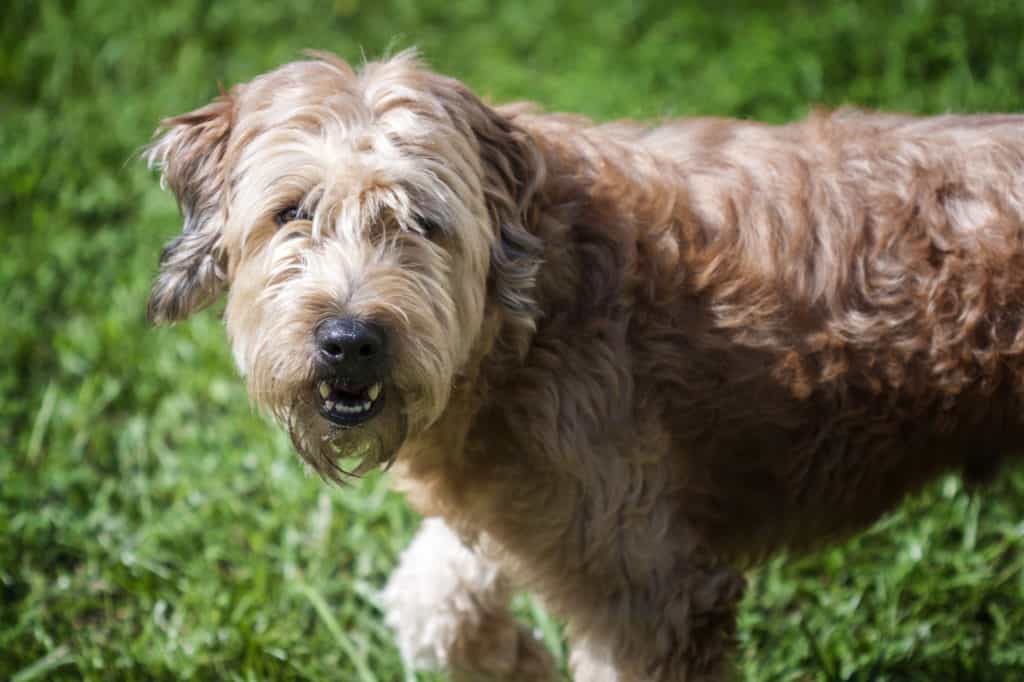
Goldendoodles typically have an exemplary temperament. They are friendly, affectionate pups who love nothing more than snuggling up with their owners and generally get along well with other dogs.
So, if your furry friend suddenly becomes less cuddly or starts snapping at you, you know there’s something wrong. Dogs react to painful stimuli by adopting a fight or flight stance. They don’t understand why they’re hurting and feel vulnerable, usually responding by hiding away or becoming defensively aggressive.
Hiding or Withdrawing from Social Interaction
A dog in pain will sometimes hide away in a place he feels safe and secure.
Goldendoodles are sociable, friendly dogs that love to be the center of attention. So, a dog that shuns all social interaction with his human family and doggy friends could be in pain or discomfort.
Excessive Licking or Chewing at a Specific Area
Parasite activity or a hidden injury can cause discomfort and irritation. A dog with this kind of issue will often lick or chew the area as he tries to relieve that pain.
On a cautionary note, you might not be able to see anything obvious, especially in the case of a parasite like Demadex mites. These annoying little critters get into the dog’s skin, typically on the paws, causing intense itching that makes the dog bite and lick its feet constantly.
What Are the Physical Signs of Pain in Goldendoodles?
You need to look out for signs of pain, including limping or favoring a limb, stiffness or difficulty moving, yelping or whimpering when touched, and changes in posture.
Limping or Favoring a Limb
If your canine companion is experiencing pain in one limb, he’ll limp or place more weight on his other legs to relieve the discomfort in the lame one.
Stiffness or Difficult Moving
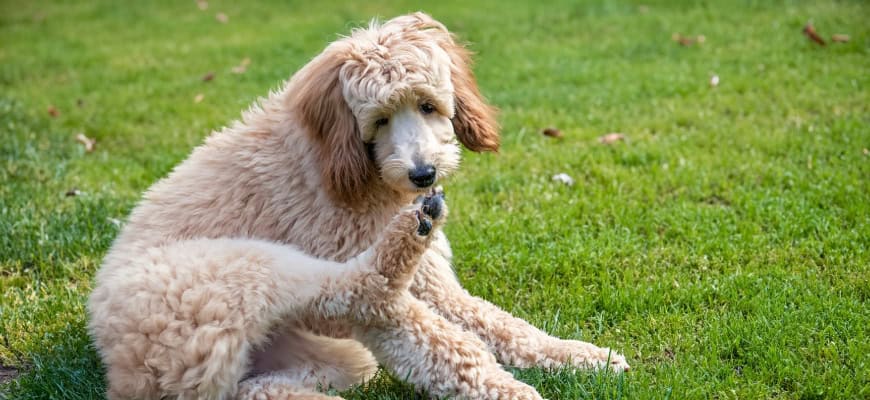
Stiffness or difficulty moving is usually caused by arthritis or some other joint problem. Older dogs, for example, might have difficulty getting up from their beds or jumping in and out of the car.
Yelping or Whimpering When Touched or Moved
These are classic signs of joint pain and stiffness, especially in dogs affected by arthritis and other joint conditions. This symptom generally accompanies a reluctance to move, play, or go for a walk.
Changes in Posture
If your Goldendoodle shows a changed posture, such as a hunched back or rigid stance, that’s often a sign that he is experiencing discomfort in his tummy or back.
That could be due to an infection or having eaten something that’s now lodged in his gut and should be investigated by your vet urgently.
Facial Expressions
Your Goldendoodle’s facial expressions can tell you when he’s not feeling great.
Look out for narrowed eyes and drawn-back lips. He might also have a vacant, wide-eyed expression and appear to be staring off into space rather than being his usual interested, alert self.
What Can You Do If You Suspect Your Goldendoodle Is in Pain?
If you suspect your Goldendoodle is in pain, take immediate action: immediately schedule a veterinary exam, avoid human pain medication, and provide a comfortable, quiet environment for them.
Schedule a Veterinary Exam ASAP!

Your first job should be to schedule a veterinary examination for your furry friend as soon as possible.
Be sure to give as many details of your dog’s symptoms as possible when you phone the vet clinic. The vet will then decide if your Goldendoodle’s condition is potentially serious and needs immediate attention or whether a slightly later appointment is appropriate.
Don’t Give Human Pain Medication
Never give your dog human pain medication!
Unfortunately, it’s a common misconception that human painkillers are okay to give to dogs. However, most human medication is highly toxic to animals like dogs and cats, and using it could potentially kill your pet.
Provide a Comfortable and Quiet Environment
Your Goldendoodle needs peace and quiet when he’s recovering from illness. Set aside a quiet space away from foot traffic and noisy kids, where he can find sanctuary and relax in comfort while he recovers.
What Are Some Painful Conditions in Goldendoodles?
Some painful conditions in Goldendoodles include arthritis, hip dysplasia, dental issues, ear infections, and injuries.
Arthritis
Arthritis is very common in large, heavy dogs like Goldendoodles, especially as they age.
The condition is inflammation of the joints, including the legs, hips, elbow, back, and neck, causing pain, stiffness, and discomfort. The cartilage within a joint becomes damaged or changed, making it less smooth, which leads to the bones in the affected joint rubbing together.
Hip Dysplasia

Dysplasia is usually a genetic condition that can be inherited from one or both of the dog’s parents. That’s why you should always ask to see documentary evidence that both a Goldendoodle puppy’s parents and grandparents have been hip-scored by a vet and declared clear of this condition.
Dysplasia means abnormality of development. The condition can affect the hip or elbow joint, which grows abnormally, causing unusual wear on the surfaces within the joint. This causes inflammation, pain, and swelling for your dog. It’s worse if your pet is overweight because of the extra strain placed on the joints.
Dental Issues
Dental issues are very common in dogs, especially as they age. Dental problems can include lost or broken teeth, gum disease (gingivitis), tooth decay, malocclusions, and abscesses.
Ideally, your vet should examine your dog’s mouth twice annually to catch and treat any issues early before they become a problem.
Ear Infections
Goldendoodles can be prone to ear infections. In the dark, warm, damp environment of your dog’s ear canal, bacteria can proliferate and set up an infection.
If you notice your dog shaking his head, pawing at his ears, or being reluctant to have his ears touched, or if you notice a foul smell coming from the ears, an ear infection is the most likely culprit.
Injuries
Goldendoodles enjoy rough-and-tumble play sessions and can get very boisterous at playtime. That can result in joint injuries and other bumps and bruises. Your dog could even dislocate a joint leaping over a fence or simply slipping on a greasy surface.
More serious injuries, such as fractures, bites from other dogs, or scratches from the family cat, can also sometimes happen. All injuries to your Goldendoodle should be investigated by a vet and treated appropriately.
Conclusion
Understanding your Goldendoodle’s normal behavior is the key to detecting pain early. If your pampered pooch starts acting differently from normal, that could be a sign he’s in discomfort, and veterinary advice is needed.
Unusual behaviors, such as not eating, reluctance to move or play, aggression or hiding, whimpering, and not wanting to be touched and petted, are all signs that your Goldendoodle is in pain.
If you notice any of the signs we’ve described in this guide, don’t wait to see if your pet gets better by himself! Seek veterinary advice immediately, and get your furry friend the care and pain relief he needs.
