From the Doberman’s hidden heart risk to the family dog owners say steps in front of a stroller anyway, here’s which of the most protective dog breeds fits your house and your routine.
The breed at #1 rarely tops guard-dog lists, and it may have your back anyway.
It’s getting dark, and someone you don’t recognize is walking up to the house. The dog beats you to the front door: nails skidding on the hall floor, a bark that buzzes the storm-door glass. You feel better right away.
Then a second thought shows up, the one most write-ups on the most protective dog breeds leave out. If that dog weighed 140 pounds and decided the stranger was a problem, could you hold it back?
Table of Contents
#13 The German Shepherd next door
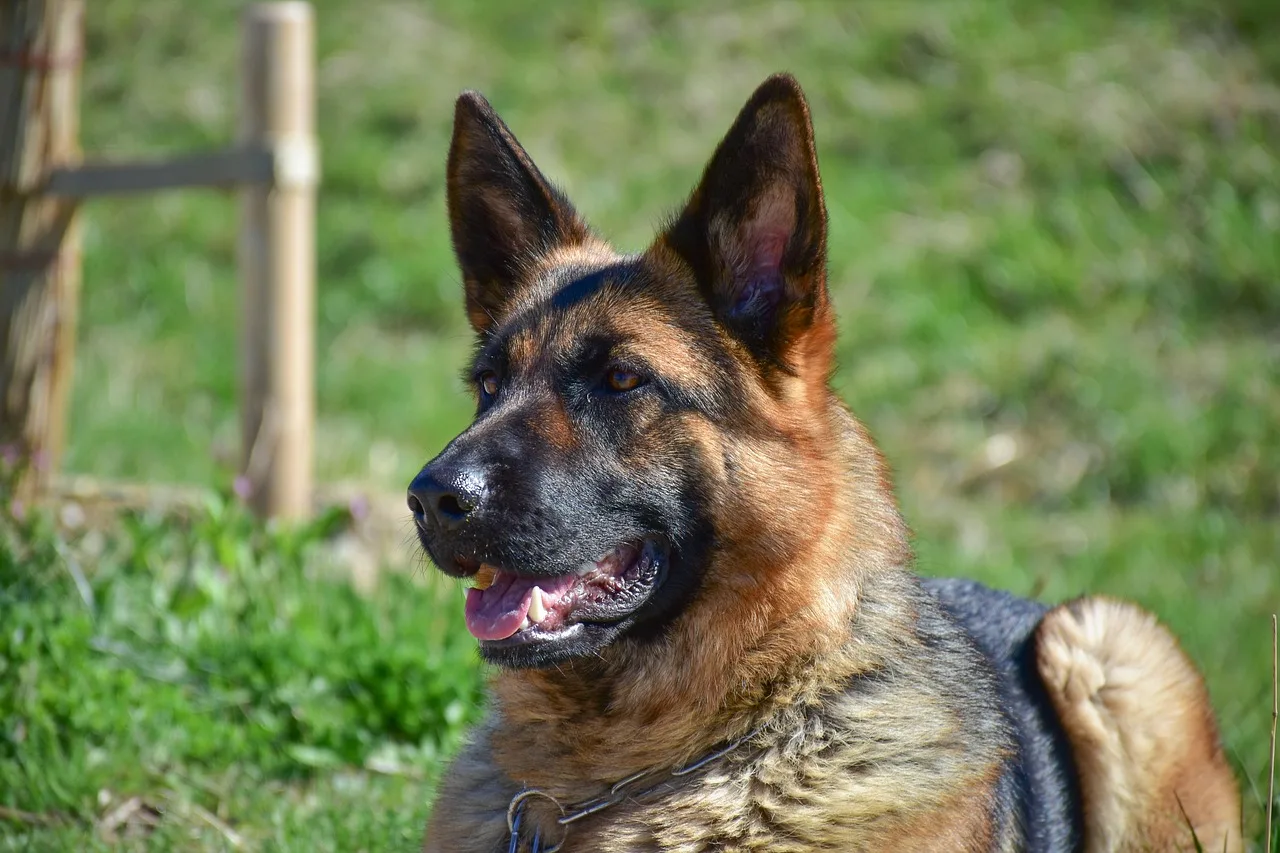
Odds are you’ve lived beside one, been barked at by one, or loved one. The German Shepherd was the fourth most registered breed with the American Kennel Club in 2025, same as the year before. VCA Animal Hospitals’ breed guide calls it “A one family dog, tending to be aloof toward and suspicious of strangers.”
That’s the whole job description in one sentence. The people inside the house get the goofy, tail-thumping version. Everyone else gets a long, polite stare.
Garret Wing founded American Standard Dog Training and has spent more than 20 years training police dogs and pet dogs. He thinks most families need less dog than they imagine. It comes down to size and bark, he says: “the size of the dog and the loudness of the bark.” A Shepherd has plenty of both, and a good one stops there. “He is not going to bite anyone, which is exactly what you want.”
He also likes the Shepherd for a very practical reason. In his words: “This is a dog that unlike the Rottweiler, doesn’t get so big, so your family should be able to control it.” Put plainly, this is a guard dog you can still steer.
The real catch is time, not muscle. Orvis notes that Shepherds “do not tolerate long periods left alone.” If your week includes long days out, the dog will have opinions about it, and it’ll share them with the whole street through the front window.
“Ours made it his job to be our personal protector.” German Shepherd owner, r/germanshepherds
#12 The Rottweiler and its 135-pound frame
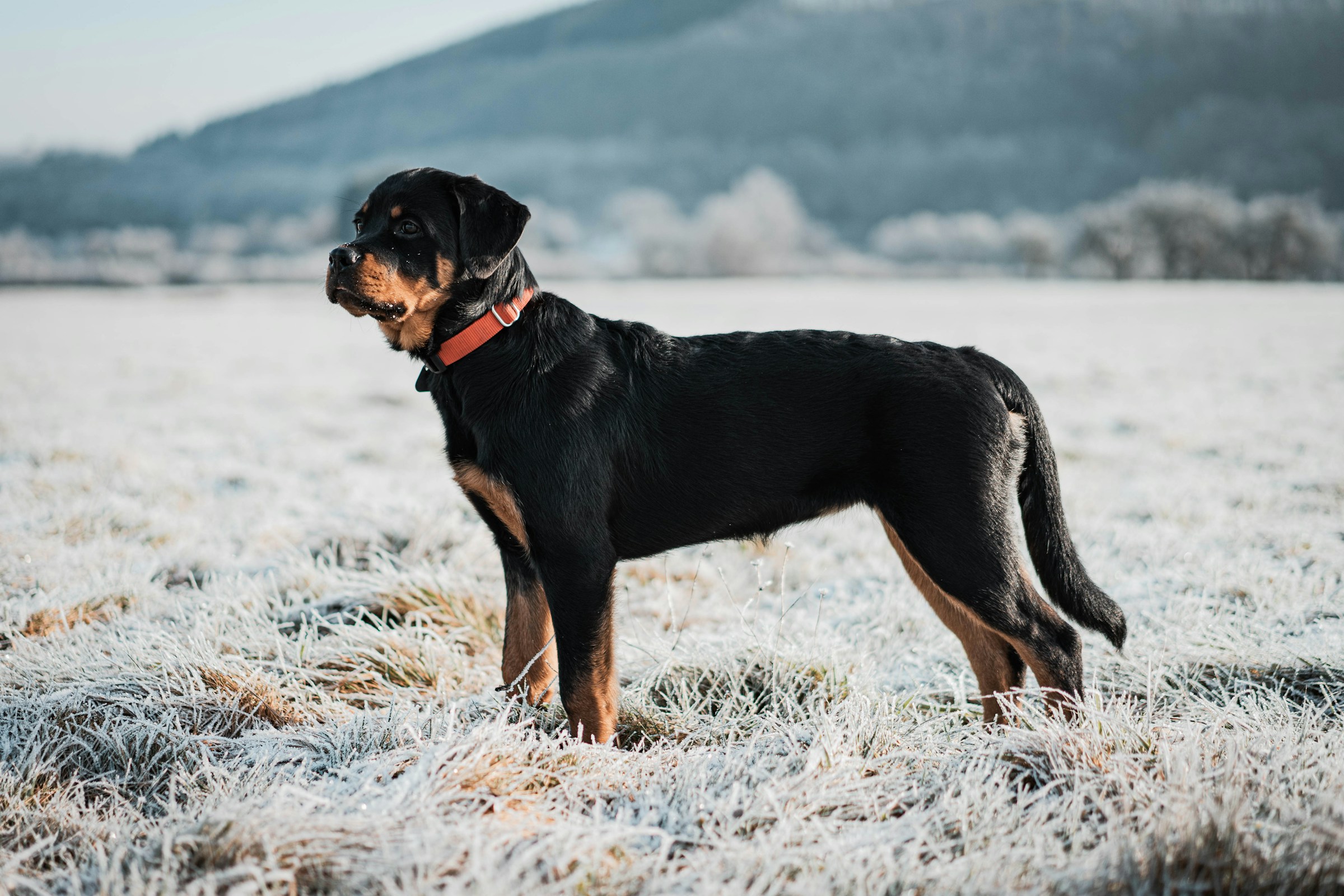
Picture your back steps, and a nine-year-old Rottweiler at the bottom of them, looking up at you as if you’re the one who should fix this.
A grown male runs 95 to 135 pounds, according to CareCredit’s breed guide, and females 80 to 100. The AKC says the breed is “descended from the mastiffs of the Roman legions,” which explains the build. It also says a Rottie “observes the outside world with a self-assured aloofness,” which explains why yours made up its mind about the delivery driver years ago.
As a natural guardian of its people and its yard, it’s hard to beat. The part to plan for is the joints. In UK vet records, Rottweilers had the highest odds of an osteoarthritis diagnosis of any breed, the wear-and-tear kind of arthritis: 3.11 times the odds of a mixed-breed dog.
Here’s how the two most familiar guard breeds compare on what you’d actually live with:
| What to plan for | German Shepherd | Rottweiler |
|---|---|---|
| Adult weight | 75 to 95 lb | 95 to 135 lb (males) |
| Arthritis odds vs. mixed breeds | 2.28 times | 3.11 times |
| Lifespan | 10 to 12 years (typical) | 9 to 10 years (average) |
The same study found that dogs at or above their breed’s average weight had 2.3 times the odds of arthritis. So the most useful thing you can do for a Rottie’s later years costs nothing. Keep it lean. The measuring cup belongs in the protection plan.
#11 The Doberman with a hidden heart risk
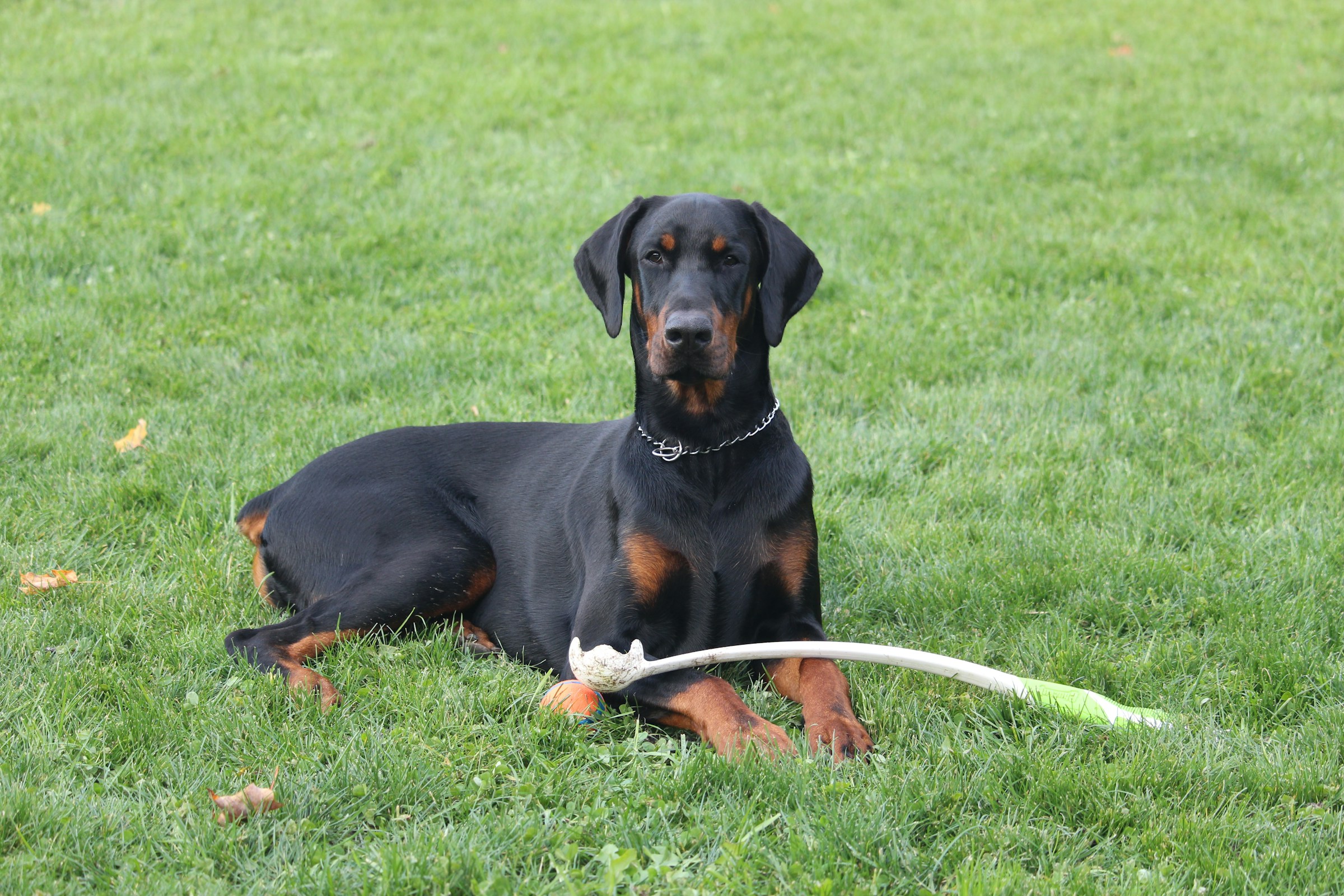
The Doberman exists because a German tax collector wanted backup. Karl Friedrich Louis Dobermann collected taxes in Apolda in the late 1800s, and he also worked as a night watchman and the town dog catcher. According to the AKC, he picked “the strongest, steeliest, and most intelligent” dogs from his own pound to guard him on his rounds.
When half the town owes you money and the other half wants its dog back, you’d want one too.
That edge is still there. VCA says the breed “Tends to be reserved with strangers.” Doberman owners on r/DogBreeds101 describe working-line dogs that scan for trouble on their own and bond hard with one person, the classic one-person dog. One working-line owner summed up the style as “Textbook perfect defensive guarding, never offensive.”
Now the part that should change how you shop. Dobermans are prone to dilated cardiomyopathy, or DCM, a disease in which the heart muscle stretches and weakens. European veterinary heart specialists, in their 2017 screening guidelines, put it at a “high prevalence (58%)” in the breed. That’s more than half of all Dobermans.
Doberman heart check, in plain words – When: every year, starting at age 3 – Test one: a Holter monitor, a small heart recorder the dog wears home – Test two: an echocardiogram, which is an ultrasound of the heart – Ask first: what your vet charges, since Trupanion treats screening tests as routine care it doesn’t cover
#10 The Belgian Malinois turning up at shelters
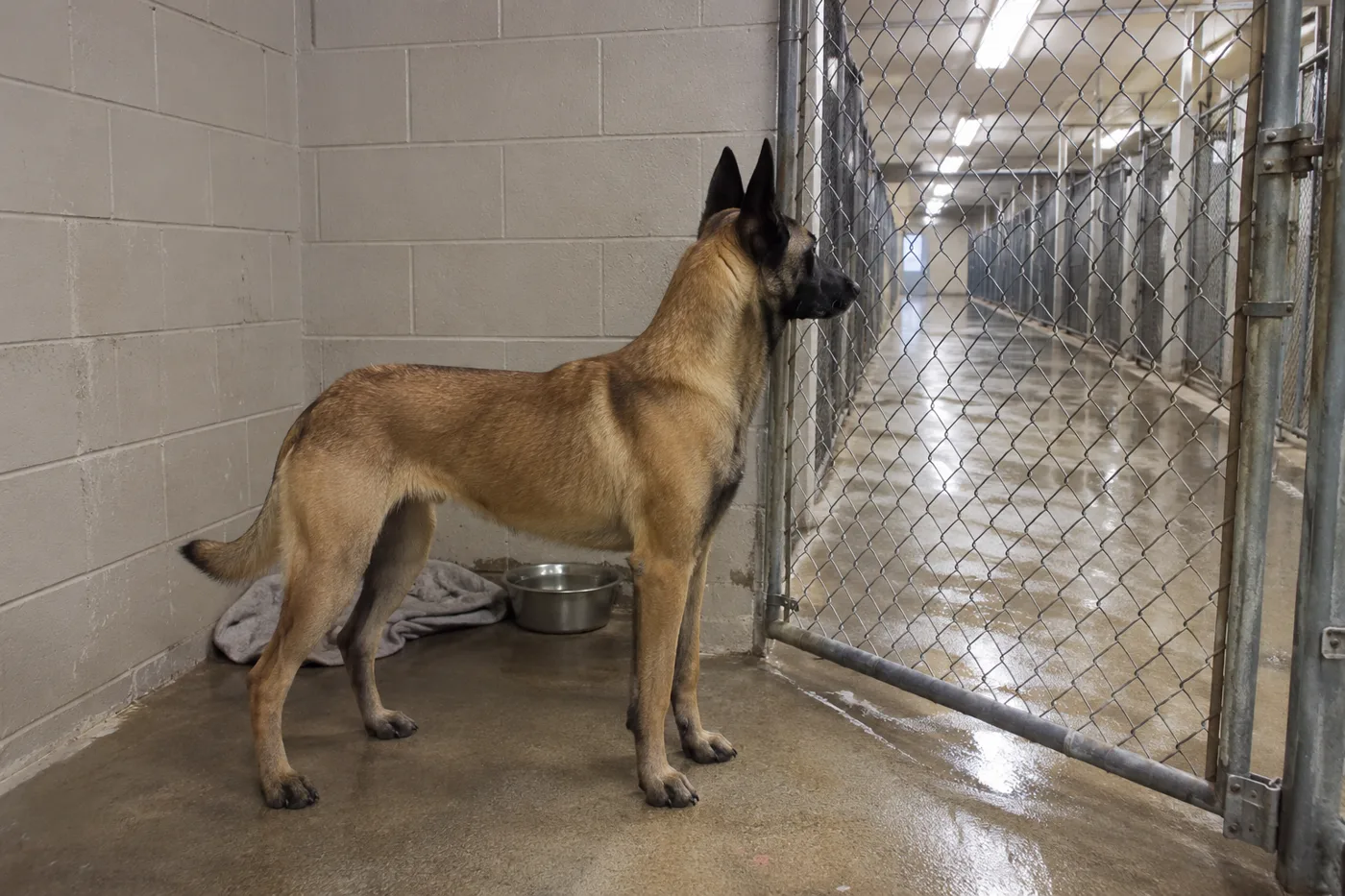
One Arizona shelter is seeing more Belgian Malinois come through its doors, and backyard breeders are part of the story. Joe Casados of the Arizona Humane Society told Newsweek: “We don’t have [Belgian Malinois] very often, however it is becoming more common as the breed grows in popularity.”
You may remember where the fame came from. In 2011, a Malinois named Cairo went with SEAL Team 6 on the bin Laden raid, and the breed has carried a movie-star glow ever since.
The AKC keeps trying to cool it down. Its own description says the Malinois needs “extensive training, regular exercise, and consistent mental stimulation” and is “generally not a good fit for first-time dog owners.”
Read that first list again. All three, every day, for the dog’s whole life. A Malinois with nothing to do will invent a job, and you won’t love the one it picks.
So the honest question has little to do with protection. Do you have a trainer and a daily job lined up before the puppy comes home? Adopting doesn’t skip that step. The Malinois Rescue League asks adopters to complete at least three sessions with a professional trainer and finish basic obedience within six months, with adoption costs running up to $2,000. Cairo had a team of professionals behind him. A Malinois in your living room would have you.
#9 The Cane Corso climbing the popularity charts
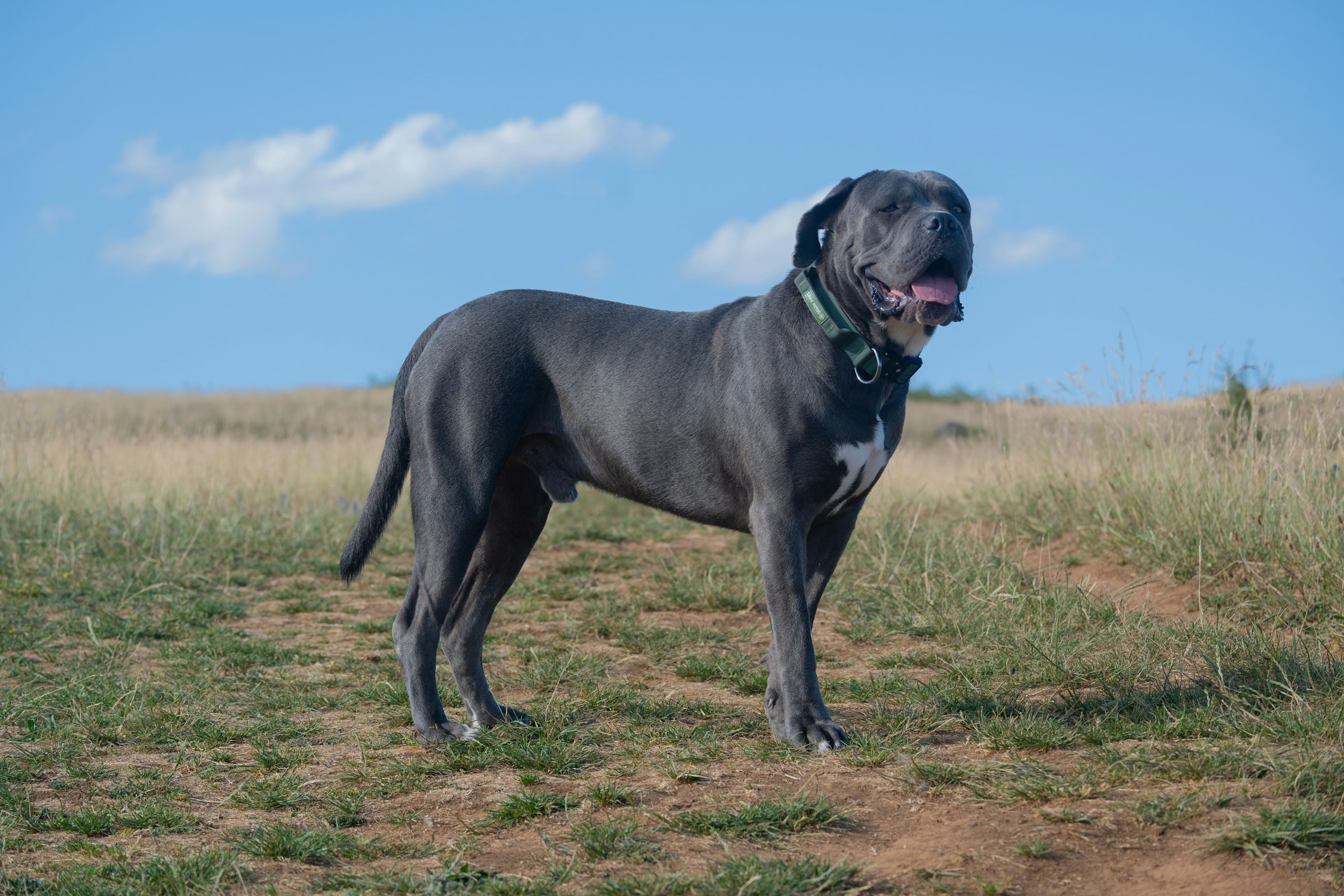
Cane Corso can be translated as “bodyguard dog,” from the Latin words for dog and military guard. The name is the sales pitch, and Americans are buying. The breed went from 14th to 11th on the AKC’s 2025 registration list, which the club called “nearly breaking into the top 10.”
That’s a fast climb for a dog that nearly died out by the middle of the 20th century. Italian fans revived it in the 1970s, and the first ones reached the US in 1988. If it feels like these dogs showed up on your street out of nowhere, in a sense they did.
Orvis puts adults at 80 to 110 pounds and doesn’t sugarcoat the personality: “the strong-willed breed needs an owner who will not give in to pressure.”
Tom Davis, founder of Upstate Canine Academy in upstate New York, has worked with dogs professionally for 13 years. In one training session with an owner whose 2½-year-old Corso growled at strangers, he compared a protective breed to a loaded gun. The owner makes every decision. If the owner looks to the dog for direction, the dog takes over. His summary: “You just have to be responsible and you have to have the ultimate communication and control.”
One more number before you fall for the puppy. In a large UK study, the Cane Corso’s median life expectancy was 8.1 years, one of the shortest of the 155 breeds counted, against 12.5 for dogs overall. That’s about four fewer birthdays than the average dog gets.
#8 The Akita that trusts only its own family
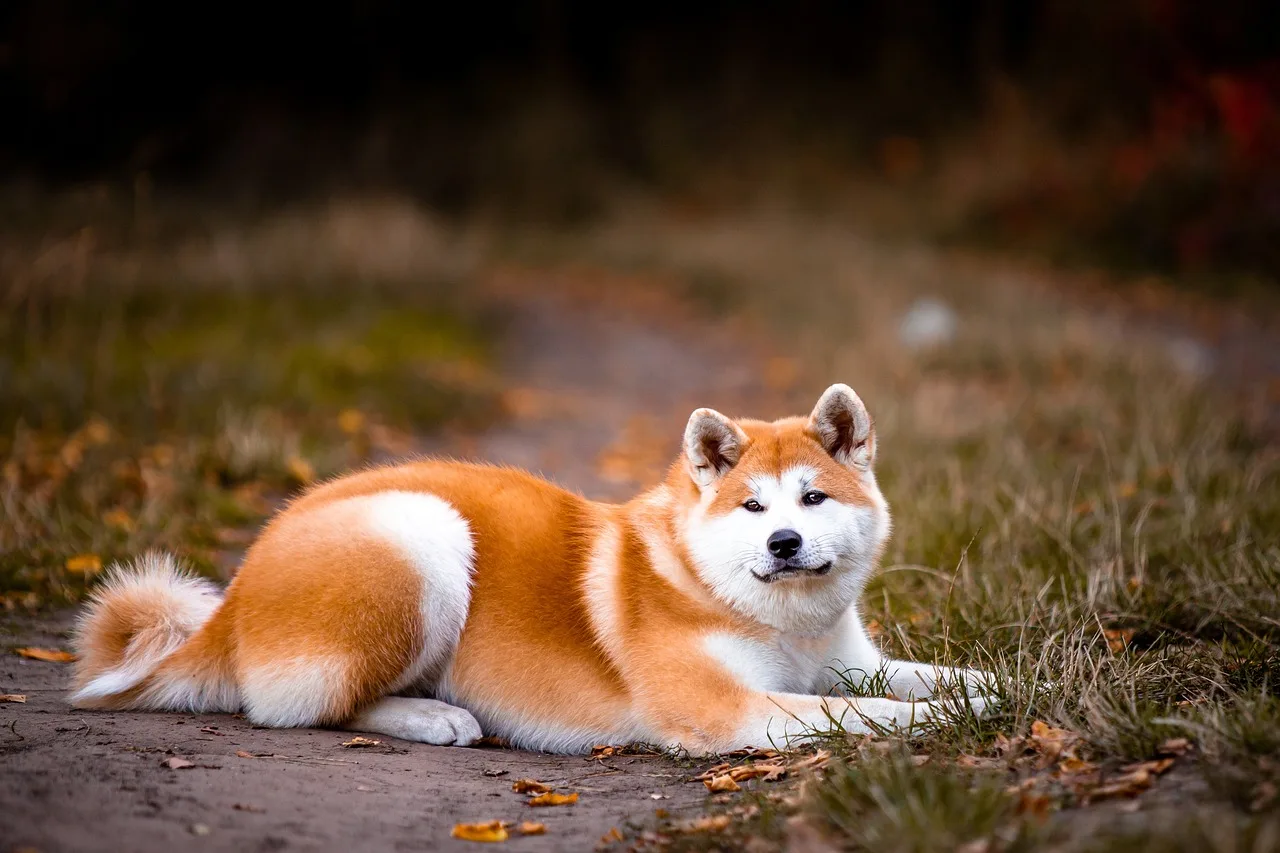
An Akita sorts the world into its family and everybody else, and it does the sorting by itself. “You don’t need to train him to do this; it comes naturally to him,” says the Akita Club of America.
If you read about Helen Keller as a kid, you may have missed her part in this. In 1937 she was given an Akita puppy in Japan named Kamikaze-go and called him an “angel in fur.” He died of distemper at seven and a half months, and in 1939 Japan’s government sent his brother, Kenzan-go, known as Go-Go. The AKC credits Go-Go with helping make the breed popular in America.
The angel comes with rules, and the breed club states them more bluntly than most. “Male Akitas show aggression toward other male dogs, and female Akitas usually will not tolerate another female.” It also says it’s wise, as a general rule, not to leave an Akita, or any large dog, alone with children under 12.
VCA adds a warning that’s easy to picture. Akitas “may mistake the play of visiting children as threats to family children.” Two kids wrestling on the lawn, one of them shrieking with laughter, and a dog this wary of strangers sees an outsider pinning one of its own. At 65 to 115 pounds, that’s a misunderstanding you want to prevent, not correct.
If children ever visit, decide where the dog goes before the doorbell rings. Owners of naturally protective dogs on Reddit describe exactly that routine: when the kids’ friends come over, the dog goes behind a closed door.
#7 The Bullmastiff that patrols at low speed
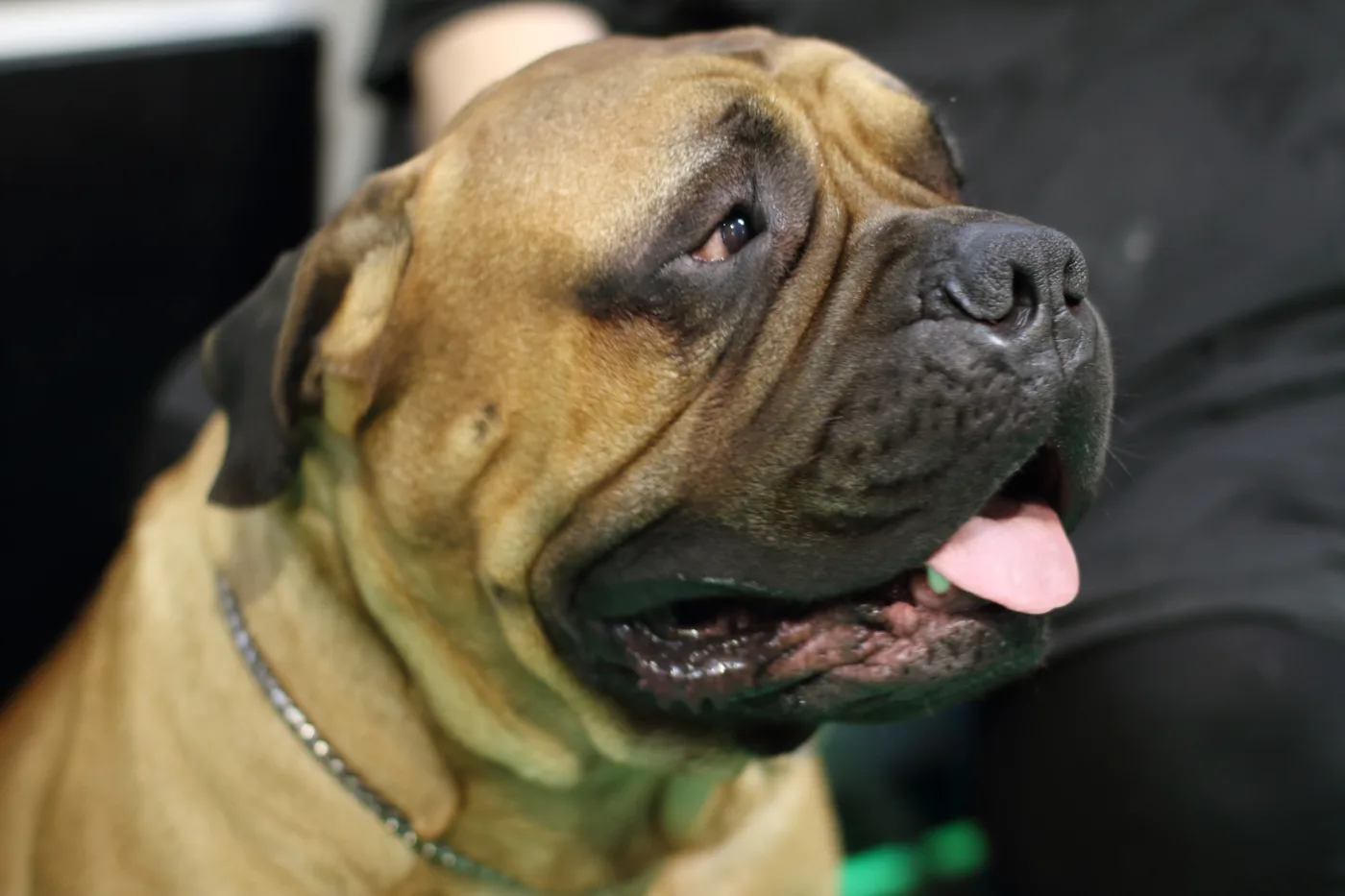
If you want a big guard dog without a big exercise habit, start here. VCA says the Bullmastiff needs only moderate exercise, “a walk or short jog,” and calls it “gentle and generally good with children” while still “suspicious of strangers.”
That calm was the original design. In 19th-century Britain this was the “Gamekeeper’s Night Dog,” about 60% Mastiff and 40% Bulldog. Its job was to track poachers in the dark and hold them until the gamekeeper caught up.
“I would rather have one of these dogs with me in a night [fight] than three men.” William Burton, Bullmastiff breeder, in 1901, quoted by the AKC
As a family guard dog, that mix of calm and heft makes a lot of sense. Just remember that low energy doesn’t mean light. It’s 100 to 130 pounds, with a typical life of 8 to 10 years.
We compared AKC registration ranks for 14 guard breeds in 2024 and 2025, and the Bullmastiff fell the furthest, from 67th to 78th. That counts registrations, nothing about the dogs themselves.
The Rockefellers brought some of the first ones to America in 1934 to guard their Pocantico estate. You don’t need an estate. You do need a hallway wide enough for 130 pounds to turn around in.
#6 The Great Pyrenees that barks all night
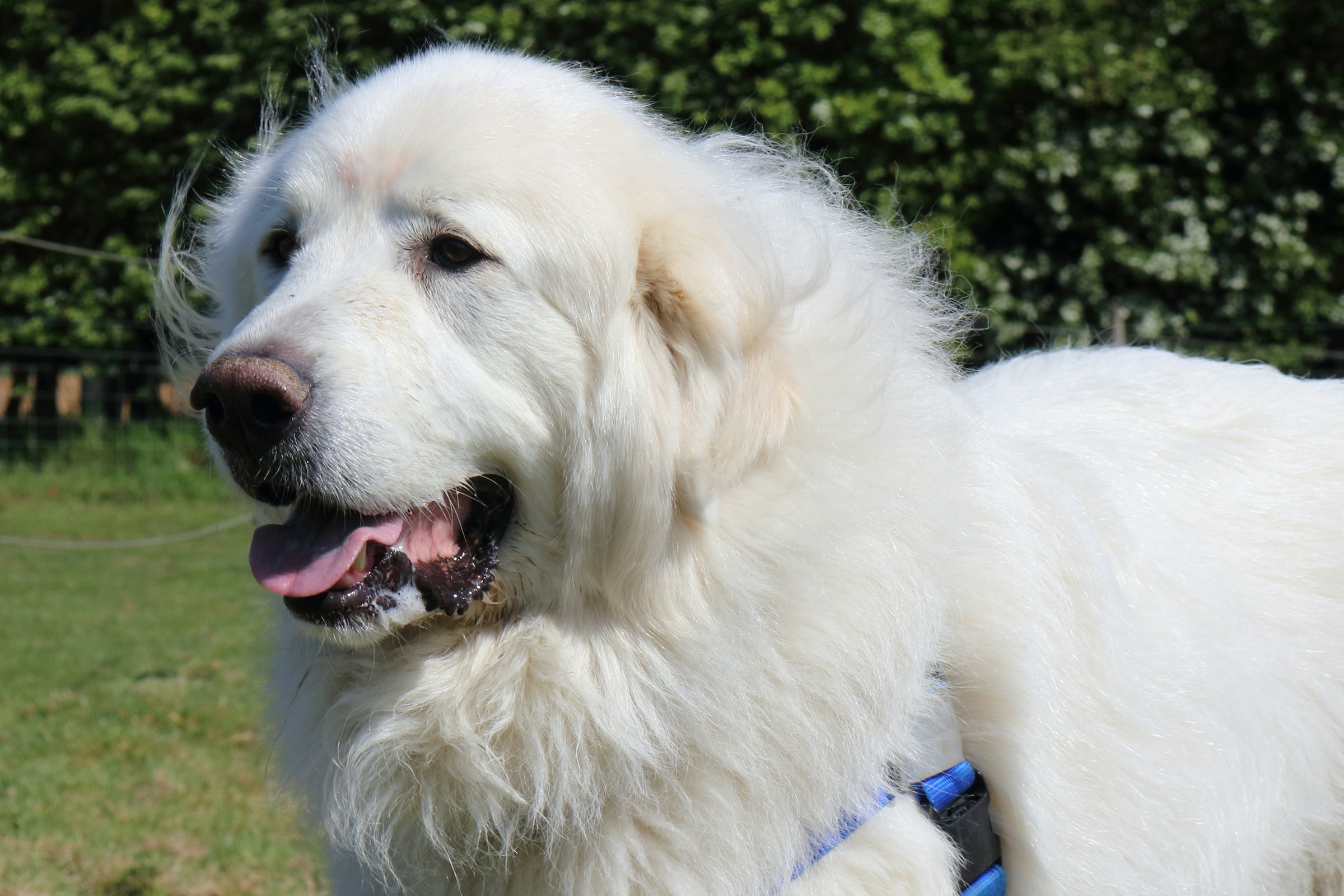
It’s 2 a.m. Something rustles past the fence, and your Great Pyrenees answers with a bark that seems to start somewhere under the floorboards. Then the neighbor’s bedroom light comes on.
The breed’s own club warned you. “Like all livestock guardian breeds, Great Pyrenees are barkers, especially at night,” says the Great Pyrenees Club of America. It adds: “Most Great Pyrenees in urban or suburban settings must be kept indoors at night.”
Their protective instincts belong to a guardian, not a fighter. The club says they are “not ‘attack’ dogs,” though they “cannot be expected to welcome uninvited intrusions.” And because a Pyr will cheerfully appoint itself guardian of the next county, the club says that outside a fence they “must be kept on lead at all times.”
At home, CareCredit’s guide says “Well-socialized Pyrs love children and are naturally protective of them.” Males run 100 to 110 pounds, and the shedding is heavy. You will own a better vacuum within a year.
Among those same 14 guard breeds, the Pyr climbed the most, up 8 places to 66th. Fans on Reddit’s breed forums say these dogs tell friend from foe and stay calm until a threat is real. Others there argue they belong with livestock, full stop.
Before one comes home to a neighborhood, settle where it’ll sleep. In town, the club’s answer is inside.
#5 The Staffie and its unfair reputation
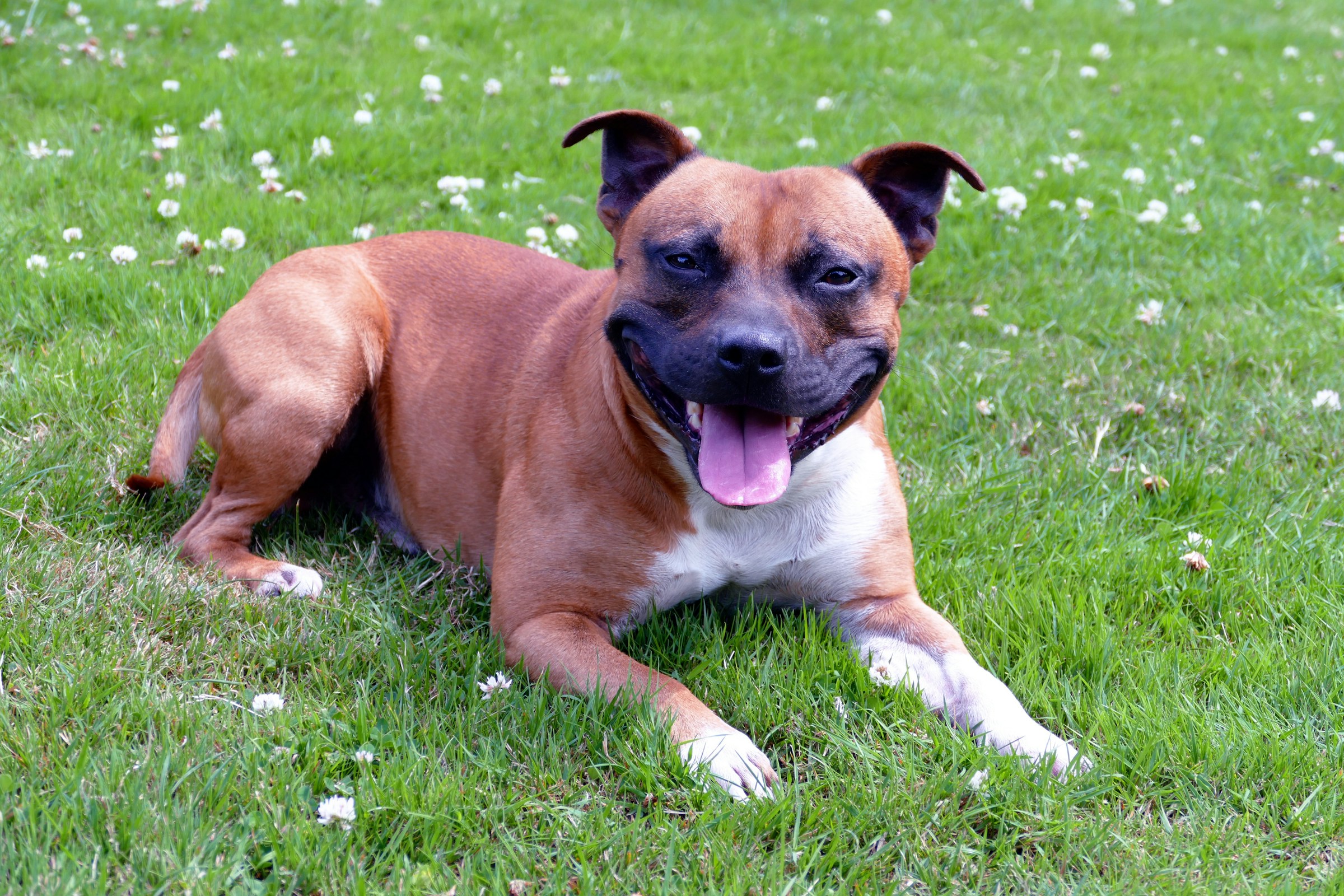
If you love a Staffordshire Bull Terrier, you may have watched someone steer their kids to the far side of the sidewalk. The vet records don’t back them up. A Royal Veterinary College study of Staffies in UK clinic records found “no significant difference in the odds of aggression” between them and other dogs.
The breed turns up on plenty of guard-dog lists, usually on reputation alone. What the same records did find is less dramatic and a lot more useful. Compared with other dogs, Staffies had:
- nearly twice the odds of atopic dermatitis, the itchy, allergic kind of skin trouble
- 1.8 times the odds of lumps on the skin
- about twice the odds of seizures
So budget for the skin, not the drama. That’s where a Staffie owner’s vet money tends to go.
Reputation costs owners in one other place: insurance. In 2021, New York barred insurers from refusing, canceling or raising premiums “based solely on the breed of dog owned,” and Nevada and Illinois had passed similar limits by then. Arizona followed for policies issued or renewed after June 30, 2023. Wherever you live, call your insurer about the breed before the puppy comes home, not after.
#4 The Tibetan Mastiff that crashed in value
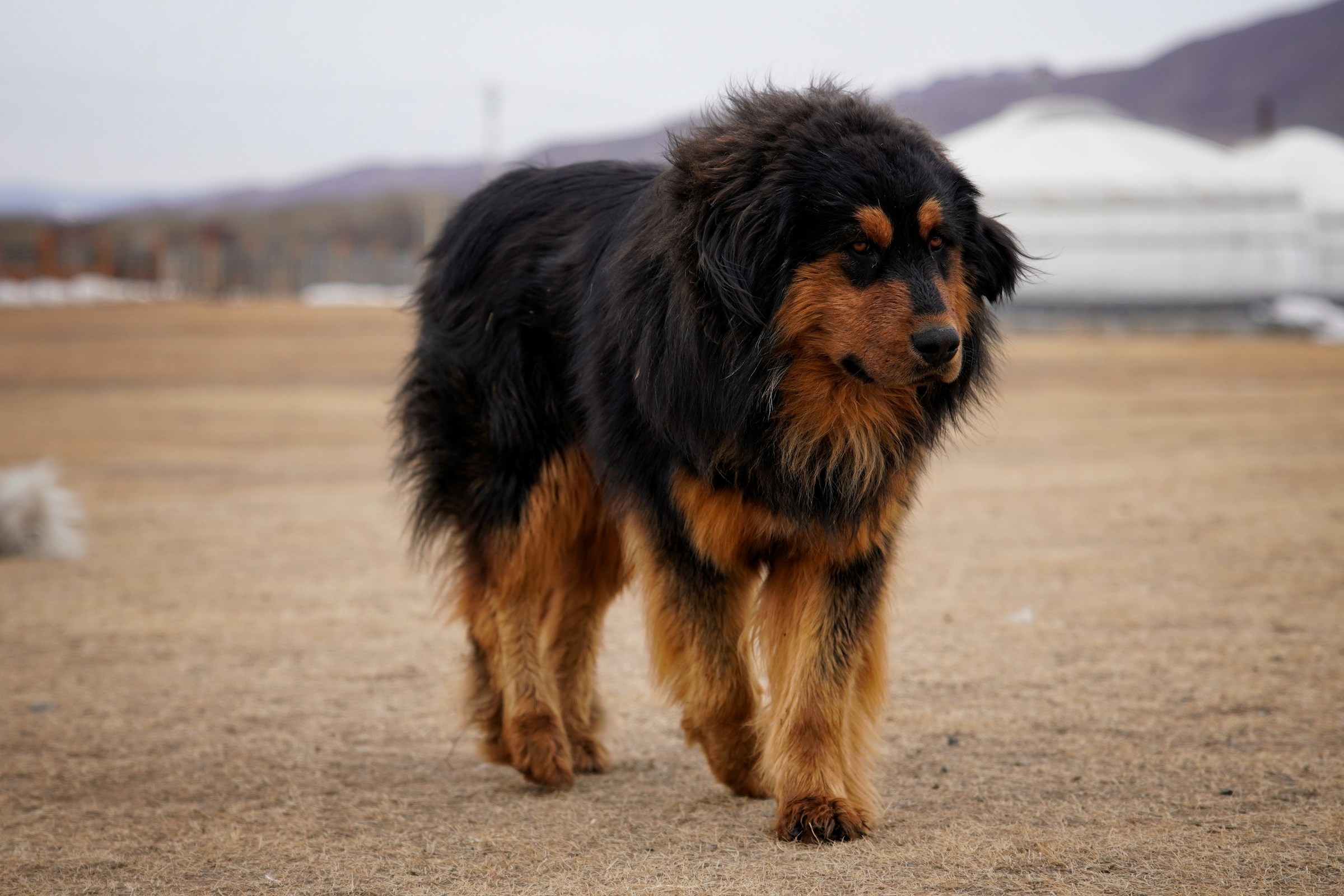
Of all the dog stories you could tell at dinner, this one wins. In March 2014, at a luxury dog fair in Zhejiang province, a Chinese property developer paid 18 million yuan, about $3 million, for a pair of Tibetan Mastiff twins. The golden one alone cost 12 million yuan.
By 2015 the bubble had burst. The New York Times reported Tibetan Mastiffs being sold to slaughterhouses for about $5 each. In one case, activists stopped a truck carrying 21 of them.
A status symbol is a strange job for a dog bred to guard Himalayan monasteries and villages. In the US it’s rare, 142nd on the AKC’s 2025 list.
The same squeeze can hit any guard breed that gets trendy faster than good breeders can keep up. In one 2013 study, dogs bought as pet-store puppies showed “significantly greater aggression toward human family members, unfamiliar people, and other dogs” than dogs from noncommercial breeders. With a guard breed, where the puppy came from matters as much as what it is.
What a Tibetan Mastiff asks of you – Room: Orvis says it needs a lot of space – Patience: it’s stubborn and wants an experienced owner – Your nights: it barks a lot when left alone, especially after dark – Your floor: males run 90 to 150 pounds
#3 The Boerboel that takes muscle to manage
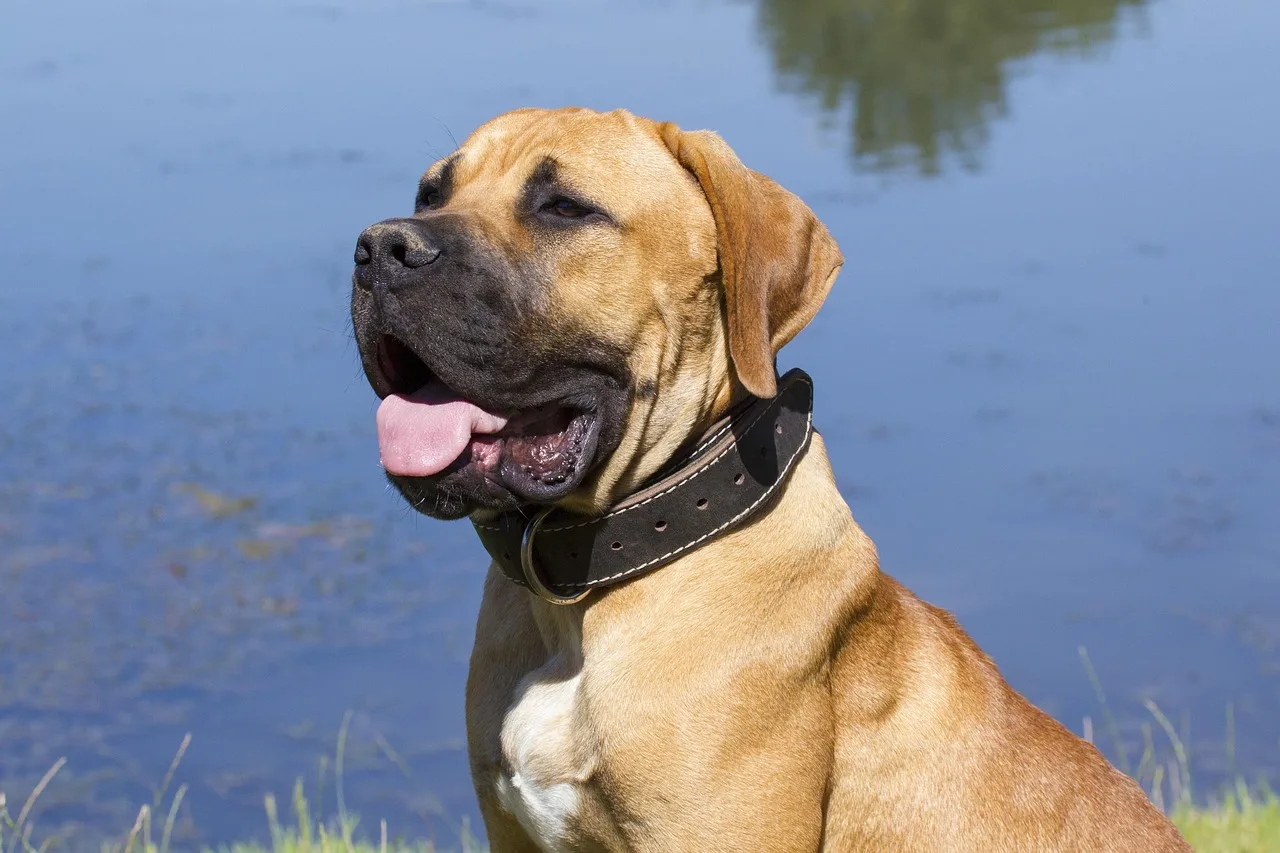
A grown Boerboel can weigh about 154 to 198 pounds, and the BorrowMyDoggy breed guide that gives those numbers adds that it’s “not recommended for first-time dog owners.”
Garret Wing, the police and pet dog trainer from #13, goes further. He calls the giant guardian breeds “too much dog for most people,” and on the Boerboel he’s blunt: “I don’t think they’re for the first-time dog owner and you definitely have to have the physical strength.”
His examples are the everyday ones: getting the dog up on the couch, getting it into the car.
That car matters more than it sounds. A dog that won’t load is a dog that can’t get to the vet without a second person, every single time.
None of this is about age. Wing’s warning would stop a 30-year-old weightlifter who has never owned a big dog. And you won’t run into many: the Boerboel was 112th on the AKC’s 2025 list.
#2 The English Mastiff that can outweigh you
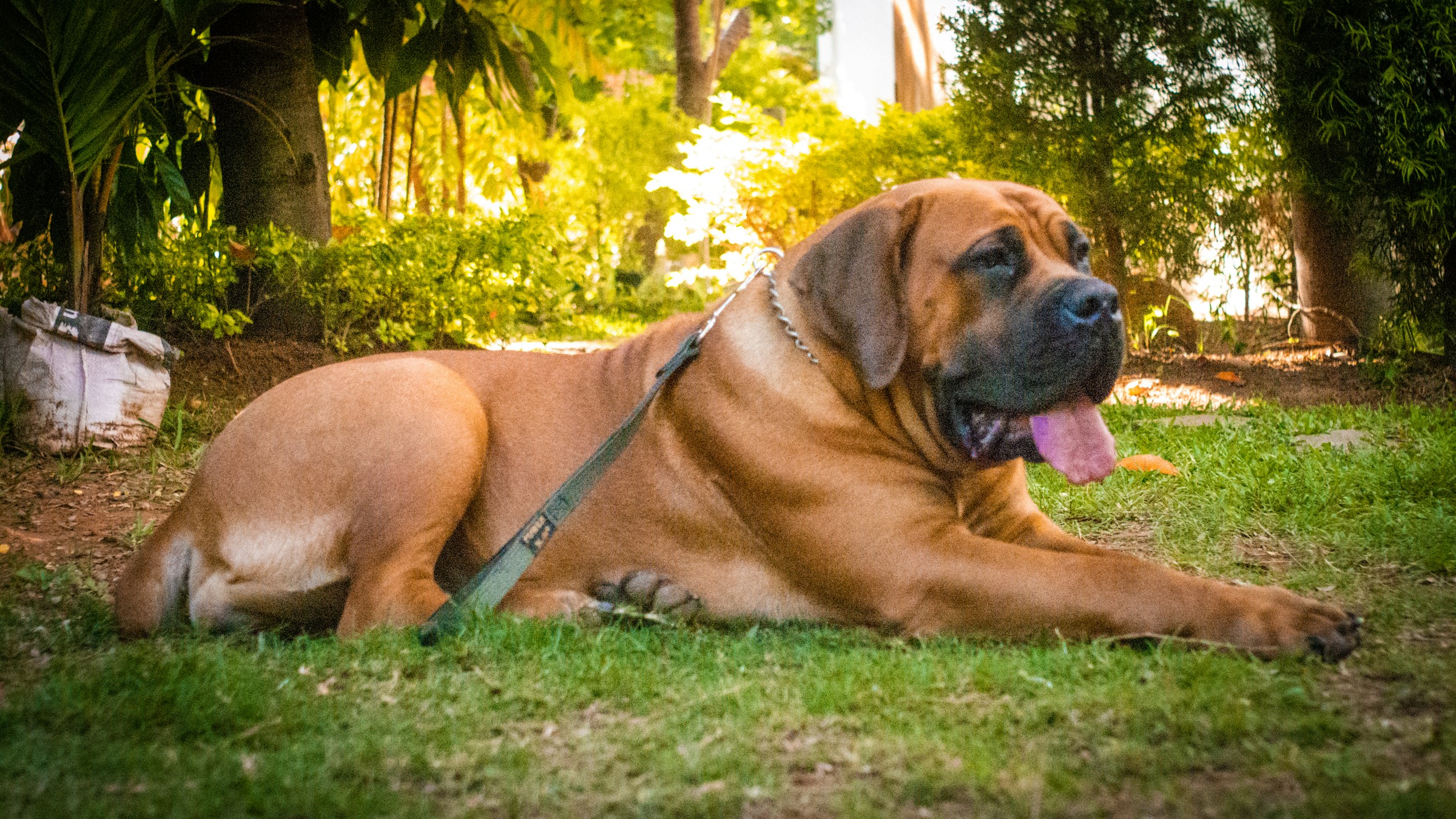
The English Mastiff is the dog people mean when they say gentle giant, and both words hold up. Hill’s describes a calm dog that watches before it reacts, at 120 to 230 pounds and 30-plus inches at the shoulder for the biggest. Most of the day, you’re living with a very large rug that sighs.
It’s also short-lived, with a median of 9.0 years in the UK Dogs Trust study. Hill’s says Mastiffs are less suited to homes with small children, and it adds a line worth taping above the leash hook: with this dog, “slips and falls can be a big deal.”
The risk lives on the walk, and the Mastiff still needs 45 to 60 minutes of activity a day. A Penn Medicine study found that broken bones from walking a dog among Americans 65 and older rose 163% between 2004 and 2017. The researchers recommended obedience training so a leashed dog doesn’t suddenly lunge, and smaller breeds for older owners.
With a Mastiff, that training has to be finished before the puppy outweighs you, and that day comes quickly.
#1 The Labrador or Golden that guards anyway

You’re crossing a parking lot, and a man you don’t know angles toward you a little too fast. Your Golden, who has never met a stranger it didn’t want to lick, shifts over and plants itself between you, tall and very still. He says hello. The tail starts up again.
Officially, that shouldn’t happen. The AKC’s Labrador page says: “If you’re hoping to find a watchdog, a Lab may not be the best fit. They’re vigilant, but they don’t have the strongest guardian instincts.” Its Golden page says Goldens “are not typically suited for watchdog roles” and “typically get along well with strangers, children, and other pets.” You won’t find either on many lists of the best guard dogs for families.
Owners tell it differently. Golden owners on Reddit describe dogs stepping between them, their children or a stroller and someone coming too close. The dog stands tall or growls, then goes right back to friendly once it decides the person is fine.
“Just based on my personal experience they definitely do, they just tend to be alot more polite about it than some other breeds.” Owner of a Golden Retriever and a Norwegian Elkhound, r/goldenretrievers
Polite is the useful part. Commenters in guard-dog threads keep landing on the same fix: a security system for the house and an ordinary family dog for everything else.
The Lab also gives you time. Its median life expectancy in the Dogs Trust study was 13.1 years, against 8.1 for the Cane Corso in the same count, and it does that at 55 to 80 pounds. It was the AKC’s #2 breed in 2025, its third year running there, so if your “guard dog” is a Lab, you have a lot of company.
It barks at the door, steps in when something feels off, and then lets the plumber in.
The bottom line
Think about who actually comes to your door in an ordinary month. The mail carrier. A neighbor who wants her casserole dish back. Someone to fix the furnace. Maybe kids who belong to somebody you love.
A dog that guards hard against every one of them is a dog you’ll be shutting in the back room a lot. A dog that barks, looks big in the window and settles once you open the door covers most of what most homes need.
So the next time the bell rings, watch the first ten seconds. Watch the dog, and watch where your own hand goes: the collar, the doorframe, or nowhere at all.
Bonus: Four checks to make before the next knock
Put the dog in a separate room and close the door before you open up for a mail carrier. The US Postal Service counted more than 5,200 dog attacks on its workers in 2025 and asks owners to never take mail directly from a carrier while a dog is present.
Ask your homeowner’s or renter’s insurer what your liability coverage would pay if your dog hurt someone. The average dog-related injury claim in 2025 was $65,450, according to the Insurance Information Institute.
Learn the loose-dog routine before you need it. The Peninsula Humane Society & SPCA says to hold up a hand like a stop sign, toss treats, walk away without running and keep your own dog’s leash loose. It also warns against putting yourself between the two dogs’ faces.
When children visit, keep watching even a dog with a spotless record. In a 2007 study of dogs that had bitten children, 66% had never bitten a child before, and fear was the most common reason behind the bite.
Questions people also ask
What is the #1 guard dog in the world?
No official body names one #1 guard dog. The AKC calls the Belgian Malinois “one of the breeds most commonly selected by police departments,” the German Shepherd is the highest-ranked guard breed on its 2025 list at #4, and the Bullmastiff was bred specifically to catch and hold poachers. The best pick depends on the job you want done: a loud alarm, a big deterrent or a dog trained to act on command.
Will my dog protect me without training?
Some will, but wanting to help and knowing how are different things. In a 2020 Arizona State University study, 60 pet dogs with no rescue training watched their owners call “help” from inside a box, and only about a third freed them. Yet 84% of the dogs that could work the door did, and Clive Wynne, director of the university’s Canine Science Collaboratory, said the others simply couldn’t work out what to do.
What’s the difference between a watchdog, a guard dog and a protection dog?
A watchdog barks to raise the alarm, a guard dog uses its size and presence to deter people and defend its territory, and a protection dog is trained to act on command. That last kind is costly: in 2023 the Los Angeles Times reported prices of $45,000 to $65,000 at one company and $70,000 at another. It also found “no standard industry playbook or official certification,” and said ongoing maintenance training is recommended.
Are protective dog breeds safe with kids and grandkids?
They can be, as long as an adult is always watching. The American Academy of Pediatrics says, “Never leave a small child and a dog alone together, no matter if it is the family dog,” and notes that most bites involve familiar dogs in everyday situations. Some breed clubs go further: the Akita Club of America says it’s wise, as a general rule, not to leave an Akita, or any large dog, alone with children under 12.
What is the best protective dog for older adults?
No official source names one best breed. The AKC’s list of dog breeds for seniors is all small and medium dogs, from the Shih Tzu to the Dachshund, and suggests weighing exercise needs, lifespan, costs and how a dog behaves with grandchildren. It also notes that an adult dog may already be “housebroken and leash trained.” The Dachshund, German for “badger dog,” made that list and ranked #5 on the AKC’s 2025 count.