The holiday foods dogs can’t eat, sized to your dog from the gravy boat to the trash can, and what to do if she gets into one anyway.
Read all the way to #1 before you share a single bite. It decides whether your dog gets the “a little is fine” answers below or a flat no.
The turkey’s resting under foil. The kitchen smells like butter and sage, and there’s a nose at your hip, tail thumping the cabinet, eyes locked on the cutting board. You already know chocolate’s off limits. But the skin? The rolls rising by the stove? The beer someone set on the floor by the recliner? Plenty of Thanksgiving foods and Christmas foods that are toxic to dogs look completely harmless, and how much it takes depends on whether she weighs 10 pounds or 50.
Table of Contents
#17 Dark chocolate and the baking chocolate in the pantry
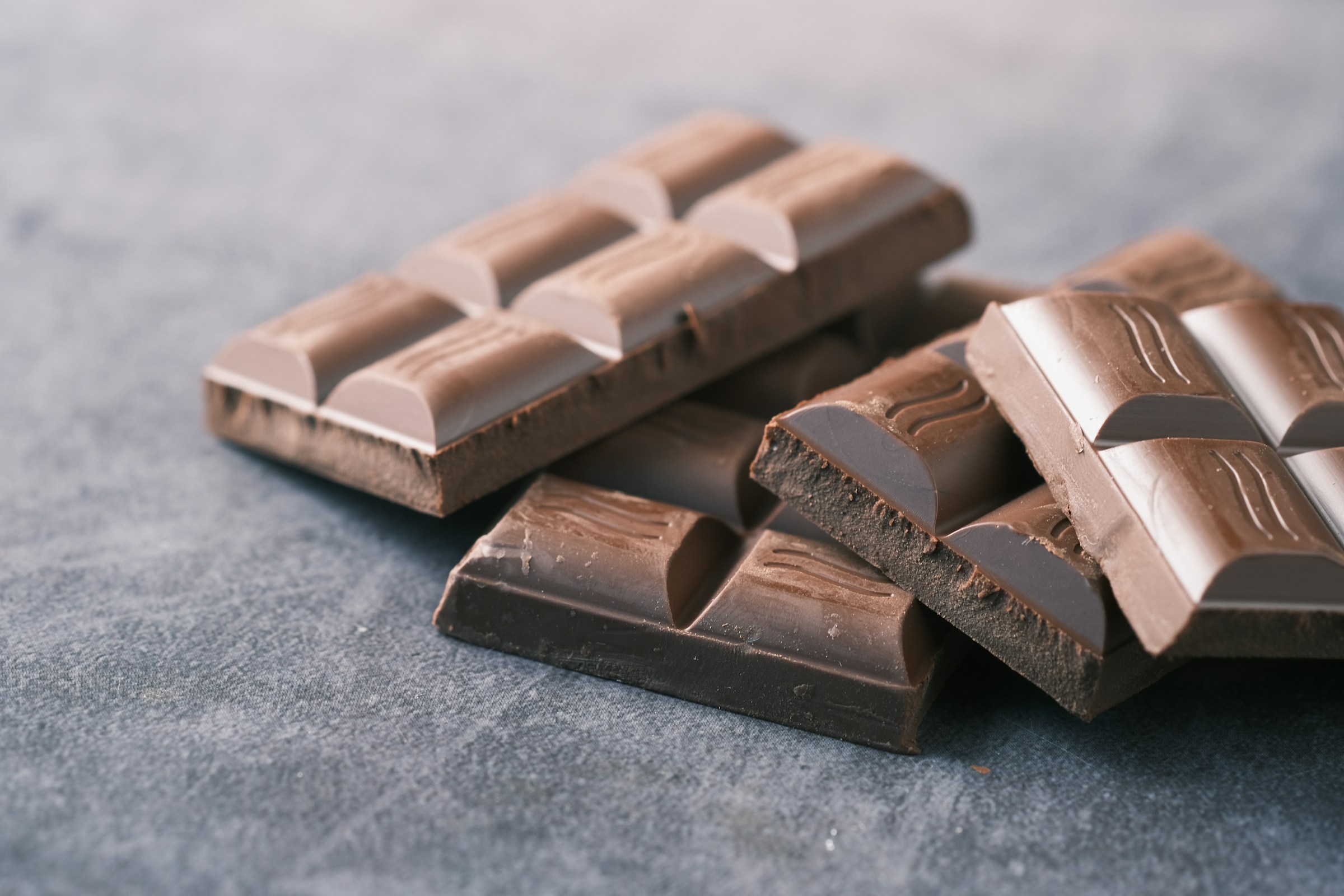
Everybody knows chocolate’s a no. Almost nobody tells you how much, and the answer swings wildly depending on which chocolate she found.
The trouble is theobromine, a chemical cousin of caffeine. A dog’s body clears it slowly: half of it is still in her system 17.5 hours later, against about 4.5 hours for caffeine.
We worked out the amount that brings on the first signs (vomiting, diarrhea, a dog who can’t stop drinking) from USDA theobromine figures and the dose the Merck Veterinary Manual ties to mild poisoning:
| Chocolate | 10-lb dog | 50-lb dog |
|---|---|---|
| Milk | 44 g (about 1.6 oz) | 221 g (about 7.8 oz) |
| Dark, 45 to 59% cacao | 18 g | 92 g |
| Dark, 70 to 85% cacao | 11 g | 57 g |
| Unsweetened baking | 7 g | 35 g |
For a 20-pound dog, roughly double the 10-pound column. Seizures can start at about three times these amounts. None of these numbers is a safe amount. They’re the point where a vet stops calling it a close call.
So a milk chocolate Santa is a stomachache for a Lab and a real emergency for a Chihuahua. A square of unsweetened baking chocolate is trouble for both. The tin of cocoa powder beside it is stronger still, nearly twice the baking chocolate, ounce for ounce.
Christmas is peak season. In UK vet records from 2012 to 2017, dogs were nearly five times as likely to be seen for chocolate at Christmas as on an ordinary day. The culprits included Advent calendars, Santa figures and chocolates hung on the tree.
If she gets into it, the first move costs nothing:
“I want you to take a sample of it and really try to record exactly how much of it they got.” Dr. Clayton Greenway, veterinarian, in his video guide to pet poisons
Signs usually show up 6 to 12 hours later, so call while she still looks fine. The wrapper in your hand tells your vet which row of that table you’re on.
#16 Raisins baked into fruitcake, stuffing and cookies
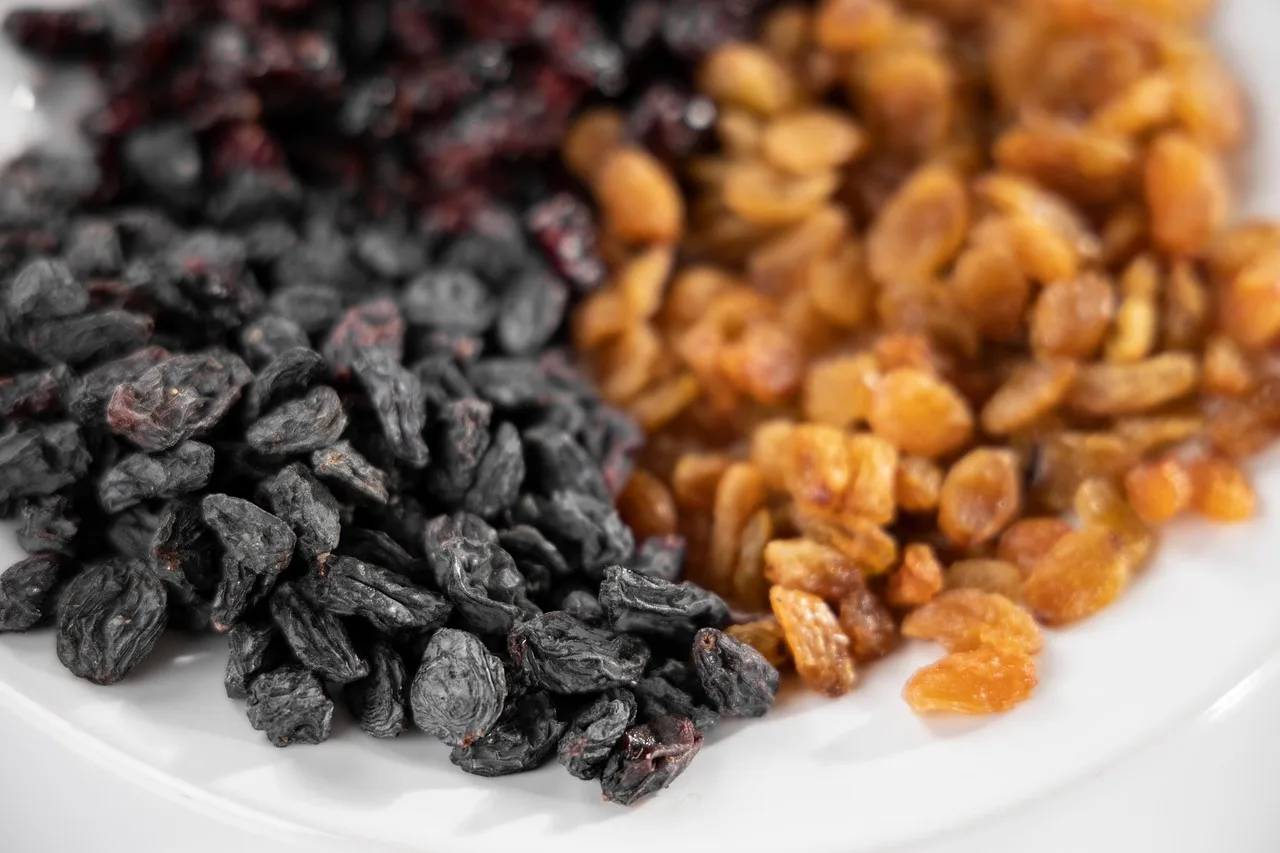
With raisins, nobody can give you a safe number. Not your vet, not a poison hotline.
The Merck Veterinary Manual’s rule of thumb is that more than one grape or raisin per 10 pounds of dog may be enough to cause harm. That’s more than one for a 10-pound dog, more than two for a 20-pound dog, more than five for a 50-pound dog.
Treat that as a warning line, never a promise. ASPCA poison control vets only pinned down the likely toxin, tartaric acid, some 20 years after the first cases were described, and grapes carry anywhere from 0.35% to 2% of it. So the same number of raisins can carry very different amounts of the toxin.
That’s why the cases look so random. A 2016 review found some dogs stayed symptom-free after eating up to a kilogram of raisins, more than two pounds, “while others died following the ingestion of just a handful.”
The damage lands on the kidneys. Vomiting can start within 6 to 12 hours, and kidney failure can follow in one to three days. Once a dog stops making urine, Merck says “most dogs die or are euthanized,” so call the moment you know she ate them, not when she starts acting sick.
And watch the candy dish. Pet Poison Helpline calls chocolate-covered raisins a “double toxic concern.”
#15 Macadamia nuts in the cookie tin
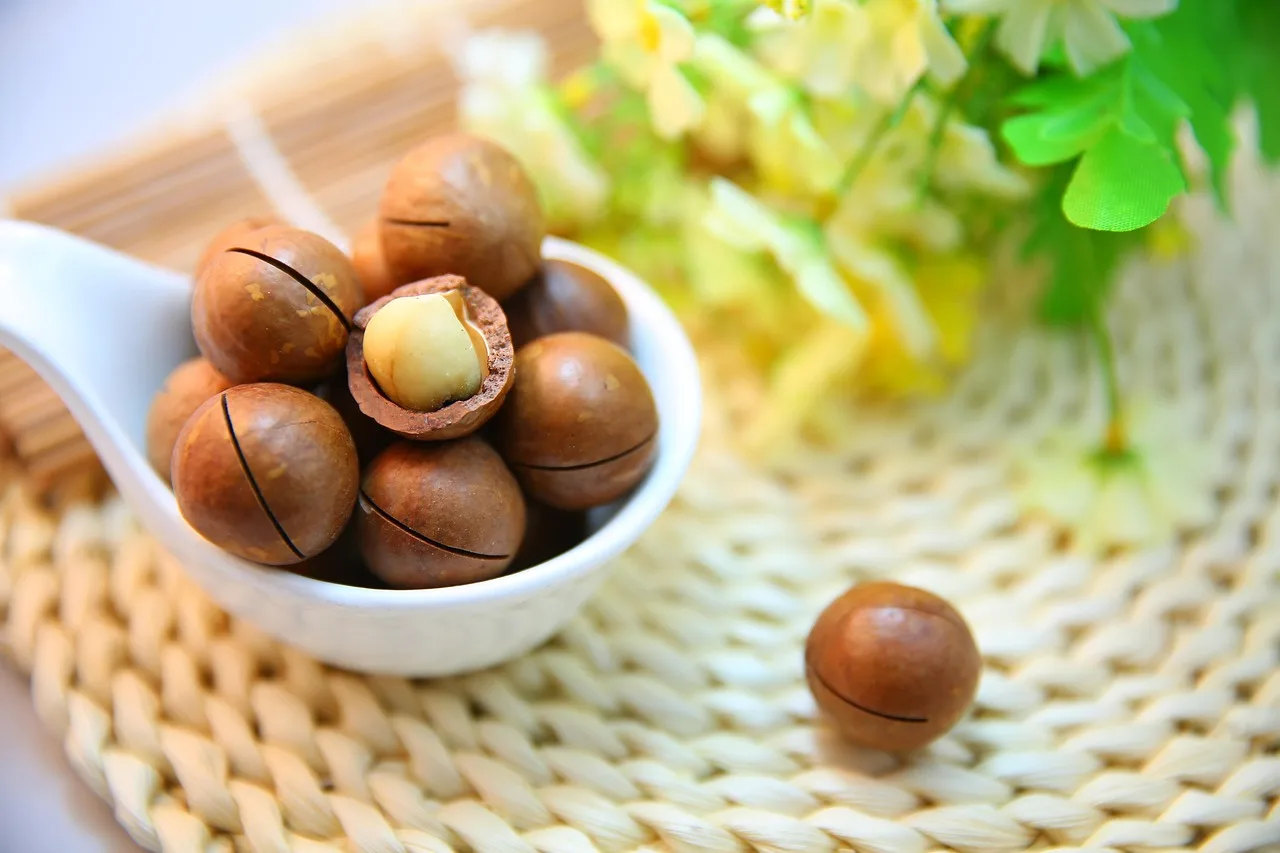
Good news, for once. Macadamia nuts can make a dog look alarmingly sick, and she almost always bounces back.
The Merck Veterinary Manual reports signs at 2.4 grams of nut per kilogram of dog. That’s about 11 grams for a 10-pound dog, 22 grams for a 20-pound dog and 54 grams for a 50-pound dog. Within 12 hours she may be weak, wobbly on her feet, trembling, vomiting or running hot.
Then, usually within 12 to 48 hours, it passes. Merck’s own word for the whole thing is “nonfatal.”
Still call. A dog who suddenly can’t walk straight looks like a dozen worse things, and your vet can help her through a miserable night.
Check what the nuts came in, too. In a white chocolate macadamia cookie, the white chocolate barely registers: Merck puts its theobromine at a tiny fraction of milk chocolate’s. The nuts and the butter are what she’s really eating.
#14 Cooked turkey and ham bones
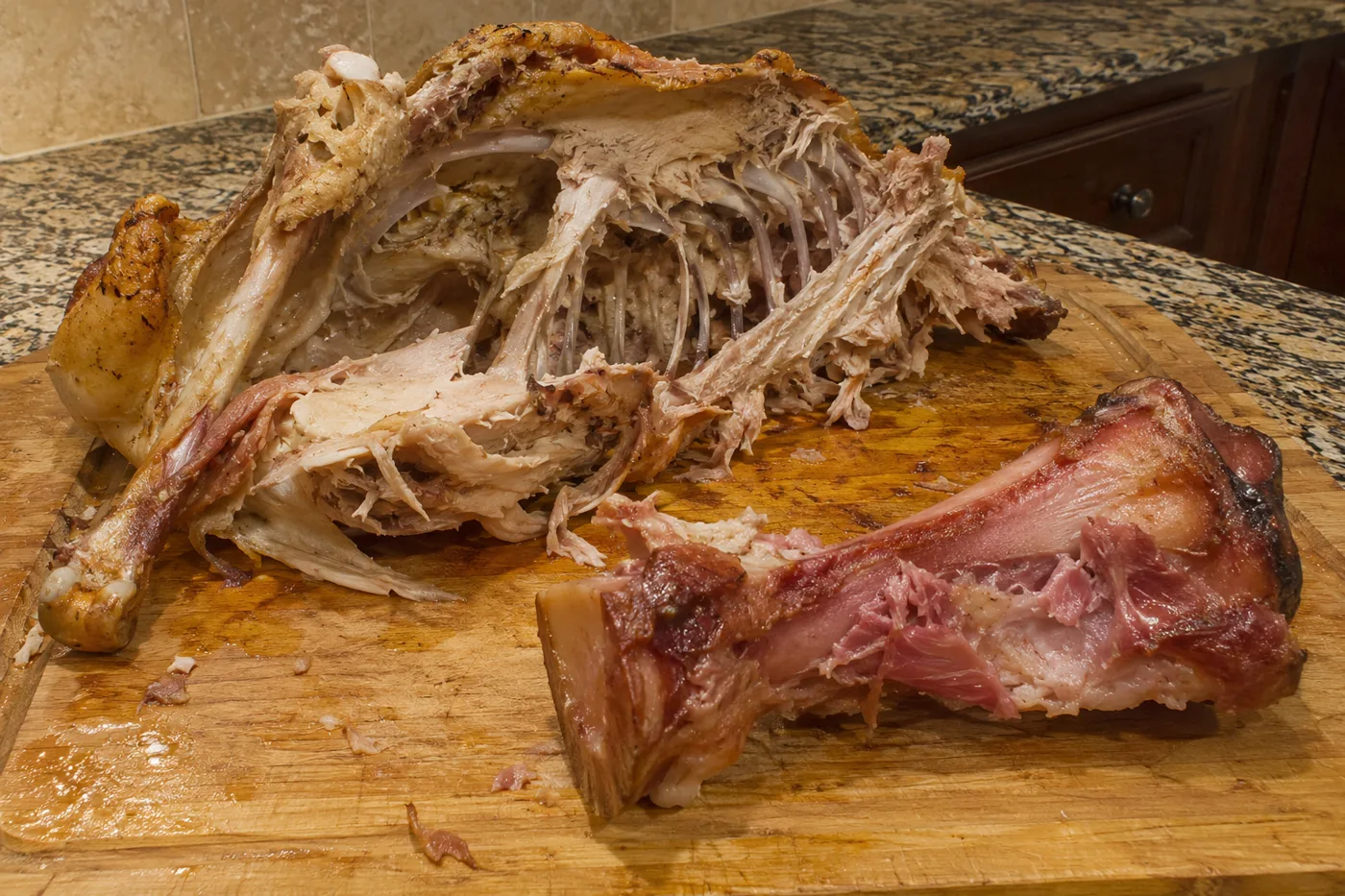
Cooked bones break into sharp pieces. AKC Chief Veterinary Officer Dr. Jerry Klein says it plainly: cooked bones “can splinter, creating a serious choking hazard or causing internal injuries.”
Maybe you figure a bone sold for dogs is the safe version. By the FDA’s count in a 2017 report, roughly 90 dogs had been sickened by processed bone treats with names like “Ham Bones” and “Smokey Knuckle Bones,” and about 15 of them died. The problems included blockages, choking, mouth wounds and rectal bleeding.
If bones packaged for dogs did that, the ham bone off your own platter gets no pass.
“Never ever be tempted to actually give them a cooked bone.” Dr. Alex Avery, veterinarian, on holiday hazards for dogs
He also notes where dogs often find them: in the trash, on the holiday night itself. So the carcass skips the kitchen can. Bag it and carry it out to the outdoor bin before the pie comes out.
#13 Turkey skin and the drippings in the pan
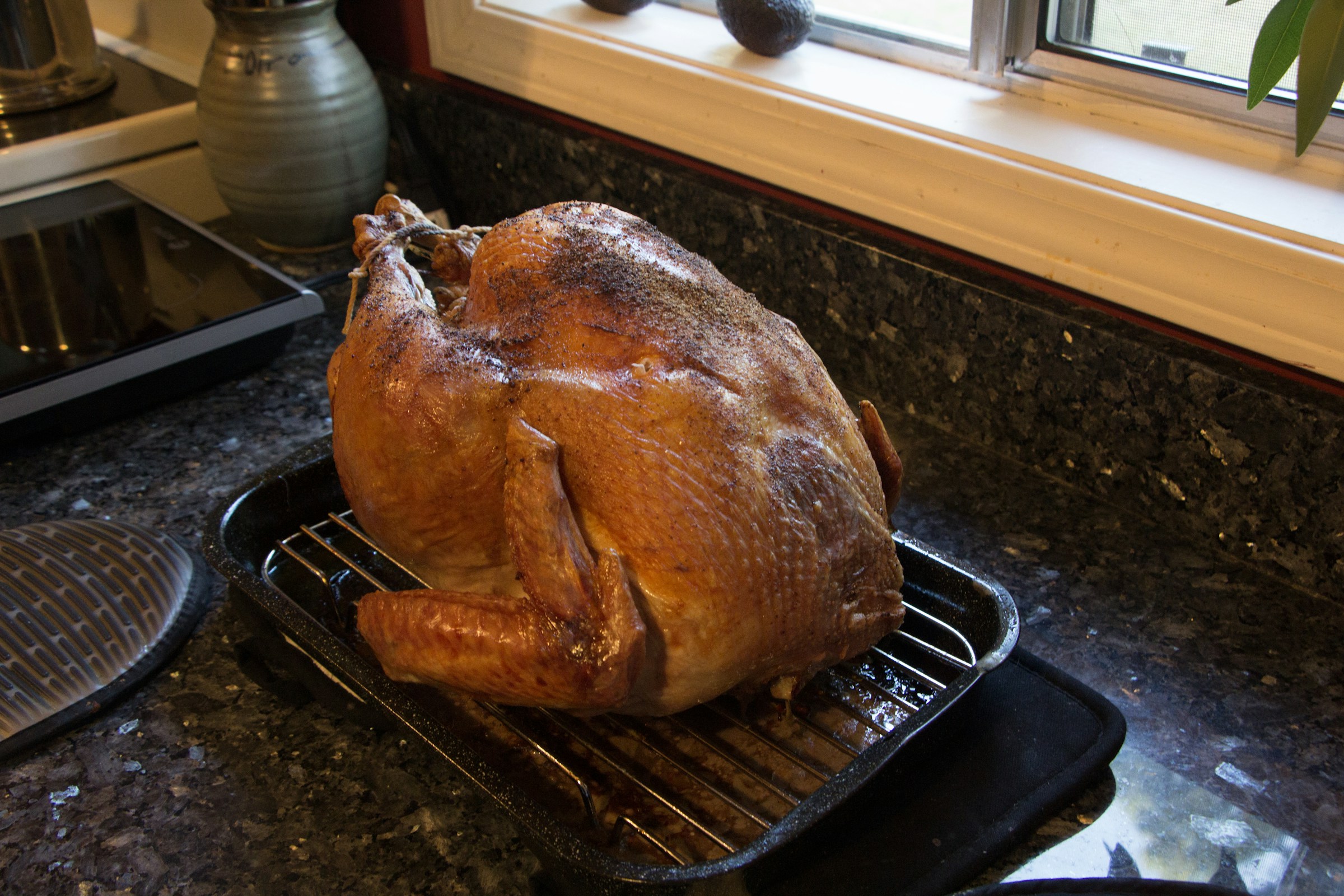
The meat underneath is fine. The skin is the problem, and the numbers explain why.
Ounce for ounce, roasted turkey skin carries about 18 times the fat of skinless breast meat: around 11 grams of fat in an ounce of skin, well under 1 gram in an ounce of breast. That’s before the butter you basted it with, which the AKC counts against it too: “too much fat (from the skin itself, plus any butter or oil used for roasting or frying).”
Why fat, of all things? A big hit of grease can inflame the pancreas, the organ that makes her digestive juices. That’s pancreatitis. Small-animal veterinarian Dr. Lindsay Butzer rules out grease even when a dog is refusing food and you’d try anything:
“That can cause them to get a nasty pancreatitis which can actually be deadly to your dog.” Dr. Lindsay Butzer, DVM, on tempting a dog who won’t eat
Watch for vomiting, belly pain, fever, low energy and a dog who turns down food. Signs may not show right away: Pet Poison Helpline says they can appear up to 4 days after the meal. VCA says severe cases are usually hospitalized for two to four days.
The drippings in the roasting pan are that same fat, melted and waiting. Dark meat runs fattier than white, too. If you want to share, peel the skin back and pull a couple of bites of plain white meat from underneath.
#12 Christmas ham and the deli tray
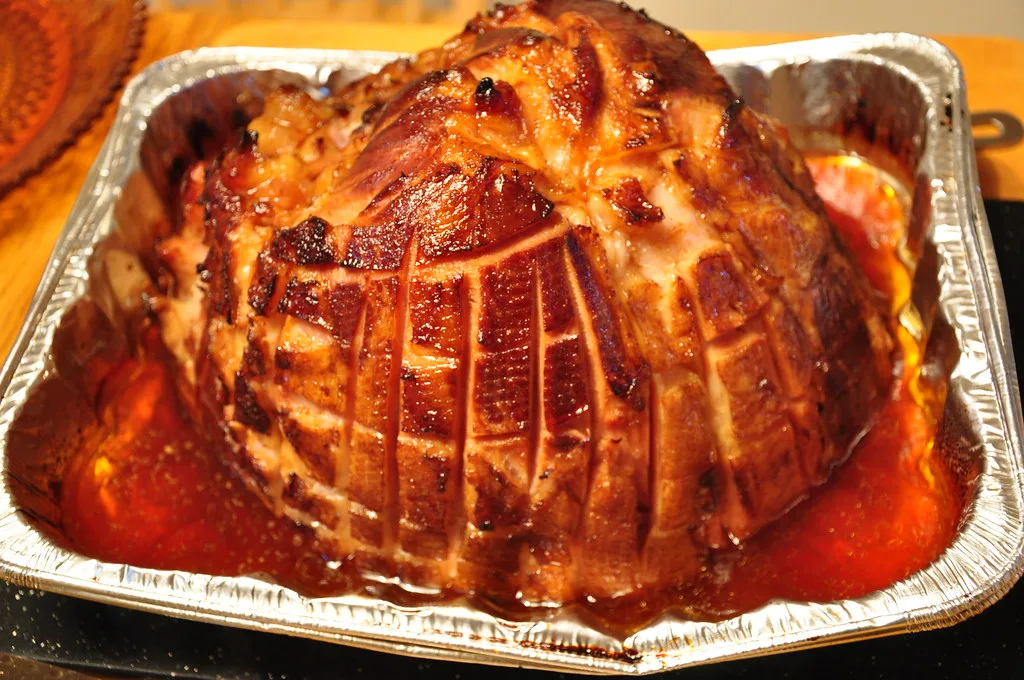
Ham won’t poison her. For a healthy dog, a scrap usually means a thirsty night and a few extra trips to the door. For a dog with heart disease, it’s a different story.
Salt is why. Three ounces of cured ham holds about 930 milligrams of sodium, roughly 4.6 times what the same amount of turkey breast has.
Veterinary nutritionist Dr. Lisa Freeman of Tufts’ Cummings School calls a low-sodium diet an “important nutritional goal” for pets with heart disease. Her warning names the usual suspects: “deli or lunch meats, rotisserie chicken, and bread are very high in sodium which can be harmful.”
The surprise is where she wrote it: a piece about foods for hiding pills. Cheese, peanut butter and a curl of lunch meat are exactly what most of us grab when a dog needs a pill, and a dog on heart medicine gets that pill every day.
Dr. Butzer, the small-animal vet from #13, only reaches for deli meat when a dog won’t eat anything else: “I don’t typically use these all the time because of the saltiness if your dog has heart disease.”
Spiral hams vary a lot by brand, so if your dog is on a low-salt diet, read the label before anyone carves. Plain turkey breast is the lower-salt meat to share.
#11 Sugar-free pie, gum and peanut butter
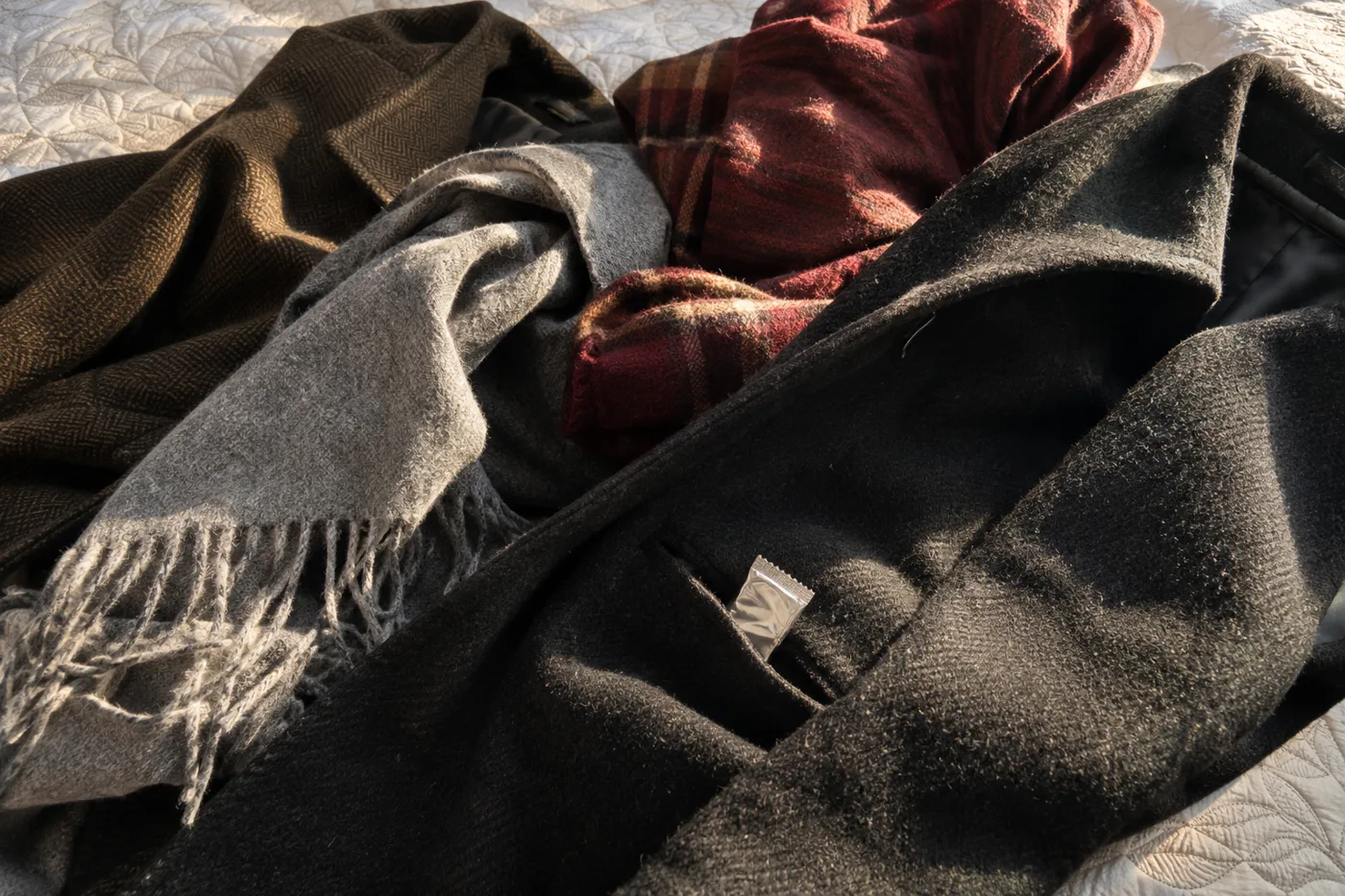
The sweetener xylitol drops a dog’s blood sugar fast. The FDA’s own poster says “Xylitol poisoning can start within 20 minutes!!” Two exclamation points, from a federal agency.
It also hides behind other names on a label:
- wood sugar
- birch sugar
- birch bark extract
FDA veterinarian Martine Hartogensis says to check the label for xylitol, “especially ones that advertise as sugar-free or low sugar.” The FDA’s list of usual sources includes nut butters, baked goods and “skinny” ice cream. Think of the sugar-free pie someone brings, the spoonful of peanut butter that hides a pill, the gum in a coat pocket on the guest bed.
How much does it take? By the Merck Veterinary Manual’s thresholds, low blood sugar can start around half a gram of xylitol for a 10-pound dog, about 0.9 grams for a 20-pound dog and 2.3 grams for a 50-pound dog. At about five times those amounts (roughly 2.3, 4.5 and 11.3 grams), the liver can fail.
You can’t eyeball grams from a slice of pie. If xylitol or one of its aliases is on the label and she ate any, treat it as an emergency. Liver damage may not show for a day or two, so a dog who seems fine an hour later hasn’t been cleared.
#10 Eggnog, beer and spiked punch on the coffee table

Dogs love eggnog. The cream is the draw: Dr. Tina Wismer, senior director of the ASPCA Animal Poison Control Center, notes that cream-based drinks attract pets more.
Her figure for a lethal dose works out to these amounts of pure alcohol:
- 10-pound dog: 25 to 36 grams
- 20-pound dog: 50 to 72 grams
- 50-pound dog: 125 to 179 grams
A 12-ounce beer at 5% alcohol holds roughly 14 grams of alcohol, though strength varies by brand. Picture a dog who punctures two cans left by the recliner and laps up what pools on the rug. For a 10-pound dog, two beers at that strength would already land inside that range.
Signs usually show within an hour, and alcohol can drop her blood sugar on top of everything else. The ASPCA lists wobbling, vomiting, trouble breathing, tremors, coma and even death.
The punch bowl is easy to guard. The rum-soaked cake cooling on the counter is easier to forget, and it can carry both the alcohol and the raisins from #16.
#9 Dinner roll dough rising on the counter
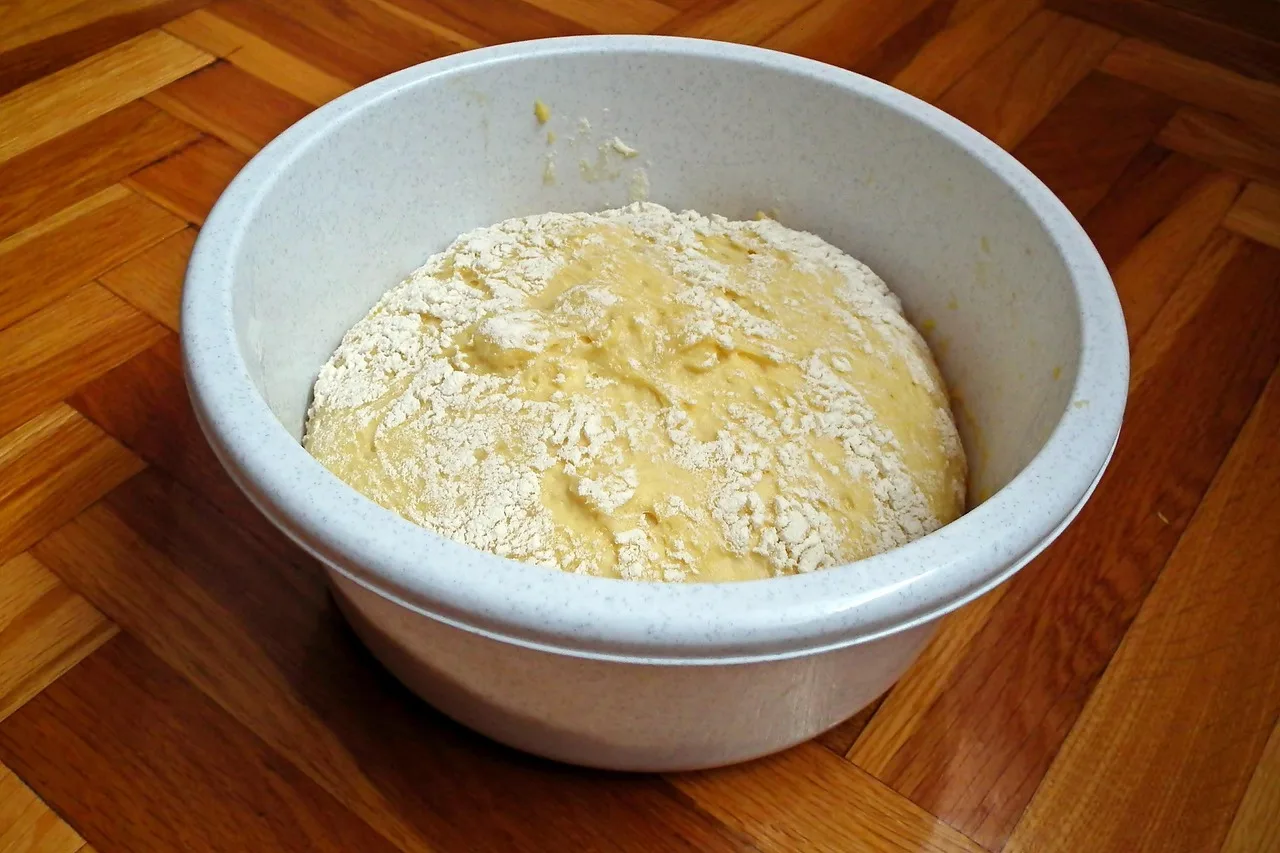
Swallowed raw yeast dough keeps working. The Merck Veterinary Manual puts it this way: “The warm, moist environment of the stomach serves as an efficient incubator for yeast to replicate.”
Two things happen in there. The dough swells, and the yeast makes alcohol. Most people would guess the swelling is the killer. Merck says death is usually due to the alcohol instead.
So a dog who gulped a ball of dough can end up with a swollen belly, confused, dangerously cold and having seizures. In breeds prone to bloat, where the stomach can twist, Merck adds that the risk “should not be overlooked.”
The fix is a hiding place she can’t reach. Let the dough rise in a cold oven or the microwave with the door shut, and stick a note on the oven door so nobody preheats it with the rolls inside.
#8 The fried onions on the green bean casserole
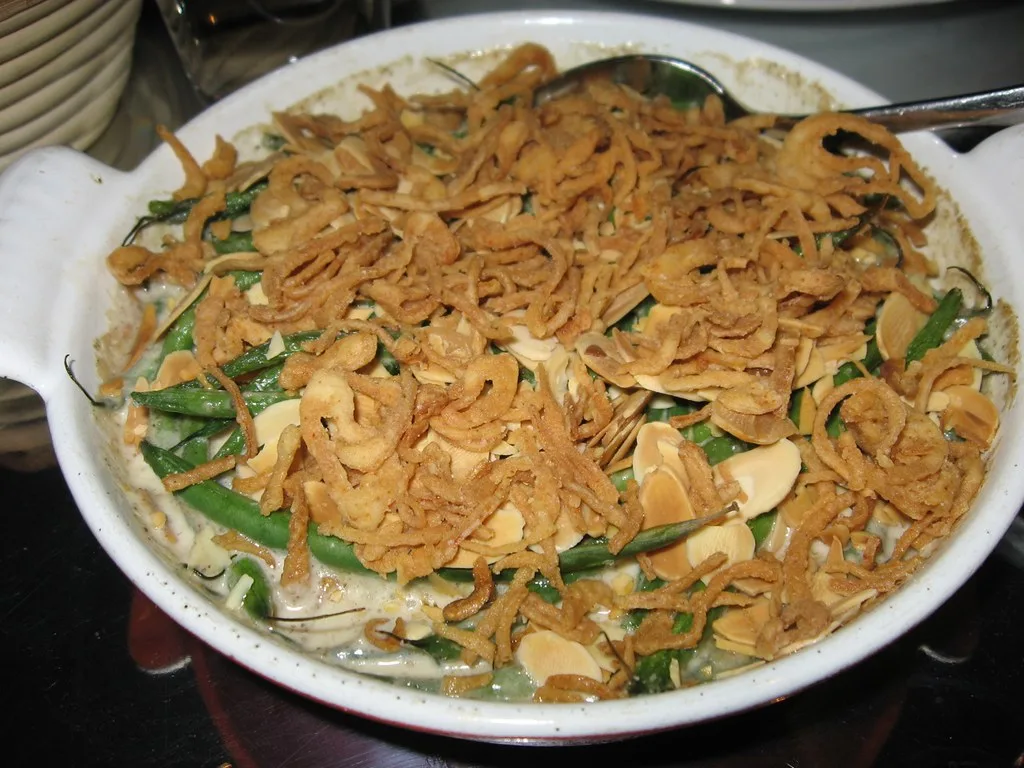
Plain green beans are fine. Texas A&M veterinarian Dr. Lori Teller says “some plain green beans” are okay to share. That’s why the casserole feels safe.
A commenter under a vet’s holiday-food TikTok named the catch in seven words: “The onion on the green bean casserole.”
Onions damage red blood cells, the cells that carry oxygen around her body. Lose enough and she becomes anemic. The crispy topping counts: Merck says raw, cooked, dried and granulated onion have all caused poisoning.
Honestly, it takes a fair amount. Merck has seen signs after 15 to 30 grams of raw onion per kilogram of dog. That’s about 2.5 to 5 ounces of onion for a 10-pound dog, 5 to 10 ounces for a 20-pound dog, and 12 ounces to 1½ pounds for a 50-pound dog. A big dog licking a serving spoon isn’t the worry.
A small dog who finds the dish on the counter is. So is the weekend of leftovers. Pet Poison Helpline’s warning about garlic, onion’s stronger cousin, is that large or repeated amounts are what cause anemia.
Easy fix: scoop out a handful of plain beans for her before the soup and onions go in.
#7 Corn on the cob, after the corn is gone
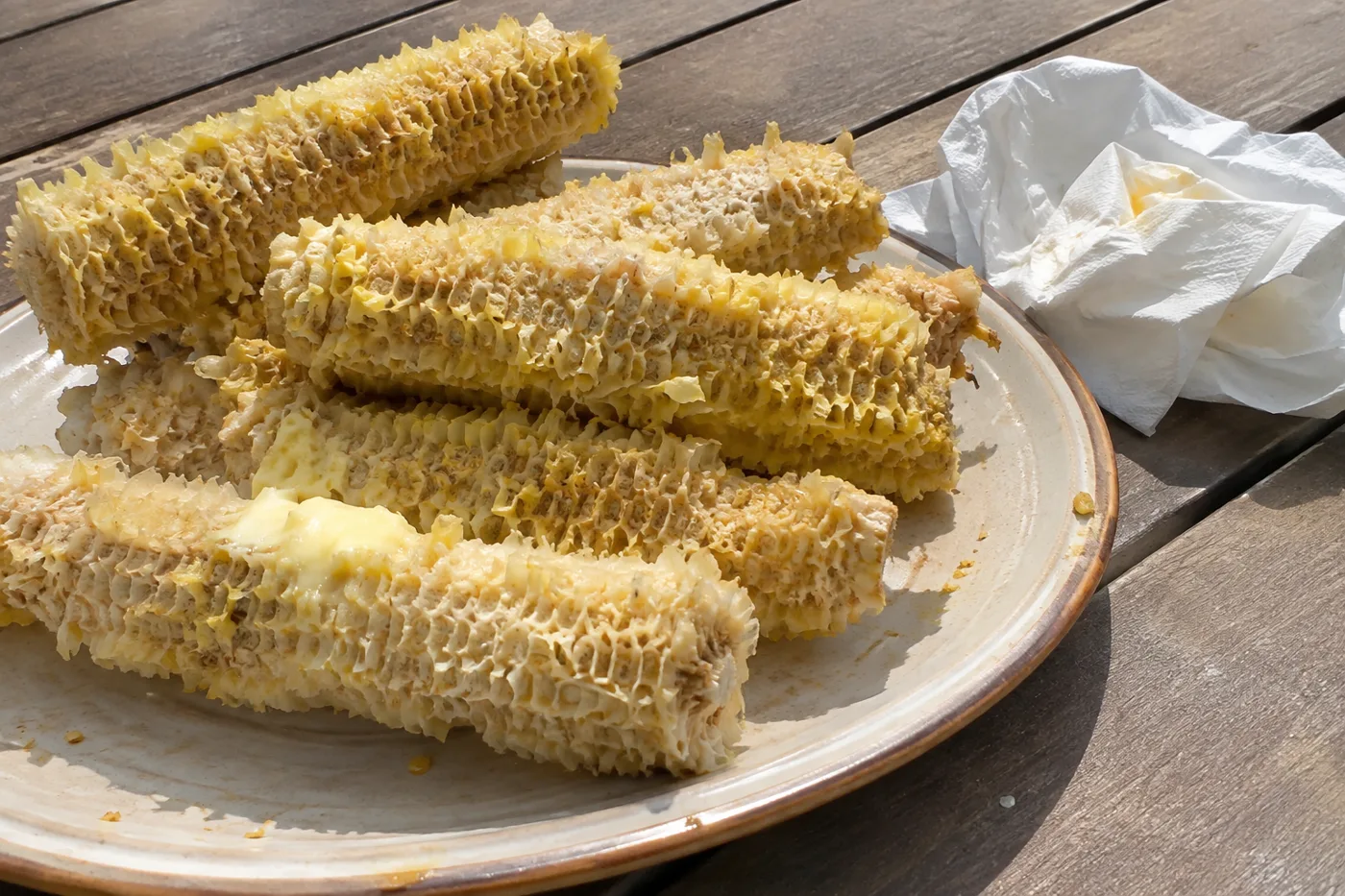
In November 2014, Frost was an 83-pound, one-year-old pit bull on Staten Island. A big, strong dog. He still needed two hours of surgery at the ASPCA Animal Hospital to get a swallowed corn cob out.
Size doesn’t save them. Dr. Janice Fenichel, who works at that hospital, explains that dogs “often don’t distinguish between what is tasty and what will actually fit in to their gastrointestinal tracts.”
A commenter in Reddit’s r/AskVet put it more bluntly: “Correct, when the cobs are swallowed they tend to cause life threatening GI obstructions.” GI means the gut. The specialty hospital group MedVet calls cobs “an especially common foreign body that obstructs dogs,” usually wedged in the small intestine.
Watch for vomiting, a dog who won’t eat, belly pain and listlessness. Better yet, never let it get that far. A platter of gnawed cobs smells like butter and salt to her, so it goes straight from the table into a lidded can.
#6 Gravy made with onion, garlic and butter
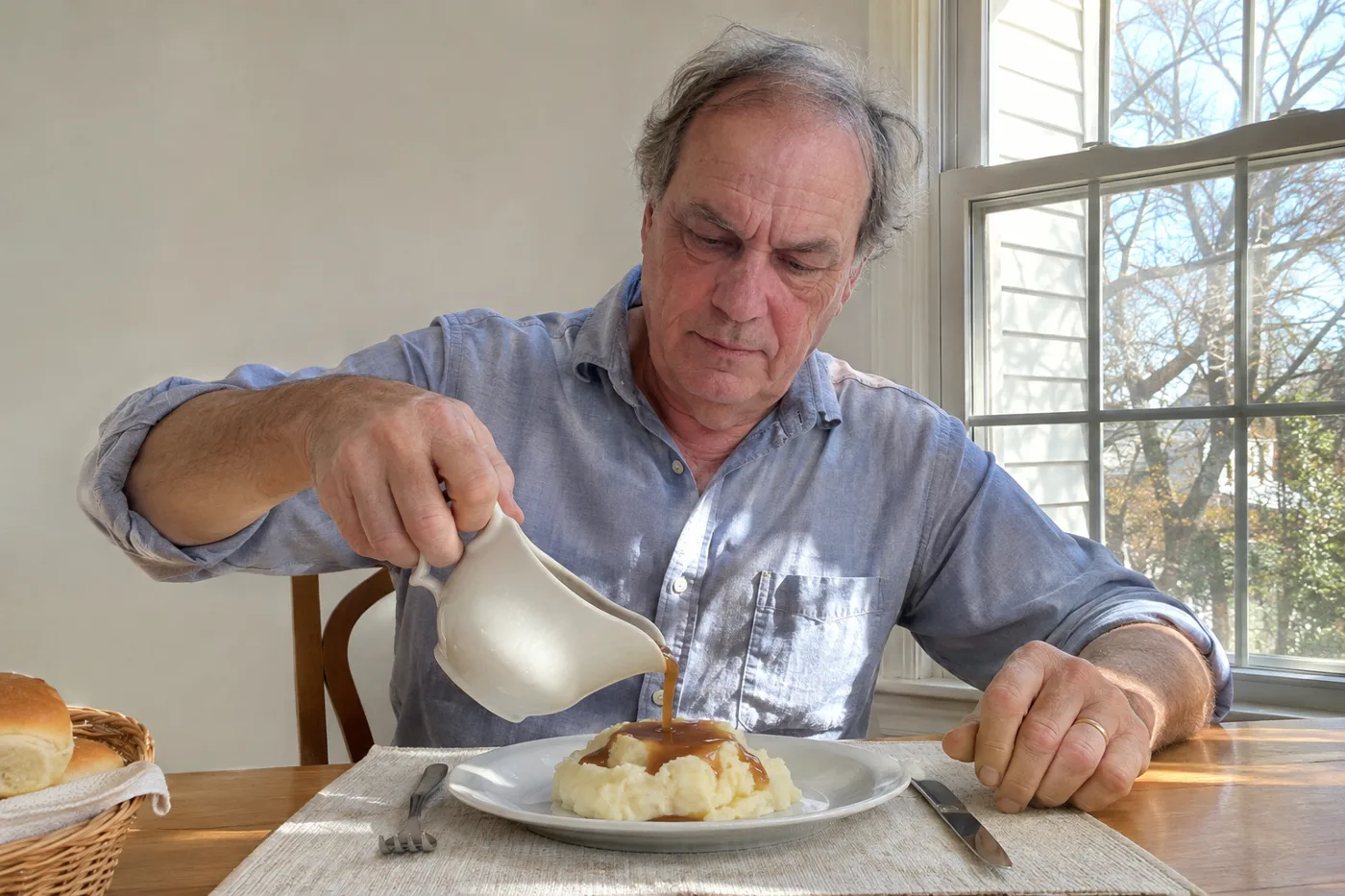
The night of the meal, she’ll seem fine. That’s the trap.
Onion damage to red blood cells typically shows up 3 to 5 days after she eats it. By then the leftovers are gone, and nobody connects a tired dog on Tuesday with the gravy she licked off a plate on Thursday.
Garlic is worse than onion. Merck puts it at 3 to 5 times as toxic, ounce for ounce, and a gravy made with onion, garlic and the drippings from #13 carries all three risks at once.
The signs Merck lists, in plain words: low energy, poor appetite, fast breathing, a racing heart, a yellow tinge, and red or brown urine. If she’s off in the days after a holiday meal, tell your vet exactly what she ate, even if it was days ago.
When the trouble shows up
- Within an hour or two: xylitol (as little as 20 minutes), alcohol, caffeine
- Within 12 hours: chocolate (6 to 12 hours), macadamia nuts, the first vomiting from grapes or raisins
- One to three days: kidney failure from grapes or raisins
- Three to five days: onion and garlic damage to red blood cells
#5 The butter dish left on the counter
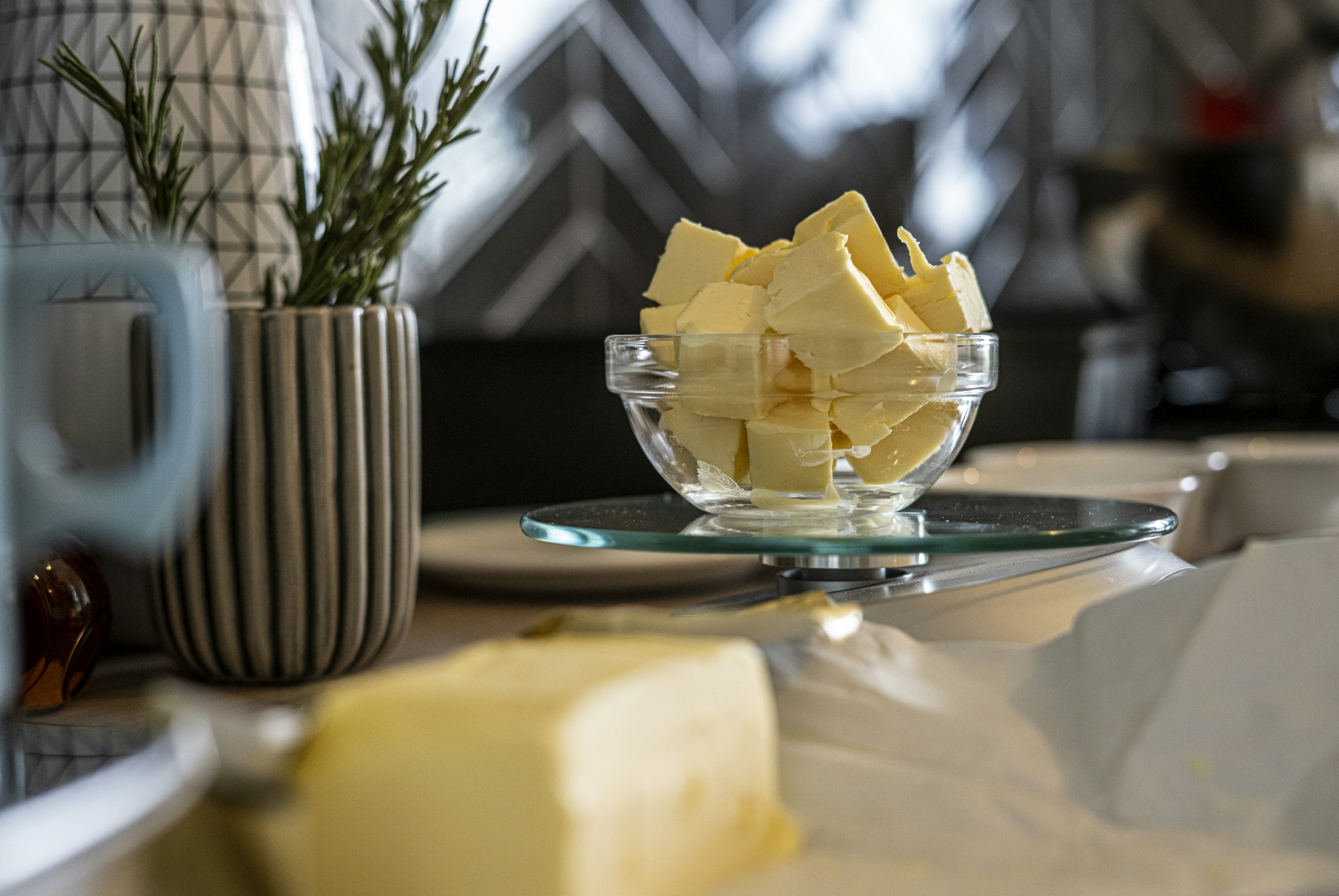
One stick of salted butter holds 92 grams of fat. That’s about as much as half a pound of roasted turkey skin, more skin than any guest could ever sneak her.
A tall dog takes it from the counter in seconds, wrapper and all. A short, determined one finds a chair.
The Merck Veterinary Manual lists eating something she shouldn’t (vets call it “dietary indiscretion”) as a common risk factor for pancreatitis. A whole stick of butter is about as indiscreet as it gets.
Buttery mashed potatoes are the same fat in a softer package. Between courses, the butter dish goes into the fridge or the microwave. If she gets a whole stick anyway, note how much is missing and call.
#4 Greasy turkey twine, oven bags and foil
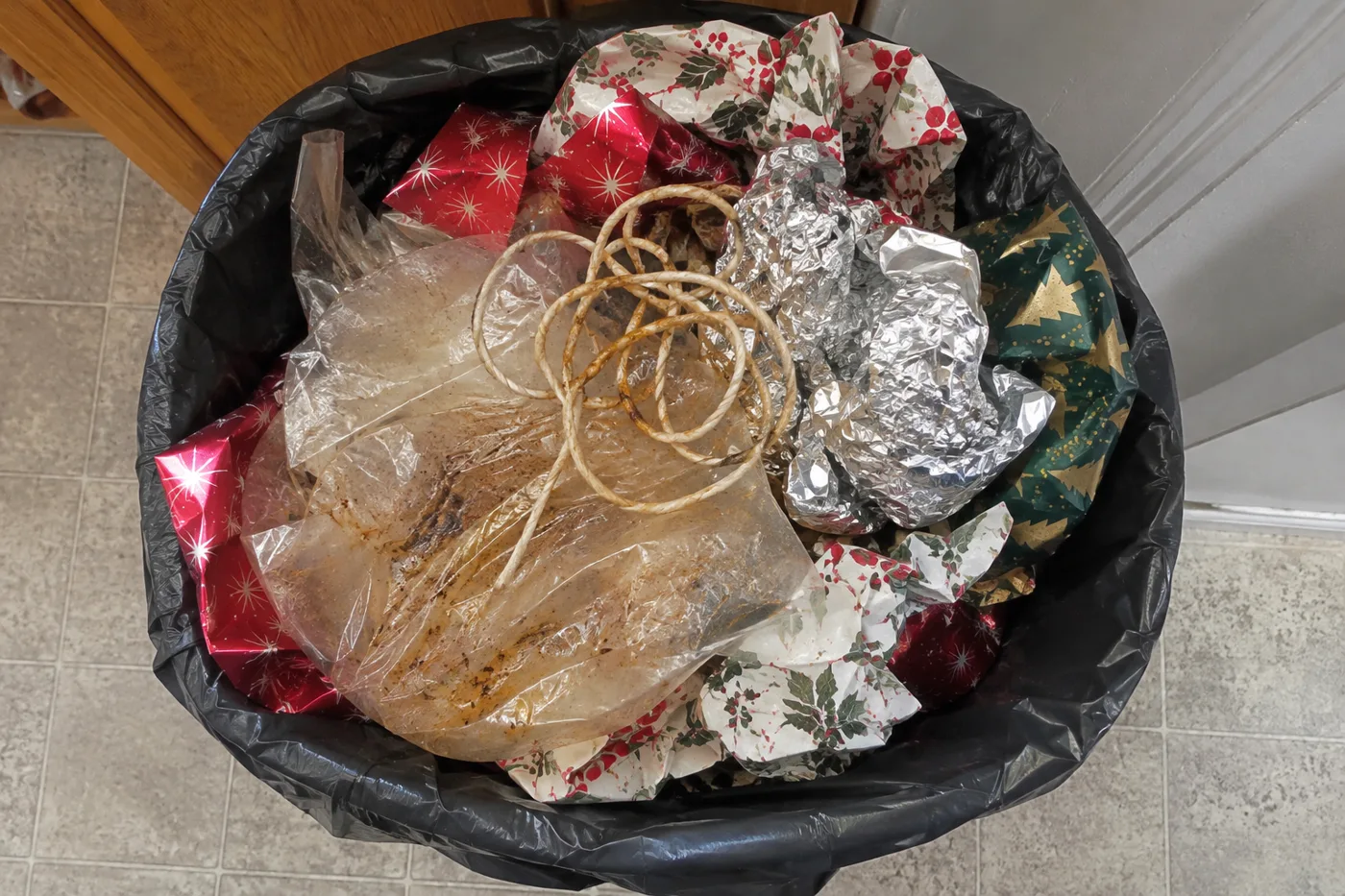
The string that held the turkey together has soaked in drippings for hours. To your dog, it’s a long, chewy strip of turkey.
A commenter in r/AskVet summed it up: “The twine to tie a turkey isn’t good and can again cause GI issues if eaten because it’s indigestible.”
String is worse than a lump. One end can catch and anchor while the rest keeps traveling, so the bowel bunches up on it and can “pleat like an accordion, leading to perforation and severe internal damage and septic peritonitis.” In plain words: the gut tears, and the belly gets infected.
The roasting bag and the greasy foil smell just as good. Dr. Teller’s advice is to keep “plastic, strings, foil, and bags used during cooking out of pets’ reach,” and VCA adds a heavy, secure lid and taking the trash out before bed.
That last step matters most. The kitchen can, stuffed with string and foil, is never more tempting than at 2 a.m. when the house is asleep.
#3 The raw neck and giblet bag inside the bird
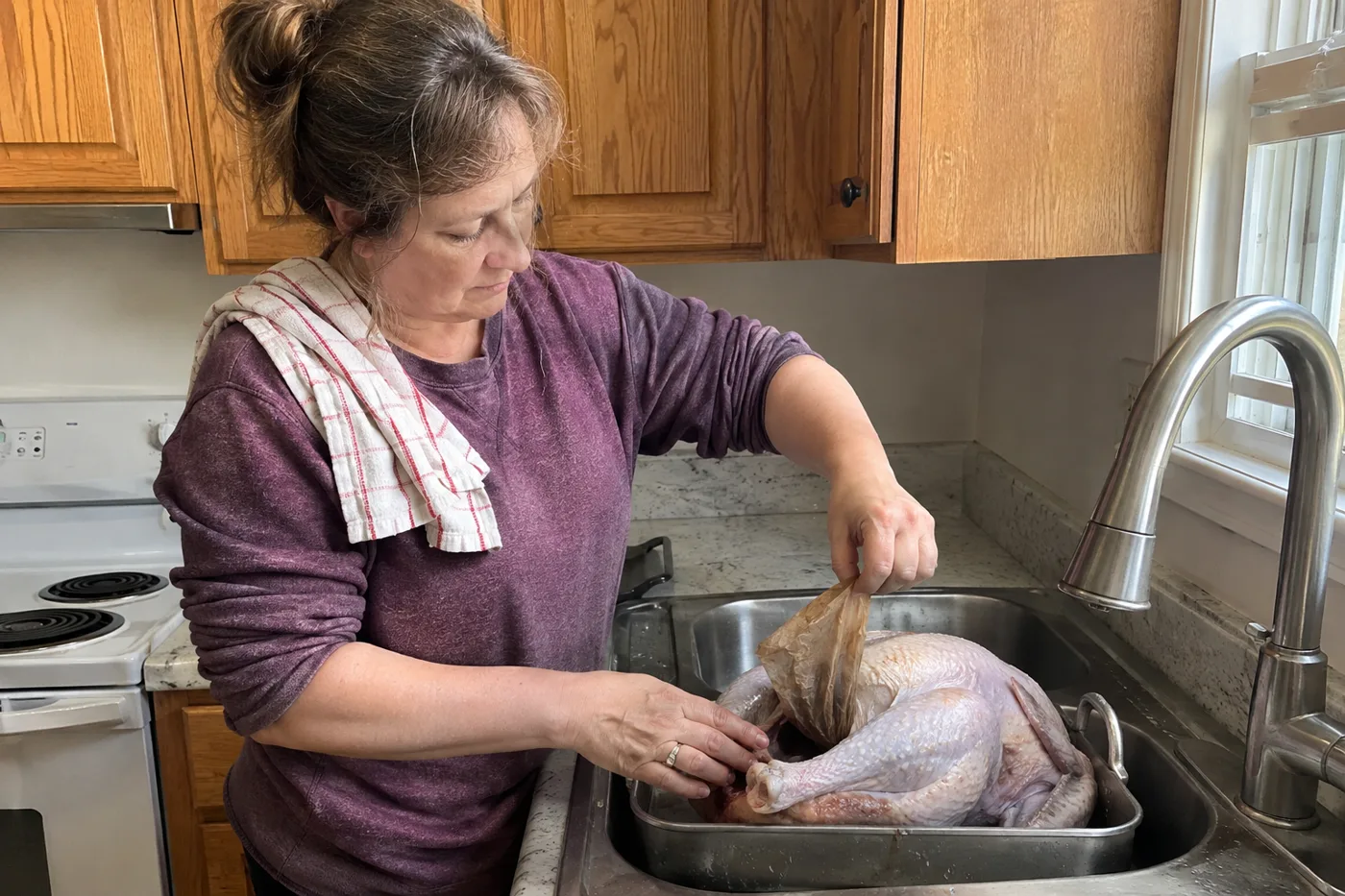
You pull the paper packet out of the cavity, cold and wet, and a dog materializes at your knee.
Raw meat can carry germs like Salmonella and Listeria, and the CDC says flatly that it “does not recommend feeding raw pet food or treats to dogs and cats.” The AKC adds that any raw, meaty bone carries a salmonella risk.
The CDC counts adults 65 and older among the people at higher risk of serious illness from those germs.
Cooking the neck doesn’t rescue it, either. Cooked, it’s the splintering bone from #14. So the neck is out either way: into the stockpot for you, then out to the outdoor bin.
#2 The dog’s own “mini” holiday plate
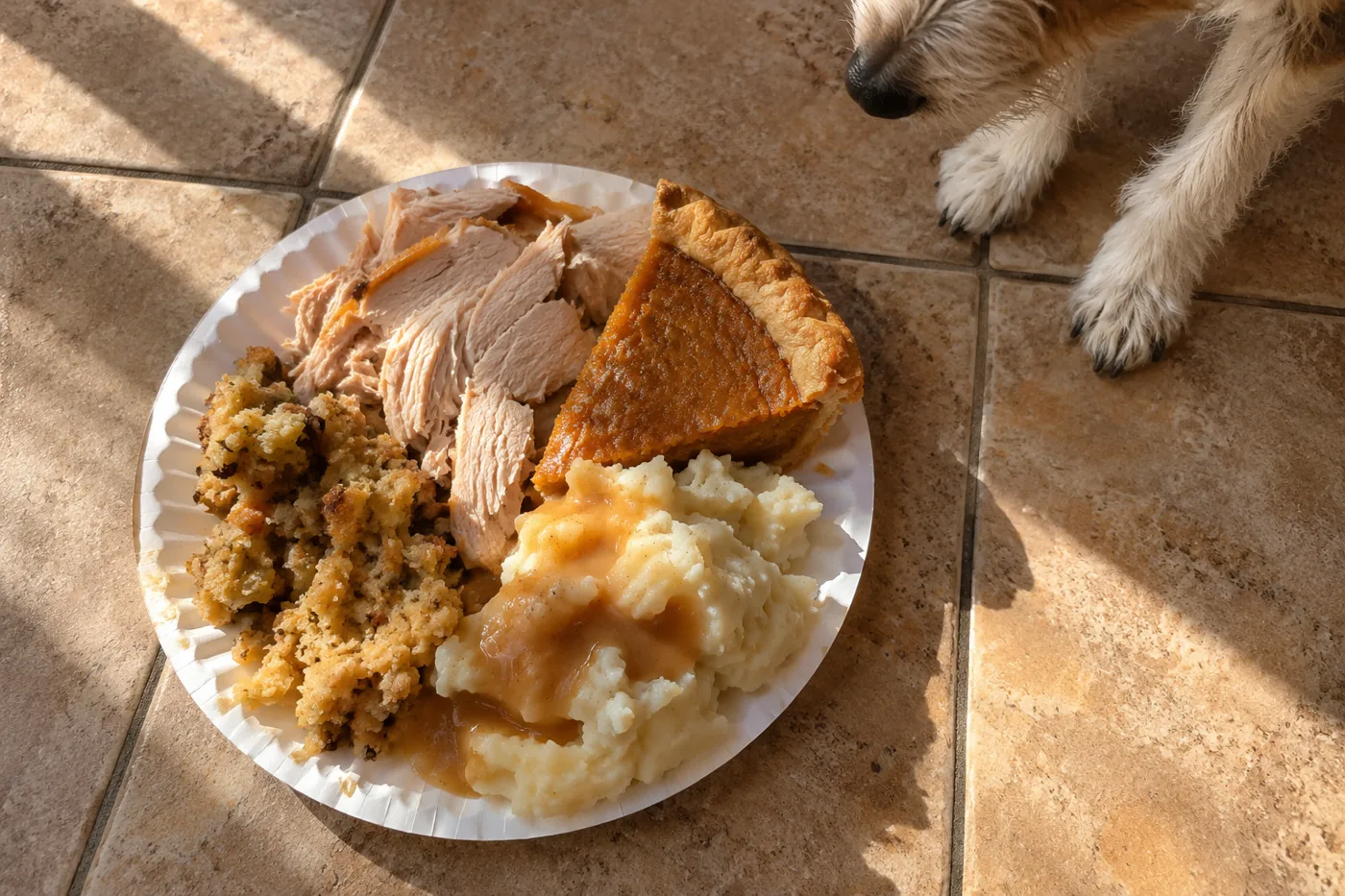
Every year the videos roll in: a dog in a bib, a paper plate of turkey, stuffing, potatoes and a wedge of pie, everyone cheering as it vanishes.
Robin Applebaum of the Calorie Control Council, which speaks for the reduced-calorie food industry, told Newsweek that “an average Thanksgiving meal can contain approximately a whopping 3,000 calories.” That’s a human’s plate. A dog of about 20 pounds needs roughly 440 to 550 calories for her whole day. Under one of those dog-plate videos, commenters pointed out that the “mini” plate was really a full adult meal, and predicted the diarrhea to come.
In the same comment sections, owners insist their dogs get pie, scraps or even a beer every holiday and are fine, including two who say their dogs are 14. Other commenters push back hard. Those are the dogs who got lucky.
Owners on Reddit and TikTok describe a better version: plain, unseasoned turkey mixed into her usual kibble, a spoonful of plain pumpkin, some steamed green beans. A few with sensitive-stomach dogs skip it all and hand over a stuffed toy. Whatever you choose, make it a topping on her regular dinner, never a second dinner.
#1 Rich scraps for schnauzers, Yorkies and other at-risk dogs
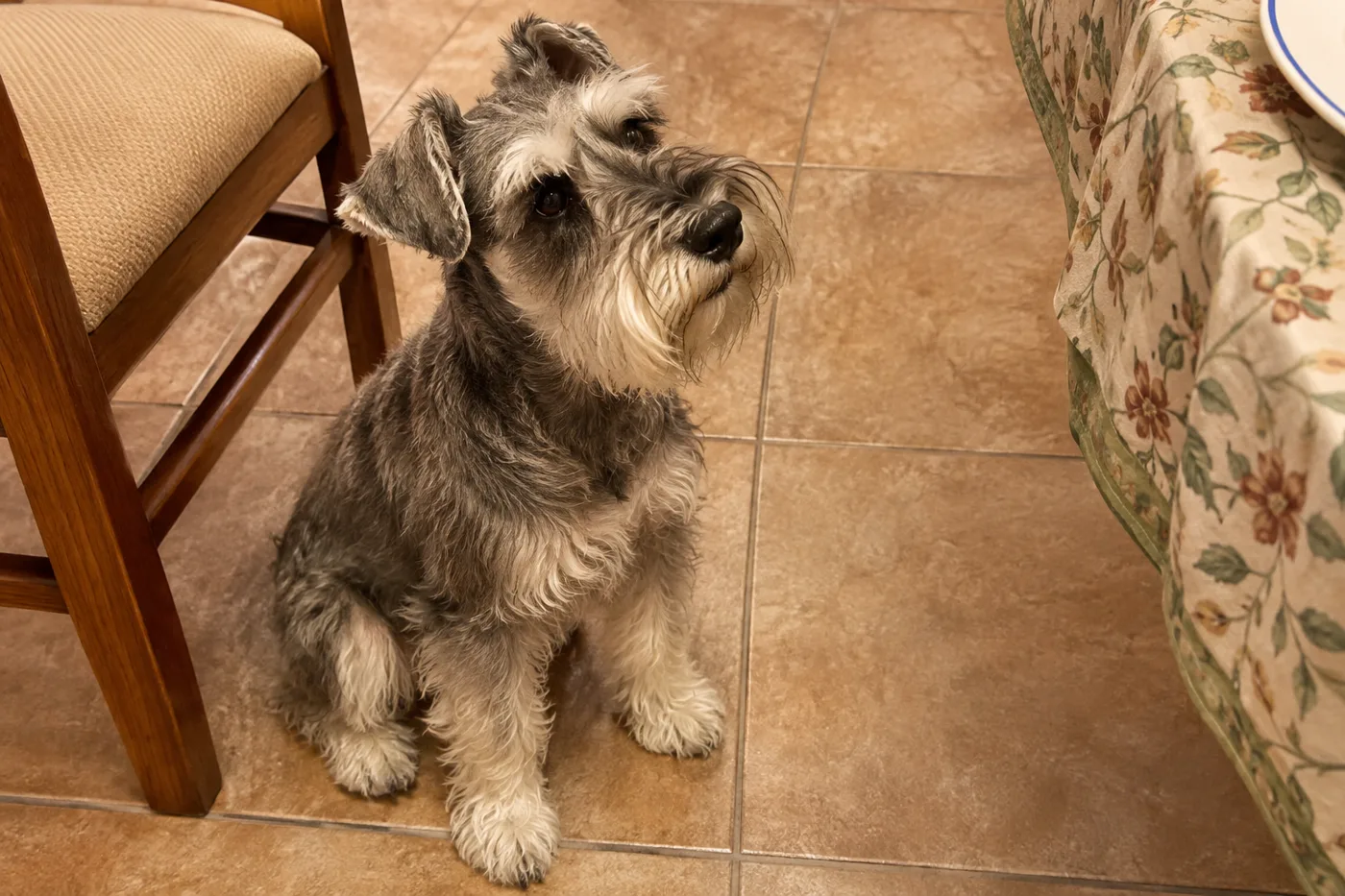
For some dogs, every “a little is fine” above turns into a hard no. If your dog is one of the breeds below, or has had pancreatitis before, rich holiday food stays off her plate entirely.
Veterinarian Dr. Alex Avery draws that line for “a dog who has had pancreatitis in the past or is a breed such as a miniature schnauzer, a miniature poodle or maybe a cocker spaniel.” The Merck Veterinary Manual goes further, calling Miniature Schnauzers “dramatically overrepresented.”
Who should skip rich food completely
- Miniature Schnauzers, Yorkshire Terriers, Cocker Spaniels, Dachshunds and Poodles
- Any dog who’s had pancreatitis before
- Dogs with very high blood fats (triglycerides) on their bloodwork
- Dogs with Cushing’s disease, a hormone disorder
It doesn’t take a feast. The AKC notes that “a single large serving of fatty food” can set it off in some dogs, and that emergency clinics see more cases after Thanksgiving.
Here’s how tight the margin really is. Merck’s diet for dogs with this history stays under 20 grams of fat per 1,000 calories. For a dog of about 20 pounds, who needs roughly 440 to 550 calories a day, that’s about 10 grams of fat for the whole day. One ounce of turkey skin has about 11. So does about a tablespoon of butter scooped off the dish.
One big hospital network, VCA, says it sees no breed pattern at all. Read that as no breed getting a free pass, since VCA also warns that some dogs who recover go on to have repeat bouts. Over time, Merck says, those repeats can wear down the pancreas’s ability to make digestive enzymes and hormones.
If she’s on that list, her holiday plate is her usual food with a couple of bites of plain white turkey on top. She’ll beg. She’ll do the face. She’ll survive.
The bottom line
Most holiday trouble doesn’t happen at the table, where everyone’s watching. It happens after: plates left on the coffee table, the trash bag by the back door, coats piled on the bed, everyone saying goodbye at once.
Food and chocolate made up about 3 in 10 of the cases the ASPCA’s poison hotline handled in 2025, roughly 300 a day across all pets.
So give someone a job for the hour after dinner, or take it yourself: watch the dog. Whoever has it gets first pick of the leftovers.
Bonus: four things to do before anyone rings the doorbell
Weigh your dog. Step on the bathroom scale holding her, then without her, and subtract. Every number above depends on it.
Save both poison hotlines in your phone: Pet Poison Helpline at (855) 764-7661 and ASPCA Animal Poison Control at (888) 426-4435, which runs 24/7. Both charge a fee per case, so have a card handy.
Call your nearest emergency vet ahead of the holiday and ask about their hours that day. Your regular vet may be closed, and you don’t want to be searching in the car.
Give guests one sentence at the door: “Please don’t feed her, and keep your bags off the floor.” The gum and the mints usually come in through the front door.
Questions people also ask
How quickly will a dog show signs of toxicity?
It depends on what she ate, anywhere from 20 minutes to five days. Xylitol can act within 20 minutes and alcohol within about an hour, while chocolate takes 6 to 12 hours and macadamia nuts up to 12. Kidney failure from grapes or raisins can follow in 24 to 72 hours, and onion or garlic damage often doesn’t show for 3 to 5 days. Call when you know she ate it, without waiting for signs.
Can dogs have Thanksgiving turkey?
Yes, a couple of bites of plain turkey with the skin removed and no gravy is generally fine, according to Texas A&M’s Dr. Lori Teller. The AKC says turkey isn’t inherently toxic to dogs but advises removing the fatty skin. Never give her the cooked bones, which can splinter.
What should I do if my dog eats chocolate?
Write down what kind of chocolate it was and roughly how much she ate, then call your vet or a pet poison helpline right away. Pet Poison Helpline, at (855) 764-7661, says “do not attempt to induce vomiting without professional guidance.” ASPCA Animal Poison Control answers 24/7 at (888) 426-4435. Both charge a consultation fee.
Is a small amount of garlic safe for dogs?
A small taste, like the garlic in a slice of Texas toast, is unlikely to reach a harmful amount, the AKC says. Large or repeated amounts can cause anemia, and garlic is 3 to 5 times more toxic than onion, ounce for ounce. Akitas and Shiba Inus are more sensitive to it, so those dogs should skip it, per Pet Poison Helpline.
Can dogs eat pumpkin pie?
A bite of regular pumpkin pie is unlikely to poison her, but plain canned pumpkin is the better choice. Pet Poison Helpline says the small amount of nutmeg in a recipe is “very unlikely to cause serious toxicity,” though the pie’s fat and sugar still add up. A sugar-free pie is a different matter, since the FDA lists sugar-free baked goods among xylitol sources. Read the can, too: you want plain pumpkin, not pie mix.
Can dogs have milk or ice cream?
Milk and ice cream are more likely to upset her stomach than to hurt her. Dogs don’t make much lactase, the enzyme that digests milk sugar, the ASPCA says, so dairy can upset her digestion. The exception is “skinny” or sugar-free ice cream, which the FDA lists among products that can contain xylitol.