Fifteen dog breeds that hate cold weather, and the fix that works for each one, from a coat that covers the belly to a shoveled potty patch.
The dog at #1 starts real arguments among its owners, and the quick check that settles it works on any mixed breed too.
The back door is open a few inches and the furnace is humming behind you. Your dog is planted on the mat with one front paw held up off the frosty step. She looks at the yard. She looks at you. She does not move.
It isn’t just her. Plenty of dogs get cold easily, and the cold-sensitive breeds usually have a plain physical reason: no undercoat, a lean frame, a short face, a belly that rides an inch above the snow. Each reason has its own fix.
Table of Contents
#15 French Bulldog: flat face, thin coat
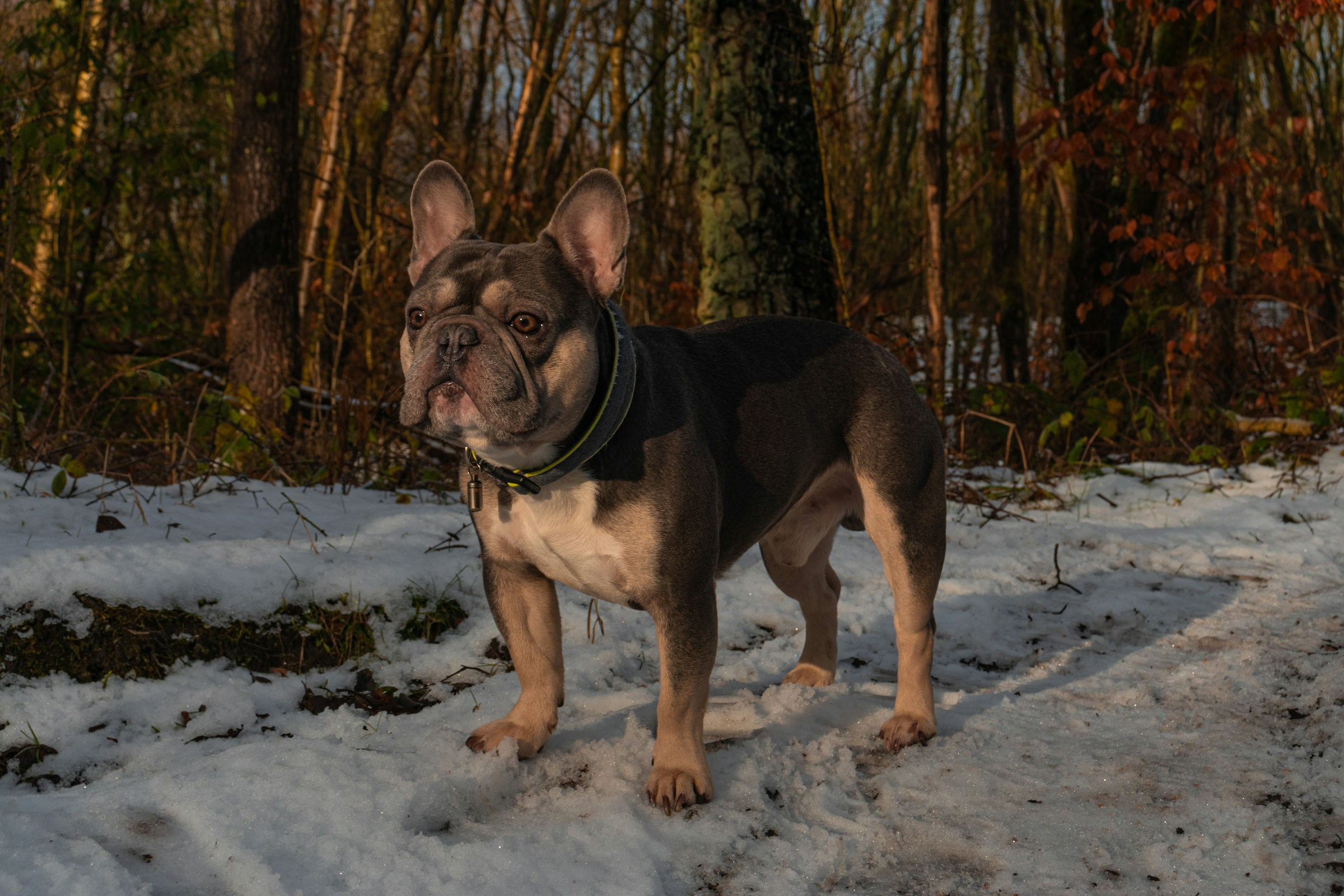
America’s favorite dog is also one of its chilliest. The French Bulldog has held the American Kennel Club’s top spot four years in a row, ever since it ended the Labrador Retriever’s 31-year reign in 2022. That’s a lot of Frenchies stepping out into a lot of Januarys.
The coat is the first problem. VCA Animal Hospitals, the national vet hospital chain, says it flatly: “Its short coat does not protect it against the cold.” It gives the breed 1 out of 5 for cold.
The face is the second problem, and almost nobody mentions it. A long nose works like a small heat exchanger. On a cold morning, warmth gets pulled back out of each breath as it travels down the muzzle. The Institute of Canine Biology explains that the shorter the muzzle, the more heat is lost with every exhale. Vets call this flat-faced shape brachycephalic, which just means short-headed.
So those little breath clouds at the end of the driveway are warmth a Lab would have kept.
The fix is simple: consider a coat for cold walks. The University of Wisconsin’s vet school says coats help most for short-haired dogs, really slender dogs and elderly dogs. A short-coated Frenchie checks that first box the day it’s born. Take the coat off once you’re home, though. The PDSA, a UK vet charity, says most dogs don’t need a coat indoors and can overheat fast in a heated house. The RSPCA adds that noisy or fast breathing, especially in a flat-faced dog, is a sign of overheating.
#14 Chihuahua shivering, then refusing to potty
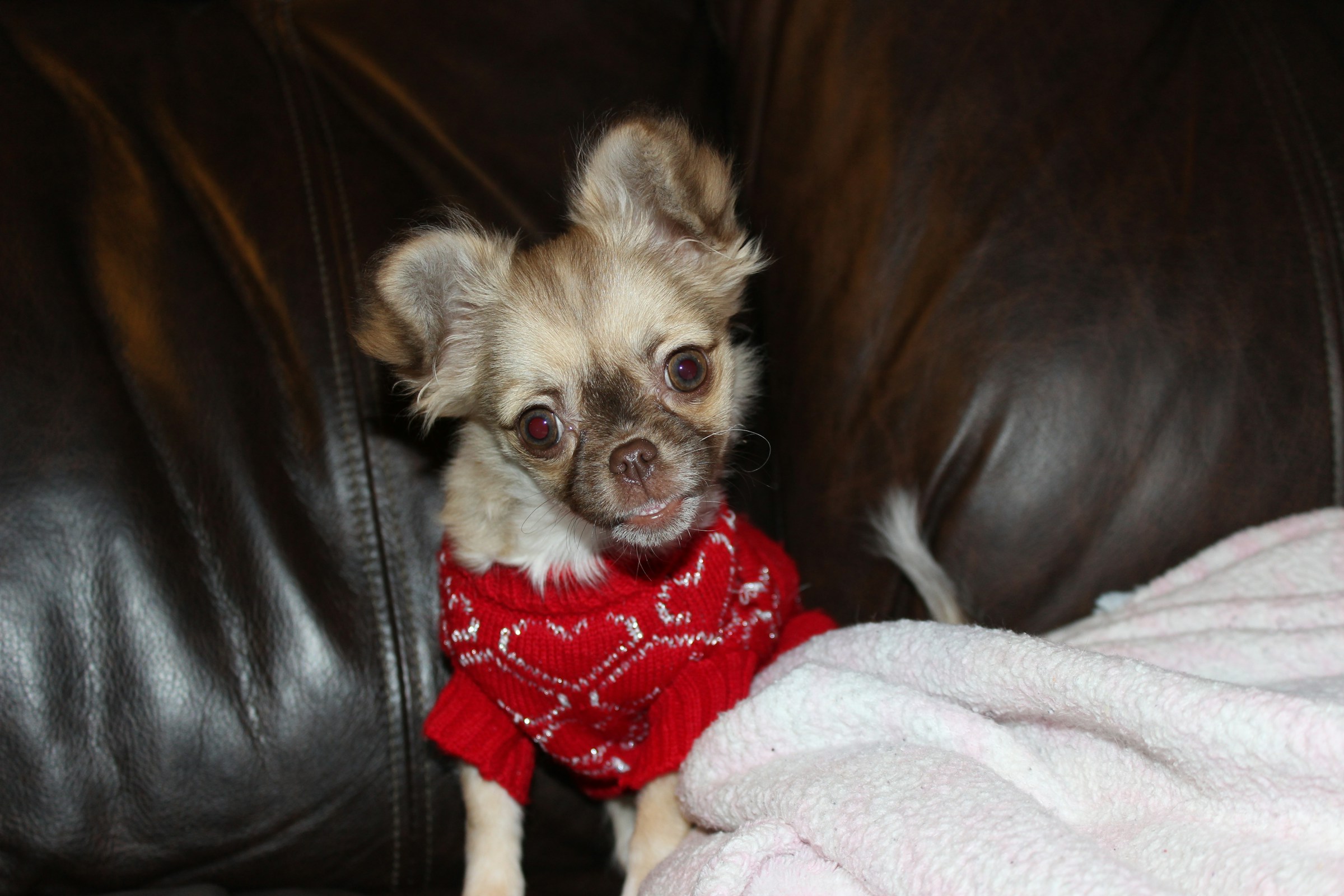
It’s 45 degrees. She’s wearing the little fleece you bought her, and she’s still trembling on the lawn, staring at you instead of doing her business. Then she trots back to the door. Mission not accomplished.
Of all the small dog breeds that hate cold weather, the Chihuahua may be the most famous for it, and owners know the scene by heart. “I have 2 tiny chis, they need coats when it’s 40 – 50 degrees outside, and yet they hate wearing them,” a Chihuahua owner wrote on r/dogs. Another owner, in Canada, described the routine: “Even with coats, they hate the snow covered ground and only stay outside long enough to do their business then it’s straight back indoors.”
Is a long-coated Chihuahua any tougher? Less than you’d hope. The breed standard asks for a dog not to exceed 6 pounds, and for long coats it says “undercoat preferred.” Real dogs often don’t deliver. VCA says “Chihuahuas, even long coated Chihuahuas, hate the cold”, because the coat has little undercoat and doesn’t store heat well. All that fluff is mostly for looks.
Dr. Aly Cohen, a veterinarian at Cornell’s Riney Canine Health Center, explains the size problem: “Smaller breeds, especially those with short hair or thin coats, lose heat quickly.”
The potty fix is a shovel. Purdue’s veterinarians suggest clearing a small path on your lawn. Mikkel Becker, writing for Vetstreet, goes further: shovel her usual spot as close to the ground as possible, or put down potty grass there, then praise her for going.
Rough lines on the thermometer – Above 45°F: cold shouldn’t be a problem for most dogs, says PetMD’s Dr. Jennifer Coates – Below 32°F: small, thin-coated, very young, old or sick dogs could be in danger – Below 20°F: every owner should watch for cold trouble, thick coat or not – Wind shifts all three lines; see the chart at #5
#13 Retired Greyhound with a full winter wardrobe
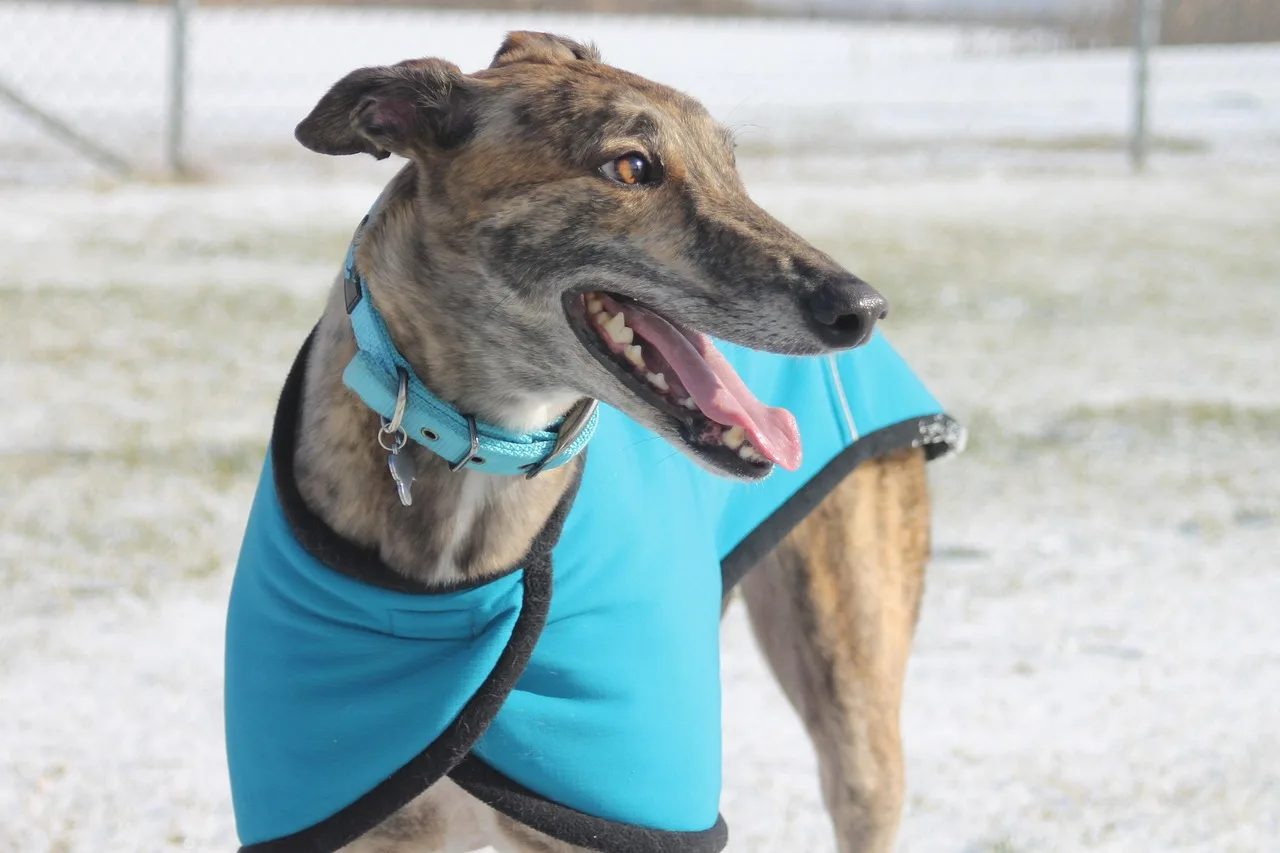
Ask a Greyhound owner what the dog wears in winter and you’ll get a list. Greyhound owners on r/dogs run through it: pajamas, a pullover, a raincoat, a heavy coat. “Mine has a coat because he’s a greyhound so they’re prone to getting cold,” one wrote, as if nothing more needed saying.
Nothing more does. In a small body-scan study summarized in the vet journal Clinician’s Brief, Greyhounds at an ideal weight carried only 7.2% body fat. The average dog at the same ideal weight carried 20%. Huskies and Rottweilers carried 31% and 32%.
Dr. Rebecca Ruch-Gallie of Colorado State University’s veterinary health system says sight hounds have a short coat without an undercoat and no fat under the skin. Thin coat, low body fat, nothing between the dog and the weather.
That’s why one coat isn’t enough. Greyhound Safety Net, an adoption group, says Greyhounds should wear a warm coat outside on cold days. In winter they will need one at night too, for sleeping warmly indoors, since the group expects its greyhounds to live as indoor dogs. The pajamas are part of that indoor plan.
What the Greyhound Adoption Action Alliance recommends:
- A coat that covers the chest and belly, where the breed has the least natural insulation
- Shorter, more frequent walks instead of one long outing, to cut total time in the cold. That means more trips to the door, and you’re stepping out more often too.
- Firm, thick bedding instead of a thin mat
That bedding matters more as the dog ages. The same group says joint stiffness from old racing injuries or arthritis becomes more common in older Greyhounds, and PetMD’s Dr. Brittany Kleszynski says cold weather can make arthritis even worse. If yours came off a Florida track, where racing ended on the last day of 2020, those track years may be showing up in its joints now.
#12 Dachshund belly dragging through the snow
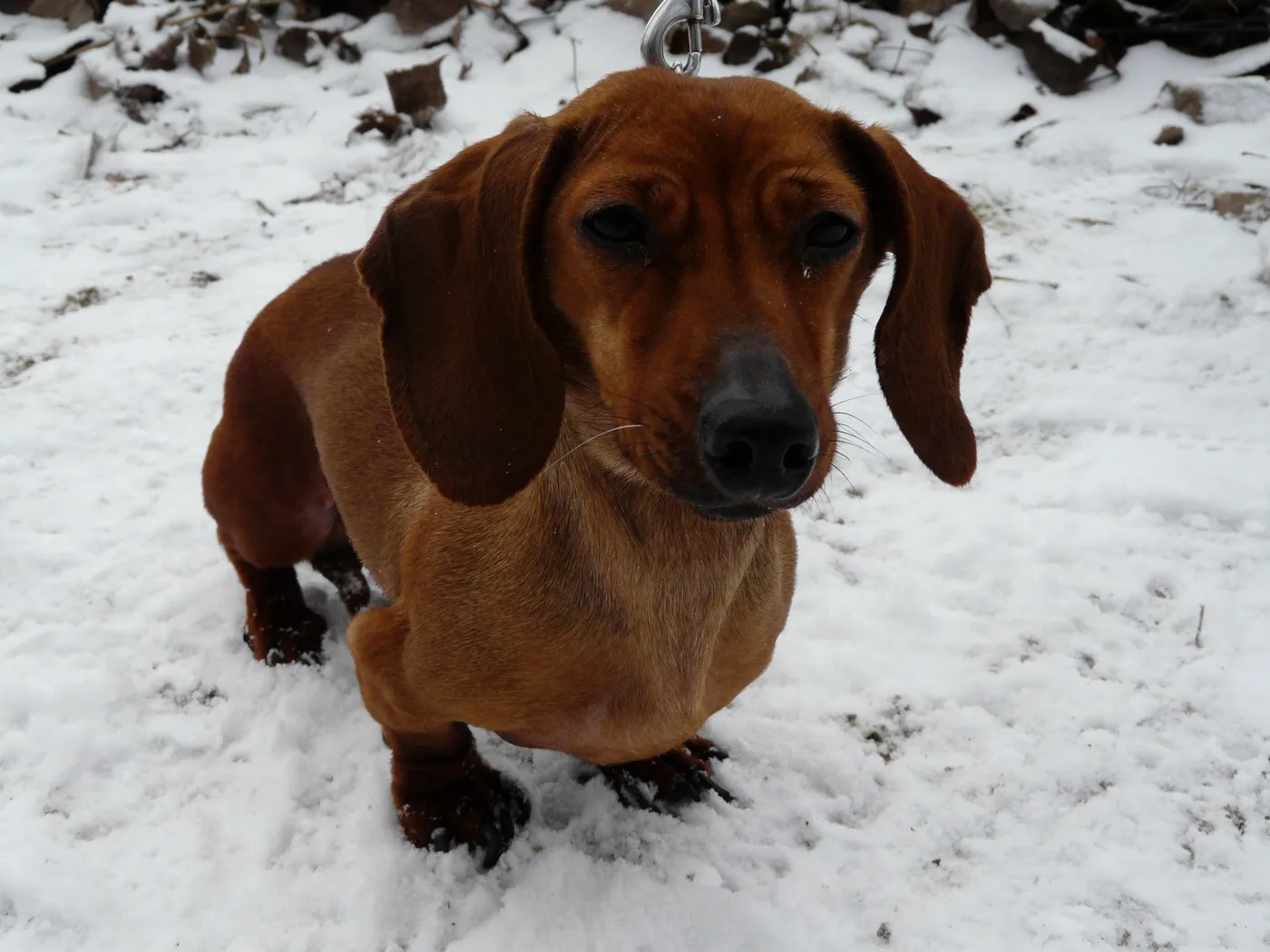
Four inches of fresh snow is nothing to a Lab. To a Dachshund, it’s a belly scrub.
The breed is built low to ground, long in body and short of leg, and one registry’s standard puts the belly about a third of the dog’s height off the ground. On a miniature, which tops out at 11 pounds, that’s not much clearance.
What surprises a lot of owners is that only one of the three Dachshund coats is supposed to have an undercoat:
| Coat | Undercoat in the standard | What it means in winter |
|---|---|---|
| Smooth | No; “short, smooth and shining” | VCA: “Smooth Dachshunds hate the cold” |
| Longhaired | Not mentioned | Looks warm, may not be |
| Wirehaired | Required; missing one is a fault | Best equipped of the three |
Fit is where winter plans fall apart. A coat cut for an ordinary dog can stop halfway down a Dachshund’s back and leave the belly bare, which is the part that’s actually in the snow. The AKC names Dachshunds, Basset Hounds and Corgis as dogs whose bellies easily touch snow and ice. It suggests measuring body length and chest girth before you buy, so look for a coat that wraps underneath.
The sidewalk brings its own trouble. Purdue’s vets say “Salt and ice can cause trauma to pads.”
Boots are the other half of the argument. Stonnie Dennis, a dog trainer and kennel owner in Winchester, Kentucky, with more than 30 years of training, isn’t a fan for most dogs. He says boots cut off what a dog feels through its feet and can make it slip. He makes exceptions for de-icers, heavy ice and dogs whose pads aren’t used to the cold.
Owners on Reddit’s Dachshund and dog forums land in a similar place. Several say they skip boots, use paw wax and keep trips short, and save boots for streets with road salt. If you do try boots, Best Friends Animal Society suggests starting with one boot and high-value treats, adding one at a time until all four are on.
#11 Toy Poodles and Doodles, fluffy but unprotected
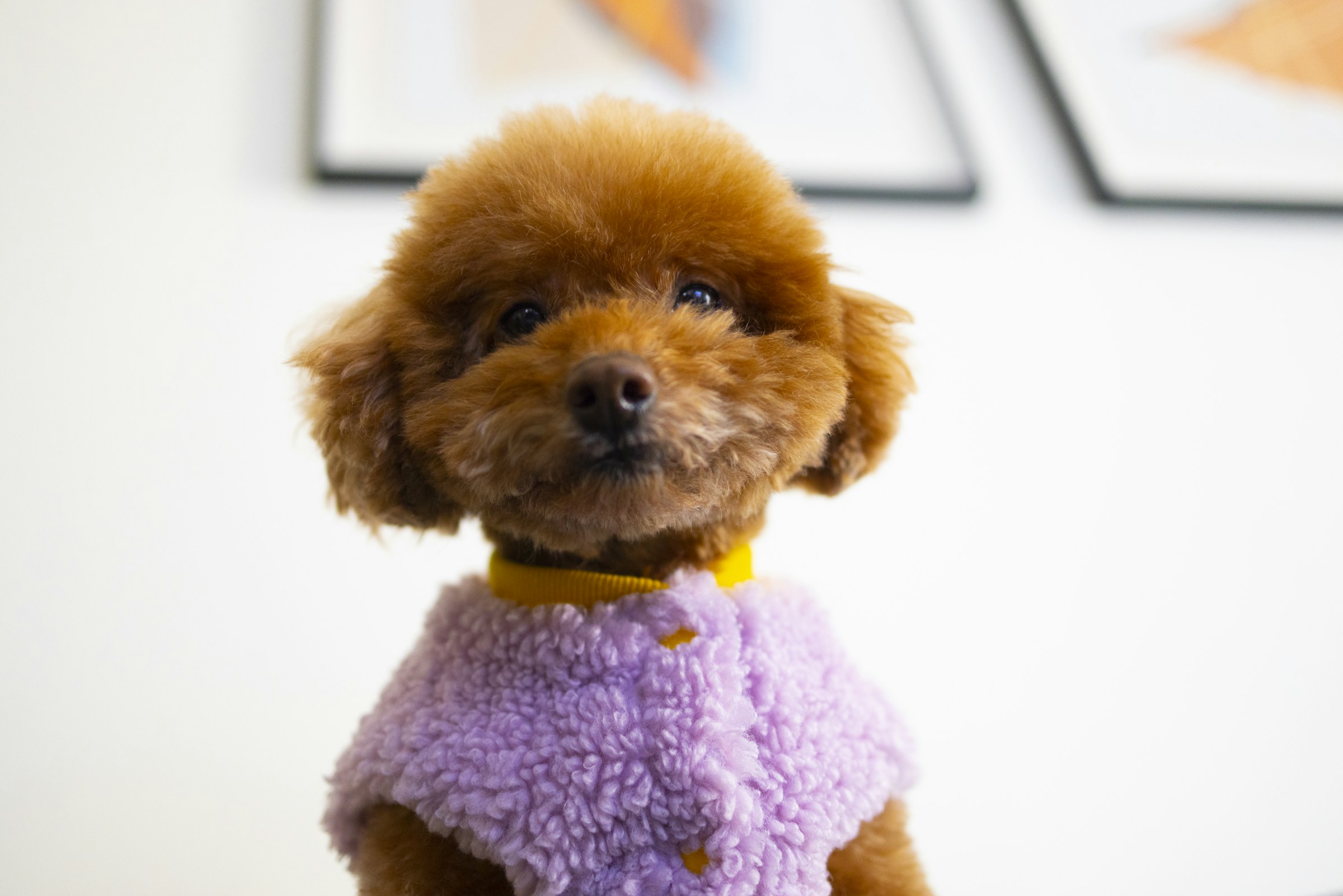
A Toy Poodle looks like it’s wearing a winter coat all year. It isn’t.
This is the biggest wrong guess about winter dogs: fluffy means warm. Poodles are the textbook example of a single coat, made of guard hairs with little or no downy undercoat. Guard hairs are the outer layer. The soft, warm layer underneath that a husky has is mostly missing.
Then comes the groomer. Poodles of every size, and any clipped dog, are on the AKC’s list of dog breeds that need a coat in winter, because a clip removes natural insulation. Book a short, tidy cut the week before a cold snap and you’ve given your dog a summer haircut for January.
The fancy show clip, oddly enough, started as winter gear. The AKC explains the old theory that Poodles retrieving ducks in cold water kept hair on the body to keep the shoulders and internal organs warm. That big mane over the chest was insulation.
Whatever coat your Doodle inherited, a short winter trim takes some of its warmth away. If you’d rather keep the easy-care short cut, plan on a coat to go with it.
#10 Yorkshire Terrier: hair, not fur
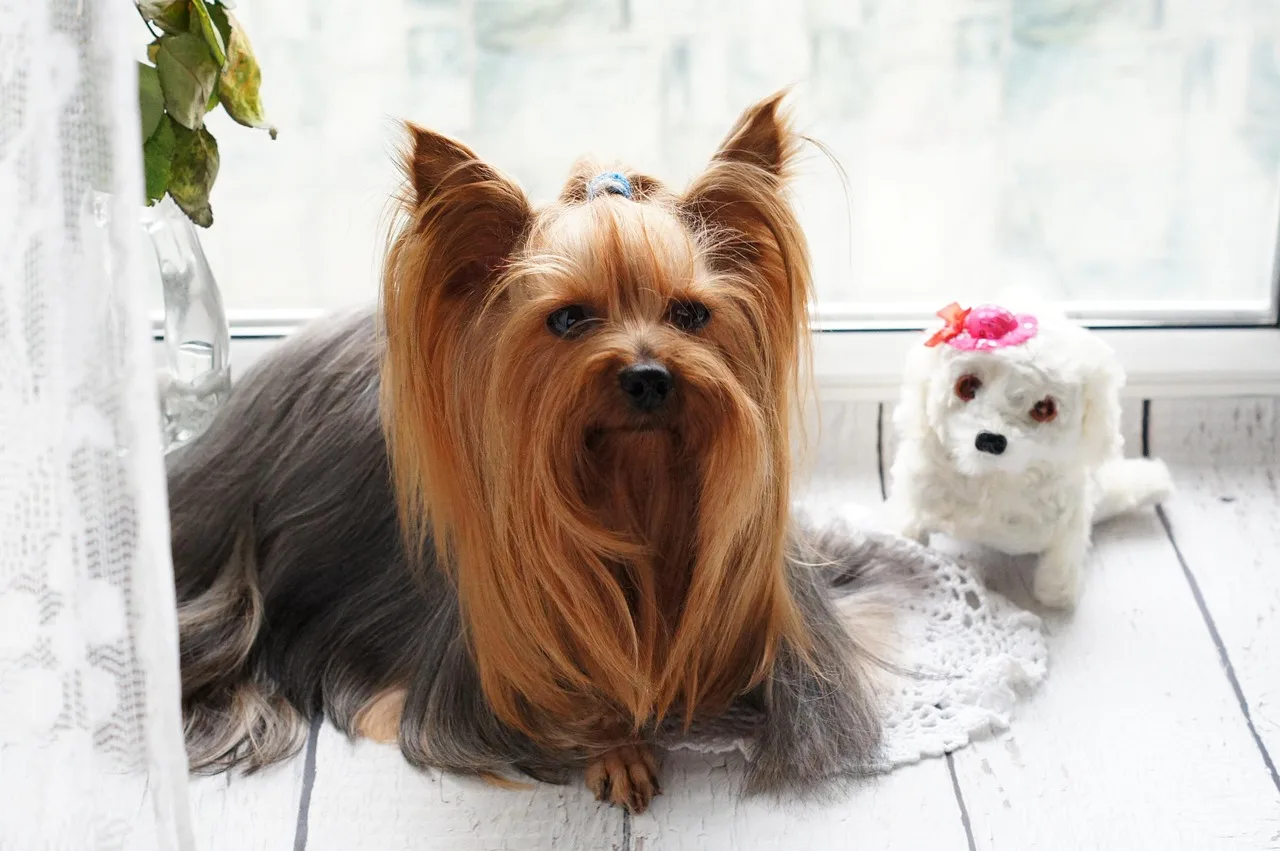
Run your fingers through a Yorkie’s coat and you’re closer to touching human hair than dog fur. The Yorkshire Terrier Club of America describes the coat as glossy, fine and silky, with “one layer and no undercoat making it very similar to human hair strands.”
Picture stepping out in sleet with wet hair and no hat. Now picture doing it in a body the standard says must not exceed seven pounds. That’s a Yorkie on a January morning.
So the coat makes sense. Getting it on the dog is another matter. An owner in a cold country summed up the bind on r/explainlikeimfive: “My dog struggles in cold weather, and will simultaneously refuse to walk if he’s cold and complain if I try to put a coat on him.”
Daniel Neale, a trainer at Shelby Semel Dog Training in New York City, builds up to the coat in small steps, starting with the coat lying across the room. One step surprises people: he practices the Velcro sound from a distance, long before the coat goes near the dog. His rule: “Coat, then food, every rep, and never a treat waved to lure a frightened dog into the neck hole.”
It’s slow, so start before the first frost, not on the morning you need it.
#9 Italian Greyhound that won’t go outside
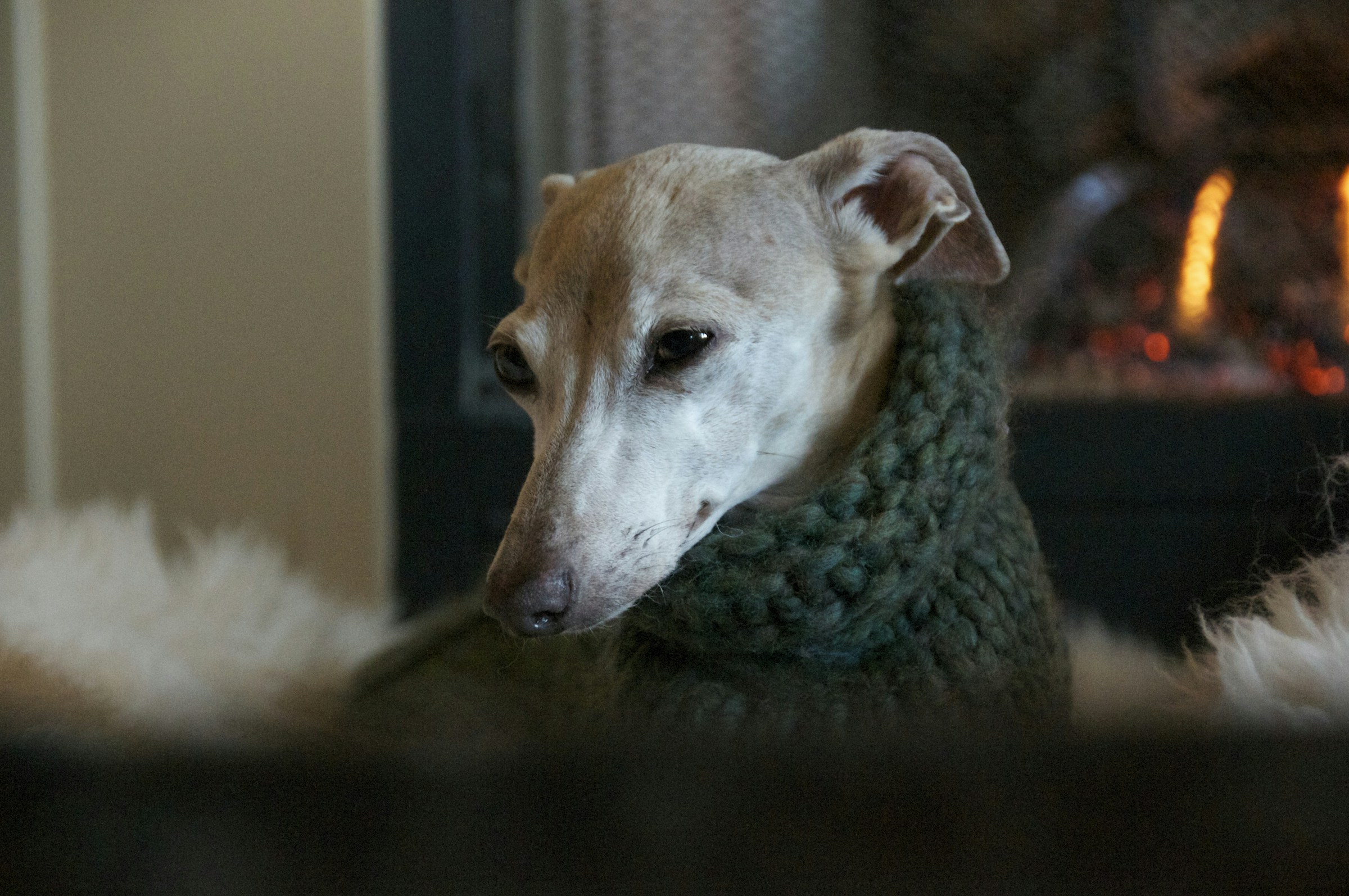
Some dogs shorten the potty trip. The Italian Greyhound may cancel it.
Mid-Atlantic Iggy Rescue says the breed is especially sensitive to cold, wet and windy weather, and that “it is difficult to persuade an IG to go out when conditions are less than optimal.” Coming from people who love the breed, that’s a strong warning.
The body explains it. An Iggy is one of the lean sighthounds, the same build as the Greyhound at #13: no undercoat, no padding under the skin. It just comes in 8 to 12 pounds, with far less dog to hold heat.
If your Iggy flat-out refuses, Pat Miller, a certified behavior consultant writing in Whole Dog Journal, suggests a bathroom out of the weather: “a shed with a dirt floor, a lean-to, a tent,” or an artificial-turf litter box indoors.
The order is the trick. She suggests teaching the dog to use the turf box outside first, then bringing it in. Start while the yard still feels normal. Wait until a February cold snap and you’re teaching a brand-new habit to a dog who’s already holding it. An indoor box also means indoor cleanup, so set it somewhere you can mop.
#8 Chinese Crested: mostly bare skin
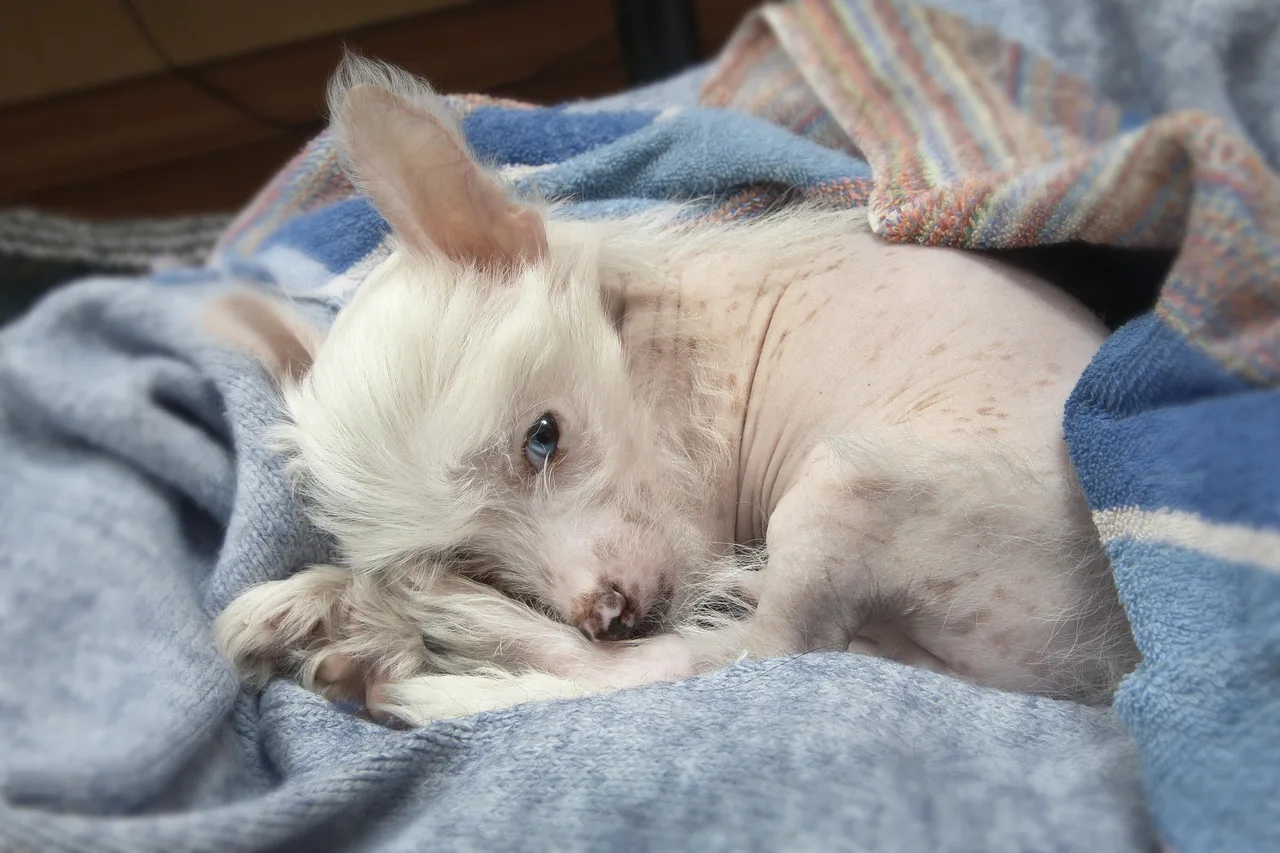
Winter care for a hairless Chinese Crested happens partly at the bathroom sink.
PetMD says the hairless variety has smooth, soft skin with silky hair only on the head, feet and tail. These dogs need a warm sweater or coat even on mild days, and owners must “regularly moisturize their skin.”
So winter is two jobs: cover the skin outside, keep it soft inside. A sweater does the first. The second is a routine, a few minutes of moisturizing that never comes up for a Lab. Don’t reach for your own lotion. VCA says pets lick off whatever goes on their skin, and some human lotions can cause drooling, vomiting and diarrhea, so ask your vet for a product instead.
The breed also comes in a powderpuff version, with a full coat of long locks. Same breed, very different winters. If you’re looking at Cresteds, ask which variety it is before you plan the wardrobe.
#7 Xoloitzcuintli, the hairless dog from Coco
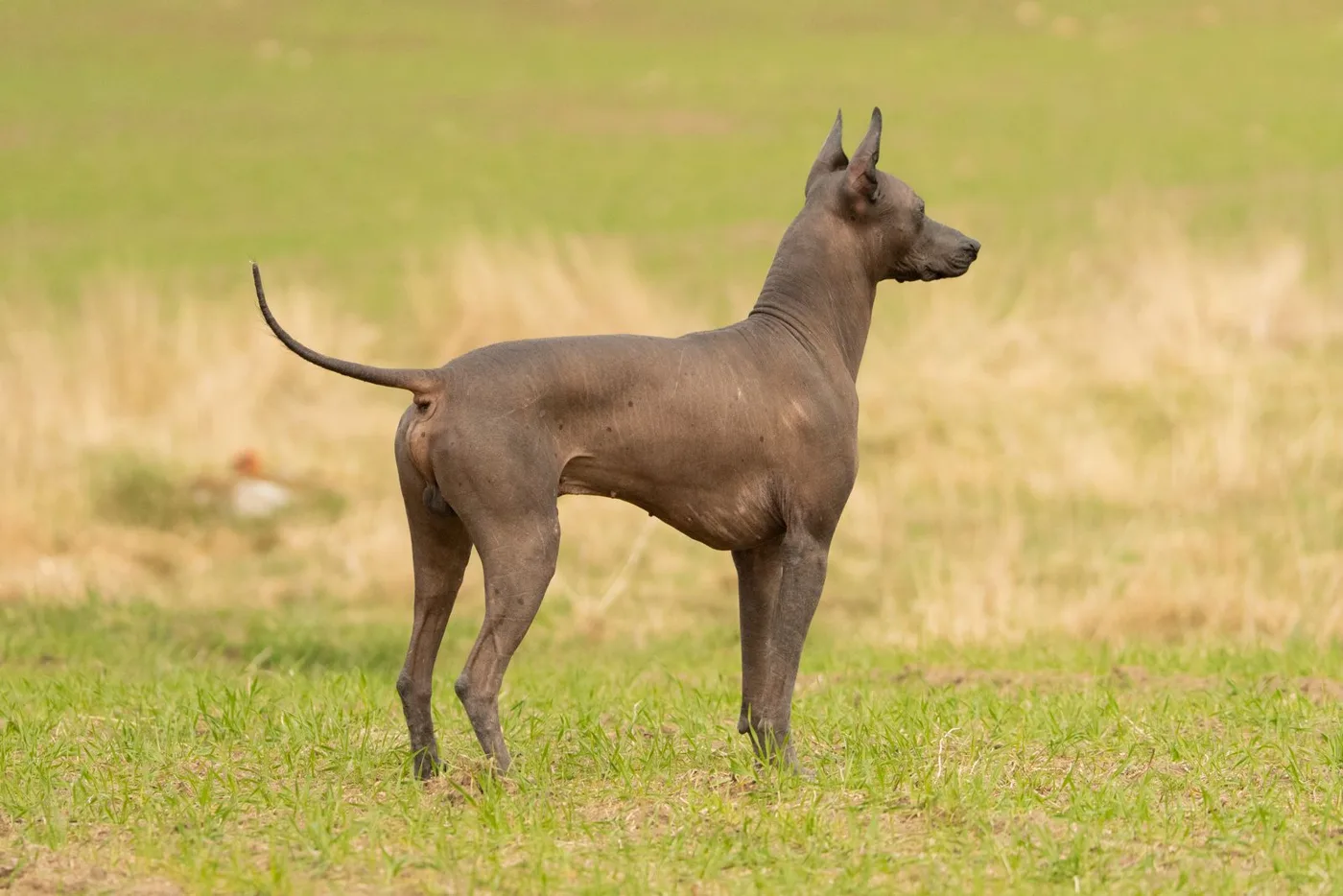
If you watched Pixar’s Coco, you’ve met a Xolo. Dante, the goofy dog with the tongue, is one, and the film sparked a wave of interest in adopting Xolos.
What the movie doesn’t show is that the breed isn’t always bare. The Xoloitzcuintli Club of America lists three sizes and two varieties, hairless and coated. Statues of the hairless type date back more than 3,000 years, so people have been keeping this dog warm for a very long time.
For a hairless Xolo, Sidewalk Dog’s advice is plain: a sweater or coat in cold weather. If someone in your life falls for Dante and you’ll be the one walking the dog in January, ask breeders and rescues about the coated variety too.
#6 Basenji that dreads wet grass
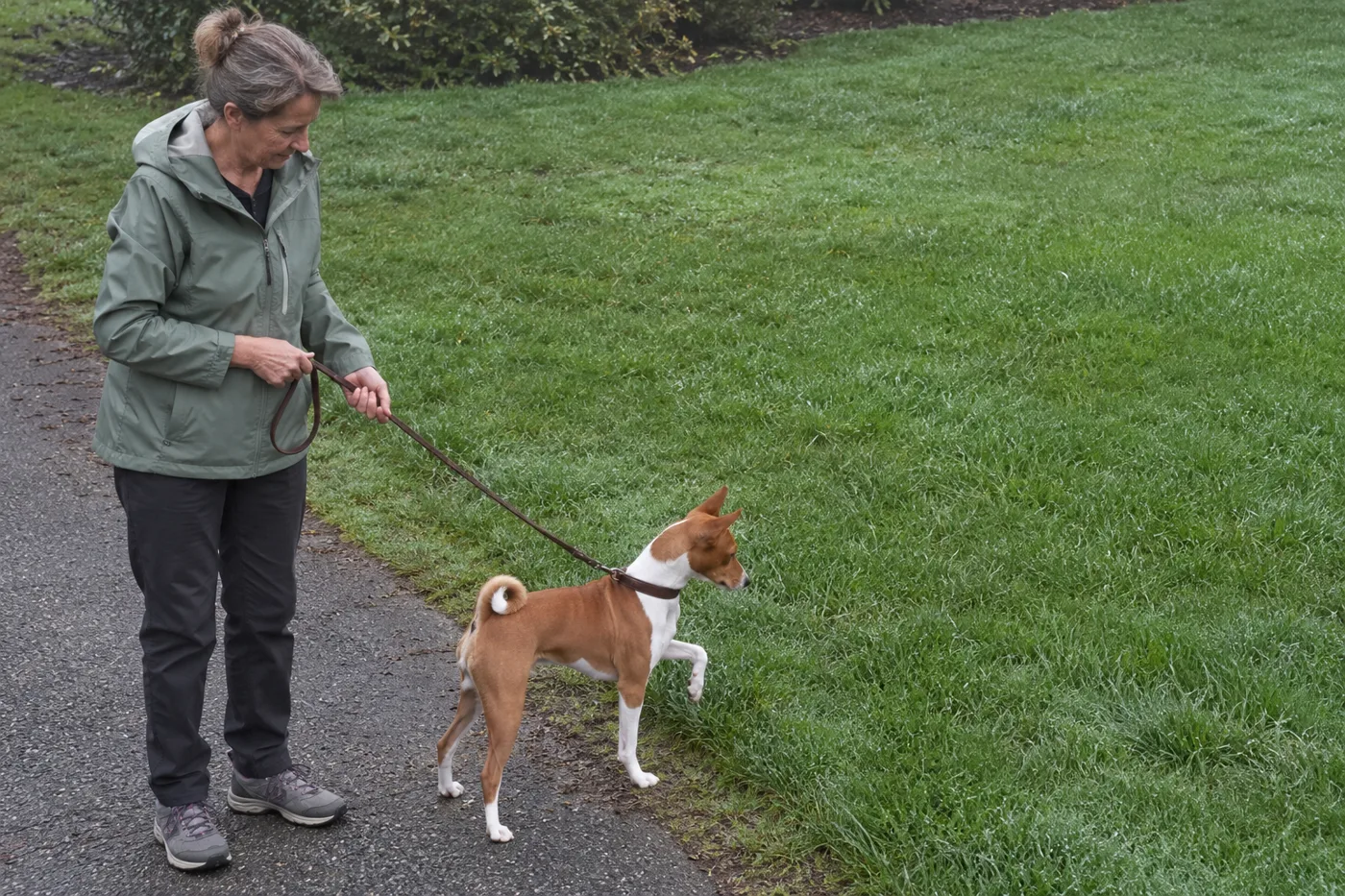
For a Basenji, the trouble starts at ground level.
Modern Dog says Basenjis almost universally dislike the water, and quotes an owner whose dog “acted like she was being tortured if asked to walk on wet grass.” Thawing slush, dew on a 38-degree morning, the puddle by the curb: all torture.
You’ll hear about it, too. The Basenji Club of America describes an ancient hunting hound from central Africa, 22 to 24 pounds, that doesn’t actually bark. “They yodel, chortle, and scream.” A Basenji with wet feet has opinions and the voice to share them.
Wet is its own problem. Colorado State’s Ruch-Gallie says dampness and humidity can make dogs feel colder, and PetMD notes rain or snow can quickly chill a dog even when the air is mild.
Dry matters as much as warm here. Cornell’s Dr. Cohen says even thick-coated dogs can use a thin, water-resistant layer in snow and freezing rain. For a short-coated hound that hates puddles, that’s the first thing to try. Keep a towel on the hook by the door for paws and belly.
#5 Hunting pointer that sprints, then won’t budge
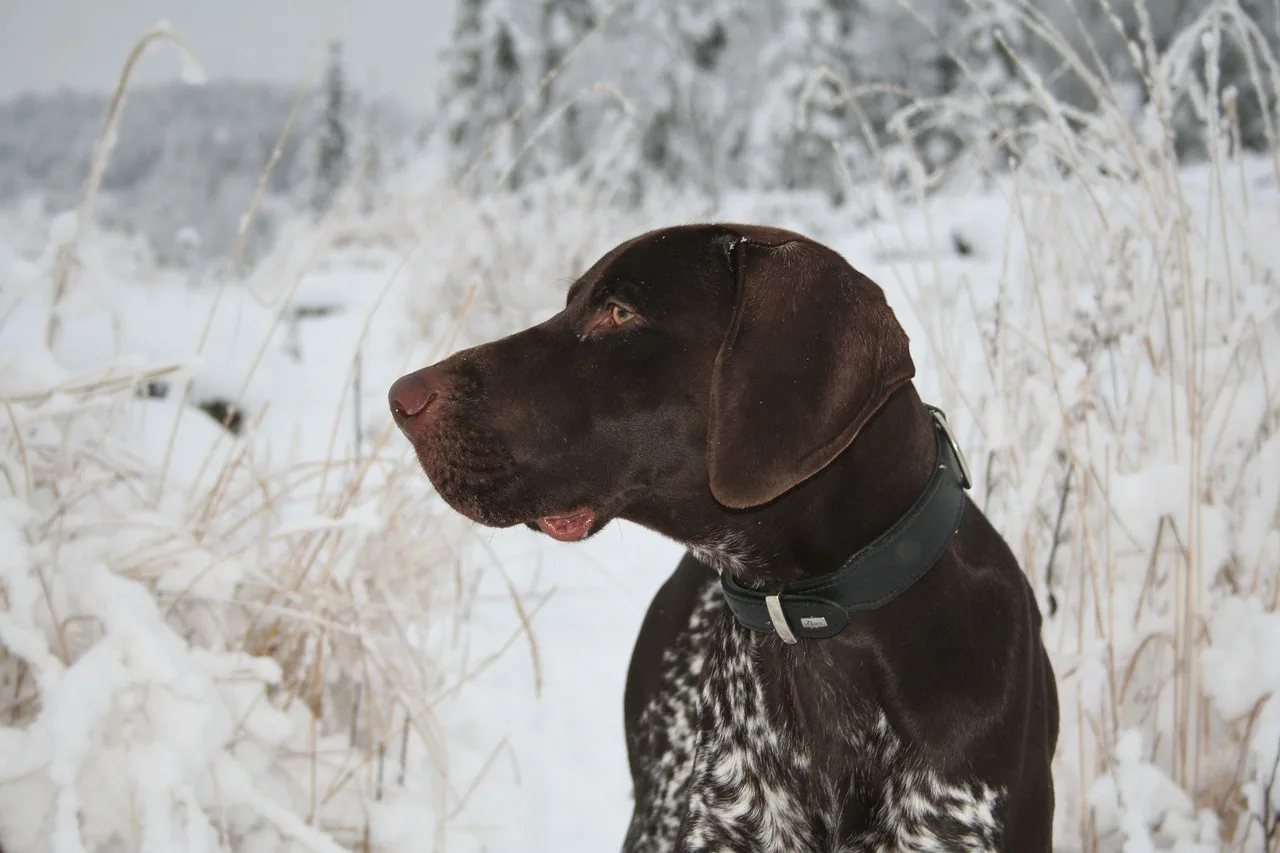
A German Shorthaired Pointer let loose on a frosty field doesn’t look cold at all. Clip the leash on for the walk home and, a few blocks later, the same dog starts lifting its paws.
Stonnie Dennis, the Kentucky trainer, explains the switch. “When you take a dog outside and they’re just on a leash, they don’t have a chance to get to moving and generate heat via metabolic action,” he says. Running, a dog makes its own heat. Plodding at your pace, it doesn’t. Kate Basedow, a licensed vet tech writing for Whole Dog Journal, puts it simply: “Just like us, dogs heat up as they exercise.”
The shorthair shows the problem clearly because it has the engine but not the insulation. The AKC lists it among short-coated, high-energy dogs that quickly become cold while walking or playing. A vet blog from Parnell says it outright: “Because of their short coat, they do get cold in the winter.”
Then there’s wind. It’s why a 40-degree morning can feel fine on Tuesday and miserable on Wednesday. Using the National Weather Service’s own formula, we worked out how much colder the air feels once the wind picks up:
| Thermometer and wind | Feels like to a person | Colder by |
|---|---|---|
| 40°F, 5 mph breeze | 36°F | 4 degrees |
| 40°F, 20 mph wind | 30°F | 10 degrees |
| 30°F, 20 mph wind | 17°F | 13 degrees |
| 20°F, 20 mph wind | 4°F | 16 degrees |
This is a human scale. The weather service built it on a model of the human face, measured about five feet off the ground, and it’s the same chart used to warn people about frostbite. No one publishes a dog version. Treat it as a guide to how raw a morning really is, not a safety line for any breed.
On the windy days, keep play in short bursts. Dr. Jolee Stegemoller, a veterinarian quoted by the AKC, says that when the wind chill is below 20 degrees, play sessions should run 15 to 20 minutes.
#4 Pharaoh Hound, the dog that blushes
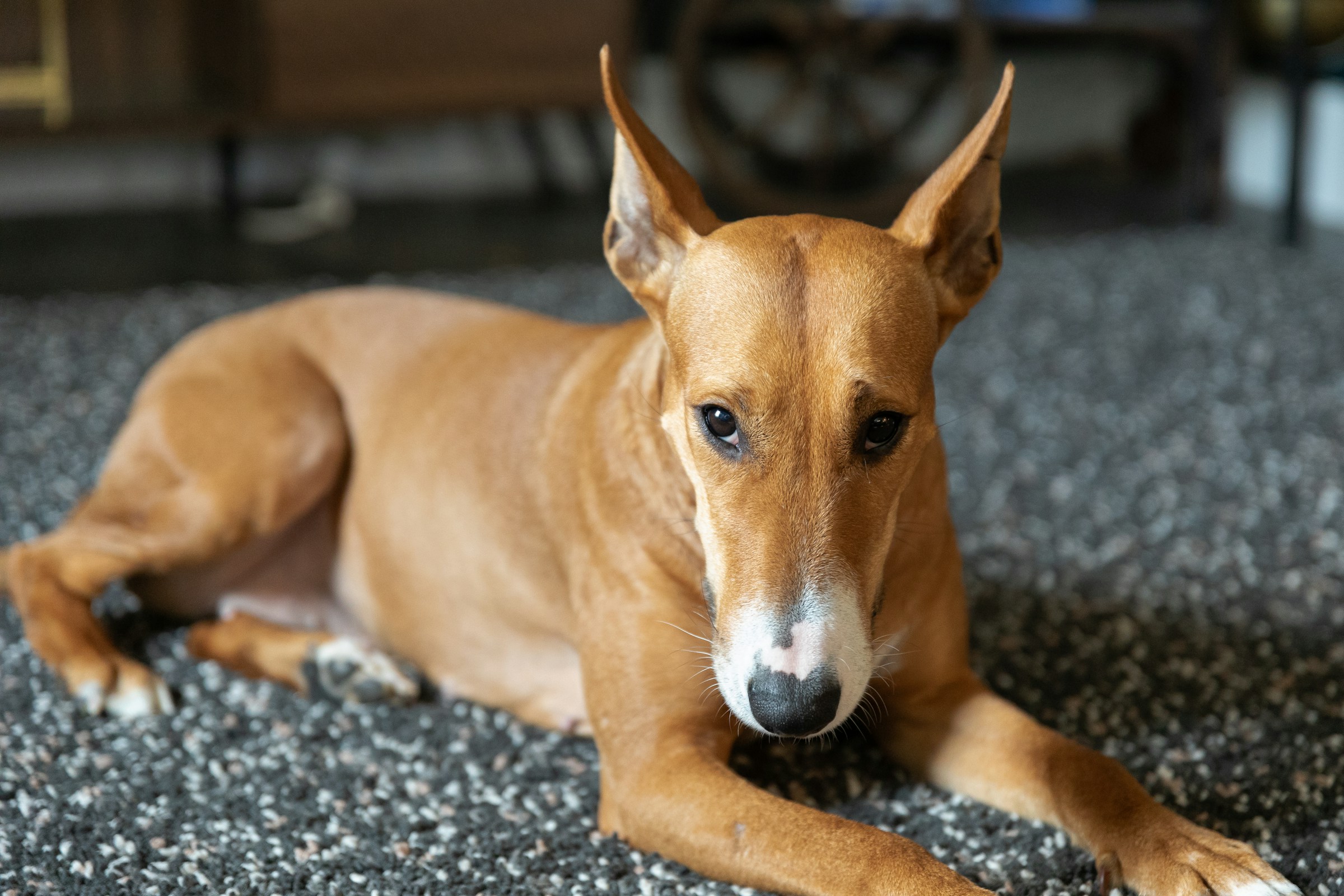
The Pharaoh Hound is known for something no coat can hide. When it’s happy or excited, it blushes, its nose and ears turning a glowing, rosy color. It’s also Malta’s national dog, renamed from the Maltese Rabbit Dog in the 1960s.
Purina says just as plainly that the breed “is not well equipped to cope with cold or wet.” Its coat advice is about as clear as winter rules get:
- Slow walk: coat on the whole time
- Fast run: coat on before, off for the sprint, back on after
That matches Dennis’s point about the pointer at #5. The tricky minutes are the warm-up and the cool-down: the stretch in the parking lot, the slow walk back to the car. That’s when the coat comes out of your pocket.
#3 Doberman: tough looking, thin coated
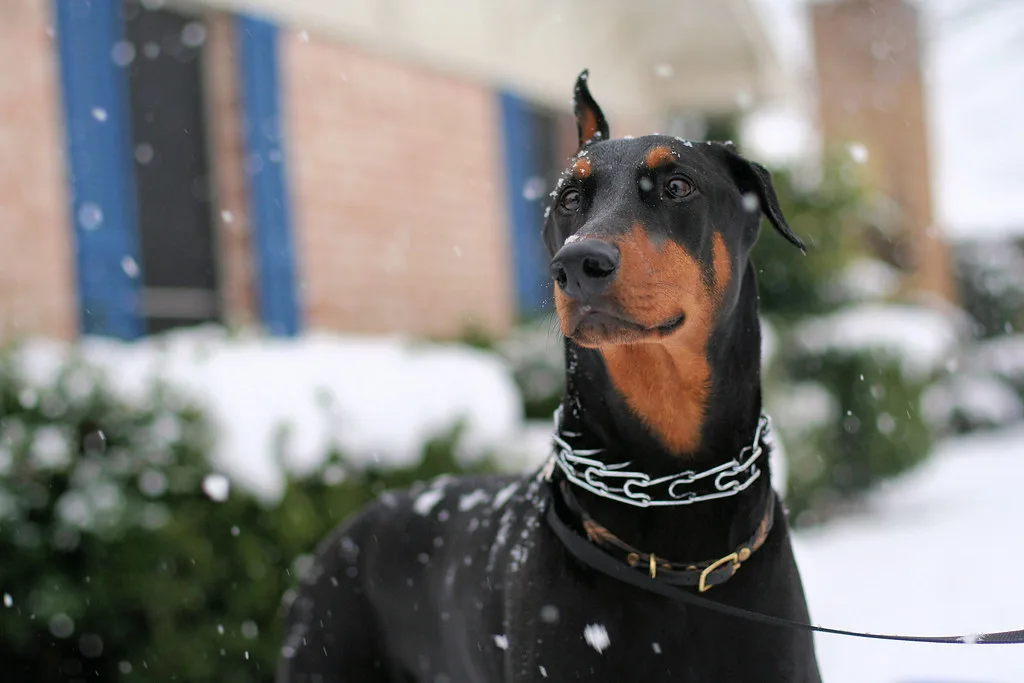
Nobody looks at a Doberman and thinks “delicate.” Then you see one shivering at the end of the driveway while you chat with a neighbor, and it makes sense.
The breed standard asks for a coat that is “smooth haired, short, hard, thick and close-lying,” and allows an “invisible gray undercoat on neck.” Invisible, and only on the neck. That’s the whole winter layer.
Orvis puts it plainly: a Doberman “can’t protect herself very well from the cold. The problem once again comes down to a short coat and a lean physique.”
Pace matters again. VCA says the Doberman enjoys cool weather for exercising but cannot live outside in it, and rates it a middling 3 out of 5 for cold. So yours may well love a snowy romp. The coat is for the still parts: the bus stop, the porch, the line outside the vet’s door.
#2 Great Dane, the giant in a thin coat
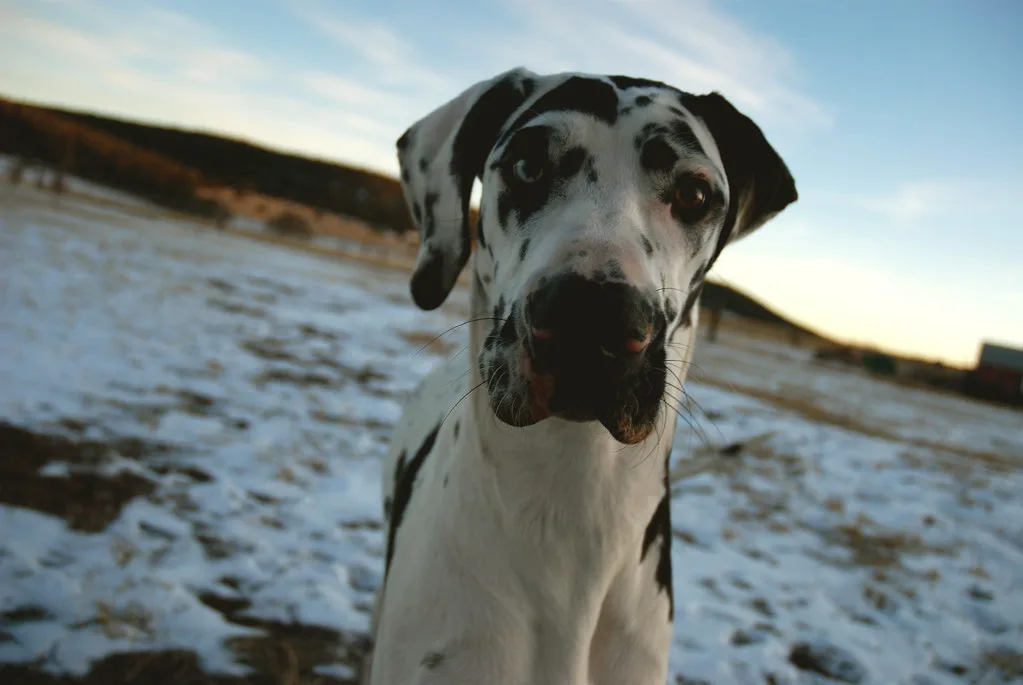
A dog that size looks like it should hold heat like a woodstove. Among big dog breeds that hate cold weather, the Great Dane is the one that surprises people most.
VCA gives Danes a range of 110 to 180 pounds, and still calls the breed intolerant of very cold weather because of its short coat. Orvis agrees: “With short coats and lean builds, Great Danes are sensitive to frigid temperatures.”
Weight isn’t what keeps a dog warm. Colorado State’s Ruch-Gallie says cold-tolerant northern breeds have “thick coats, undercoats, and extra layers of skin and fat.” A Dane has the height without the layers.
Compare it with dogs that really do come alive in winter. Blake Rashad, a master canine trainer in Lilburn, Georgia, says double coats exist because “a lot of these dogs are from very cold climates,” and names them: “Huskies, Newfoundlands, shepherds, Rottweilers, collies, and many, many more.” The Dane isn’t among them.
The fix is the same as for the Frenchie at #15: a coat on cold walks. It just takes a lot more fabric, and one that stops at the ribs leaves a great deal of Dane out in the wind.
#1 Pit bull or bully camped by the heater
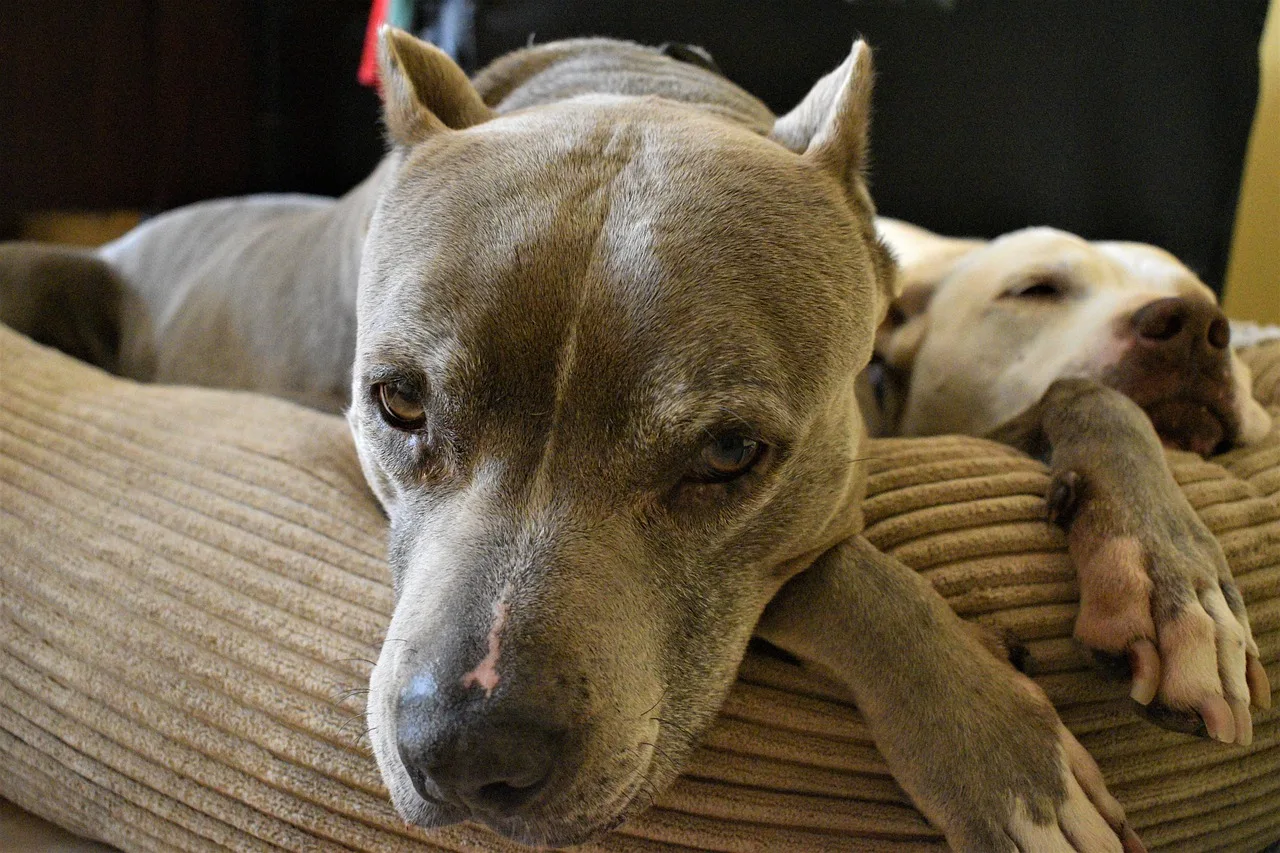
There’s a dog bed in front of the wall heater, and the second the heater clicks on, the dog is in it. Bully owners on Reddit describe exactly that, along with dogs that dive under a blanket at the slightest temperature change, and one that wears a hoodie from October through March.
One American Bully owner in the same thread says their dog hates the cold so much it will do its business on the sidewalk rather than step into the snow. That’s commitment.
The look fools people. The United Kennel Club’s American Pit Bull Terrier standard calls for males between 35 and 60 pounds, all muscle. But the coat is “glossy and smooth, close, and moderately stiff to the touch”, and a long coat is a disqualification. That’s a lot of dog in a very thin wrapper.
So is every pit bull a heater hog? No. “Does my breed get cold easily?” is the question behind that whole Reddit thread, more than 160 comments long. The honest answer comes from Cornell’s Dr. Cohen: “temperature tolerance varies dramatically from one dog to the next.” Breed, size, coat thickness, age and health all play a part. Two dogs that look alike on the leash can want completely different winters.
Your dog is already telling you. A dog that parks by the heater, burrows under every blanket, or would rather go on bare concrete than step into snow has answered the question for you. The same goes for a mixed breed with some bully in it, or none at all. Run any dog through this:
The four-line check for any dog, mutts included – No real undercoat, or a fresh short clip – Small or toy-sized – Lean, short-legged or hairless – Very young, older, or dealing with a health problem
Those traits come from the AKC’s list of dogs that need winter coats and from Cornell’s Dr. Brian Collins, who says “Very young animals, older animals and short-haired breeds are the most vulnerable.” Each yes is a reason to keep a coat by the door. A few yeses, and your dog hates winter no matter what its papers say.
The bottom line
A lot of winter misery comes from the jump, not the cold. Dennis points out that many dogs go straight from a 70-degree living room into a cold snap, and “it takes dogs a little while to mentally and physically adapt to different environments.” The first raw week is often the worst one.
Winter has an upside, too. Owners of reactive dogs, the ones that bark and lunge at other dogs, say winter is their easiest season because the sidewalks empty out. The first warm weekend brings the crowds back.
So when the paw goes up at the back door, ask what it’s reacting to. Cold, wet, wind and a slow pace each have a different fix.
Then hang the coat on the hook next to the leash, where you’ll see it before you open the door.
Bonus: Three winter habits worth starting before the first snow
Check the “feels like” number on your weather app, not just the big one. On a breezy morning, the two can be ten degrees apart before you’ve found your gloves.
Walk the sunny side of the street. Colorado State’s Ruch-Gallie says “Sunshine, particularly without a breeze, can help them keep warm,” so a sheltered, sunlit route beats an open, windy one at the same temperature.
Keep an enzymatic cleaner near the back door. Becker recommends one for winter accidents and says not to punish them.
Questions people also ask
Do Chihuahuas feel the cold?
Yes, and more than their size alone suggests. VCA Animal Hospitals says Chihuahuas, even long-coated ones, hate the cold, because the coat has little undercoat to hold heat, and rates the breed 1 out of 5 for cold. The breed standard prefers an undercoat on long coats, but a long coat doesn’t make a Chihuahua cold-proof.
How cold is too cold for a dog?
There’s no single number that fits every dog; Whole Dog Journal’s Kate Basedow says there is no hard-and-fast rule. As a rough guide, PetMD says cold shouldn’t trouble most dogs above 45°F, small, thin-coated, very young, old or sick dogs could be in danger below 32°F, and every owner should watch for problems below 20°F. Cornell’s Dr. Aly Cohen goes further, suggesting only very brief bathroom breaks below 20°F. Wind and wet make any temperature feel colder, so a breezy 40°F can feel like freezing.
Does my dog actually need a coat in winter?
Not always; it depends on the dog. Cornell’s Dr. Brian Collins says small and short-haired dogs may need coats for short walks in cold, windy weather, while Best Friends Animal Society notes that thick-coated dogs used to the cold may overheat in one. Even for a thick-coated dog, Cornell’s Dr. Aly Cohen says a thin, water-resistant layer can help it stay dry in snow and freezing rain.
Are dog boots necessary in winter?
Not for every walk. Cornell’s Dr. Collins ties dog booties to longer outings, and for short trips VCA suggests a thin layer of paw balm just before you head out; some owners use paw wax the same way. Either way, wipe the paws with warm water after salted sidewalks, because de-icers are toxic if your dog licks them off.
Why does my dog lift its paws on winter walks?
It’s often a sign your dog is too cold. Cornell’s Dr. Collins says a dog picking up its feet or reluctant to walk may be too cold, and Colorado State’s vets suggest checking the paws for ice balls and salt damage. Trainer Stonnie Dennis adds his own view: on a slow leash walk, a dog isn’t moving enough to make heat.
How long does it take a dog to get used to cold weather?
Anywhere from about a week to two months. The USDA’s animal health agency says it can take 7 to 60 days for a healthy dog to adjust to temperatures below 45°F, depending on body size and shape, coat, body condition and health. Best Friends Animal Society gives the same range, one week to two months.