From the Lab pacing by the door to the Border Collie that trashes your car on a quick errand, see which breeds take being left behind hardest and what actually helps.
The dog at #1 isn’t missing you one bit, and once you see why, you’ll read every chewed cushion differently.
You pick up your car keys, and across the room a head lifts off the couch cushion. By the time your jacket is zipped, she’s at your feet, staring at those keys like they owe her money.
Plenty of dog breeds that hate being alone are simply missing you. Others are bored and about to find a hobby, usually something you own. Which kind she is tells you whether it’s how she’s made or what changed around her. A lot has changed: the share of American workers who mostly work from home has fallen from 17.9% at its 2021 peak to 12.9% in 2025, a drop of about 28%.
Here’s where each breed sits in the AKC’s 2025 popularity ranking of 202 breeds, and what usually drives the trouble:
| Breed | AKC rank, 2025 | Missing you, or bored? |
|---|---|---|
| #15 Labrador Retriever | 2 | Missing you, mildly |
| #14 Golden Retriever | 3 | Both |
| #13 German Shepherd | 4 | Both |
| #12 French Bulldog | 1 | Missing you |
| #11 Dachshund | 5 | Missing you |
| #10 Toy and Miniature Poodle | 6 (all sizes) | Missing you |
| #9 Chihuahua | 24 | Missing you |
| #8 Siberian Husky | 30 | Both, plus an escape plan |
| #7 Cavalier King Charles | 12 | Missing you |
| #6 Whippet | 48 | Missing you |
| #5 Australian Shepherd | 14 | Bored |
| #4 Belgian Malinois | 32 | Bored, and wants you there |
| #3 Jack Russell | 60 (as Russell Terrier) | Bored |
| #2 Doodles and Cockapoos | Not ranked (mixes) | Missing you |
| #1 Border Collie | 26 | Bored |
Table of Contents
#15 Labrador Retriever waiting by the door
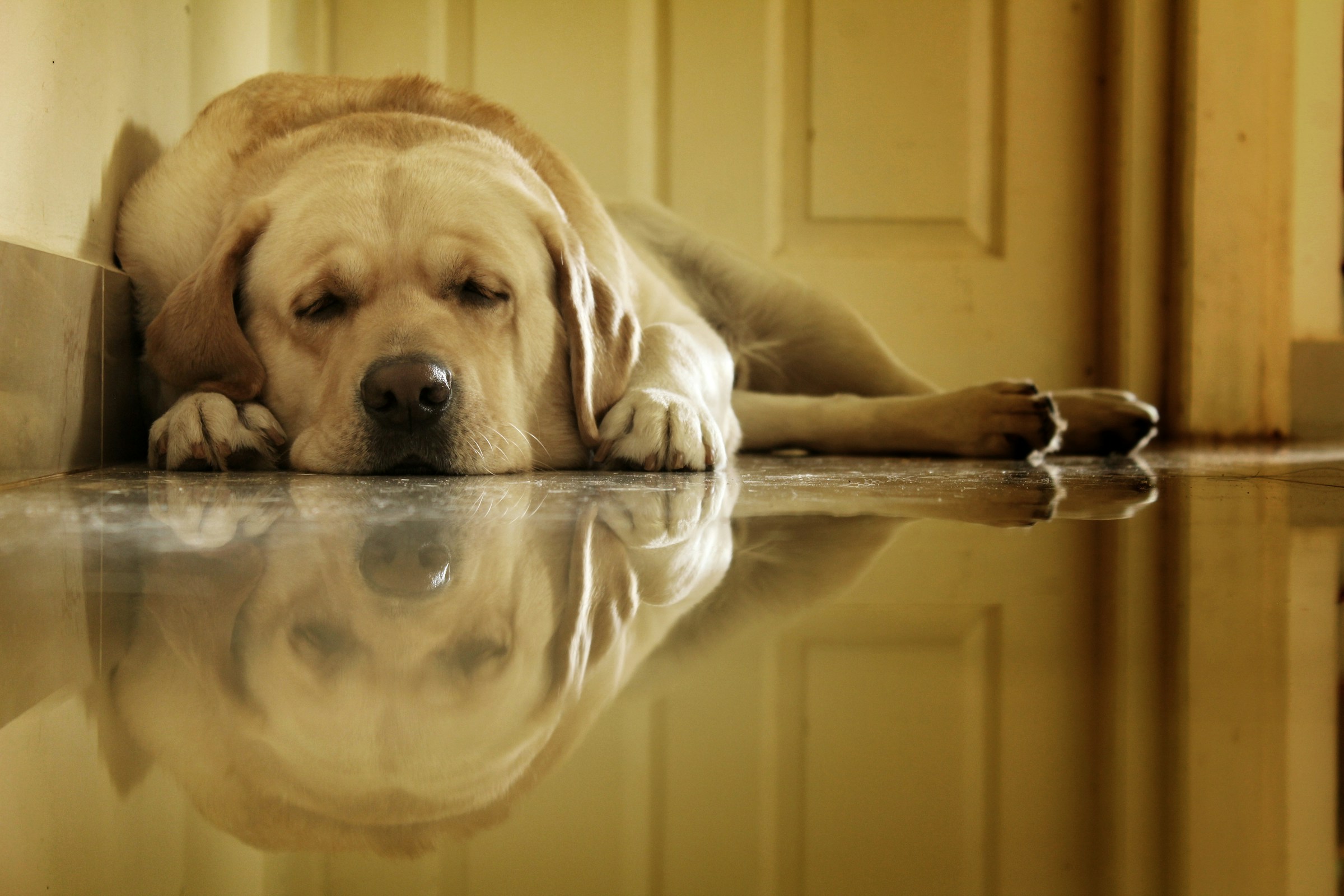
A Lab parked at the front door at five o’clock is a velcro dog, and usually that’s all she is. PetMD’s vets put Labradors on the list of sporting breeds naturally inclined to be clingy.
The same page draws the line that matters most: “Clingy dogs want to be around you when you’re at home, but they don’t panic when you’re not there.”
The clinginess comes from the job. The first Labs worked Newfoundland’s fishing boats, where the AKC says they “hauled nets and long lines.” They dove for cod that slipped off the hook and even fetched fishermen’s hats. That’s a dog built to spend the whole day within arm’s reach of a person, busy.
Here’s the surprise: Labs come out well ahead of Miniature Poodles when left alone. In a 2019 study, owners of more than 5,000 dogs filled out the same detailed behavior questionnaire. Labs averaged 0.55 for separation trouble, against 0.93 for Miniature Poodles. Lower is calmer.
Orvis’s guide even puts a number on it: “An easygoing Lab can usually manage about six hours alone.”
Notice the word easygoing. A young Lab with nothing to carry all morning is a different animal, and the state of your sofa will tell you which one you’ve got.
Before you head out, give her something to bring back. A round of fetch speaks the language her great-great-grandmothers learned on the docks.
#14 Golden Retriever following you room to room
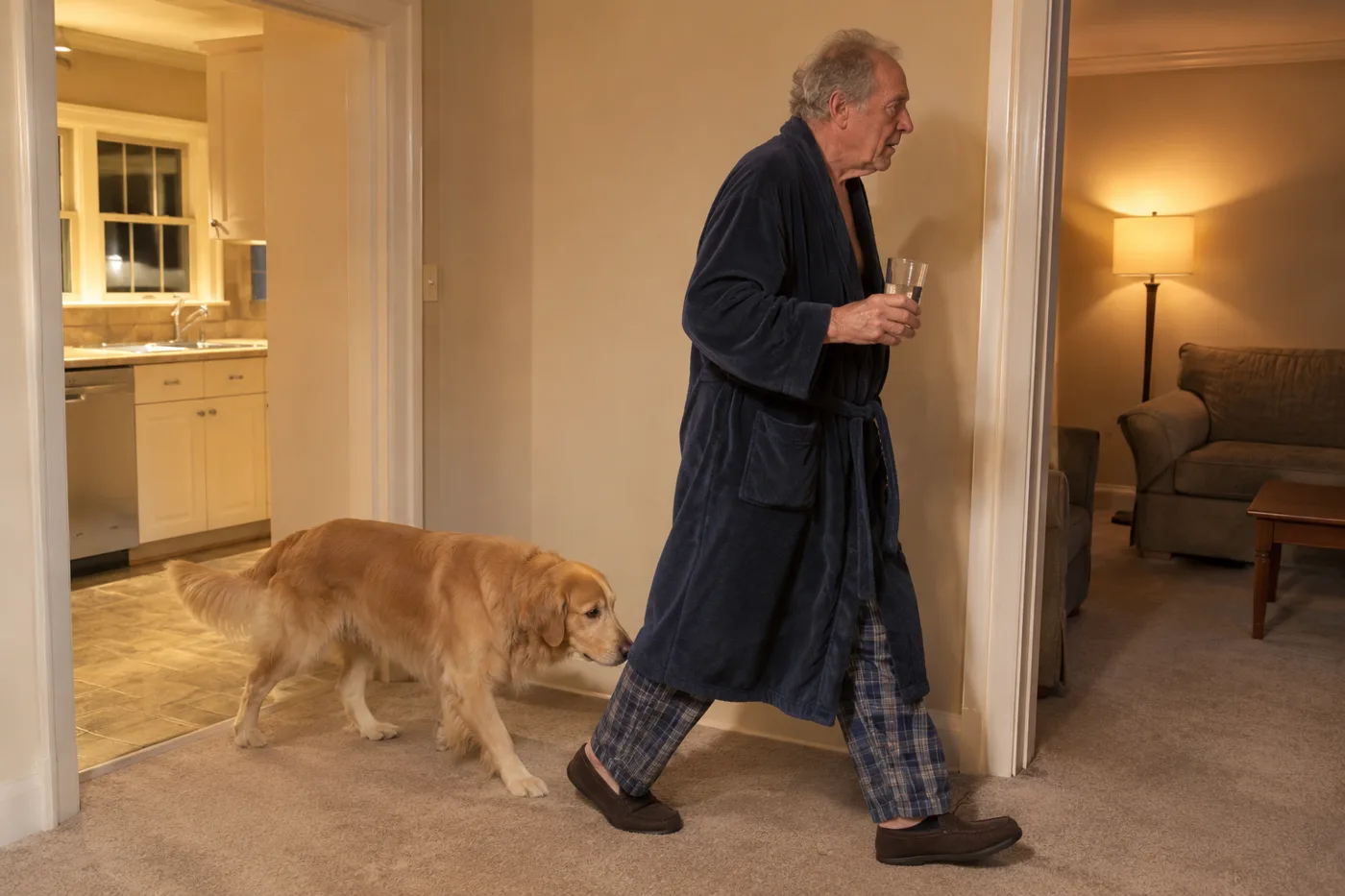
You get up for a glass of water and hear nails clicking on the floor behind you. You sit back down, and the clicking stops at your feet. Goldens are one of the breeds owners keep naming when Reddit threads ask about “shadow” dogs.
Most breed pages skip the good news. Following you around isn’t a warning sign. The Merck Veterinary Manual says dogs that trail family members through the house “are at no greater risk of separation anxiety than dogs that do not display these behaviors.”
The real risk is isolation, and the breed’s own club is unusually blunt about it. The Golden Retriever Club of America says Goldens “need to live as members of the family.” Then it spells out what happens when they don’t: “Isolated from human companionship, they become bored and stressed, and this produces behavior such as barking, chewing, digging, and hyperactivity.”
It goes further. In extreme cases, the club says, those behaviors end with the dog surrendered to a shelter or rescue. That’s the people who love Goldens most putting the word “shelter” on their own welcome page.
So a Golden left alone too long gets both kinds of trouble at once: she misses you, and she runs out of things to do.
The club’s fix is practical. If a young puppy will be alone for more than half a day, line up a dog walker or doggy daycare.
#13 German Shepherd guarding an empty house
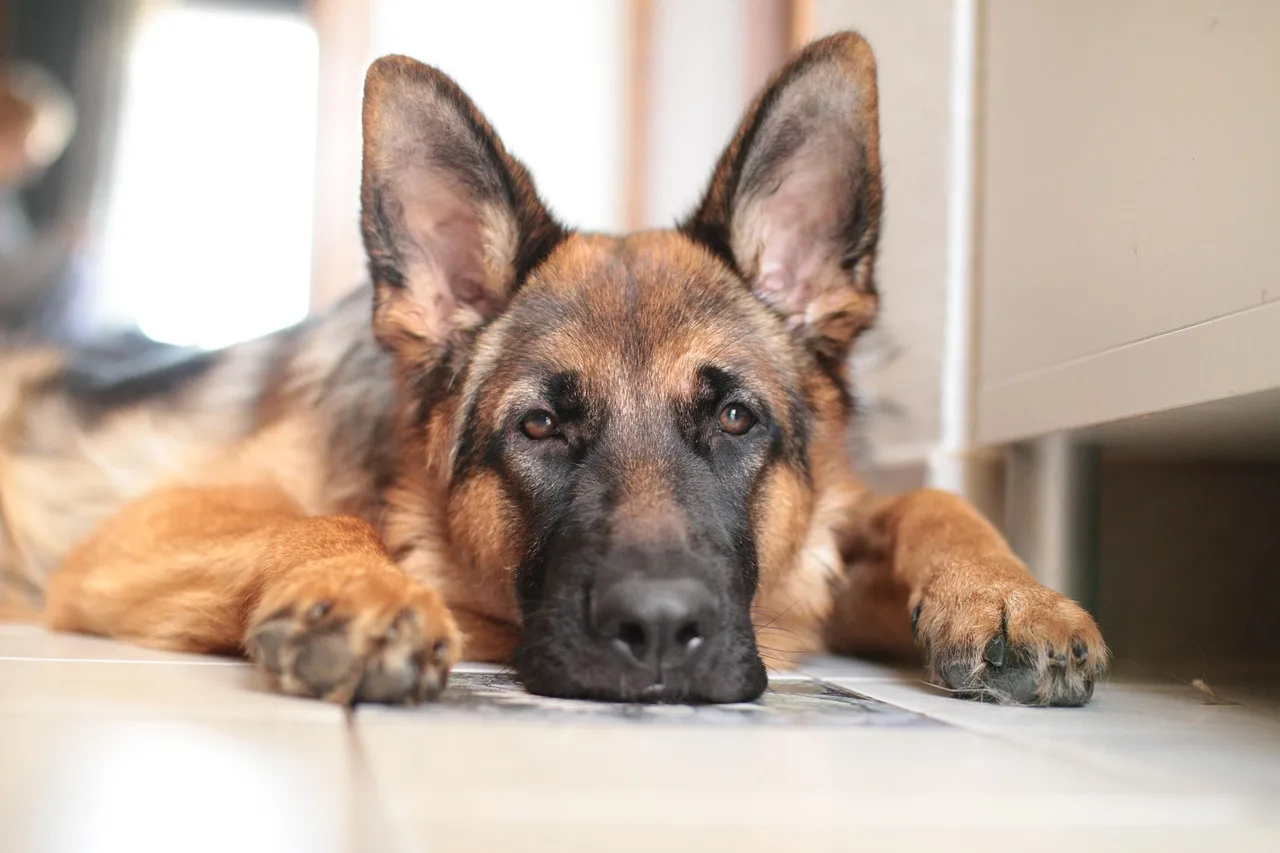
Some breed guides tiptoe around this. Orvis doesn’t:
“German Shepherds do not tolerate long periods left alone. Welcome your shepherd into your home and family, or choose another breed if your lifestyle will not allow it.” Orvis German Shepherd breed guide
That’s the missing-you half. The same page covers the other half. “Daily vigorous exercise is a must,” it says, and without it a Shepherd may “turn to destructive chewing, and possibly neurotic barking.”
This working dog also “wants a job to do, however small or inconsequential.” So a Shepherd alone all day can be lonely and out of work at the same time.
The useful part is “however small.” The job doesn’t have to be grand:
- Carrying the newspaper in from the driveway
- Finding a toy you hid behind the recliner
- Holding a “wait” while you put on your shoes
If you give him nothing, he’ll pick a job himself. Usually it’s patrolling the front window and reporting every mail truck in a voice the whole street can hear.
#12 French Bulldog who can’t handle four hours
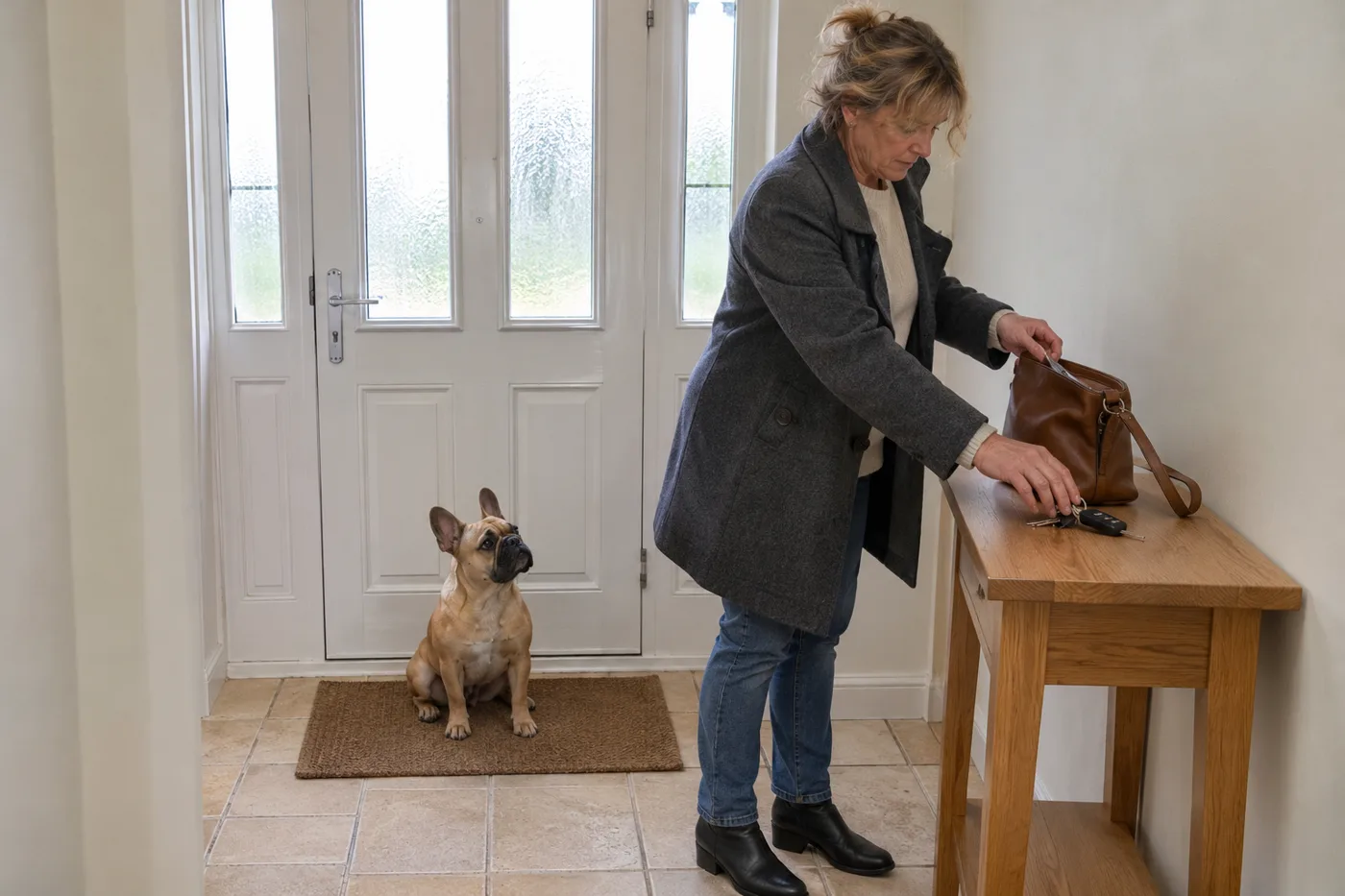
America’s favorite dog has one of the shortest leashes when it comes to alone time. The French Bulldog topped the AKC ranking for the fourth year running.
PDSA, the UK veterinary charity, doesn’t hedge: “Ideally, you should never leave your dog for more than four hours and some Frenchies can’t cope with shorter periods than this.”
The reason is what the breed was made for. PDSA says Frenchies “were originally bred as a ‘companion’ breed, which means they’re very people orientated dogs and dislike being left alone for even short periods.” This companion dog has no herding urge to burn off and no work instinct to feed. Its job is you.
Four hours covers a haircut and a grocery run. It doesn’t cover a workday, a long drive to see family, or a full day of sightseeing.
How many hours is too many – Purina UK: no adult dog alone for more than four hours in a row – The AKC, quoting veterinarian Dr. Bethany Hsia: about four to six hours for most adult dogs – Dr. Virga, a veterinary behaviorist quoted by the AKC: no more than six to eight hours alone without a chance to relieve themselves – For a full workday, Purina UK and the AKC both point to a midday dog walker or doggy daycare. The average US dog-walking visit runs about $25.63 for roughly 31 minutes.
#11 Dachshund too attached to let you leave
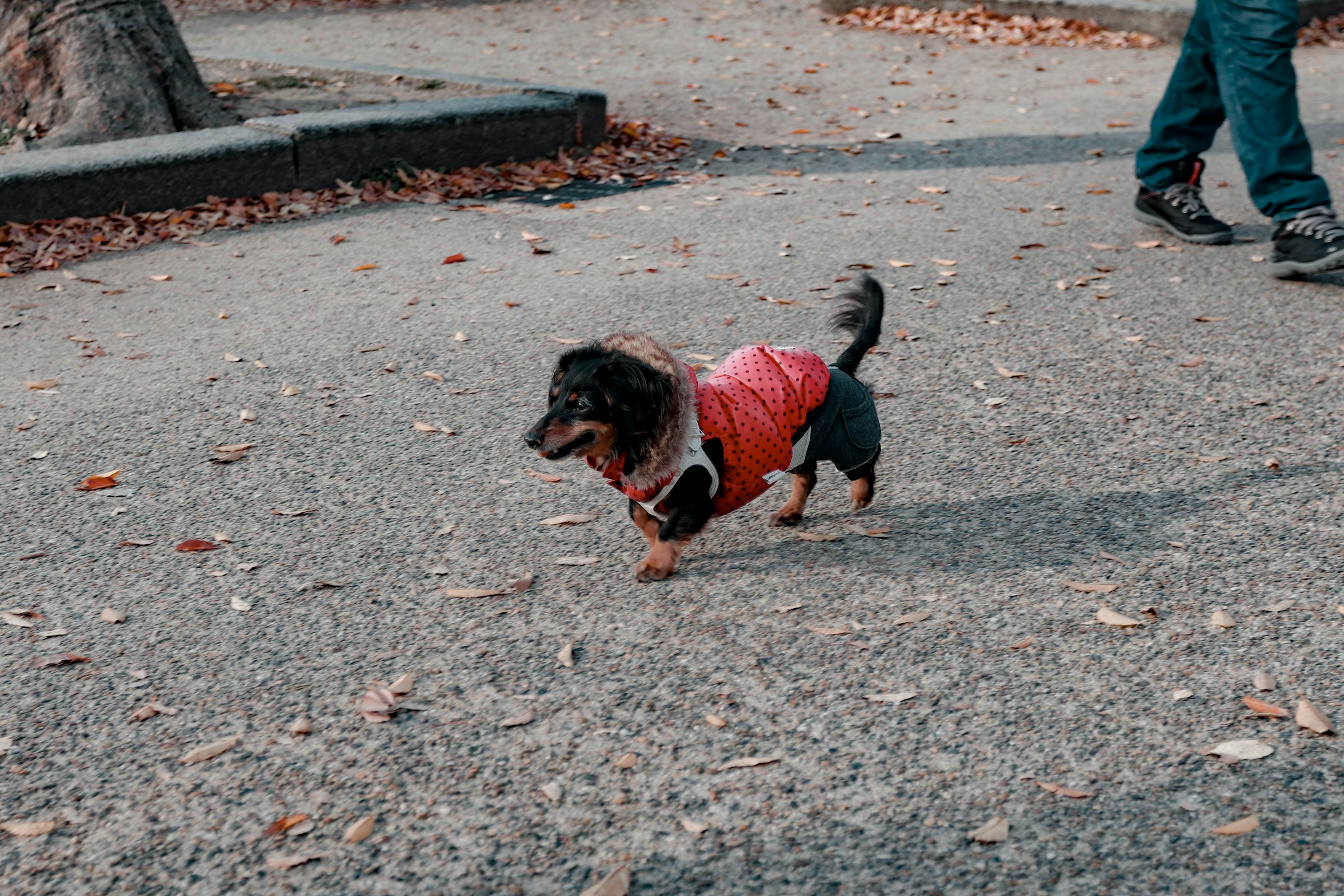
You may have read two breed lists and found your Dachshund called clingy on one and independent on the other. You’re not imagining it.
PDSA says Dachshunds “love human company so can develop separation anxiety if left alone,” and do best where someone’s home all day. Orvis lists them among breeds that cope with longer stretches on their own.
Both can be right, because the bond decides it. The UK trainer behind YCA Dog Training owns two Dachshunds himself. He explains the problem in one of his videos: “They can be so social to you that it creates separation anxiety, FOMO and all sorts of issues there.”
FOMO means fear of missing out. If you’ve ever watched a Dachshund drop a perfectly good chew to trot after you to the mailbox, you’ve seen it.
There are more of them around, too. The Dachshund hit No. 5 in the AKC ranking, its first time in the top five since 2003. If yours grew up with you home all day, that bond has had years of practice.
PDSA’s minimum is an hour of exercise a day, or half an hour for a miniature. A tired Dachshund loves you exactly as much. She’s just more likely to spend your absence snoring.
#10 Toy Poodle panics, Standard Poodle shrugs
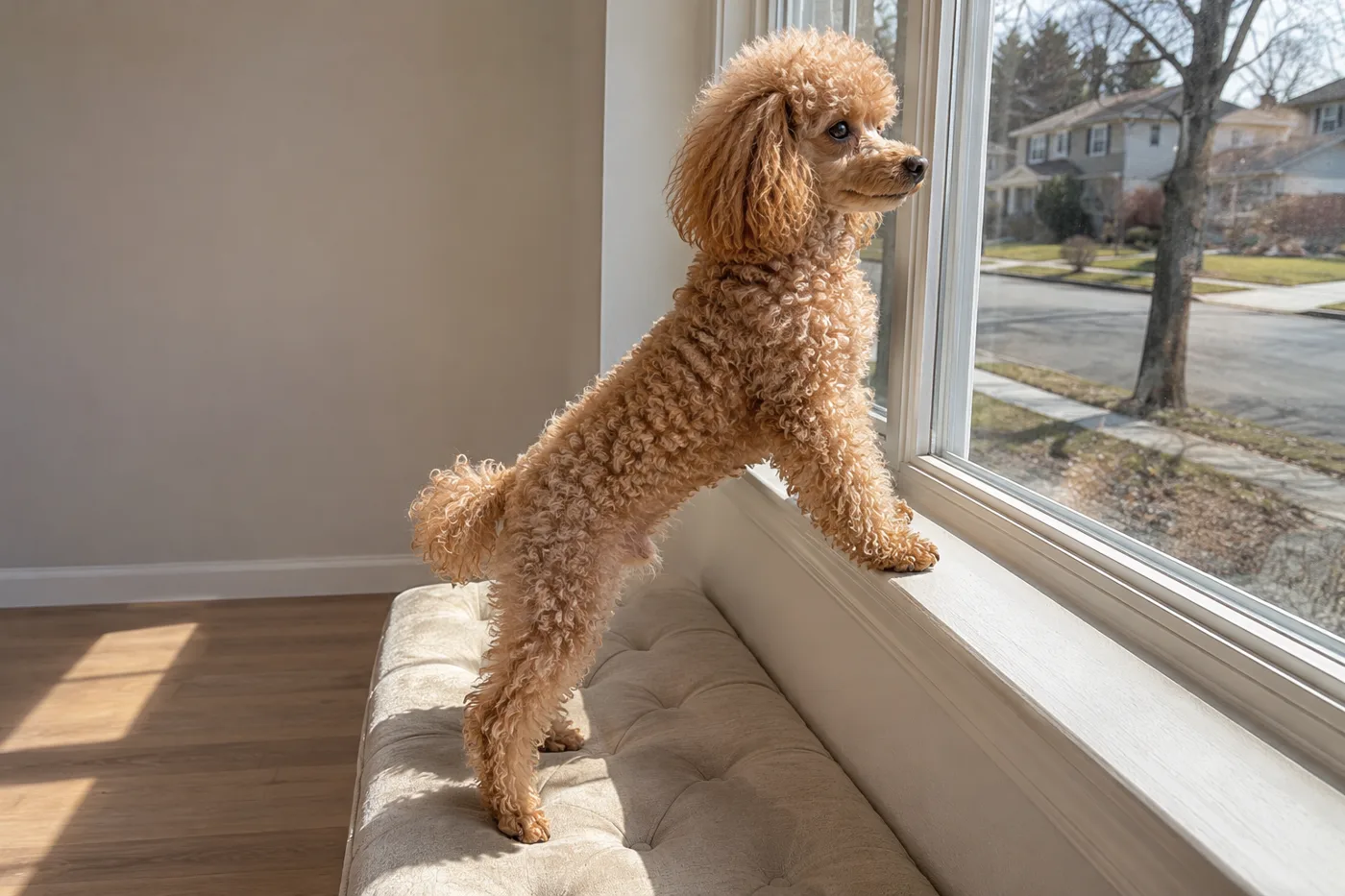
The AKC counts all three Poodle sizes as one breed, No. 6 in its ranking. For time alone, though, size is the whole story.
| Size | What Orvis says | Owner survey score (lower is calmer) |
|---|---|---|
| Standard | “May be able to handle a full day alone” | 0.62 |
| Miniature | Not well suited to long stretches alone | 0.93 |
| Toy | Not well suited to long stretches alone | Not studied |
The researchers behind those 2019 survey scores suspect size-related genes play a part. Same breed, same curly coat, very different afternoon.
If you’re choosing a Poodle for a home where you’re out part of the day, pick the size before you pick the color. And if you’ve already got a Toy and a job, budget for the midday visit.
Even a Standard comes with a “may.” Orvis isn’t promising your Standard will nap from nine to five.
#9 Chihuahua that can’t cope with being alone
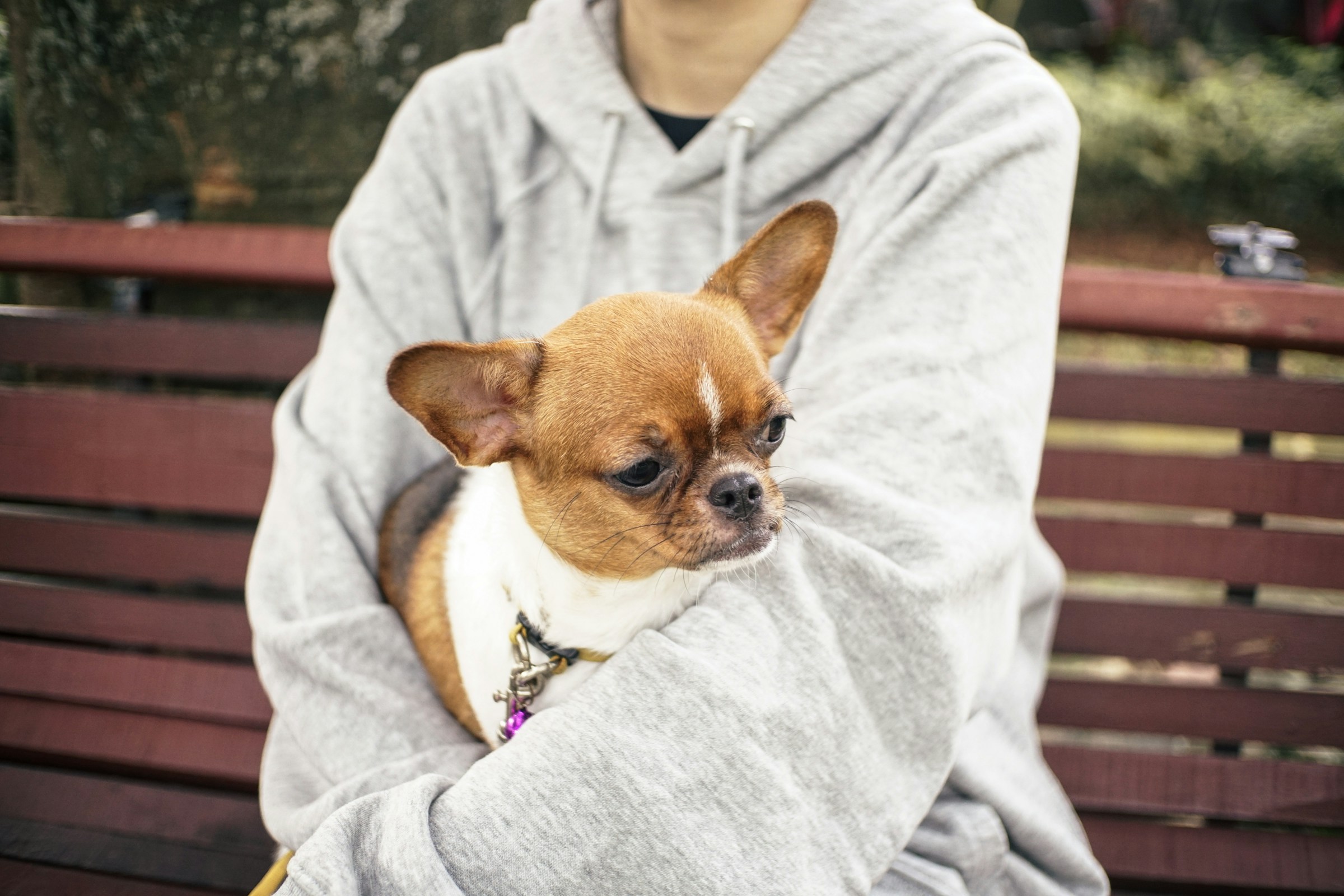
PDSA says Chihuahuas “tend not to cope well with even very short periods alone” and “can quickly develop separation anxiety.”
As companion dogs, it adds, they “need someone around the home all the time.”
So the question with an anxious dog is whether anyone else will do. The answer changes your whole plan.
- Fine with anyone: the ASPCA says most anxious dogs “are fine as long as someone is with them. That someone doesn’t necessarily need to be you.” A sitter, a neighbor or daycare can work.
- Only you will do: Merck says some dogs “cannot be comforted by the presence of other individuals.” A sitter won’t fix that. Training will.
The ASPCA lists the signs to watch for: accidents in the house, barking and howling, chewing, escape attempts and pacing. Merck says video can help rule out incomplete housetraining before you blame nerves for that puddle by the back door. In a dog this small, that’s an easy thing to miss.
The owner of a clingy Yorkie-Shih Tzu mix summed up the trade-off in a Reddit group for bored dog owners: “Be careful what you wish for. I have to take mine everywhere or pay for a sitter.”
#8 Siberian Husky who dismantles the fence
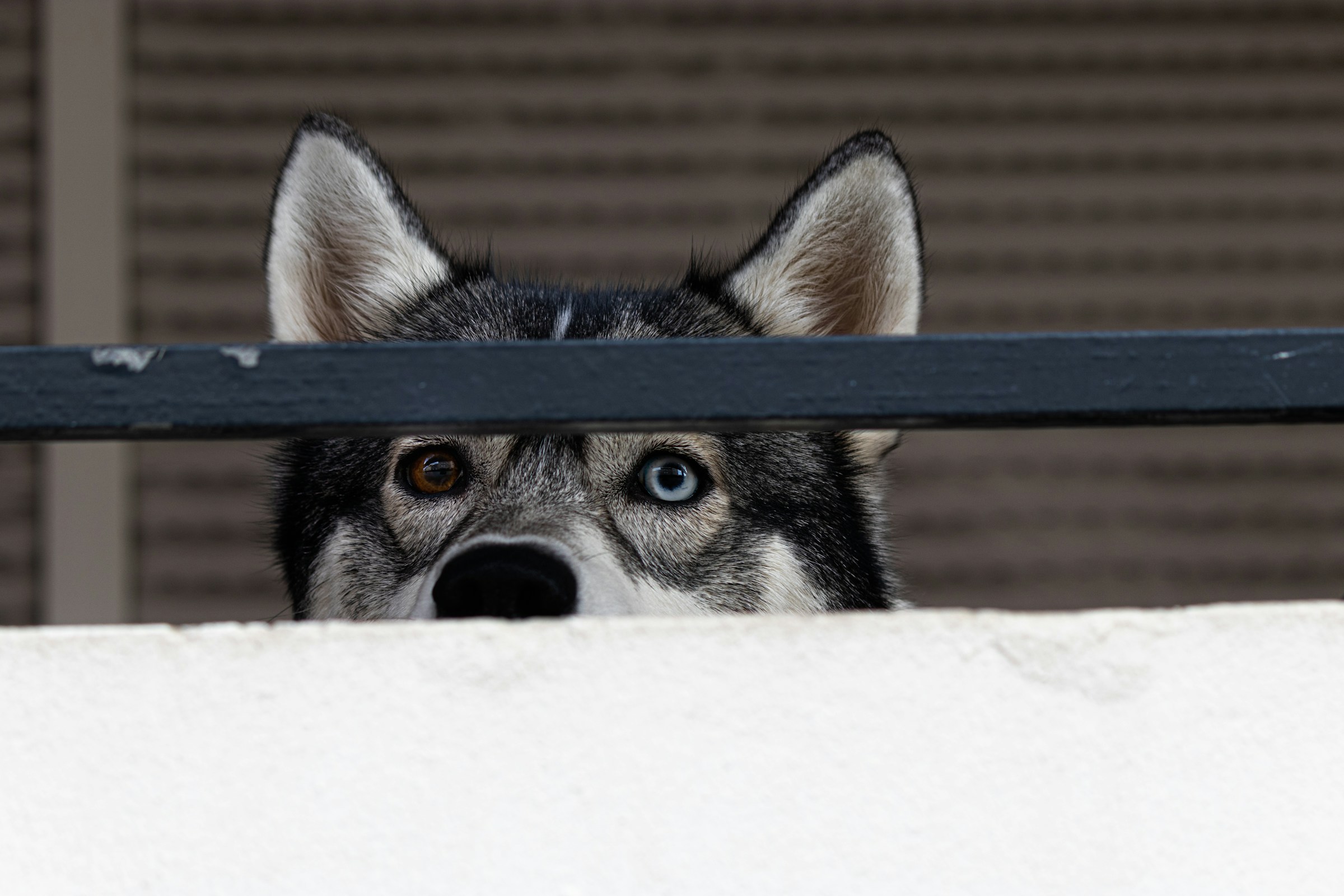
Most dogs take it out on the house. A Husky takes it out on the exits. Adopt A Husky, a Husky rescue, describes it like this:
“Left outside, a lonely Siberian will dig under the fence, unravel the fence, jump or climb over the fence, undo any child-proof locks, and even open the gate.”
The key word is “lonely.” The rescue says Huskies “cannot tolerate long periods of isolation.” What looks like boredom with teeth starts with wanting company. Without it, they go looking for fun, and the fun is usually three streets over.
That makes this breed destructive when left alone in its own special way. The couch might survive. The fence won’t.
Exercise helps, and PDSA puts a Husky’s minimum at two hours a day. The rescue’s rule is a leash or a properly fenced yard with a 6-foot fence. Otherwise, it warns, “sooner or later they WILL run off.” The child-proof latch on your gate isn’t a plan. It’s a puzzle.
#7 Cavalier King Charles Spaniel, built for laps
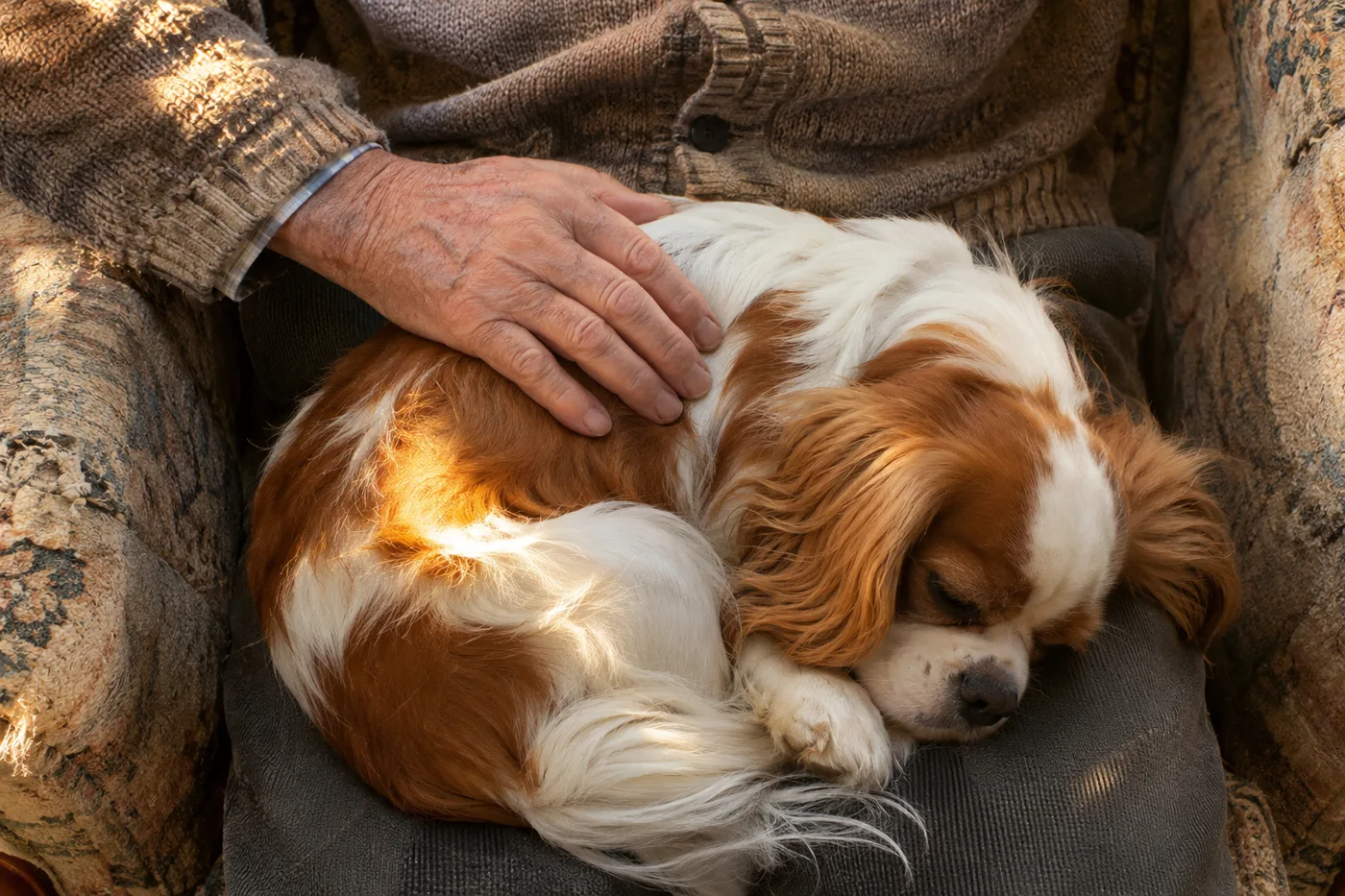
This breed was rebuilt from old paintings. In 1926, an American named Roswell Eldridge offered prize money for “Blenheim Spaniels of the old type, as shown in pictures of Charles II of England’s time.” That prize launched the modern Cavalier.
So the dog in your armchair exists because someone wanted the royal lap spaniel back, exactly as the portraits showed it.
PDSA says Cavaliers were “originally bred as companion dogs,” calls them “the comfort spaniel,” and says they “get very upset at being left alone.” Its limit is four hours.
The Cavalier is a dog bred for companionship rather than work, through and through. That changes the fix. With an Aussie or a Border Collie, a long workout buys you a quieter afternoon. With a Cavalier, more miles won’t do much. Company is the lever: a sitter, a friend, daycare, or bringing her along.
If the plan is a long lunch with friends, the most useful thing to pack might be the dog.
#6 Whippet, the couch potato who still needs you
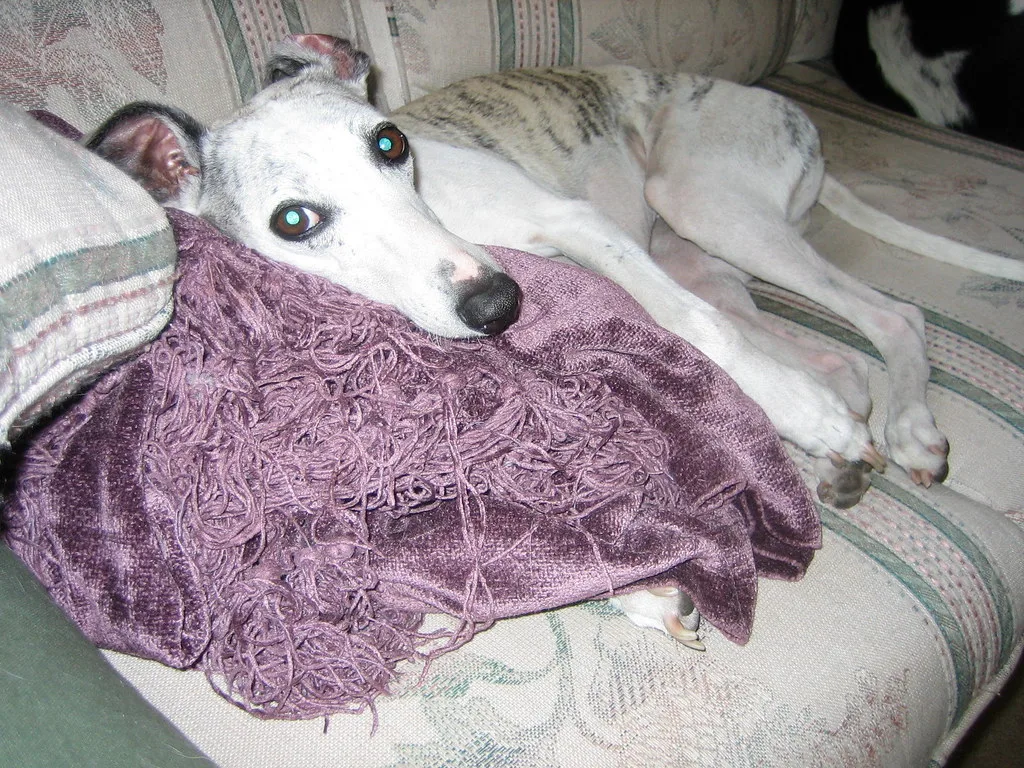
Watch a Whippet after a good run and you’d swear it couldn’t care less where you are. PDSA says they “will then happily curl up on the sofa for the rest of the day.” They still need at least an hour of exercise daily to get there.
The same charity also says Whippets “can get very stressed when left alone for any length of time.” It recommends one only if someone will be around all day. The nap is real, and so is the attachment.
That’s when a lot of owners think about a second dog. A Whippet owner traveling by RV put it best in Reddit’s RV living group:
“Basically we got the whippet as a therapy dog for our daughter, and then we had to get a therapy dog for the therapy dog.” Whippet owner, r/RVLiving
Some owners there say the second dog finally did the trick. The research says don’t count on it. In a Swiss study, researchers filmed dogs in 32 single-dog homes and 45 multi-dog homes during ordinary absences. They found no evidence that a familiar second dog helped, as psychologist Stanley Coren describes in Psychology Today.
Veterinary behavior specialist Dr. Kersti Seksel told ABC News Australia, “I think we need to resolve the problems of the first dog before we get a second.”
Behaviorist Dr. Melissa Starling went further. A second dog, she said, “won’t address underlying issues, and may even make it worse.”
#5 Australian Shepherd, the “sleeper” working dog
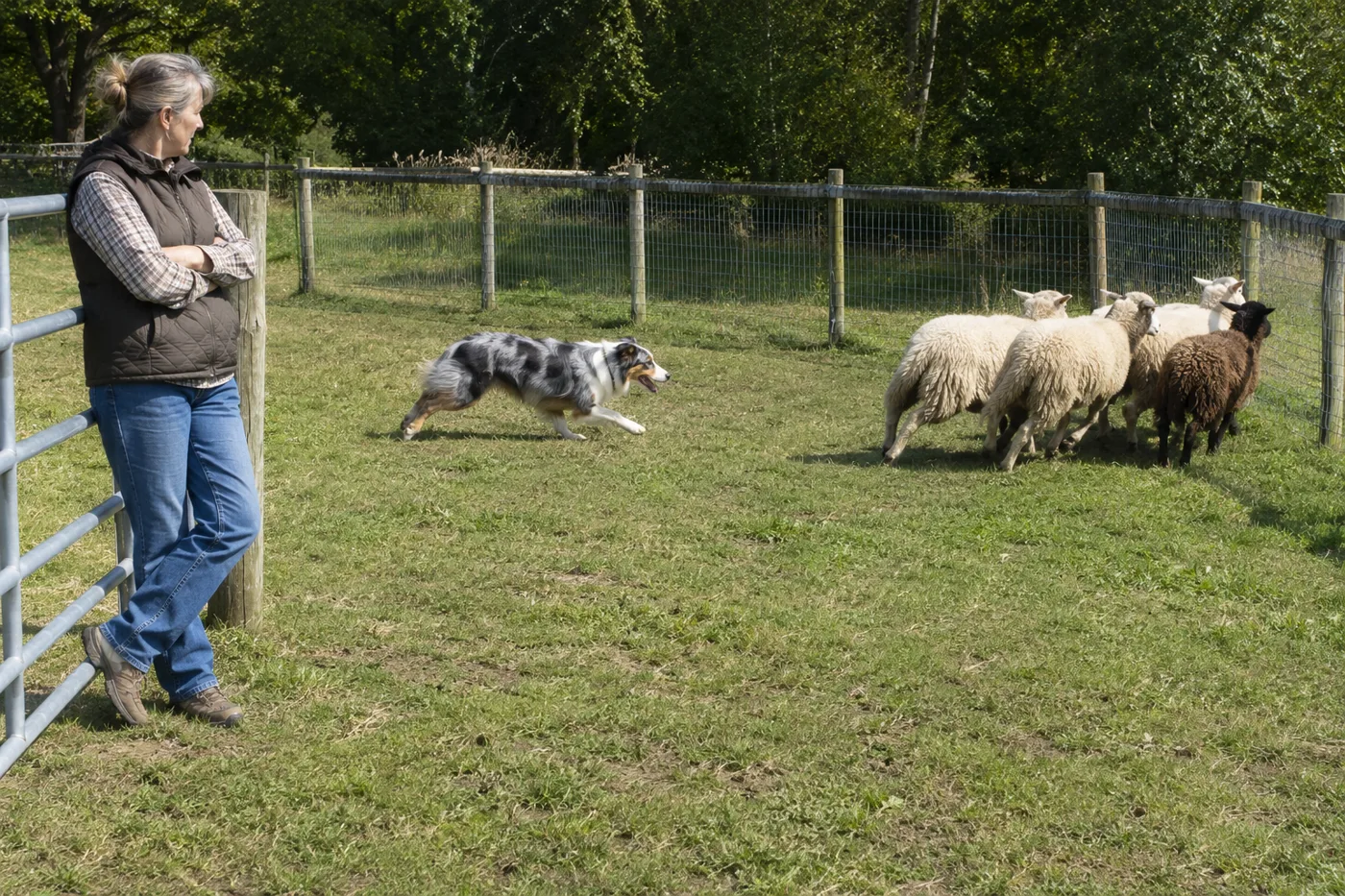
Tom Davis, a professional dog trainer who runs Upstate Canine Academy in upstate New York, has a name for them: “These are sleeper dogs.” He means people don’t see the working dog under the pretty coat.
In Davis’s view, the herding drive this breed was built on doesn’t switch off in an ordinary house, and walks alone won’t settle it. He has no patience for the picture of the Aussie as an easy, gentle dog for a quiet home. He says he’s seen plenty of them rehomed by families who underestimated them.
Orvis backs him up with numbers. An Aussie needs at least two to three hours of physical and mental exercise a day, and “will often seek out their own work if not given a task.”
It may handle four to six hours alone, but Orvis says crate training may be needed for the dog’s safety. Boredom, it warns, “may lead to destructive or snippy behavior.”
Two to three hours a day is a part-time job, for you as much as the dog. The good news is that mental work counts toward it. A training session, a puzzle toy or a game of find-it all count. The bad news is that if your days don’t have that room, a walk around the block won’t stretch to fill it.
#4 Belgian Malinois who invents its own job
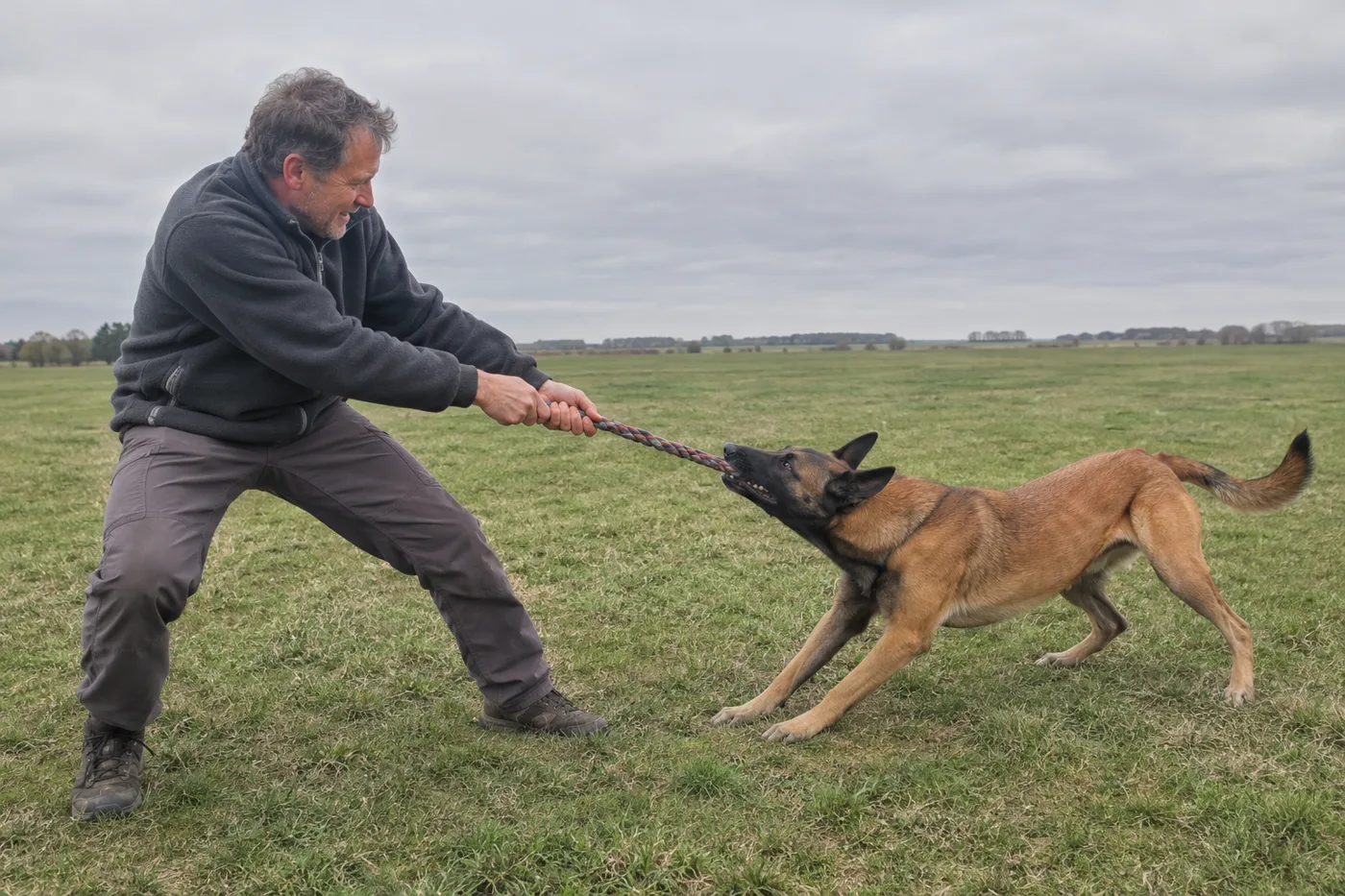
Mary Frances Betts rescues Malinois, and her husband is a Baltimore police K-9 officer. She’s seen the breed at work and at home. In 2011 she told CBS the Malinois isn’t the best pet because it requires constant stimulation, not just two walks a day.
Two walks a day is most dogs’ whole program. For a Mal, it’s the warm-up.
The AKC adds the part that makes this breed so hard to leave home: “To deny a Mal activity and the pleasure of your company is to deprive him of his very reasons for being.”
Activity and company. Most dogs need one or the other. A Malinois wants both, so even a long run doesn’t buy you an empty afternoon. He still needs mental stimulation, and he still wants you in the room.
For people who train with them daily, they’re extraordinary dogs. If you’re picking a dog for a calm house, this is the one to admire from the bleachers at a K-9 demonstration.
#3 Jack Russell, big energy in a small dog
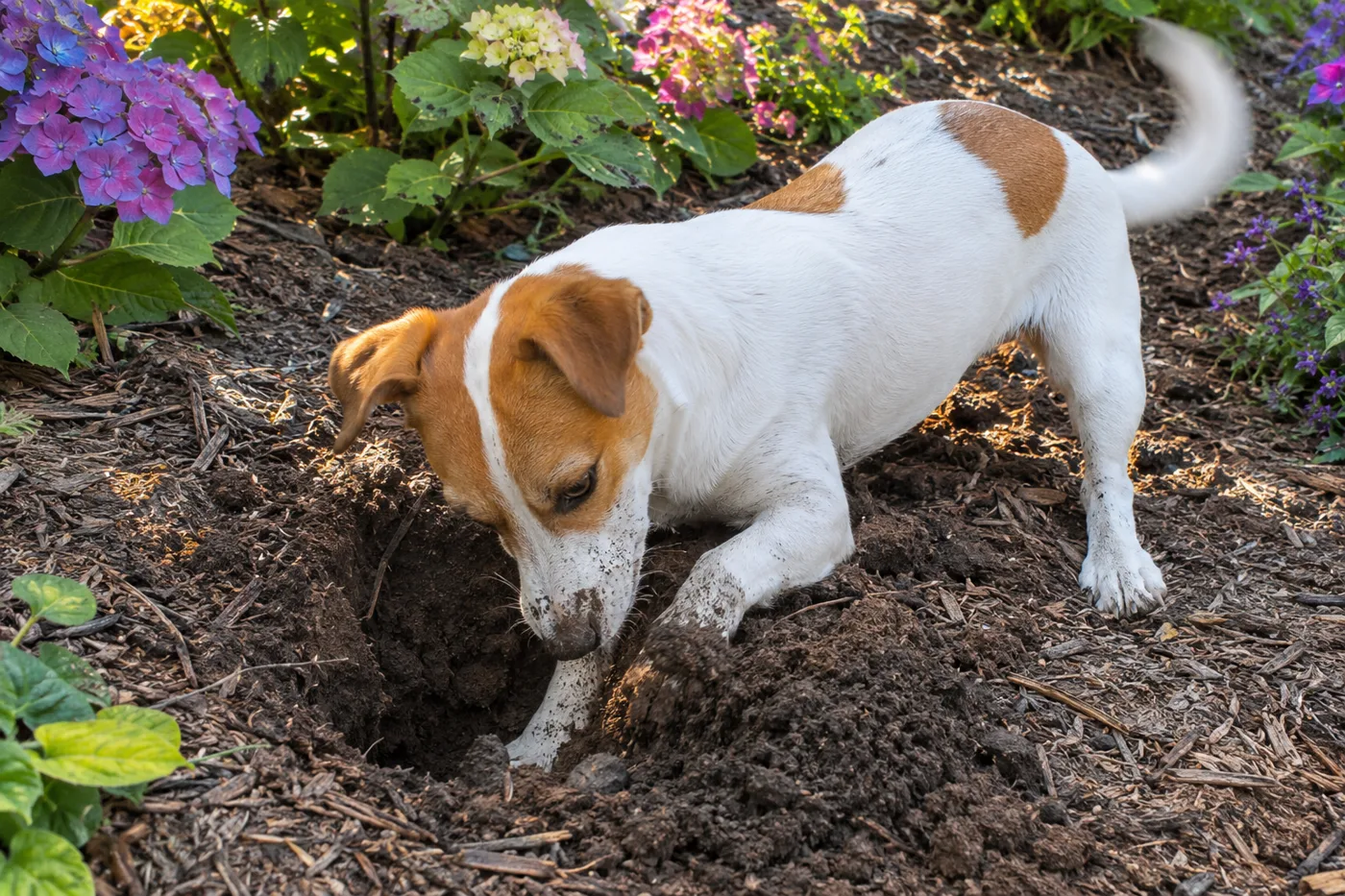
The trap is the size. Battersea, the London rescue, says “owners frequently underestimate the amount of exercise they need as they are small dogs.” PDSA puts the minimum at an hour of exercise a day.
The hole in your flower bed has an explanation too. “Digging is a particular favourite,” Battersea says, “since it’s genuinely rewarding behaviour for a breed bred to do exactly that.” Nobody told him the tulips were off limits, and his whole family tree says dig.
When he’s bored or unsettled, Battersea says, he’ll bark or dig. Its fix comes in two parts: “Building up alone time gradually, alongside meeting their exercise needs, usually helps.”
So give the digging somewhere legal to go. A sandbox corner with a toy buried in it works if you have a yard. If you don’t, a cardboard box of crumpled paper with treats hidden inside gives him something to tear into. That’s mental stimulation in terrier terms, and it’s cheaper than replanting.
#2 Doodles and Cockapoos left in the apartment
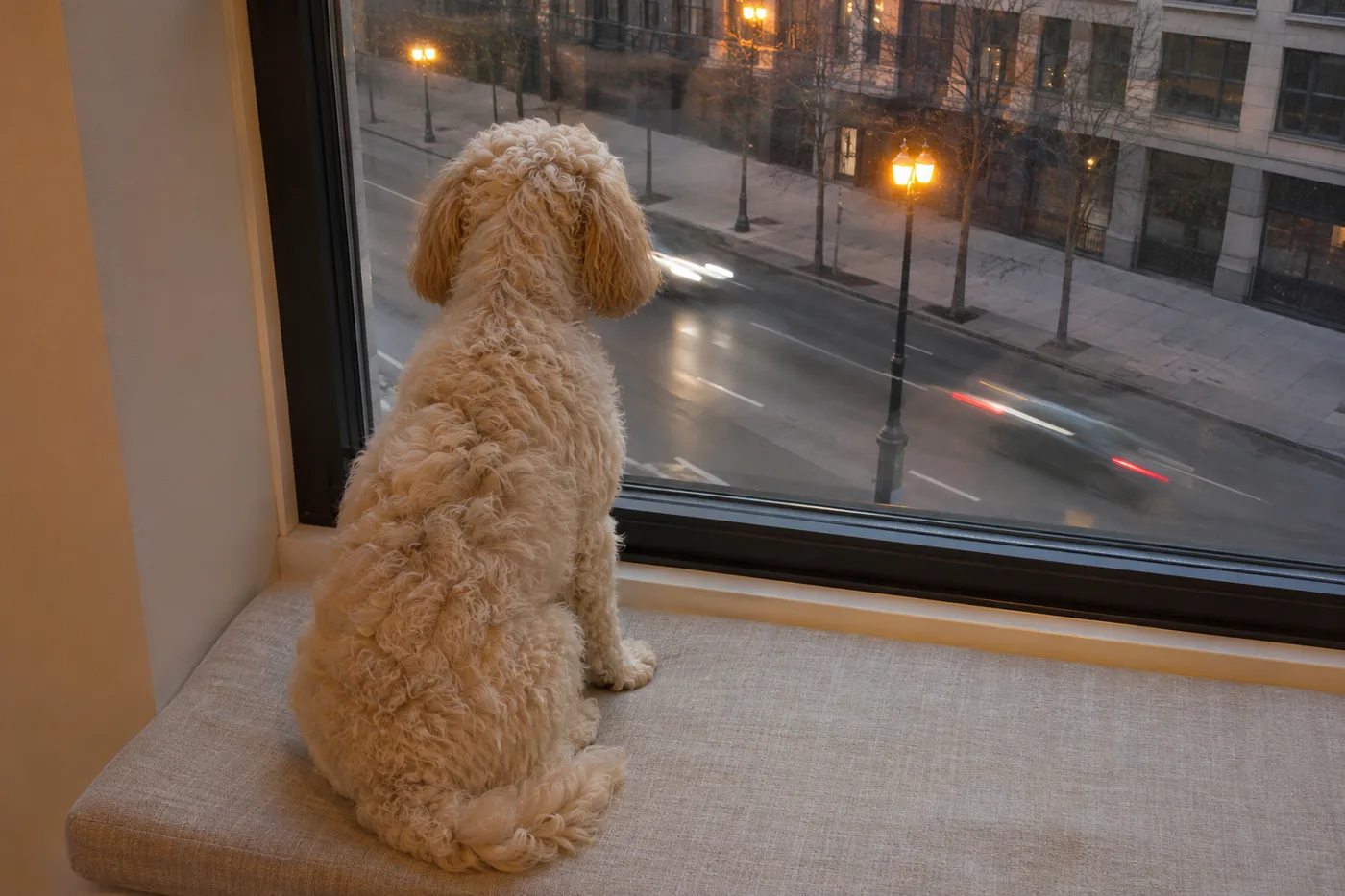
Doodles and Cockapoos aren’t official breeds, so most breed lists skip them. That also leaves out a 2026 finding their owners should hear.
The Royal Veterinary College looked at 9,402 UK dogs. Cockapoos, Labradoodles and Cavapoos each had significantly more separation-related problems than their non-Poodle parent: the Cocker Spaniel, the Labrador and the Cavalier.
Of the mixes, “Cockapoos displayed the most undesirable behaviours.” First-time owners also reported more separation trouble than experienced ones.
Those were UK owners’ reports. The 2019 survey from #15 points the same way: Golden Retrievers averaged 0.51 for separation trouble, and Goldendoodles 0.93.
Age doesn’t always cure it. Battersea says “Cockapoos bond closely with their owners and separation anxiety is common.” One owner on its page says: “Even now he’s twelve years old he can only be left alone for up to three hours.”
Veterinary workers swapping stories on Reddit describe the dogs that turn neurotic: working breeds and doodle mixes in apartments, left 6 to 8 hours with one short walk.
Canine Revolution Dog Training, a South Carolina training business, sorts the trouble into three levels:
- Low: some barking, whining or drooling
- Medium: chewed shoes or furniture, and accidents
- High: damage around the door, chewed walls, or a dog that hurts itself
At the high level, they send people to a trainer or a vet. Another puzzle toy won’t touch it.
#1 Border Collie that wrecks the car mid-errand
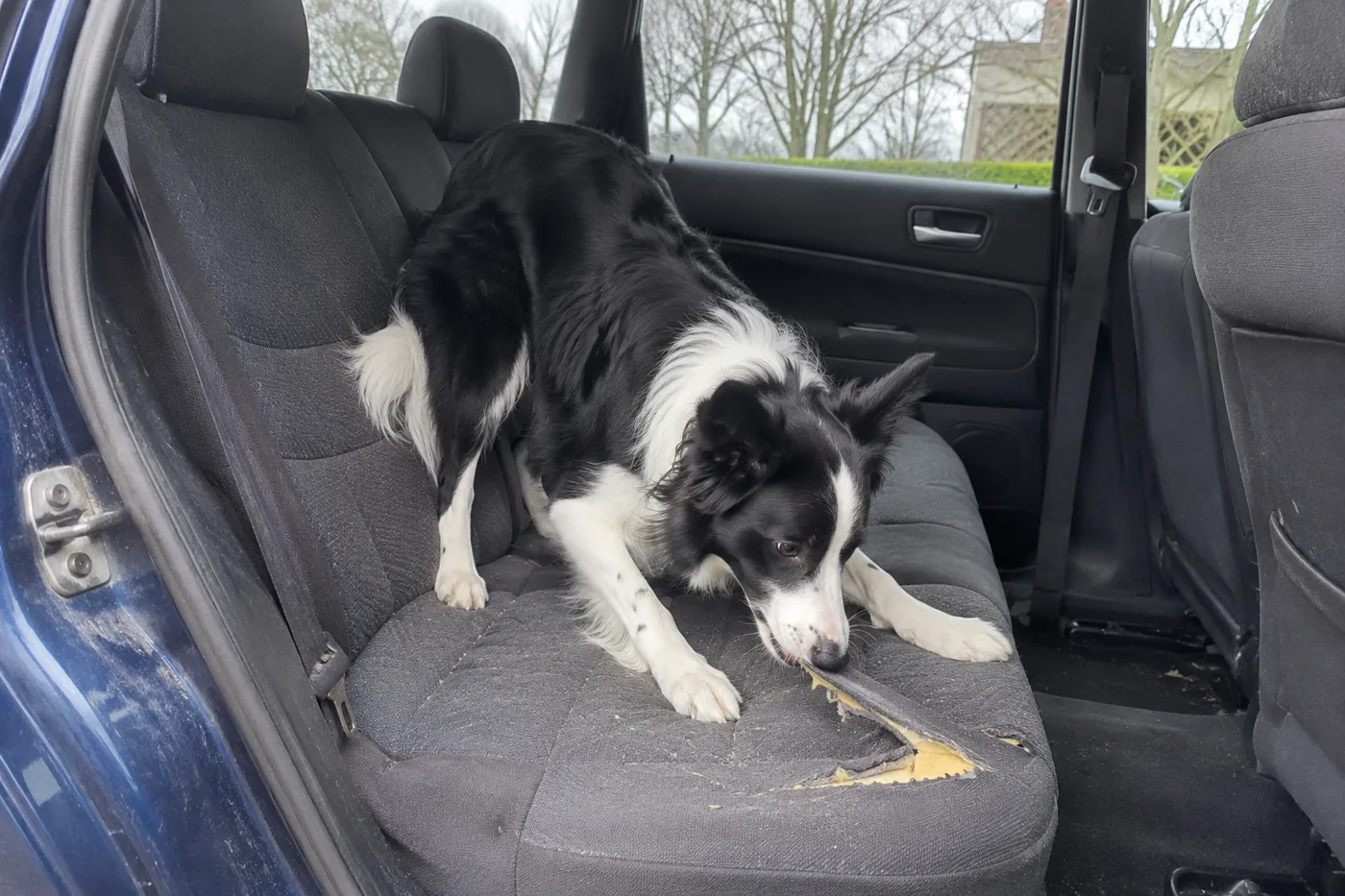
Tom Davis, the New York trainer from #5, gives the clearest picture of a dog that isn’t missing you at all. A bored Border Collie invents work, he says, “like figuring out how to dismantle your sprinkler system or ripping apart your car when you go in for a quick little milk run or something.”
There’s no grief in that. It’s a brilliant herding dog with ten free minutes and a seat belt to solve.
His rule is simple: “The smarter the dog, the bigger job you owe it.” The AKC calls the breed “a remarkably bright workaholic.”
Battersea says a healthy adult typically needs about 2 hours of exercise a day. It adds: “We often see Border Collies given up to Battersea, usually because people underestimate the complexities of the breed.”
Janet Legg of Border Collie Rescue in Washington and Oregon notes that barking is uncommon in the breed “unless bored, frustrated, ignored, kenneled, neglected.” Read her list again. Missing you isn’t on it.
The car is the wrong place for any dog during an errand, however short. On an 80°F day, Humane World for Animals says the inside of a car can hit 99°F within 10 minutes, and rolling the windows down does little. Leave her home, with the morning’s work already done.
Boredom or panic: what the camera shows – Barking and scratching at the door: in a Hungarian study, these went with frustrated, “demanding” dogs – Whining and trying to escape: the same study tied these to fearful dogs – A young dog chewing everything: the ASPCA says to rule out “juvenile destruction” before calling it separation anxiety – Out cold for hours: owners on Reddit say their cameras often show a dog sleeping through a full workday, barely moving
The fix for a Border Collie is a job before you leave: a training session, a game that makes her think, a problem worth solving. Give her the work, or she’ll find her own, and she’ll pick something you’d rather keep.
The bottom line
The dog most at risk may be the one that has never had to be alone. A UK study followed 1,807 dogs through 2020. About one in ten with no earlier signs developed separation problems, and dogs whose owners’ time away shrank the most during lockdown were at higher risk. The ASPCA names a change in schedule as a classic trigger.
So if you’re home nearly all day, whether you’re retired, working from the spare room or just happy at home, practice being gone while nothing depends on it. A family trip or a surprise appointment is a bad time to find out.
Breed sets the odds, not the outcome. A Finnish study of 13,715 dogs found separation trouble was the least common problem owners reported, at about 5 to 6%, and none of the breeds here stood out. A former RV traveler whose dog has since died looked back on it all in Reddit’s RV living group: “I think I was the one with separation anxiety.”
Start with the mailbox. Five minutes, no dog, and see who’s waiting when you get back.
Bonus: Four habits that make leaving easier
Make goodbyes boring. Canine Revolution Dog Training advises skipping the goodbye, keeping your homecoming low-key, and rewarding the dog only once she’s calm.
Don’t scold the chewed cushion. The ASPCA says plainly that “anxious behaviors are not the result of disobedience or spite.”
Give a newly adopted dog weeks before you judge. Orvis says to expect an adjustment period and ease the dog into your schedule. Owners on Reddit say early panic in a new dog may just be the dog settling in.
Get a sitter’s visit times in writing. There’s no industry standard, and pet sitters on Reddit say some owners expect visits every 2 to 3 hours while many client dogs can manage only 4. Agree on the hours using your own dog’s limit.
Questions people also ask
Which dogs can be left alone for 8 hours?
Very few, and most vets and trainers say no dog should be left alone for 8 hours as a regular thing. Veterinary behaviorist Dr. Virga’s outer limit is “no more than six to eight hours alone without a chance to relieve themselves.” Orvis names Bulldogs, Basenjis, Boston Terriers, Basset Hounds and Greyhounds as breeds that may manage it, and says a Chow can handle a workday if someone takes him for a midday walk.
How do I know if it’s separation anxiety or boredom?
A camera pointed at your exits for the first half hour after you leave is the quickest way to tell. The Merck Veterinary Manual says true separation distress usually starts within 15 to 30 minutes of departure, with pacing, drooling, barking or howling, an inability to settle, and damage at the exits. The ASPCA says to rule out boredom and juvenile destruction first, and Merck says video helps tell it apart from incomplete housetraining, since all of them can leave the same mess.
Will getting a second dog help my dog’s separation anxiety?
Usually not, so it isn’t something to count on. A Swiss study that filmed dogs in 77 homes during ordinary absences found no evidence that a familiar second dog helped them cope, as psychologist Stanley Coren explains in Psychology Today. Purina UK adds that another dog “should never be seen as an alternative to human companionship.”
Should I crate a dog with separation anxiety?
Only if your dog is calm in the crate. The ASPCA says a crate can help a dog that learns it’s a safe place, but with “heavy panting, excessive salivation, frantic escape attempts, persistent howling or barking, crate confinement isn’t the best option.” The Merck Veterinary Manual treats fear of confinement as a separate problem to rule out.
How long does it take to fix separation anxiety?
Usually weeks at the least, and often months. The ASPCA describes weeks of daily sessions that add only a few seconds of time away each round, and Merck says graduated departure training can take months. Separation anxiety specialist Malena DeMartini says “every dog sets the pace of the protocol.” She adds that when a vet prescribes medication, its purpose is “to enhance learning and retention.”
Which dog breeds are ok being left alone?
Breeds with an independent streak tend to cope best, and Purina UK names 11, including the Chow Chow, Greyhound, Basenji, Basset Hound and Shiba Inu. Even for those, Purina says no adult dog should be alone more than four hours at a stretch. Orvis adds that some Bassets “may depend on companionship, and may howl when left alone.”