See which vintage dog food brands, cans and mascots are still on shelves, which quietly vanished, and what “with beef” on the label really meant.
Hang on to #1. It’s the one number here that might change how you feel at the register.
The big bag never fit in the top of the grocery cart, so it rode underneath, a heavy paper sack with a happy dog printed on the front. Nobody in the checkout line read the ingredients. The dog on the bag looked pleased with the arrangement, and so did the one at home.
Many of those names are still being printed. One moved to South America. One turned into cat food. One came home as fresh patties with blueberries in them. And the words on the label mean something far more exact than anyone told you then.
Table of Contents
#25 Milk-Bone biscuits from the box
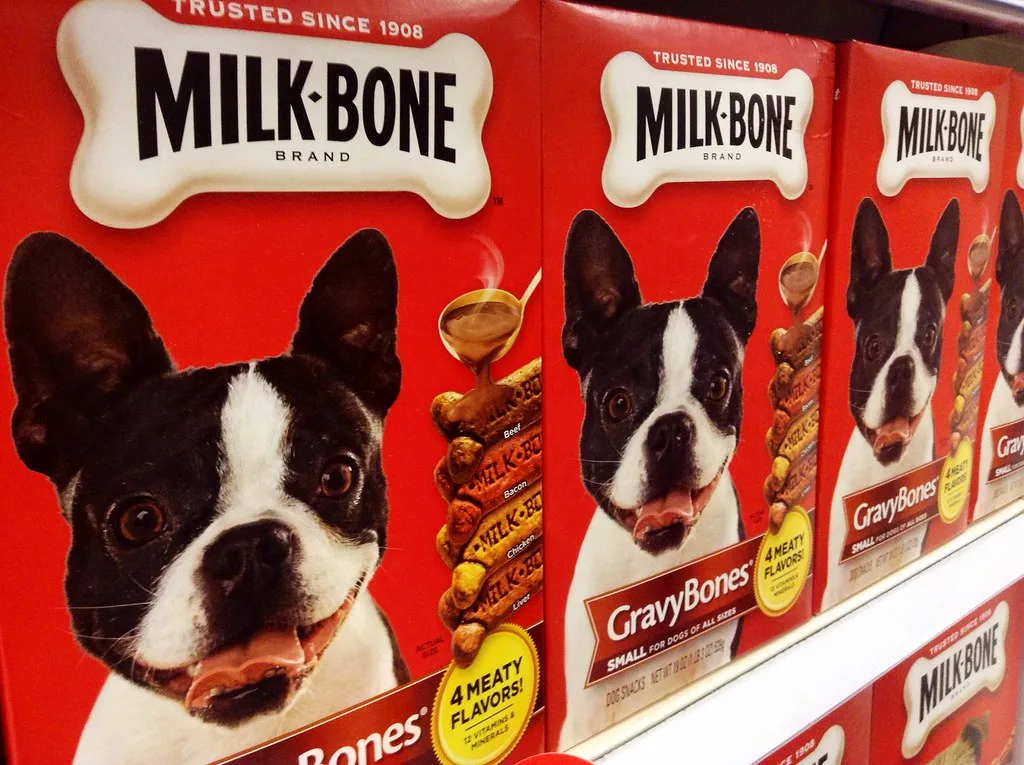
The bone-shaped biscuit you shook out of that box started life in 1908 as something called a Maltoid. It came out of the F.H. Bennett Biscuit Company on New York’s Lower East Side, made of meat, cereals, milk and liver oil. It had its famous name by 1926 at the latest.
Since then the box has changed hands more often than most family recipes:
- 1931: National Biscuit Company, later Nabisco
- Later: Kraft Foods
- 2006: Del Monte Foods
- 2014: Big Heart Pet Brands
- 2015: J.M. Smucker
The American biscuits are still baked in Buffalo, New York. The pitch has shifted over the years toward cleaner teeth and fresher breath, and chicken and beef flavors joined the plain ones.
The part almost nobody knows: in 2023, Smucker sold off a whole set of its pet brands to Post. It kept Milk-Bone, along with Meow Mix. When a company cleans out the garage and holds on to one dog biscuit, you can guess which one sells.
Kent, a Las Vegas dog trainer, uses cheap, bone-shaped boxed biscuits, no particular brand, for everyday rewards. In one of his training videos he breaks each one into pieces, so a dog gets more rewards from the same calories. He’s frank that the hard biscuits don’t bring much nutrition to the party.
Those calories add up faster than you’d think. A large Original Milk-Bone is 125 calories, and in the American Animal Hospital Association’s worked example, a 10-pound neutered adult dog needs only about 300 a day. Even the small size is 15. Several treats out of one biscuit, and no dog has ever filed a complaint about portion size.
#24 Ken-L Ration’s “better than your dog” jingle
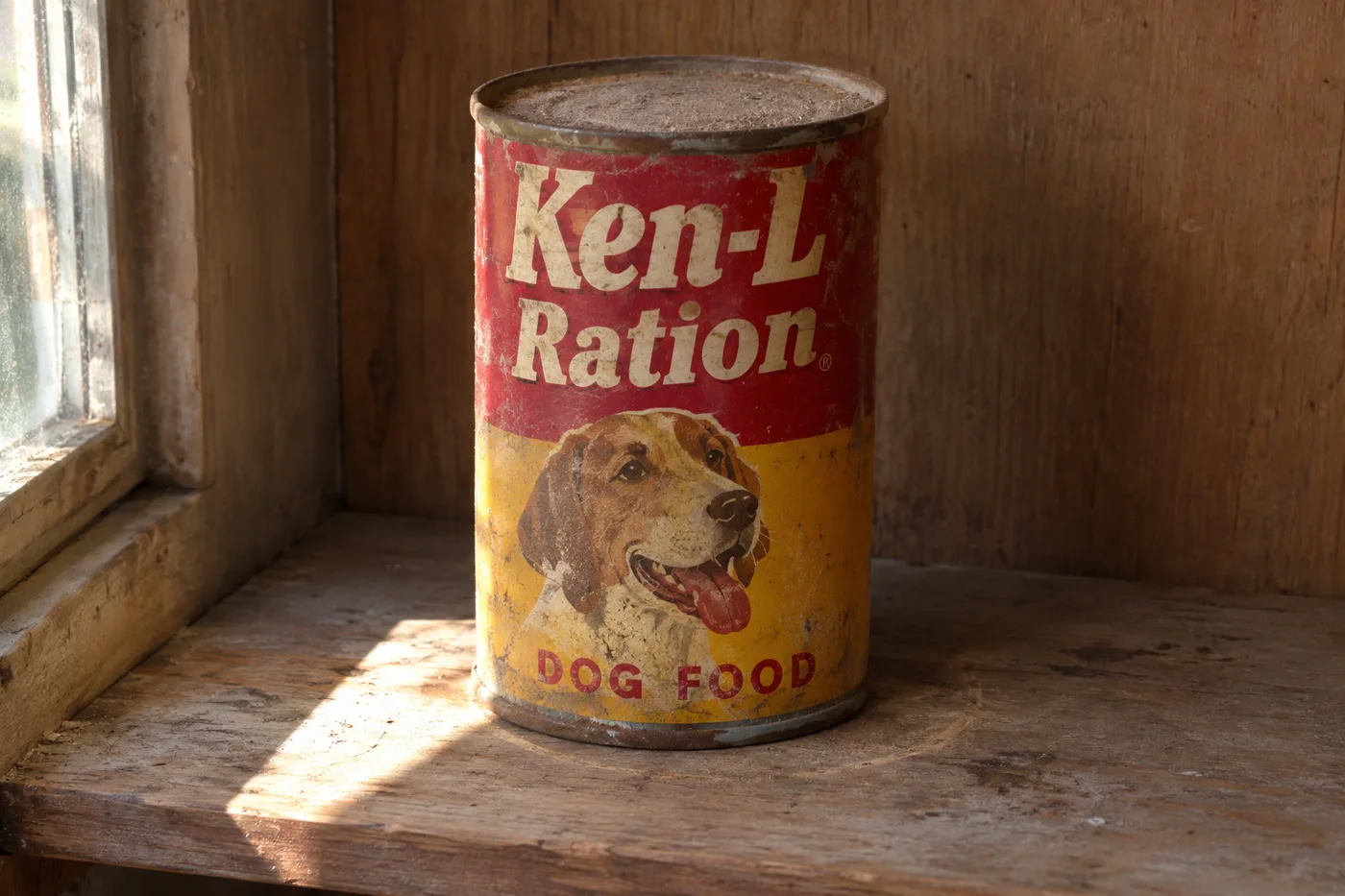
If you can’t hear “My dog’s better than your dog” without finishing the line, you can thank a folk singer. The jingle was based on Tom Paxton’s song “My Dog’s Bigger Than Your Dog”, which a folk-music blogger says Paxton recorded in 1962 and ties to a 1964 commercial. Somewhere between the record and the ad, “bigger” became “better.”
By then the brand was already old. Ken-L Ration was the first canned dog food in the US, launched in 1922. According to the Pet Food Institute, its main ingredient was horse meat, “which was considered an acceptable ingredient source at the time.” The ads called it lean red meat, and a 1960s one told you to “Feed the real thing…with lean red meat.”
The brand did more than sell cans. Its label dog was a yellow dog named Fido. It handed out a yearly Dog Hero of the Year Award, with the last known one in 1996. And until 1968 it sponsored the pet kennel at Disneyland, called Ken-L Land.
Quaker Oats sold the brand to Heinz in 1995, and it faded from American shelves. A company revived the trademark in 2015, and a Grupo Pilar subsidiary bought it in 2020. Today an Argentine company sells Ken-L Ration as “the premium nutrition line of GEPSA® PET FOODS” in Argentina and Chile.
So the can from the jingle went upscale and moved south. And if a US dog food ever did use horse meat now, the label would have to say so.
#23 Chuck Wagon racing through the kitchen
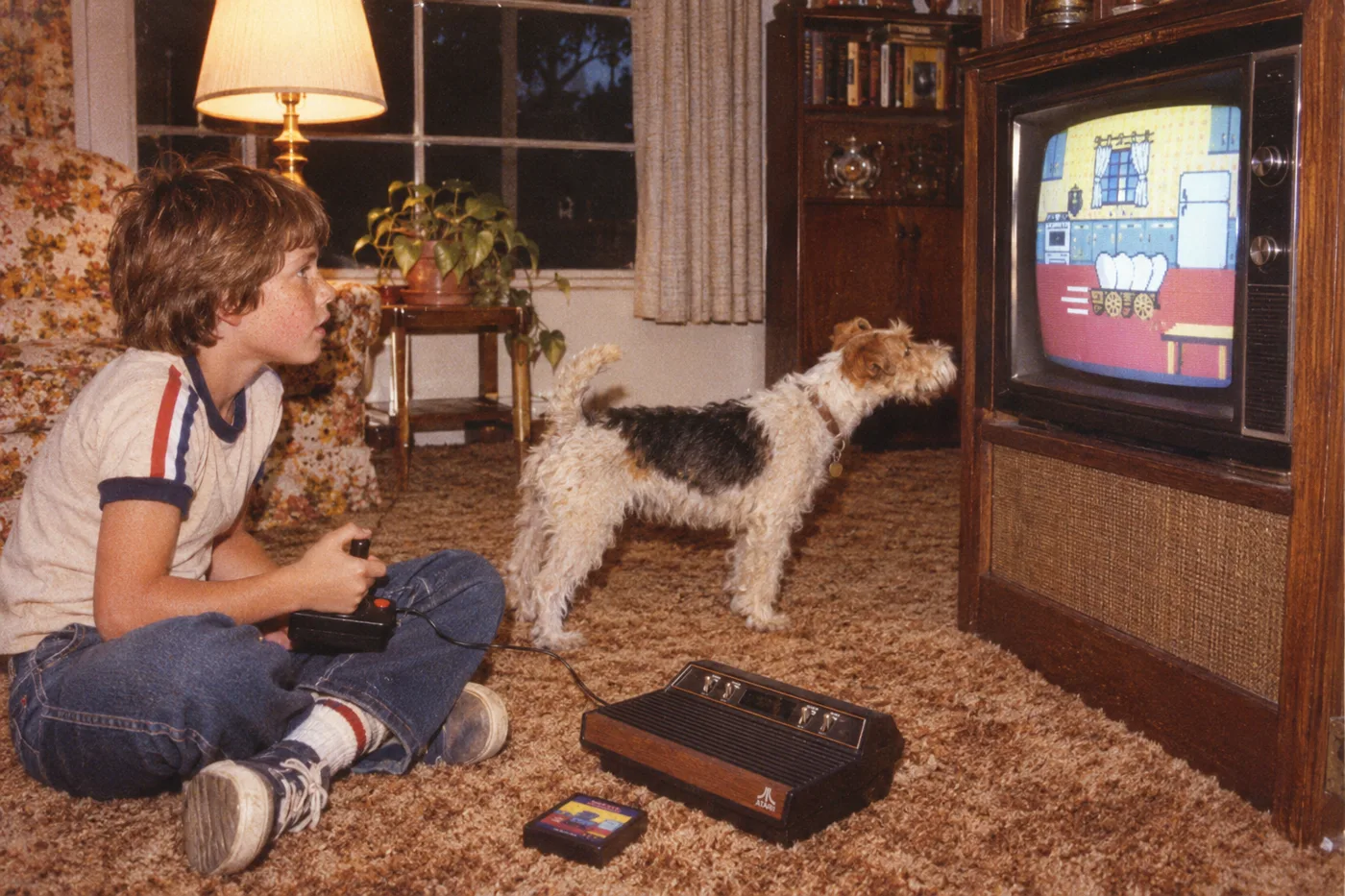
A tiny covered wagon tears across the kitchen, and a dog is right on its tail. A Remind Magazine writer who dug up the old spots describes the wagon, “its covering adorned with Purina’s famous red-and-white checkerboard logo, racing around living rooms and kitchens.” In two threads on Reddit’s r/70s, people still say they spent the whole commercial wanting the dog to catch it.
The ads worked on more than kids.
“You know your advertising firm hit a homerun when Mom starts buying Chuckwagon instead of Alpo.” A fan of the old commercials, on Reddit’s r/70s
What was in the wagon was a dry food sold as an “Instant Dinner for dogs,” launched around 1970.
Then came the strangest prize in dog food history. In 1983 Purina offered an Atari 2600 game, Chase the Chuck Wagon, that you could only get by mail, by sending in proofs of purchase from the bags. You steered a dog named Chuckie through mazes toward the wagon. Finally, he could catch it.
By the early 1990s sales were sliding, down more than 20% in a year. Purina’s fix, in a 1994 relaunch, was to bring the chase straight back. It held on until Purina dropped the brand in 2005.
The name didn’t stay gone. Topco bought it in late 2011, and by 2012 Chuck Wagon was a store brand at Price Chopper, Piggly Wiggly Carolina, Tops and other chains. To launch it, Price Chopper posted a 1970s Chuck Wagon commercial on Facebook. You can still buy it: in 2026 the Food City grocery chain lists a 13-pound bag of Chuck Wagon Dog Dinner.
#22 Gravy Train making its own gravy
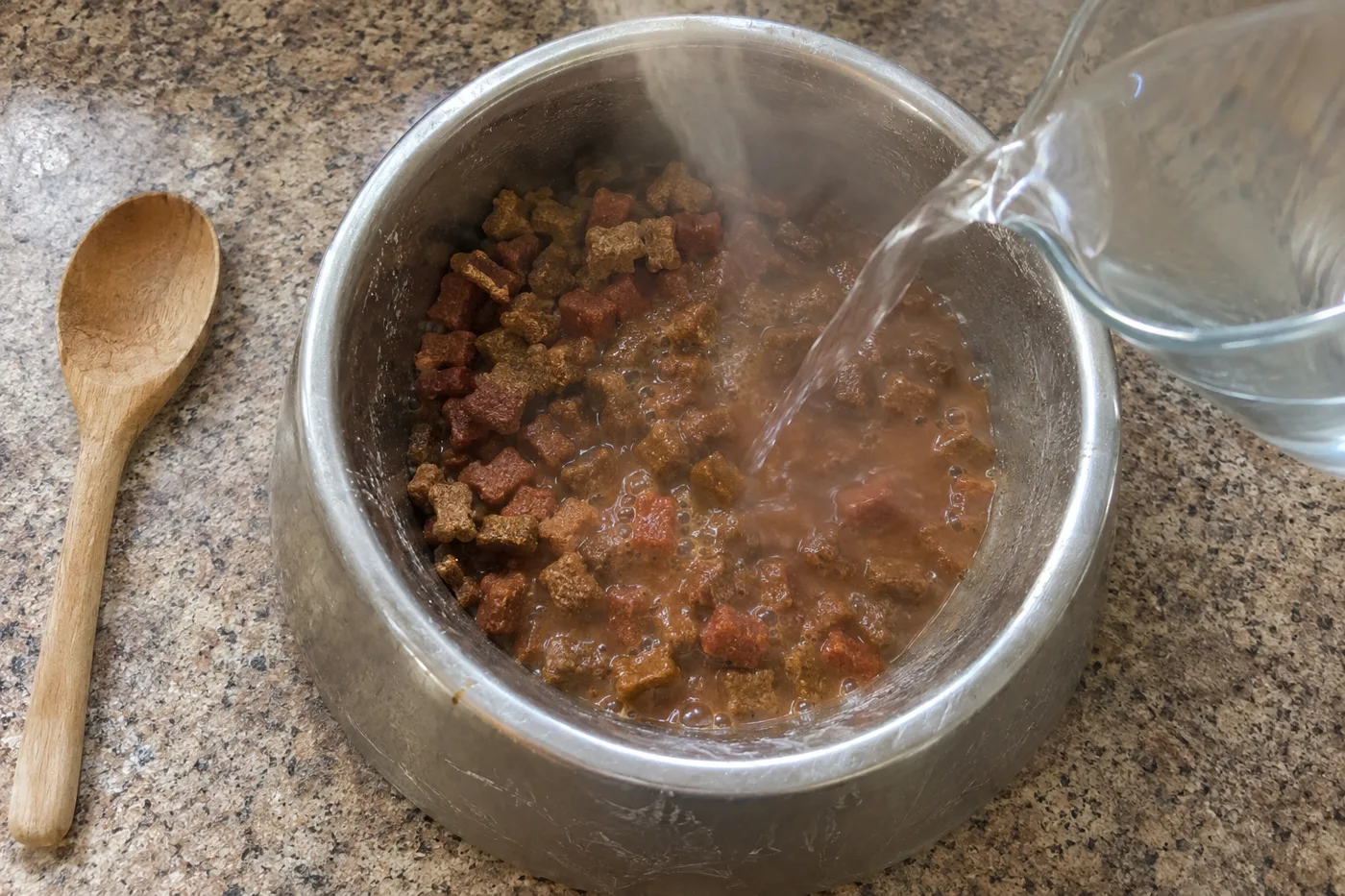
You poured warm water over the kibble, gave it a stir with whatever spoon was handy, and brown gravy appeared from nowhere. A 1960 ad promised exactly that: it “makes its own gravy.”
The trick was a powder coating on the kibble. General Foods developed Gravy Train in 1959, and today an ingredient called cellulose gum does the thickening. The slogan was “the gravy taste dogs can’t wait to finish,” which anyone who heard the bowl get licked across the kitchen can confirm.
The brand’s one hard stumble came in a dog food recall in March 2018, and it was bigger than most people remember. Smucker, the owner then, pulled more than 107 million cans across four familiar names: Gravy Train, Kibbles ‘n Bits, Skippy and Ol’ Roy, mostly the 13.2-ounce size.
The cause was pentobarbital, a drug used to put animals to sleep, traced to tallow, a fat rendered from animals. The FDA said that “low levels of pentobarbital are unlikely to pose a health risk to pets.” Still, 107 million cans came off shelves.
The gravy survived the scare. In April 2023 Post Holdings bought the brand, warm water trick and all.
#21 Nipper listening to the phonograph

The little dog with his head tilted at the horn was real, and his life was short. Nipper lived from 1884 to 1895, just 11 years. RCA calls him “a fox terrier, though he was probably a terrier mix with some bull terrier ancestry.”
Here’s the odd part. Francis Barraud’s painting was delivered to the Gramophone Company in October 1899, four years after Nipper died. The dog who became the most famous listener in advertising never saw himself on a record label.
RCA got the American rights in 1929. Then in 1990, its ad agency gave Nipper company: a Jack Russell puppy. A naming contest in 1991 settled it. The puppy was Chipper.
#20 Friskies cans and boxes for dogs
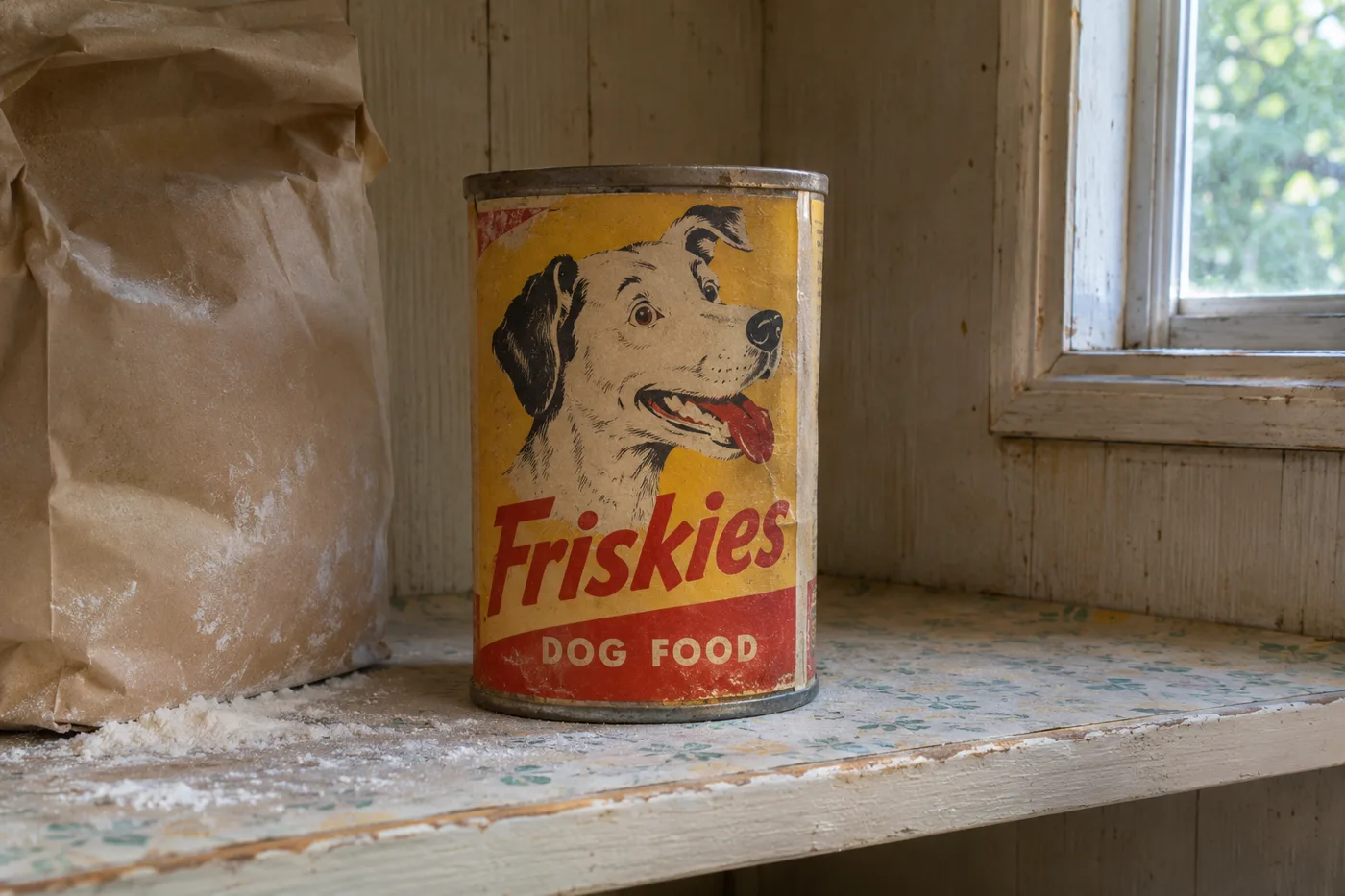
Today Friskies means cat food. It started as dog food.
Carnation launched Friskies in 1934 as a dry dog food and added cans in 1951. The 1960 ads on Click Americana show it squarely aimed at dogs.
The turn came in 1956, when Carnation test-marketed something on the West Coast: “the first dry pet food product specifically for cats.” Cats won. Nestlé bought Carnation in 1985 for $3 billion, and Friskies now “focuses on cat food and treats.”
If you have a cat, there’s a fair chance you’ve been buying the great-grandchild of a dog food without knowing it.
#19 The checkerboard Purina Dog Chow bag
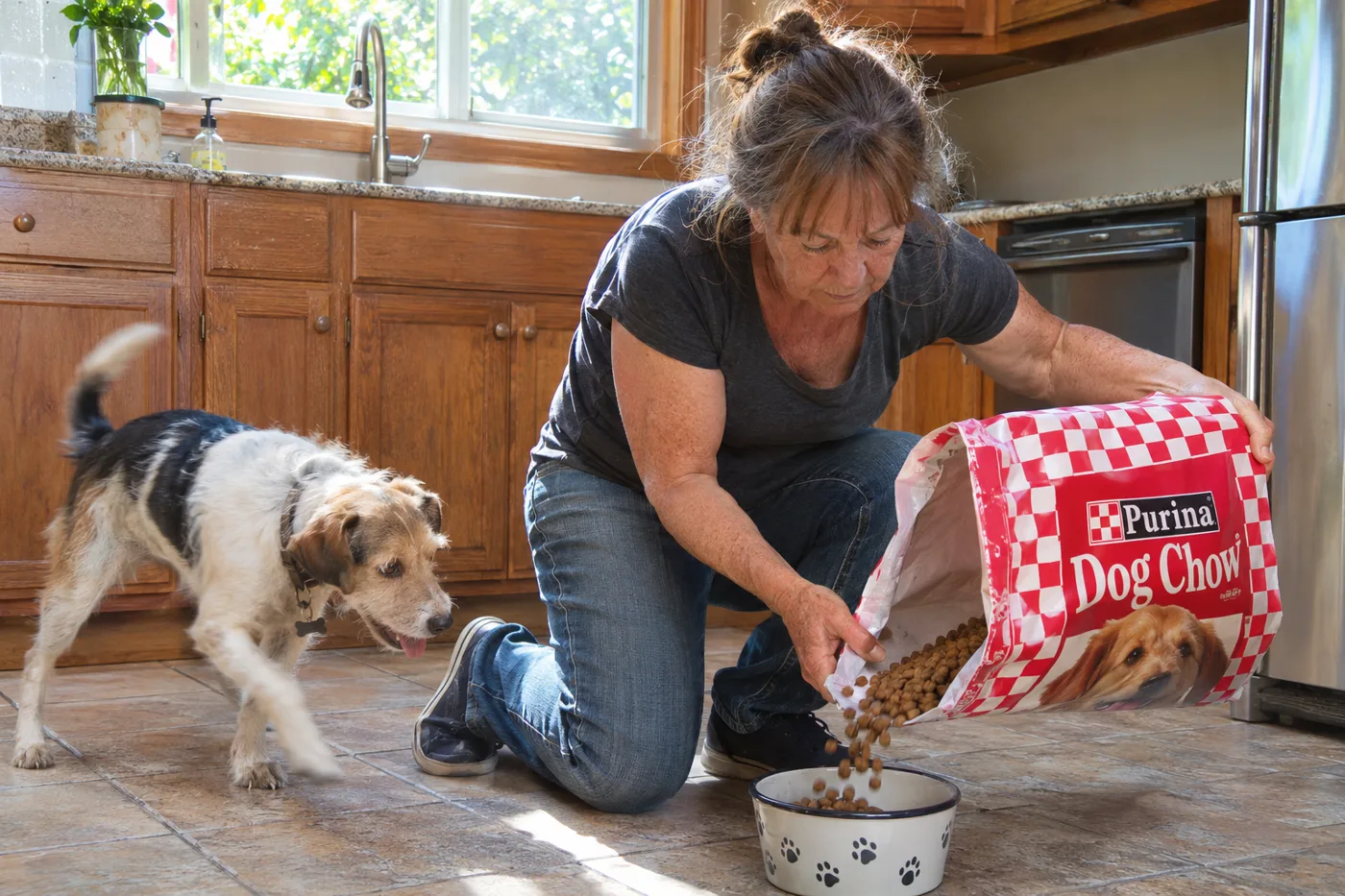
In 1933, when Admiral Byrd outfitted an expedition to Antarctica, he chose Dog Chow for it. The bag with the red-and-white checks went to the bottom of the world before it went to most American kitchens.
Dog Chow dates to 1926. A 1950s or ’60s ad called it “America’s largest seller…more nutritious than meat.”
The real milestone came in 1956, when Dog Chow became the first pet food made with pressure-processed extrusion, a way of cooking kibble under pressure. Nestlé Purina PetCare still makes it.
One more surprise for anyone who grew up on the Muppets: in 1962, Dog Chow commercials in Canada starred Jim Henson’s Rowlf the Dog. A puppet dog, selling kibble to the people who fed real ones.
#18 The Kibbles ‘n Bits jingle
The song is what you remember. What you might not know is that the food behind it was a genuine first.
Quaker Oats launched Kibbles ‘n Bits in 1981 as part of its Ken-L Ration line. It was “the first dual textured dog food, having soft chewy pieces as well as hard crunchy ones.” Dogs who’d been picking through mixed bowls for years finally got the mix on purpose.
In 1983 the name got longer, to Kibbles ‘n Bits ‘n Bits ‘n Bits, and sales came in at double the forecasts. The extra “bits” weren’t padding.
So Ken-L Ration has a descendant still on US shelves after all, just under its younger name. Post Consumer Brands markets it today, in the same 2023 deal that took Gravy Train.
#17 McGruff the Crime Dog
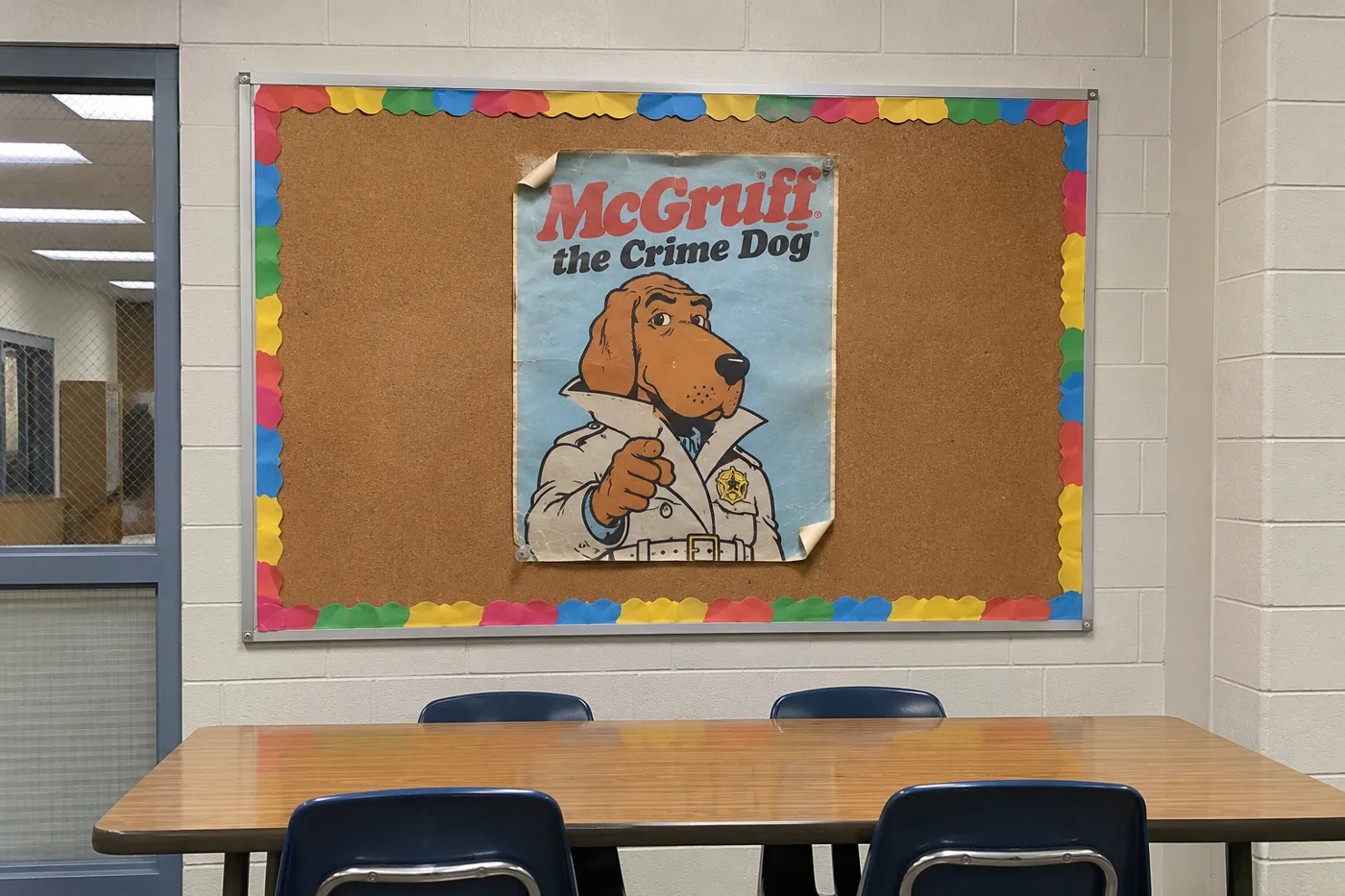
He didn’t sell food, but if you watched TV in the ’80s, you saw a lot of him.
McGruff grew out of a 1977 request from the Justice Department to the Ad Council. Jack Keil, an ad man at the agency Dancer Fitzgerald Sample, came up with a bloodhound, who debuted in 1980. His name came from a contest that July.
His reach is the surprise. By mid-1981, his ads had run on over $100 million in donated airtime. A bloodhound is famous for its nose, but McGruff had the famous name: in a 2007 survey, nine in ten people knew it.
#16 The Hush Puppies basset hound
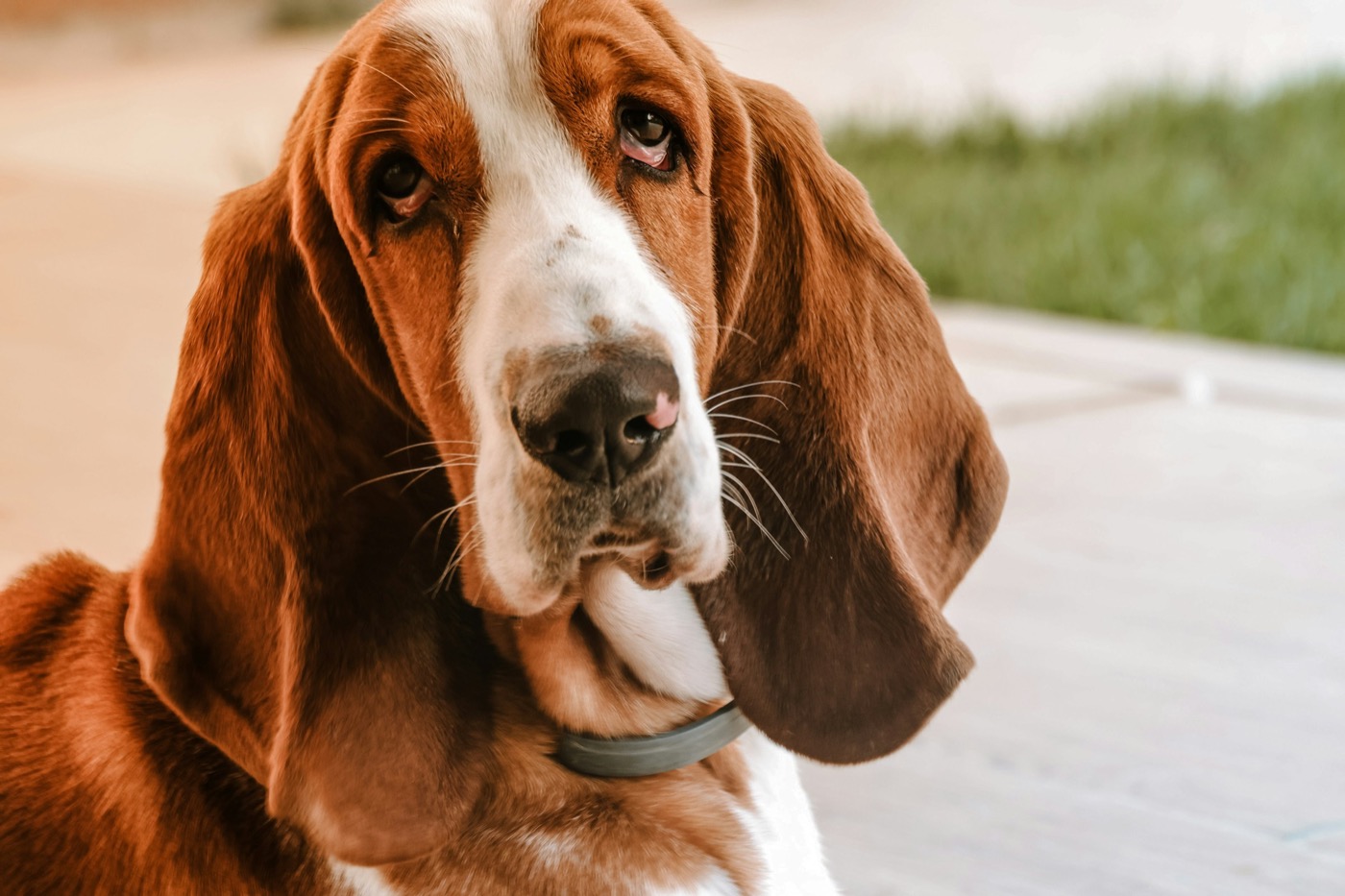
Wolverine World Wide started Hush Puppies in 1958, after working out a new way to tan pigskin. For the face of the brand they picked a basset hound named Jason.
Within five years, by 1963, one in ten adults in the United States owned a pair. That droopy, patient expression did a lot of selling.
If a basset lives at your house now, you know that look. It’s the same one he gives you when dinner is five minutes late.
#15 Tige, Buster Brown’s dog
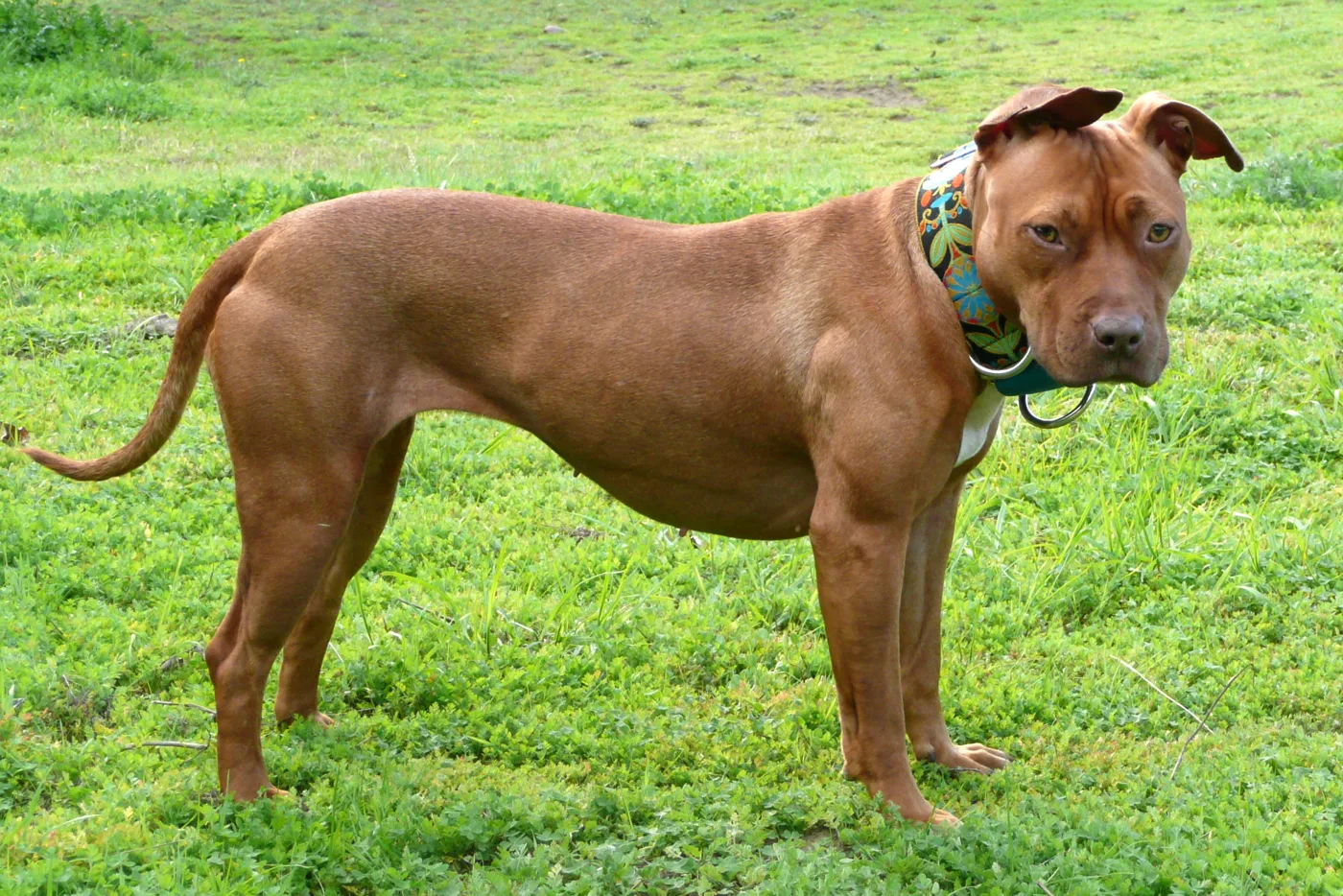
You probably pictured a scrappy little terrier. Tige, the grinning dog in the 1902 Buster Brown comic, was an American Pit Bull Terrier.
He was also a pioneer. Tige is “thought to be the first ‘talking pet’ featured in comics, though his speech went unnoticed by adults.” Any dog owner believes that one. The dog talks all day, and the grown-ups miss it.
Brown Shoe Company took on Buster and Tige at the 1904 St. Louis World’s Fair. A company employee named John Bush paid creator Outcault $200 for the rights.
If a pit bull shares your couch, its breed was selling children’s shoes more than a century ago.
#14 Rawhide chews and knotted bones
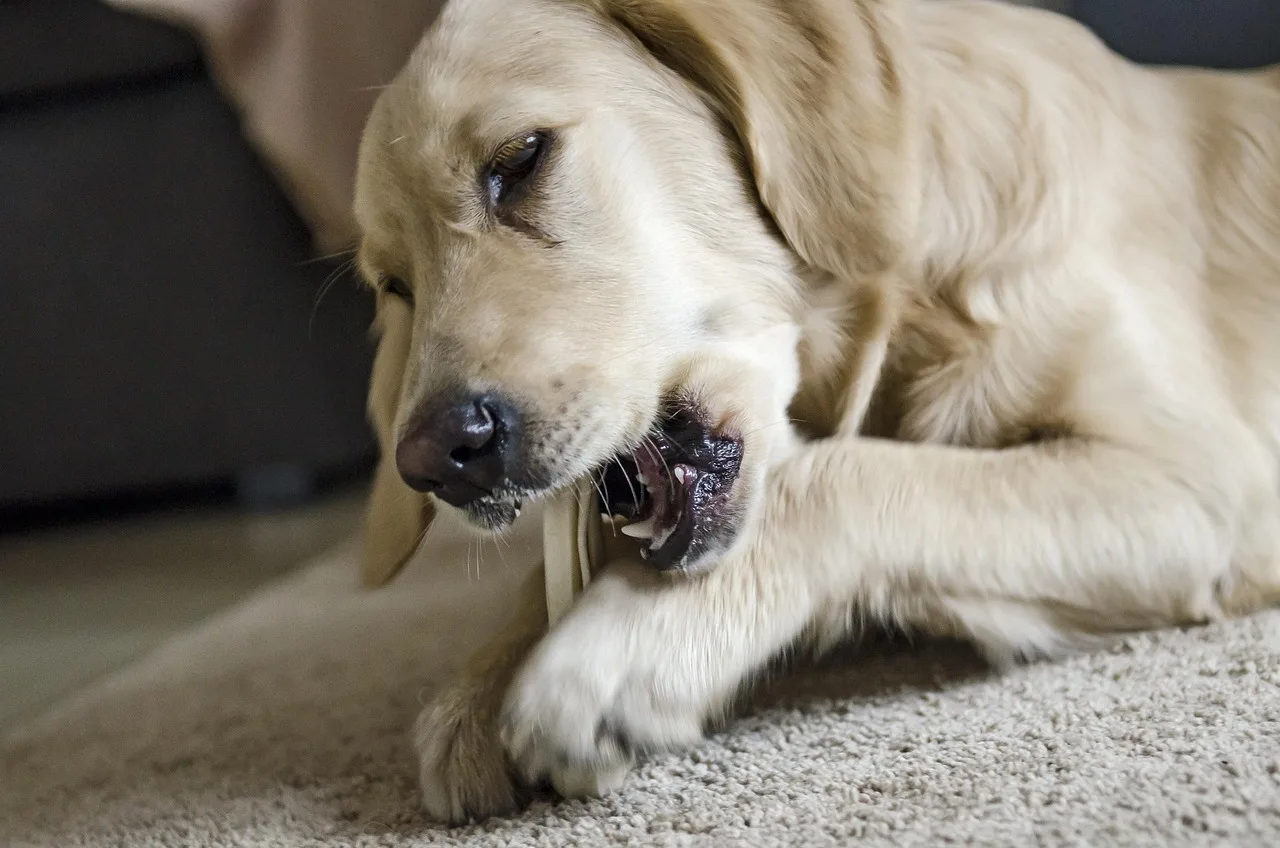
The knotted rawhide bone, gnawed into a soggy lump and left under the couch for you to find barefoot. It was in every pet aisle, and it still is. What’s changed is how differently the experts size it up.
The Doberman Pinscher Club of America makes the case for it: “Only since 1959 have we recognized the dog’s natural desire to chew animal skin.” The club suggests about an hour of chewing a day, thick US beef hide, and a word with your vet first if your dog has stomach trouble or a beef allergy.
Veterinarian Dr. Marty Becker says it depends on the dog. Chunks can become stuck “in the esophagus, stomach or intestinal tract.” His advice: “know his chewing style, select one that’s large enough that he can’t swallow it whole and only provide it when you can monitor the chewing.”
Then there’s Nikki, a clinical pet nutritionist, walking a Walmart pet aisle on TikTok. Her verdict: “All rawhide treats absolutely not.”
If your dog is a slow, careful chewer, Becker’s middle path is the practical one. If your dog swallows things in two gulps and dares you to stop him, that’s the dog Becker’s warning is written for.
#13 Table scraps in the dog’s bowl
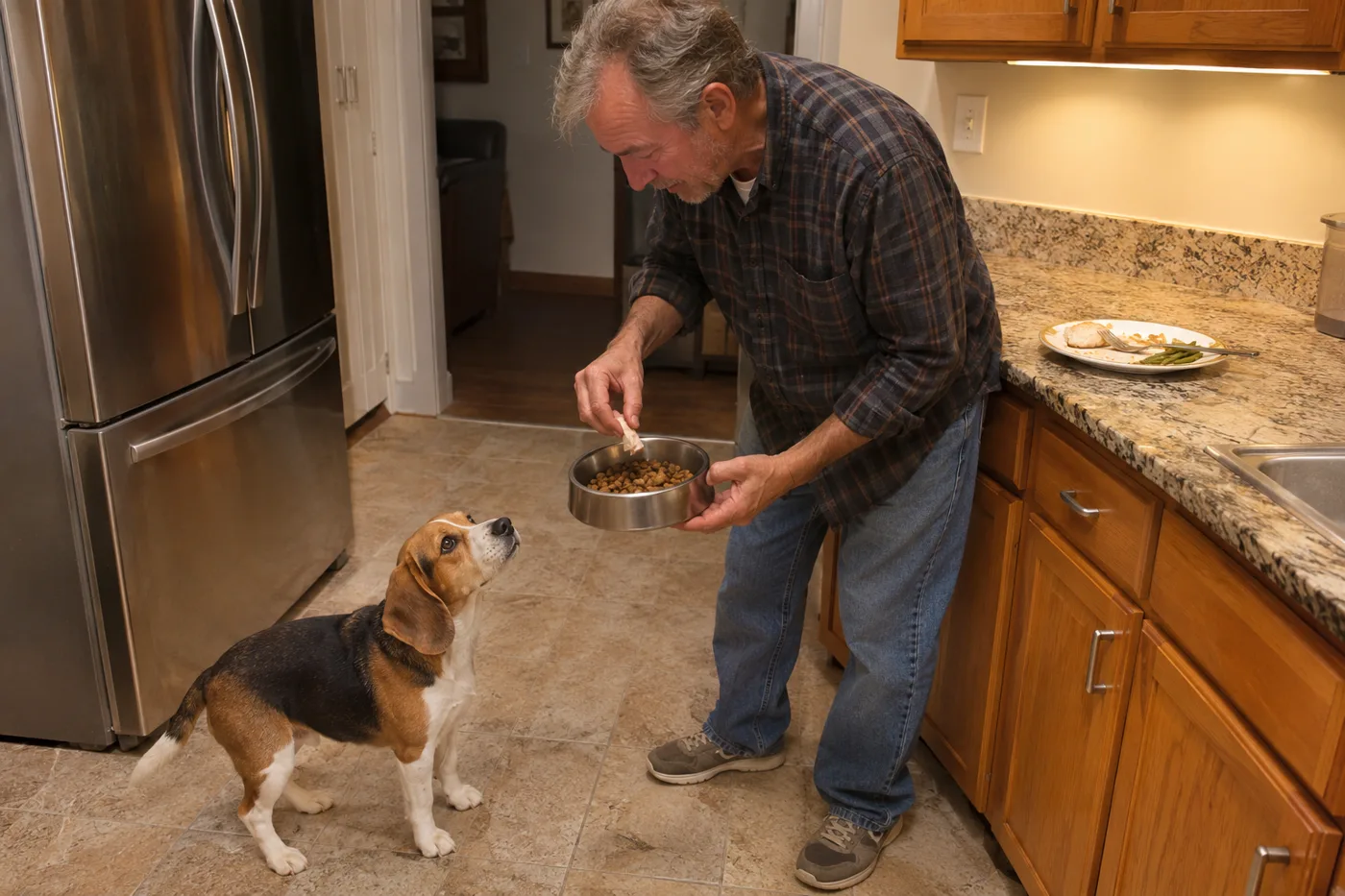
After supper, the plates got scraped into the dog’s dish. It was simply how plenty of houses ran.
The useful number comes from Dr. Joseph Wakshlag, a professor of clinical nutrition at Cornell’s veterinary college. He says “Treats should be limited to no more than 15% of the daily calorie intake,” and many nutritionists use 10%. In research he cites, the average dog got about 20% of its calories that way, “which is a bit too much.” So the typical dog is already over the line, scraps and biscuits counted together.
Merck Animal Health sorts the scraps like this:
- Fine in small amounts: lean cooked meat without skin or bones, plain vegetables with no onion or garlic, plain pumpkin
- Leave out: grapes and raisins, onions and garlic, chocolate, macadamia nuts, the sweetener xylitol, bones, poultry skin, and starchy bread, potatoes and pasta
Fatty trimmings are the easy one to miss. The ASPCA says those fats can cause vomiting and diarrhea and sometimes pancreatitis, a painful swelling of the pancreas. If your dog gets into a greasy plate and keeps throwing up, call your vet.
#12 A soup bone from the butcher
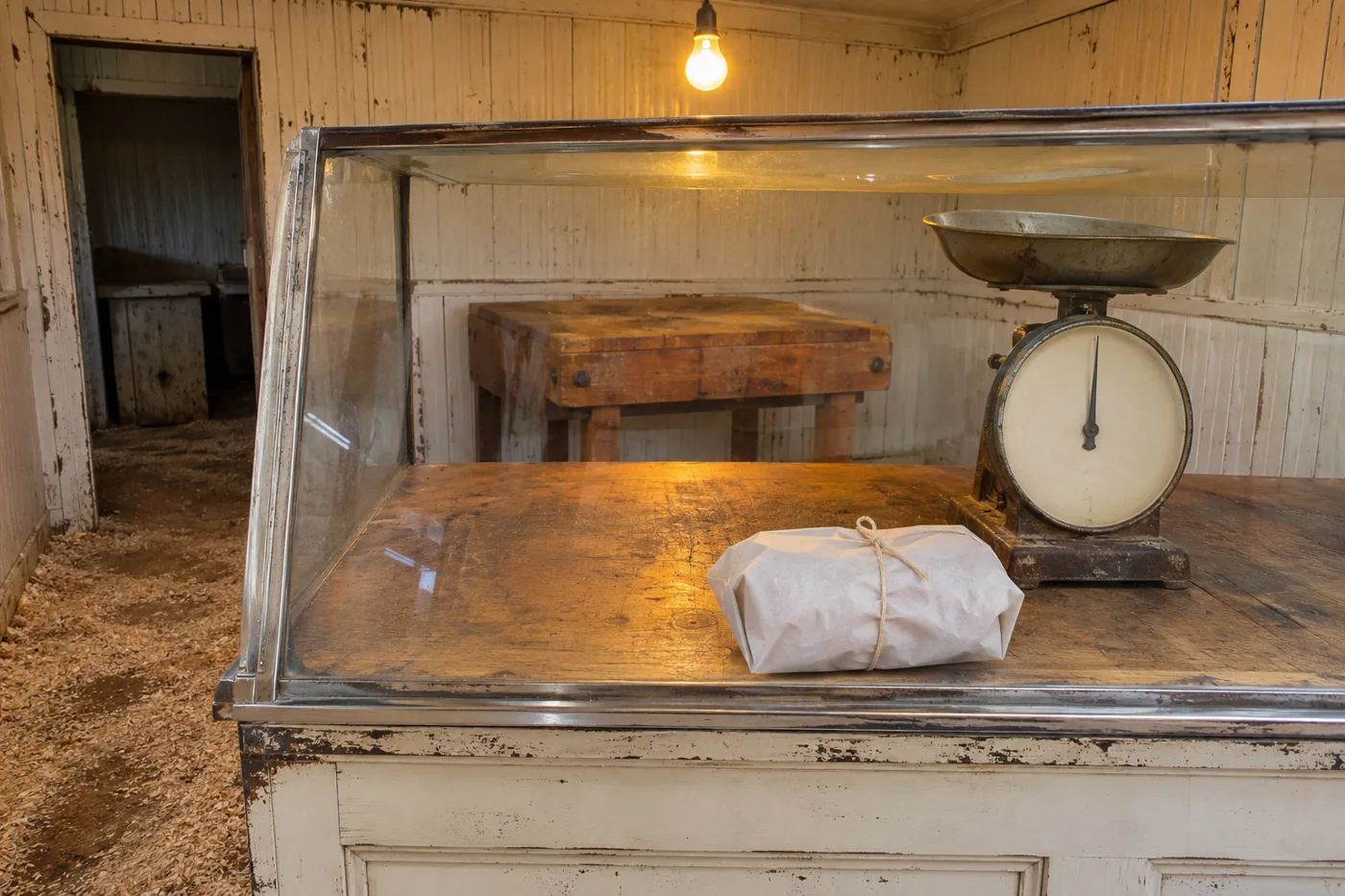
It came wrapped in white paper, tossed in with the Saturday order, and the dog knew exactly what it was before you got the string off.
“Bones are unsafe no matter what their size.” Carmela Stamper, veterinarian at the FDA’s Center for Veterinary Medicine, 2010
Stamper went out of her way to cover the big holiday ham bone and the roast bone, the ones everybody figured were too large to cause trouble. A swallowed bone can injure or block the gut, the ASPCA says, and that can mean surgery.
If your dog wants something to work on, Mississippi State University veterinarian Dr. Christine Bryan suggests a hollow rubber toy stuffed with canned dog food and frozen. Stay close while he works on it, since pieces of any chew can break off and get swallowed.
#11 Half a can in the fridge under foil
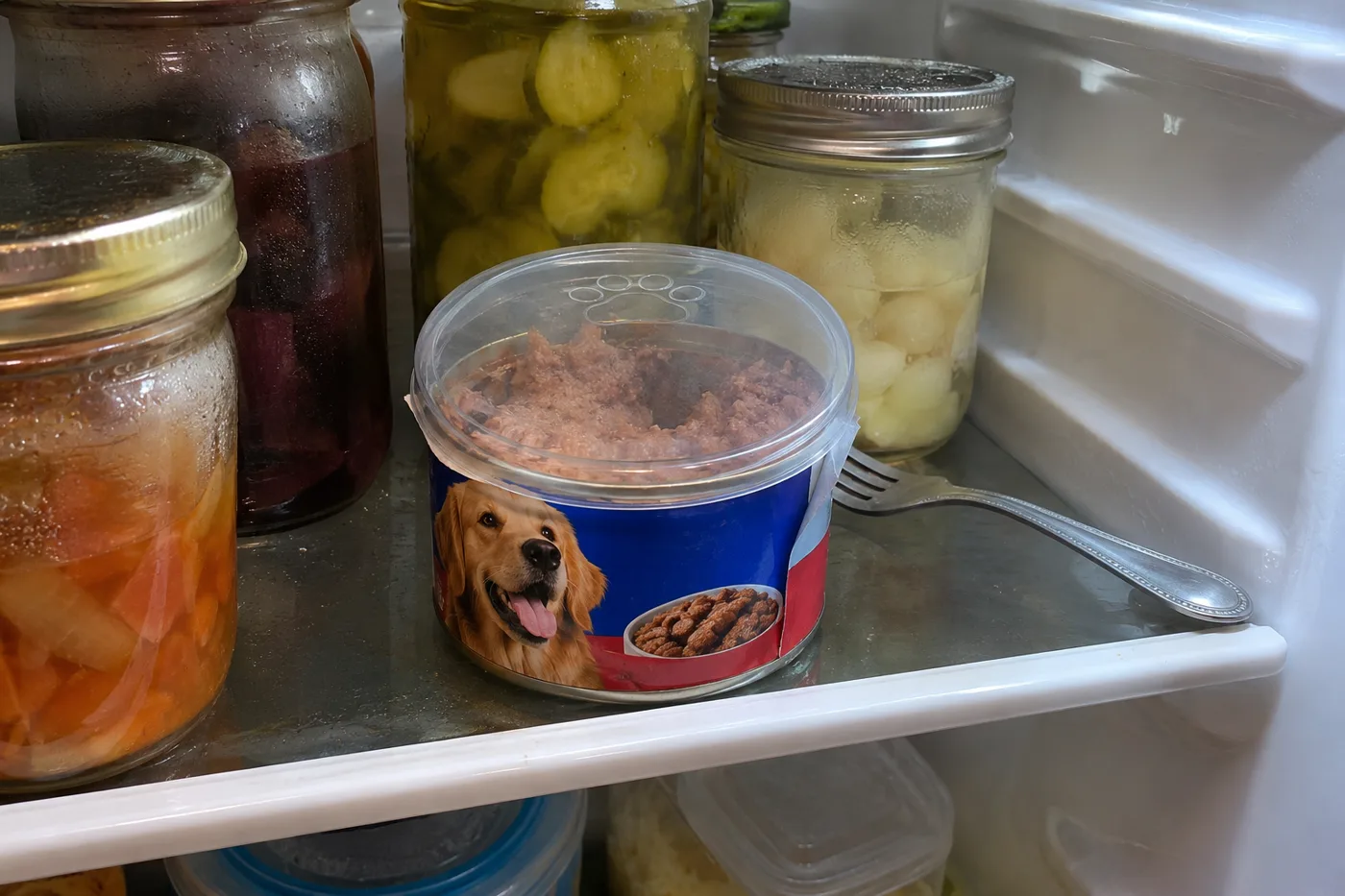
Half a can on the top shelf, a square of foil pinched over it, a fork still inside. Every dog household had one.
The FDA’s rule is simple enough: refrigerate leftovers promptly or throw them out, and cover them tightly. How long they keep is where the experts split.
Hill’s, a big pet food maker, gives an opened can most of a week. Dr. Megan McCarthy, a veterinarian with Best Friends Animal Society, gives it half that. They also differ on how long a full bowl can sit out.
Even the foil gets a second opinion. Hill’s says the best cover is “a plastic pet food lid that fits the top of the can,” with plastic wrap as the backup. Foil doesn’t make their list.
How long an opened can keeps – In the fridge, tightly covered: 3 days (Best Friends vet) to 5 to 7 days (Hill’s) – Fridge temperature: 40°F or below – In the bowl at room temperature: 2 hours (Best Friends vet), or 4 hours in a room above 50°F (Hill’s) – Freezing an opened can: Hill’s says don’t
#10 The electric can opener calling the dog
You weren’t even opening his food. You were opening green beans. The dog came skidding in anyway.
That whirr has a birthday. An electric can opener was patented in 1931 and went nowhere. Then in 1956, Walter Hess Bodle’s freestanding model, sold under the Udico name, hit stores. It also sharpened knives, came in colors with names like Flamingo Pink and Avocado Green, and sold fast that Christmas.
Why the dog came running is old science. Pavlov noticed his dogs drooling when the technician who usually fed them walked in. After a few repeats, a sound alone did it. The same principle explains the can opener: a noise that came before dinner often enough became dinner, as far as the dog was concerned.
Any sound works if it’s reliable. That’s how a dog can sleep through a thunderstorm and still wake up for green beans.
#9 Kal Kan before it was called Pedigree
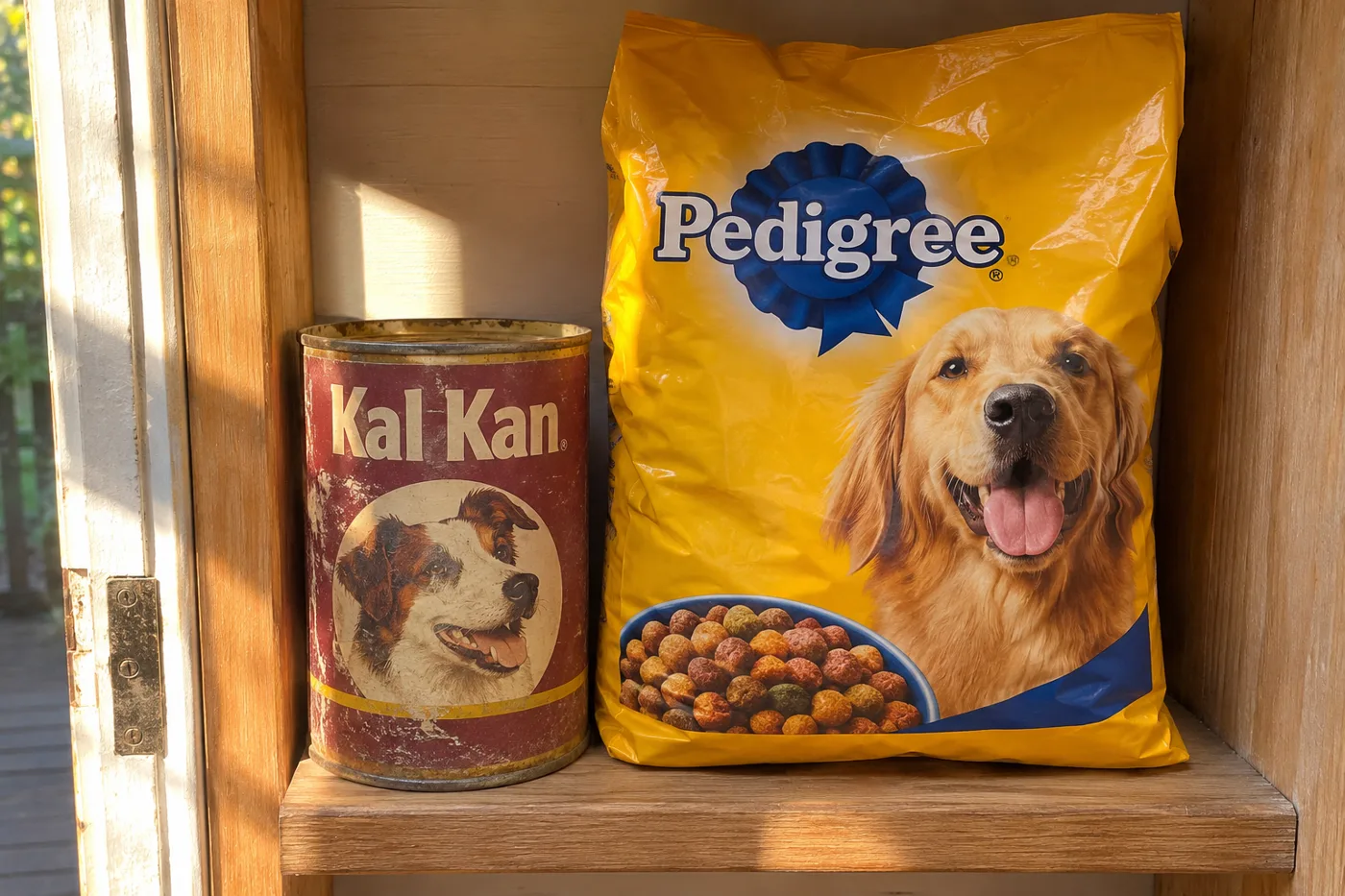
If you remember Kal Kan and wondered where it went, it never left. It changed its name.
Mars bought Kal Kan Foods of Los Angeles in 1968. Twenty years later, in 1988, Kal Kan’s dog food became Pedigree, the name Mars already used for dog food outside the United States.
If there’s a Pedigree bag in your pantry, it’s Kal Kan wearing the name Mars used overseas.
#8 Puppy, adult and senior bags appear
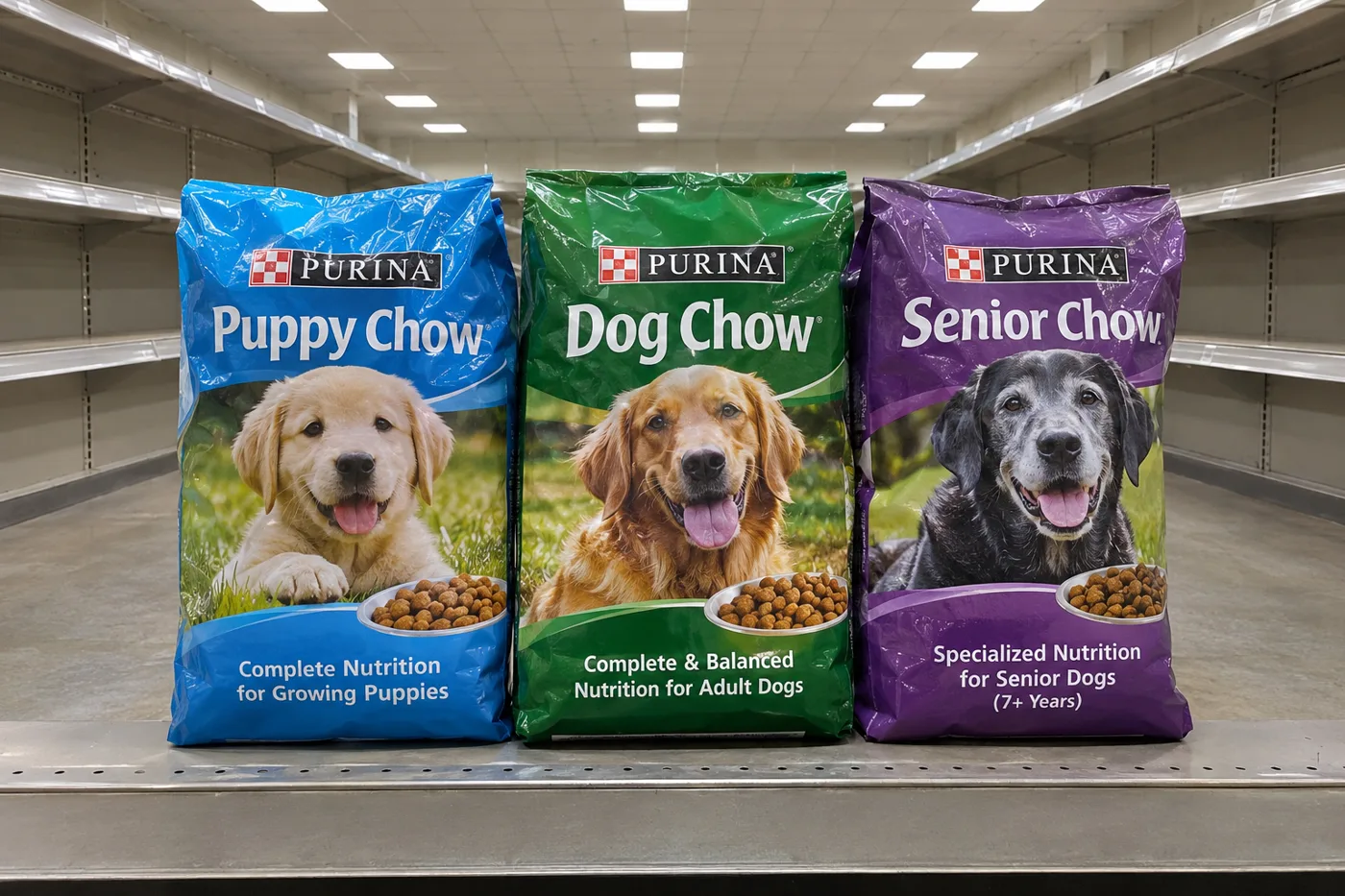
The senior bag on today’s shelf looks like a modern idea. It’s older than canned dog food.
James Spratt, who sold the first commercial dog food in the 1800s, was already promoting different foods for puppies, adults and seniors. The idea just took a long time to reach the bag.
It got there in the early 1960s. Purina’s Puppy Chow arrived in 1963, with Purina “the first to acknowledge that puppies need additional protein and nutrients.” By 1977, a Cycle ad was promising “Nutrition…for the life of your dog.” According to the UK pet food trade body, life-stage foods became widely available from the 1980s.
The senior bag is the one that tugs at people.
“My older lab is almost 8- and every birthday makes me sad.” An owner of an aging Labrador, on Reddit’s r/labrador
Around 7 is when the UK trade body starts talking about senior food, which it describes as “highly digestible and easy to chew.”
#7 Forgotten canned names on the shelf
Some names from the old ads you’ll recognize only as a faint bell:
- Red Heart, with ads running in the 1940s
- Pard, whose 1945 ad asked, “What have wartime foods done to your dog?”
- Ideal, advertising in 1943
- Skippy, still on shelves in 2018, which is how it got swept into the Gravy Train recall
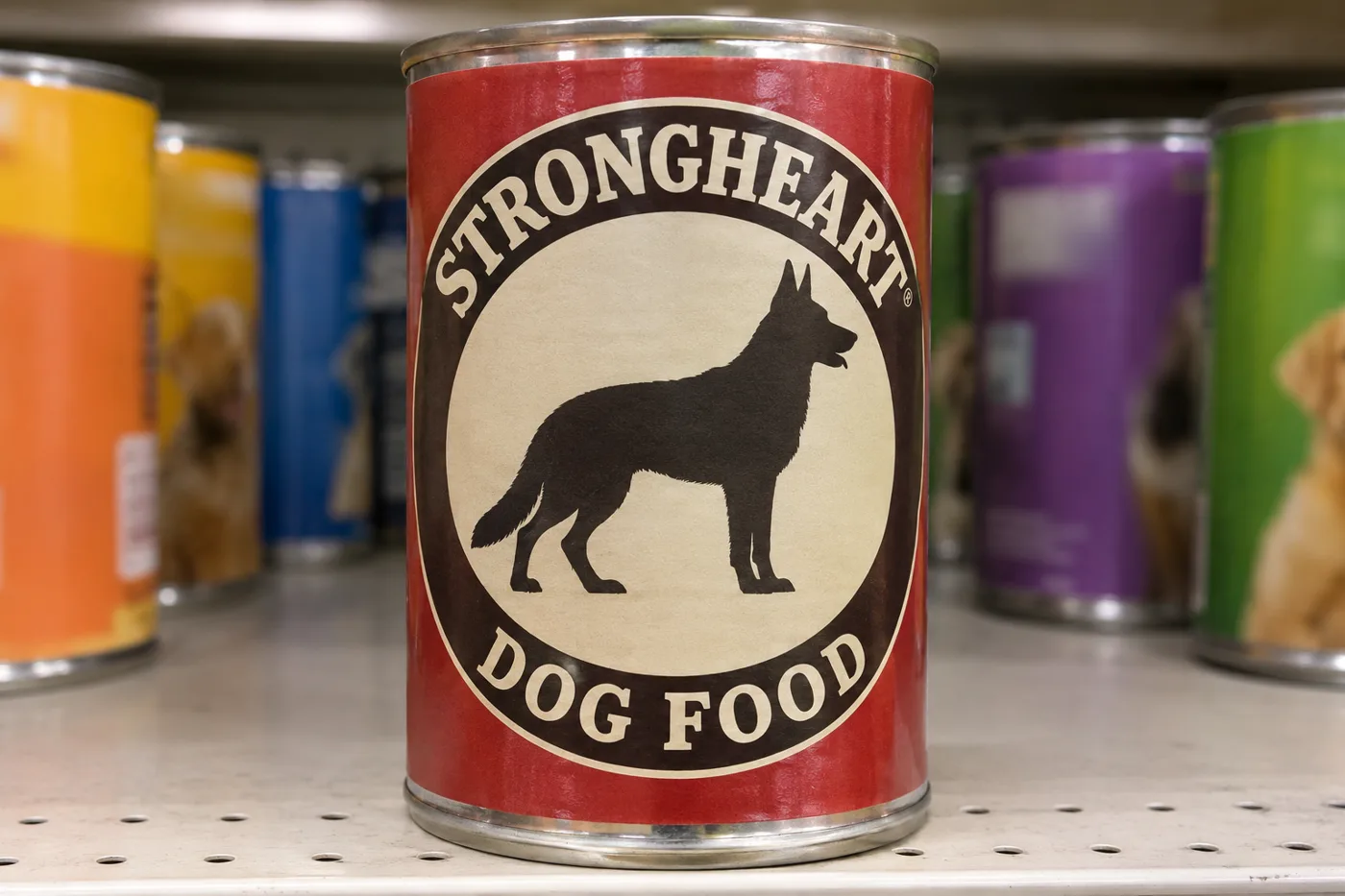
One of them never went away. In 1932, Doyle Packing Company named a canned dog food after Strongheart, a German shepherd star of the silent movies. Strongheart dog food was still made as of 2025, which makes it older than nearly every jingle you can hum.
#6 Where to watch the old ads again

You can watch the real commercials again, free, without hunting through random uploads. Two places to start:
- Duke University’s AdViews. Nearly 10,000 TV commercials from the 1950s through the 1980s, all from one big ad agency, D’Arcy Masius Benton & Bowles. You can watch them free on the Internet Archive.
- The Library of Congress. Its guide to commercial collections lists the Karr Collection (1,928 commercials from the 1960s to the early ’70s) and the Gitt Collection (362 from the early ’70s). It also points you to the Prelinger Archive, with nearly 7,000 films you can watch online at the Internet Archive.
Duke’s set is the work of a single agency, so not every dog food brand will be in it. The agency worked for General Foods, maker of Gaines and Gravy Train. Type the brand name into the search box and see who turns up.
#5 Spuds MacKenzie, the party dog
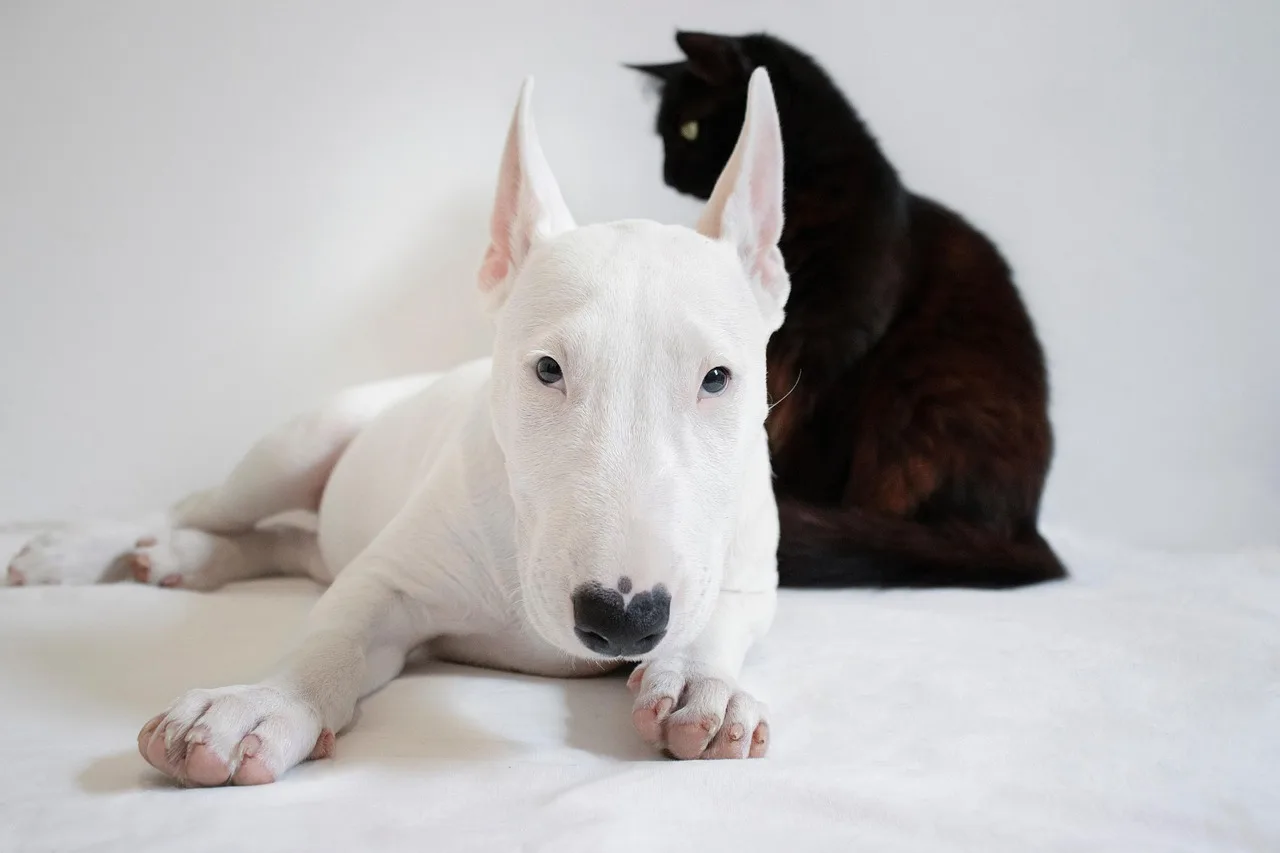
He didn’t sell dog food, and he wasn’t a he.
Spuds was a bull terrier who sold Bud Light, starting at Super Bowl XXI in 1987. The real dog was a female named Honey Tree Evil Eye, “Evie” at home, owned by Jackie and Stanley Oles. Spuds partied. Evie went home and was a dog.
The campaign ended in 1989, after lawmakers complained the ads appealed to kids. Bill Stolberg, the campaign’s PR manager, had his own view of how long any of it could last:
“A really good campaign doesn’t last much longer than 18 months. The joke gets old.” Bill Stolberg, PR manager for the Spuds campaign, via Mental Floss
Bull terrier owners will tell you the breed’s sense of humor never gets old. Evie died of kidney failure in 1993. She was 10.
#4 Crumbling a Gaines-Burger into the bowl
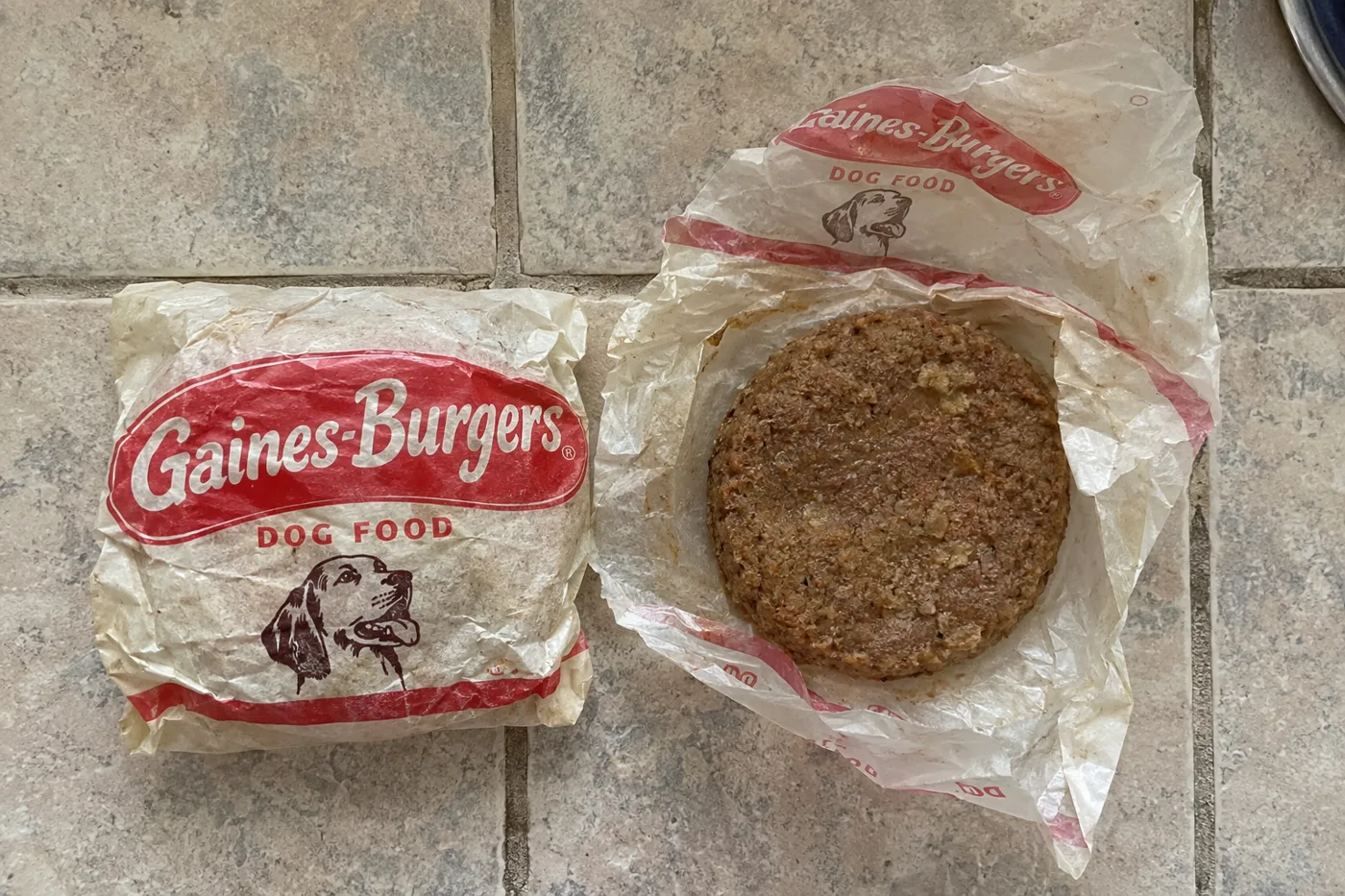
“My lil dog ate Gainsburgers or something that you crumbled up. Never smelled like food.” A childhood dog owner, on Reddit’s r/70s
In the same thread, another poster remembered the patties looking good enough to put on a bun. Both are right. General Foods introduced Gaines-Burgers in 1961: moist dog food, shaped like a hamburger, each one in its own wrapper. The name came from the Gaines Food Company of Sherburne, New York.
Then the brand got passed around. A cheese version arrived in 1982. Anderson, Clayton and Company bought Gaines in 1984, Quaker Oats took it in 1986, and the patties stopped in the 1990s.
Gaines-Burgers are being made again, just not the way you remember. A Chicago company, dVour Brands, sells them as fresh dog food in limited batches. There are two recipes: beef with beef liver, or turkey with blueberry, both with chia seeds. No cellophane, and not shelf-stable.
The site doesn’t list prices or stores, so check there before you plan a nostalgic dinner for anyone. The dog you had then would have been baffled by the blueberries.
#3 The Coppertone dog tugging the swimsuit
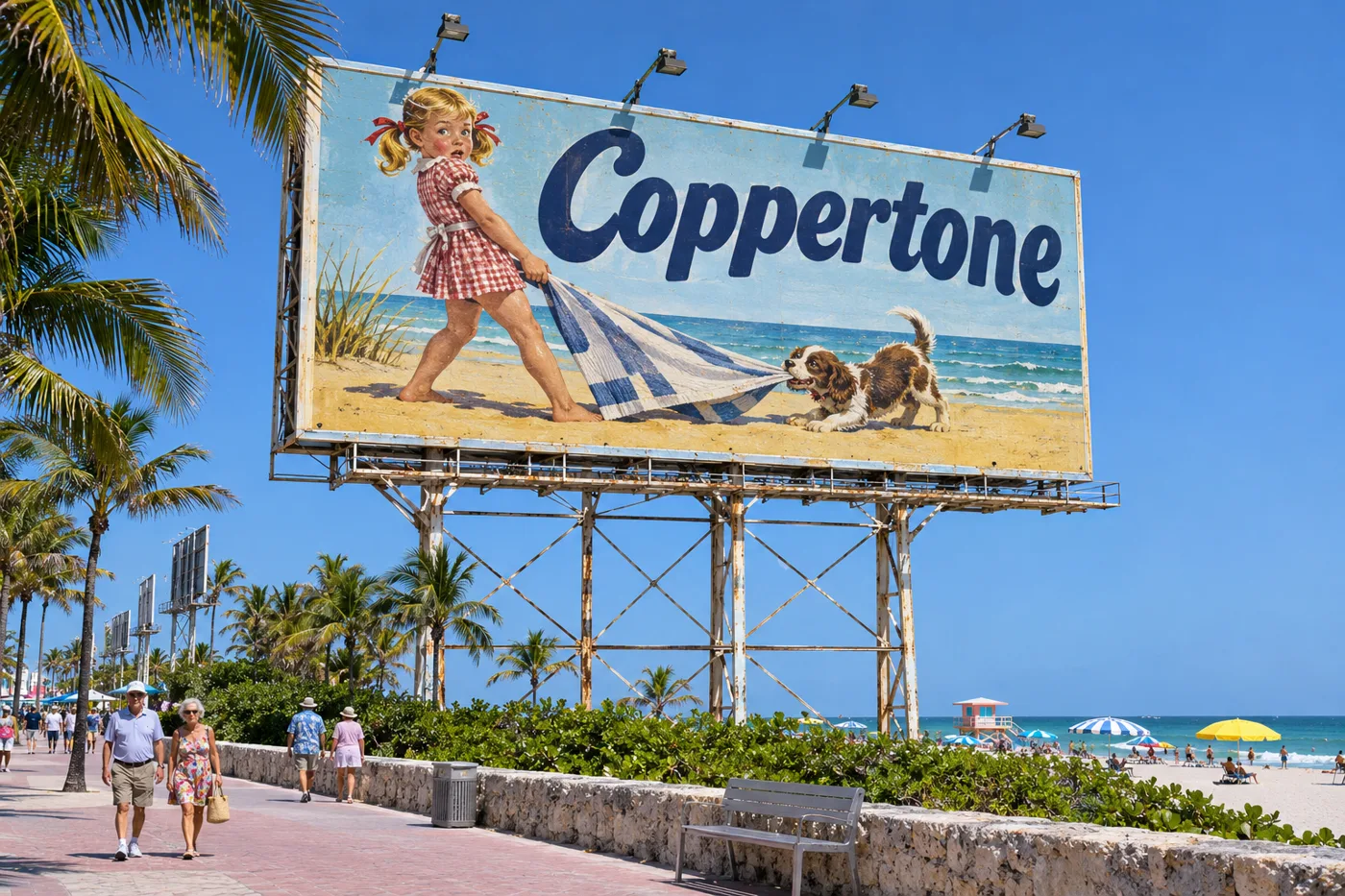
The little girl on the beach, tan line showing, a puppy yanking at her swimsuit. You saw it on bottles, in magazines and on billboards all through your summers.
A Florida ad agency, Tally Embry Advertising, came up with the girl and the cocker spaniel in 1953. The puppy you probably remember is a redraw. The original artwork burned, and in 1959 the artist Joyce Ballantyne Brand painted it again, using her daughter Cheri as the model. She was paid $2,500 for the first art and $2,000 more to redo it after the fire.
The dog was the problem. Her own dog was entirely wrong for the part.
“I had a cute little girl, but my dog was a big, old German shepherd. So I had to borrow the dog.” Joyce Ballantyne Brand, artist, to the Baltimore Sun, 1991
So she borrowed a neighbor’s cocker spaniel in Bronxville, New York. Her explanation, years later: “She worked cheap and was convenient.”
The image was later toned down “for modesty,” but a moving billboard of it still stands in Miami Beach. The German shepherd, presumably, stayed home and sulked.
#2 Alpo and the words on the can
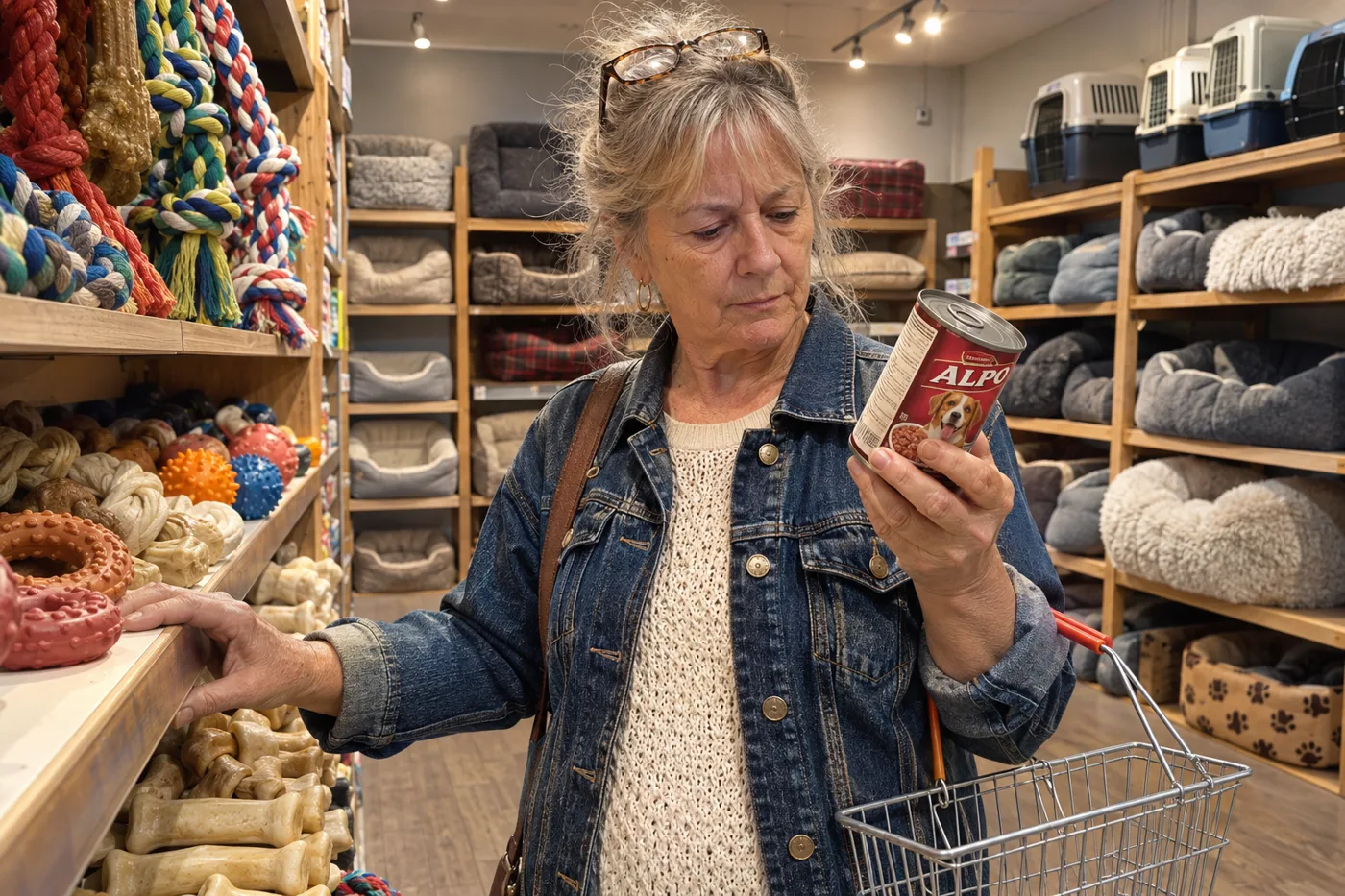
Lorne Greene told America he fed Alpo to his own dogs. It’s often credited as the start of the phrase “eating one’s own dog food,” which people still use when a company relies on its own products.
Alpo goes back to 1936, when Robert F. Hunsicker started it in Allentown, Pennsylvania. The name is short for “Allen Products.” Ed McMahon did Alpo ads too, and in the 1990s Garfield signed on as a “spokescat.” After several owners, it became part of Nestlé Purina PetCare in 2001, which now makes it in cans, soft packs and dry kibble.
The old ads sold the meat hard. A 1970 Alpo ad leaned on “real chunks of meat,” and a 1982 one on “meat protein.”
“I always thought that dog food looked better than the food my mom was serving us…” A man who grew up watching 1970s dog food commercials, on Reddit’s r/70s
An ad can say what it likes. The name on the label is what follows rules, and on today’s cans the small word in the name tells you the minimum. These are the model rules from AAFCO, the group of state feed officials whose label rules most states adopt:
| What the label says | Beef it must contain |
|---|---|
| “Beef Dog Food” | At least 95%, not counting added water |
| “Beef Dinner” or “Entrée” | At least 25% |
| “With Beef” | At least 3% |
| “Beef Flavor” | No set amount |
Skyler, a certified dog trainer and pet nutritionist who reviews brands on YouTube, read a can of Alpo and found beef sixth on the ingredient list. Her point: a “with beef” can needs only the 3% minimum, and here beef is clearly not a main component of the food. She’s blunt about Alpo in general and ranks it near the bottom.
On “beef flavored,” she’s blunter still: it doesn’t mean the food has to contain any meat at all.
So a “dinner” can and a “with beef” can that sit side by side on the shelf can hold very different amounts of beef.
#1 The grocery-store bag, then and now
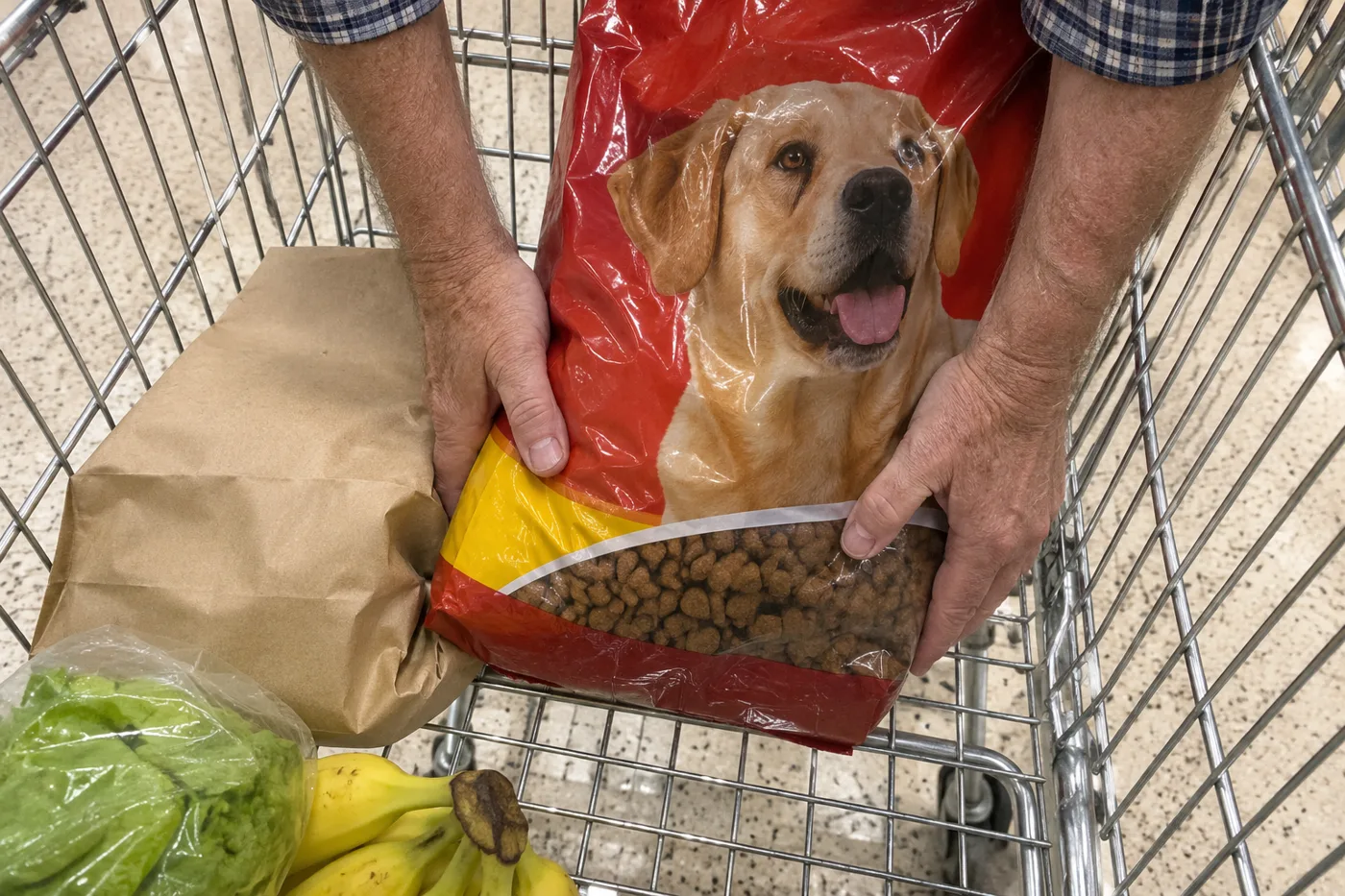
You’ve stood in the pet aisle holding a bag that costs more than it used to and muttered about it. Everyone has. Here’s what the government’s price numbers say: since the late 1990s, pet food has gone up less than prices overall.
Since December 1997, the Bureau of Labor Statistics’ index for pet food and treats has risen about 95%. Over the same stretch, prices for everything together rose about 109%, by the government’s main price index. The bag got pricier, but prices across the economy rose faster still.
The sting you remember was real, though. Pet food jumped about 22% between 2021 and 2023, then barely moved in 2024 and 2025.
The price story, in short – Our estimate: measured against everything else you buy, pet food is about 7% cheaper than it was in late 1997 – 2020 to 2025: pet food up about 23%, all prices up about 26% – These figures start in late 1997, so they can’t tell you what a bag cost when you were a kid
The price tag isn’t the only thing that weighs on people in that aisle. On a Reddit thread about ads people can’t stand, several posters on r/CommercialsIHate pushed back on premium-food commercials that hint cheaper food makes you a bad owner. A healthy, well-fed pet, they say, is a pet doing fine. One volunteer put it better than any ad:
“People who are feeding their dogs with whatever we provide them are some of the most caring, loving pet owners I have ever met.” A volunteer at a city pet food pantry, on Reddit’s r/CommercialsIHate
The bottom line
Almost none of those names simply died. They were sold, renamed, sent to Argentina, turned into cat food, or handed to a grocery chain. The dogs eating them never noticed a thing.
What changed most is the fine print. A 1970 commercial could promise real chunks of meat and leave it there. The can you buy now has to earn its name on the label, one small word at a time.
So when a jingle from 1964 starts up in your head in the pet aisle, let it play. Then pick up the can and read the small word next to the beef.
Bonus: Three checks for the next can or bag
- Find the word “flavor” and compare it with the word “beef.” Under AAFCO’s model rules, “flavor” has to be printed as large and as plainly as the meat word, so a tiny “flavor” under a giant “BEEF” isn’t playing by the rules.
- Read the ingredient list for plain “meat.” On a US label, generic meat can only come from cattle, pigs, sheep or goats, and any other animal has to be named.
- Write the day you opened it on the lid with a marker. With experts giving anywhere from 3 days to a week, “I think I opened it Tuesday” won’t settle anything.
Questions people also ask
What was the first dog food ever made?
The first commercial dog food was James Spratt’s dog cakes, launched in England in 1860. They were sold in the US by 1870, and Spratt got a US patent in 1881, according to the Hagley Museum. The first canned dog food in the US was Ken-L Ration, in 1922, according to the Pet Food Institute.
Does horse meat go into dog food?
Horse meat is not generally used in US commercial pet food today, according to the Pet Food Institute, and any product that contains it must say so on the label, according to the American Pet Products Association. It was the main ingredient in Ken-L Ration when it launched in 1922, when it was considered an acceptable ingredient.
Do they still make Gaines-Burgers?
Yes, in a new form: a Chicago company called dVour Brands now sells fresh Gaines-Burgers patties in limited batches, in beef or turkey recipes. The original wrapped, shelf-stable patties stopped in the 1990s. The Gaines-Burgers site doesn’t list prices or stores.
What happened to Chuck Wagon dog food?
Purina relaunched Chuck Wagon in 1994 after sales fell, then dropped the brand in 2005. Topco Associates bought the name in late 2011, and by 2012 it was a store brand at chains including Price Chopper, Piggly Wiggly Carolina and Tops. In 2026 the Food City chain still lists it for sale.
Is it safe to feed my dog really old or expired dog food?
No. A decades-old can of dog food is a keepsake rather than a meal. Utah State University Extension says canned food keeps its best quality until the date on the can, usually 2 to 5 years from manufacture, and any badly dented, bulging, rusty or leaky can should be thrown out. If your dog has already eaten some, call your vet.
What does “beef flavor” mean on a dog food label?
“Beef flavor” requires no set amount of beef at all; an ingredient only has to give the food a beef taste. Under AAFCO’s model rules, which most states adopt, “with beef” needs at least 3% beef, a “beef dinner” at least 25%, and a plain “beef dog food” at least 95%.