From the firehouse Dalmatian to the Dutch duck-trap dog, here’s the real work dogs did before machines, wars and wires took it away, and what to do with that leftover drive today.
The most famous dog job of all, the one waiting at #1, never looked the way the paintings told you.
Somewhere across town a siren starts up, and your dog lifts her head off the couch cushion. Ears up. Whole body still. She has never seen a fire horse in her life. But maybe some dog way back in her family ran in front of one.
Old dog jobs work like that. The work went away and the wiring stayed. Once you know the job, the habits that drive you a little crazy start to make sense.
Table of Contents
#24 Firehouse Dalmatian running ahead of the horses
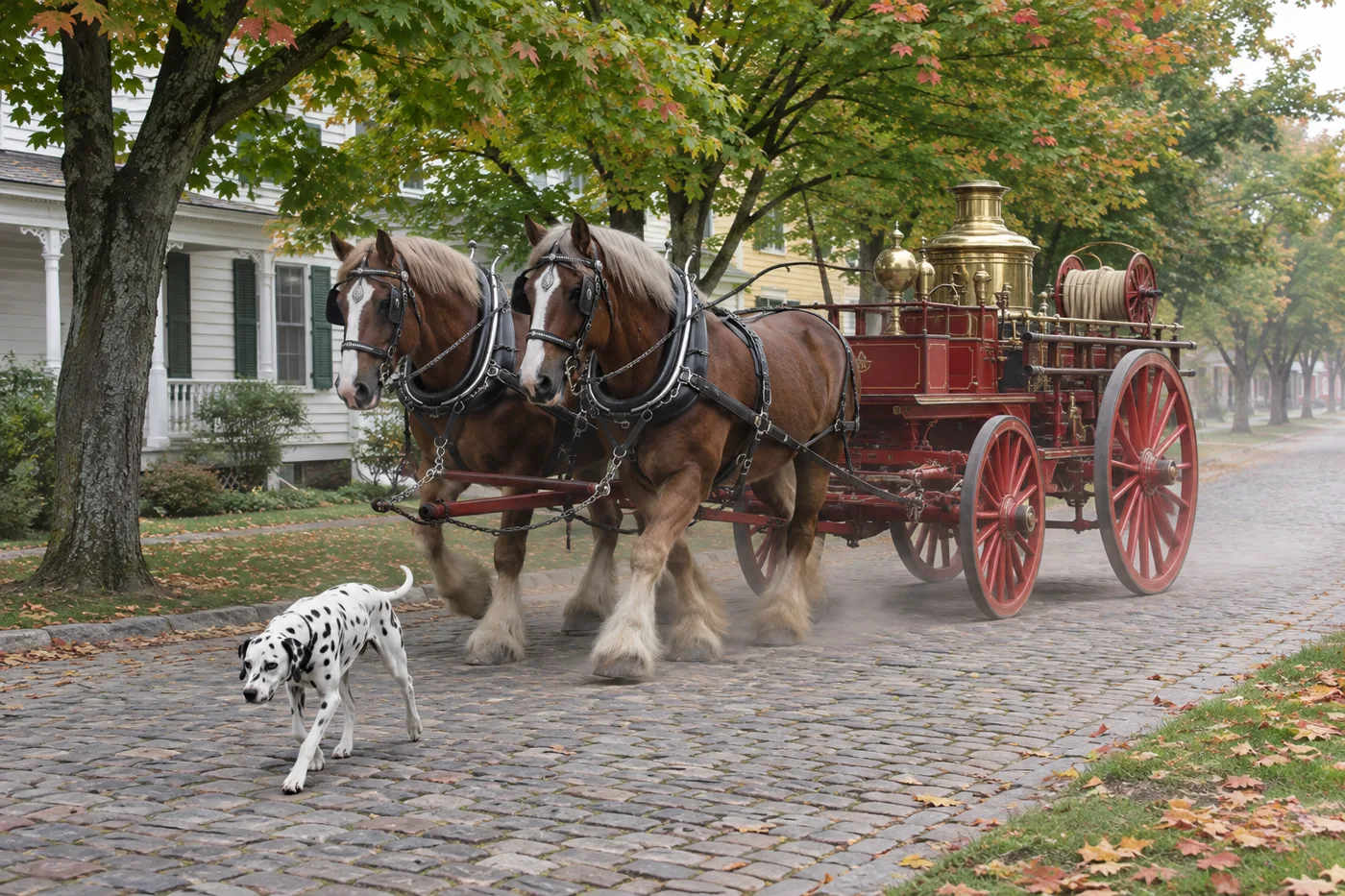
You probably met Sparky before you met a real fire dog. He was the cartoon Dalmatian in the fire hat on the posters and coloring sheets at fire-prevention time. He officially debuted on March 18, 1951, and turned 75 in 2026.
The real dogs had a real job, and it started on the road. The Dalmatian was bred for “coaching,” which meant running beside horse-drawn carriages and guarding the horses and gear when the driver walked off. Fire companies borrowed that skill. In 1910, an FDNY lieutenant described the dogs that would “run ahead of the horses whooping it up and getting people out of the way.” At a fire, they guarded the equipment and kept stray dogs from spooking the horses.
New York had about 1,550 fire horses in 1911. The last horse-drawn run came on December 20, 1922, in Brooklyn Heights. At the farewell, the company’s coach dog, Jiggs, “ran circles around the engine.” Departments kept the spotted dogs on as mascots, and the image stuck for a hundred years.
Here’s the 2026 news most Dalmatian owners haven’t heard. As of May 1, 2026, Dalmatians can enter AKC herding events. A dog must be 9 months or older to compete, and 6 months or older for an instinct test, which takes no prior training. One AKC-licensed club’s entry form lists that test at $50 a dog.
If yours paces the house by late afternoon, that’s coach-dog stamina with nowhere to go.
#23 Lassie and Rin Tin Tin on TV
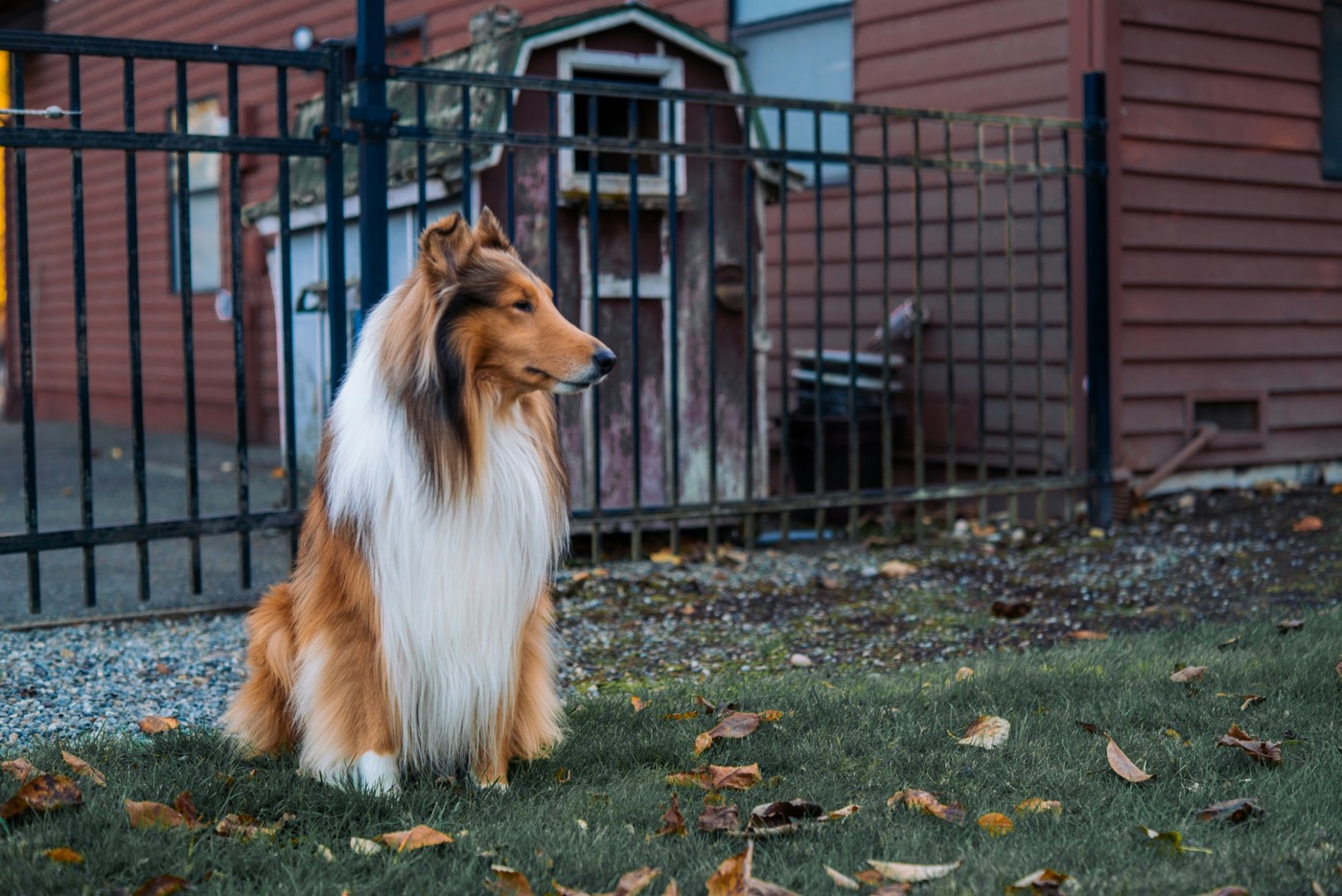
For a lot of homes, Sunday supper ran on Lassie’s schedule. The show aired on CBS at 7 p.m. Eastern from 1954 to 1971, then went into syndication, for 591 episodes. Rin Tin Tin was out at Fort Apache on ABC from 1954 to 1959. That role was mostly played by a dog named Flame Jr.
Jon Provost, who played Timmy, titled his memoir “Timmy’s in the Well!” The joke was that a well was the one place Timmy never fell.
You’d assume every family in America ran out and bought a Collie. The kennel club’s rankings say otherwise. The Collie was 4th in the 1940s, before the show existed, then 8th in the 1950s, 7th in the 1960s and 10th in the 1970s. Lassie saved Timmy every week and never stopped her own breed’s slide.
German Shepherds had their big moment earlier. They hit No. 1 from 1925 to 1928, after the silent-film Rin Tin Tin, and were down to 6th by the 1950s.
If you did bring home a Collie because of Lassie, she was built for something tougher than TV. Collies are eligible for AKC herding tests, and plenty still have the instinct to gather a yard full of kids.
#22 The dog who fetched the morning paper
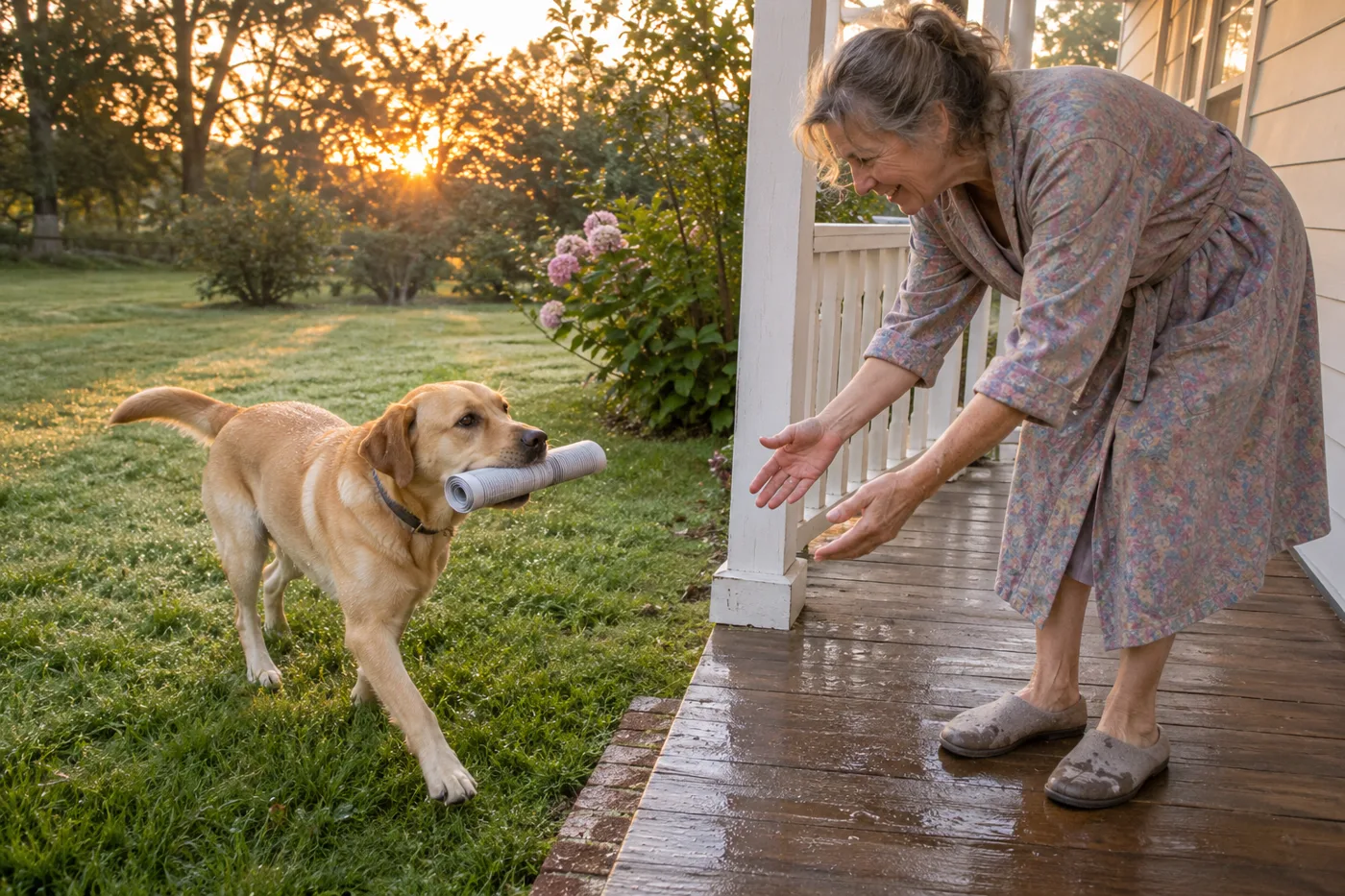
You remember the thump on the lawn before sunrise, the rubber band, and the dog trotting back with the paper soggy at one end.
The job shrank because the paper did. Weekday newspaper circulation in the U.S. was about 62 million in 1990 and about 21 million by 2022. For every three papers landing on lawns in 1990, about one lands now.
Some dogs still have the route. Taylor, a Boxador in Morristown, N.J., runs out every morning for the paper and gets a treat for it. One owner on Reddit’s r/dogs says the whole neighborhood envies them on snow days, watching their dog happily run out for the newspaper.
If your news comes on a screen, fetch something else. Someone on r/dogs who grew up with a spaniel remembers a mom who kept misplacing her slippers. She taught the dog to find them on cue, and the dog loved it. Another owner, on r/puppy101, had a shoe thief and trained her to bring the shoes at walk time instead.
The AKC’s method for fetching a named object goes step by step:
- Name one toy and reward every retrieve.
- Put it among things that aren’t toys and ask for it by name.
- Put it among other toys.
- Add a second named toy.
The rule that keeps it working: “If at any point your dog chooses the wrong toy, just go back to the previous step where your dog was successful.”
Give your dog a job: other easy starts – Treibball, where a dog pushes big inflatable balls into a goal. The head of the American Treibball Association says herders have “a slight edge,” but any dog can learn it. – A nosework or scent class, which owners on Reddit name as a favorite “job”. – The job your dog already picked. Owners report dogs who appoint themselves lookout for hikers or rough play in the pool.
#21 Farm collie bringing the cows in
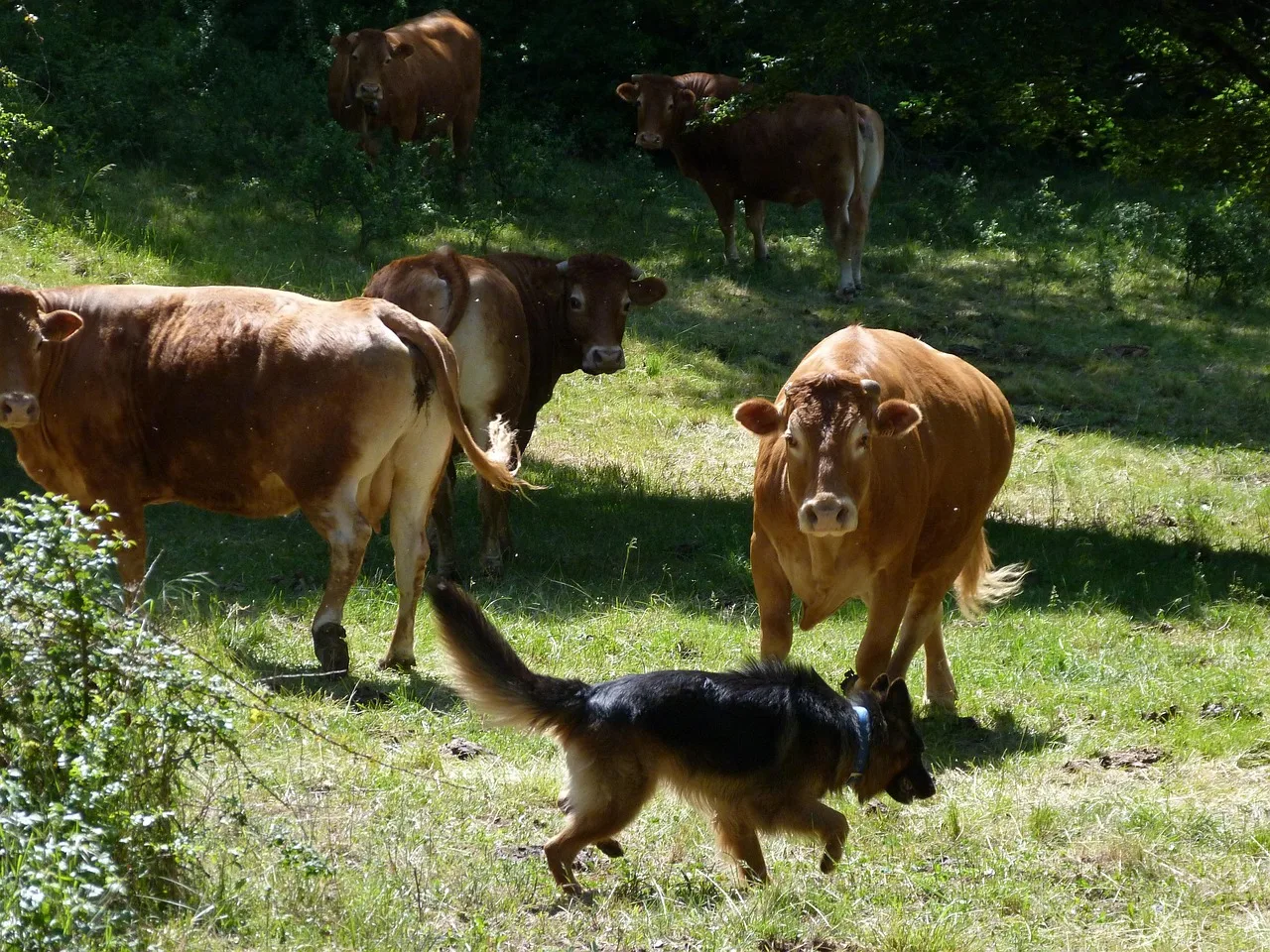
At milking time, somebody said “go get ’em,” and the dog went down the lane alone. Twenty minutes later the cows came plodding up with a dog behind them, and nobody thought it was remarkable.
That dog was often an English Shepherd, the “farm collie.” It herded stock, fetched escaped animals, killed rats in the granary and kept hawks and raccoons off the chickens. Breeder and historian Jan Hilborn explains how the job ended: “In the 1950’s, tractors finished replacing horses… the all-purpose old-fashioned farmdog became equally unfashionable.”
What surprises people is how recently the rest of that world shrank. Licensed U.S. dairy herds fell 63% between 2004 and 2024, from 66,825 to 24,811. The farms that stayed got bigger. The average herd went from 112 cows in 2000 to 283 in 2021. A family dog can’t bring in that many, and nobody asks it to.
That leftover brain is why owners on r/dogs report that retrievers and Border Collies finish puzzle feeders and snuffle mats in minutes. A cheap puzzle won’t hold a dog bred to run a farm. The AKC herding program, running since 1989, takes Collies, Australian Shepherds, Border Collies and Shetland Sheepdogs, among other eligible herding dogs.
#20 Chained junkyard and gas-station watchdog
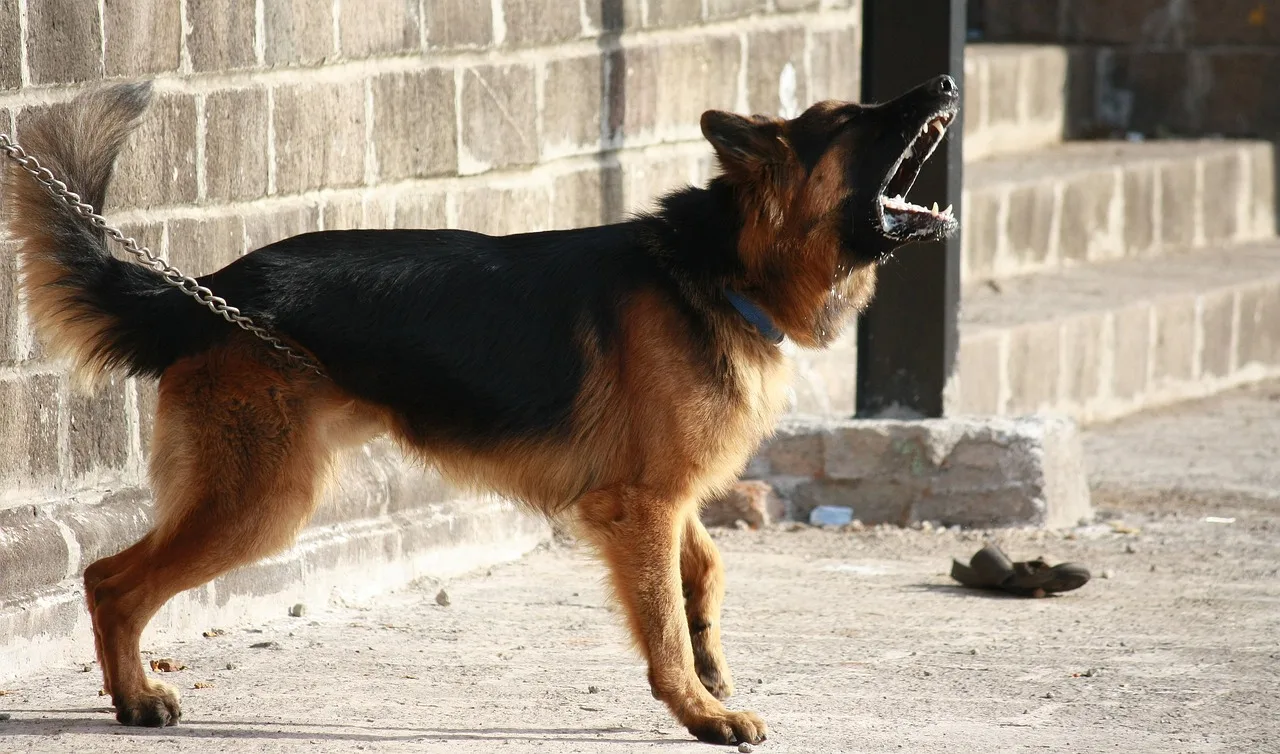
You pulled in for gas, and the dog by the garage bay looked up just long enough to make sure you knew he was there.
Jim Croce said the junkyard-dog line in “Bad, Bad Leroy Brown” came from hunting junkyards for car parts, where the dogs had “an axle tied around their necks or an old lawnmower to keep ’em at least slowed down.” The song spent two weeks at No. 1 in July 1973.
Plenty of today’s dogs take that job without being asked.
You don’t have to fight it. Veterinarian and dog behaviorist Dr. Ian Dunbar, who founded the Association of Pet Dog Trainers, puts barking on cue, so the dog gets a time and place to let it out. A watchdog who barks when you ask, and quits when you ask, is still a watchdog.
#19 Sled dogs hauling mail and freight
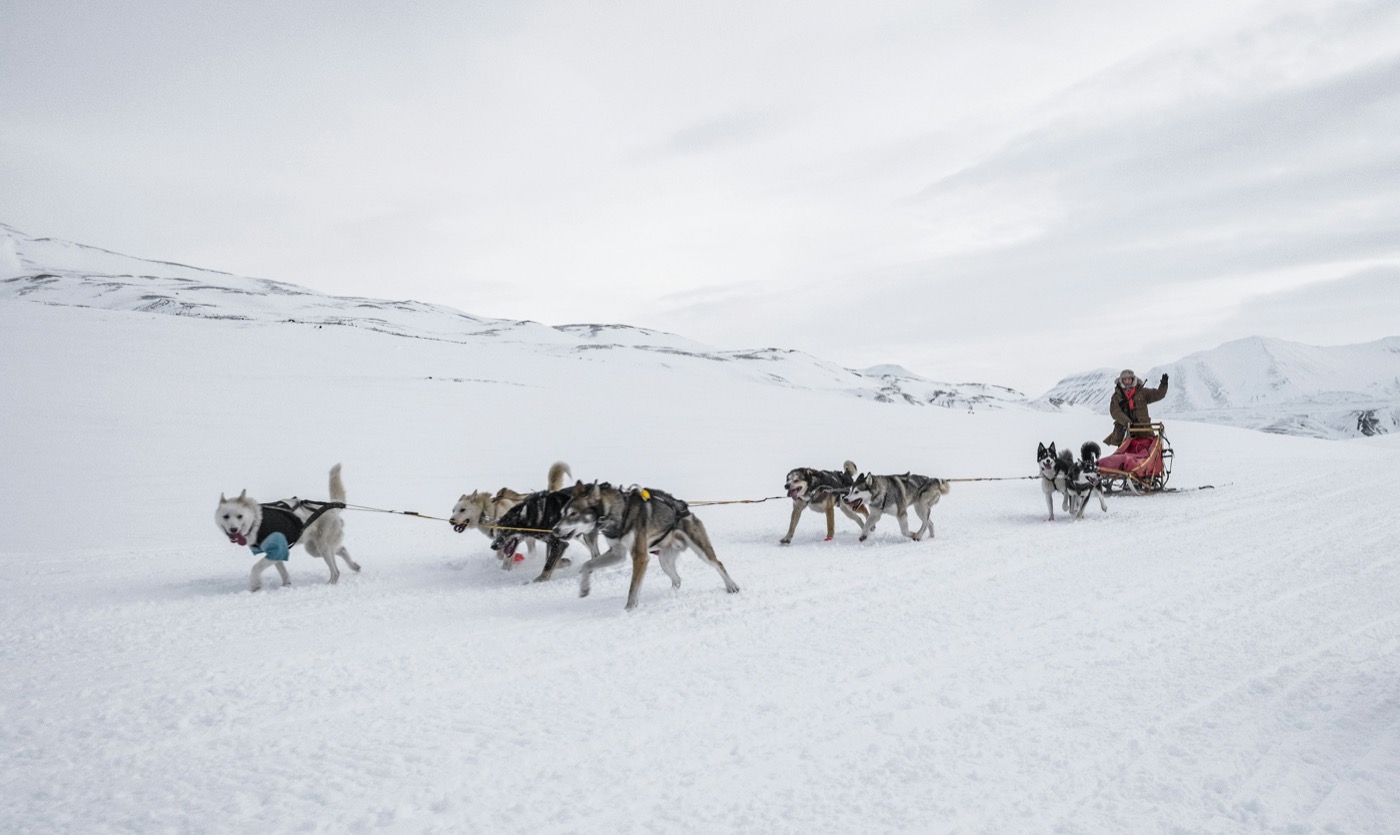
The last dogsled mail route in Alaska ended on January 8, 1963. It ran between Gambell and Savoonga, and an airplane had already taken over the month before.
Snowmachines took most of the rest. Village dog teams were disappearing, and Joe Redington Sr. started the Iditarod to save them. As the race tells it, his argument was that snowmachines could leave you stranded, and dogs were always reliable. The first Iditarod ran in 1973. The winner, Dick Wilmarth, took a little over 20 days.
So the most famous sled dog race in the world began as a rescue mission for a way of life.
Siberian Huskies came to Nome in 1909 for a race with a $10,000 prize. Some owners still run them on sleds or in AKC Rally, and every Siberian owner has to manage a habit of running off. If yours has ever pulled a vanishing act when the gate opened, that’s a dog built to cover miles of trail, and a long line on walks is the safer bet.
#18 Laika riding Sputnik 2 into orbit
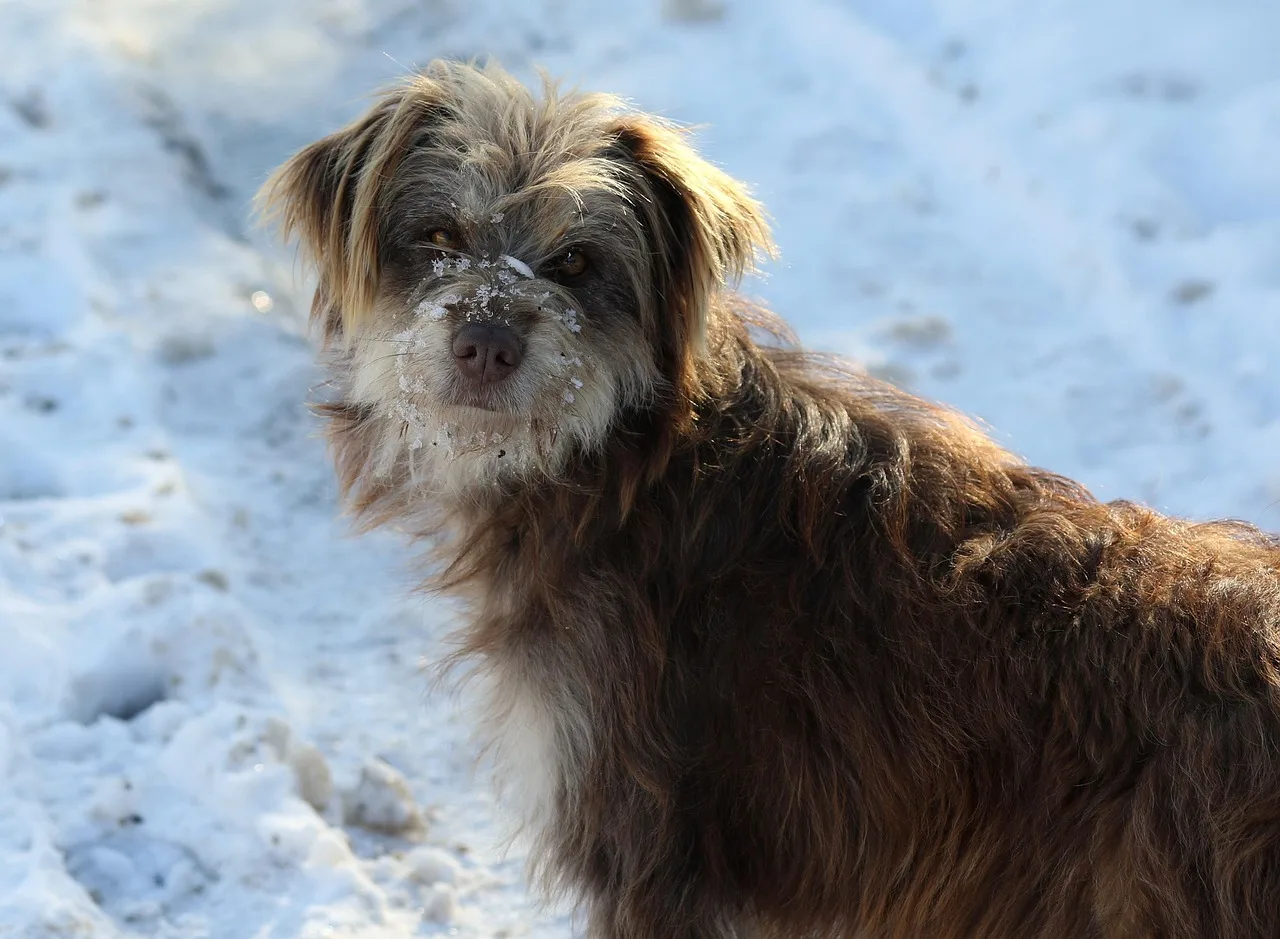
In November 1957, a small dog went up on Sputnik 2 and became the first animal to orbit Earth. American newspapers called her “Muttnik.”
She wasn’t a purebred, and that was on purpose. Soviet scientists chose homeless dogs because they thought strays would better handle “the cold, hunger and harsh conditions.” Laika came off a Moscow street. She weighed about 5 kilograms and was around 3 years old.
What you weren’t told back then: she overheated within hours of launch. That didn’t come out until 2002, when scientist Dimitri Malashenkov revealed it. Her name is on a monument in Moscow today, and she is still the best-known dog ever to leave the planet.
Belka and Strelka flew in 1960 and were the first dogs to come home from orbit alive. One of Strelka’s puppies was given to President Kennedy. If your own dog came from a shelter with no papers and a cast-iron stomach, the space program would have taken a look at her.
#17 Circus and TV variety dog acts
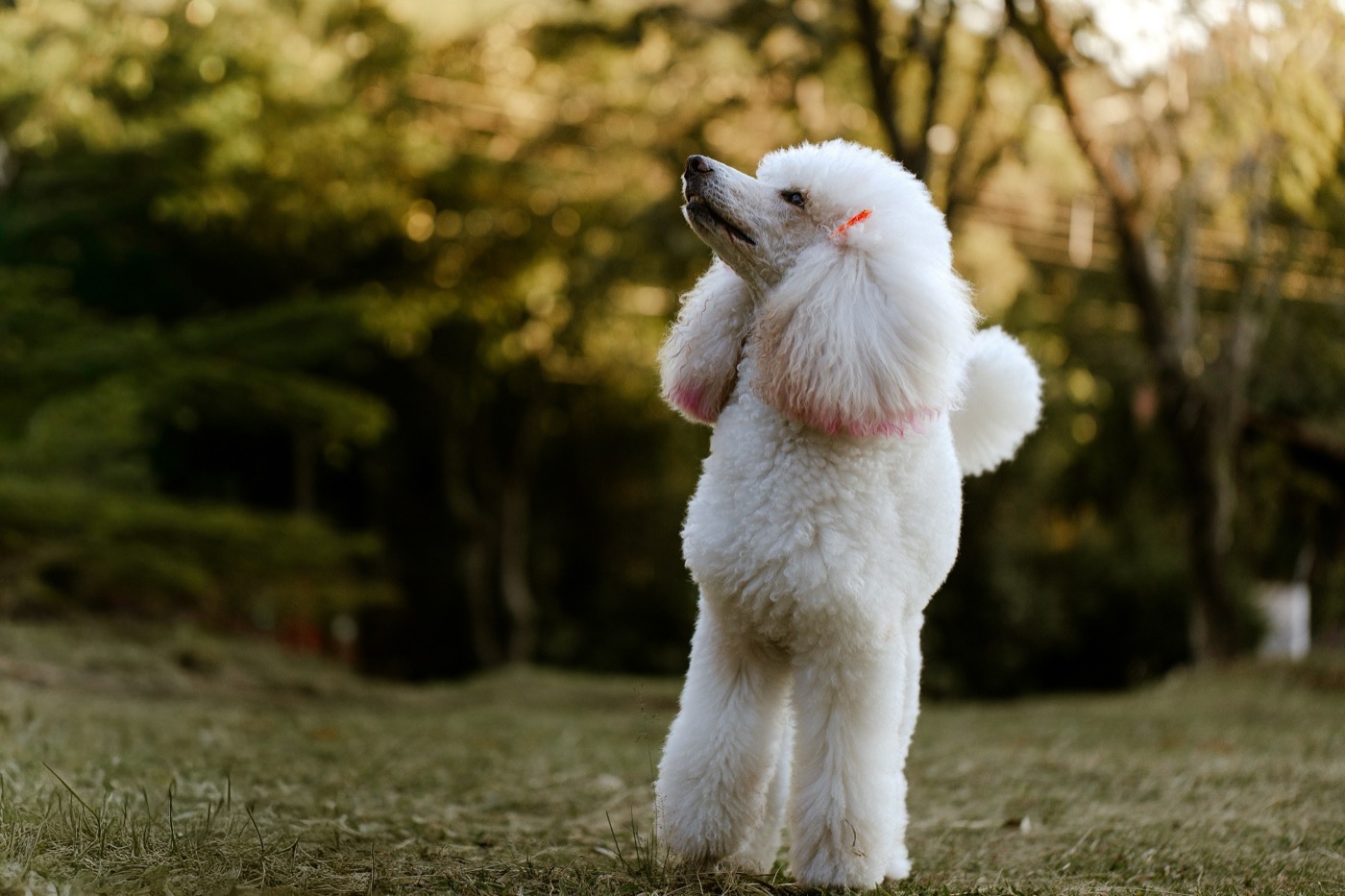
Little dogs in ruffled collars, trotting on their hind legs, jumping through a hoop on cue while a drumroll played. You saw them under the big top or on a Sunday night variety show, and the whole act took about two minutes.
Ringling Bros. ended its 146-year run with final shows in May 2017. Kenneth Feld said that after the elephants came off the road, the company saw “an even more dramatic drop.”
That same month, on May 1, 2017, the AKC launched Trick Dog titles. The circus act left the ring and moved into ordinary homes. You can earn a title with your own dog for tricks you already do. The first level, Novice, takes 10 tricks from its list, and you can send it in by video instead of showing up in person. The AKC charges $32 a title.
Dr. Mary Burch, who directs the program, sums it up: “The primary characteristic of trick dog training is having fun.” That’s a lower bar than a drumroll, and your dog will thank you for it.
#16 Barn ratter terrier in the feed room
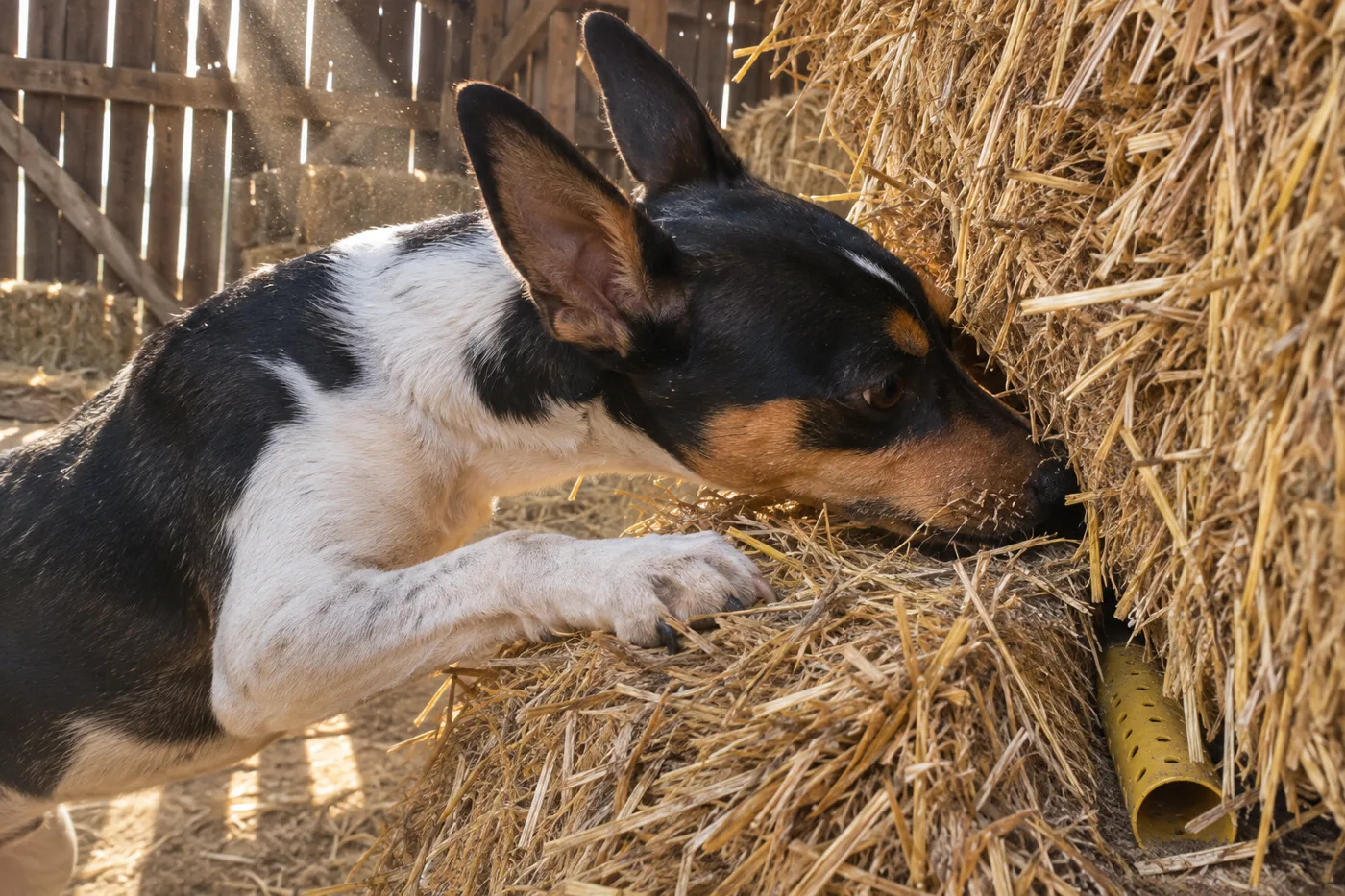
By the early 1900s, the Rat Terrier was “probably among the most popular dogs in America”. Every farm had a feed room, and every feed room had rats. Then pesticides arrived in the 1950s, and the working role faded.
The job came back as a sport. Robin Nuttall founded Barn Hunt after watching her Miniature Pinscher, Zipper. Dogs search a course of hay bales for rats that stay safe inside aerated tubes. Nearly 50,000 dogs registered in its first eight years, and it’s open to any dog over 6 months, mixes included. The entry-level Instinct class needs no experience at all, and each host club sets its own entry fee.
One competitor, Cathy Hoese, says the appeal plainly: “It’s really watching a dog figure it out.”
That terrier who digs through your couch cushions for a crumb isn’t being naughty. She’s checking the feed room.
#15 Southern quail bird dog on point
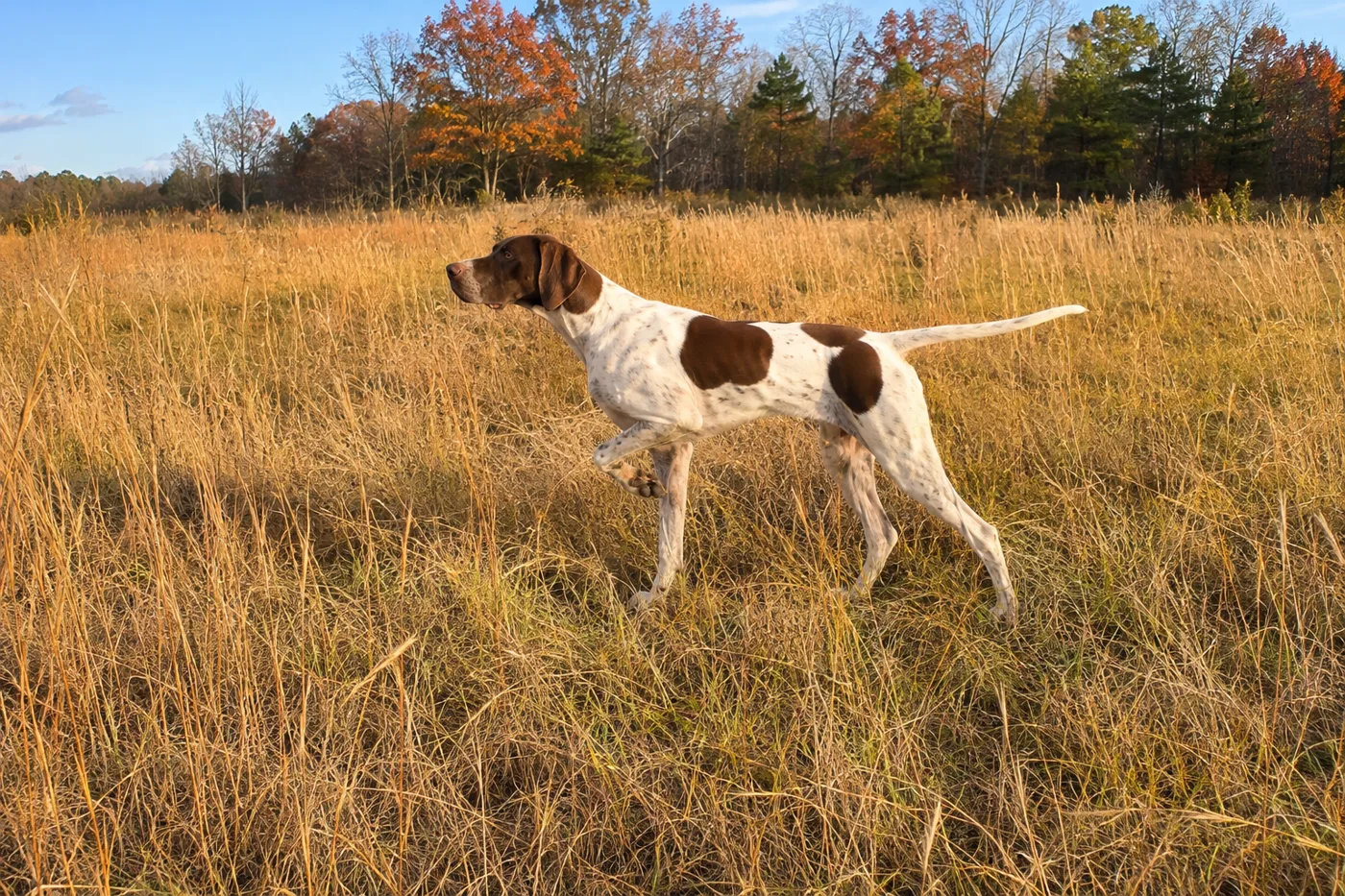
The pointer froze in the broom sedge, one front foot up and tail straight as a pencil, and everybody stopped talking.
The hunt faded because the birds did. Northern bobwhite numbers fell 81% between 1966 and 2019. The likely causes are fire suppression, farm mechanization, lost habitat and pesticides. Fewer birds meant fewer pointing dogs with a job to do.
Your bird dog still knows how. When she locks up in the living room over a sparrow at the window, she’s doing exactly what her great-great-grandmother did in a Georgia field. Owners who can’t hunt often turn to scent classes and nosework instead, which use the same nose without needing a quail.
#14 Squirrel dog that filled the supper pot
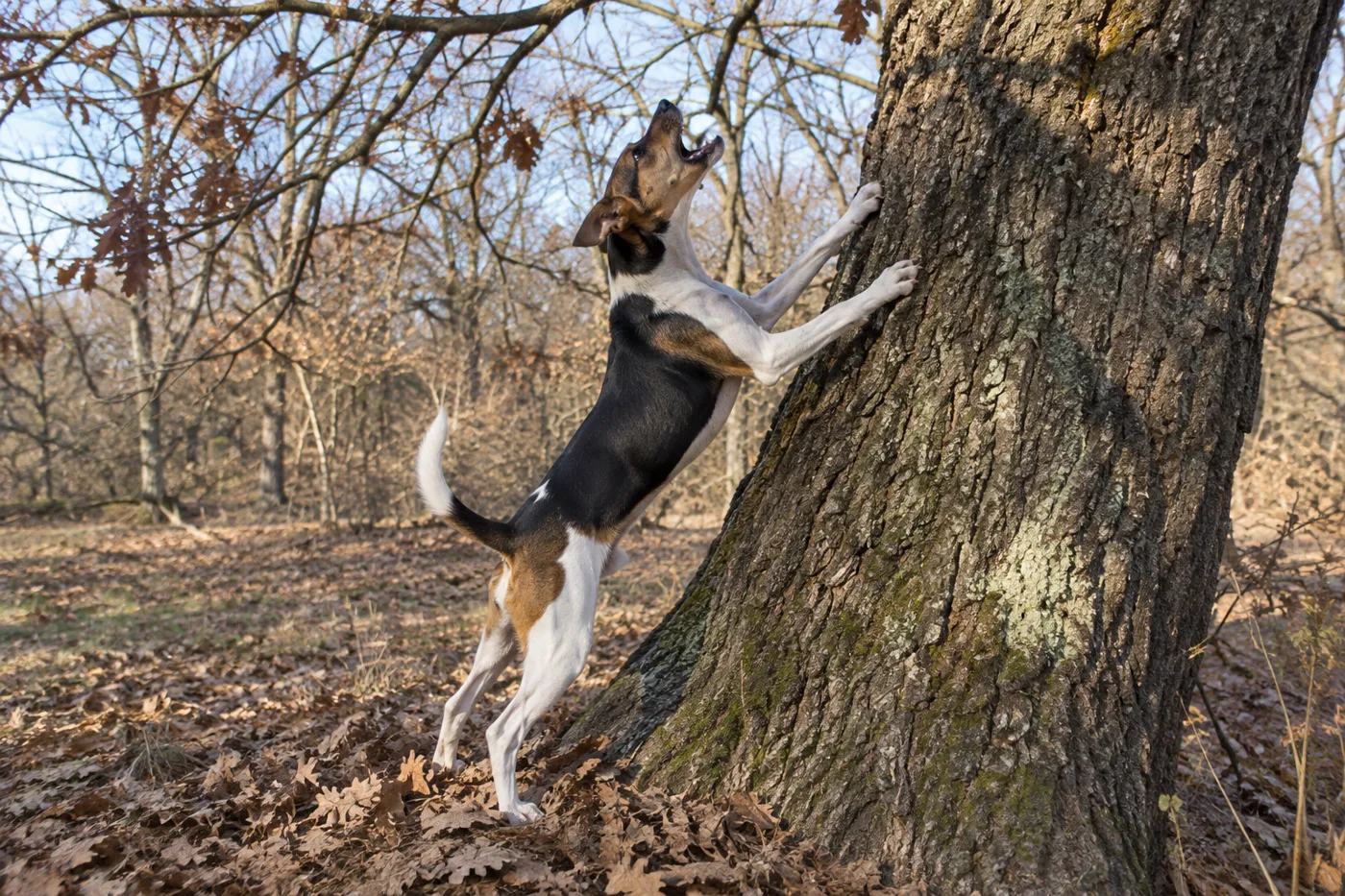
A lot of rural families had a small, scrappy dog of no particular breed that could put supper on the table. It ran a squirrel up a tree, stood at the base barking, and made sure you knew which tree.
That dog probably had a name you never heard: feist. Feists were “originally bred to hunt squirrels” in the 19th-century Southeastern mountains. They “tree” game, chasing it up a trunk and pointing the hunter to the right one. The Treeing Feist wasn’t recognized by the United Kennel Club until 1998, and the Mountain Feist waited until 2015.
The pot needed filling less often as hunting dropped off. The 2022 national survey counted 14.4 million hunters aged 16 and older, and the Fish and Wildlife Service notes participation has been declining over the years.
If your little short-haired mutt from the country stares up the backyard oak for an hour and won’t come in, you may have a feist and never knew it.
#13 Family pets drafted into World War II
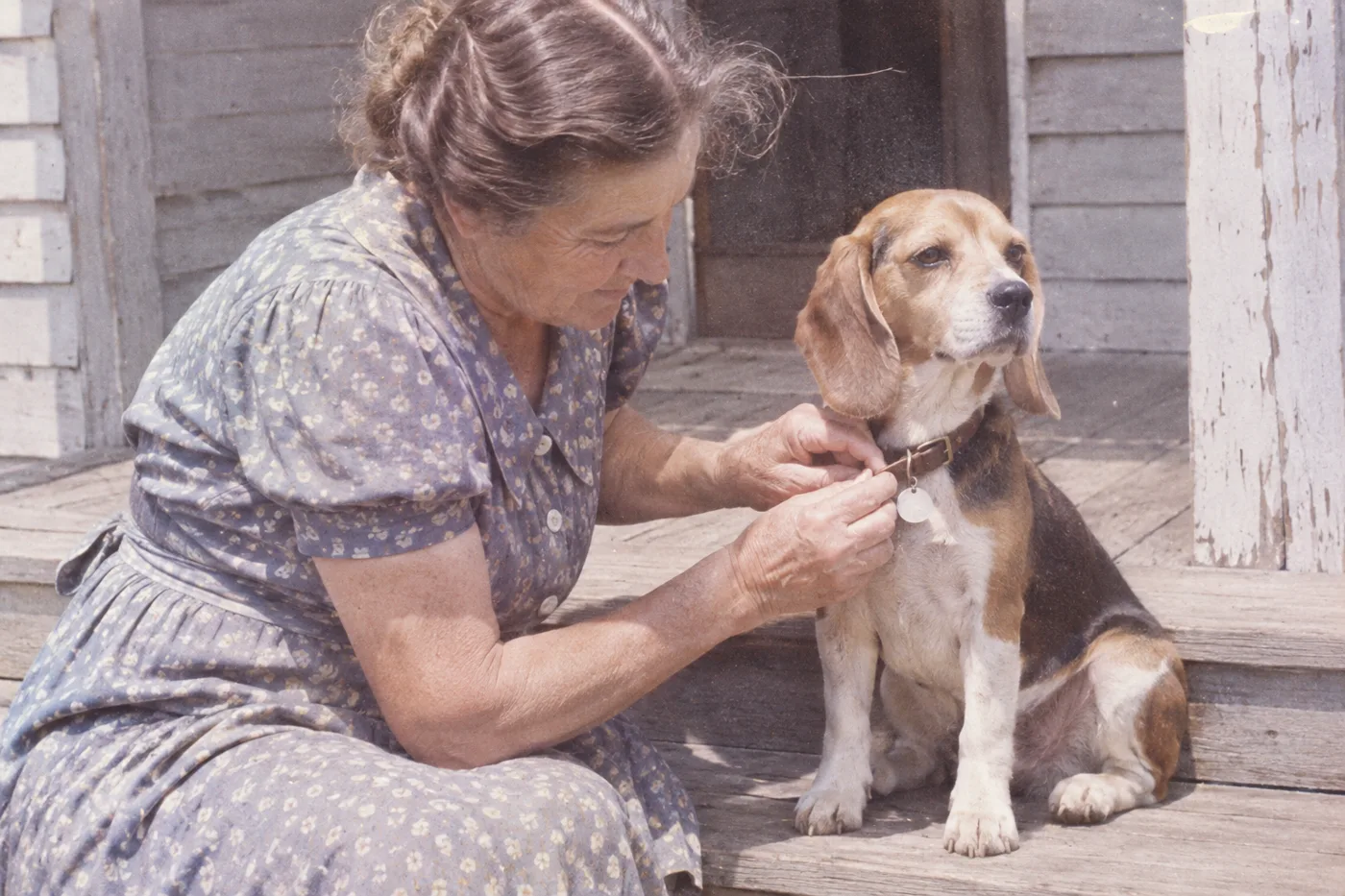
In the early 1940s, Americans did something hard to picture now: they loaned the family dog to the Army.
The program was called Dogs for Defense, and owners volunteered more than 40,000 pets. About 18,000 passed and were trained, and 10,368 served with the Army and Coast Guard.
Families who kept their dogs home could still enlist them, sort of. A $1 donation made a home-front dog a “private,” and $100 made it a “general.” Somewhere in an attic there’s probably a certificate promoting a beagle.
The Army started out taking about 30 breeds and narrowed that to seven by 1944. Owners were promised their dogs back. Of 559 Marine war dogs still alive at war’s end, 540 went back to civilian life after retraining to undo their military work.
#12 Vietnam scout and sentry dogs
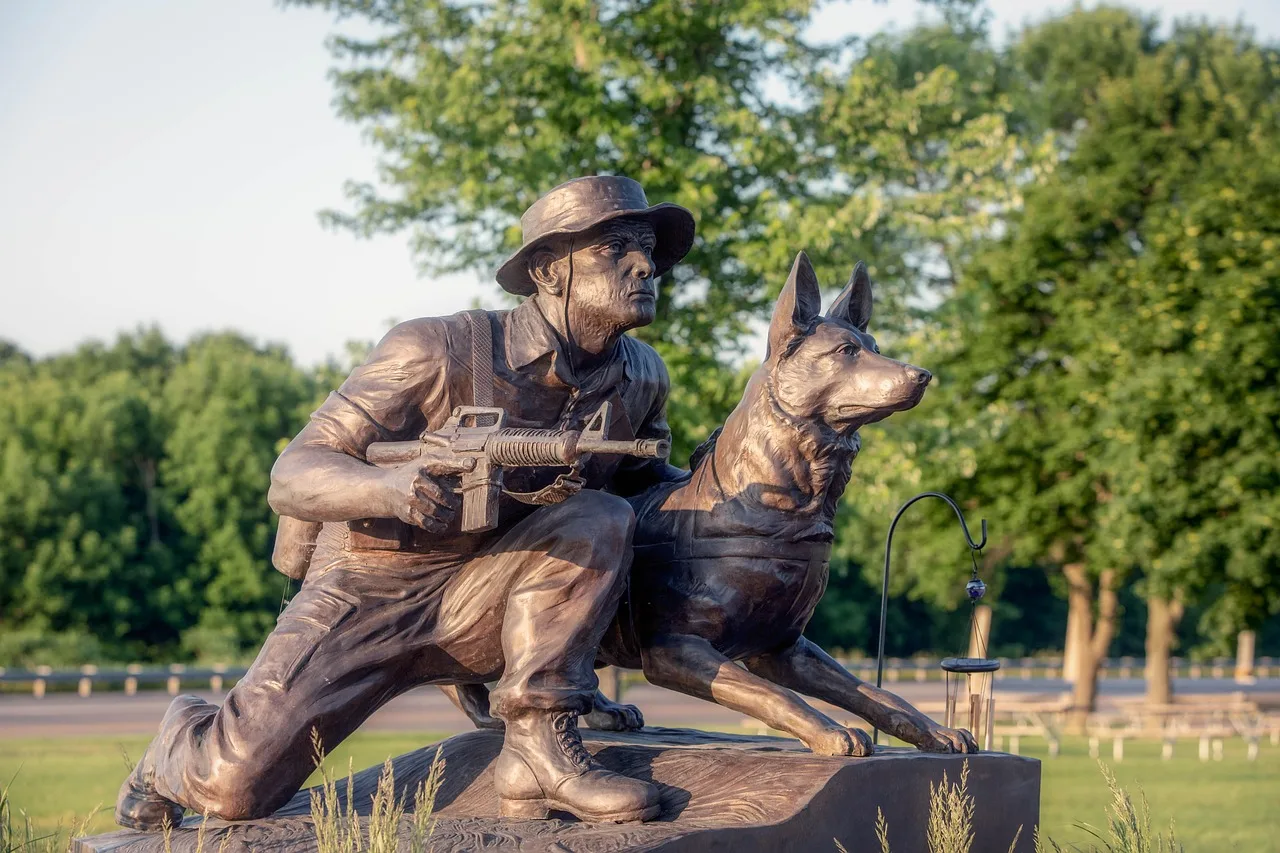
Nemo was a German Shepherd sentry dog at Tan Son Nhut Air Base. When he and his handler, Airman Robert Throneburg, were both shot, Nemo stayed over him until help came. He came home, worked as a recruiting dog and died in 1972.
Most of his fellow dogs didn’t come home. Between 4,000 and 5,000 dogs served in Vietnam, and only 200 to 300 returned. They’re credited with saving more than 10,000 American lives.
The law that changed it came decades later. Robby’s Law, passed in 2000, made it legal to adopt retired military dogs. To adopt one now, the Defense Department’s program at Joint Base San Antonio-Lackland asks for an application by email, a home screening and a secure fenced yard, and the wait can run more than 18 months. If you’ve ever seen a family take home a retired working dog with a gray muzzle and a sharp eye, that’s the door Nemo’s generation never got.
#11 The Dutch duck decoy dog
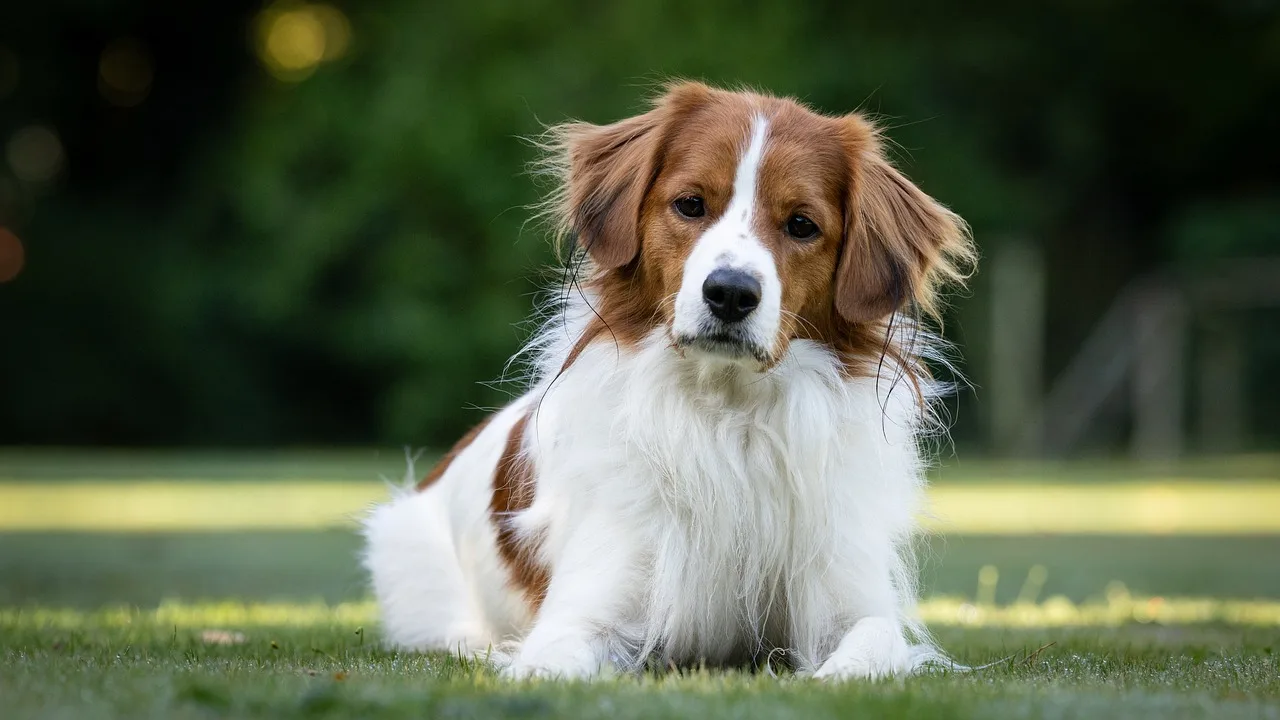
Almost nobody in America has heard of this job, and the breed nearly vanished with it.
In the Netherlands, the Kooikerhondje worked the eendenkooi, a duck trap of pipes and screens. The dog would “trot the length of the screen, weaving in and out, the flashes of their white markings intriguing the wild ducks,” leading them in. The ducks followed the dog out of curiosity.
The Netherlands had about 3,000 of these traps in the 1600s. About 100 are left, mostly used to band birds for research. A baroness rebuilt the breed from a female named Tommy, and the AKC didn’t recognize it until 2018.
If you own one, you know the white-flagged tail that never stops waving. Now you know it was a work tool.
#10 Owney, the Railway Mail Service dog
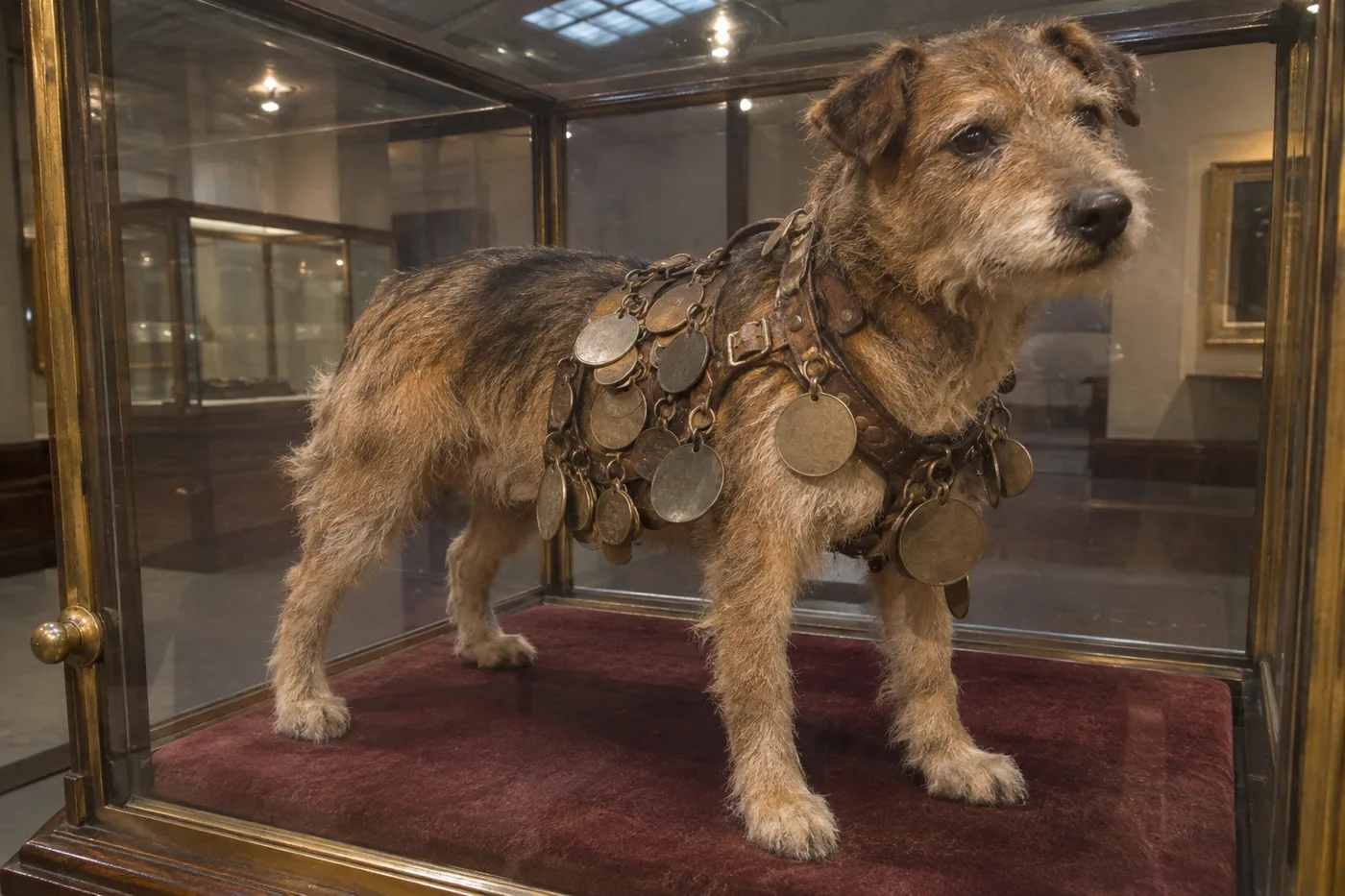
In 1888, a scruffy dog wandered into the Albany, N.Y., post office and started riding the mail trains. Clerks along the routes gave him tags and tokens. He collected so many that Postmaster General John Wanamaker had a harness made to hold them.
In 1895, Owney went around the world in 113 days. He’s been at the Smithsonian since 1911, tags and all.
The surprise is how recently his line of work ended. Clerks sorting mail aboard moving trains lasted longer than most people think. The last railway post office ran between New York and Washington on June 30, 1977. If you were out of school by then, the job Owney rode along with was still running.
#9 The lighthouse keeper’s dog
At Owls Head Light in Maine in the 1930s, keeper Augustus Hamor had a dog named Spot. Spot learned to ring the fog bell by pulling the rope.
One night in a blizzard, the rope was buried in snow. Spot went to the edge of the cliff and barked. Out on the water, mail-boat Captain Stuart Ames heard him and found the harbor.
Machines took the job. The Coast Guard began automating lighthouses in the mid-1960s, and by 1990 every U.S. lighthouse but Boston Light was automated. That one followed in 1998, and since keeper Sally Snowman retired in 2023, it has had no keeper at all.
In 2004, a Coast Guard commander placed a new marker on Spot’s grave.
#8 Turnspit dog turning the kitchen roast
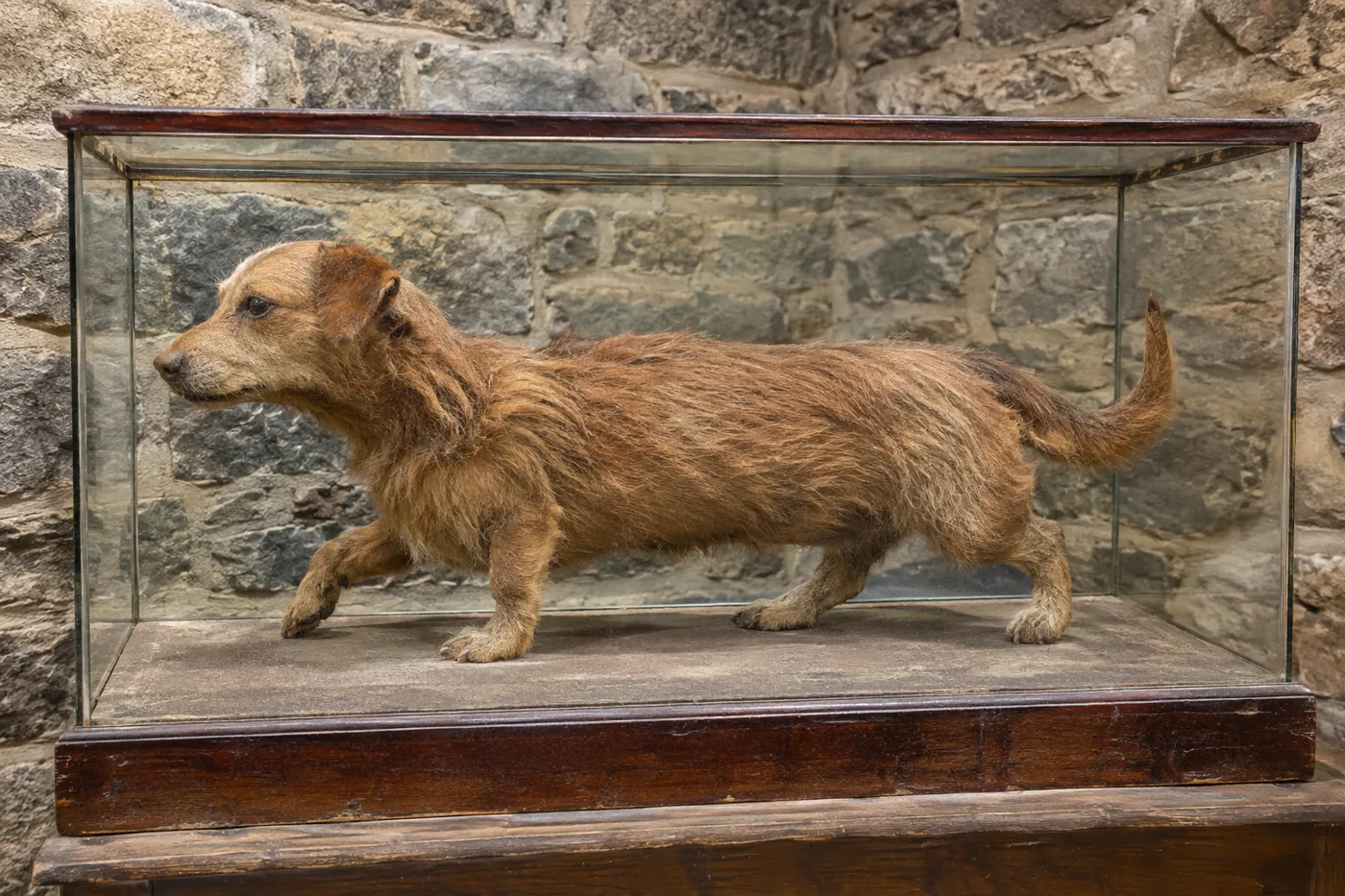
Picture a short-legged dog running inside a wooden wheel mounted on the wall by the fireplace, turning the roast on its spit for hours. That was the turnspit dog’s whole life.
The first written mention dates to 1570. When mechanical spit-turners came along in the mid-1800s, nobody kept the dogs as pets, and the breed died out. Author Jan Bondeson says they were viewed as kitchen utensils.
You’ve probably said something that may come from them. The dogs were often kept in pairs, so they could be worked in shifts. Some say that’s where “every dog has his day” comes from, though the saying itself is older.
One preserved turnspit survives: Whiskey, at the Abergavenny Museum in Wales.
#7 Corgi heeling cattle on Welsh farms
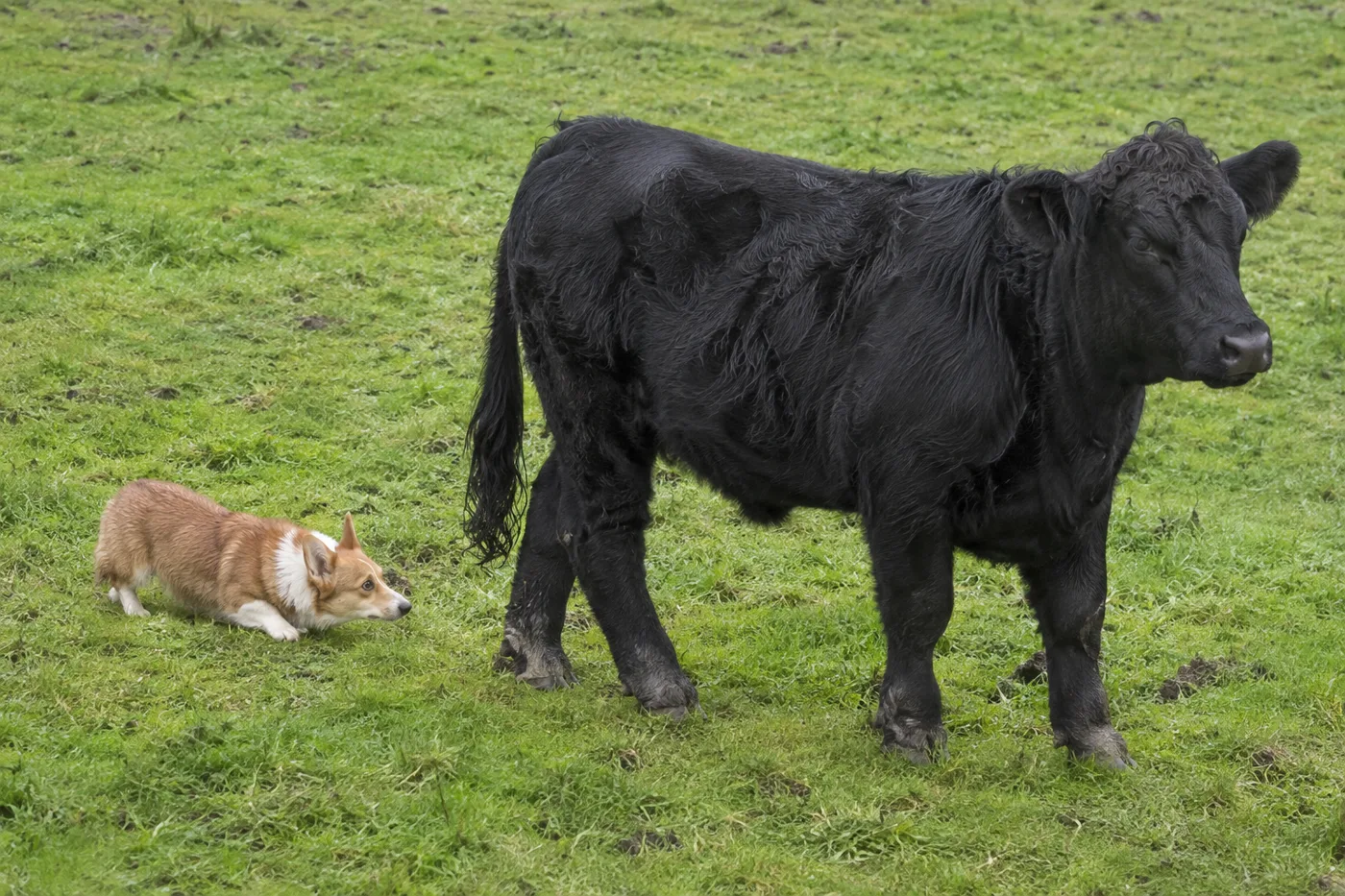
If a corgi ever nipped at your ankles while you walked across the yard, it wasn’t personal. It was a job interview.
The Pembroke Welsh Corgi Club of America explains why the breed is built so low: “Corgis work by nipping the soft part of the cattle’s heel while being agile and low to the ground, ensuring they miss the inevitable kicks!” Those short legs kept the dog under the hoof’s swing. Pembrokes drove Welsh Black cattle, and they also drove geese to market.
Both corgi breeds are eligible for AKC herding. Children running in circles in the yard set off the same instinct. If you have kids or grandkids around a corgi, a herding class gives that drive a better target than small sneakers.
#6 Farm dog guarding the henhouse
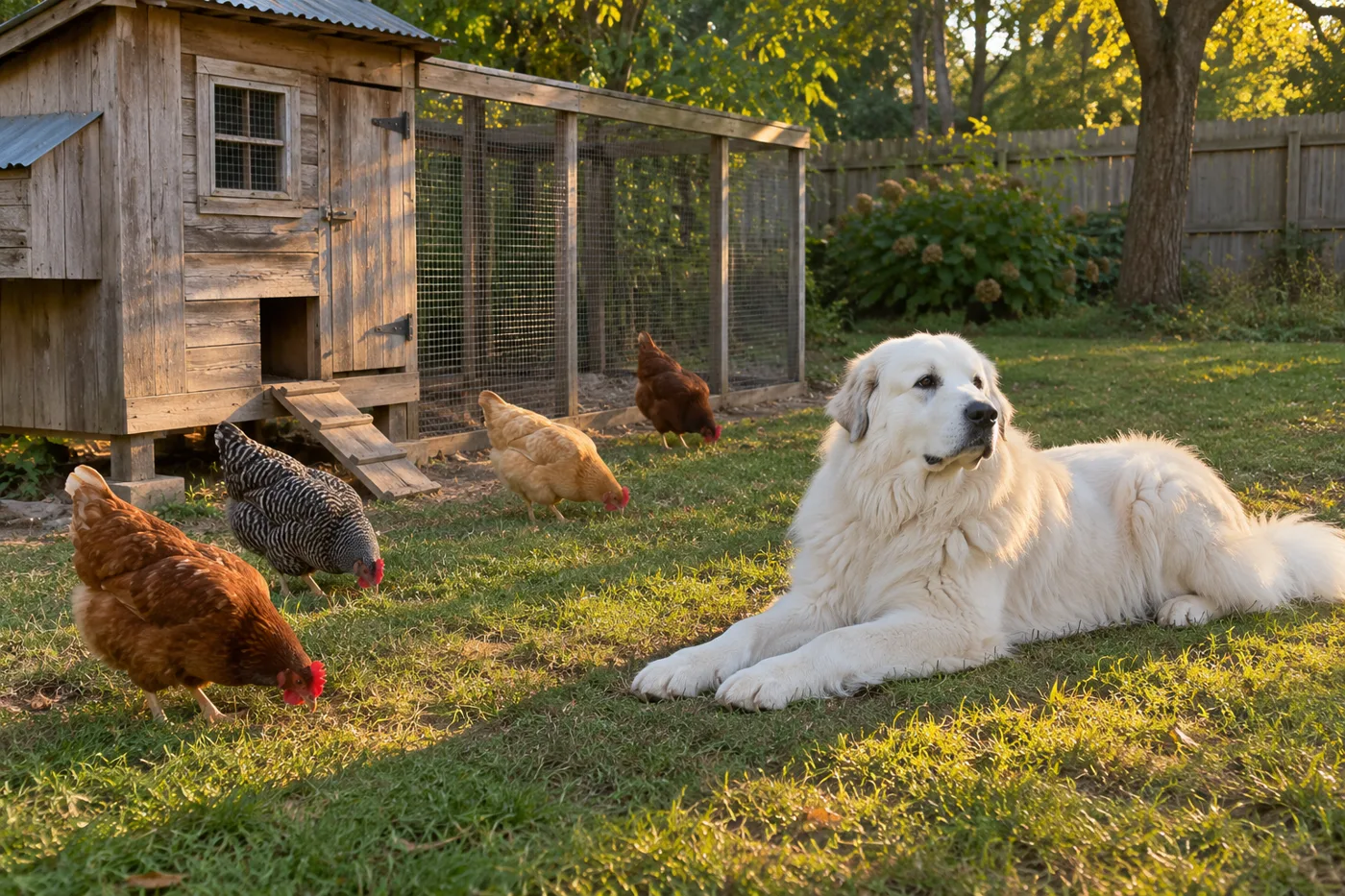
Every farm with chickens had a dog that slept near the coop and heard the fox before anybody else did.
This one is making a quiet comeback. In USDA’s 2024 survey, 6.7% of U.S. adults kept poultry. In Denver, chicken-keeping households rose from 0.7% in 2012 to 2.4% in 2024, and Miami went from 1.7% to 2.5%. City hens need guarding too.
The classic livestock guardian dog is the Great Pyrenees, bred to keep wolves off sheep. Today the AKC calls it a “vigilant guardian of home and family.” Owners on Reddit describe guardian dogs patrolling the fence and chasing off delivery trucks. That’s the job, pointed at the wrong target.
What owners should know: a Great Pyrenees needs a securely fenced yard, and a lead whenever it’s outside the fence, because its instinct is to set up and patrol a large territory.
#5 Sheepdogs on the big Western flocks
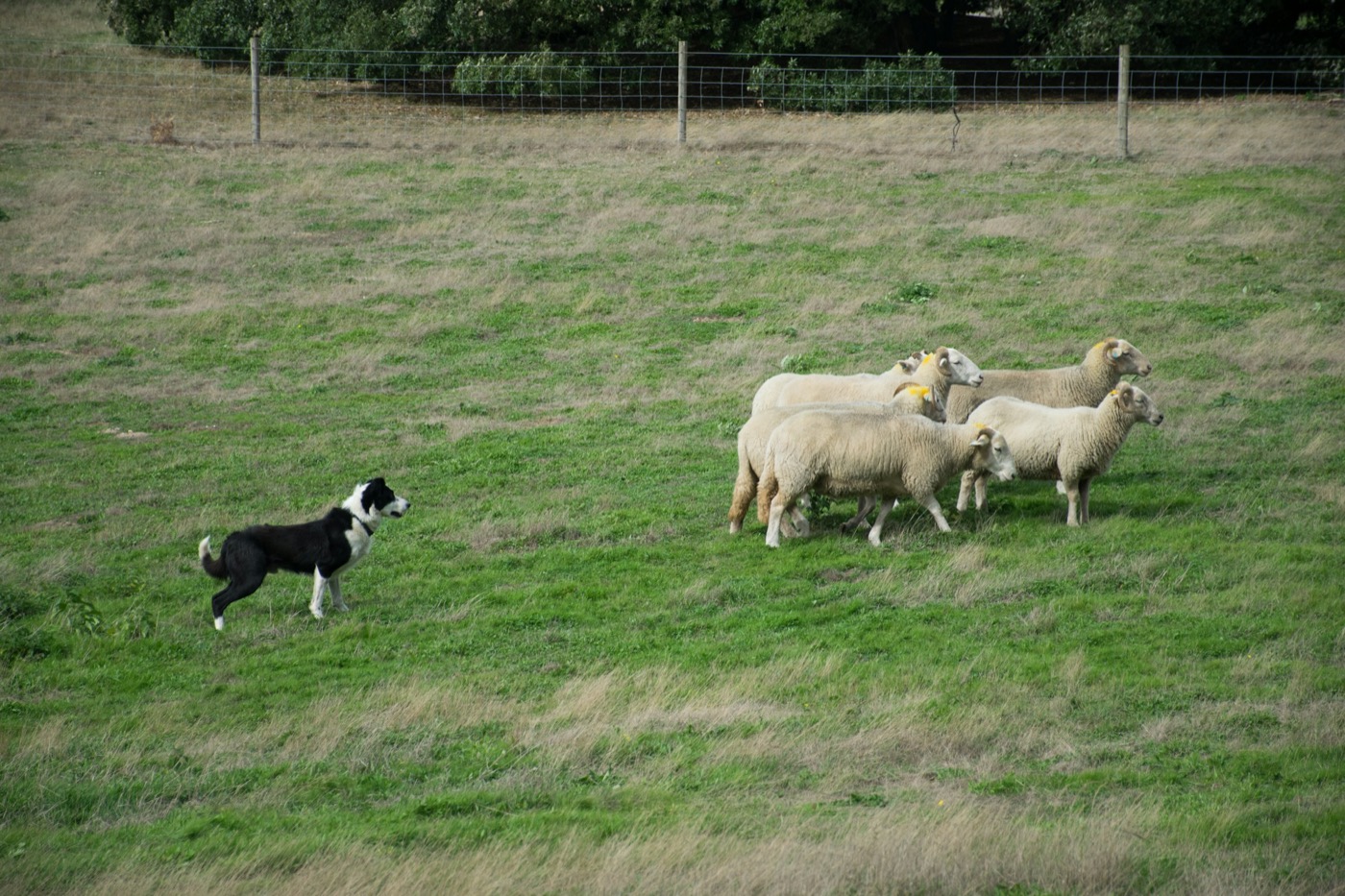
The herding and guarding work on the big Western ranges didn’t fade. It mostly disappeared.
USDA says sheep numbers have declined steadily since peaking at 56.2 million in 1942. On January 1, 2026, the count was 4.99 million. For every sheep in America today, there were about 11 in 1942. That drop is a rough gauge of how much flock work disappeared, though it doesn’t count the dogs themselves.
That’s a lot of Border Collies and Aussies with brains built for a job that doesn’t exist anymore, now living in a house with one cat in it. Owners who’ve solved it name herding lessons, agility and scent work as the “job.”
#4 Dachshund going to ground after badgers
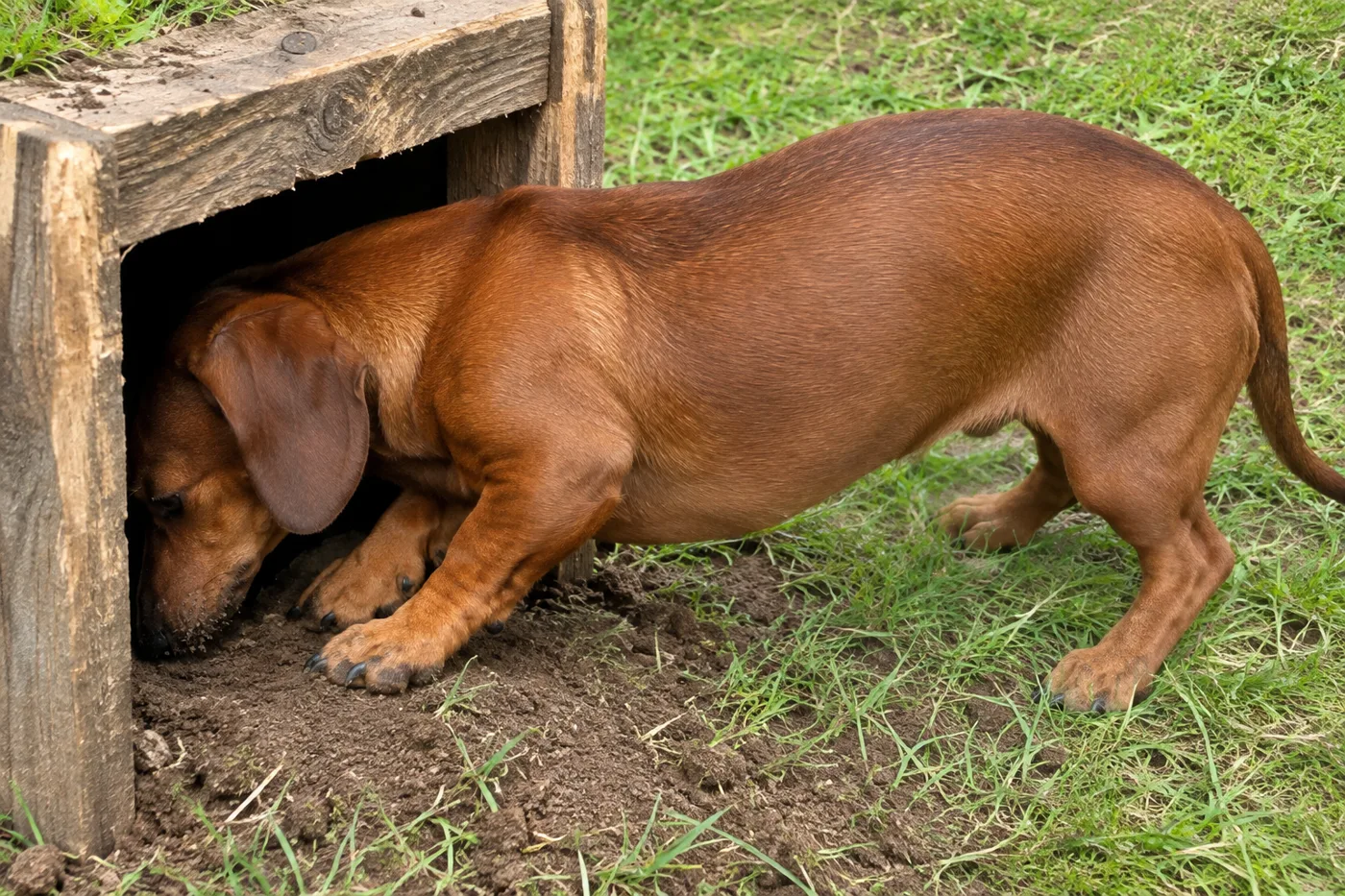
The name has been telling you all along. “Dachshund” is German for “badger dog.”
The short legs keep the dog low enough to track scent along the ground. The narrow body lets it go down into a burrow. Standard Dachshunds, up to 35 pounds, went after badger and wild boar. During World War I, the AKC tried calling them “badger dogs” instead.
If yours burrows under every blanket in the house and digs at the sofa before lying down, that’s a dog going to ground.
There’s a sport for it. The AKC Earthdog program started October 1, 1994. The first test was run by the Greater Portland Dachshund Club and drew 110 entries. Dachshunds and 14 terrier breeds were eligible from the start.
#3 Cart dogs pulling milk, bread and meat
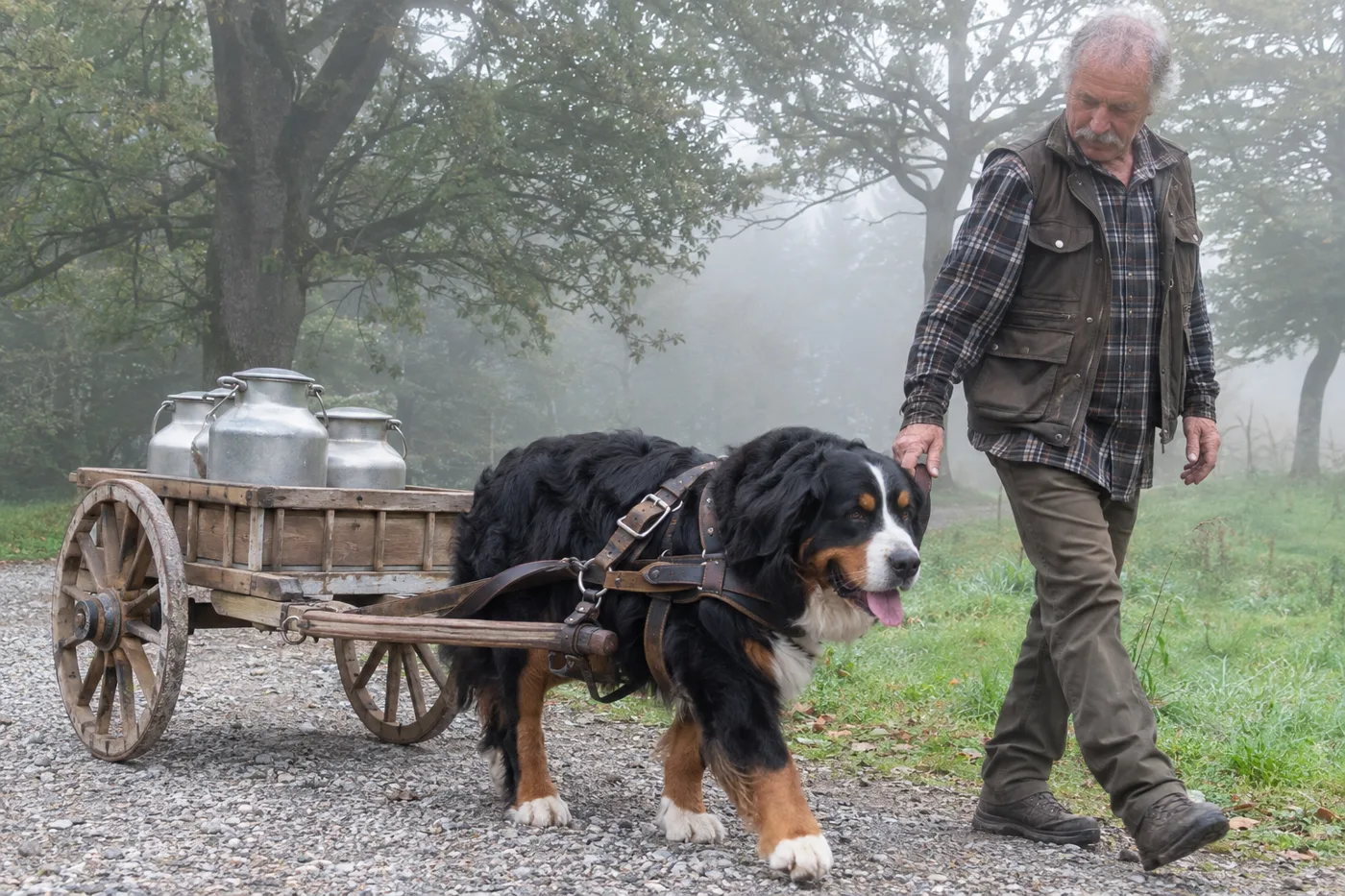
Long before the milkman had a truck, milk in parts of Europe came to the house by dog.
In the Netherlands, dog carts carried milk, bread, vegetables and petroleum, and the post office used them until 1922. The Dutch regulated the practice in 1910 and banned it in 1962.
The Rottweiler got its old nickname from this work. It was the “Rottweiler Metzgerhund,” the butcher’s dog of Rottweil. It hauled meat carts, and drovers hung their money in “a purse around the dog’s neck.” When railroads came, the job dried up so fast that only one Rottweiler showed up at an 1882 dog show in Heilbronn.
Bernese Mountain Dogs were dairy dogs that hauled milk and cream from farm to dairy, “sometimes accompanied by a person and sometimes alone.” Bernese club draft tests still judge the dog’s “willingness and enjoyment of his work.”
For an everyday version of carting, some owners put a pack on the dog. One owner on r/puppy101 says the mental work of carrying the pack tires the dog out as much as the walk itself. The AKC says the pack plus everything in it should be no more than 10% of your dog’s body weight, and that puppies, overweight dogs and dogs with joint, back, heart or breathing problems shouldn’t carry any. Check with your vet first.
#2 Poodle as a working duck retriever
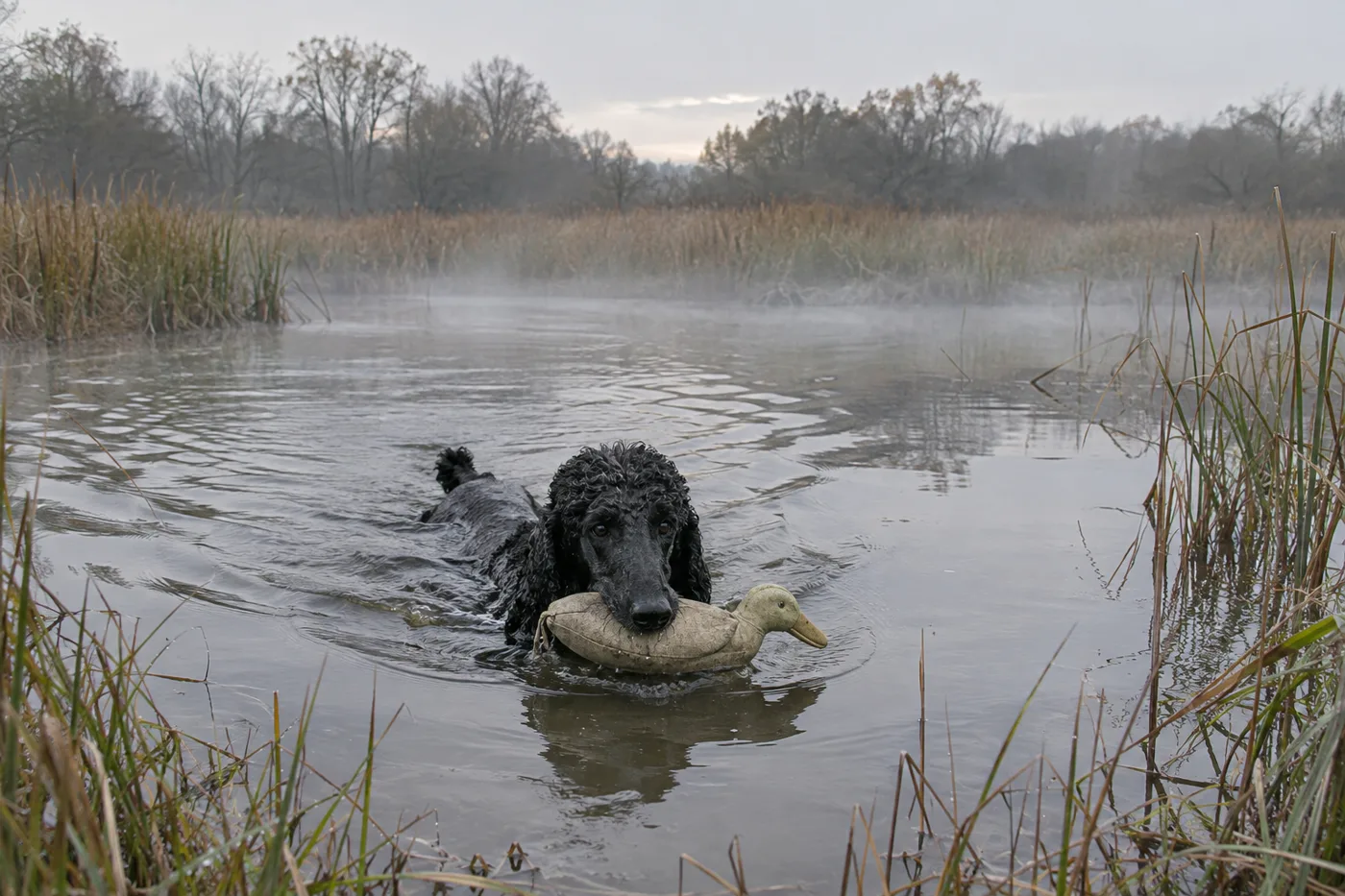
The poodle with the pom-poms is a hardworking water dog in a fancy haircut.
The breed comes from Germany. Its name comes from “pudel,” roughly “to splash in the water,” and the French call it “Caniche,” or “duck dog.”
That show clip started as a work cut, with puffs of hair around the joints and upper torso to protect the joints and vital organs. The trim everyone teases was practical gear.
A breeder and hunter, Dr. Grace Blair, pushed for change, and in 1996 the AKC let Standard Poodles into retriever hunt tests. Poodles that hunt today keep their coats about an inch long in season. If yours goes straight for every puddle on the walk, that’s the splash dog showing through.
#1 St. Bernard with the brandy barrel
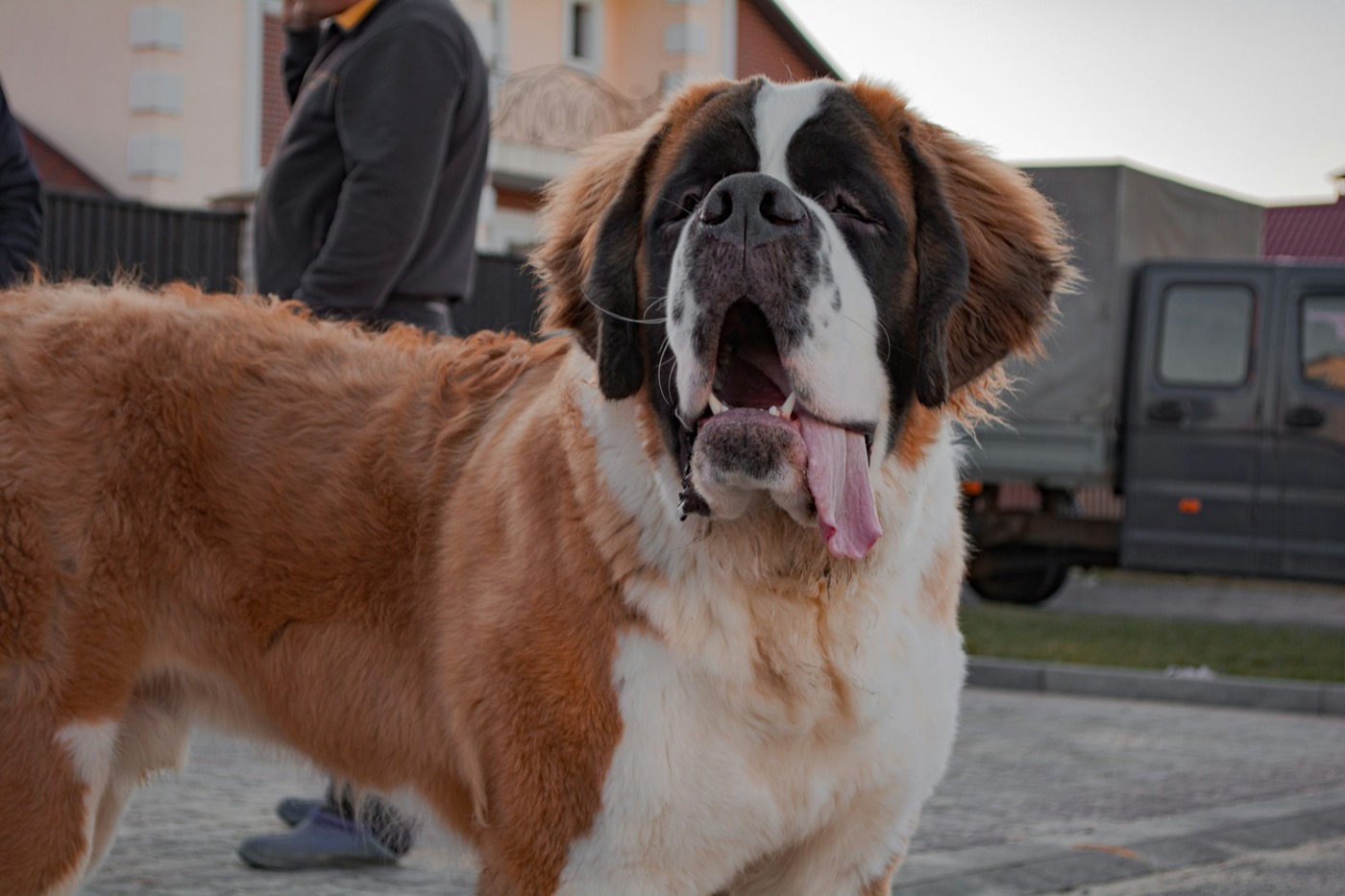
You can see it right now: a huge, gentle St. Bernard plowing through snow with a little wooden barrel under its chin, coming to save a frozen traveler.
There was never any barrel. It was “a creative detail invented by” Edwin Landseer, a 17-year-old painter, for an 1820 painting called Alpine Mastiffs Reanimating a Distressed Traveler. The picture was so good that everybody believed it.
The rescues were real. Dogs worked at a mountain hospice founded around 1050, and one named Barry served there from 1800 to 1814. He’s credited with saving 40 people.
What replaced them was the helicopter, and a St. Bernard is too big to fit in one. So smaller breeds, like Australian Shepherds, now do the rescue work. The big dogs got a different job. The Barry Foundation keeps 36 dogs in Martigny, Switzerland, and its head, Jean-Maurice Tornay, says they found “a new social mission.”
That mission is people. The dogs made 609 therapy visits in 2025, and more than 130,000 people came to meet them at the foundation’s park, Barryland, in its first year after reopening. The St. Bernard went from finding people on mountains to sitting next to them.
What was my breed bred for? A quick lookup – Dachshund: badger dog, now Earthdog tests – Standard Poodle: duck retriever, now retriever hunt tests – Corgi: cattle heeler, now herding trials – Rottweiler and Bernese: cart dogs, now draft and carting tests
The bottom line
Every dog on your couch is carrying a job description nobody handed her. Some of those jobs ended in 1922, some in 1977, and some are still slipping away on dairy farms.
You don’t have to bring back the fire horse or the duck trap. Dr. Dunbar’s warning runs the other way: he regrets training that strips natural dog behavior out of the dog. The goal is a place to put the drive, not a dog with the drive trained out.
So here’s a question about your own dog. What does she do on a rainy afternoon when nobody’s asking anything of her? Watch for a week. The thing she keeps returning to, whether that’s carrying, digging, circling, barking at the gate or nosing under the rug, is the old job asking for work.
Bonus: Old dog work you can still spot today
- At a farm museum, look for a wooden dog treadmill. Dogs on these pumped water and churned butter, and treads were first patented in 1871. Dog-powered treadmills faded as farms electrified: in the mid-1930s, nine out of ten rural homes had no electric service, and by 1953 more than 90% of farms had power.
- If you visit the Smithsonian for Owney, ask about Sergeant Stubby. He was found at Yale in 1917, served through 17 battles, warned of gas and found the wounded, and has been at the Smithsonian since 1956.
- Driving through Albany, N.Y., look up. A four-ton, 26-foot statue of Nipper, the RCA dog, still stands on a rooftop, and he was “plenty of bull terrier,” not a fox terrier.
- When someone grumbles about renewing a dog license, tell them the tag is an antique idea. Dog licensing and “dog taxes” in the U.S. started in the early 1800s.
Questions people also ask
What jobs did dogs used to have?
Dogs used to turn roasting spits, run beside fire engines and carriages, pull milk and meat carts, carry mail by sled and serve in both world wars. Most of those jobs ended when machines took over the work, from mechanical spit-turners and motor fire trucks to railroads, airplanes and snowmachines. Alaska’s last dogsled mail route ended in 1963.
Why do firehouses have Dalmatians?
Firehouses have Dalmatians because the breed was a coach dog, bred to run beside horses and guard them, and fire departments used it to clear the road and protect their fire horses. When motor trucks replaced horses, departments kept the dogs as mascots. In New York, the last horse-drawn run was in December 1922.
What was my dog breed originally bred to do?
Most purebred dogs were built for a specific original job, and the breed’s national club or the AKC usually records it. The Dachshund was a badger dog, the Corgi heeled cattle, the Poodle retrieved ducks, and the Rottweiler hauled a butcher’s cart.
What was a turnspit dog, and does the breed still exist?
A turnspit was a short-legged dog that ran inside a wall-mounted wheel to turn roasting meat over a fire, and the breed is extinct. Mechanical spit-turners took over in the mid-1800s, and nobody kept the dogs as pets. The only preserved one, “Whiskey,” is at the Abergavenny Museum in Wales.
How do I give my dog a job today?
You can give your dog a job by teaching it to fetch named objects, joining a nosework, scent work, Barn Hunt or herding class, or adding a properly loaded pack to walks. The AKC method for named fetch adds one toy at a time and goes back a step if the dog picks wrong. A pack and its contents should be no more than 10% of the dog’s body weight. Puppies, overweight dogs and dogs with joint, back, heart or breathing problems shouldn’t carry weight.
Does my herding or working breed need its old job to be happy?
A herding or working breed doesn’t need its exact old job back, but it does need a real outlet. The AKC says sports give herding breeds an outlet for their “mental and physical energy” that makes a contented companion. Dr. Ian Dunbar writes that whatever the breed, a dog’s temperament comes mainly from how well it was socialized as a puppy, so how a dog is raised matters as much as what it was bred for.