From the flea collar in the junk drawer to Benji on the big screen, here’s what a 1970s family dog really had, and what took each one’s place.
Stay for #1: whether the dog you grew up with really lived as long as you remember.
In the pet aisle, you pick up a flea collar in its plastic sleeve and, out of pure habit, you sniff it. Nothing. There’s no sharp, sweet chemical cloud, the one that used to hang around the dog’s neck for a week and end up on your hands every time you scratched behind his ears. That smell belonged to the 1970s family dog, along with a can opener he could hear from two rooms away and a door nobody bothered to close behind him. Almost all of it has been swapped out since, and not always for what you’d guess.
Table of Contents
#28 Letting the Dog Out the Front Door

“Open the front door, dog went out. Came back whenever.” That’s the whole routine, as someone who grew up with a family dog in the 1950s to 1970s put it on Reddit’s r/AskOldPeople. Others in that thread describe the same dog, more or less. He was out after breakfast and home for supper, and where he went in between was anybody’s guess.
Your memory isn’t exaggerating. In the 1970s, about a quarter of all U.S. dogs were still roaming the streets with no clear owner, according to a review of shelter history by Andrew Rowan and Tamara Kartal. The leash had been gaining ground for decades by then. The CDC credits animal vaccination and leash control laws, starting in 1947, with beginning the decline of rabies in dogs.
Someone who grew up with a free-roaming beagle mix said what a lot of us think now: “Thinking back on that now, it’s a wonder she didn’t get hit by a car or something.”
Today, a dog who gets out usually gets home. A 2010 national phone survey found 14% of dogs had gone missing at least once in the previous five years, and 93% of them came back. How they came back is the useful part:
- 49% were found by someone searching the neighborhood
- 20% came home on their own, the old-fashioned way
- About 15% were returned thanks to their tags
The shelter is the other half. “This research tells us that there is a possibility that a significant percentage of the stray dogs and cats in the shelters around the country do not have someone looking for them,” said Dr. Emily Weiss, then a vice president at the ASPCA. If yours ever slips out, search the blocks around home first. Then go to the shelter and look for yourself, and don’t wait: most states have shelters hold a stray dog only about five to seven days, sometimes as short as 48 to 72 hours, before he can be adopted out, and the count varies by state.
#27 The Flea Collar in the Junk Drawer
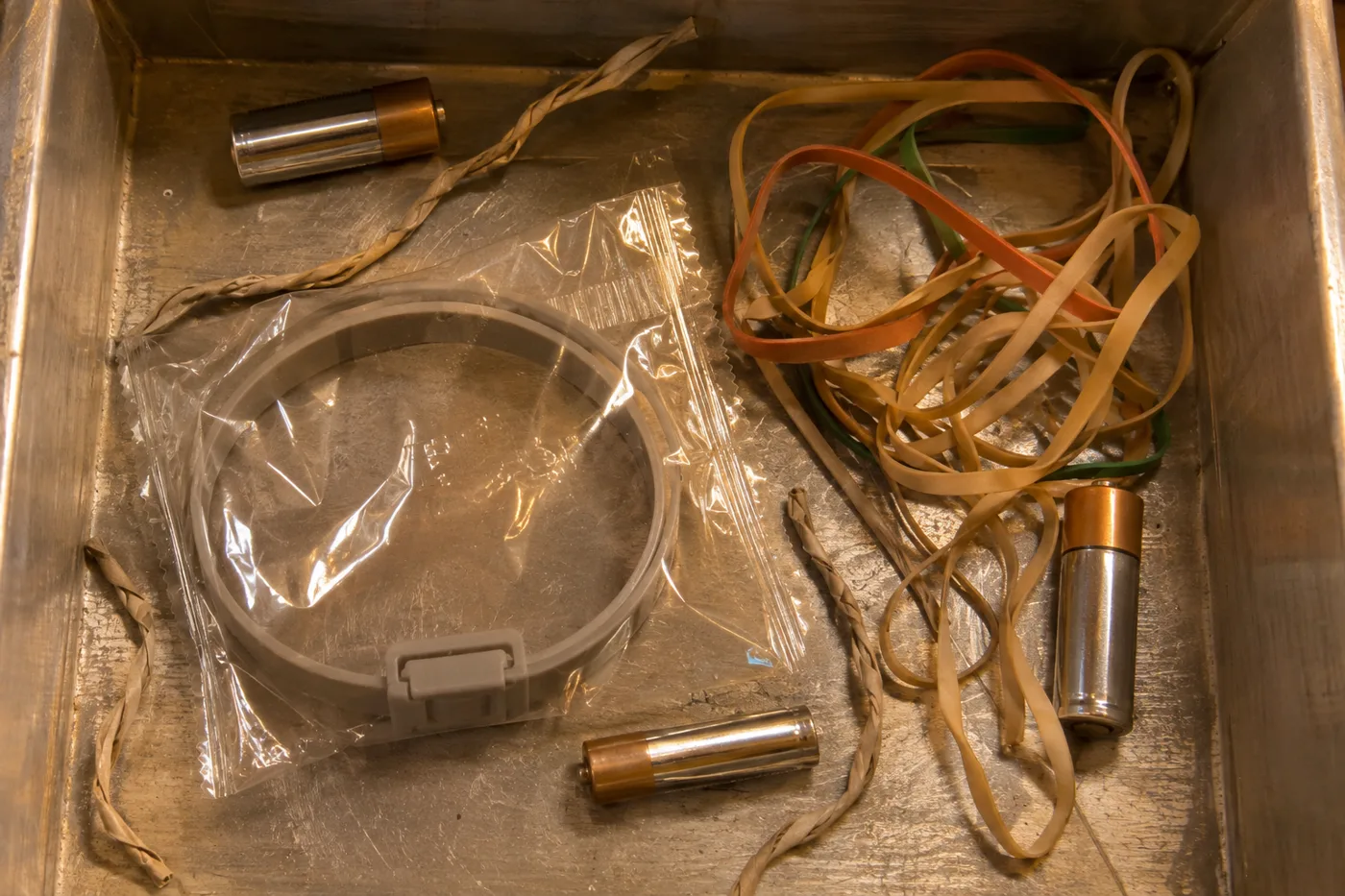
You knew a new flea collar was on the dog before you saw it. The smell got there first.
That collar had an inventor, and he started with cows. Robert Goulding, an entomologist (an insect scientist) at Oregon State University, worked on slow-release pesticides set in resin. He tried them first on posts that cattle rubbed against. That work led to the flea collar’s introduction in 1964, and a university photo from 1971 shows him holding the plastic collar he invented.
For years the collar was one of a handful of choices. Before the 1990s you had powders, sprays, shampoos, dips and collars, which the Science History Institute sums up as “messy, laborious, imprecise, expensive, and dangerous.” They also killed only the adult fleas on the dog that day, which is why the scratching came right back.
The mid-1990s changed that. Program arrived, then Frontline, Advantage and Revolution, treatments that went after fleas at every stage of life instead of just the grown-ups. In 2013 the FDA approved NexGard, a beef-flavored chew that kills fleas and ticks for a month. Plenty of dogs today get their flea protection as a treat.
The collar never left, though. In June 2024 the Environmental Protection Agency (EPA) kept collars made with TCVP, an older pesticide, on the market. That came after the agency agreed in 2022 to cancel them and then reversed itself in 2023. Its advice on those collars is the part few owners ever read: keep children from playing with them, and wash your hands after handling one.
For any collar, the EPA says to read the whole label, watch your dog afterward, and take the collar off right away at any reaction, then bathe the dog with mild soap. Your vet can tell you whether a collar, a drop-on treatment or a chew suits your dog.
So the collar you used to buckle on every spring? If it’s made with TCVP, wash your hands after you do.
#26 Canned Dog Food and the Can Opener
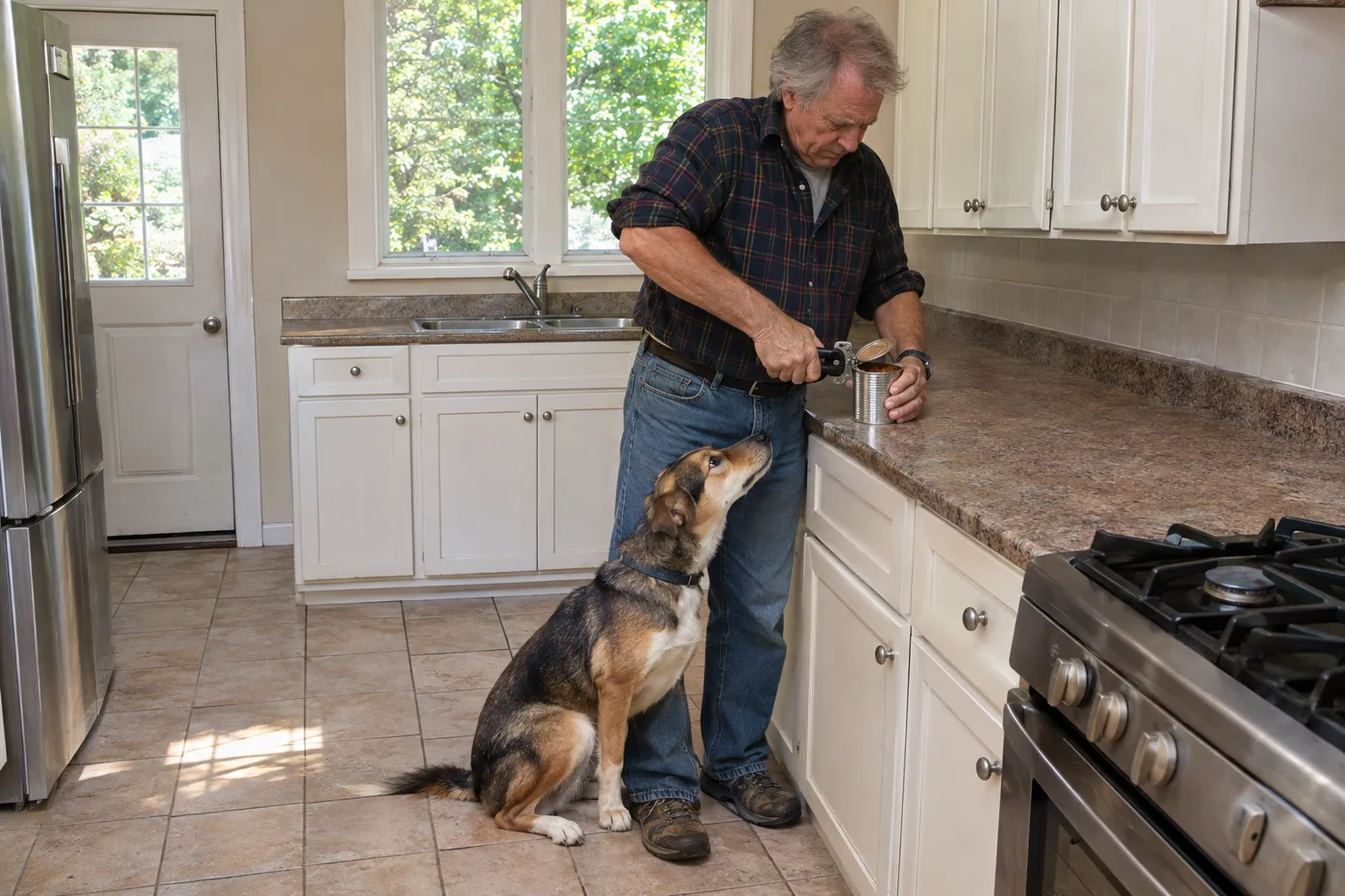
The electric can opener started to whir, and the dog came skidding in from wherever he’d been, even from a dead sleep at the far end of the house. As far as he was concerned, every can in the place was his.
What came out of those cans has a back story most owners never heard. Ken-L Ration, sold since 1922, started out as horse meat, marketed as “lean, red meat.” It’s also the brand behind the jingle where kids argue over whose dog is better, set to Tom Paxton’s song “My Dog’s Bigger Than Your Dog.” A company that revives old brands brought the Ken-L Ration trademark back in 2015.
Alpo got its name from Allen Products, the Allentown, Pennsylvania, company that launched it in 1936. Its main TV pitchman, Lorne Greene, claimed he fed it to his own dogs. Alpo also sponsored the very first broadcast of 60 Minutes, in 1968.
These days the name on the front of the can follows rules, and those rules tell you how much meat is inside. They come from the Association of American Feed Control Officials, the group of state feed regulators that sets pet food label standards:
| If the front says | The named meat must be |
|---|---|
| “Beef Dog Food” | 95% of the food, not counting water added for processing |
| “Beef Dinner” or “Beef Entrée” | 25% |
| “With Beef” | at least 3% |
| “Beef Flavor” | enough that you can detect the flavor |
So “with beef” and “beef” are miles apart. Then turn the can over and find the nutritional adequacy statement, the line saying the food is complete for a dog at a certain stage of life. The regulators call it “perhaps the most important part of a label.”
#25 Table Scraps in the Dinner Bowl
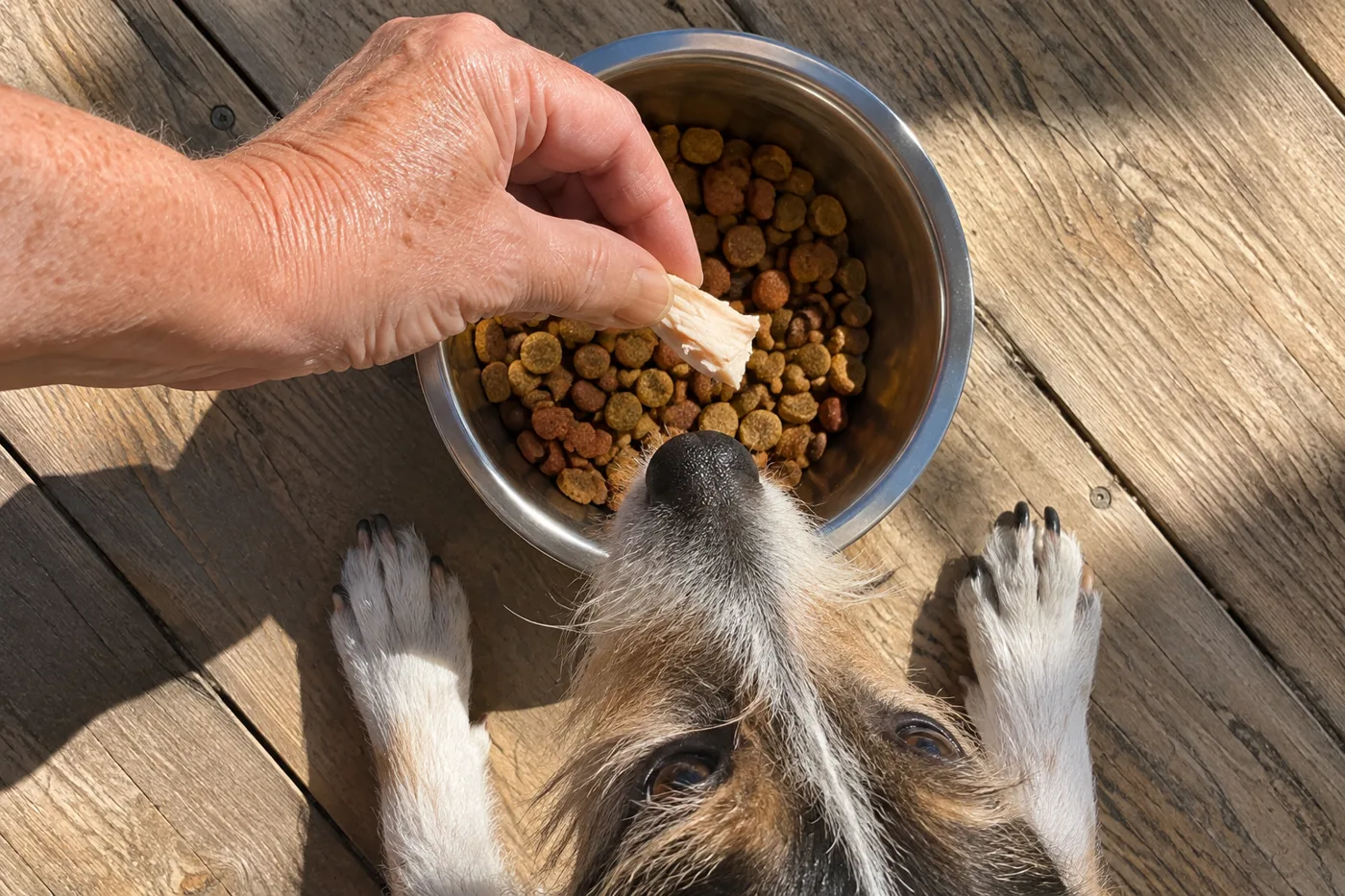
It depended on which house you grew up in. In some, the dog got the fat trimmed off the roast and the last spoonful of mashed potatoes. In others, he got kibble, and a look if he begged. Families split on this, and they still do.
So why did the bag win? Dr. Laura Gaylord, a veterinarian and board-certified veterinary nutritionist, is plain about it: “The success of dog food has become really because of the convenience factor.” In the same conversation, she sums up what you give up when you cook for a dog: “You do sacrifice the convenience of just keeping it in a closet and pouring it in a bowl and you’re done.”
Here’s the part that might surprise you. In a 2024 article with fellow nutritionist Dr. Donna Raditic, Gaylord reported a study linking leftovers and table scraps given as chews in puppyhood to a lower risk of chronic enteropathy, a long-lasting gut disease, later in life. Owners reported what they’d fed, which the authors flag as a real limit, so treat it as a hint, not proof.
Gaylord also has doubts about one food forever. Talking about dogs who can only cope with a single diet, she said: “I think we’ve created that problem potentially with some of them by feeding them one specific way their whole lives.”
None of that makes every scrap fine. The same article says treats should be no more than 10% of your dog’s daily calories, and the crusts count. The ASPCA’s list of foods to keep away from dogs includes onions, garlic and chives, grapes and raisins, fatty foods, and anything with the sweetener xylitol. If your dog gets into any of them, call your vet or ASPCA Animal Poison Control.
And don’t judge by the dog you had in 1974. A review of food poisonings in pets found some dogs ate about two pounds of raisins with no signs at all, while others died after a handful.
#24 The Choke Chain on Walks
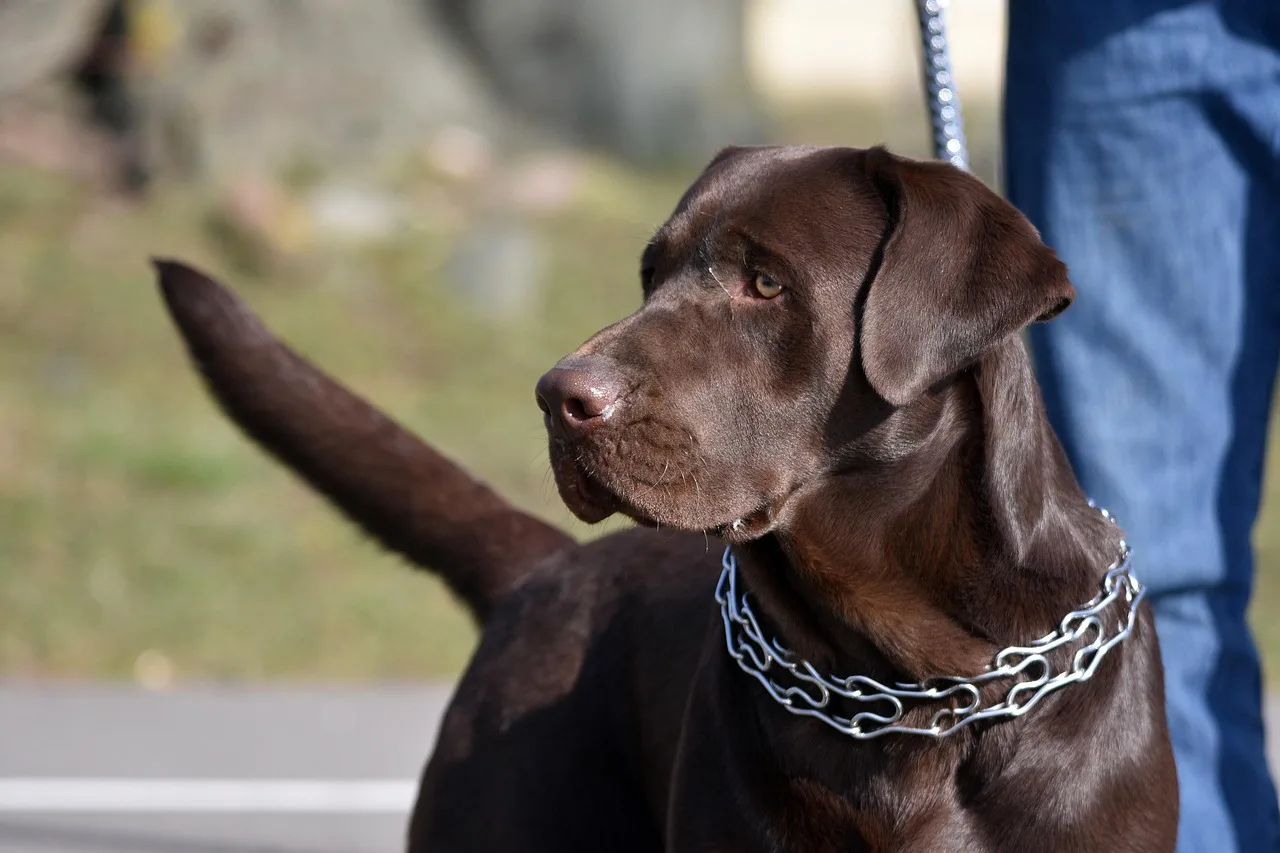
If you took a dog to obedience class back then, you probably remember the sound: the chain sliding through its ring, and the instructor telling you to give a quick pop. It was standard gear. Nobody thought twice.
Ask a veterinary behaviorist now and the answer is flat. The American Veterinary Society of Animal Behavior, whose members are veterinarians who specialize in behavior, said in a 2021 position statement that aversive methods, “including but not limited to electronic collars, prong collars, choke chains, leash corrections,” should not be used under any circumstances. Aversive means a method that works by making the dog uncomfortable. In 2025 its board went further and said it doesn’t support them “regardless of the tools used or the trainer’s level of experience.”
The turn started with a book. Karen Pryor’s Don’t Shoot the Dog!, published in 1984, took reward-based training out of the lab and handed it to ordinary owners. In 1998 she founded the company now called Karen Pryor Clickertraining.
For a dog who pulls, the same group suggests a front-clip harness or a head halter instead. The harness turns him slightly every time he pulls, which slows him down. A head halter isn’t right for flat-faced breeds.
If you’re hiring a trainer for the dog you have now, ask one question: “What do you do when a dog pulls?” The answer tells you which decade they learned in.
#23 The Jingling License and Rabies Tags
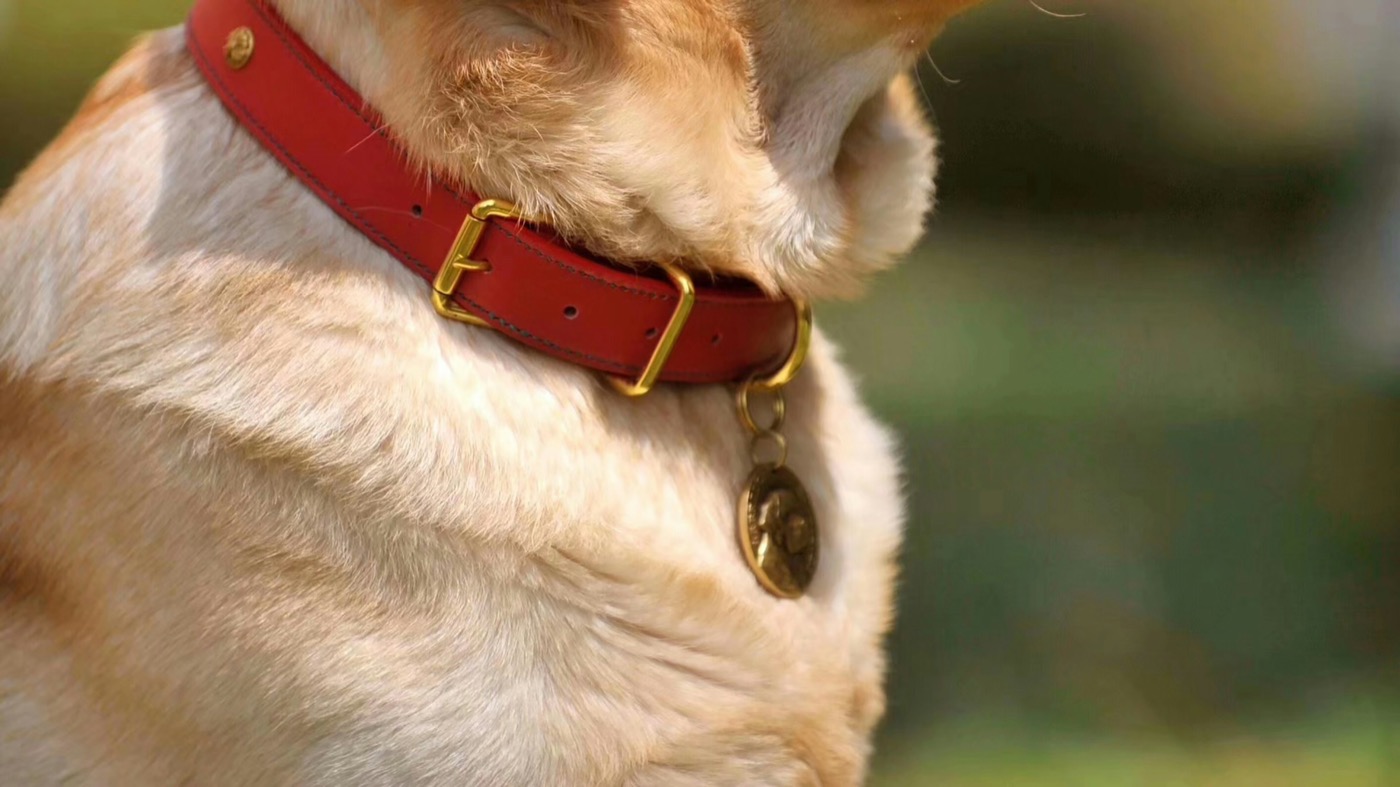
You could hear the dog coming down the hall before you saw him, a little jingle with every step and a full drum solo when he scratched.
Those tags followed a code. National rabies guidelines in 1986 set a color and shape for each year: an orange fireplug in 1986, a green bell in 1987, a red heart in 1988, a blue rosette in 1989, then around again. The same guidelines backed dog licensing as a way to control strays, with the fees paying for animal control. By 1998 the fireplug had become an orange oval, and rabies tags were supposed to look different from license tags.
So what’s 2026? This is one place the sources don’t agree. One tag maker lists 2026 as a green bell, while the four-year cycle in the old national guidelines would make it an orange oval. Your county decides, and one call to its animal control office settles it.
#22 Chained to a Stake in the Backyard

There was always a worn circle in the grass, exactly as wide as the chain was long, with the doghouse at one edge and the bowl tipped over somewhere along it.
For a lot of yard dogs, that circle was home, and nobody questioned it. As of 2022, 23 states plus Washington, D.C., had laws on tethering dogs, and some get very specific:
- Massachusetts: no more than 5 hours in any 24, none outdoors from 10 p.m. to 6 a.m. except for 15 minutes, and a chain no heavier than one-eighth of the dog’s weight
- Texas: a tether at least five times the dog’s length or 10 feet, whichever is longer
- Pennsylvania: no more than 30 minutes when it’s above 90°F or below 32°F
The reasoning fits in one sentence from Humane World for Animals, the group once called the Humane Society of the United States: “An otherwise friendly and docile dog, when kept continuously chained or intensively confined in any way, becomes neurotic, unhappy, anxious and often aggressive.” A trolley line, the cable strung between two points, gives more room but carries similar risks, it says.
The group isn’t against every tie-out. A short, supervised stretch may be fine, it says, as long as the dog is never on a choke chain for it. Laws have kept changing since 2022, so check your own state’s rule before you put a stake in the ground.
#21 The Dented Metal Food Bowl
Every family dog seemed to own the same bowl: metal, dented on one side, and pushed halfway across the room by the end of every meal.
You’d guess the metal one was the cleaner choice. A 2023 study of 96 dog bowls in Italy found the opposite: metal bowls carried higher bacteria counts than plastic ones. Hand-washed bowls also tended to carry more of a family of gut bacteria than bowls run through the dishwasher, though that difference was right on the edge of counting.
So metal doesn’t get a free pass. Whatever yours is made of, wash it often, and if it’s dishwasher-safe, let the machine do it. As for how often, nobody has written official bowl-washing rules for owners. The researchers looked.
#20 The Once-a-Year Rabies Shot
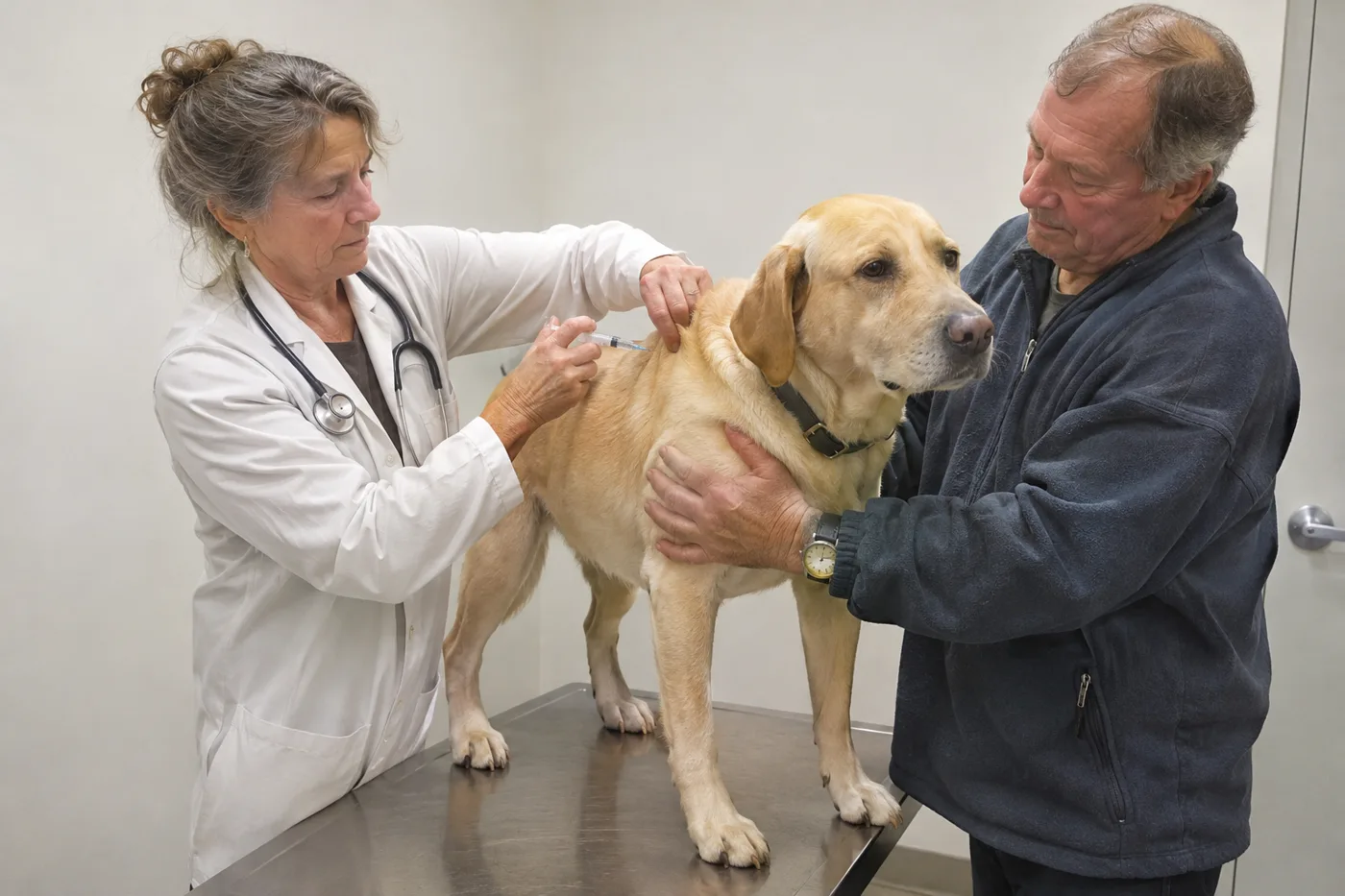
For plenty of family dogs, the rabies shot was the vet visit. In an r/AskOldPeople thread about dogs of that era, several people say vet care meant the yearly shot, or a trip only when the dog was clearly hurt. The person who started that thread, who kept a found stray as the family dog, put it this way: “Costly vet treatments & dog anxiety were unheard of.”
Even then, the shot didn’t always need to be yearly. National guidelines in 1983 already preferred rabies vaccines that lasted three years, with the first shot at 3 months old.
Then a new disease hit. Canine parvovirus showed up in dogs in Europe around 1976 and was spreading unchecked by 1978. That year Leland Carmichael and Max Appel at Cornell isolated the virus, and they had the first parvo vaccine by 1979. If you remember a scare about puppies dying in the late ’70s, that was it.
The biggest change since is how people pay. About 6.4 million U.S. pets were insured at the end of 2024, three in four of them dogs, and the average accident-and-illness policy for a dog cost $749.29 a year, about $62 a month. Whether that beats putting the money aside yourself depends on what a policy actually pays for, so read the coverage list before you look at the price. Most policies leave out conditions your dog already has, along with hereditary ones, and some companies won’t sign up a dog past a certain age. With an older dog, ask about those two things first.
#19 Chasing the Mail Carrier
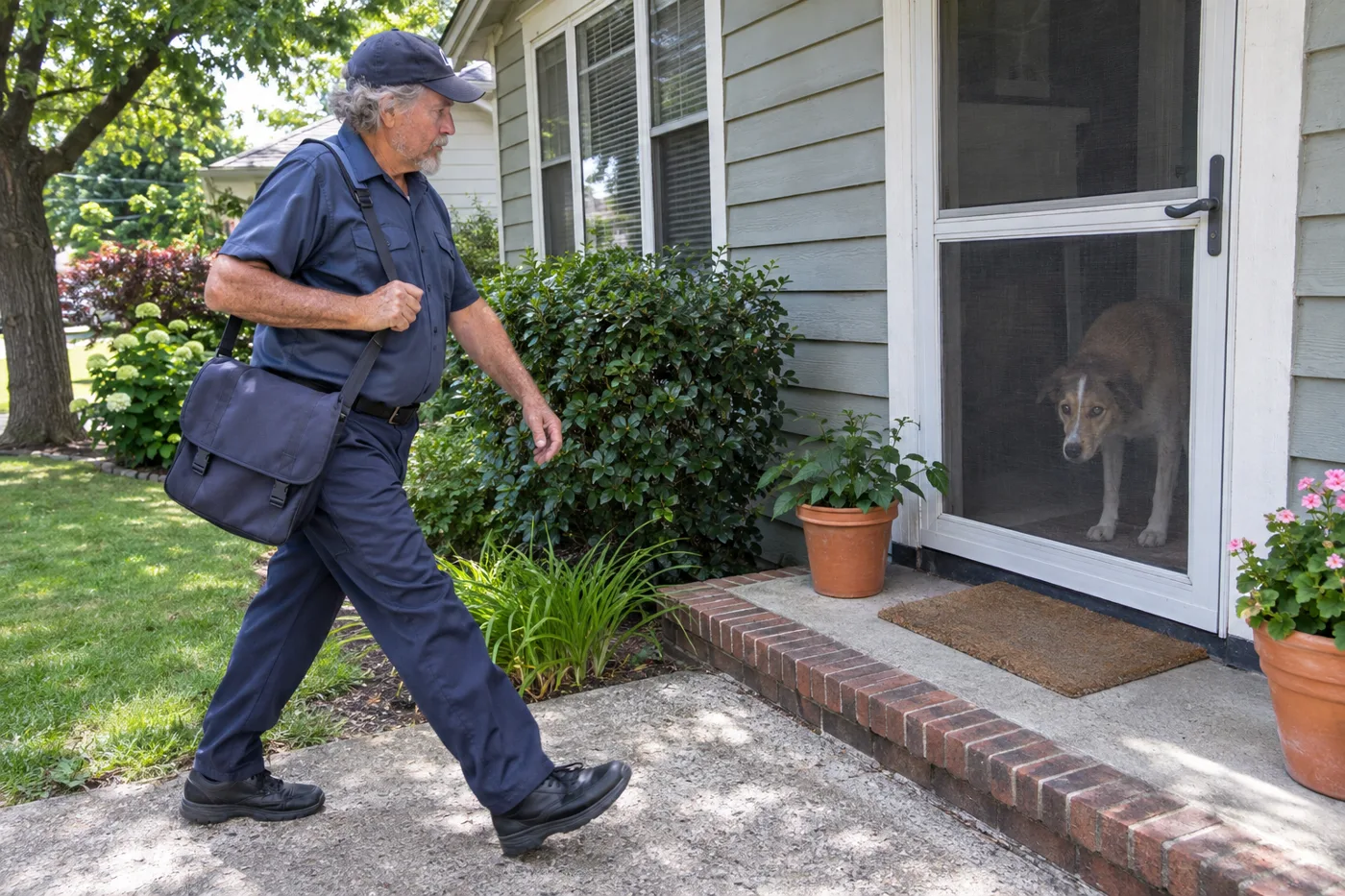
It was practically a comedy routine. The mail truck turned the corner, the dog hit the fence at full speed, and the carrier kept walking like none of it was happening.
For carriers, it was never that funny, and the numbers are climbing again.
Dog bites on mail carriers, then and now – At their worst: as many as 7,000 bite injuries a year – 1998: a low of 2,541, which the Postal Service credited partly to cooperative owners and stricter leash laws – 2024: over 6,000 carriers attacked or bitten, the most in seven years – In 2024, that works out to an estimated 20 carriers attacked or bitten on every day the mail runs, based on about 302 delivery days a year
In 2024, California led with 701 incidents, then Texas with 438 and Ohio with 350. The Midwest averaged 75% more attacks per household than the South. Leeann Theriault, who runs employee safety awareness for the Postal Service, gives the simplest fix there is: “Keep your dog secured and away from the carrier as the mail is being delivered.”
If yours goes off like a car alarm at every delivery, a trainer can help. Until then, keep him inside at mail time. When a loose dog makes a carrier feel unsafe, the Postal Service can stop delivery to the whole street, and every neighbor picks up mail at the post office until it’s fixed.
#18 Chasing Cars Down the Street
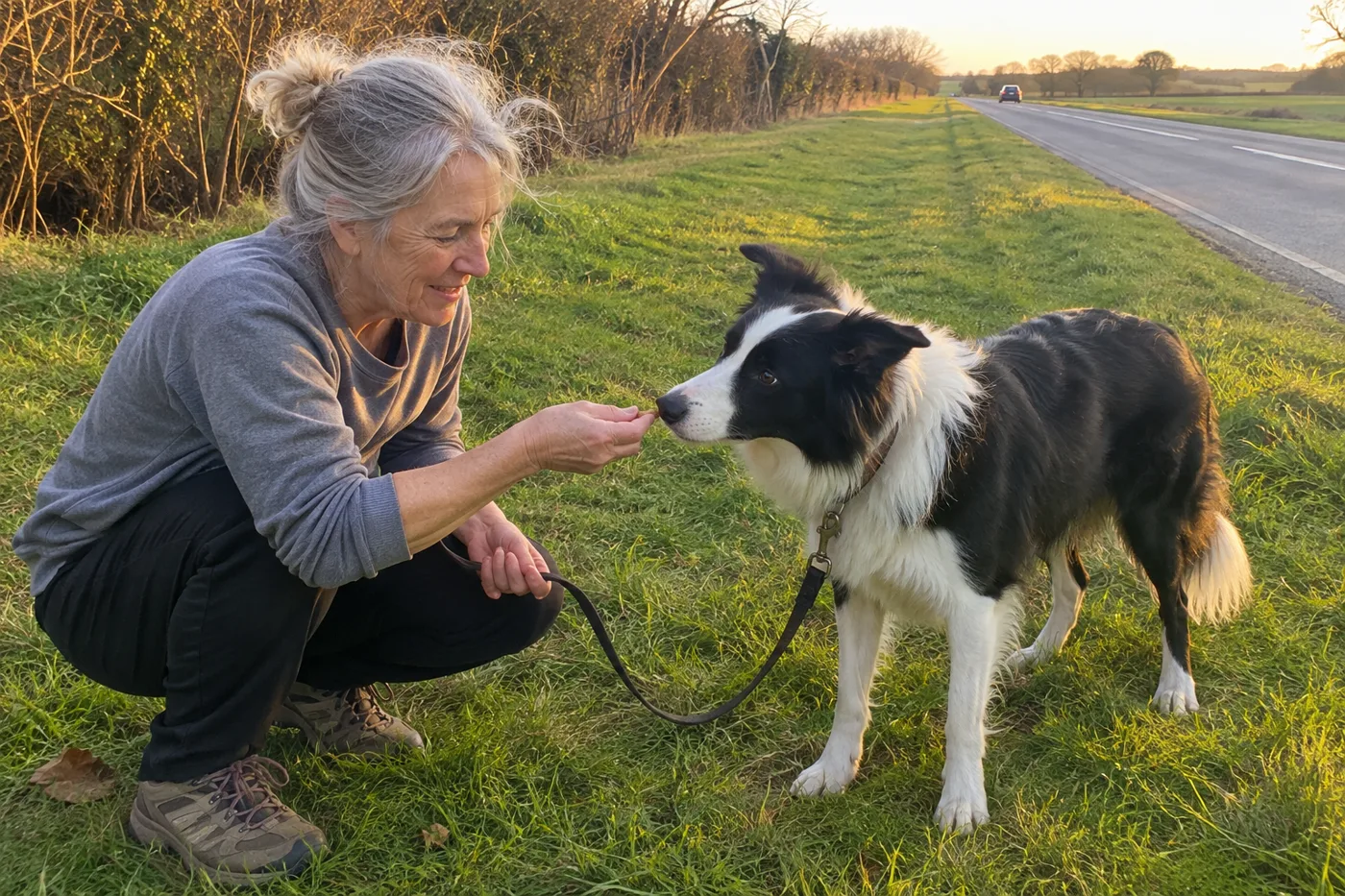
Some dogs barked at cars. Yours, maybe, ran alongside them with his ears flat, all the way to the corner, then trotted home looking very pleased with himself.
Some breeds come by it honestly. Sassafras Patterdale, a certified professional dog trainer, writes for the American Kennel Club (AKC) that sighthounds “were bred to chase,” herding breeds find fast cars “hard to ignore,” and terriers come with a strong prey drive.
Her method for teaching a dog to let cars go by is simple and slow:
- Start far enough from the road that your dog notices cars but stays calm.
- Every time a car passes, praise your dog and give a small, high-value treat.
- If your dog lunges, you’re too close. Back off and try again from farther away.
What can trip it up is the setting. You need a leash, a spot where traffic passes at a safe distance, and the patience to move at the dog’s pace instead of yours. A pocket of tiny treats will do more than all the “Get back here!” ever shouted down a street.
#17 The Dog Catcher’s Truck
Somebody would yell that the dog catcher was coming, and suddenly every loose dog in the neighborhood remembered urgent business at home.
That truck was headed somewhere grimmer than most kids knew. A 1973 national survey estimated about 13.5 million dogs and cats were euthanized that year, roughly one in five of the country’s pets. By 2011 the Humane Society of the United States described the change as going from around 25 percent of dogs and cats euthanized every year to about three percent.
The newest count is smaller still. In 2024, U.S. shelters and rescues euthanized 607,000 cats and dogs, 334,000 of them dogs. That’s more than 20 times fewer than in 1973.
The job grew up, too. On September 27, 1978, 49 people from 24 states met in Englewood, Colorado, to form the National Animal Control Association. The man who got them there was Mike Burgwin, who ran a county animal control department in Oregon.
#16 A “Free Puppies” Box Outside the Store
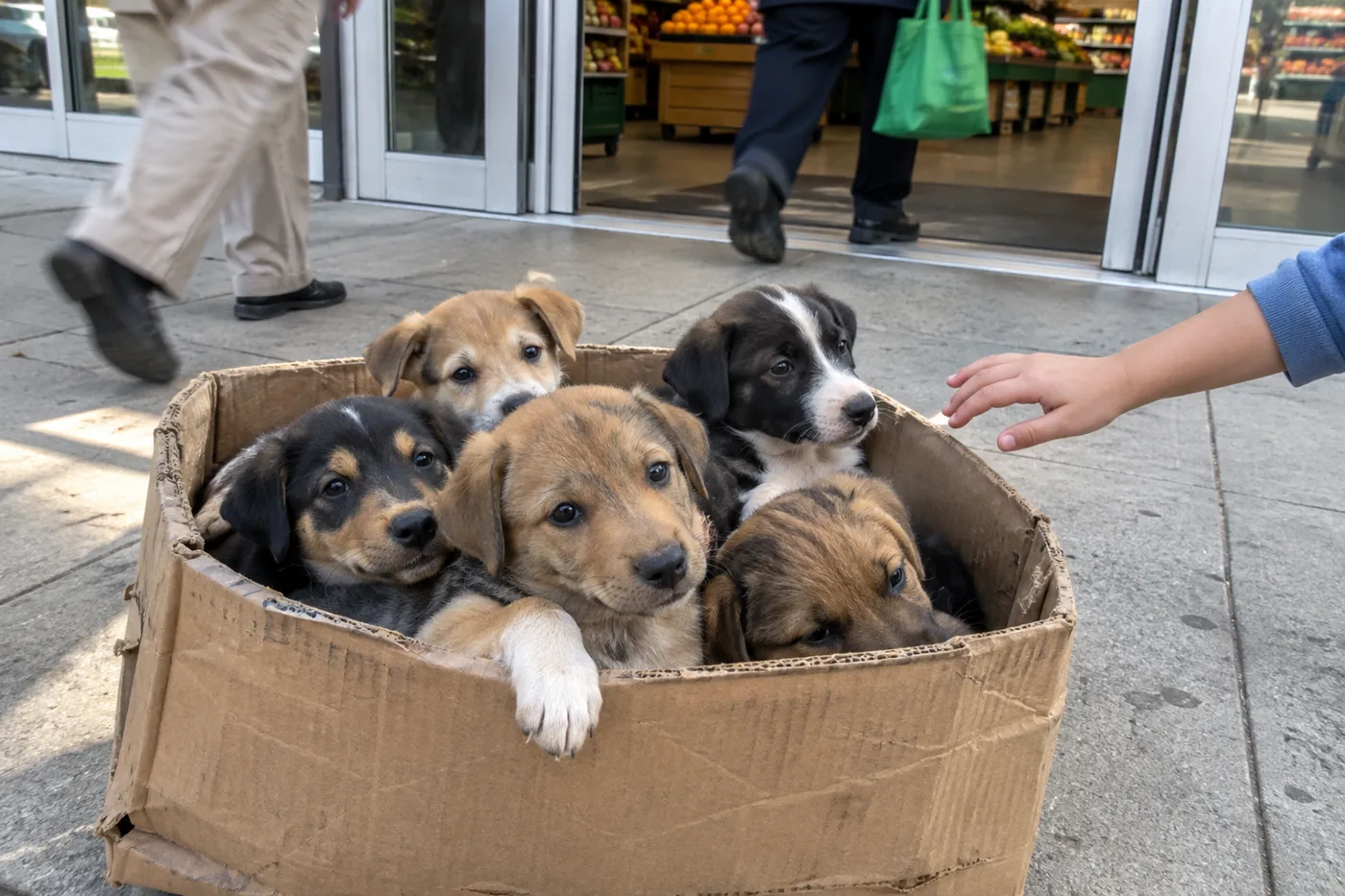
A cardboard box by the grocery store doors, FREE PUPPIES in marker on the side, a kid holding it steady while some grown-up said absolutely not. Then the grown-up looked inside.
Those boxes existed because almost nobody spayed or neutered. In Los Angeles in 1971, only 10.9% of licensed dogs were sterilized. Within a few years it was half. National meetings in 1974 and 1976 pushed what they called the LES approach, short for legislation, education and sterilization, which included charging more to license a dog that hadn’t been fixed. And starting in 1979, Bob Barker began reminding TV viewers to have their pets spayed or neutered.
Getting a dog now can feel like applying for a mortgage. Human Animal Support Services, a group that pushes shelters to drop barriers, lists 27 common rules that turn adopters away, including:
- fenced yards, sometimes 6 to 8 feet high
- required home inspections
- minimum ages of 21 to 25
- no families with children
If a rule stops you, ask whether it’s firm. The group argues for “a conversation-based approach” instead of a checklist, and a conversation is a fair thing to ask for.
#15 Riding Loose in the Station Wagon
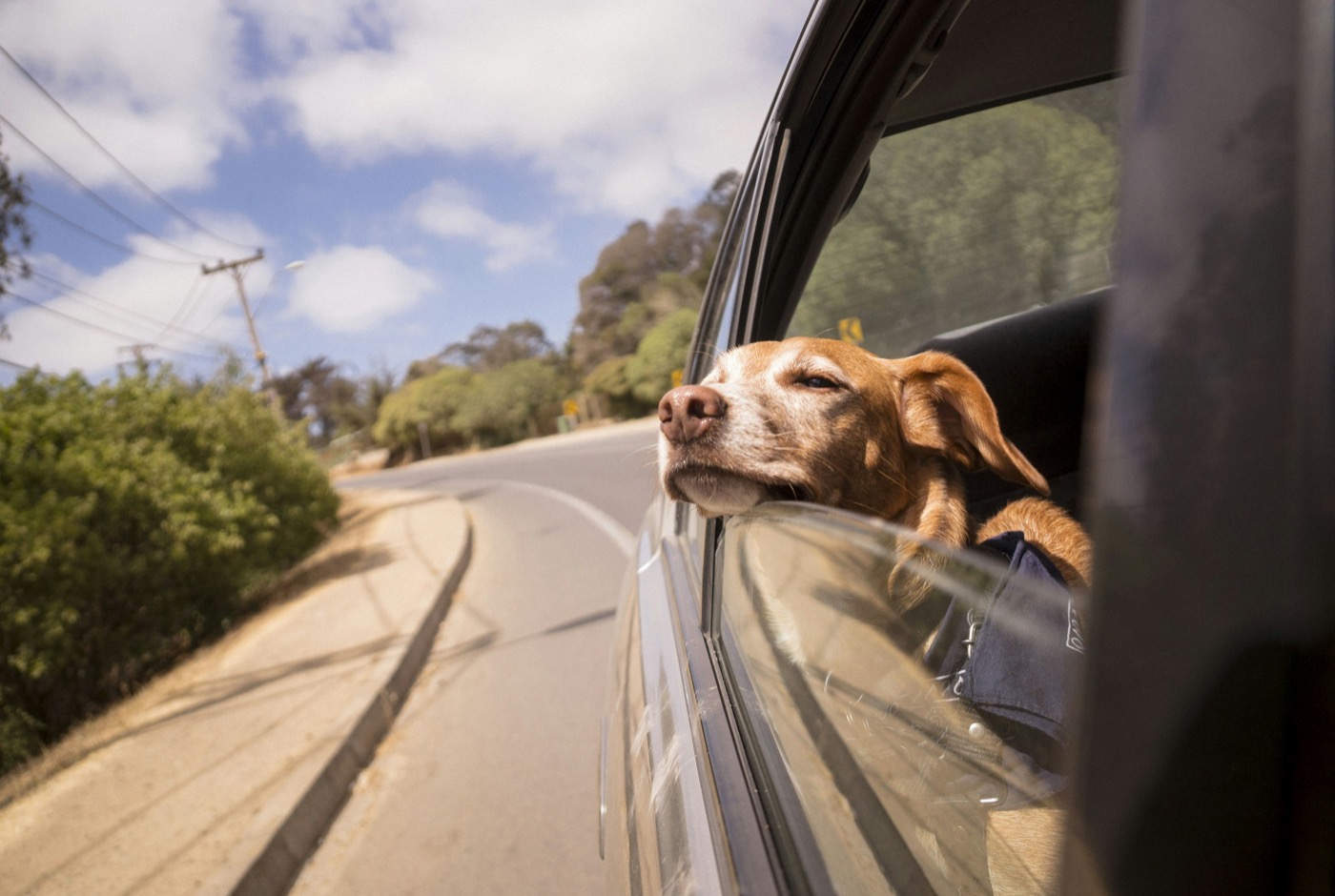
The dog rode in the way-back of the station wagon, sliding into the side panel on every turn, or he stretched across the back seat with his head out the window and his ears flapping like laundry.
That open window looked like the best part of his week. Veterinarian Dr. Lindsey Wendt told Newsweek that road debris hitting “the surface of their eye or their face” can hurt a dog, including scratches to the eye, and that a dog could jump out and “be seriously injured or killed.” Her fix is a harness or carrier, or a window cracked open instead of rolled down.
Choosing a restraint is trickier than it looks. Lindsey Wolko, who founded the Center for Pet Safety, a nonprofit that crash-tests them, puts it bluntly: the pet products industry has very little regulation, and many brands simply decide for themselves that their products pass. Products the center has certified include the Sleepypod Clickit Range harness (5-star rating, tested with a 110-lb dog, November 2024) and the Säker Bomber Harness (5-star rating, tested with a 75-lb dog, November 2022). The certified list changes, so check the center’s current list before you buy.
#14 The Old Tennis Ball and the First Kong
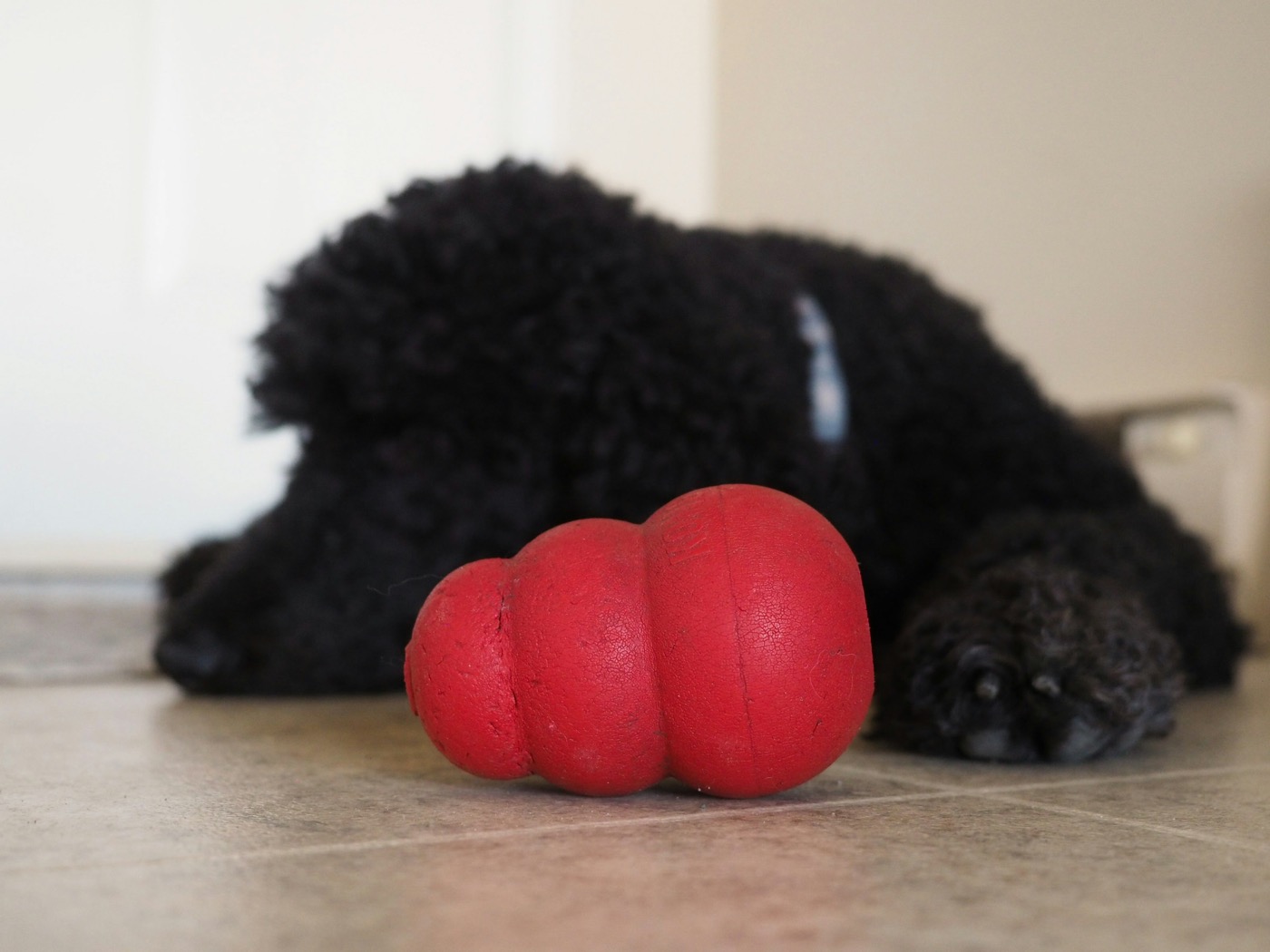
For most dogs, the toy box was a tennis ball gone gray and slimy, and maybe a knotted piece of rope.
Then, in Denver in 1976, a mechanic named Joe Markham noticed something about his German Shepherd, Fritz. Fritz chewed up everything, but he couldn’t wreck a rubber axle stop from a late-1960s Volkswagen Bus. Markham spent the next six years turning that part into a toy. He called it the Kong.
The tennis ball still has its fans, with a few strings attached. The AKC warns that half of a broken tennis ball “can get lodged in the back of their throats, blocking the airway,” and a veterinary dental specialist says the fuzzy felt slowly grinds teeth down. Its advice: tennis balls for supervised play only, one at a time, and a sturdy rubber ball for a dog who likes to chew.
Fritz would have approved.
#13 Sleeping Under the Porch in Summer
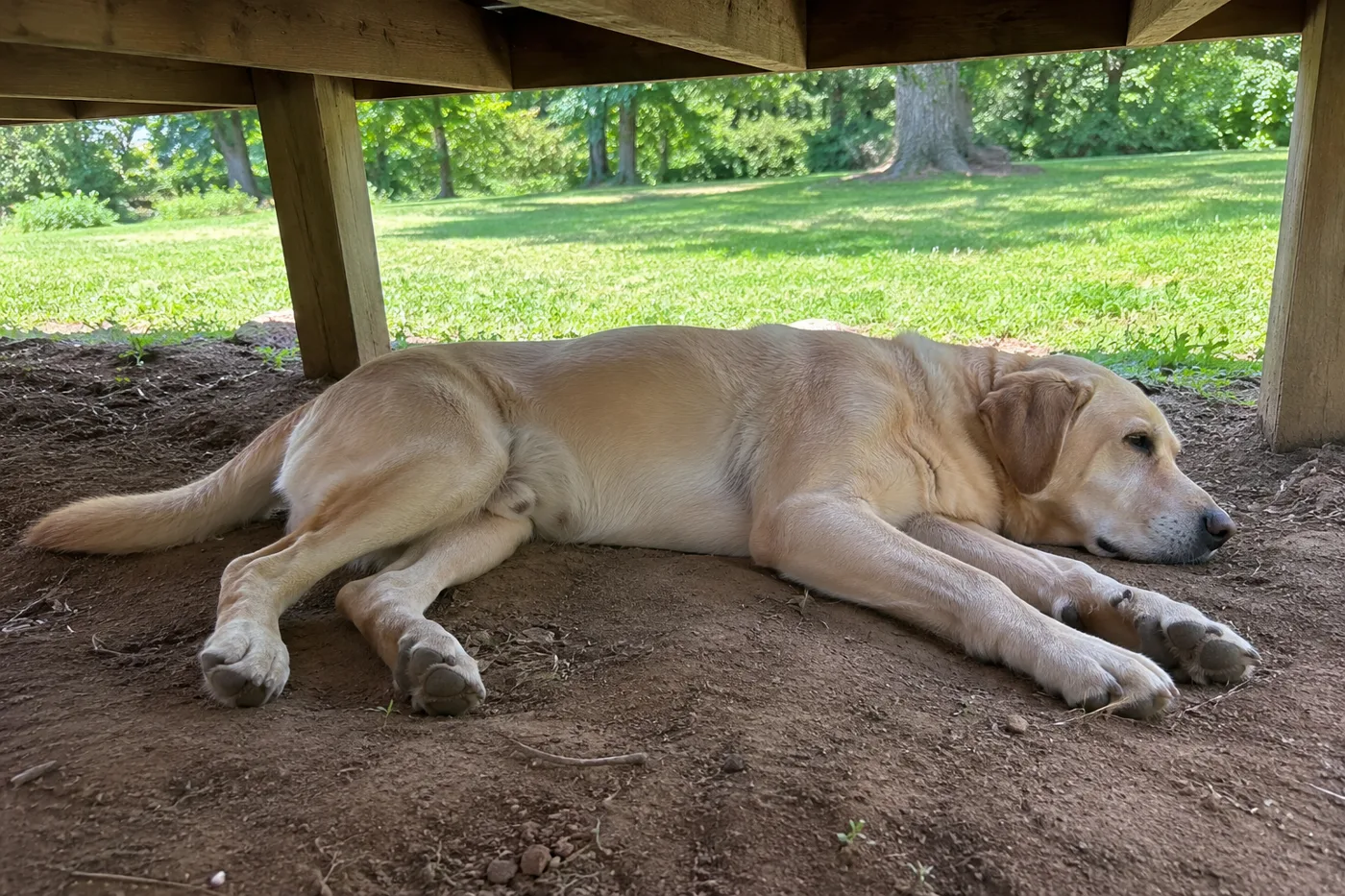
On the worst August afternoons, the dog knew the coolest spot on the property better than anyone. He’d lie flat out in the dirt under the porch, or in the shade of the car, and move only when the shade did.
He was doing what the air conditioner does now, and he started earlier in the season than you might. Humane World for Animals says to be careful with dogs once it hits 68°F, a lot cooler than most people would guess.
The 7-second pavement test – Put the back of your hand on the pavement. If you can’t hold it there for 7 seconds, it’s too hot for paws. – Central air in U.S. homes: 27% in 1980, 67% by 2020. – Flat-faced breeds face increased heatstroke risk, and senior dogs, overweight dogs, and dogs with heart disease or airway problems are also at higher risk. – If a dog overheats, cool it with room-temperature water, never ice, and call the vet.
#12 Sleeping Outside, or in the Kids’ Bed

Where the dog slept depended on whose dog it was. In that r/AskOldPeople thread, some people describe dogs kept outside or in the barn and let into the kitchen only at night or in bad weather. Others describe dogs who slept in the kids’ beds and had the run of the house.
Farm dogs were their own category. Someone who grew up around a grandfather’s farm herding dogs said: “They were lovely dogs but working dogs and we couldn’t treat them as pets.”
The split now leans hard toward the bed. In an AKC poll of owners:
- 45% let the dog sleep in their bed
- 20% crate the dog at bedtime
- 17% use a dog bed
- 14% say various places indoors
- 4% use an outdoor shelter
If anyone tells you the dog ruins your sleep, there’s a comeback. When the Mayo Clinic surveyed 150 patients at its Arizona sleep center, 56% of the 74 pet owners let pets in bed, and 41% said the pet didn’t disturb their sleep or even improved it. Those were people already at a sleep clinic, so it’s no promise for you. The dog, as usual, has already voted.
#11 The Big Dog Watching the Toddler
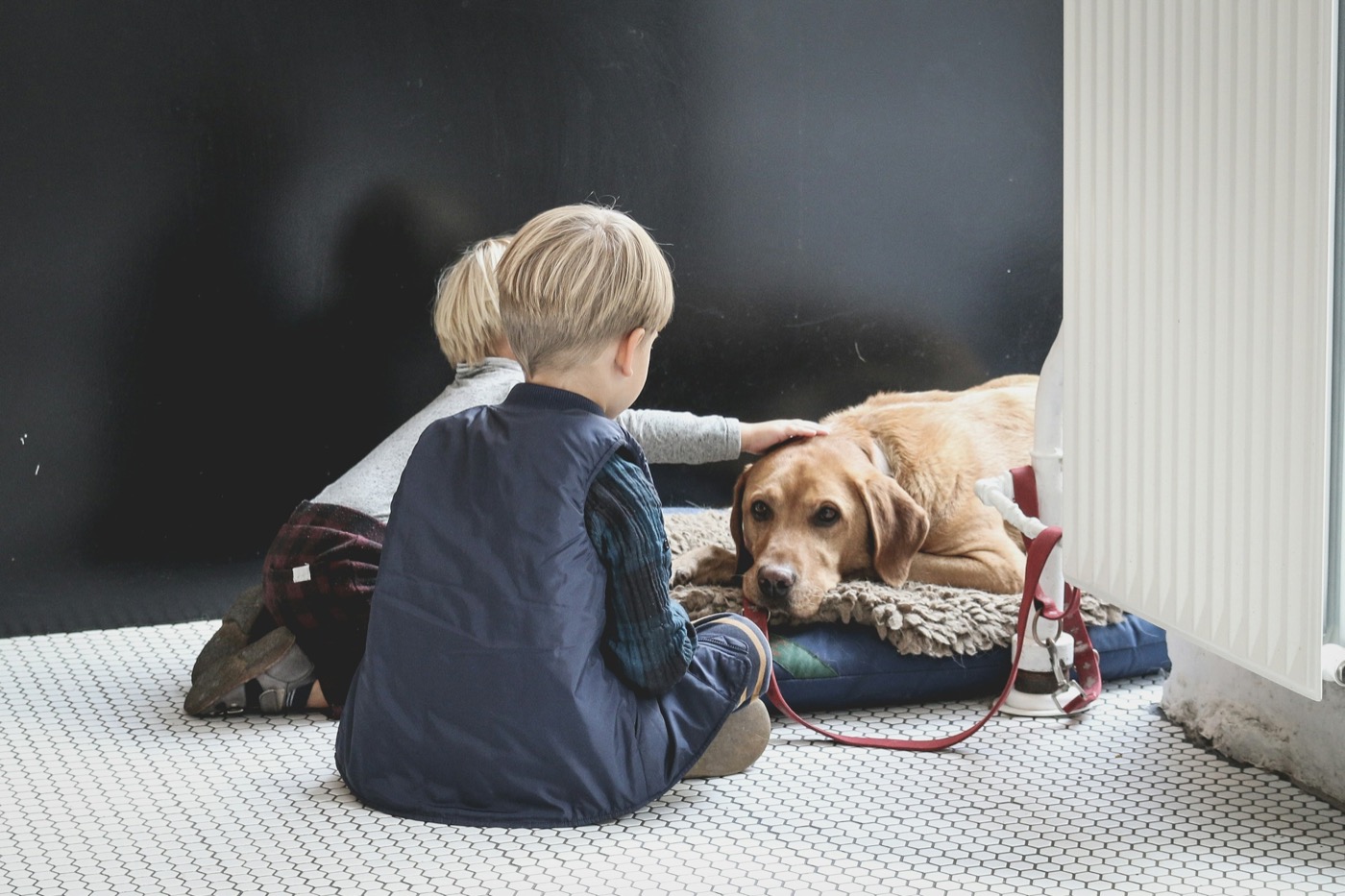
The big dog lay beside the playpen like a furry fence, and everybody agreed he was the best babysitter the family ever had.
That belief is alive and well. Under a TikTok video of a Great Dane playing with a toddler, commenters say big, well-socialized dogs naturally adjust to small children. Most of those dogs probably were wonderful. Pediatric advice still draws a firm line, and it isn’t aimed at anyone’s old dog.
“Never leave an infant or toddler alone with your pet.” KidsHealth, reviewed by Melanie L. Pitone, MD
The reason is the dog’s bad moment, not his character: “even the nicest, best-trained family dog may snap if it’s startled, scared, threatened, angry, or hungry.” If a toddler visits your house, the rule is simple. The dog and the little one are together only when a grown-up is in the room.
#10 No Poop Bags, No Scooper
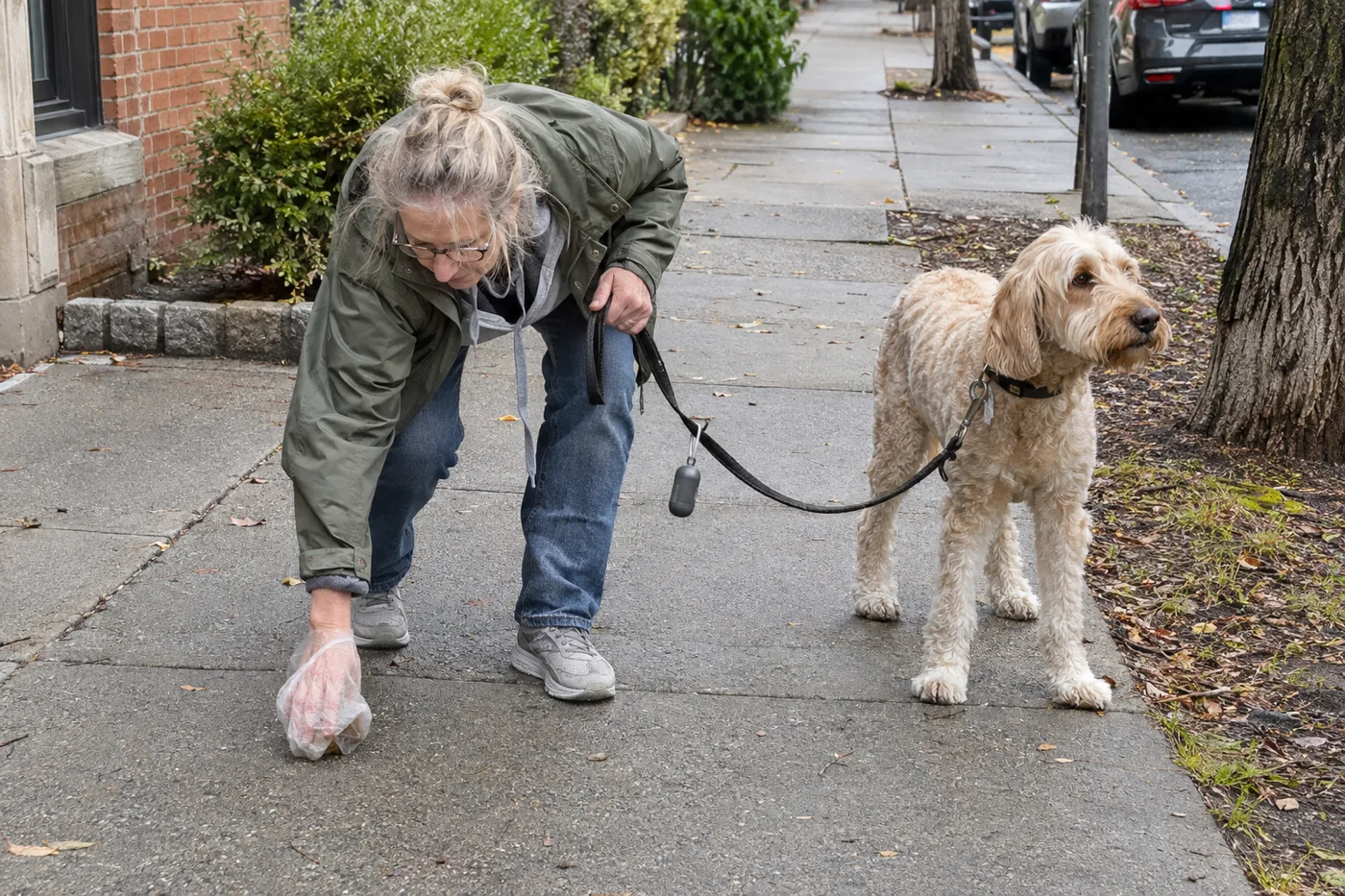
You stepped around it. Everyone did, in your yard and everybody else’s.
The memories are oddly specific. Someone in the r/AskOldPeople thread recalls “White, powdery poop all over the back yard,” and the front-door commenter from #28 sums up walks as “No plastic-bag pickups on leashed walks.”
The cleanup started in a small town. Nutley, New Jersey, passed the first poop-scoop law in 1971. New York State’s took effect in August 1978, and the AKC calls it “a prototype for similar legislation all over the world.” Now a roll of bags clipped to the leash is as standard as the leash itself.
Before New York’s law, its streets were estimated to collect 500,000 pounds of dog waste a day. That’s 250 tons, every day, on one city’s sidewalks.
#9 The Semi-Moist Burger Patty
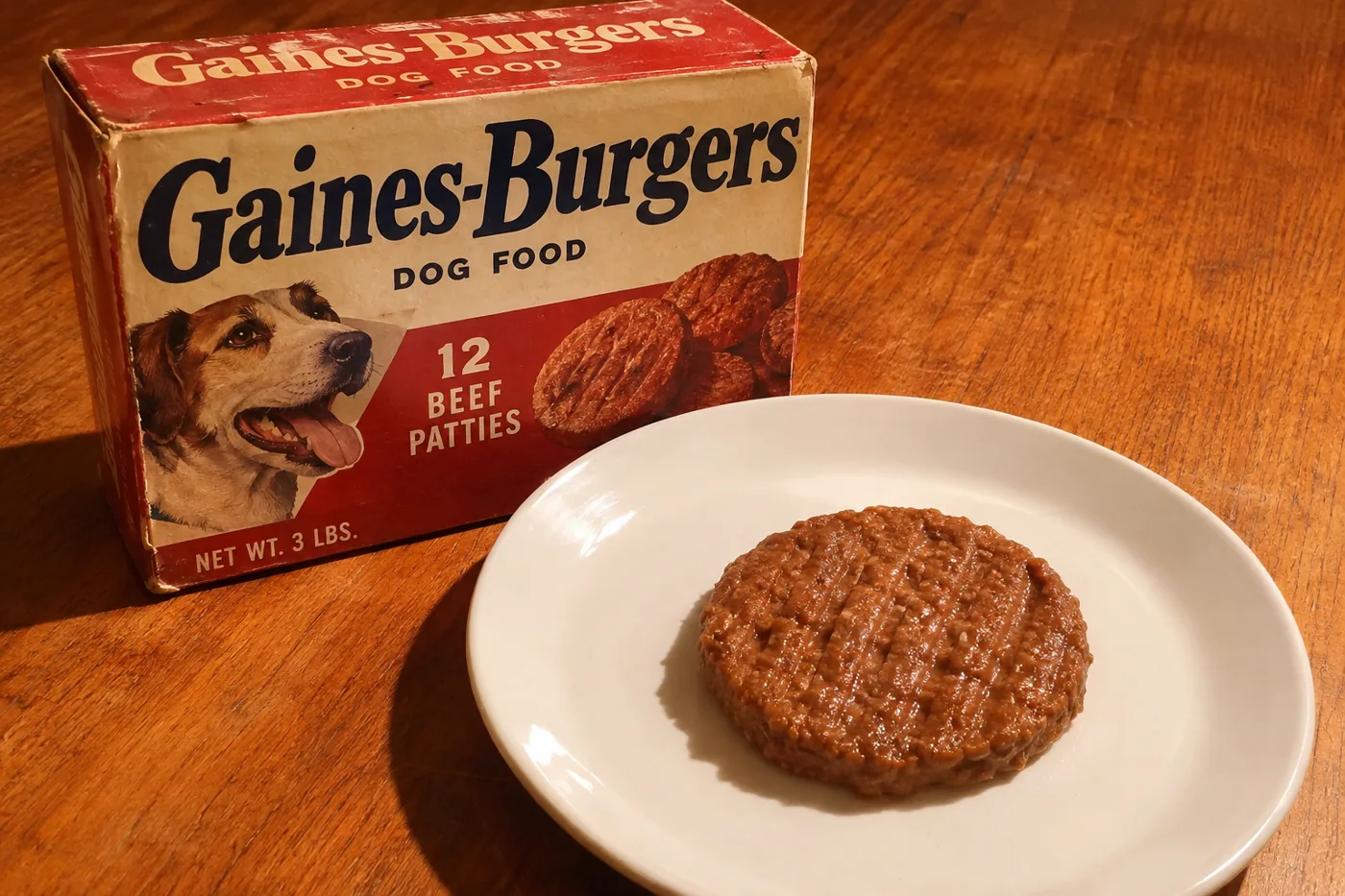
You peeled back the cellophane and there it was, a patty that looked exactly like a hamburger, if a hamburger could bend without breaking.
General Foods launched Gaines-Burgers in 1961 as individually wrapped patties of moist dog food “that resemble a hamburger patty.” There was a cheese version in the 1970s, and “Improved Gaines-Burgers Cheese” followed in November 1982. Then the brand changed hands, first in 1984 and again in 1986, and the patties disappeared in the 1990s.
They didn’t stay gone. In February 2020, dVour Brands brought the Gaines-Burgers name back in limited releases.
If you find a box for old times’ sake, check the nutritional adequacy statement from #26 before it becomes dinner. Your dog won’t care about the nostalgia. He’ll care that it smells like a hamburger.
#8 The Heinz 57 Mutt Down the Street

He was part shepherd, part something, and part whatever got over the fence that spring. Every family had a theory, and the theory grew a little with every telling.
Mutts were never rare, and they still aren’t. Two national estimates put mixed breeds at 44% and 53% of U.S. household dogs, which means about half.
Now there’s a way to settle it. Wisdom Panel’s DNA tests screen for more than 430 breeds, for about $100 to $160 in 2026.
The honest catch: a DNA test needs a dog to test. It can’t settle the argument about the one who’s gone. It can settle the one about today’s mutt, the one the whole family swears is “mostly Lab.” Have everyone write a guess down before the results come back. Somebody will want proof they called it.
#7 President Ford’s Golden Puppies

In September 1975, the White House had puppies. Liberty, President Gerald Ford’s Golden Retriever, gave birth to nine, four females and five males, and the First Lady didn’t leave her side.
“I sat on the floor and held Liberty’s head for eight hours, until the first puppy came.” Betty Ford, via the Gerald R. Ford Presidential Library
The Fords kept one puppy, Misty. Seven were sold for $300 each or given to family and friends. And one, named Jerry, went to Leader Dog School for the Blind in Rochester, Michigan.
What you might not expect: the breed most people now picture as the family dog wasn’t even in the AKC’s top 10 for the 1970s. The Golden Retriever entered at No. 5 in the 1980s and was No. 3 in 2024. In the decade of the White House litter, it was still waiting for its turn.
#6 The Doberman as the Family Guard Dog

Cropped ears, a sharp stance and a “Beware of Dog” sign on the gate: the Doberman was the 1970s idea of a dog nobody messed with.
It was also hugely popular. The Doberman was No. 3 in the AKC’s 1970s ranking, and VCA calls it “the second most popular breed in America in 1977.” Breed-only shows drew 700 to 1,000 Dobermans at a time. That worried the people who knew the breed best. Faye Strauss of the Doberman Pinscher Club of America writes that breeders feared “our breed becoming the dog for everyone; we knew they aren’t that.”
The look has fallen out of fashion, officially. In 2008 the American Veterinary Medical Association said it opposes ear cropping and tail docking “when done solely for cosmetic purposes,” and Dr. Gail Golab pointed to “anesthetic complications, pain, blood loss and infection.” The breed ranked No. 16 in 2024.
What owners should know hasn’t changed. VCA describes the Doberman as “playful and generally gentle with children” but reserved with strangers, and it sets a high bar for exercise: “a long walk, or preferably, long jog.”
#5 The Irish Setter Craze
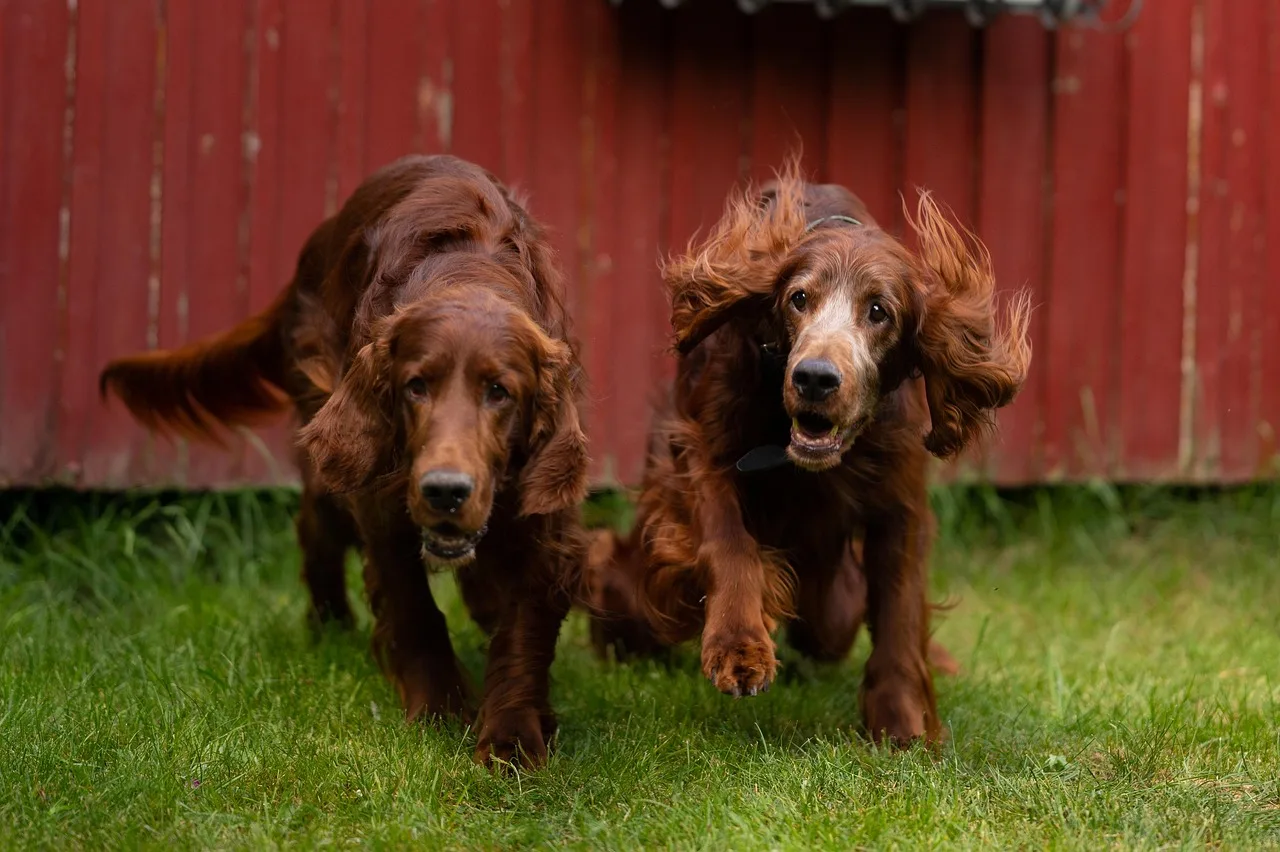
The photo said it all: a big red dog at the White House. Gun Dog magazine ties part of the Irish Setter boom to President Nixon’s dog, King Timahoe, being photographed there.
The climb had started a decade earlier, with the 1962 film Big Red. The breed went from 27th in 1960 to 21st in 1965, then peaked at third in 1973. It finished No. 6 in the AKC’s ranking for the whole decade.
Booms bring people who are in it for the money. One breeder told Gun Dog what happened next: “When no one wanted to buy their pups any longer the opportunists quickly abandoned the breed.” By 2024 the Irish Setter had fallen to No. 85.
If one has caught your eye, here’s what to know first: the breed needs a lot of activity and shouldn’t be kenneled full-time.
#4 Lassie on Sunday Nights

Sunday at 7, on CBS, the theme music started and whoever was home drifted toward the TV. For 17 seasons, that’s where Lassie lived.
The ending is the part most people misremember. The show ran until March 24, 1973, but CBS dropped it in 1971, when a new federal broadcasting rule reshuffled the prime-time schedule. Its last two seasons ran in syndication, sold to local stations, so where you lived it may have turned up on a different night or a different channel.
Lassie’s breed has slipped since then. The Collie was No. 10 in the AKC’s 1970s top 10 and No. 39 in 2024.
And the line everybody quotes? Jon Provost, who played Timmy, called his autobiography Timmy’s in the Well! because a well was “the one place Timmy never fell into.”
#3 Benji at the Movie Theater

The lights went down, a scruffy little dog filled the screen, and by the end there wasn’t a dry eye in the row.
Hardly anyone in Hollywood saw it coming. Every studio turned Benji down, so Joe Camp released it through his own company, Mulberry Square Releasing. It premiered in Dallas on May 22, 1974. It cost $500,000 and took in $31.5 million in the U.S., 63 times its budget, and $45 million worldwide, enough to make it the ninth-highest-grossing film of the year.
Then there’s the star. Benji was played by Higgins, whom trainer Frank Inn found as a puppy at the Burbank Animal Shelter. He was believed to be part Miniature Poodle, part Cocker Spaniel and part Schnauzer. Higgins died on November 11, 1975.
His kind are still waiting. In 2024, 2.9 million dogs entered U.S. shelters and rescues, and the dog adoption rate rose to 57%. Somewhere in a kennel is the next Higgins, waiting on his Frank Inn.
#2 Crying Over Old Yeller
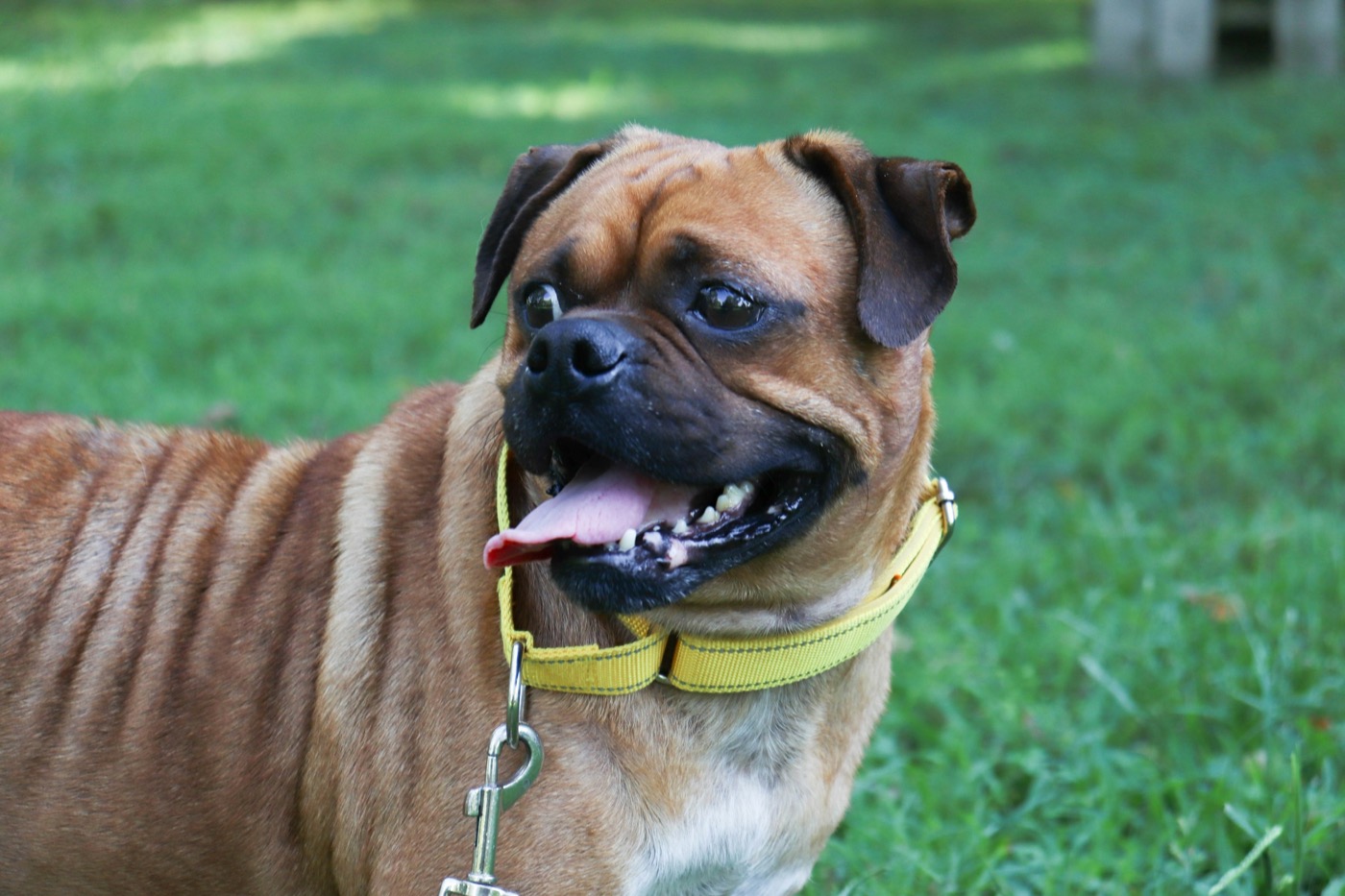
You knew it was coming. Everyone did. It didn’t help one bit.
Old Yeller opened on December 25, 1957, directed by Robert Stevenson from Fred Gipson’s 1956 novel, and it was the fifth-highest-grossing picture of the year. Whether you first saw it in a theater or years later on TV, the ending landed the same way. Rabies is spreading through the region, and that disease is what drives the heartbreak.
That fear made sense back then. In 1947, U.S. reports counted thousands of cases of rabies in dogs. By the late 1960s it was fewer than 500 a year. And by 2004, the CDC says, the dog strain of rabies had been eliminated from the U.S. That’s the shot your dog still gets, still doing its job.
Rabies hasn’t vanished, though. About two Americans a year still die of it, and most of those cases come from bats.
#1 How Long the Family Dog Lived

Ask anyone about the dog they grew up with and you’ll hear a big number. In the r/AskOldPeople thread, people remember family dogs living to 12, and a farm pointer reaching 20.
So did dogs really live longer back then? The honest answer is that nobody can say. We looked for U.S. data on dog lifespans from the 1970s and found nothing reliable, so there’s no fair way to compare your childhood dog with today’s.
What does exist suggests dogs are living a little longer, if anything. Banfield’s records on about 2.2 million dogs seen in 2012 showed an average lifespan of 11 years, up 4% since 2002. In those same records, spayed females lived 23% longer than unspayed ones, and neutered males 18% longer than intact males. That’s the free-puppies box of #16, showing up again at the other end of a dog’s life.
A 2023 study of 13.3 million dogs at 1,152 Banfield hospitals put life expectancy at birth at 12.69 years, and it rose by more than half a year for toy, small and medium dogs between 2013 and 2019. Size changes everything:
| Dog size | Life expectancy at birth |
|---|---|
| Toy | 13.36 years |
| Small | 13.53 years |
| Medium | 12.70 years |
| Large | 11.51 years |
| Giant | 9.51 years |
So if your childhood terrier made it to 15, your memory may be dead right. In the numbers we do have, the biggest difference isn’t the decade. It’s the size of the dog: about four years between the average small dog and the average giant.
The bottom line
The 1970s dog went without a lot. He had no crash-tested harness, no beef-flavored flea chew, and no bowl that went in the dishwasher.
What he did have was a neighborhood that knew him. Half the block could tell you his name, his favorite yard and which kid he followed home from school. When a dog goes missing now, a search of the neighborhood still finds more of them than anything else.
So here’s a question for the dog on your couch: how many people within a few blocks would know him on sight? If the answer is “not many,” introduce him to one neighbor you’ve never talked to.
Bonus: Five small things to check on the dog you have now
- Look at the shampoo you use on your dog. If it’s yours, swap it for a dog shampoo: VCA explains that dog skin is closer to neutral (pH 6.2 to 7.5) than human skin (5.2 to 6.2), so human shampoo can upset its natural protective layer.
- Save ASPCA Animal Poison Control in your phone so it’s there when you need it: (888) 426-4435.
- If yours is a Beagle, check the fence line for gaps. VCA says Beagles follow their noses, may ignore you when called, and “tend to wander.”
- Notice what time your dog starts waiting for someone to come home. Alexandra Horowitz, founder of Barnard College’s Dog Cognition Lab, has a theory that dogs may smell time as the odors in a room shift through the day.
- Tell the next Peanuts fan you meet that Snoopy was the first fictional dog registered with the AKC, with the honorary number Beagle-1.
Questions people also ask
What were the most popular dog breeds in the 1970s?
The most popular dog breeds of the 1970s, by the AKC’s ranking for the decade, were the Poodle, German Shepherd Dog, Doberman Pinscher, Beagle, Dachshund, Irish Setter, Cocker Spaniel, Miniature Schnauzer, Labrador Retriever and Collie, in that order. It was the Poodle’s second straight decade at No. 1. The 1970s were also the first time the Labrador Retriever made the AKC top 10.
What did people feed their dogs in the 1970s?
Family dogs in the 1970s ate canned food such as Ken-L Ration or Alpo, semi-moist patties like Gaines-Burgers, Milk-Bone biscuits, and table scraps, with plenty of dogs getting a mix. Milk-Bone added 12 vitamins and minerals in 1977. Today, veterinary nutritionists say treats, scraps included, should stay under 10% of a dog’s daily calories.
Did dogs live longer in the old days?
Nobody can say, because there’s no reliable U.S. data on dog lifespans from the 1970s to compare. What does exist shows dogs living a little longer in recent years: a 2023 study of 13.3 million dogs put life expectancy at birth at 12.69 years, rising for toy, small and medium dogs between 2013 and 2019. Size makes a big difference, with giant breeds averaging about 9.5 years.
Are flea collars still safe to use on dogs?
The EPA still allows flea collars to be sold, including ones made with the pesticide TCVP, which it kept on the market in June 2024 with extra reporting rules. For TCVP collars, the agency says to keep children from playing with them and wash your hands after handling them. For any collar, follow the label, watch your dog, and take the collar off right away if there’s a reaction. Your vet can help you choose between a collar, a drop-on treatment and a chew.
Why don’t trainers use choke chains anymore?
Veterinary behaviorists oppose them: the American Veterinary Society of Animal Behavior’s 2021 position statement says choke chains and other aversive tools should not be used under any circumstances, and it recommends reward-based training only. In 2025 its board added that the stance holds regardless of the trainer’s level of experience. The shift built on reward methods that Karen Pryor’s 1985 book Don’t Shoot the Dog! brought to everyday owners.
When did leash laws and pooper-scooper laws start?
Leash and dog vaccination laws began spreading in 1947, and the CDC credits them with starting the long decline of rabies in dogs. The first pooper-scooper law passed in Nutley, New Jersey, in 1971, and New York State’s took effect in August 1978. Local rules differ, so your own town’s ordinance is the one that applies to you.