If you share your home with a dog, you already know the truth nobody in the flooring aisle wants to tell you: the finish on your hardwood matters more than the wood itself. A 70-pound Lab with untrimmed nails will scar a soft-finished oak floor faster than any child ever could. Meanwhile, a small senior dog with the occasional accident can slowly cloud a finish that looked perfect on day one.
I have spent years doing hardwood floor refinishing Atlanta homeowners count on, and I have personally applied every major finish on the market, from old-school oil-based polyurethane to European hard wax oils. This guide is not a manufacturer’s brochure. It is what I tell my own friends when they call me and say, “We are getting a Great Dane puppy, what should we put on our floors?”
The goal here is simple: help you walk into a conversation with your contractor already knowing which finish fits your dog, your lifestyle, and your tolerance for maintenance. You are the one living on the floor every day. You deserve a real answer.
Table of Contents
The Four Finishes That Actually Matter
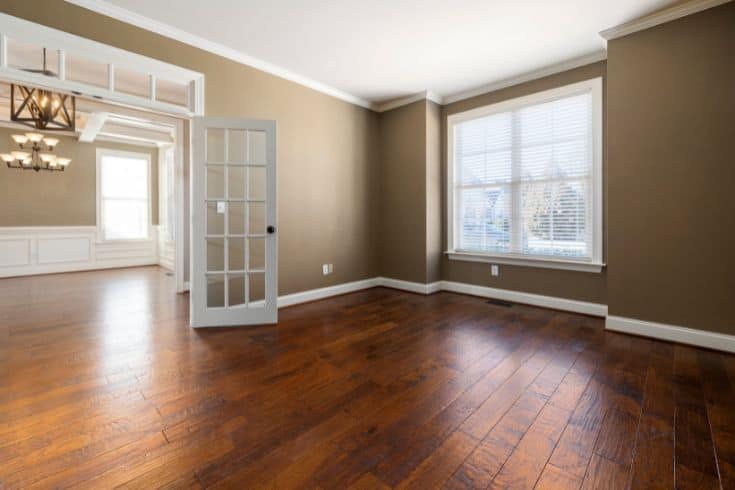
There are hundreds of product labels out there, but they almost all fall into one of four real-world categories. Here is how they break down for a dog household.
1. Oil-Based Polyurethane
This is the classic. If your parents looked for hardwood floor refinishing Atlanta in the 1990s, this is almost certainly what they used. It goes on amber, and it gets more amber over time, which some people love on red oak, and some people hate on white oak or maple.
- Durability: Very good. The cured film is thick and forgiving of scratches, especially on older oak, where the grain hides a lot. A deep nail gouge still shows, but surface scuffs from nails often polish out with a simple screen-and-recoat every few years.
- Scratch visibility: Medium. The warm tone tends to camouflage minor wear. You will still see deep scratches down to bare wood.
- Dog urine accidents: This is one place where oil-based products actually helps you. The cured film is dense and hydrophobic, so a urine puddle caught within 15 to 30 minutes usually wipes up with no staining. You get a real buffer. Leave it overnight, and you are in the same trouble as any other finish.
- Dry time and smell: Here is the honest downside. Oil-based poly takes 24 to 48 hours between coats and releases strong VOCs during cure. You and the dog need to be out of the house during work. You and the dog can walk on the floor 24 hours after the final coat, and furniture goes back at the same mark. Area rugs are the one exception and should wait two to three weeks so the finish can fully cure underneath.
- Recoat cadence: A screen-and-recoat every 5 to 7 years in a dog home keeps the floor looking fresh without a full sand.
- Best for: Traditional aesthetics, oak floors, households that can leave for a few days during application, and dogs whose accidents you catch quickly.
2. Waterborne Polyurethane
Waterborne has come a long way. The commercial-grade two-component waterbornes I use today are genuinely tough, sometimes tougher than the oil-based products I grew up applying.
- Durability: Excellent, especially the two-component cross-linked formulas. The cured film is harder on the Janka-equivalent surface hardness scale than most oil-based poly.
- Scratch visibility: This is the trade-off. Waterborne dries water-clear and stays that way, which means scratches show up more starkly against the natural wood color. No warm amber to hide behind.
- Dog urine accidents: Waterborne reacts to moisture faster than oil-based. A urine puddle left for an hour can start to cloud or whiten the finish. The good news is that you can recoat a cloudy spot more easily with waterborne than with oil-based. The bad news is you have less buffer. If you have a dog with frequent accidents, set a 15-minute rule and stick to it.
- Dry time and smell: Two to four hours between coats, and low VOC. You can often be back in the house the same evening. Full cure is still around 14 days, so keep the dog off area rugs for the first two weeks.
- Recoat cadence: Every 4 to 6 years in a dog household. Slightly shorter than oil-based because the film is thinner, but also easier to recoat.
- Cost: Waterborne typically costs 20 to 30 percent more than oil-based poly because the material itself is more expensive, and the labor is faster but more precise.
- Best for: Large active dogs, households with kids and dogs, people sensitive to smell, and anyone who wants a modern, clear look on white oak or maple.
3. Hard Wax Oil (European Style)
Brands like Rubio Monocoat and Osmo brought this category into American homes. It is not a film finish at all. It penetrates the wood and cures inside the fibers, leaving a very low-sheen natural look.
- Durability: Moderate. It will not chip or peel like a film finish because there is no film. But it scratches more easily on the surface.
- Scratch visibility: Low, in a surprising way. Because there is no film to gouge through, scratches look like wear rather than finish damage. Most of them buff out with a maintenance oil and a rag.
- Dog urine accidents: This is the weakness. Urine can penetrate faster because the finish is literally soaked into the wood rather than sitting on top. You need to catch accidents quickly. The upside is that spot repair is the easiest of any finish. A clouded or stained section can often be re-oiled by hand without redoing the whole floor.
- Recoat cadence: Annual or semi-annual maintenance oiling on high-traffic lanes. It is less “refinish every 7 years” and more “touch up the hallway every spring.”
- Best for: Small to medium dogs, older calm dogs, homeowners who like a natural matte aesthetic, and do not mind hands-on maintenance. Not the right call for a young Boxer with zoomies.
4. Aluminum Oxide (Factory Pre-Finished)
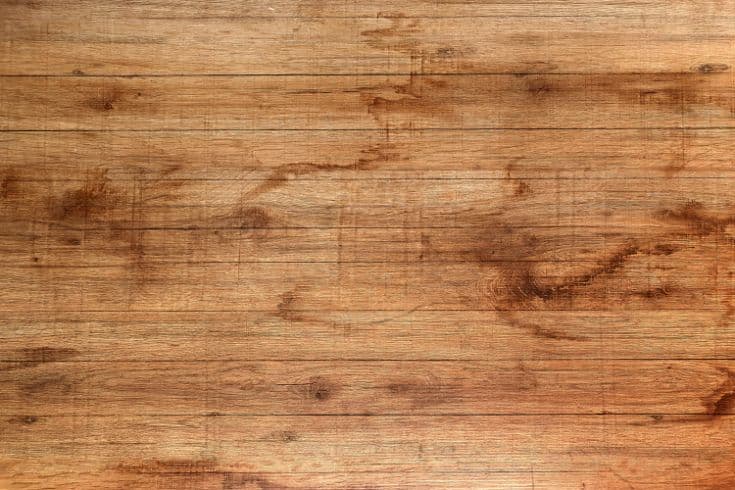
Aluminum oxide is the finish on most pre-finished engineered and solid hardwood sold at the store. The factory cures it with UV light, which creates a surface harder than anything applied on site.
- Durability: Extreme. This is the hardest finish a dog will encounter. Large breed nails still leave marks on the wood below, but the finish itself is remarkably scratch-resistant.
- Scratch visibility: Low on the finish, but the beveled edges between boards trap hair and debris and can show wear at the seams.
- Dog urine accidents: Comparable to oil-based poly in buffer time, but here is the catch that nobody mentions at the store: aluminum oxide cannot be spot-refinished. If a section gets damaged, you either live with it, replace the boards, or eventually sand the whole floor down and recoat with a site-applied product.
- Maintenance: None for 10 to 20 years. Then a full refinish.
- Best for: New construction, large active dogs, busy households that want maximum durability and will accept eventual full replacement rather than incremental touch-ups.
The Recommendation Matrix
Here is the cheat sheet I actually use when friends ask.
| Your dog | My honest recommendation |
| Large breed, young, active (Lab, Golden, Shepherd, Great Dane) | Two-component waterborne polyurethane. Accept that scratches will show and plan a recoat every 5 years. |
| Multiple dogs in a busy household | Aluminum oxide pre-finished if building new, or waterborne if refinishing existing floors. |
| Small to medium adult dog, calm temperament | Waterborne for ease, or hard wax oil if you love the matte natural look. |
| Small older dog with occasional accidents | Hard wax oil. Spot repair is the killer feature when you are managing incontinence. |
| Traditional oak floors you want to keep amber | Oil-based polyurethane. Catch accidents fast and plan a screen-and-recoat every 5 to 7 years. |
| Puppy, breed unknown, life chaotic | Waterborne. It forgives most scenarios and recoats easily when life calms down. |
What to Ask Your Contractor
Whichever finish you land on, ask your contractor three questions before you sign anything.
- Which specific product and sheen are you using? “Waterborne” is a category. The two-component commercial waterbornes are dramatically tougher than the big box store version.
- How many coats, and what is the recoat window? Two coats is the minimum for a dog home. Three is better for waterborne.
- What is the realistic cure time before the dog can be back on the floor with nails, rugs, and food bowls?
A good contractor will answer all three without flinching. If they dodge, keep shopping.
Your floor is going to take a beating no matter which finish you choose. The right finish does not prevent the beating; it decides how gracefully the floor ages and how much work it takes to keep looking great. Pick the one that matches your dog, your patience, and your aesthetic, and you will be happy for a long time.
Wrap-up
Selecting the right hardwood floor finish requires balancing your dog’s activity level against your maintenance preferences. For large, high-energy breeds, a commercial grade two-component waterborne polyurethane offers high surface hardness and rapid cure times. Senior dogs prone to accidents benefit most from penetrating hard wax oils that allow for spot repairs without a full sand.
While traditional oil-based products provide a warm amber tone and a reliable buffer against moisture, the key to longevity is choosing professional-grade materials and an expert hardwood floor refinishing Atlanta strategy. By matching the finish chemistry to your specific canine needs, you can enjoy durable floors that withstand the daily wear of a pet household.
Contact a local flooring specialist today to schedule a professional assessment and find the perfect protective finish for your home.