See which popular breeds run short on years, what usually ends their lives early, and the test or surgery that can buy back time where one exists.
Stay for #1. It’s the breed at the very bottom of the big 2024 UK count, and the reason its number is shaky will change how you read your own dog’s.
If you’ve had dogs for a while, there’s a snapshot somewhere with a year written on the back in ballpoint. You do the arithmetic without meaning to.
You’ve heard that the bigger the dog, the shorter the life. A 2024 UK study of 584,734 dogs across 155 breeds put the overall median lifespan at 12.5 years. The dog breeds with the shortest lifespan fall years below that, and size explains only part of it. A flat face or one family gene can take years off a lapdog too. The order below isn’t a strict lifespan ranking. Each breed is here for what cuts its life short, and the countdown ends on the lowest number in the big UK study.
Table of Contents
#15 Great Dane, the giant that grows too fast
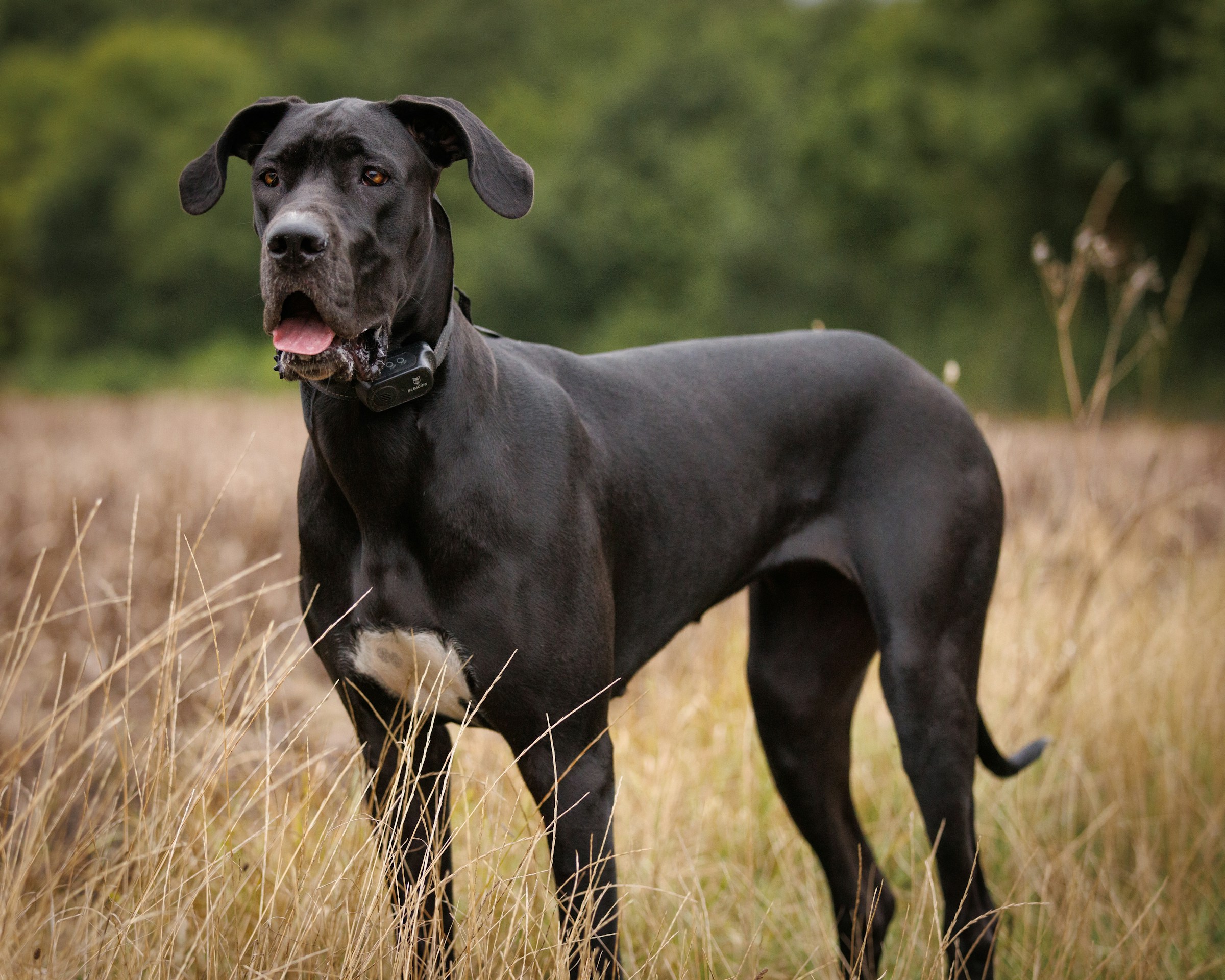
The thing most likely to cut a Great Dane’s life short can start between dinner and bedtime. The Great Dane Club of America calls bloat “the number one killer of Great Danes.”
In bloat (gastric torsion, which vets call GDV), the stomach fills with gas and can twist on itself. A board-certified vet surgeon writing in dvm360 puts a Dane’s lifetime odds at 42%. That’s uncomfortably close to a coin toss.
The fix is planned rather than panicked. In a preventive gastropexy, the vet tacks the stomach to the body wall so it can’t flip. Danes who’ve had one are “about 30 times less likely to die from GDV” than Danes who haven’t, writes PetMD vet Rhiannon Koehler.
Ask about it before the spay or neuter. One New Jersey hospital prices the keyhole version “usually in the $1400 to $1600 range.” It does the surgery alongside a spay or neuter and usually sends dogs home the same day. Prices differ where you live, and insurance may not help. Trupanion’s policy, for one, doesn’t cover a preventive gastropexy on its own, only complications from it. Those are rare. In a study of 766 dogs, problems caused by the tack itself turned up in 0.4%. Afterward comes 10 to 14 days of restricted exercise, which is a long two weeks with a young Dane.
Now compare the emergency version, once the stomach has already twisted: PetMD puts it at $1,500 or more, with totals reaching several thousand dollars. That can cost far more than the planned $1,400 to $1,600, and only one of them happens at 2 a.m.
Bloat signs that mean go now – Retching with nothing coming up – A swollen, tight belly – Pale gums and weakness – A “praying” stance: front end down, rear end up
Any of those means the emergency vet tonight, not a wait-and-see morning. Cornell’s vet school puts survival with treatment at “greater than 80 percent.” It also advises several small meals a day, no raised bowls, and a rest after eating before any running around.
Dr. Rachel, a Texas veterinarian with a YouTube channel, puts the Dane among the five breeds she wouldn’t own herself, even though she calls them fun and very loving.
“The one thing I don’t like about them is that their lifespan is just so short.” (Dr. Rachel, veterinarian, on YouTube)
“They grow quickly and they develop health issues really early on in life, unfortunately,” she adds. That fast growth starts at the food bowl. In feeding studies, Dane puppies given rich food free-choice, or food heavy in calcium, developed bone and joint problems. A vet nutritionist recommends measured meals and a lean pup over a round one.
If you’re buying a puppy, ask to see both parents’ heart scans and thyroid results. The breed club wants them done around age two, and says: “Heart & thyroid testing should be repeated at least every 2-3 years.”
The UK median for the breed was 10.6 years. Some families love Danes through that more than once and then stop. A neighbor of one such family put it plainly on Reddit: “They had a few before deciding they couldn’t deal with the upset and got a spaniel instead.“
#14 French Bulldog, America’s most popular short-lived dog

The AKC named the Frenchie America’s favorite breed of 2025, “for the fourth year in a row.” So it matters that the French Bulldog’s lifespan depends a lot on who’s counting.
A 2022 study of UK vet records put a newborn Frenchie’s life expectancy at just 4.53 years. The bigger 2024 UK study gave a median of 9.8. If you read the first number with a Frenchie asleep on your feet, it probably stopped your heart.
Trust the 9.8. The low figure has a reason behind it. UK Frenchie registrations jumped from 2,771 in 2011 to 39,266 in 2020, which left vet records full of puppies and young dogs. The authors called it “a population of French Bulldogs biased towards younger dogs.” When most of a breed is young, the deaths you count skew young too. Even so, 9.8 years is almost three years short of the all-dog median.
What takes those years is breathing. Flat-faced (brachycephalic) breeds have short skulls and pushed-in noses. Many end up with a blocked airway that vets call BOAS. In a 2021 study of UK vet records, Frenchies had about 31 times the odds of that airway disease and 42 times the odds of narrowed nostrils.
Heat makes it worse. Frenchies had 6.49 times the odds of heat illness compared with Labradors. Across all dogs in that study, about 1 in 7 heatstroke cases ended in death. Treat a hot afternoon as a real hazard for this breed. If yours can’t settle his breathing after the heat, he needs a vet right away.
Airway surgery helps, and the help lasts. A 2026 Cambridge follow-up checked 32 Frenchies, Pugs and Bulldogs at a median of about four and a half years after the operation. Their gains had held, and 97% of owners would recommend it. But a quarter of the dogs still had moderate obstruction.
The detail that stings: 55% of owners believed their dog had no breathing problem, even when tests showed one. The snore you’ve stopped hearing from the next room is the one to ask your vet about.
#13 German Shepherd’s hidden hind-leg disease
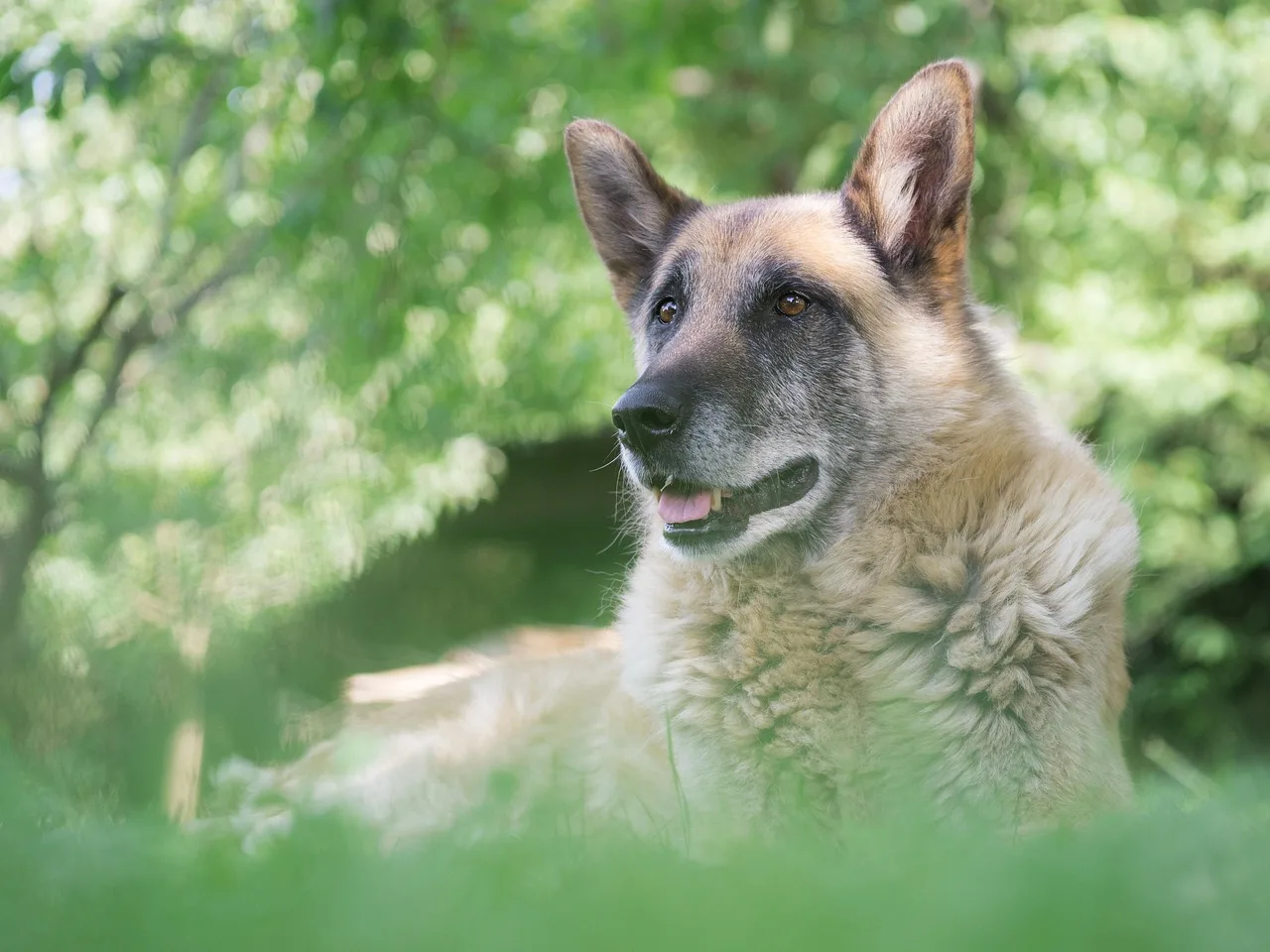
It starts at the back end. Your shepherd turns at the far end of the yard and the rear legs take a half-second longer to follow than they used to.
That can be degenerative myelopathy, a slow disease of the spinal cord. The Orthopedic Foundation for Animals says it begins “typically between 8 and 14 years of age,” which is exactly when you’d expect a big dog to slow down anyway. It doesn’t hurt, so the dog doesn’t complain. It begins as poor coordination in the hind legs and usually reaches hind-leg paralysis within six months to a year.
How common is the back-end story in this breed? In a study of UK vet records, the top four causes of death for German Shepherds were:
- Bone, joint and muscle disorders (16.3%)
- Being unable to stand (14.9%)
- Cancer (14.5%)
- Spinal cord disorders (13.6%)
Three of those four are about getting up and walking.
There’s a DNA test, $65 through the OFA, and it’s worth knowing its limit before you pay for it. An “At-Risk” result raises the odds, but not every At-Risk dog ever gets the disease. For breeders choosing pairs, that’s useful. For a 9-year-old, it’s a maybe printed on official paper. The steady, unglamorous clue is still watching how those back legs move on the turn. There’s no cure, but Cornell’s vet school says routine physical therapy may slow it down.
The other early killer in this breed is fast and quiet. German Shepherds are among the breeds at higher risk of hemangiosarcoma, a cancer of the blood vessels (HSA for short), most often between ages 8 and 12. Kelly Sams of Cornell’s Coonrod Lab describes how it most often shows up, in the spleen: “Dogs with the most common splenic form of HSA will usually arrive at an emergency clinic having suddenly collapsed.”
#12 Bernese Mountain Dog and its cancer odds
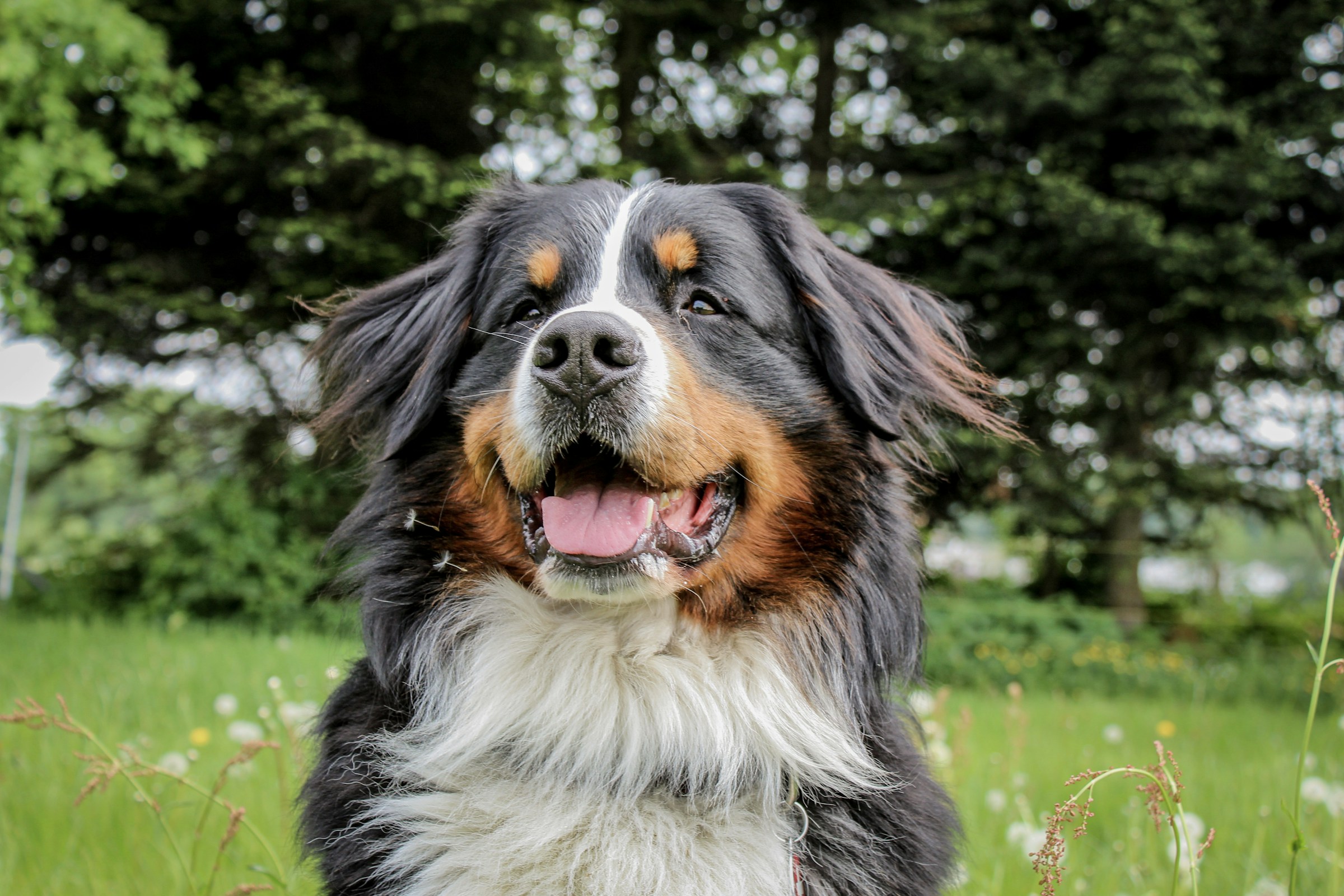
“My bernese passed away at 6 from cancer.” (a Bernese owner, in TikTok comments under a video on short-lived breeds)
Six sounds cruelly young. For this breed’s worst cancer, it’s close to typical.
Histiocytic sarcoma is a cancer that often turns up already spread through the body. The breed club says it “kills more than 16% of Bernese Mountain Dogs.” In a European study of 365 Bernese with it, the average age at diagnosis was 6.6 years. The early signs are maddeningly ordinary: going off food, slowing down, a fever. In that study, Bernese often had it in the chest, too.
Count every cancer and the picture gets darker. In the Bernese Mountain Dog Club of America’s 2005 health study, “67% of all dogs that died succumbed to some form of cancer.” A Swiss club study of Bernese born in 2001 and 2002 found a median lifespan of 8.4 years, and just 7.7 for males. The UK median was a little kinder, at 10.1.
The step that matters happens before the puppy exists. Breeders can run the Antagene Histio Pre-Test, which gives each dog a letter. An A is four times less likely to develop the cancer and a C four times more likely. The club is clear that it’s “not a diagnostic test,” and its advice is to “avoid breeding a C to another C.”
If you’re shopping for a Bernese puppy, ask for both parents’ letters. If yours is already grown and snoring on the rug, a letter can’t tell you whether he’ll get it. What you can do is take a slump in appetite or energy to the vet sooner.
#11 Boxer’s hidden heart defect
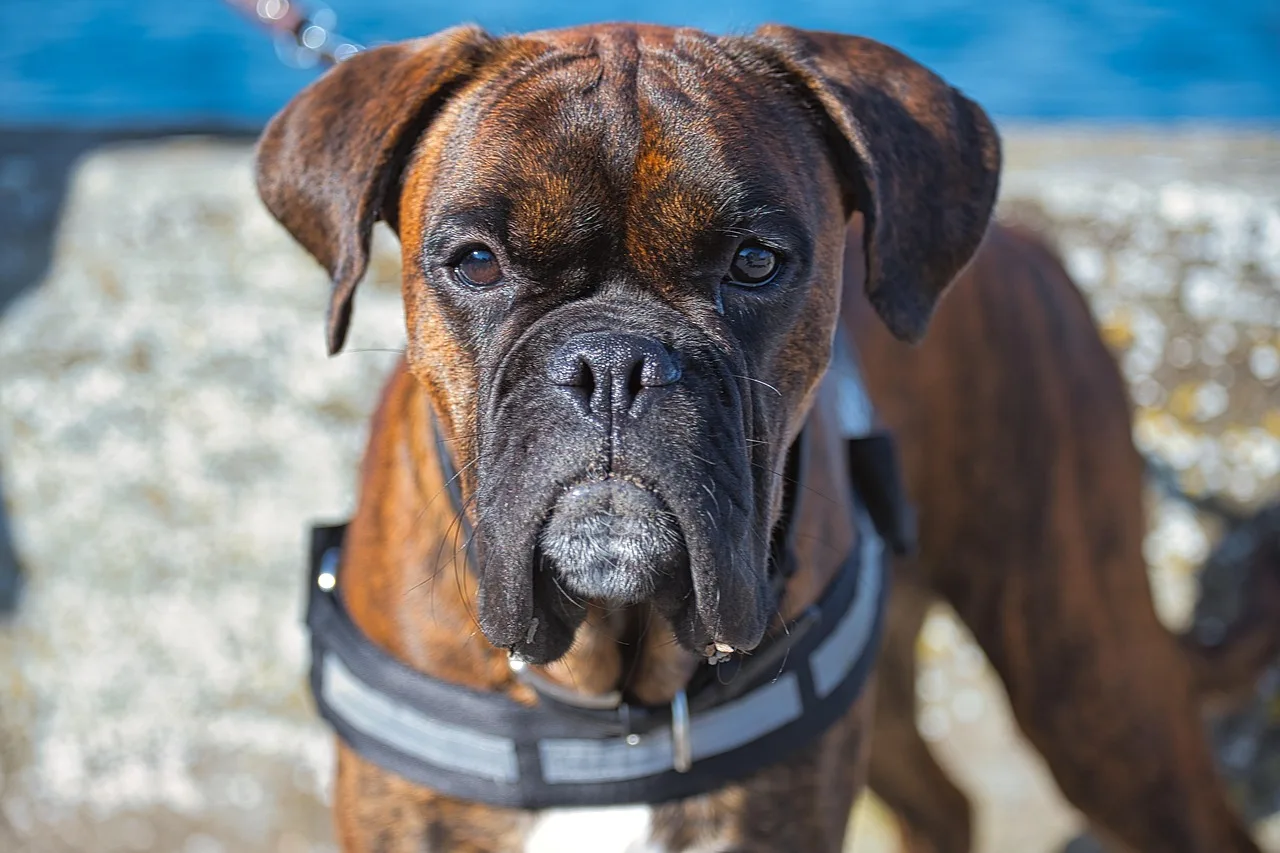
Boxers are the clowns of the dog world, wiggling from the shoulders back, so it’s easy to miss the day the clown sits down to rest.
Boxer cardiomyopathy (vets call it ARVC) is an inherited disease in which fatty, fibrous tissue slowly replaces heart muscle. The signs are fainting, a fast, uneven heartbeat, and tiredness, typically from around age 6. Sometimes the first sign is sudden death.
That’s why the advice starts years earlier. Boxer specialists recommend a 24-hour Holter test every year from age 3. A Holter is a small heart recorder the dog wears for a full day while going about his business, so it catches the odd beats a quick office listen would miss.
There’s also a DNA test from NC State: $70 for both known gene variants, or $48 each, as of March 2022. The researcher behind it, Kathryn Meurs, DVM, PhD, is honest about what it can’t tell you: “In Boxers, we can identify which ones have the ARVC1 and ARVC2 gene mutations, but we cannot predict the penetrance.” In plain words, a positive result says your dog carries the gene. It can’t say whether he’ll ever get sick.
So use the DNA test as a reason to book the Holter, not as a verdict.
Boxers also carry a heavy cancer load. A 20-year study of US vet teaching hospitals put the Boxer among the breeds with the highest share of deaths from cancer, at 47%. Half the UK Boxers in the big study lived past 11.3 years.
If your Boxer ever faints, even once, even if he pops right back up looking pleased with himself, that’s the week to book the heart recorder.
#10 Rottweiler’s bone cancer risk
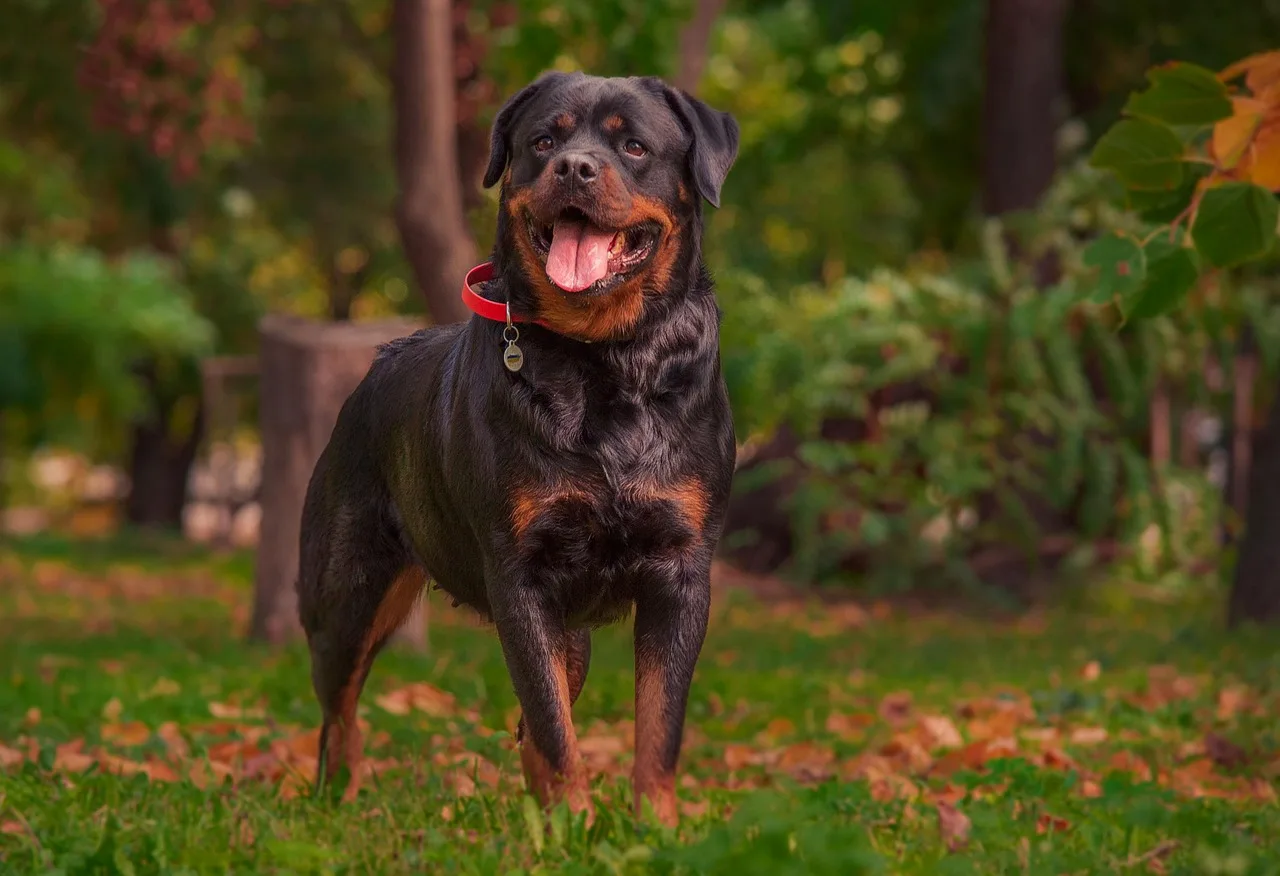
When should you neuter a Rottweiler? For decades the answer was simple: early. Bone cancer research has made it complicated.
Start with the risk itself. In a UK vet-records study, Rottweilers had nearly 27 times the odds of bone cancer of crossbred dogs. They were also the single biggest group of cases in the whole study, 61 dogs. The usual sign is a limp with a bony or soft swelling. Across all breeds, the median age at diagnosis was about 9 and a half.
Now the timing. Karen M. Tobias, a board-certified surgeon at the University of Tennessee, summarizes a Purdue study of Rottweilers. More than 25% of dogs neutered before age 1 developed bone cancer. Among dogs left intact, or neutered after about 3 and a half to 5 years, it was 7.6% to 10.5%.
Her conclusion: “leaving a rottweiler intact for at least 4 years is worth the risk for mammary tumors.” That last part is the trade-off for females, and it’s real. A UC Davis study on joint problems sets a minimum: neuter males after 1 year and spay females after 6 months. In that study, 43% of females spayed before 6 months developed joint disorders, against 16% of intact females.
Waiting helps, and it has costs. Several years with an intact dog means managing heat cycles, keeping a male from wandering, and preventing surprise litters. Females also face a womb infection called pyometra. In a Purdue-led study of 242 female Rottweilers, 6.6% developed it, at a median age of 5.4. If your Rottie came from a rescue, the decision may have been made before you met. If you’ve got a puppy, take the Purdue numbers to your vet before the first appointment books itself.
#9 English Bulldog, a vet’s least-favorite breed

Ask Dr. Rachel which breed she’d avoid above all others and she doesn’t hedge. It’s the Bulldog, along with most flat-faced (brachycephalic) dogs.
“Genetics are not on their side, the most obvious being that they struggle to breathe with their elongated soft palate and their smooshed faces.” (Dr. Rachel, veterinarian, on YouTube)
She also names allergies and spinal disc disease as Bulldog troubles. She says that if she rescued one, she’d make sure it had airway surgery so it could breathe more easily.
The records back her up. A 2022 study of 2,662 English Bulldogs in UK vet practices found 19.20 times the odds of the flat-faced airway disease. The most telling figure is about age. Only 9.7% of those Bulldogs were over 8 years old, against 25.4% of other dogs. The authors called for “immediate redefinition of the English Bulldog towards a moderate conformation,” meaning a less extreme face and body.
The UK median in 2024 was 9.8 years, the same as the Frenchie’s.
Heat is where Bulldog owners have to be strictest. Bulldogs had nearly 14 times the odds of heat illness compared with Labradors, more than double the Frenchie’s odds. A summer afternoon that a Lab shrugs off can turn dangerous fast, so keep a Bulldog cool and get to a vet quickly if he can’t catch his breath.
Dr. Rachel’s advice for anyone still choosing: “So they’re just not a healthy breed and I would suggest looking into others if you can.” For anyone already sharing a couch with one, the to-do list is shorter: ask about the airway, and guard the shade.
#8 Cane Corso, popular and short-lived
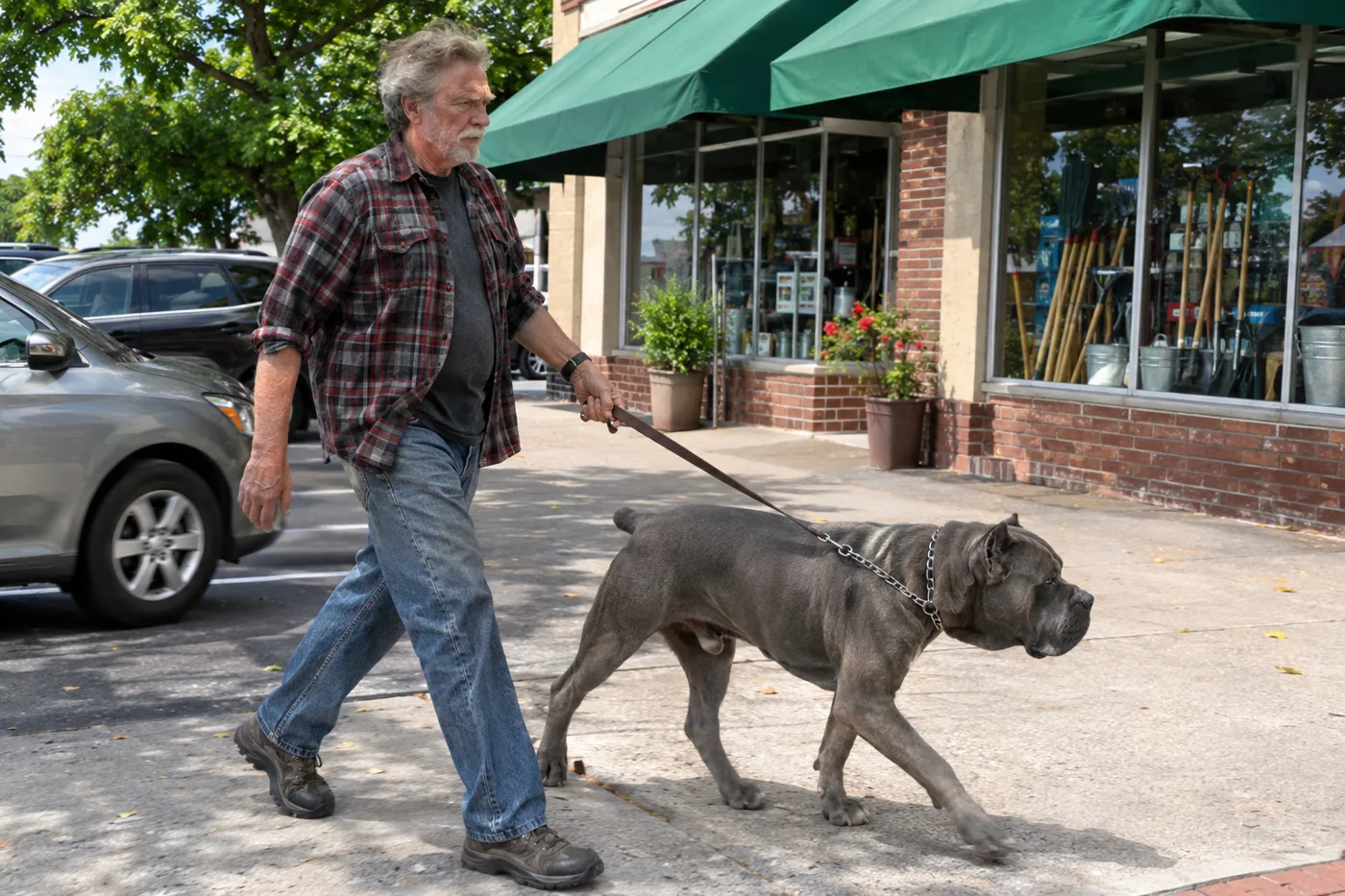
You’ve probably noticed more of them: the big, square-headed guard dog at the end of a leash outside the hardware store. The Cane Corso climbed from #14 in 2024 to #11 in the AKC’s 2025 rankings.
Its UK median lifespan was 8.1 years. That’s about 35% shorter than the 12.5-year median for all dogs. Over the study, Cane Corsos also died at about 2.4 times the rate of the comparison group.
We matched the AKC’s 2025 popularity ranks against the UK study’s breed medians. Three of America’s 11 most-registered breeds have medians under 10 years:
| Breed | AKC popularity rank, 2025 | UK median lifespan |
|---|---|---|
| French Bulldog | 1 | 9.8 years |
| Labrador Retriever | 2 | 13.1 years |
| Bulldog | 10 | 9.8 years |
| Cane Corso | 11 | 8.1 years |
The Lab is there for scale. Its median is five years longer than the Corso’s.
What ends a Corso’s life depends on age. A 2022 genetics paper reports that young Cane Corsos most often died of gut disorders or infections, and older ones of nerve disease and cancer.
Hips are this breed’s other weak spot. In French screening records from 1997 to 2017, the Cane Corso had the highest hip dysplasia rate of 10 breeds studied. It also improved the most, falling from 72.7% to 49.9%.
Before you bring one home, ask to see both parents’ hip results. A breeder who has them will hand them over before you finish the sentence.
#7 Doberman’s heart disease, and a drug that buys time
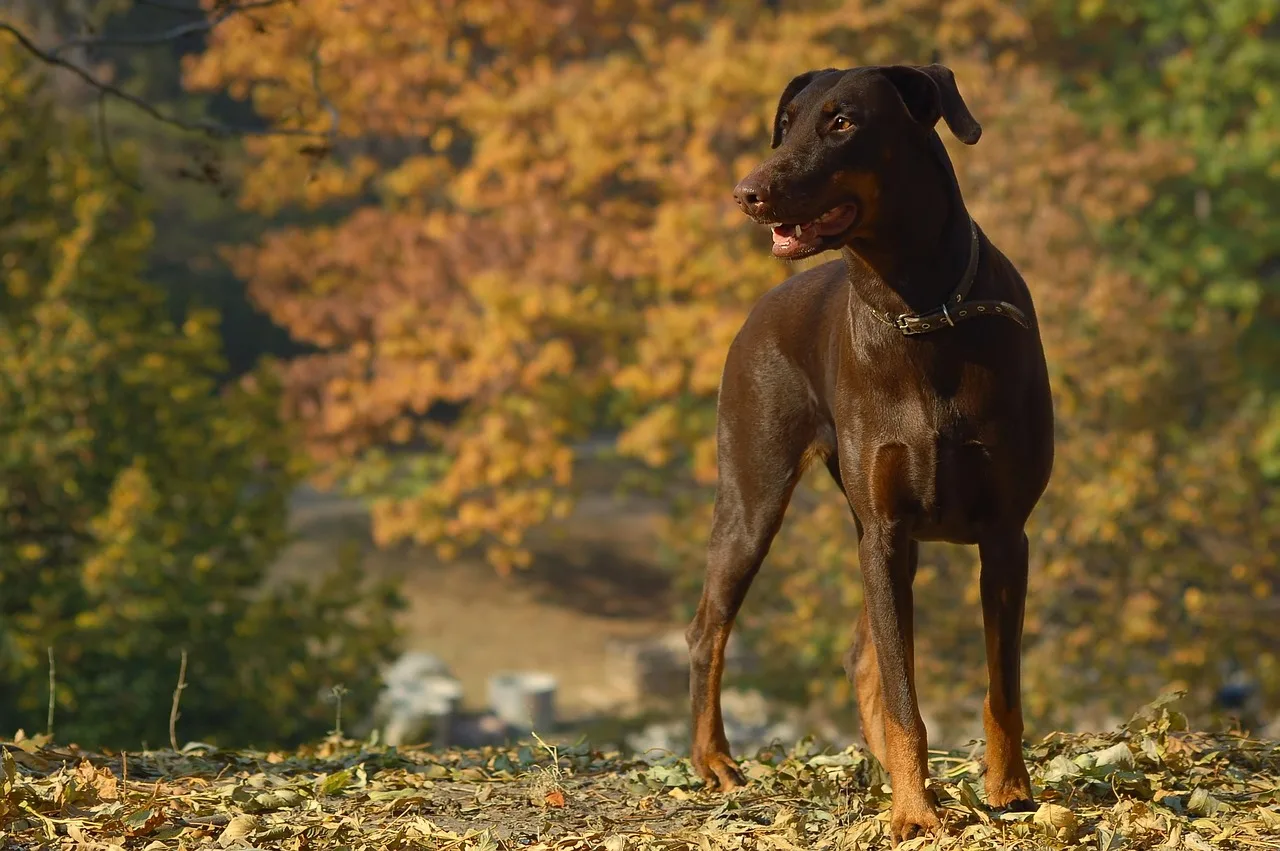
If you share your life with a Doberman, the most useful date on the calendar is the second birthday. That’s when heart screening should start.
The disease is dilated cardiomyopathy, in which the heart muscle grows weak and stretched and can’t pump well. In a study of 412 European Dobermans, it eventually affected 58.2% of them. The recommended routine is a yearly 24-hour Holter recording plus an echocardiogram, which is an ultrasound of the heart. If money only stretches to one, the researchers say “Holter monitoring is a more sensitive screening tool.”
Why bother when the dog seems fine? Because in at least a quarter of affected Dobermans, sudden death comes before any heart failure. The first sign can be the last one.
Screening also opens the door to treatment. In the PROTECT trial, Dobermans with early heart disease but no symptoms were given a heart drug called pimobendan. They went a median of 718 days before heart failure or sudden death, against 441 days for dogs on a dummy pill. That’s about nine more months, and you only get them by catching the disease before your dog shows it.
What the heart checks cost – 24-hour Holter: $205 at one US cardiology service (2025) – 7-day Holter: $900 at the same service – Full cardiology workup: around $800 to $1,500 – Yearly 24-hour Holters from age 2 through 10: about $1,845, before vet visit fees
Those are one service’s prices, and a full workup estimate from another. Your clinic’s will differ. Ask before your dog’s second birthday, not after the first fainting spell.
#6 Irish Wolfhound, cancer unchanged in 20 years
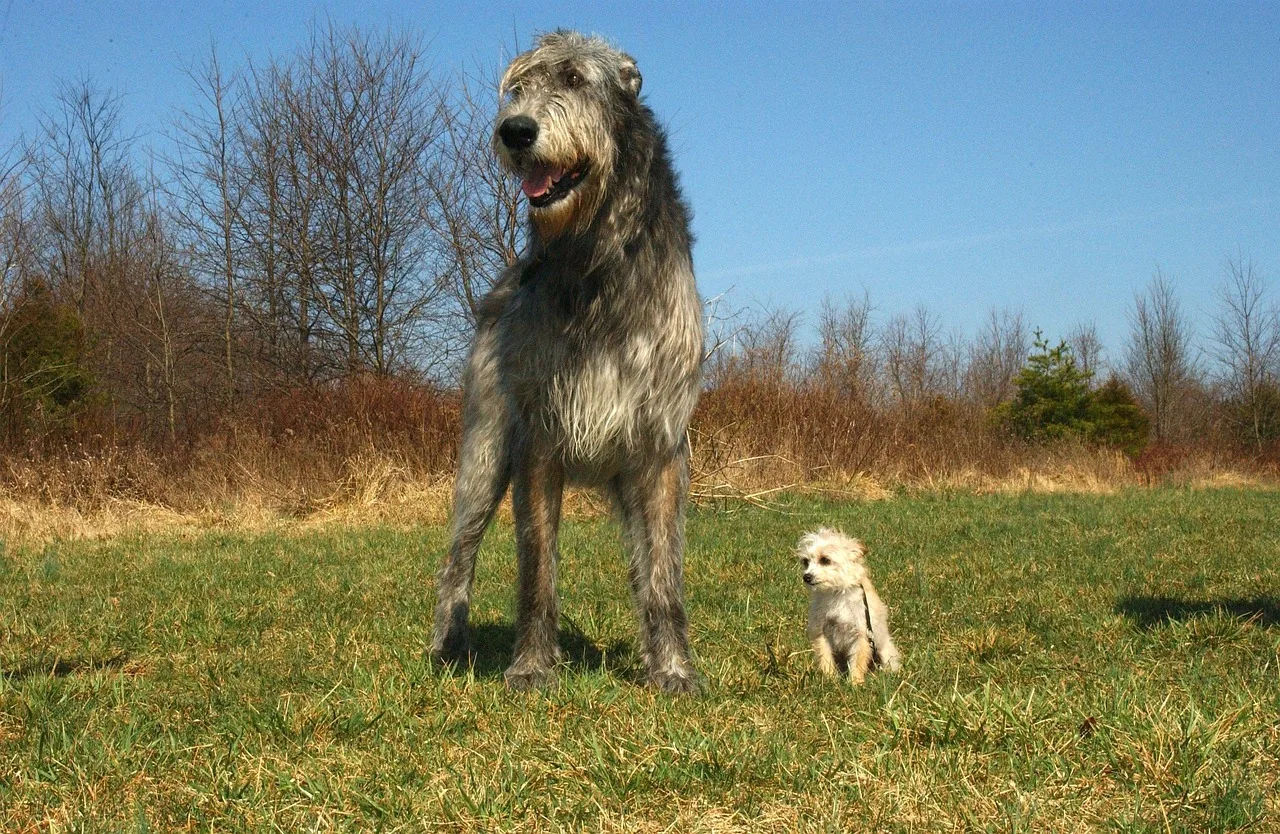
“The major killer of IWs is cancer at 36.6% (no decrease in the past 20 years).” (Mariellen Dentino, MD, for the Irish Wolfhound Foundation)
Dentino wrote up the foundation’s Lifetime Cardiac Study, which followed 979 Irish Wolfhounds that died between 2000 and 2015. Their average lifespan was 7.45 years.
The odd part is in the name. The study was built to track hearts, yet cancer killed about three times as many hounds as heart disease did:
- Cancer: 36.6% (bone cancer alone, 20%)
- Heart disease: 11.64%
- Rear-leg weakness: 11.44%
Heart disease is the killer that can be screened for, and the foundation asks owners to have every Wolfhound checked from age 2, then every year for life.
A Swedish study of 105 Wolfhounds found a similar story, with a median lifespan of 7.5 years and shorter lives for males. It turned up something less famous, too. More than a third of the hounds had pneumonia at some point, and those that did died about six months younger. A Wolfhound’s cough is worth a vet visit sooner rather than later.
The UK median for the breed was 9.9 years, a little longer than either study. Wolfhound people will tell you every one of those years is tall.
#5 Scottish Deerhound’s extreme cancer odds
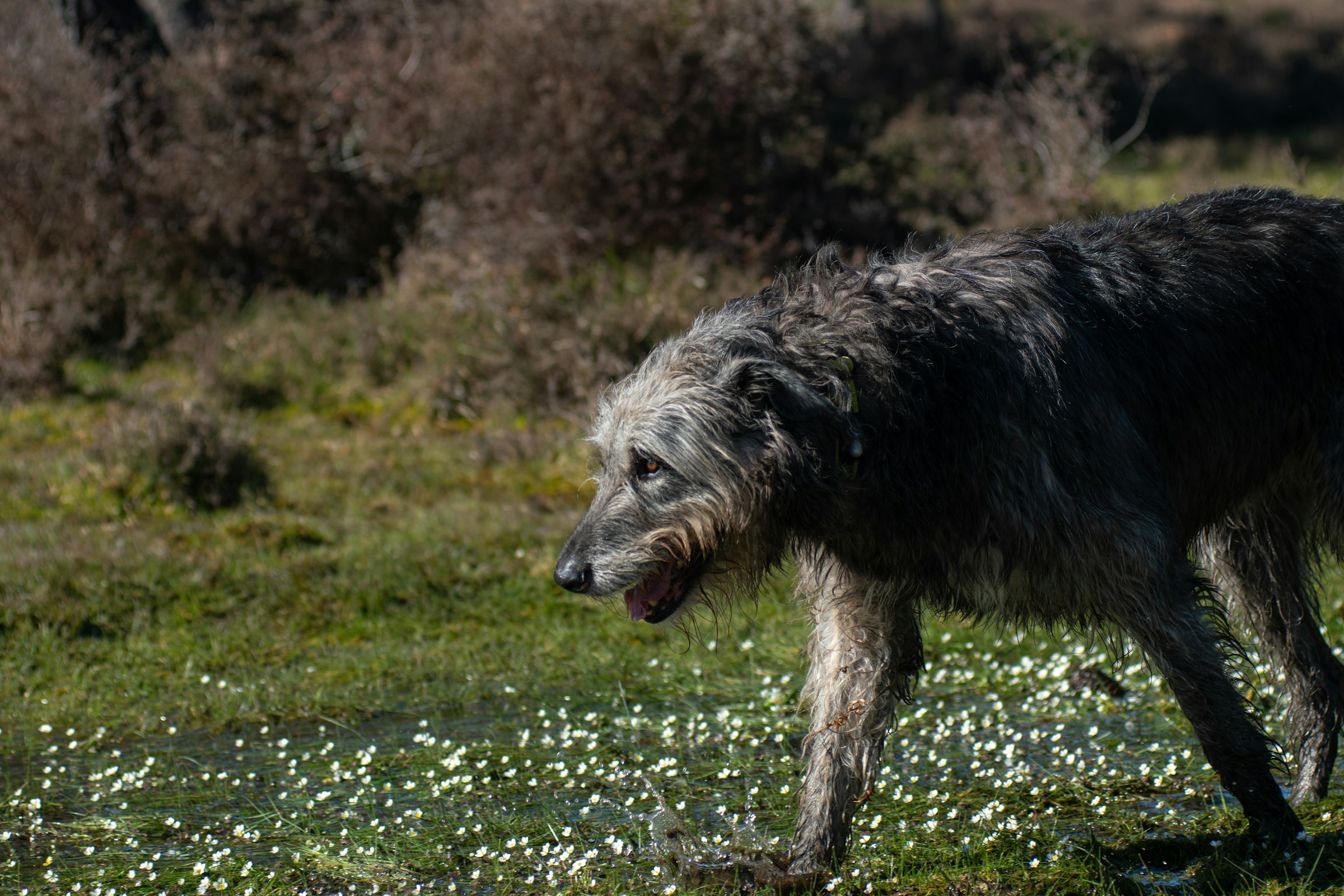
You may only ever have seen a Deerhound at a dog show: rough gray coat, long legs, a face that looks faintly apologetic. It ranks 156th in AKC popularity, so meeting one on your street is a real event.
What this rare breed carries is the worst bone cancer risk of any dog in the big UK vet-records study. Deerhounds had 118 times the odds of crossbred dogs. The Rottweiler, back at #10, had about 27. The Deerhound’s risk is more than four times that.
Over 15% of Deerhounds develop bone cancer, according to the UK animal-welfare group Science for Animal Welfare. The average age at diagnosis is 7.7, but it has struck dogs as young as 2 and as old as nearly 14. It runs strongly in families. Even with aggressive treatment, fewer than 10% are cured.
Here’s the hard part. No genetic screening test exists for it yet, so there’s no letter grade to ask a breeder for, as there is with the Bernese. What you can ask is how many of a puppy’s close relatives had bone cancer and at what age. A breeder who answers without flinching is one you can trust.
UK Deerhounds reached a median of 10.5 years. If your Deerhound starts limping and there’s a swelling with it, call the vet that week.
#4 Pug, a small dog with a big risk

The bigger the dog, the shorter the life. Pugs never read that rule.
Commenters on Reddit threads about dog lifespans, in r/science and r/NoStupidQuestions, keep making the same point: a flat face shortens a life even when the dog is small. The numbers agree with them. In the 2024 UK study, small breeds overall had a median of 12.7 years. The Pug’s was 11.6. The 2022 vet-records life table gave just 7.65.
Breathing is why. In a 2022 study of 4,308 UK Pugs, they had nearly 54 times the odds of the flat-faced airway disease and 51 times the odds of narrowed nostrils. The authors went further than most scientists dare: “The Pug has diverged to such an extent from mainstream dog breeds that it can no longer be considered as a typical dog from a health perspective.” Heat adds to it, at over three times the Lab’s odds of heatstroke.
Pugs also carry a rare brain disease of their own. Pug dog encephalitis is an inflammation of the brain, and before there was a DNA test, about 2% of Pugs died of it. High-risk dogs are almost 13 times more likely to get it, but only about 1 in 7 of them actually do.
Cecilia Penedo, an associate director at UC Davis, puts the test in its place: “It’s mostly a breeding tool.”
For a puppy, ask about both parents’ results. For the grown Pug in your lap, a high-risk result is a reason to watch, not a sentence.
#3 Cavalier King Charles Spaniel’s failing heart
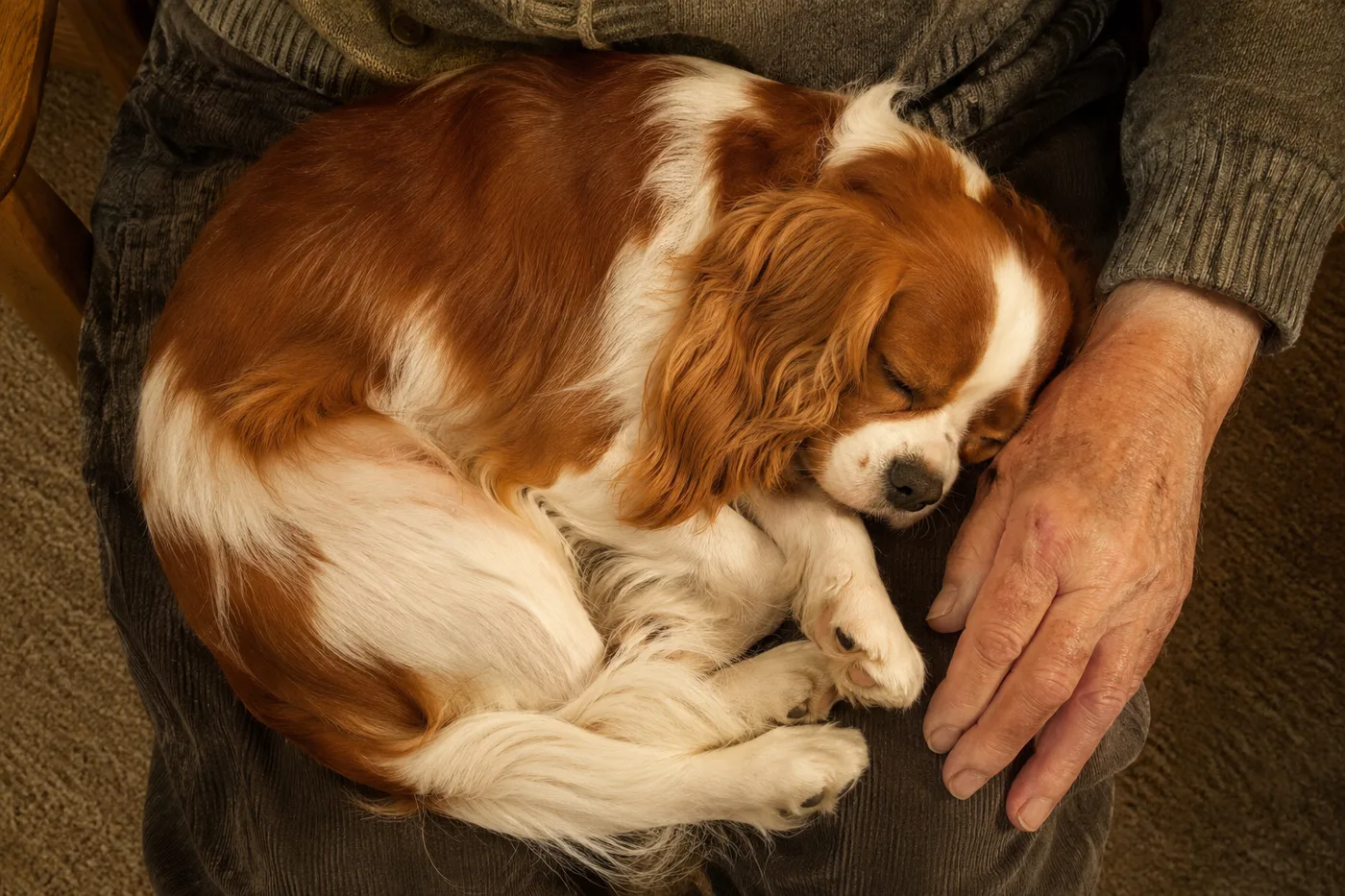
Almost every Cavalier gets it eventually.
The disease is mitral valve disease, a leaky valve on the left side of the heart. Your vet first hears it as a murmur, a soft whoosh through the stethoscope. In a Swedish study, about half of Cavaliers had a murmur by age 6 or 7. By 11, almost 100% had the disease.
Even breeding programs have struggled to move it. Sweden began one in 2001, yet 52% of six-year-olds had murmurs in 2007, and 55% in 2009. The advocacy site CavalierHealth.org calls the disease “the leading cause of death of cavalier King Charles spaniels throughout the world.”
The good news is in timing. In the EPIC trial, almost half of the 360 dogs were Cavaliers. Dogs whose hearts had already enlarged, but who had no symptoms yet, were given pimobendan, the same drug from the Doberman trial at #7. It delayed heart failure by a median of 15 months: 41 months against 25 and a half. In a breed whose UK median is 11.8 years, 15 months is a big piece of the time you have.
So at every checkup, ask two things: is there a murmur, and has the heart enlarged yet? The second answer is what opens the door to the drug.
What to notice at home – Breathing of 30 or more breaths a minute while resting or asleep – Tiring sooner than usual on walks – A new cough, or one that’s getting worse – Any fainting spell
The breathing count is the easiest to do. Wait until your Cavalier is sound asleep on your lap, watch the chest rise for a full minute, and jot the number in the margin of the calendar.
#2 Dogue de Bordeaux, wrongly called the shortest-lived

If you saw Turner & Hooch in 1989, you’ve met a Dogue de Bordeaux. Hooch was played by a dog named Beasley, drool and all.
Read almost any breed list and this is the dog it calls the shortest-lived of all. One pet insurer’s breed page gives it “a tragically short lifespan of only six to eight years, although some are living to ages 10 and 11.” An older study of 5,095 deaths at English vet practices did name it the shortest-lived breed, alongside the Great Dane.
The bigger 2024 UK count tells a different story. Its median for the breed is 11.1 years. That’s longer than the Great Dane (10.6), the Bernese (10.1), the Frenchie (9.8) and the Cane Corso (8.1). Nowhere near last, and still below the all-dog median.
When one does die young, the same insurer lists the usual causes as “cancer, primarily lymphoma; dilated cardiomyopathy and aortic stenosis; and bloat.” That means a heart scan is worth asking about, and so is the stomach-tacking surgery from #15.
This breed is also the big, flat-faced combination the Reddit commenters at #4 worried about. It had more than five times the Lab’s odds of heatstroke. Hooch would have spent August under the porch.
#1 Caucasian Shepherd, ranked shortest on a shaky number
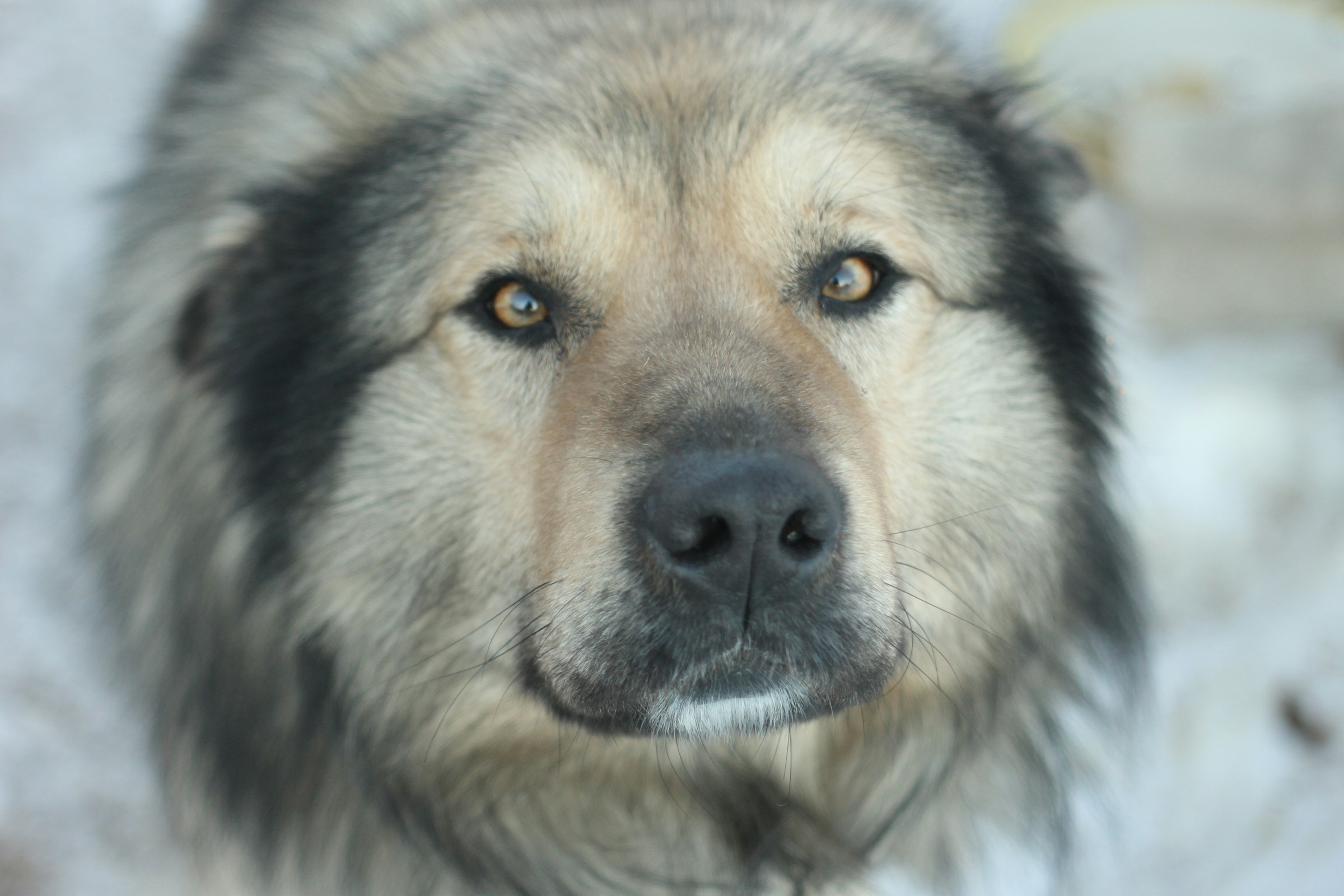
The dog at the very bottom of the 2024 UK study isn’t a Dane or a Bulldog. It’s the Caucasian Shepherd Dog, with a median lifespan of 5.4 years, the lowest of all 155 breeds.
That’s the number that ends up in headlines. Here’s what sits under it: only 52 dogs, including 22 recorded deaths. That’s out of more than half a million dogs in the study. With so few deaths, a handful more Caucasian Shepherds living to old age would move the median a long way. The study’s own uncertainty range shows it: the breed’s death rate could be anywhere from 1.6 to 3.7 times the comparison group’s.
The shortest figure in the study is also a shaky one. The same caution applies to every number above, including the one for the dog on your sofa.
A median is a midpoint. Half the dogs of that breed in the study lived longer than it. It isn’t a countdown clock. The UK pet insurer Agria says the results “should be treated as a guide, not a prediction for an individual dog.” The study’s own authors say the figures “are representative of the UK canine population only,” which is worth remembering with an American dog. Owners often report dogs living well past their breed’s number, though few of those stories come with paperwork.
When you see a breed’s lifespan anywhere, ask three questions before you let it settle in your chest:
- How many dogs is it based on? Twenty-two deaths is a rumor with a decimal point.
- Where were the dogs? UK figures are a guide for US dogs, not a measurement of them.
- Is it a median, an average, or a life table? Those can differ by years, as the Frenchie’s 4.53 and 9.8 showed back at #14.
Then go back to what you can actually change for your breed: the age to start looking, and the test that finds trouble early or the surgery that heads it off.
The bottom line
If you’re still choosing, the useful question is how many years you’re hoping for, and which dog you want to spend them with. Ten years with a Dane and twelve with a Cavalier are both good answers. Just know which one you’re choosing.
If the dog is already home, find the age when your breed’s trouble usually starts: 2 for a Doberman’s heart screening, 3 for a Boxer’s, around 6 for a Bernese’s cancer, 8 for a shepherd’s back legs. Book the heart checks a few months before that birthday. For the others, bring up the early signs at every visit from that birthday on.
The owner of a 12-year-old Labradoodle asked strangers on Reddit what so many people quietly wonder, and said it best: “so we’re hoping we’ve got years left instead of like months.“
Someone who has lost several dogs answered a different thread with the line most dog people already know by heart: “They have such short lives & they spend most of them waiting for us.“
Bonus: four things to sort out before you need them
- Price pet insurance for your breed before you need it. In quotes for a 6-year-old dog (October 2026), a Doberman ran $114 a month and a Bernese $108, while a Cavalier was $54 and a Pug $55. The breed changes the monthly bill as much as the lifespan.
- If you have a Great Dane or an Irish Wolfhound, joint worries needn’t set the spay or neuter date. A 2020 UC Davis study of 35 breeds found that neutering at any age didn’t raise the risk of joint disorders in either breed.
- Write down a backup person for your dog. The ASPCA suggests naming a main and a backup caregiver, setting money aside, and writing out care instructions, and it offers a free pet planning packet.
- Save Cornell’s Pet Loss Support Hotline number, 607-218-7457, before you need it. It’s staffed by vet students trained by grief counselors, and as Cornell puts it, “Grief can begin before, during or after a death.“
Questions people also ask
Do bigger dogs really have shorter lifespans?
Yes, on average: the bigger the dog, the shorter the life. In the 2024 UK study, purebred medians were 12.7 years for small breeds, 12.5 for medium and 11.9 for large. Research by Cornelia Kraus and colleagues found that every extra 4.4 pounds of body weight costs about a month of life expectancy, mainly because big dogs age faster. Size isn’t the whole story, though: flat-faced small breeds like the Pug fall below the small-dog median.
What is the number one cause of death in dogs?
Cancer causes the largest share of dog deaths in most studies. A University of Georgia study of 74,556 dogs at US vet teaching hospitals found that “almost a third of all adult dogs were found to have died of cancer.” In US primary-care clinics, cancer made up 45.5% of recorded causes of death. Some breeds differ: one UK study of Bulldogs listed heart disease slightly ahead of cancer.
Which dog breed has the longest lifespan?
The Lancashire Heeler had the longest median lifespan in the 2024 UK study, at 15.4 years. It was followed by the Tibetan Spaniel, Bolognese, Shiba Inu and Papillon. The record for a single dog belongs to Bluey, an Australian cattle dog who lived 29 years and 5 months.
Do mixed-breed dogs live longer than purebred dogs?
The studies disagree, so there’s no clear winner in mixed breed versus purebred. A 2013 study of English dogs found crossbreds lived about 1.2 years longer, but the bigger 2024 UK study gave purebreds the higher median, 12.7 years against 12.0. A US study of 20,970 dogs that accounted for body size found no significant difference.
At what age is a large dog considered a senior?
Giant breeds count as seniors much earlier than small ones, at about five or six years for a Great Dane. Vets usually call a dog senior once it reaches about 75% of its breed’s expected lifespan, and VCA’s vets write that “Giant breed dogs like Great Danes are seniors at five or six years.” They recommend vet exams at least twice a year from then on.