See which breeds won’t come when called, which pull beats your voice every time, and what that means for your fence and your leash.
Hang on for #1: a breed so good at ignoring people that a conservation group has put hundreds of them on farms on purpose.
You’re at the back door in your slippers, holding a slice of cheese you meant for your own sandwich, saying the dog’s name for the ninth time. Your voice has gone from cheerful to a little too cheerful. A porch light comes on next door. Out past the hedge, the dog lifts its head, considers you, and goes back to whatever smells so good.
You didn’t fail. Most of the dog breeds with the worst recall were built to answer something else first: a nose, a pair of eyes, an independent streak, or a plain love of running.
Table of Contents
#17 The husky runs loops, comes home eventually
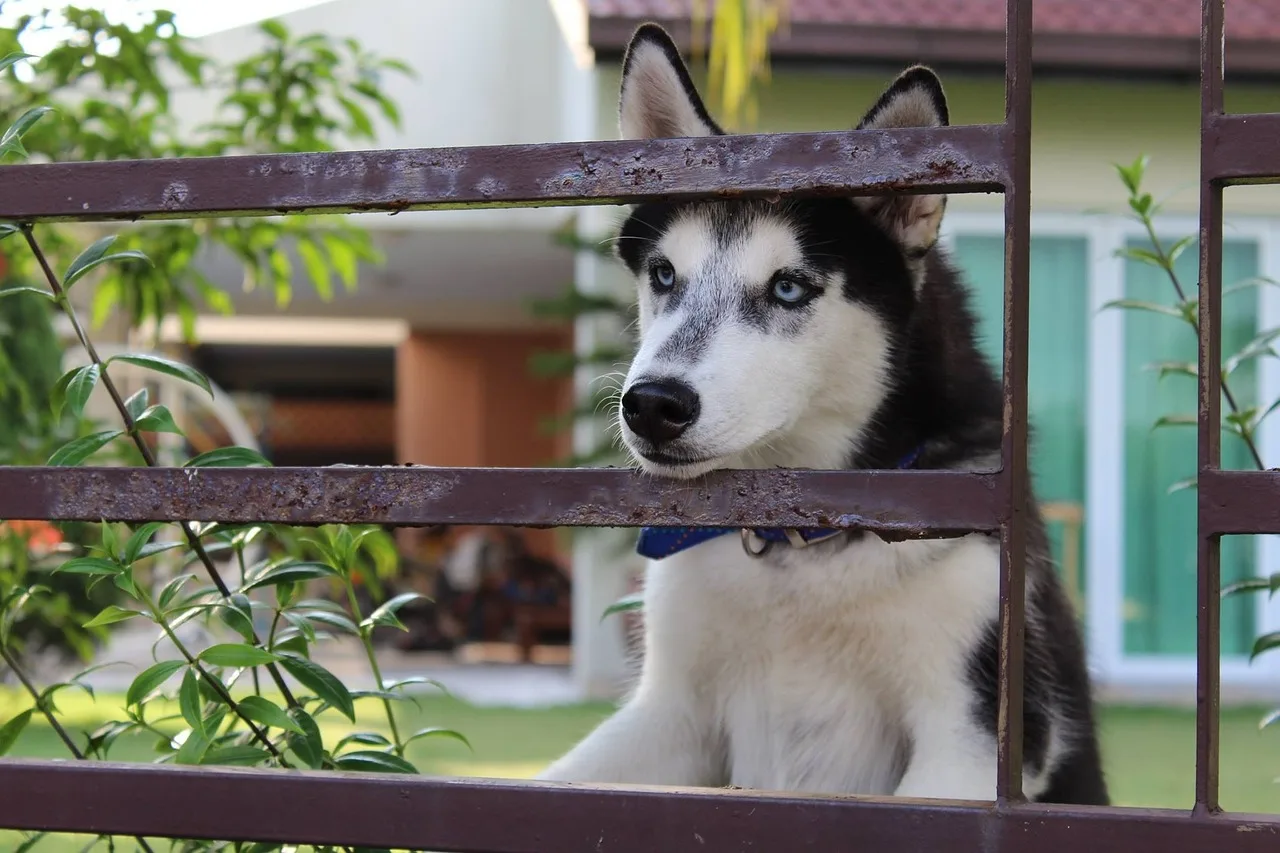
Your husky heard you. Husky owners on Reddit and TikTok describe the same routine almost word for word. The dog gets out, runs a wide loop just past arm’s reach, and trots home when it’s good and ready. Some have two huskies and can tell you exactly which one is “the runner,” and which one is taking notes.
That loop is the breed doing what it was made for. The Siberian Husky’s breed standard describes a dog built for “carrying a light load at a moderate speed over great distances.” Great distances is the part that stuck.
For a sense of what sled dogs can do, look at 1925. Relay teams carried diphtheria medicine 674 miles to Nome in 127.5 hours, through whiteouts and temperatures down to 85 below, “without a single broken vial.” A backyard doesn’t stand much of a chance against that kind of engine.
Adopt A Husky, a rescue group, is blunt about it: “No matter how expert your dog-training skills, you will not be able to ‘teach’ a Siberian not to run.” Once free, the rescue warns, a husky “may take off for hours…or they may not return at all.” Its answer is a leash, a kennel or a 6-foot fence.
Tom Davis, a trainer with 13 years of working with dogs professionally and the founder of Upstate Canine Academy in New York, has a clear view of that fence:
“So your 6-ft privacy fence for them is just a fun obstacle for them.” (Tom Davis, Upstate Canine Academy)
Treats won’t always bail you out. “Also food does not work on our husky either,” a husky owner wrote in a TikTok comment. A husky mix owner on Reddit’s r/dogs tries the opposite of chasing: “I actually have taken to hiding if she takes off at the dog park…..”
Owners who hide say the dog starts checking in once it worries it might lose you. That trick belongs inside a fenced dog park. Anywhere near a road, the fence is the plan.
Fence fixes, by how your dog gets out – Climbers and jumpers: a lean-in (wire angled inward at the top), an L-footer (wire bent flat along the base), or coyote rollers (spinning bars along the top), says the AKC – Diggers: bury fencing 18 to 24 inches deep, or lay it flat at least 12 inches into the yard, says Best Friends Animal Society – One gap is enough: fix the whole perimeter, since the dog will find the spot you skipped – Locked latches and double gates help, and the AKC says not to punish a dog when it comes back
#16 Nose down, the beagle’s world goes quiet
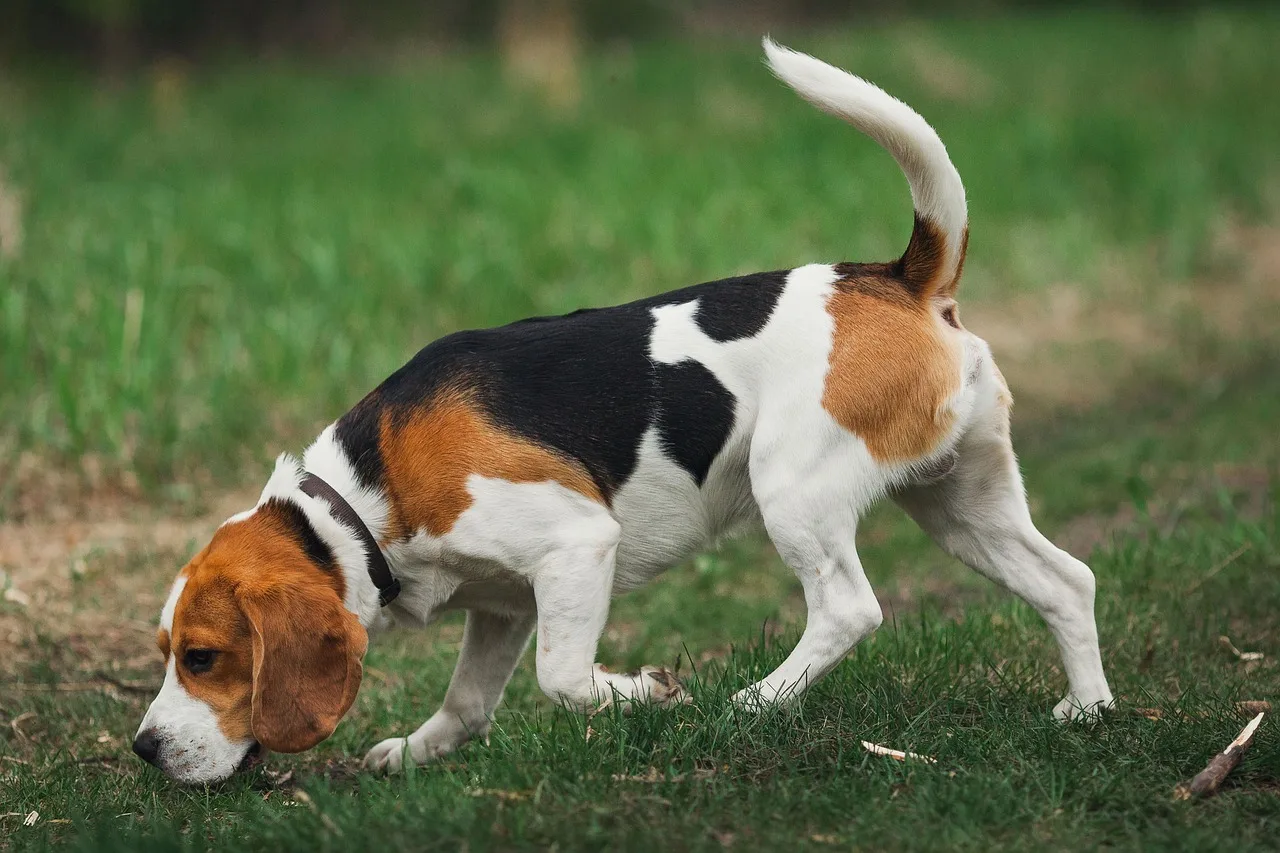
“Did she even hear me?” Probably not in any way that counts. Hounds are consistently among the hardest breeds to recall. In a survey of obedience judges by psychologist Stanley Coren, hound breeds filled most of the bottom 10 spots.
Look at what you’re competing with. Dogs carry hundreds of millions of scent-detecting cells, the AKC says, against about 5 million in a person. A pet insurer puts the beagle at about 220 million and calls the breed “a nose with feet.” Your voice is one small signal arriving in a head flooded with news.
The US government knows exactly what that nose is worth. The Department of Agriculture’s Beagle Brigade puts about 120 beagles to work at 88 major US international airports. They’re picked partly because their size and looks “prevent them from intimidating hurried travelers.” Each one trains for 13 weeks and retires at nine.
Obedience is another story. When Coren surveyed 199 North American obedience judges, the beagle landed in the bottom 10 breeds. That hasn’t scared anyone off. The beagle ranked No. 7 on the AKC’s 2025 popularity list, so you have a lot of company.
A beagle owner on r/dogs summed up the deal most of them accept: “sweet as pie and the absolute best family dog, but holy hell is she stubborn.”
At the airport, that nose is on the clock. In your yard, nobody ever told it the shift ended.
#15 The dachshund, bred to vanish down a burrow
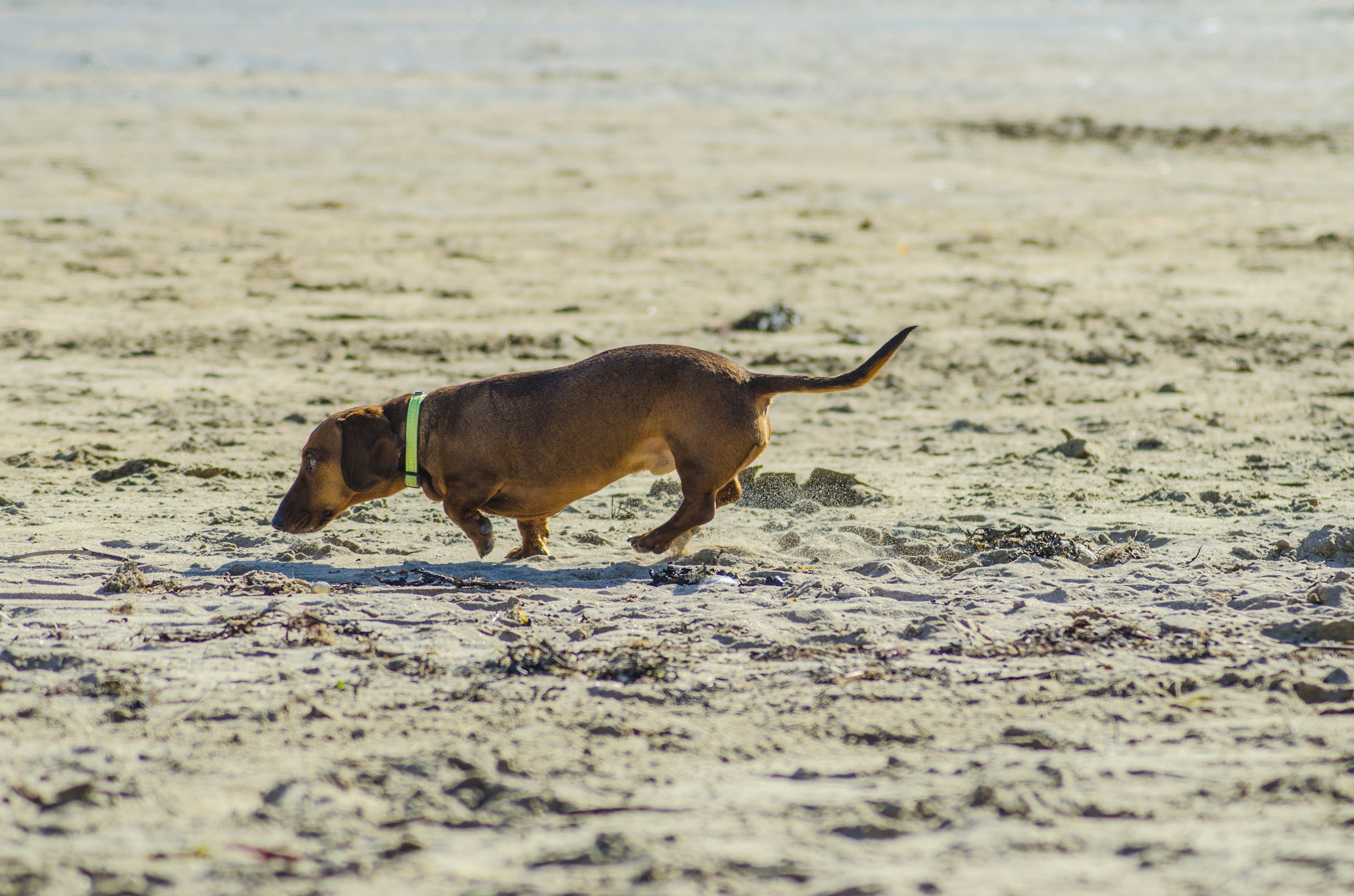
If your dachshund has ever gone under the deck and answered your calls with total silence, it was following the original instructions.
The name is German for “badger dog.” The breed was bred to follow badgers into their burrows. The short legs keep the nose near the scent, and the narrow body fits down a den. Standard dachshunds, up to 35 pounds, were used on badger and wild boar. Boar.
Anyone who has called one a terrier is in for a surprise: the AKC files the dachshund in its Hound Group and describes it as “brave and fierce.” That’s a nose dog with a fighter’s nerve, a fine recipe for not coming back up the hole until the job is done.
You’re far from alone with one. The dachshund climbed to No. 5 on the AKC’s 2025 list, its first top-five finish since 2003. If yours digs, aim your fence fixes low. Bury wire along the bottom of the fence, the same fix that works for a husky.
#14 The basset hound: slow legs, a nose that won’t quit
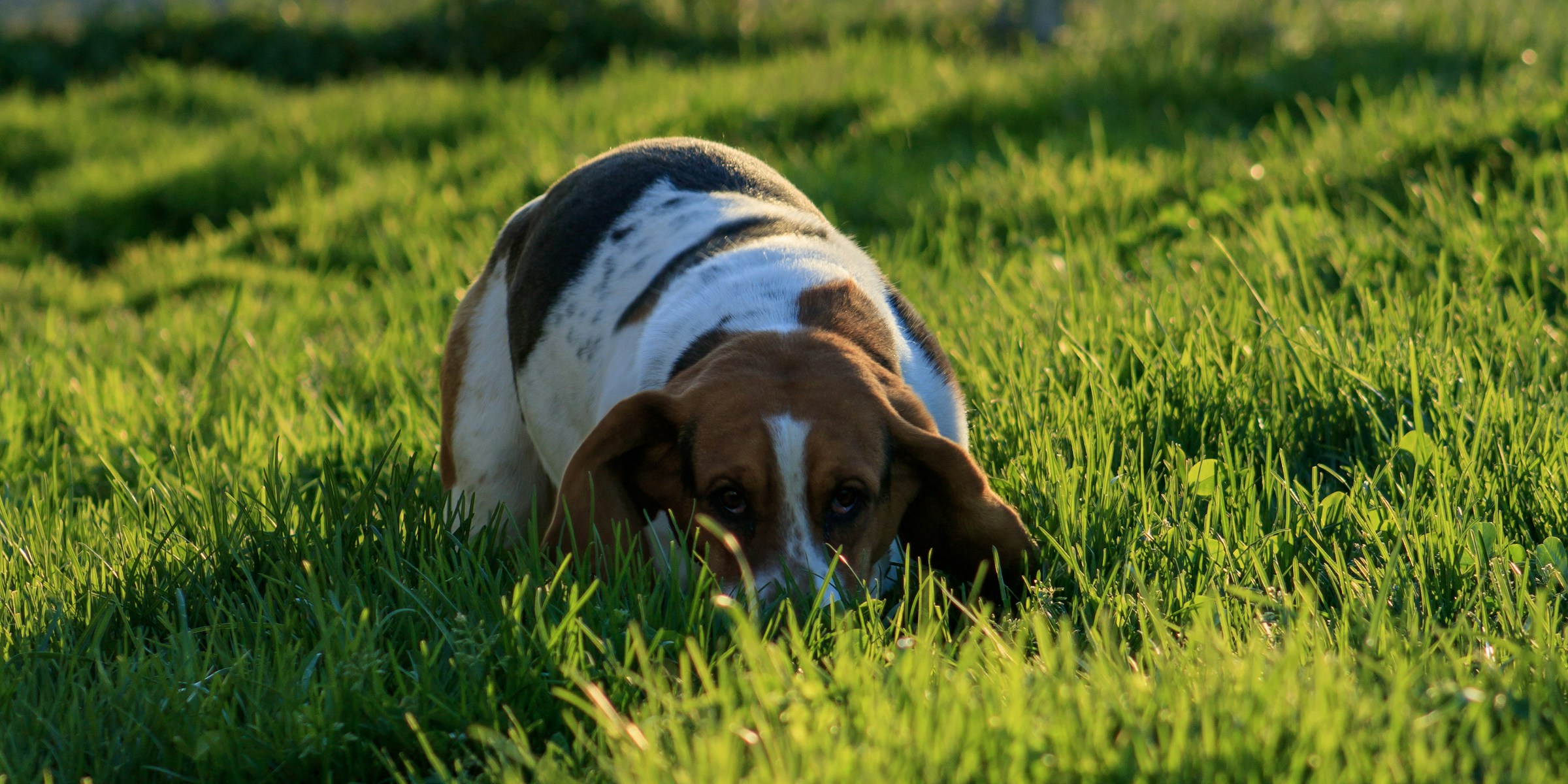
Those ears have a job. The AKC says the basset’s long ears and droopy skin “enhance” its scenting, and its sense of smell is second only to the bloodhound’s. It was bred to “follow a scent single-mindedly,” which the AKC admits can make it “independent and sometimes stubborn.” Coren’s judges put it 10th from last for obedience.
The part people don’t expect is underneath. A basset stands under 15 inches tall but can weigh up to 70 pounds, with “more bone per pound than any other breed.”
So when the nose drops and the dog plants itself at the end of the leash, you’re arguing with 70 pounds of bone set low to the ground, and it has the better position.
The AKC specifically tells basset owners to keep fencing secure, because these dogs will follow an interesting scent wherever it goes. Out in the world, shorten the leash before you reach the places where the good smells live: the edge of the woods, the storm drain, the trash cans on pickup day.
#13 The greyhound sees it, and it’s gone
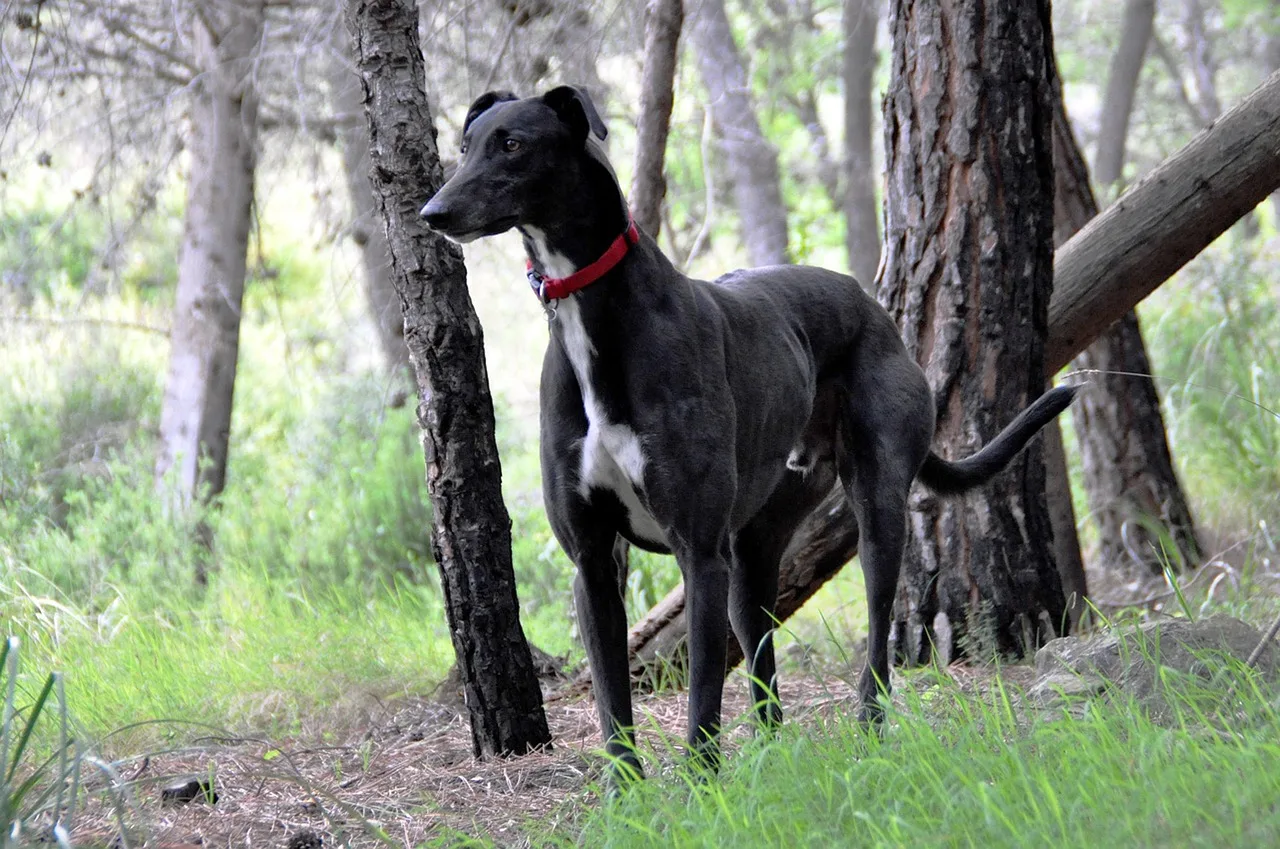
A greyhound is a sighthound, a dog that hunts by eye instead of by nose. That changes how fast things go wrong.
FastFriends is an adoption group that takes dogs from Mexico’s Caliente racetrack. It tells adopters a sighthound “will take off after something they want to catch and will be more than a mile away within two minutes.” Picture the rabbit at the edge of the yard at dusk. You’ve barely finished the dog’s name twice.
If you have one, you’re in a smaller club than you might think. The greyhound dropped 33 places on the AKC’s 2025 list, to No. 151.
FastFriends writes its rules in capital letters: “Greyhounds MUST be kept on a leash in any unfenced or partially fenced areas.” For the yard, it asks for a fence 5 to 6 feet high. Then comes the line every new adopter should tape to the fridge:
“Even if you take them through obedience training, never trust them to return when off leash.” (FastFriends, greyhound adoption group)
#12 The Parson Russell, gone after the squirrel
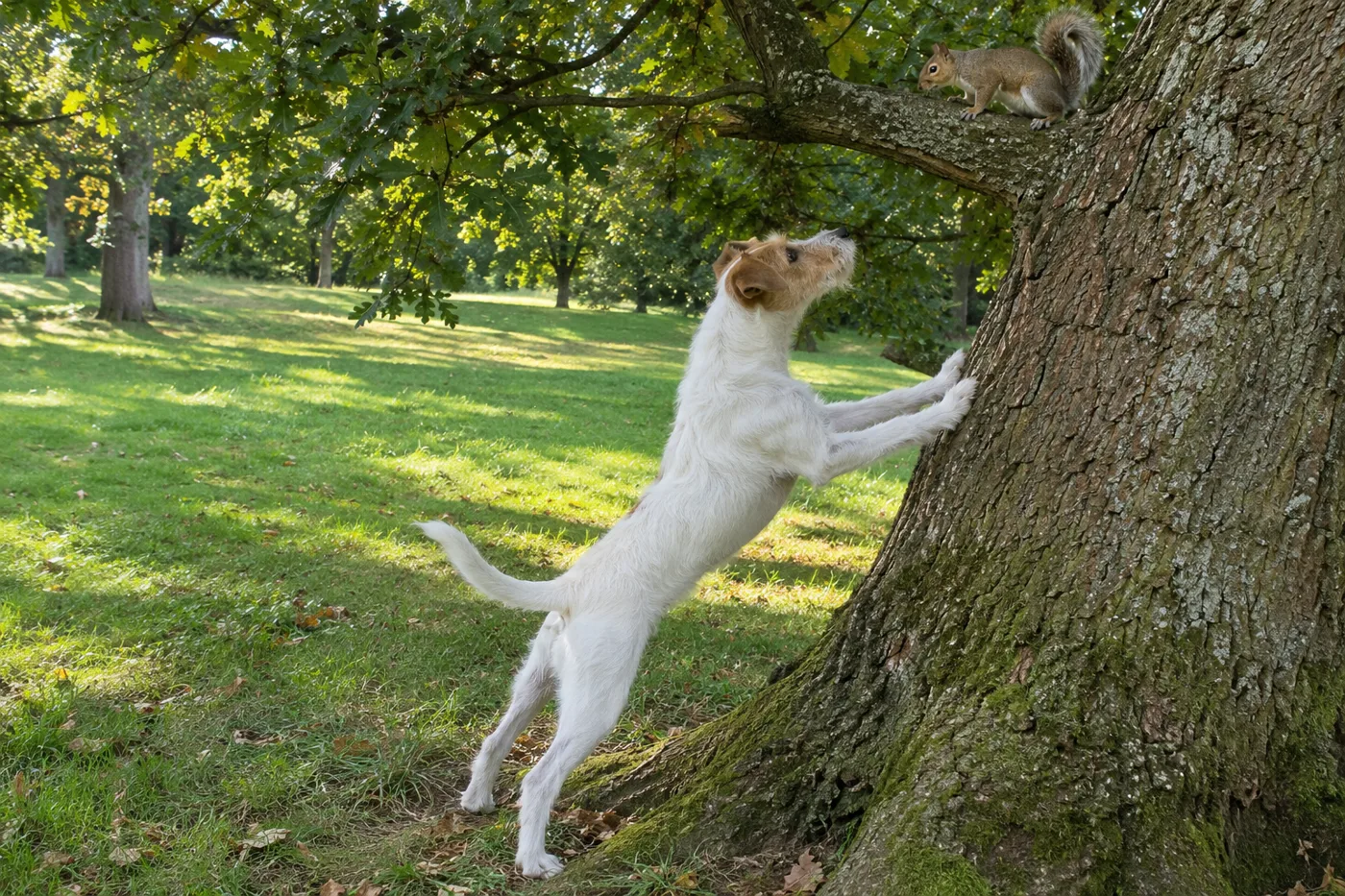
You can thank fox hunters for the word “bolt.”
Reverend John Russell developed this terrier in 19th-century southern England. He wanted a dog that could keep pace with hunters on horseback and drive foxes out of their dens, and hunters call that “bolting.”
So when your Parson rockets off after a squirrel, it is bolting in the oldest sense of the word. A clergyman bred it to.
The breed page at Orvis doesn’t hedge. Parsons are known escape artists, they dig by instinct, and they should always be leashed outdoors. That word “always” is doing a lot of work. It covers the porch, the driveway and the half-minute you spend looking for your keys with the door open.
#11 The Shiba Inu, the cat dog
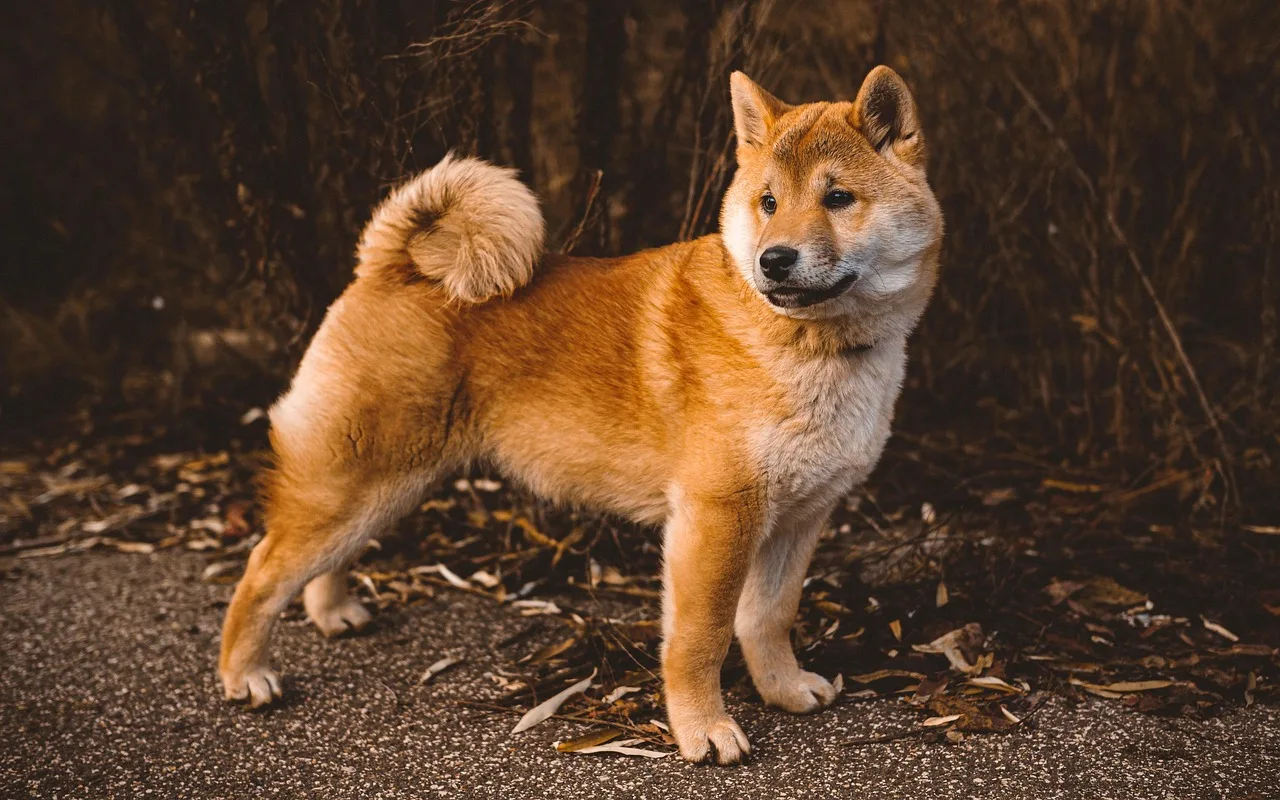
Tom Davis has a name for this one:
“I call them the cat dog because they answer to no one, and they do what they want when they want.” (Tom Davis, Upstate Canine Academy)
If you’ve ever lived with a cat, you know the look: the slow glance over the shoulder that says your request has been received and filed. Davis has worked with many Shibas, and he says their owners report the same troubles: the breed is a dedicated escape artist that will bolt the moment it gets a chance.
Plenty of people sign up anyway. The Shiba ranked No. 44 on the AKC’s 2025 list.
That word “chance” is the useful part. With a Shiba, watch the small chances: the front door during a delivery, the car door in a parking lot, the leash that slips out of a cold hand.
#10 The bloodhound on a trail, deaf to you
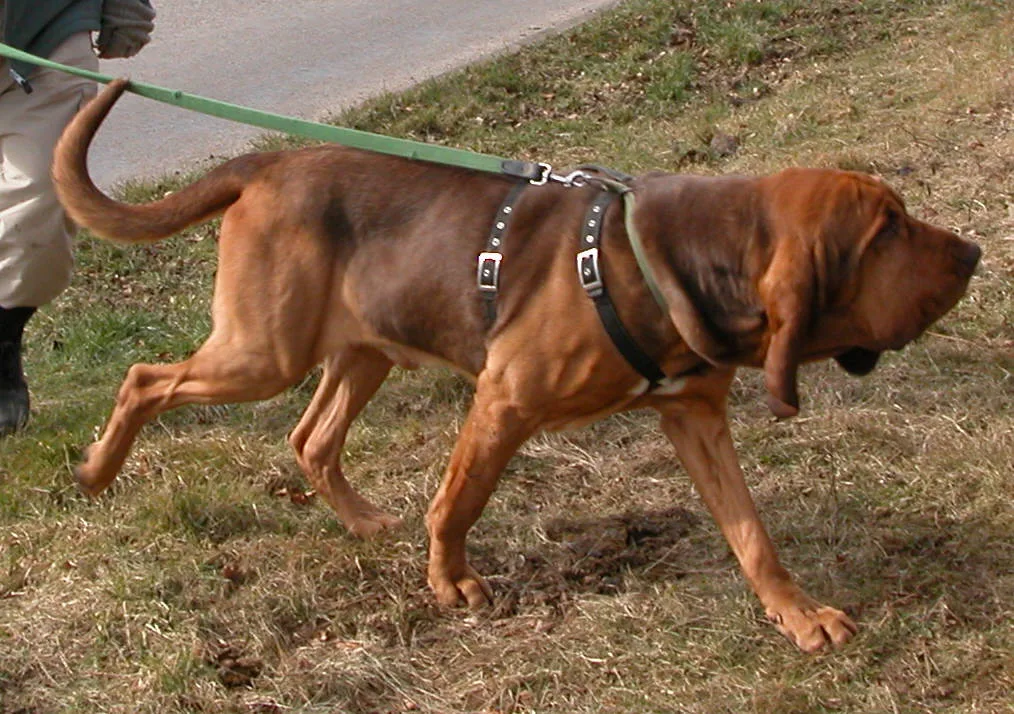
Garret, founder of American Standard K9, spent nearly two decades as a law-enforcement K9 handler and also trains pet dogs. He doesn’t waste words on bloodhound recall: “And when they get on a track, you’re not getting them off the track.”
Consider what a track means to this nose. PBS’s Nature reports bloodhounds following trails more than 300 hours old, which is over 12 days, and staying on a single trail for more than 130 miles.
Guinness World Records lists the trained bloodhound as the first animal whose evidence is legally admissible in some US courts. This dog’s nose can count in front of a judge. Your “come here” doesn’t count in front of a rabbit trail.
At home, that drive turns into a fence problem. If you share your life with one, check the bottom of the fence as often as the latch. Garret has watched enough of them to put it this way: “So, these are the type of dogs that just want to bust out of your fence, make your life a living hell.”
#9 The Akita, famously loyal and famously independent
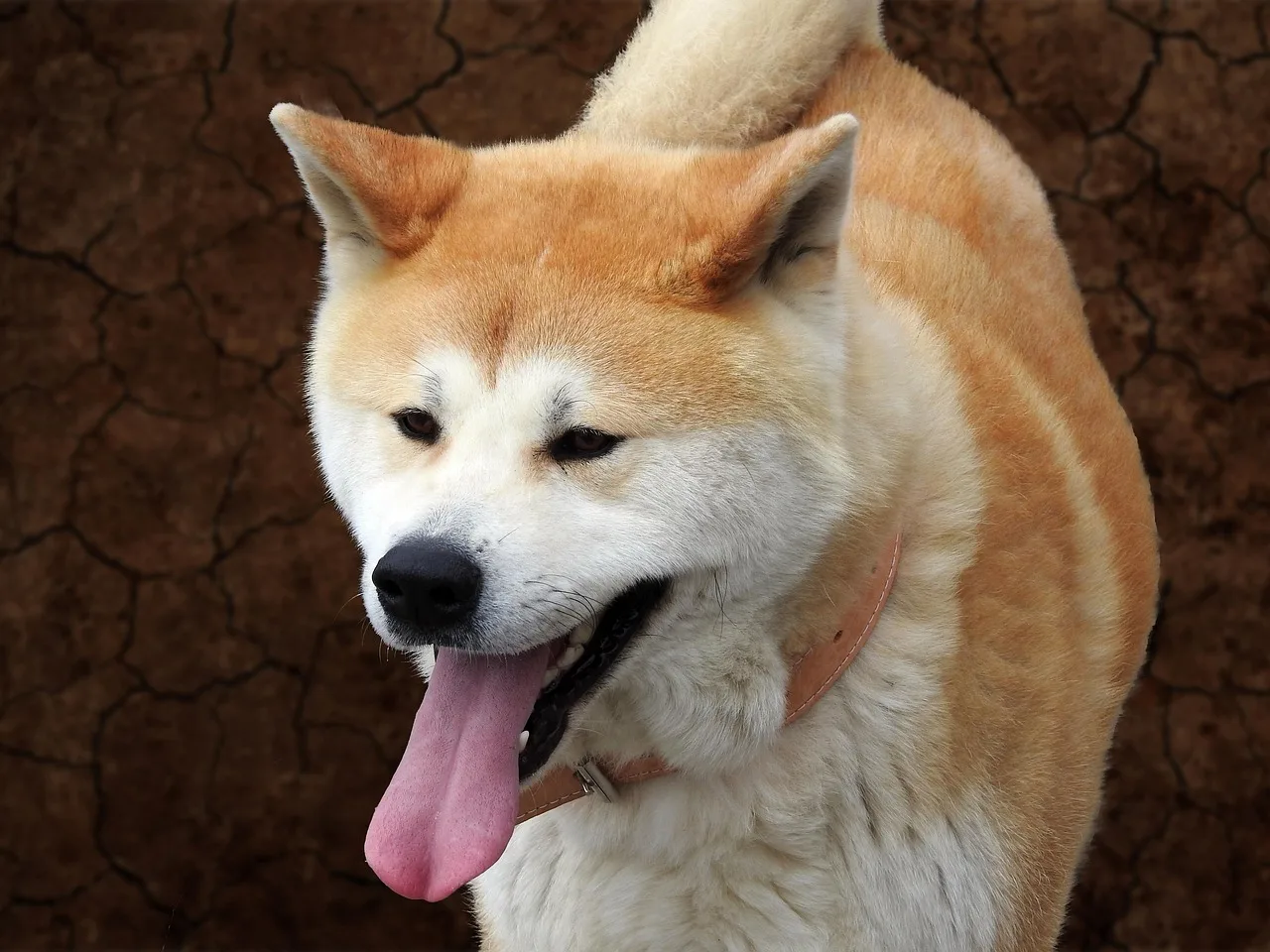
Tokyo, the 1920s. A dog named Hachikō, born in 1923, belonged to a professor named Hidesaburō Ueno. After Ueno died, the dog went back to Shibuya Station every day for ten years, until his own death in 1935.
Everybody tells that as a loyalty story. It’s also a story about a dog that made up its mind and could not be talked out of it for a decade.
Breeders prize a quality called kisho, which the AKC describes as “a kind of self-determined, focused energy.” The Akita was bred to hunt elk, wild boar and bear in the mountains of northern Japan, where a dog waiting for instructions wasn’t much use.
Casey Ray, an Arizona trainer with 30 years around dogs who graduated from National K9’s Master Dog Trainer program, describes today’s version: “Extremely independent by design. Not naturally driven to please the owner.” Then the part that matters for you: “This isn’t a dog that automatically looks to you for direction. If you don’t establish that early, it will go its own way.”
Hachikō never once had to be called to that station.
Which kind of “won’t come” is your dog? – The nose: Beagle, Dachshund, Basset Hound, Bloodhound, the coonhounds – The eyes: Greyhound, Afghan Hound, Saluki, and the Basenji, which uses its nose too – Independence: Akita, Shiba Inu, Rhodesian Ridgeback, Great Pyrenees, Komondor, Anatolian Shepherd – The urge to run: the Siberian Husky, which hears you fine and keeps going
#8 The Great Pyrenees patrols past the yard
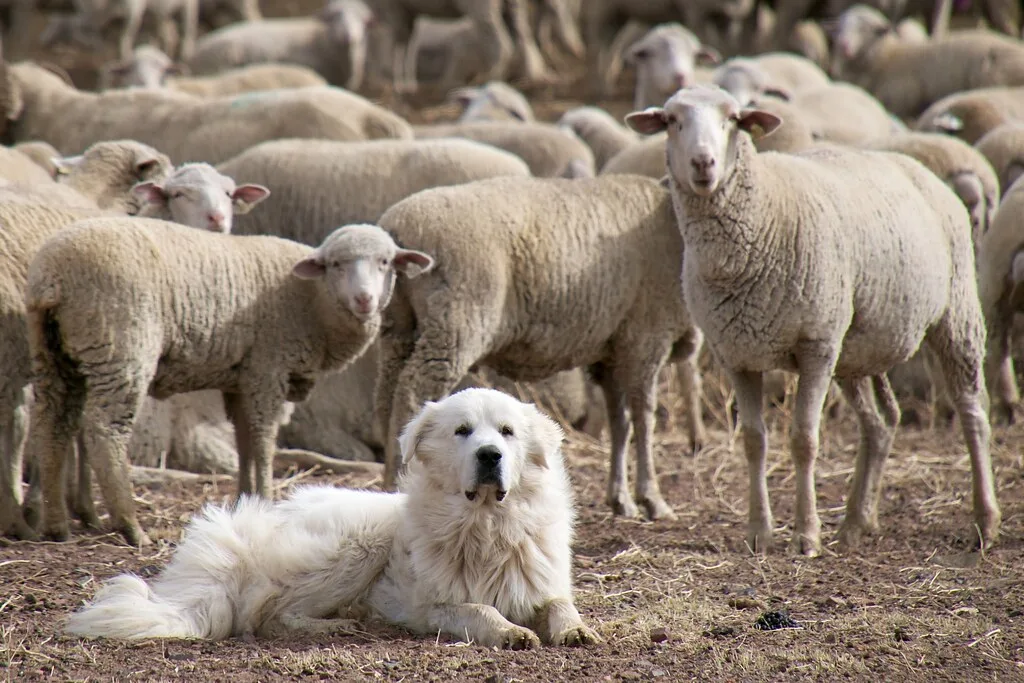
A livestock guardian is a dog bred to live with a flock and keep predators off it. The Great Pyrenees was developed in the Pyrenees Mountains for exactly that. Guarding sheep on a mountainside means deciding for yourself where the edges are. Your property line is a human idea.
The breed’s own US club, the Great Pyrenees Club of America, says it plainly: “Never allow your Great Pyrenees to roam at will. A well fenced yard is a must.” It goes further, advising “never allowing the dog off leash unless it is confined.”
Notice what the club leaves out. There’s no “until it’s trained.” There’s only never. Coming from the people who love this breed most, that line reads like the first page of the owner’s manual.
#7 The Ridgeback, bred to hold lions at bay
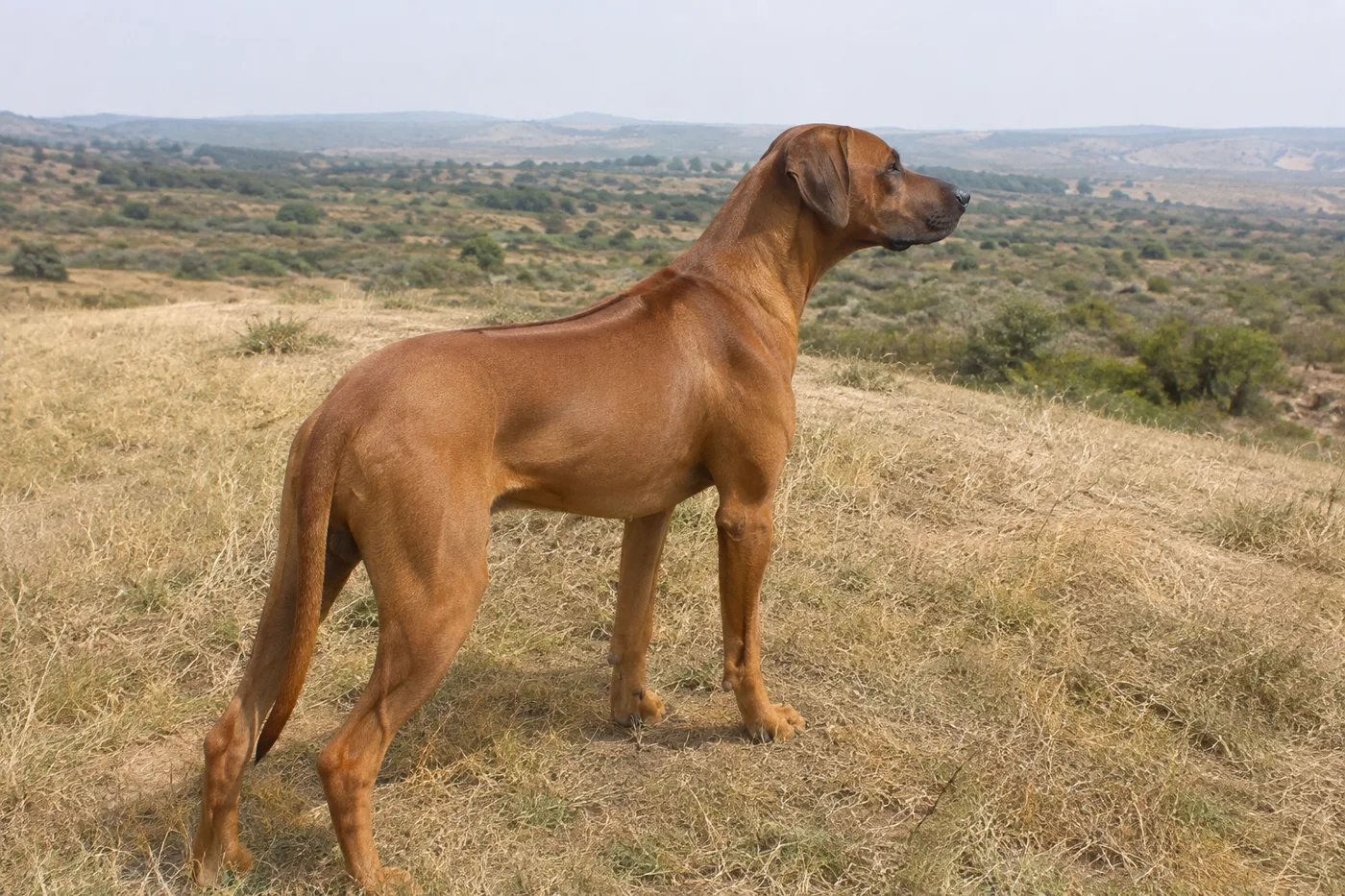
Few dogs have a résumé like this one. The Rhodesian Ridgeback, also called the African Lion Hound, was “originally bred to pursue lions” and hold them at bay, which means keeping the animal cornered until the hunters caught up.
Read that job description with your recall in mind. The dog was supposed to go out ahead, find trouble and stay with it. Trotting back to check in with you was never part of the work.
The AKC calls the breed independent and says it needs “patient and consistent training.” Today’s Ridgeback ranks about No. 41 among AKC breeds for 2025, which means a lot of former lion hounds are dozing on suburban sofas with one ear up.
#6 The coonhound baying up a tree
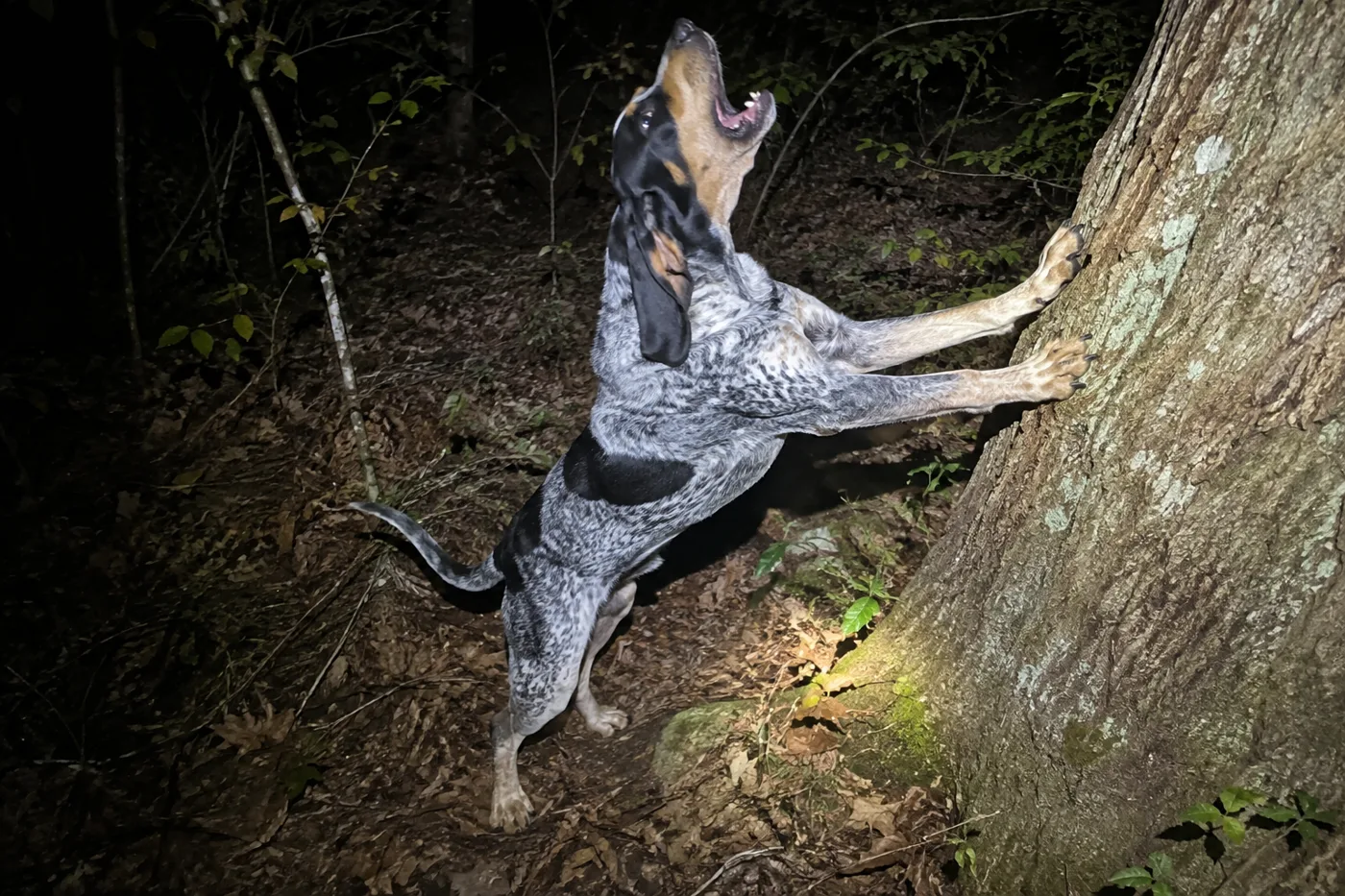
If you’ve lived anywhere with woods out back, you may know the sound: deep, rolling, and coming from somewhere you can’t see at ten o’clock at night. A coonhound has found a raccoon.
This is the moment these dogs were built for. The AKC recognizes six coonhound breeds, from the Bluetick to the Treeing Walker. They chase raccoons through the woods at night, and when the raccoon climbs, the hounds “press their front legs onto the tree trunk and sound out distinctive baying and howling until the hunter arrives.” The AKC says the American English Coonhound’s bark can be heard “miles away.”
The good news hides inside the noise. A treed coonhound tells you where it is, and it’s waiting for the hunter. Tonight, that’s you, with a flashlight and a leash, following the sound.
#5 The Komondor, the mop dog that works alone
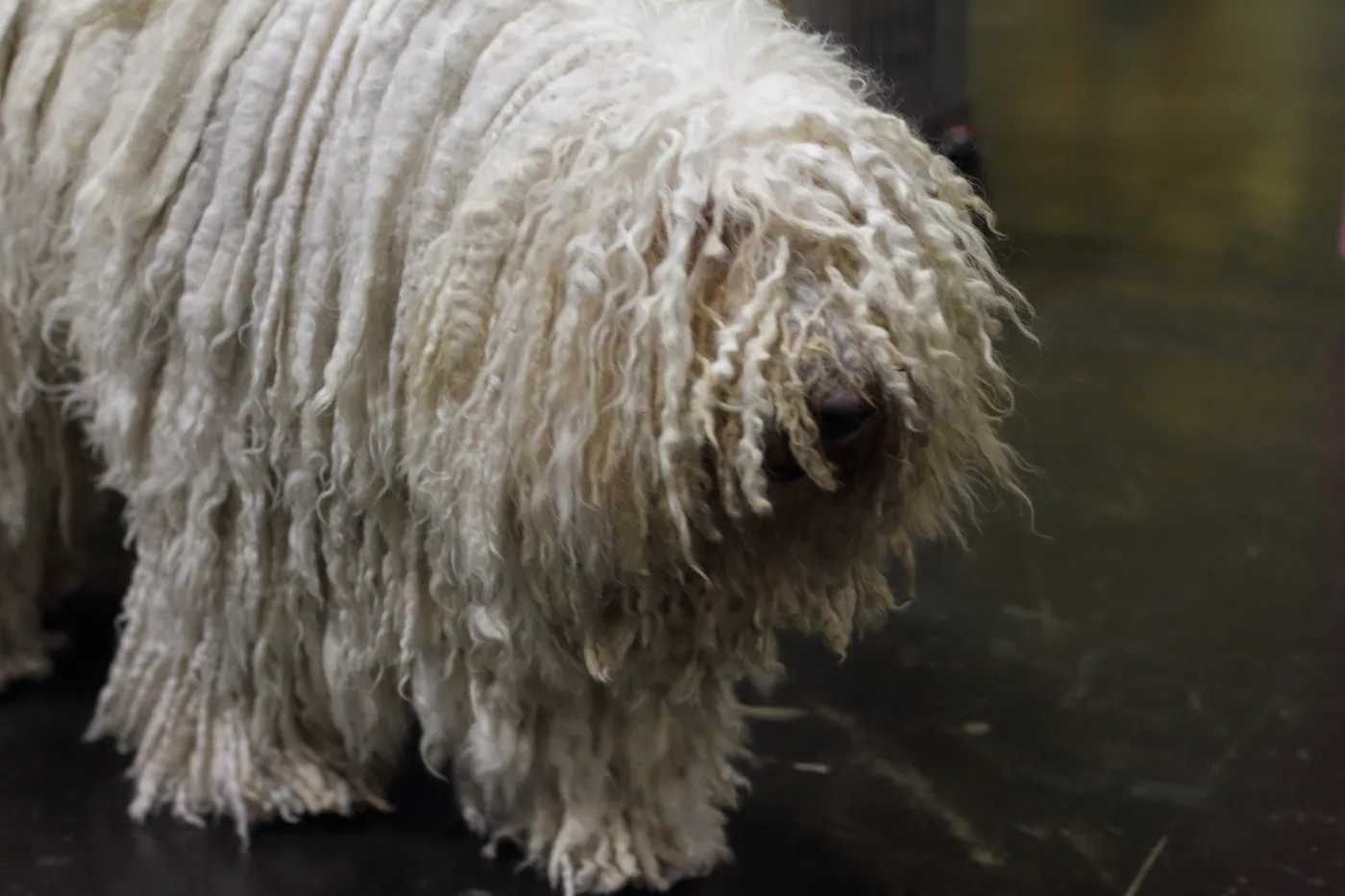
That famous coat, the long white cords that make a Komondor look like a mop with opinions, belongs to a hard-working guard. The breed was bred in Hungary to protect livestock from wolves, and it weighs 80 to more than 100 pounds.
The cords start forming at 8 to 12 months and reach the ground by about age 6 or 7. A dog in full coat has been doing things its own way for years.
Like the Pyrenees, it’s a livestock guardian, bred to stay with the flock with nobody giving orders. Garret puts it in five words: “They do their own thing, super independent.”
The AKC adds a detail that explains plenty of confused owners: these independent thinkers may get bored and choose not to repeat something they’ve already learned. So a Komondor may come nicely for a while, then simply stop.
#4 The Afghan Hound, elegant and famously deaf to calls
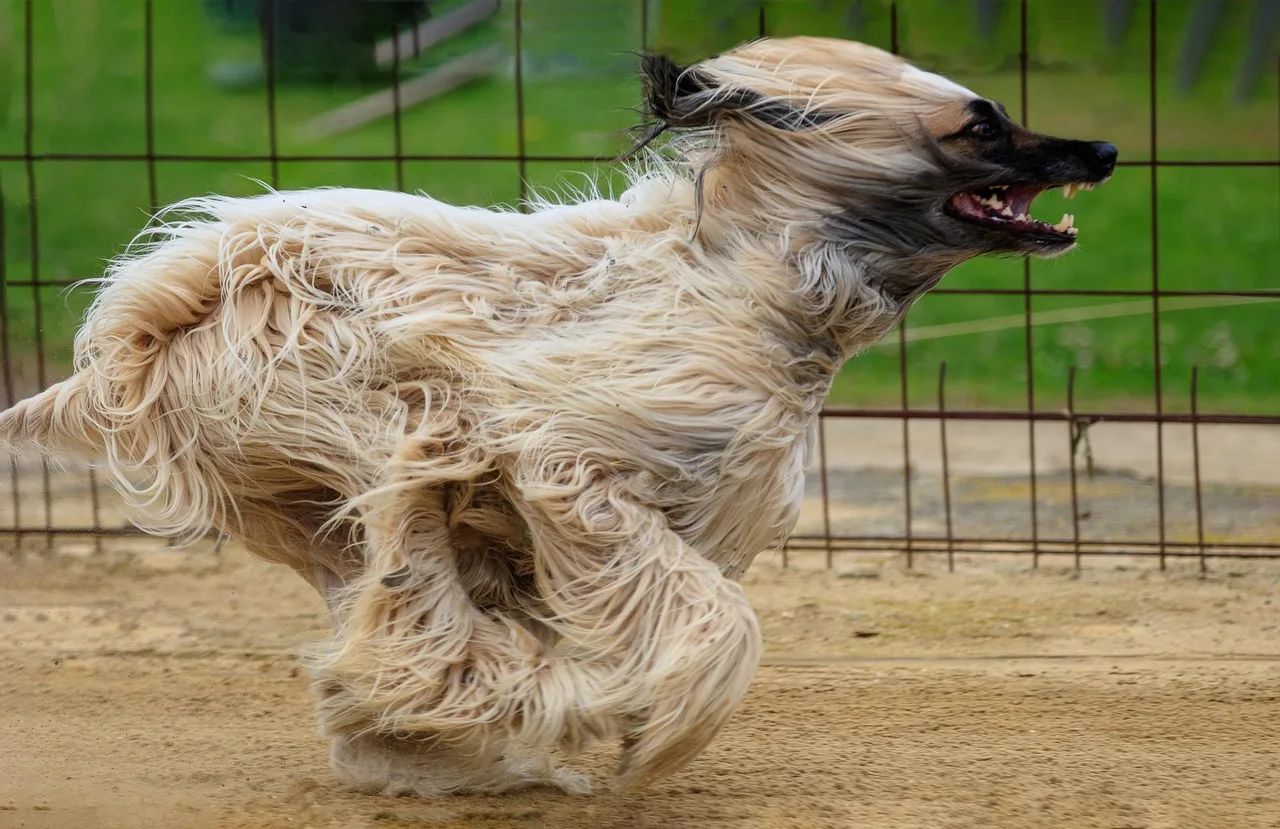
The Afghan looks like it should arrive with a butler. It does not arrive with a recall.
When Coren’s 199 obedience judges ranked the breeds, the Afghan Hound came in dead last. Coren says it was “bred to spot, pursue, and pull down antelope and gazelle.”
That glamorous hair is mountain gear. The AKC says the coat protected the dog from Afghanistan’s climate, and its “huge paw pads” protected it on rough mountain ground. Afghans “were expected to work independently,” and the AKC still calls them “independent freethinkers.”
A sighthound chasing gazelle over rocky hillsides with nobody directing it was never going to pause for your opinion. The AKC’s fence advice for this breed is at least six feet tall.
#3 The Basenji, the yodeler that answers to no one
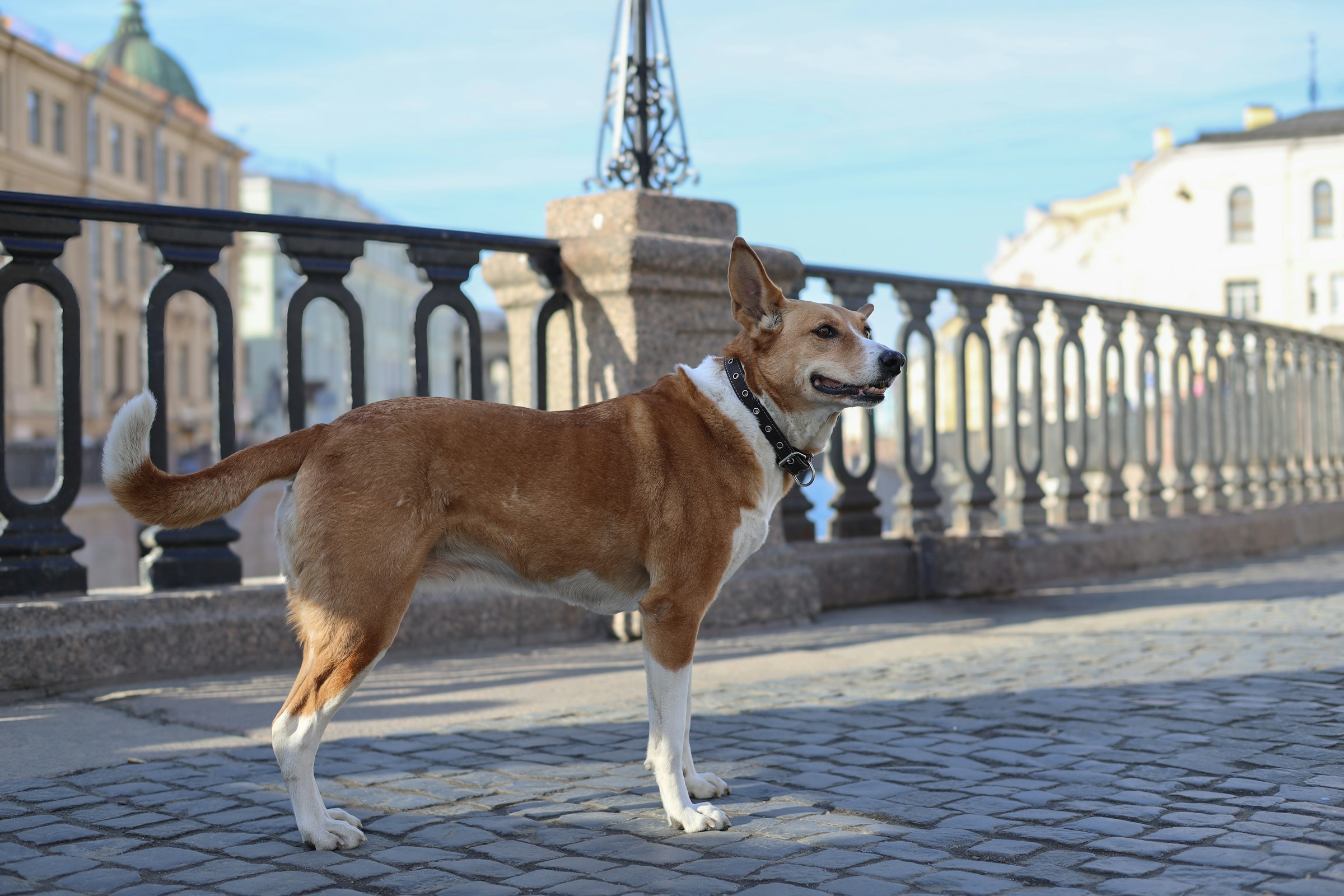
Don’t expect a normal bark. A Dog World article hosted by Basenji Rescue and Transport says Basenjis “yodel, chortle, whine, squeal, and have their own trademarked Basenji ‘baroo’.”
The breed comes from Central Africa and hunts by both sight and scent, so it has two ways to find something more interesting than you. Coren’s judges put it second from last for obedience. The same article warns that a Basenji “can scale a wire fence.”
If you’ve ever thought a second Basenji would keep the first one company, read this before you sign the adoption papers:
“One loose Basenji is hard enough to get back; two loose Basenjis goad each other toward the horizon.” (Dog World, via Basenji Rescue and Transport)
#2 The Saluki, one of the oldest chasing breeds alive
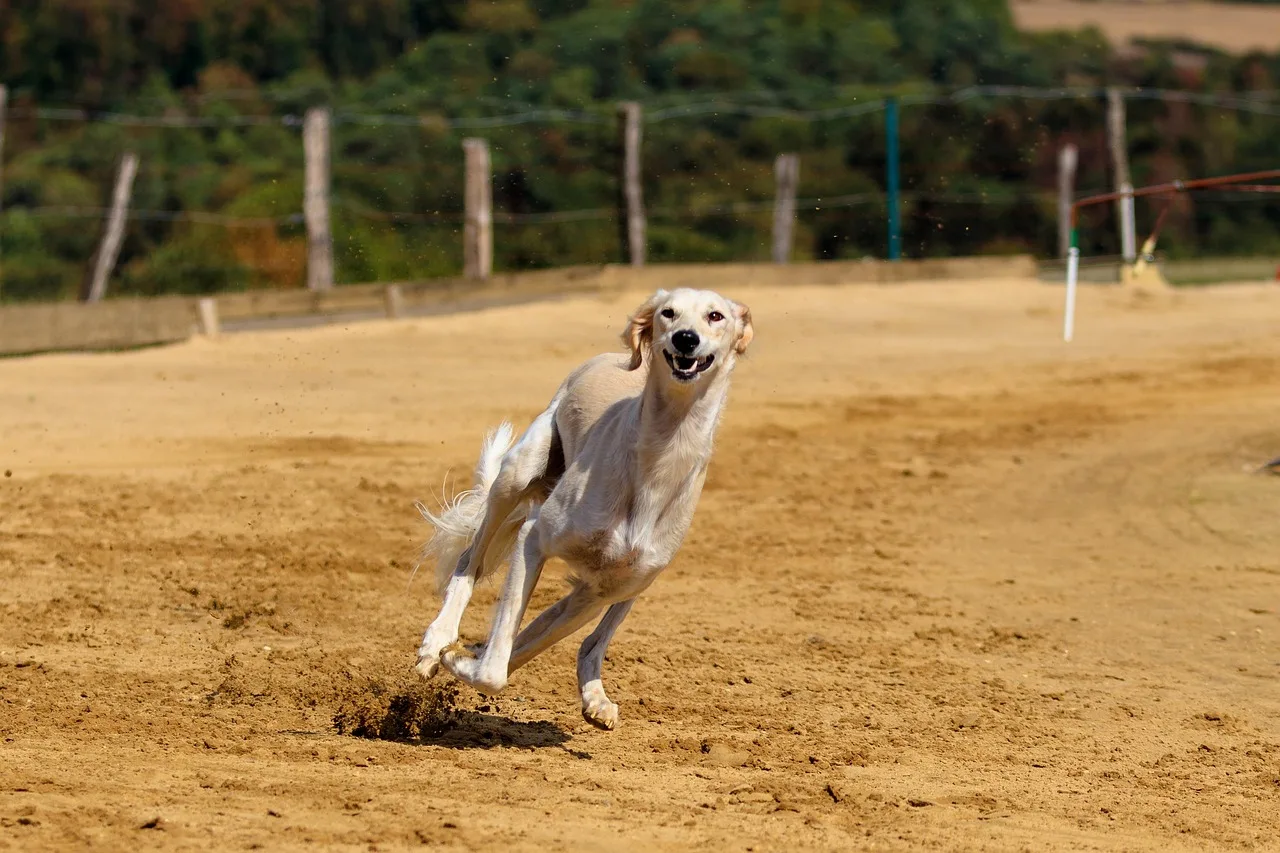
The AKC cites archaeological evidence for the Saluki going back at least 5,000 years. Egyptian nobility “mummified the dogs in the fashion of the Egyptian pharaohs.” Arab tribesmen hunted gazelle with them.
This sighthound runs 30 to 35 miles per hour, the AKC says, with some claims of nearly 50. At 35, a Saluki crosses a football field in about six seconds.
Then comes an admission you rarely see in writing. The AKC itself says Salukis may not answer calls in open fields where there is prey. That’s the breed’s own registry telling you what to expect. It recommends a very large yard with a high fence, five to six feet, and notes that Salukis are excellent jumpers.
The breed ranks about No. 135 for 2025, so you won’t meet many. Nobody in ancient Egypt wrote down whether they came when called.
#1 The Anatolian Shepherd, the guardian saving cheetahs
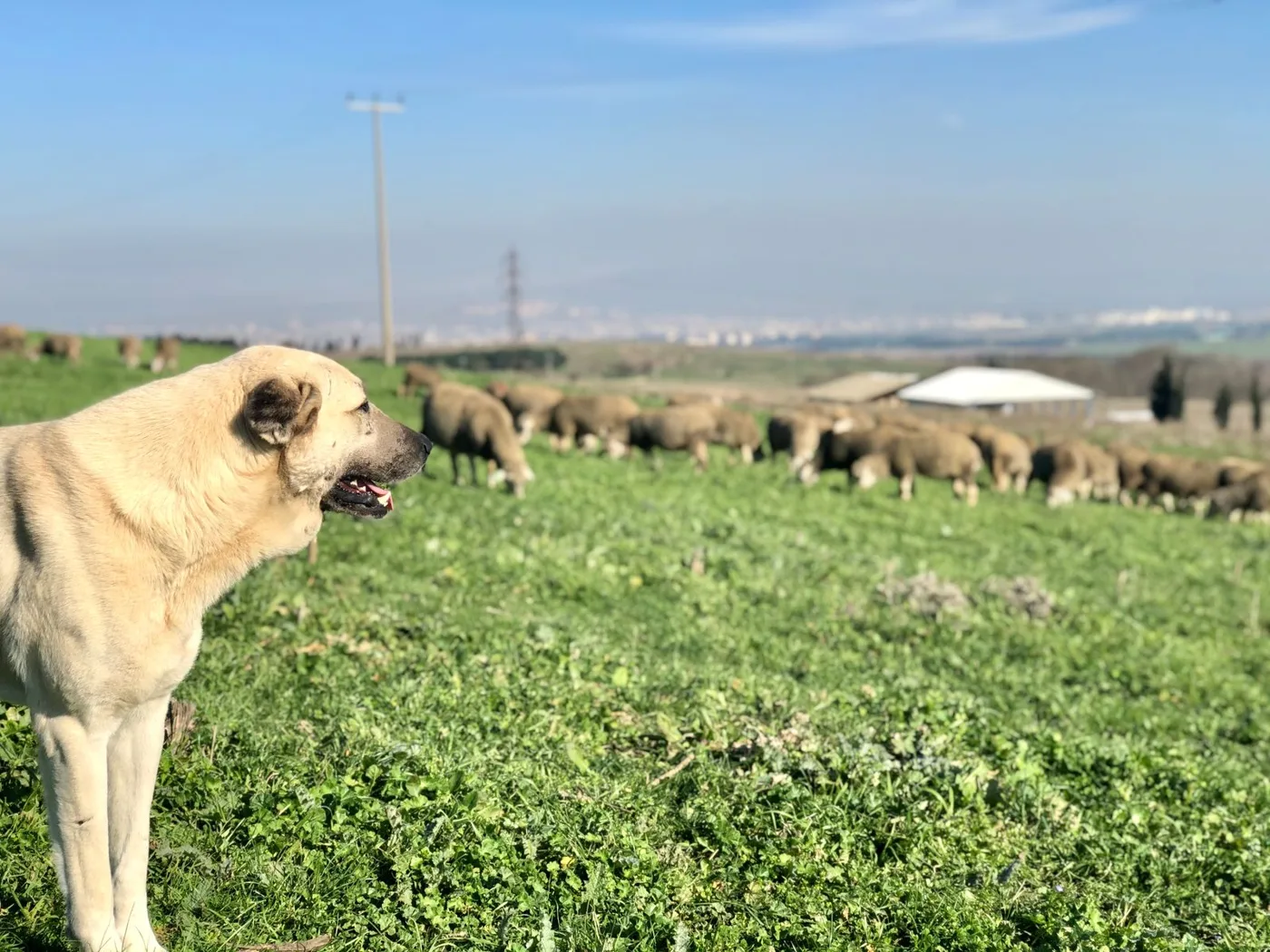
On a farm in Namibia, a big tan dog lies among the goats, and nobody is telling it what to do. That’s the whole idea.
The Anatolian Shepherd is a livestock guardian with deep roots. The AKC says artifacts from around 2000 BC describe a large, strong dog from Anatolia. It historically worked far from people and makes its own decisions. Casey Ray, whose list of guardian breeds includes the Anatolian, describes the whole group:
“These five dogs were bred to think for themselves, protect without hesitation, and make decisions without you.” (Casey Ray, dog behavior trainer)
Make decisions without you. That’s exactly why “come” doesn’t land. It’s also exactly what the Cheetah Conservation Fund wanted.
Cheetahs live mainly on open farmland, says the fund’s founder, Dr. Laurie Marker, and that puts them at greater risk of conflict with livestock farmers. So from 1994 to 2018, the group placed 634 Anatolian and Kangal guarding dogs with Namibian farmers. When it surveyed the farmers, 91% reported fewer livestock losses.
Think about what those dogs did to earn that number. They stayed with the herd with no person around. They decided on their own when a threat was a threat. They ignored everyone who wasn’t the flock. The trait that keeps your Anatolian staring at you from the far corner of the yard is the same one a conservation group put to work so cheetahs and farmers can share the land.
Ray’s shorthand for the type fits on an index card: “Thinks before it listens. Not looking for constant direction.” If you have one at home (the breed ranked No. 88 on the AKC’s 2025 list), that’s the dog you’ve got. It comes when it has decided coming is the right call.
What “livestock guardian” actually means – It historically worked with a flock far from people – It makes its own call about when to act, without waiting for yours – Anatolian Shepherd males can weigh 110 to 150 pounds, which matters at the end of a leash – Also in the countdown: the Great Pyrenees and the Komondor
The bottom line
Every dog in the countdown is excellent at something. The trouble starts when that something is on the other side of your gate.
A dogo and pit bull mix owner on r/dogs put it about as well as anyone: “He tries really hard to be a good boy, but I am not, in fact, sexier than a squirrel.” You don’t have to win that contest. You only have to make sure the squirrel never gets a fair shot.
So name your dog’s pull: the nose, the eyes, independence or the run. Then ask one plain question about your own place. Where would that pull get out tonight? For a nose dog, it’s the gap under the gate. For a sighthound, it’s the open field you love. For a guardian, it’s the far edge of the yard it already thinks it owns.
Go look at that spot before dark.
Bonus: Four moves for the next time the gate swings open
If your dog came from a shelter, treat the breed on the kennel card as a guess. In a study of 919 shelter dogs in Phoenix and San Diego, only 4.9% were purebred, and when staff named more than one breed, they matched the DNA just 10.4% of the time. Watch which pull your dog actually shows.
If your dog is loose and you can see it, don’t chase. The AKC’s advice is to head the other way so the dog follows you.
Move anything the dog can climb on, like the grill, a bench or the woodpile, away from the fence line. The AKC also lists GPS collars among its fixes.
Before anyone else holds the leash, whether a dog sitter, a neighbor or visiting family, tell them which pull your dog has and what sets it off. The person who doesn’t know about the squirrel is the one who unclips at the park.
Questions people also ask
What dog breed has the best recall?
The Border Collie comes closest, though no official ranking of breeds by recall exists. In Stanley Coren’s survey of 199 obedience judges, the Border Collie ranked first for obedience and working intelligence. Behaviorist Patricia McConnell, PhD, wrote that her Border Collie’s “genetics as a Border collie makes him more likely to come when called” than some other breeds, though she still trained him.
Will my dog ever have reliable recall?
Maybe, but plan to manage it either way. A 2022 study found breed explains only about 9% of behavior differences between individual dogs, so your dog may beat its breed’s reputation or fall short of it. Still, Adopt A Husky says no trainer can teach a Siberian not to run, and the Great Pyrenees club says never off leash unless confined. For scent-driven and prey-driven breeds, count on a leash or fence for life.
Is 100% recall possible?
No. The AKC’s recall guide, by trainer Sassafras Patterdale, CPDT-KA, aims for about 99.99% reliability and says nothing is guaranteed. For parks and other busy places, it suggests a 15- to 20-foot long line.
If my dog runs away, will it come back on its own?
Usually not on its own. In a study of 187 lost dogs around Dayton, Ohio, 71% were found, but only 8% came home by themselves. About a third were found through shelters, so call and visit them right away. Most found dogs turned up less than a mile from home.
Do treats work on a dog that won’t come when called?
They can, if you save a special treat for a rarely used emergency word. Cathy Madson, CPDT-KA, of Preventive Vet, says to choose “a word that is heard very rarely or not at all in everyday life” and pay it with about 30 seconds of treats, one piece at a time. “Do not overuse this cue! It is meant to be used in emergency situations only.” Some husky owners report that no food beats the run, so treats back up a fence and leash and never replace them.
How high should a fence be for a dog that runs away?
Most breed groups and rescues recommend five to six feet. Adopt A Husky asks for 6 feet, and the AKC advises at least six for Afghan Hounds. Height won’t stop a digger, though: Best Friends Animal Society advises burying fencing 18 to 24 inches deep, or laying it at least 12 inches into the yard along the ground.