The best way to train your Goldendoodle is through a consistent, reward-based training approach that leverages their natural intelligence and eagerness to please.
In this article, we’ll explore the ideal starting age for Goldendoodle training, how to establish trust and socialize your pet, effective training methods, potential challenges during the training process, and essential products that can support your training journey. Simple guidelines for a happier and well-trained Goldendoodle.
Ready to transform your Goldendoodle into a well-behaved companion? Let’s dive in!
Table of Contents
What is the Best Age to Start Training Your Goldendoodle Puppy?
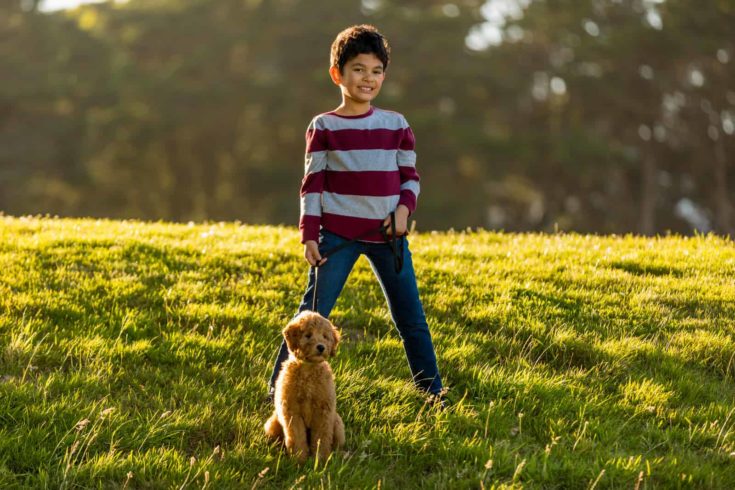
The best age to start training your Goldendoodle puppy is as soon as you bring him home.
You can begin by establishing a routine that includes meal times, potty times, naps, playtime, and bedtime. This will help your puppy feel secure and make him more receptive to training.
The Importance Of A Routine
Before you collect your new Goldendoodle puppy, decide and agree on a routine for him with your whole family.
Your routine should take into account the key events in your furbaby’s day, including meal times, potty time, naps, playtime, and bedtime. Again, everything in the routine must be consistent. A structured day will make your puppy feel secure and give him confidence, which will make other areas of his training regimen more successful.
Top Tip
Schedule your puppy’s feeding times around your own. Since young puppies are generally fed three times per day, you could feed your pet at your usual breakfast, lunch, and dinner times.
How can You Socialize Your Puppy Effectively?
You can socialize your puppy effectively by gradually exposing them to a variety of environments, people, and other animals in a safe and controlled manner to help them become comfortable and well-adjusted adults.
How Do You Form a Bond and Gain Trust with Your Doodle?
Forming a strong bond involves positioning yourself as their pack leader and mentor through positive interactions. When interacting with your puppy, it’s important that they learn to view you as their leader; this will keep them calm and make them more receptive to training.
While it’s tempting to let their cute antics overexcite you, maintaining a calm demeanor of authority will help your pup distinguish between playtime and training time.
How Do You Effectively Train Your Goldendoodle?
To effectively train your Goldendoodle, it’s essential to start early the moment you bring your puppy home. Always rely on positive reinforcement, using treats, praise, and affection to reward the behaviors you want your doodle to learn.
Consistency is key, so establish clear routines and stick to simple commands. Remember, Goldendoodles are intelligent and want to please, but training requires patience and persistence. If you encounter any specific challenges or behavioral issues, don’t hesitate to seek the help of a professional dog trainer for personalized guidance.
Types Of Dog Obedience Training Methods
Here’s a summary of the most popular dog obedience training methods that many Goldendoodle owners find to be successful.
Clicker Training
Clicker training is probably the most popular dog training method and is used by many professional dog trainers.
This form of training rewards the dog for good behavior with a treat. Each time the dog responds as you want him to, you click a small hand-held clicker and give your dog a treat. Your puppy quickly learns to associate the click with a treat and, therefore, with good behavior.
Food Rewards
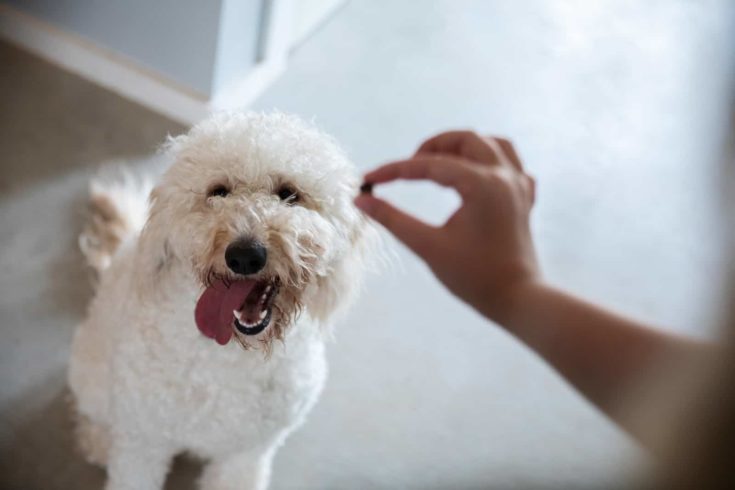
Dogs are notoriously greedy, food-oriented creatures, so rewarding your dog with a tasty treat, such as cheese or chicken is a very effective way of telling him that he’s done the job right.
Scented Item Training
Scented item training is a fun training method that uses your dog’s natural sense of smell.
For example, take three plastic cups. Place the cups upside down in a line and put a treat underneath one of them. Now, ask your puppy to sniff out the treat. You can use the same technique by placing the treat in your hand and asking your pet to choose which hand the reward is in.
Praise Reward Training
If your puppy has a sensitive tummy, and you don’t want to upset his digestion by feeding tidbits, you might prefer to use the praise reward training method instead.
As it sounds, praise reward training simply entails making a huge fuss of your puppy whenever he gets something right. For example, this method works extremely well when potty training puppies. When your puppy relieves himself in the correct place, praise him to the moon and back, and he’ll quickly realize that he’s got it right!
Crate Training
Crate training can be useful in the early stages of a puppy’s training. A crate provides the puppy with a safe den that he can retreat to when he’s anxious or simply wants to take a nap.
There are two very important caveats to crate training:
- Never shut your puppy in his crate as a punishment. The crate is there solely to safely contain your puppy in the early stages of his training, and he must always associate the crate with safety and comfort.
- Never leave your puppy alone in his crate for more hours than his age in months, plus one hour. So, a three-month-old Goldendoodle can only be kept in his crate for a maximum of four hours.
Goldendoodle Sample Training Routine
Here’s an example of a training routine that might work well for your Goldendoodle puppy:
Potty time immediately on waking up
Just like people, most puppies want to relieve themselves as soon as they wake up in the morning. So, be sure to take your puppy outside to go potty as soon as he wakes up.
Feed your puppy at the same time each day
If at all possible, try to schedule your puppy’s mealtimes at the same time as yours. That helps your puppy to socialize with you and your family and gives structure to his day.
Potty time after each meal
Puppies are generally ready for a bathroom break between 30 and 60 minutes after they’ve eaten. So, remember to let your puppy outside in time to avoid accidents. Very young puppies should be taken out every hour, as they generally need to go more frequently than older dogs.
Exercise or playtime after a bathroom break
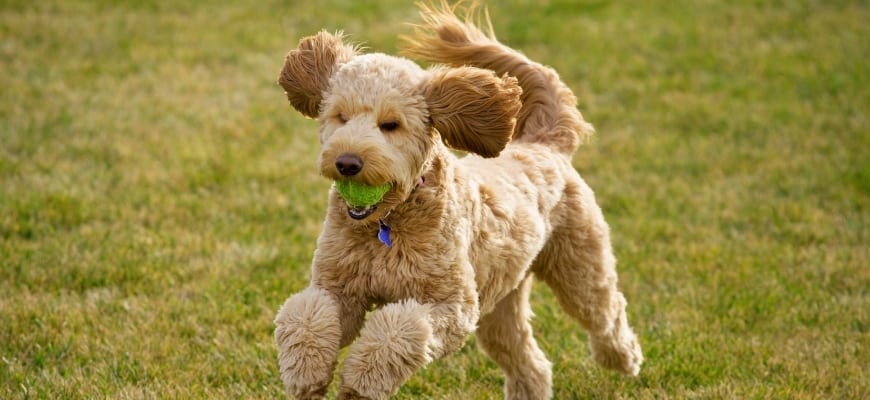
Baby Goldendoodles need exercise to keep them fit and encourage healthy growth.
That said, don’t go crazy with exercising your pet. Puppies tire quickly and overdoing playtime can cause damage to your pup’s developing joints. Also, playing with your puppy and taking him for short walks is an excellent way of socializing your pet and bonding with him, too.
Most puppies are ready to relieve themselves after the excitement of playtime, so be ready to take your little bundle of joy outside for another potty stop right after a game or a walk.
Naptime follows exercise and potty time!
Young Goldendoodle puppies typically sleep for between 16 and 18 hours per day. Baby dogs need their rest, so make sure that your pet’s snooze time isn’t disturbed.
And potty time follows naptime!
Of course, once your Goldendoodle puppy wakes up from his snooze, it’s time to take him outside for a bathroom break again.
Basic Commands
Unruly, disobedient dogs are a liability in any situation, and there are a few basic commands that your puppy needs to learn early if you are going to enjoy a happy and harmonious future together.
Off/No Jumping
Puppies are very enthusiastic little creatures that love to run and jump. Unfortunately, that jumping habit extends to your furniture, which is not good when your Goldendoodle has been rolling in something unpleasant. So, you must teach him the “off” command.
Kennel
Your puppy’s kennel or crate is his safe space where he can chill out and sleep. You can also put your pup into his crate any time you need to keep him contained.
So, “kennel” or “crate” is another command that you can teach your pup.
Speak
Goldendoodles are very intelligent and can learn more advanced commands, such as “speak.” Use that command when you want your dog to bark at you!
Quiet
On the other hand, Doodles, especially the smaller ones, can be barkers. So, “Quiet” is another command you might want to teach your dog.
Give
Your puppy will have needle-sharp teeth that can become fixed into objects such as shoes, clothing, and other things you don’t want chewed up! So, “Give” is a command you need to teach your puppy.
Leave it/Get it
“Leave it” is another command that you can use to discourage your puppy from picking up something he shouldn’t. “Get it,” on the other hand, is the instruction you’d give to your pup when you want him to fetch something for you.
Sit
This command is self-explanatory. Having a dog that’s obedient to the “Sit” command is essential when waiting to cross over busy roads and other occasions when obedience is required such as at the dog groomers.
Lay
Training your dog to lay down can be helpful in certain situations such as visits to the vet or groomer.
Stay
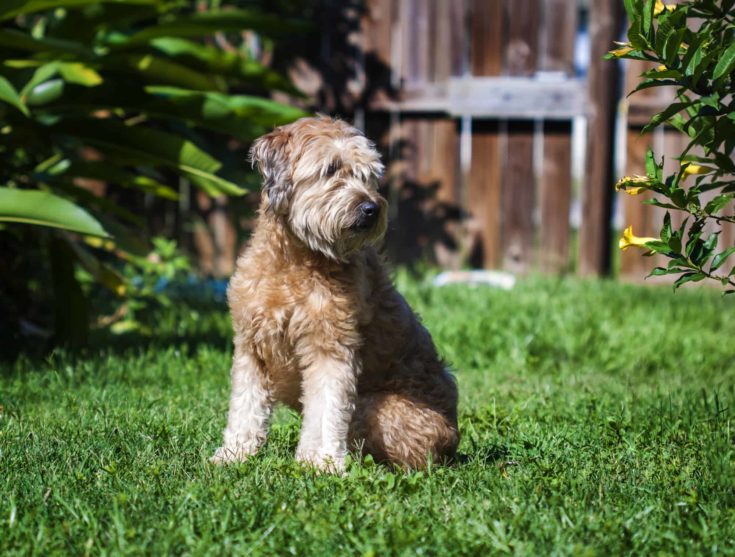
The “Stay” command is essential when you take your dog to the park or other public space and is one of the first basic commands that your puppy should learn.
Come
Another extremely important command that your puppy needs to learn is to come when he’s called. Most people teach their dogs to come to their name, but you can use the word “Come” as well if that works for your puppy.
Use Positive Reinforcement
When training your puppy, you must always use positive reinforcement, never punishment.
Making your puppy afraid of you will never enable you to build a loving and secure bond between the two of you. Although you might need to be more patient when using positive reinforcement, the experience is much more enjoyable and rewarding for you and your dog.
Positive reinforcement works by rewarding the dog for good behavior and ignoring him when he doesn’t do what you want him to. Use treats, clicker training, and verbal praise to reward your dog for a job well done. That helps the puppy to feel positive about you and the time spent training.
What are the Common Issues with Goldendoodle Training and How Can They Be Tackled?
Common issues in Goldendoodle training include counter surfing, jumping, excessive barking, leash pulling, digging, and mouthing. These can be tackled with a combination of preventative measures and training techniques.
Prevent counter surfing by removing temptations, teach your Goldendoodle alternative behaviors like sitting for greetings, and use positive reinforcement to correct barking, leash pulling, and mouthing. Provide designated digging areas or deter digging with unpleasant substances like their own feces.
If your Goldendoodle persists with eating non-food items, keep them out of reach and train the “leave it” command.
Counter Surfing And Stealing Food
Goldendoodles, like most dogs, are always on the lookout for food, and that can lead to bad behavior, such as stealing food and counter surfing.
You can prevent your dog from being a snack bandit by keeping all your countertops clear of food and leftovers. Dirty dishes should also be washed up or put out of reach in a dishwasher if you have one.
Our top tip is to crate your puppy in a location out of the kitchen while you’re preparing food.
Jumping
One of the first training exercises that you need to teach your puppy is to sit quietly when greeted. That teaches your pet that he will only receive any attention when he sits.
The object of the exercise is to distract your puppy’s attention from the person to the treat or praise reward that he knows is coming his way.
Barking
One common behavioral problem is barking.
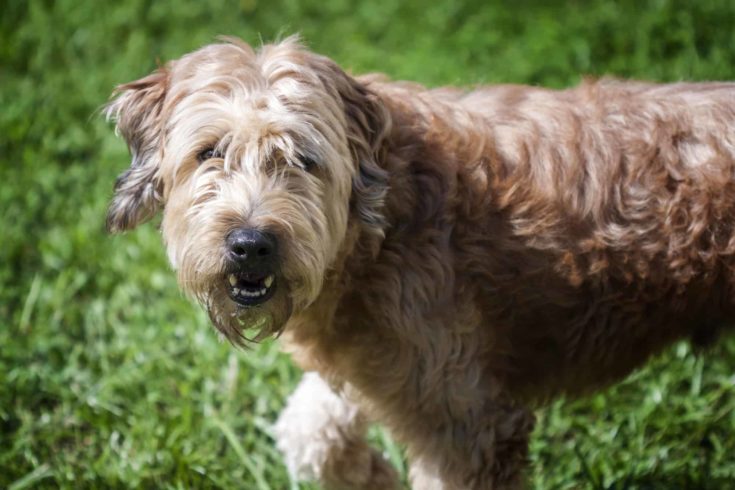
So, think about how you want your puppy to react when someone comes to your door. Do you want him to alert you by barking or not?
For example, you can train your dog to sit quietly in a specified spot when someone knocks on your door. Use treats to reward your pet until you tell them they’re released.
Leash Pulling
Pulling on the leash is a tiring and infuriating habit that can make walking your dog a chore not a pleasure.
As soon as your puppy starts to pull, stop walking. Once the pulling stops, start walking again. By repeating that behavior continually, you will teach your puppy that dragging you along is not acceptable. Always reward your puppy when he walks calmly beside you.
Always walk your puppy on a harness, not a collar. Constant pulling on a collar can cause injury to your dog’s windpipe.
Digging
Most dogs start digging up your backyard because they’re bored or fenced in. Usually, if you provide your pet with plenty of interesting toys and give them enough exercise, the digging behavior won’t start in the first place.
Top Tip
A very effective way to stop your puppy from digging is to put some of their feces into the holes they’ve dug.
Biting And Mouthing
Biting is your puppy’s way of investigating something new or trying to get your attention. Unfortunately, those sharp teeth can inflict painful injuries to your fingers, nose, and ears!
The most effective, simple way to stop your puppy from biting you is to provide him with a chew toy to mouth on or give your pet some extra playtime.
Eating Socks Or Other Non-Food Items
Unfortunately, puppies will usually chew or even eat socks, underwear, and other items of your clothing or non-food items.
The best way to prevent that behavior is to keep your “smalls” safely out of reach of your puppy. You must also teach your pup the “leave it” command. As a last resort, you might want to try a pet-repellant spray product.
Potty Training
Potty training your puppy is one of the first things you will do when you get him home. However, unfortunately, accidents can and do happen.
Observe your puppy’s behavior. If your pup starts circling, scratching at the door, whining, or barking, that could mean that he wants to relieve himself. As soon as you spot any of those signs, let your puppy outside to avert an accident. Remember, as soon as your pup relieves himself in the correct place, reward him with treats and praise.
What are the Essential Products for Puppy Training?
Here’s a list of the items that you need for training your Goldendoodle puppy.
- Treats
- Dog bowls
- Training crate
- Outdoor kennel
- Dog grooming products
- Collar and leash
- Dog beds
- Chew toys
- Dog health products
Goldendoodle Training FAQ
Here are a few of the most commonly asked questions about Goldendoodle training.
Q: Are Goldendoodles easy to train?
A: Generally, Goldendoodles are intelligent and extremely easy to train, and they love to please their owners. That said, if you’re a newbie to dog ownership and have problems training your dog, always seek professional help.
Q: How long does it take to potty train a Goldendoodle?
A: If you’re able to be around your puppy most of the time, potty training can be achieved within a few weeks. However, more usually, fully potty training your dog takes a few months.
Most Goldendoodles are completely potty trained at around six months of age. However, for some dogs that can take longer, even up to a year.
Q: When should I start training my Goldendoodle?
A: You should begin training and socializing your Goldendoodle as soon as you get him home. Start with a good routine that all your family are familiar with.
Goldendoodles are very smart dogs that are generally extremely easy to train, picking up new things very quickly.
In Conclusion
Remember, the key to Goldendoodle training success is consistency, patience, and a whole lot of love. By building a strong bond, using positive reinforcement, and understanding the specific needs of your Goldendoodle, you’ll transform your furry friend into a well-behaved, happy, and loyal companion.
Now that you’ve learned the essentials of Goldendoodle training, it’s time to put these tips into practice! Start small, set realistic goals, and celebrate every success along the way. If you’d like more personalized guidance, consider enrolling in a puppy training class or consulting a professional dog trainer.
Let’s make this training journey a fun and rewarding experience for both you and your Goldendoodle!

You’re so right about giving food as a reward. It worked great when we tried.