From the Chihuahua’s shriek to the doodle’s grooming bill, here’s which habits of the most irritating dog breeds are bred in, which you can train away, and which breed to pick next if quiet matters more now.
The dog at #1 sounds like the safe, sweet choice. A 2026 study of more than 9,000 dogs says otherwise.
A van door slides shut somewhere down the street, and your dog is already up on the back of the couch, telling the whole block about it. You say “hush.” She barks louder, because as far as she can tell, now you’re barking too. Most lists of the most annoying dog breeds skip this part. Some of that noise was bred in long before either of you was born. Some of it you can turn down by next week.
Table of Contents
#17 Chihuahua shrieking at every knock
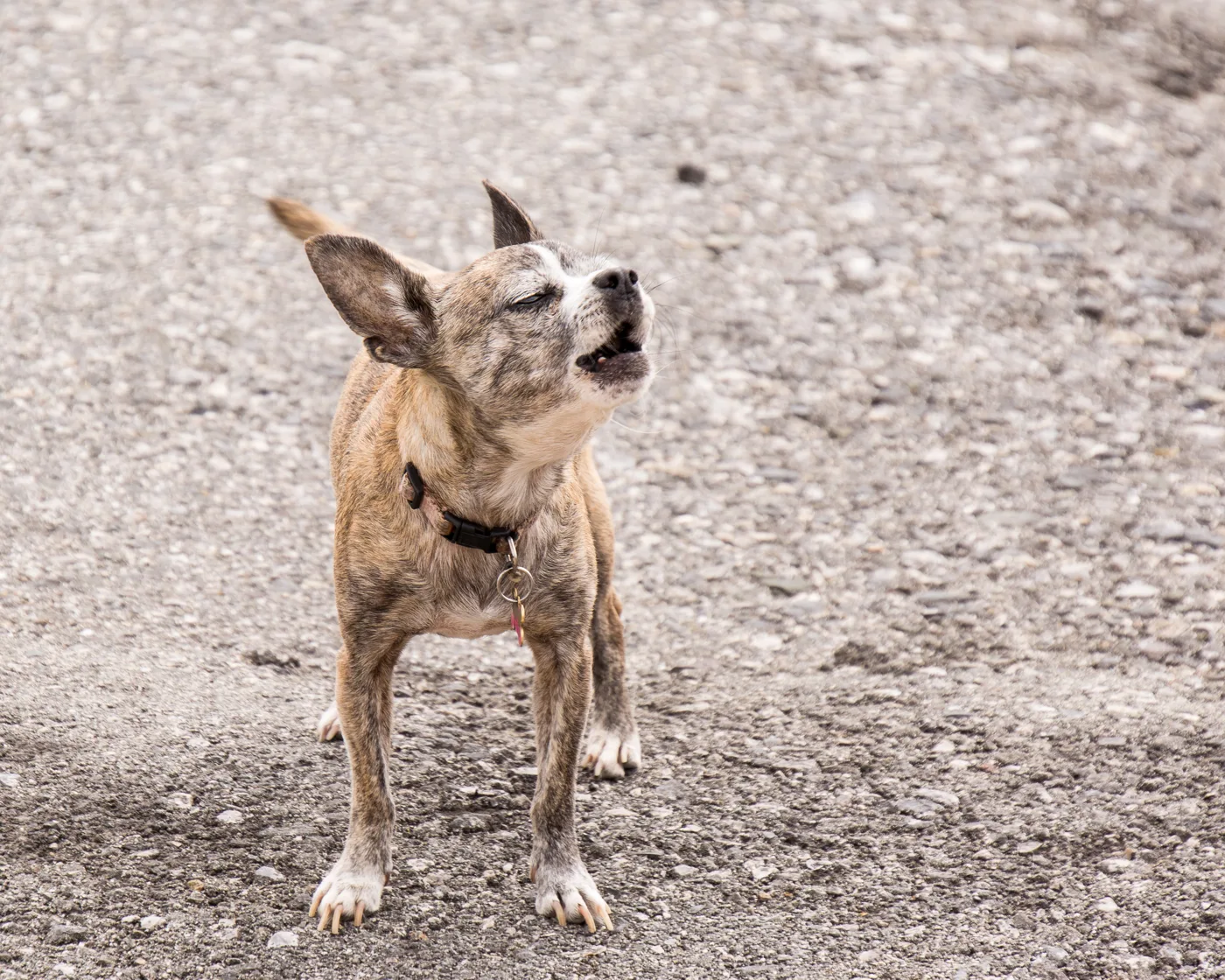
Someone taps on the door, and a dog the size of a loaf of bread goes off like a smoke alarm. Dr. Lindsay Butzer, a small-animal vet in Boca Raton, Florida, puts it as kindly as anyone can: “The Chihuahua is known to be an obnoxious barker, as much as we love that little sturdy dog breed.”
Part of it is wiring. VCA Animal Hospitals rates the breed’s barking 3 out of 5 and says a Chihuahua “tends to be a one-person, or at most, one-family dog.” Whoever is on the other side of that door is not family.
The “yappy little dog” cliché has a second author, though. When researchers in Vienna surveyed 1,276 dog owners, the small-dog owners turned out to be less consistent, and the link between punishment and anxiety showed up only in the small dogs. Psychologist Stanley Coren boiled it down: “inconsistency has a larger negative impact on smaller dogs.”
So if the shriek gets a laugh on Monday and a scolding on Tuesday, that mixed message hits her harder than it would hit a big dog. Pick one response to the knock and get everyone in the home to use it. The ASPCA’s version is simple: let her bark three or four times, say “quiet” once, calmly, and treat the second she stops. It falls apart if a visitor scoops her up mid-shriek and coos at her, because that’s the best reward she’s had all week.
One more thing about the loud ones: they’re also the popular ones. We looked up the American Kennel Club’s 2025 rank for every breed with a barking reputation that you’ll meet below. Most sit in the top 30 out of 202 breeds, but two don’t: the Basset Hound (#34) and the Great Pyrenees (#66). The AKC counts registered purebreds only, so mixes aren’t in there.
Rank of breeds known for barking vs. the quiet Greyhound – German Shepherd #4, Dachshund #5 – Beagle #7, Chihuahua #24 – Siberian Husky #30 – The famously quiet Greyhound: #151
#16 Beagle baying the minute you leave
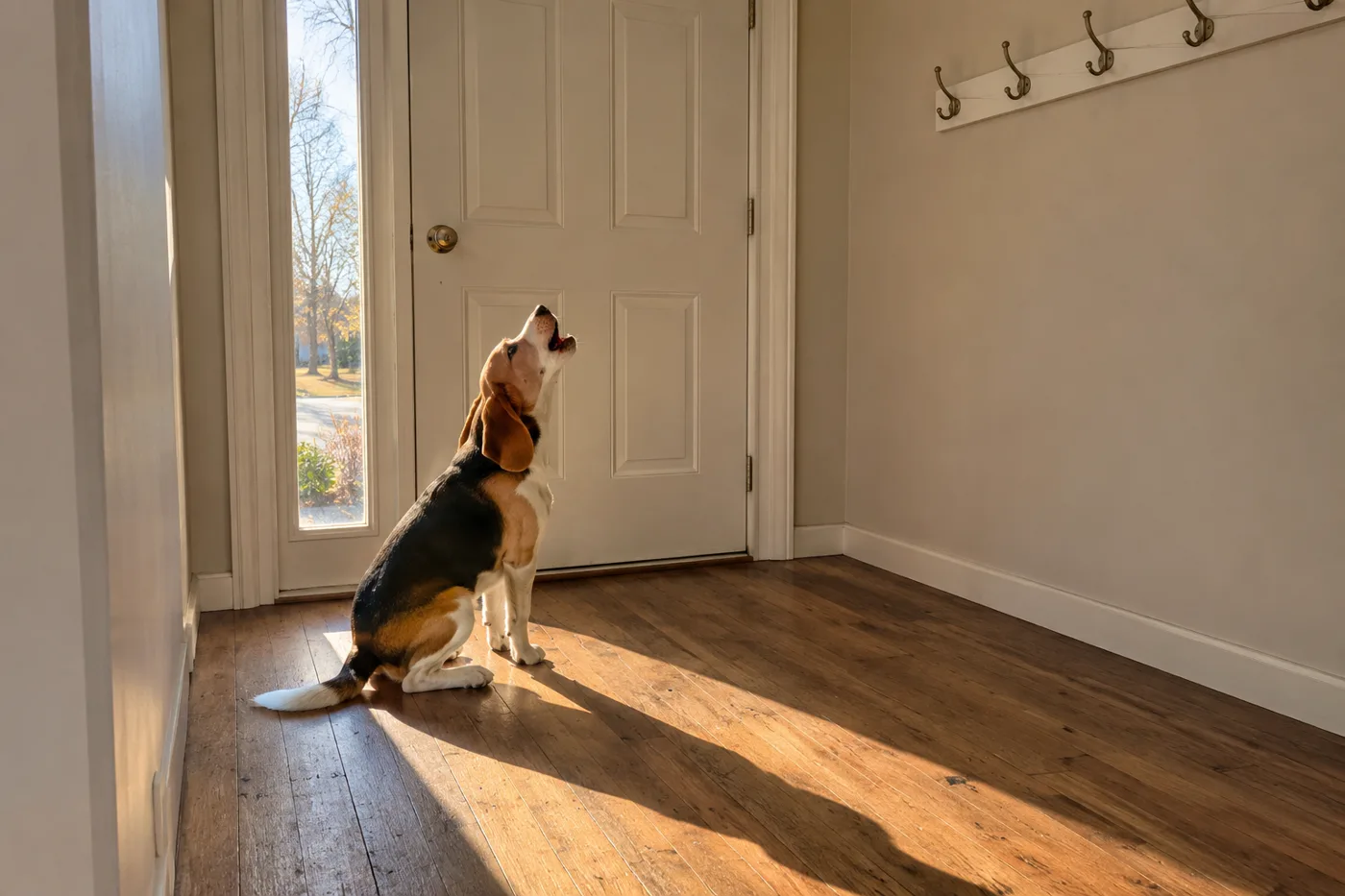
Why does she save the full concert for when you’re gone? Because a Beagle was never meant to be alone. The AKC says Beagles “were bred to hunt in packs, so they enjoy company,” and a pack hound left by herself does what pack hounds do. She calls for the others.
She has the voice for it. Of all the breeds here, the Beagle gets VCA’s highest barking rating, 4 out of 5, with a warning that “some bark and bay loudly and frequently.” In a 2014 poll of vet staff, Beagles ranked third for drama at the clinic, thanks to “enormous voices they’re happy to use.” Beagle people on Reddit describe loud, demanding dogs that are hard to train and impossible not to love.
How much is bred in? Most of it. Your lever is food. A Beagle will work hard for a treat, and VCA says reward training with food is what they respond to best, so teach “quiet” while you’re home. For the hours you’re out, company works better than training: a neighbor, a dog walker, a second dog. If nobody’s home eight hours a day, no trick fully replaces a pack.
For a slower-paced home, there’s good news: VCA calls a well-exercised Beagle “a fairly calm housedog.” Budget for the ears, though. In UK vet records, Beagles had 2.54 times the odds of an ear infection compared with mixed breeds.
#15 Husky talking back, then taking off
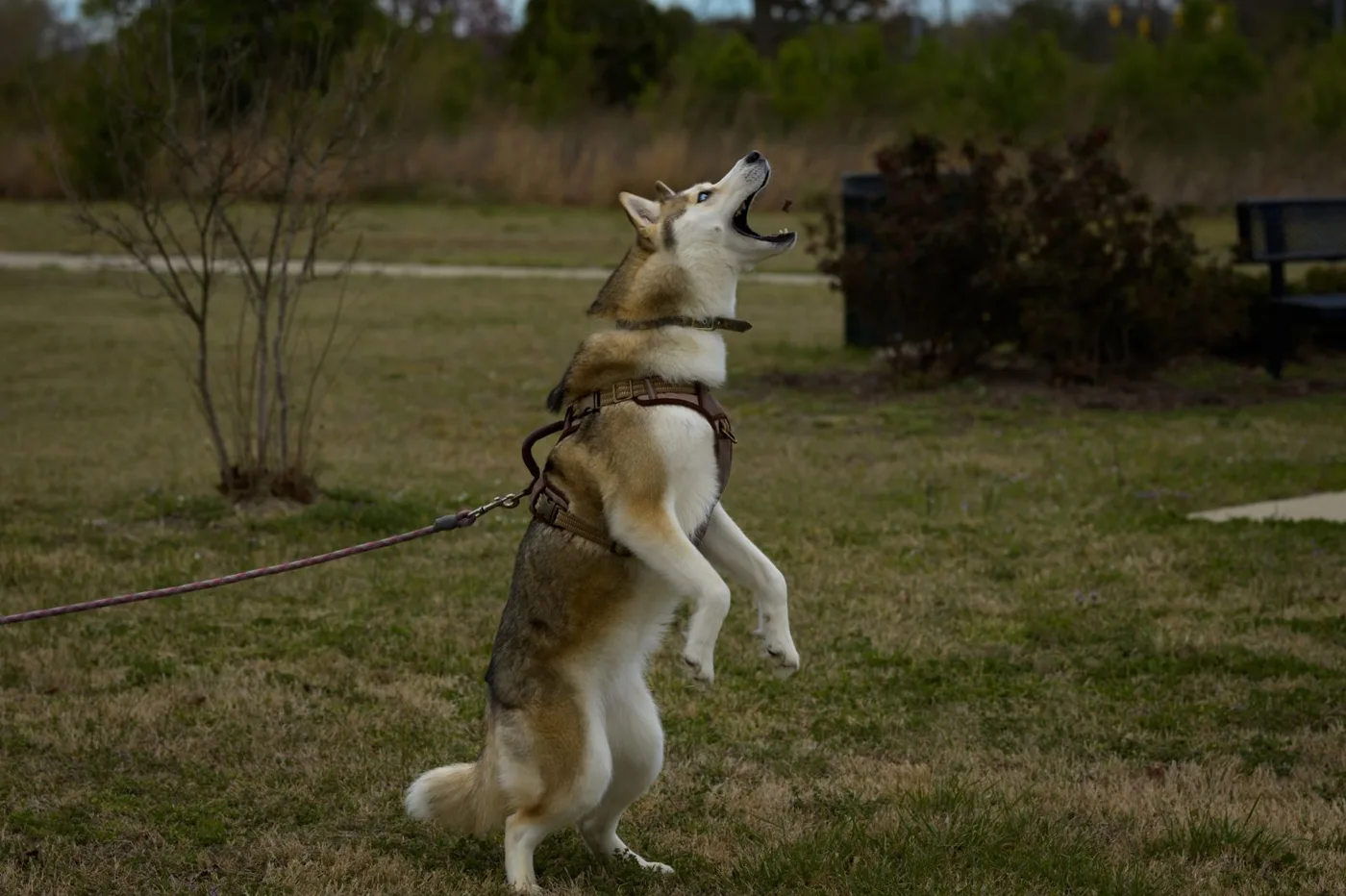
Siberian Huskies look like they could guard a castle. Their own breed club says they have “not the temperament of a watchdog.” That big wolfish face would probably greet a burglar like a long-lost cousin.
What a Husky does have is opinions, delivered out loud, and a habit of taking off.
The running off makes sense once you know the job. The Chukchi people of northeastern Asia developed the breed as an endurance sled dog, and in 1925, dog teams relayed medicine to Nome, Alaska. A dog built to keep going sees no reason to come back when called. The New Jersey Siberian Husky Club doesn’t soften it: “we strongly urge that no Siberian Husky ever be allowed unrestrained freedom.”
So the fix for poor recall is a leash and a fence rather than more yelling. The club’s own idea of a good workout is on a leash, in a large enclosure or, “best of all, in harness.” If your ideal walk is a slow loop with a coffee, this is the honest mismatch.
#14 Dachshund barking at every stranger
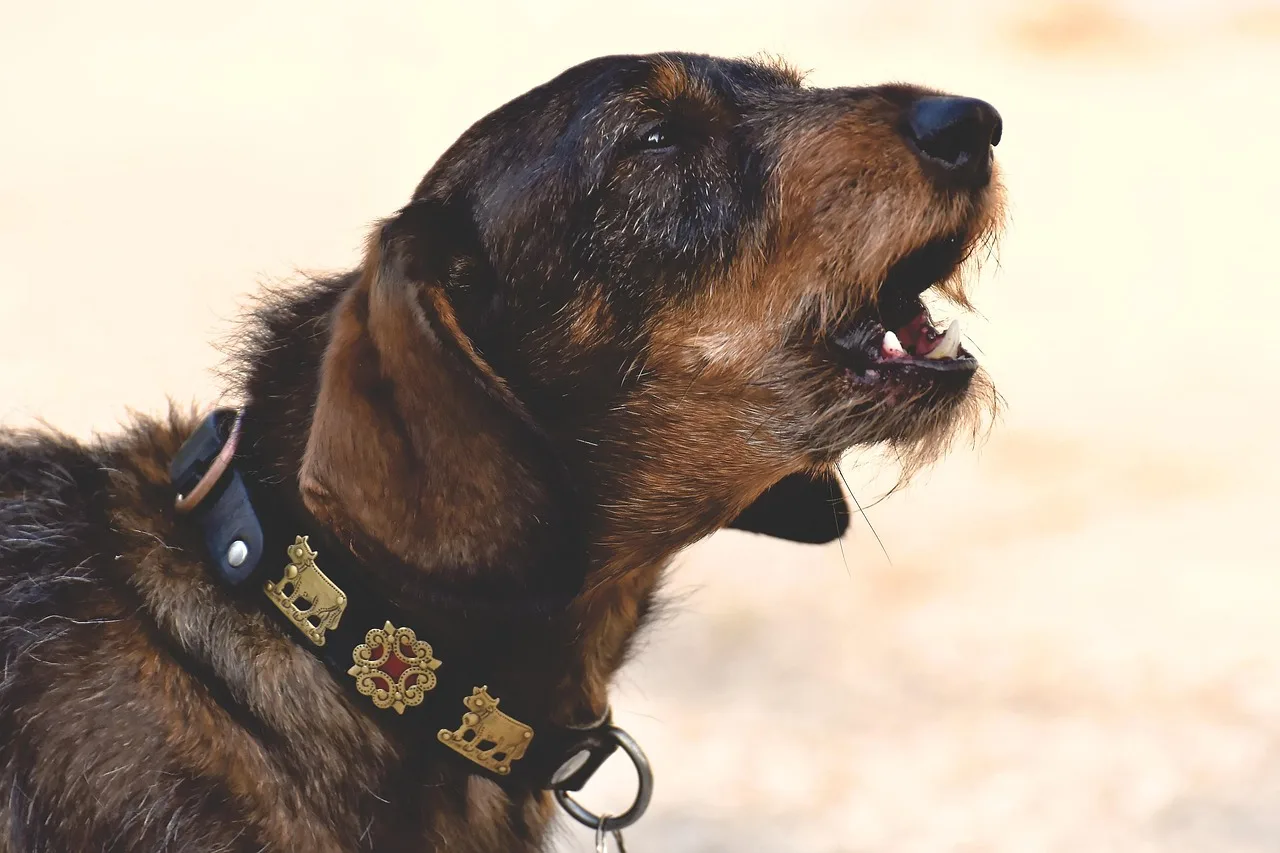
The Dachshund was built for an underground job in 1700s Germany: going after badgers in their own tunnels. VCA calls the breed “reserved, even suspicious, toward strangers” and admits that “some bark a lot.” Think of the nerve it takes to walk into a badger’s living room. The delivery driver never stood a chance.
For the excessive barking, strangers are the trigger, so strangers are where the work happens. Reward her for staying quiet while someone walks by, and keep it up for months.
If you’re choosing one, the body matters more than the stubborn reputation. Dachshund Health UK, the British breed council’s health site, says of back disease that “around 1 in 4 may be affected at some stage in their lives.” Stubborn you can work around. A bad back is harder, and pricier: the University of Illinois vet teaching hospital lists surgery for a ruptured disc in a small dog at $7,000 to $9,000 in its 2025 fee estimates. Before you buy, ask the breeder whether both parents had the DNA test for the gene variant linked to this back disease, and what the results were.
They bring the attitude to the clinic, too. Vet staff ranked the Dachshund fifth for drama in that same 2014 poll.
#13 German Shepherd barking at the window
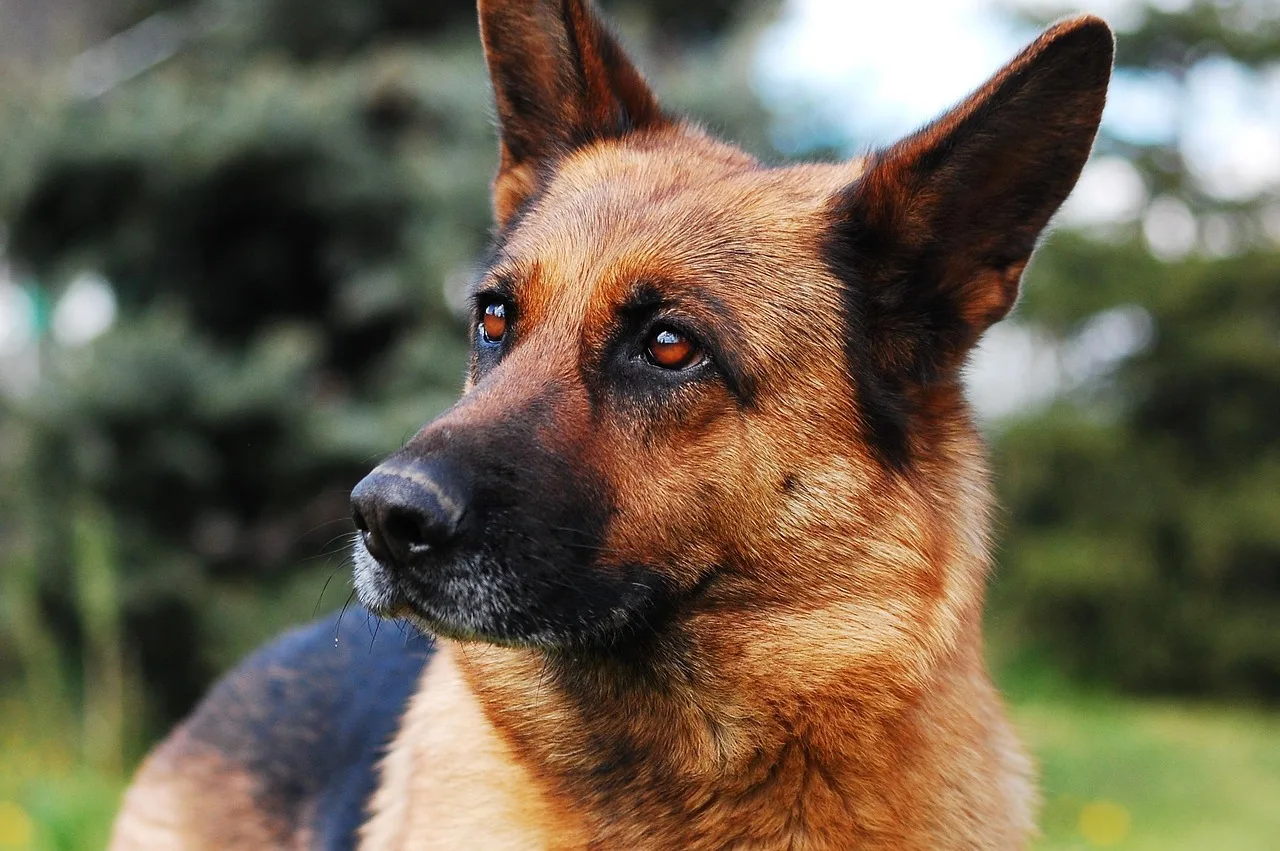
This one gets a different verdict. Will Atherton, a dog trainer in Derbyshire, England, says it plainly: “It would be an unfair expectation to ask them to not bark at a stranger walking by the window.”
The breed was shaped in Germany from 1899, out of traditional herding dogs, and today it tracks suspects and patrols for police. Shepherds can become overprotective of their family and territory. Obedience judges ranked them the third most trainable breed. So when a smart dog bred to watch and report sees a stranger, it watches and reports.
Compare that with the Chihuahua at #17. She barks at the knock out of nerves. The Shepherd barks at the window out of duty. You can calm nerves, but duty you can only cut back.
Shrink the job instead of fighting it. AKC trainer Stephanie Gibeault suggests curtains to block the view and one rule: “Simply teach them that silence earns rewards.” Atherton adds the timing: “Rather than giving our dog any attention when they’re barking, we wait for them to be calm and quiet, curled up on their bed.”
Curtains won’t block sound. A Shepherd still hears the gate latch, and a bark or two at that is fair pay for a dog who’s on the clock.
#12 Yorkshire Terrier, a ratter in a lap dog’s coat

Hold a modern Yorkie next to her ancestors and the stubbornness makes sense. In the mid-1800s, Scottish weavers brought terriers to Yorkshire to kill rats in factories and mines. Those dogs weighed 15 to 20 pounds. Today’s breed standard caps a Yorkie at seven.
That’s less than half the dog, with all of the nerve kept. Modern Dog says Yorkies are suspicious of strangers with hearing sharp enough to make them “effective watch dogs,” and that “the famous Yorkie terrier attitude often presents itself in stubbornness.”
That’s the surprise for anyone expecting a lap ornament. The bow in her hair is a costume. Underneath is a working rat catcher who decides for herself when she’s ready to come inside.
Train the terrier, not the toy. Keep the rules firm and the same every day, the way you would with a dog two or three times her size.
You’ll have time to get it right. In UK vet records, Yorkies had a life expectancy at birth of 12.54 years, second-longest of all the breeds studied.
#11 Jack Russell Terrier with no off switch
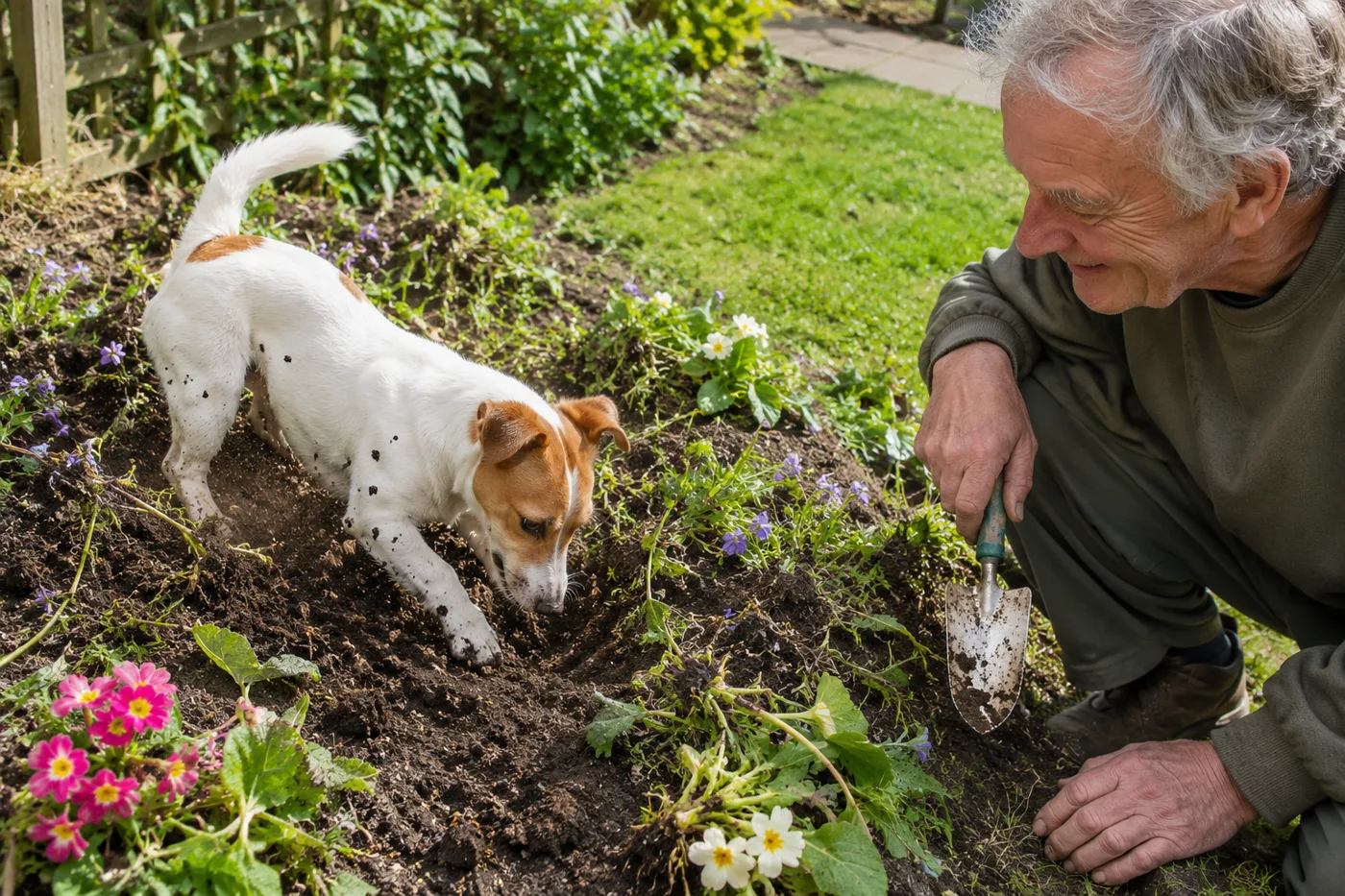
The breed carries the name of the Reverend John Russell, who bred terriers for working fox in England. Hill’s Pet Nutrition’s breed guide gets right to the point: “this breed is not for everyone.” Hill’s calls the Jack Russell a vocal “baying terrier,” says flatly that “digging is normal,” and warns the dog may not tolerate young children or other pets.
Garret Wing, a professional trainer who spent almost twenty years as a police K9 handler, names the problem behind most high-energy misbehavior: “We forget that all dogs, all breeds were bred to have a purpose in life and perform work.” Take away the fox and a Jack Russell invents a new one, and it’s often your sofa cushion.
The surprise is how long that energy lasts. In a large UK study of dogs that died between 2016 and 2020, the Jack Russell had the longest life expectancy at birth of any breed studied: 12.72 years. So the energy isn’t a puppy phase you wait out. It’s the dog you’ll have for more than a decade.
If you have a yard, a patch where digging is allowed beats years of filling holes. If you go looking through the AKC, you’ll find the breed’s close cousins there under the names Russell Terrier and Parson Russell Terrier.
#10 Shiba Inu ignoring you, then screaming
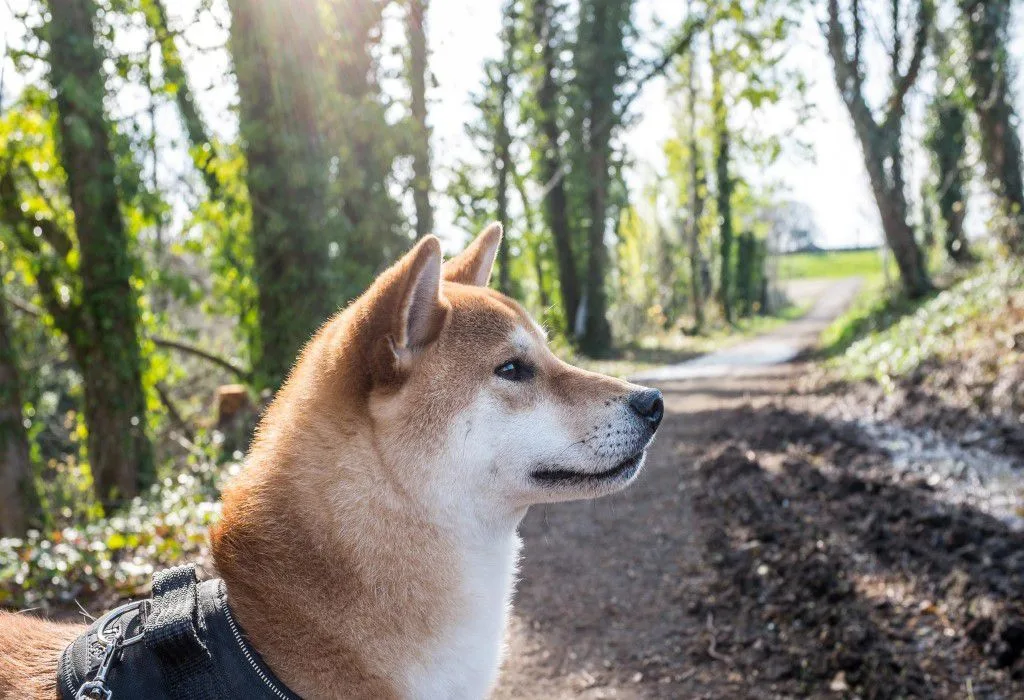
“They know exactly what you want of them but will absolutely refuse to do it if they don’t think it’s worth it.” That’s a Shiba owner on Reddit, and it explains the breed better than “stubborn” ever has.
The key words are worth it. Shibas come from Japan, where they were bred to hunt birds, small game and sometimes wild boar, so they’re used to making their own decisions. PetMD’s vet-reviewed profile calls them “independent-minded and opinionated,” and when they’re frustrated you get the famous Shiba scream.
So pay better. A Shiba who won’t come for a piece of kibble may come for a piece of chicken. PetMD says they do best with patient owners and positive reinforcement. Patience matters most here, because a scolding only proves to the Shiba that you weren’t worth it.
Several Shiba owners on Reddit call it the most frustrating breed they’ve lived with, then go right on to say how much they love the dog.
#9 Pomeranian yapping at the doorbell
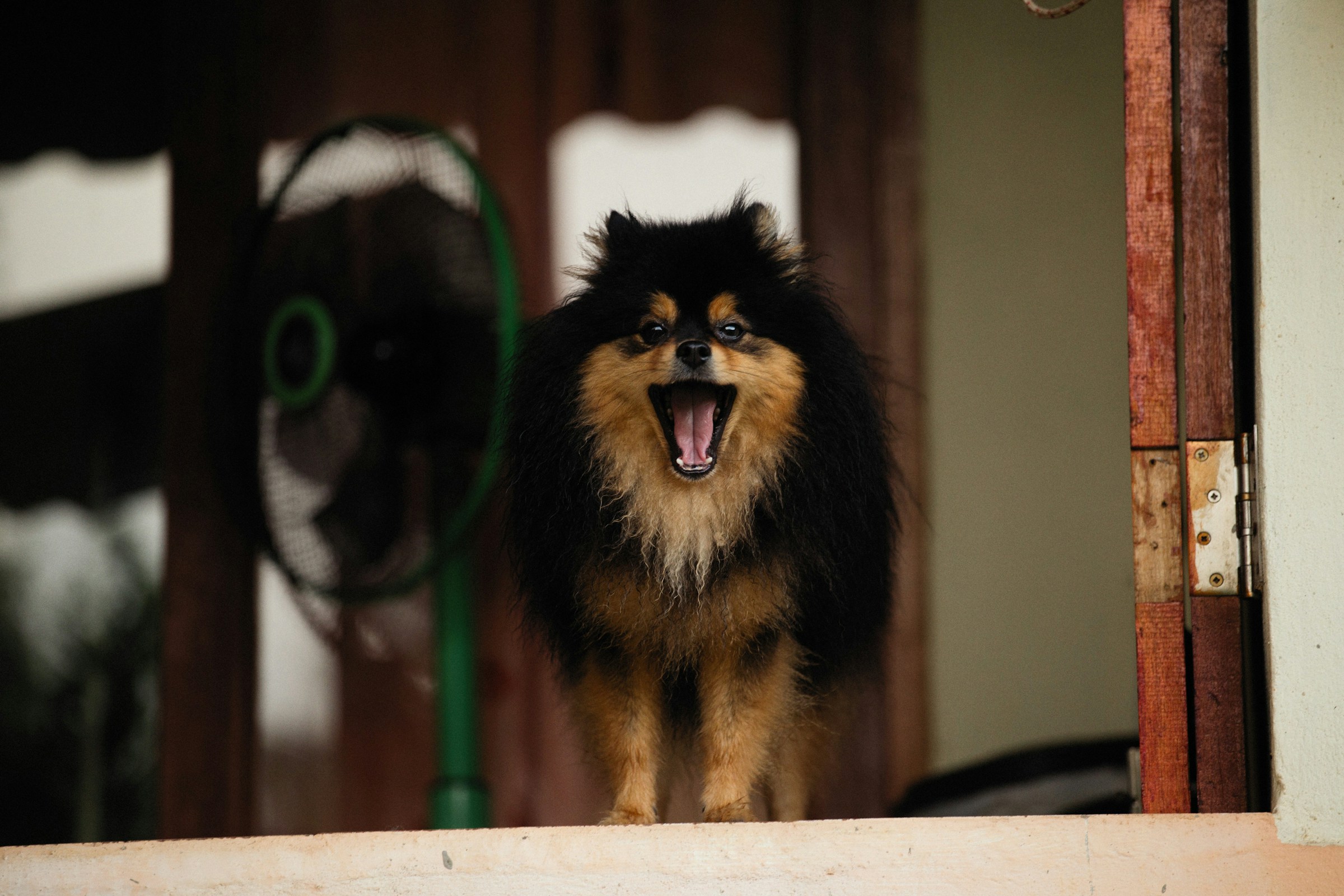
Early Pomeranians weighed around 30 pounds. Today’s weigh 3 to 7. The size shrank, but the voice stayed full-size.
Poms come from the ancient Spitz family of dogs, the same sled-and-watchdog line as the Husky at #15.
However much of the noise is bred in, you’re the one who decides where it goes. VCA says Pom barking “should be discouraged from an early age” and that the breed learns best through rewards with food or games. Puppies are easier to change than a five-year-old Pom with a long-standing doorbell habit, so start early. With an older dog, set your goal at fewer barks rather than none.
Breed or owner? A quick gut-check – In a Penn study of 14,020 dogs, genes explained 60 to 70 percent of the differences between breeds in traits like trainability and attention seeking – That describes breeds as groups, not your particular dog – A large study of breed aggression still found “considerable variation within each breed” – “Environment and training still has a very, very strong effect,” says Penn co-author Noah Snyder-Mackler
#8 Border Collie staring down anything that moves
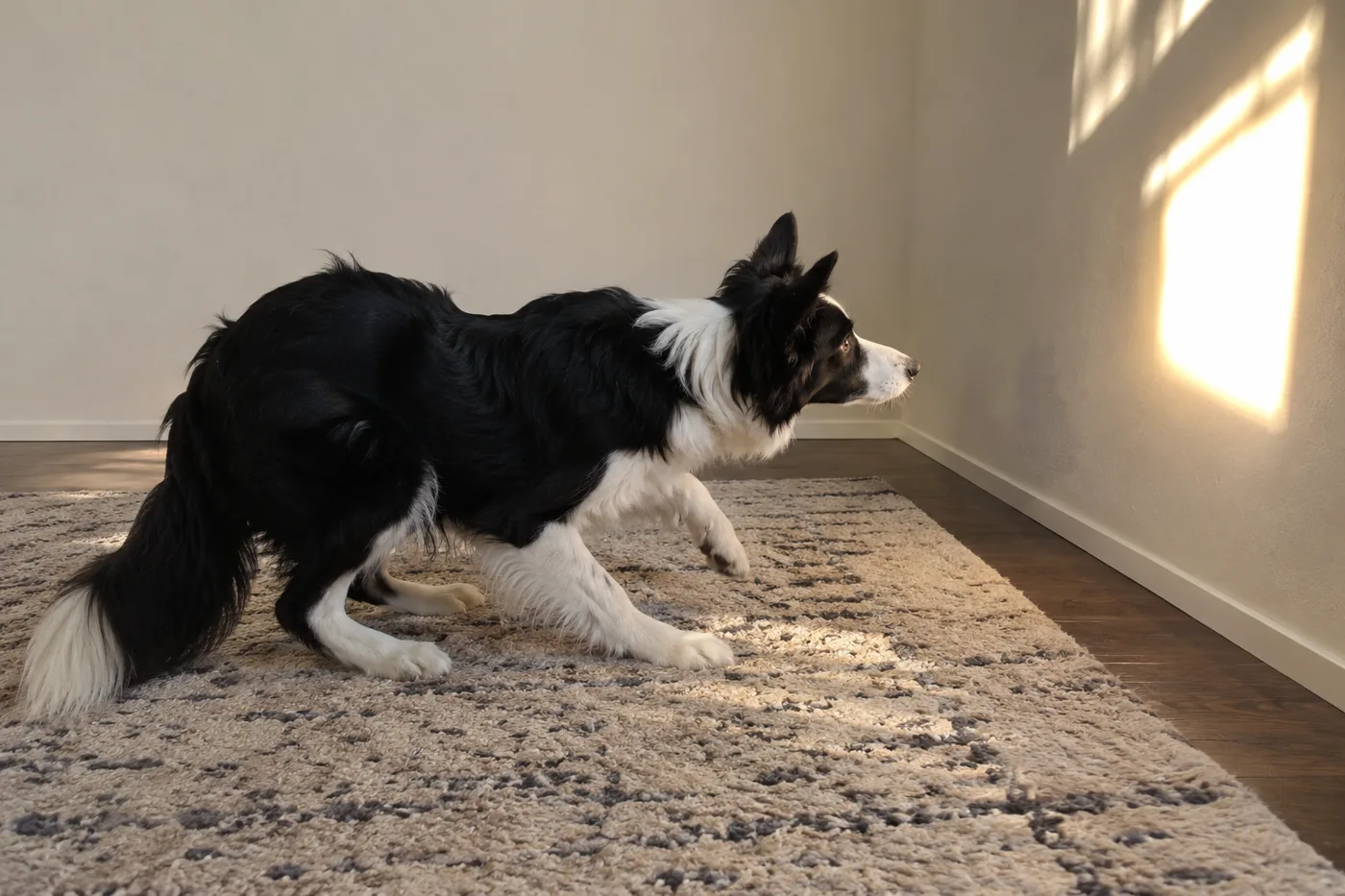
The Border Collie came first when Stanley Coren polled 199 North American obedience judges for his famous “smartest breed” list. Dogs in his top tier learn a new command in fewer than five tries and obey the first time at least 95% of the time.
Now the flip side. In University of Helsinki research on nearly 14,000 Finnish dogs, Border Collies showed notably more compulsive staring and chasing of lights and shadows. You’ve seen it if you’ve lived with one: the dog locked onto a flicker of sunlight on the wall like it’s a runaway sheep.
That’s a working brain with nothing to work on, and the fix is mental stimulation. In a small Barnard College study of 20 dogs, two weeks of nosework (finding hidden food) left the dogs measurably more optimistic, while practicing heeling did not. Zazie Todd of Companion Animal Psychology says nosework gives dogs “a lot of choice.” Start by hiding half of breakfast around a room.
It’s a supplement, not a substitute. A high-energy herding dog still needs real daily work, and nosework alone won’t cover that.
#7 Belgian Malinois outsmarting the whole household
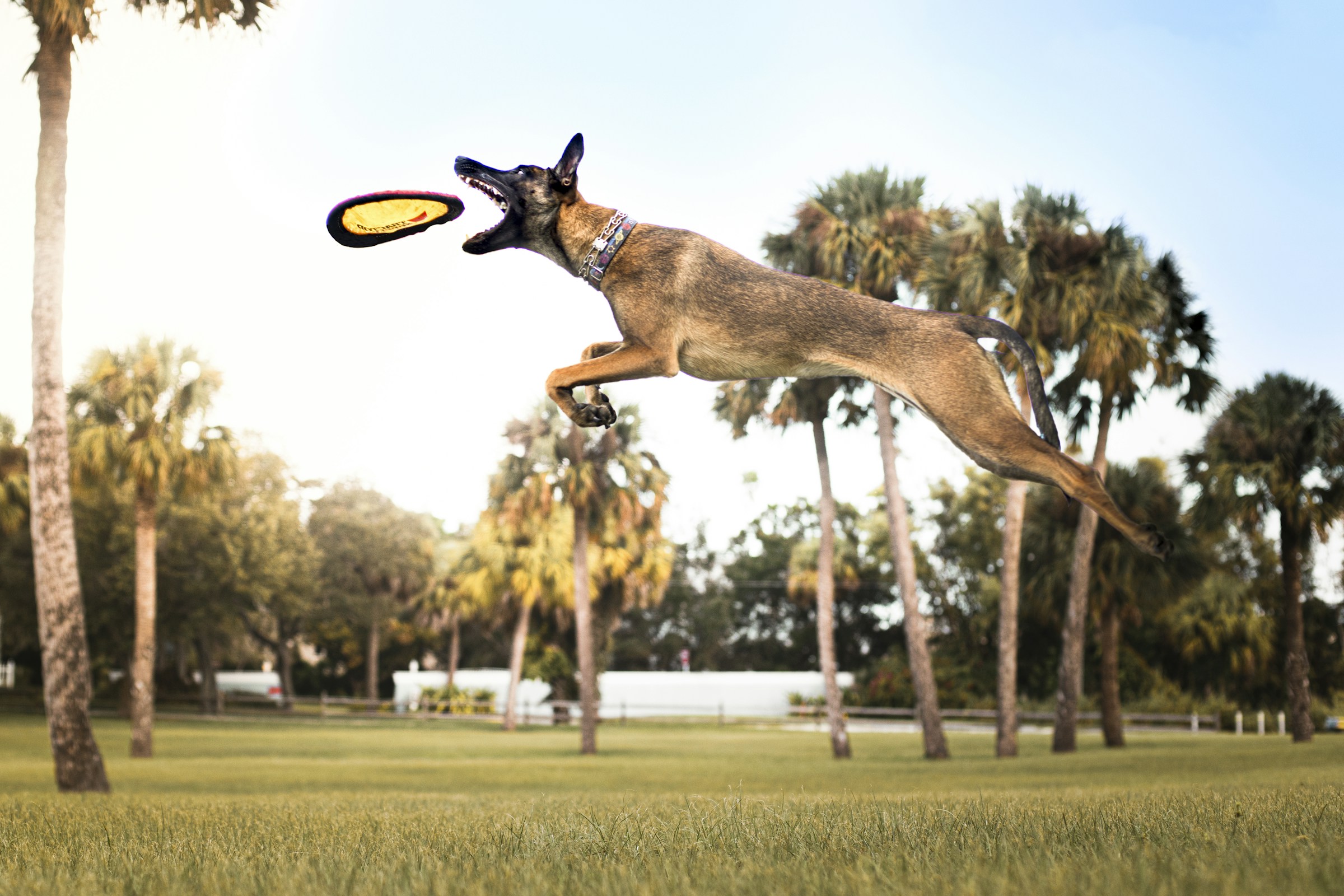
“I can confidently say the Belgian Malinois is not a family pet.”
That’s Jacob Morgan, a UK trainer who runs Yorkshire Canine Academy, speaking to PetsRadar in 2022. Then he said the part that should stop a buyer cold, about his own dog: “Even as a dog trainer, if it was just me looking after Stark, I’d struggle.”
You can see the appeal. The Malinois works for the US Armed Forces and the Secret Service, and an Army Malinois named Conan took part in the raid on Abu Bakr al-Baghdadi. The breed sits at #32 on the AKC list, so plenty of people are bringing one home.
But a dog smart and driven enough for that work will find its own job in a living room, and it won’t be one you’d pick for it. Of every breed here, this is the one I’d tell most pet homes to skip, first-time owners above all. It belongs on any honest list of dog breeds to avoid unless you’re ready to train like it’s your job.
#6 Basset Hound’s mournful, nonstop baying
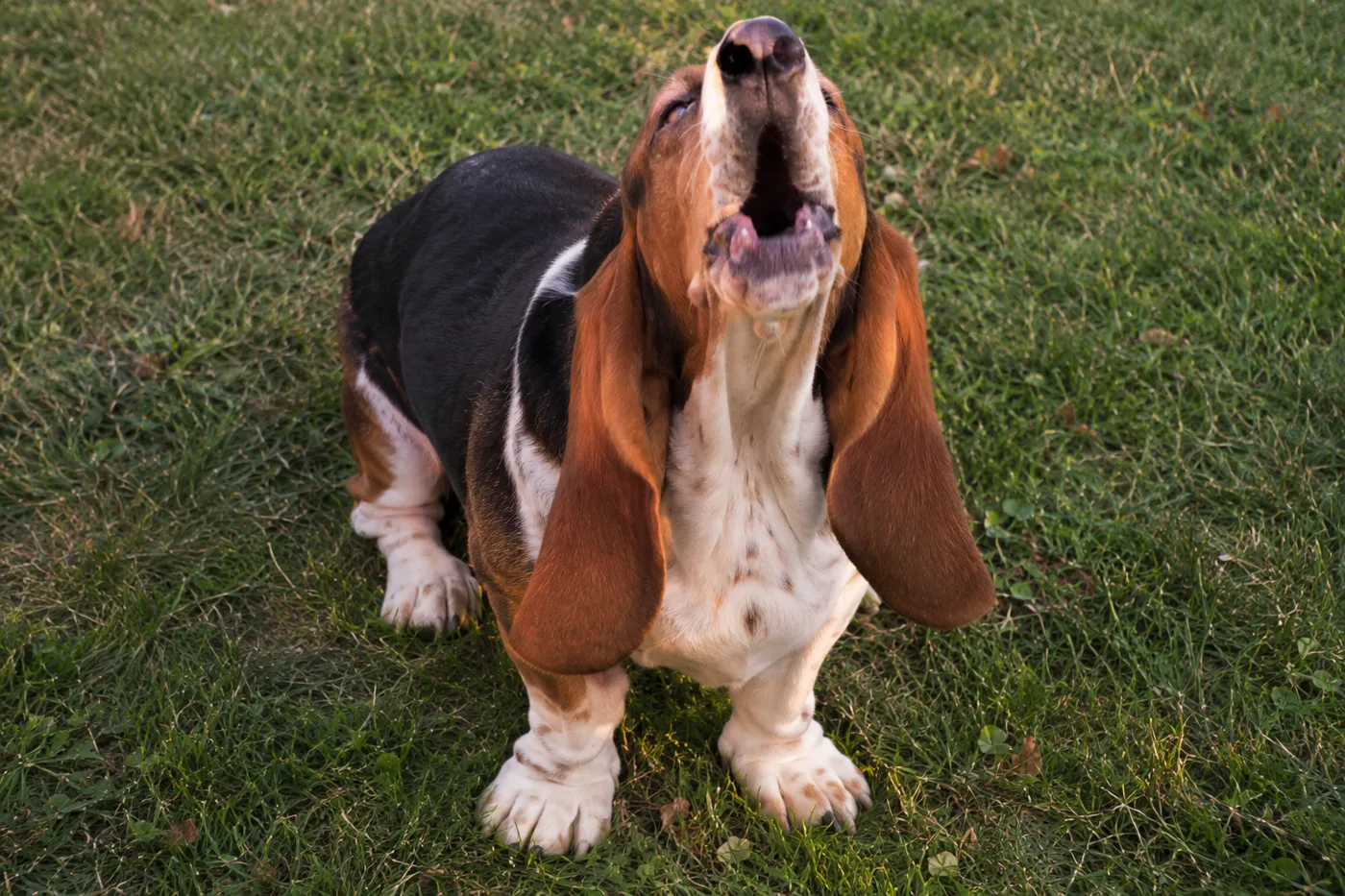
Vet staff in that 2014 poll ranked the Basset the single most dramatic breed at the clinic, citing “her mournful howl.” It’s a hunting call with nowhere to go.
The Museum of Hounds & Hunting North America says that when a pack of Bassets picks up a trail, “the sound can make the woods ring.” The Basset’s nose ranks second only to the Bloodhound’s, and those long ears stir up scent from the ground as it goes.
If the Beagle’s ear numbers made you wince, brace yourself. In UK vet records, nearly 3 in 10 Basset Hounds had an ear infection in a single year, against about 7 in 100 dogs overall. That’s the worst odds of any breed in the study, almost six times those of mixed breeds.
The baying is part of the package, and only patience and treats will soften it. The ears are a cost you can plan for, so put ear checks on your vet list from the start.
#5 Corgi nipping heels at every visitor
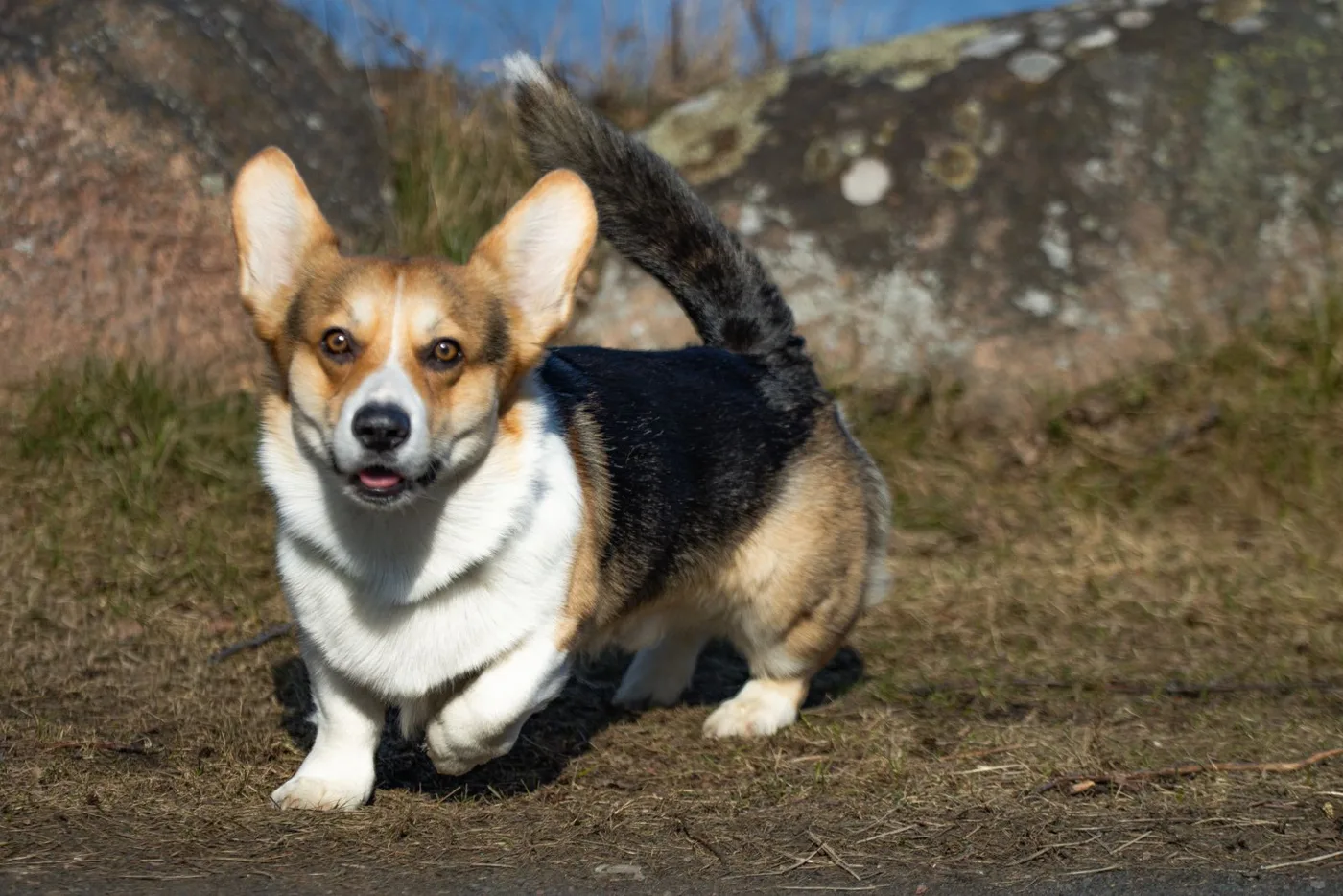
A visitor comes through the door a little too fast, and a low orange blur circles in and nips at an ankle. Before you apologize, know who you’re dealing with.
The Welsh Corgi League says corgis worked cattle “by nipping the soft part of the cattle’s heel,” and that “even today the traits of herding are often observed.” A quick-moving person is just cattle that talks.
Heel-nipping is the herding instinct, not a sign you failed at training. Queen Elizabeth II, who owned more than 30 corgis, had dogs well known for nipping staff and visitors, and the palace hired an animal psychologist in 1989. If the royal household needed outside help, you’re in good company.
The fix is about arrivals. Keep the corgi on a leash or behind a gate for the first few minutes of a visit, and reward a sit before anyone walks in. If grandkids visit, children running down a hallway are exactly what a herding dog was bred to stop.
One trait works in your favor: in a University of Helsinki study of nearly 6,000 dogs, Pembroke Welsh Corgis showed little fear of other dogs. The nip comes from a bossy dog, not a frightened one.
#4 Labrador raiding the counter, eating socks
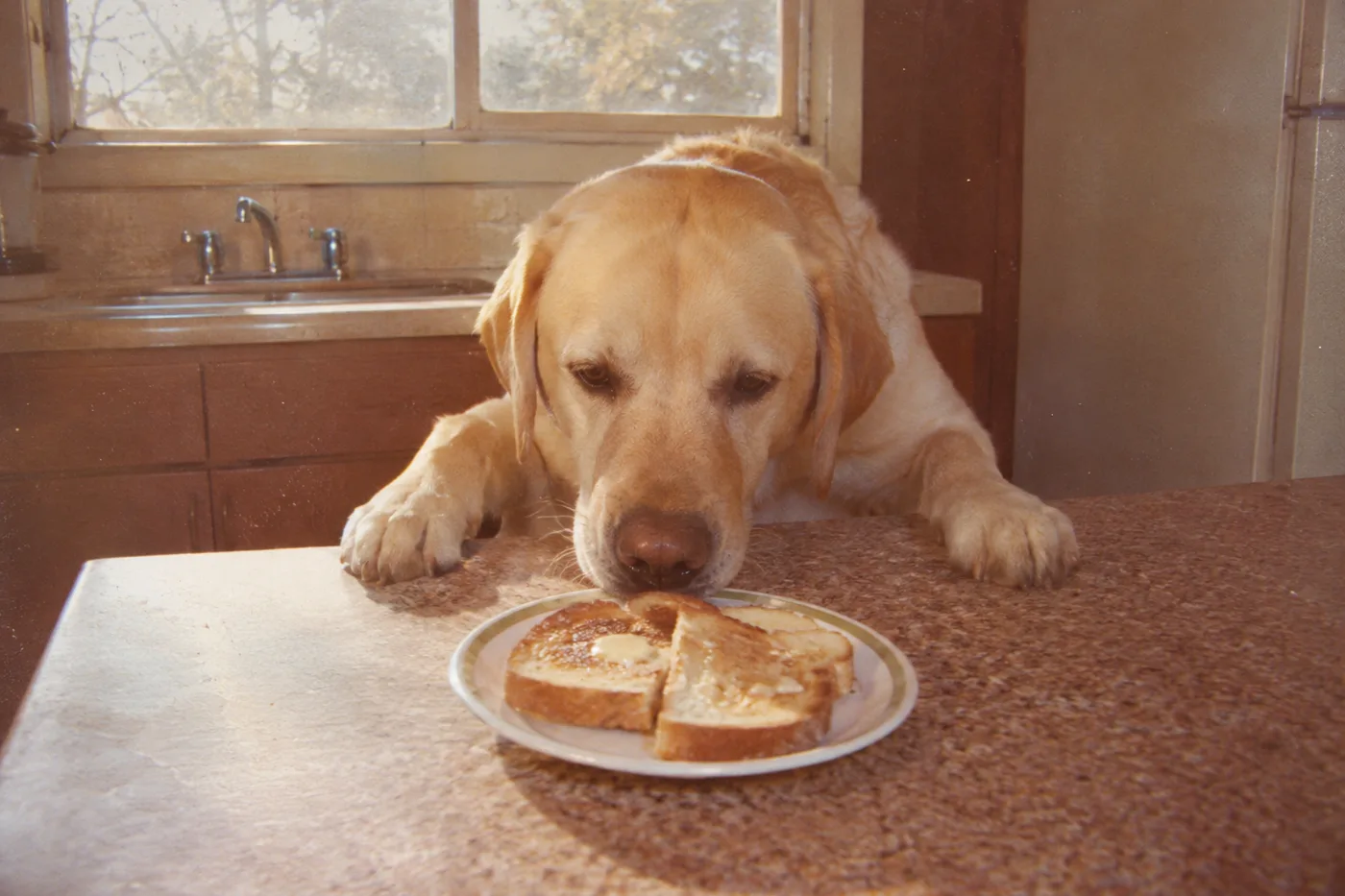
That butter dish you left out for ninety seconds may not be your Lab’s fault. University of Cambridge researchers found that about 23% of Labradors carry a gene variant linked to appetite and weight, with each copy adding about 4 pounds. Dr. Eleanor Raffan, the study’s first author, said what every Lab home already knows: “People who live with Labradors often say they are obsessed by food.”
The same gene comes with a bonus. Her colleague Dr. Giles Yeo said carrying it “may make them more trainable, but it also makes them susceptible to obesity.” A dog who’d do anything for food will also learn almost anything for it.
The socks are where it gets expensive. In pet insurer Pumpkin’s claims from 2020 to 2025, socks made up 8% of all dog swallowing claims, at an average treatment cost of $3,500. A swallowed toy averaged $2,500.
Cornell’s vet school says most of these blockages need surgery, so if a sock goes missing and you think he got it, call your vet rather than wait and see. For a dog who keeps doing it, Cornell suggests training him to wear a basket muzzle. Simpler still: a laundry basket with a lid.
#3 Great Pyrenees barking all night long
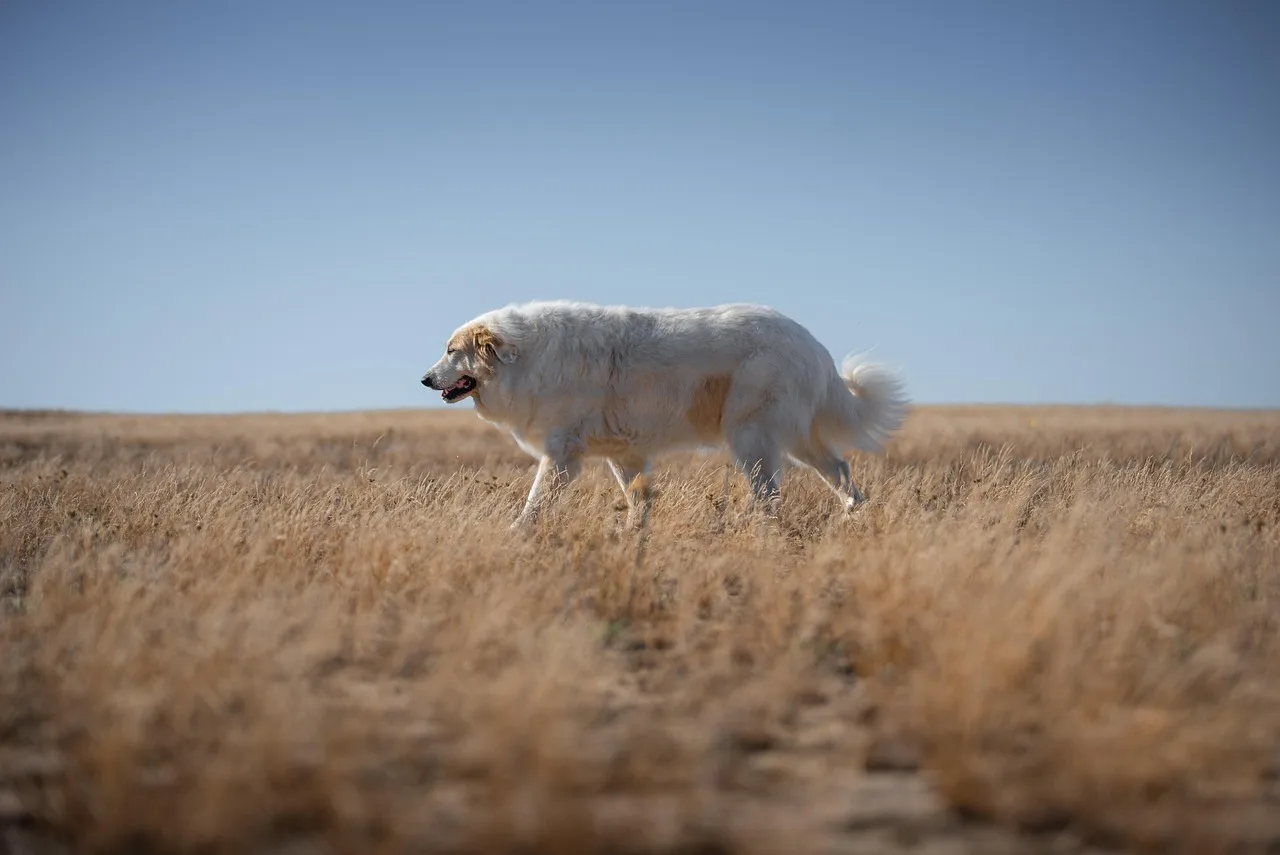
The breed’s own club tells you upfront: “Like all livestock guardian breeds, Great Pyrenees are barkers, especially at night.”
These dogs were bred to watch over flocks through the dark, and a Pyr in a cul-de-sac still believes something is out there. The Great Pyrenees Club of America adds that most Pyrs in towns and suburbs “must be kept indoors at night.” Keeping her inside quiets it for the neighbors. The barking itself doesn’t stop. Obedience won’t do it either, because the club also says these dogs “have minds of their own and are not easily obedience-trained.”
Then the club asks every buyer a question you won’t find on the ranking pages: “Are you physically able to handle a very large dog?” That’s an honest question for anyone at any age. The AKC’s breed standard sets a target weight of about 100 pounds for a 27-inch male and about 85 pounds for a 25-inch female. If your neighbors sleep with their windows open, put this breed on your list of dog breeds to avoid. If you have room, patience and a lot of acreage, it’s a different story.
#2 French Bulldog’s snoring, grunting and chewed cushions
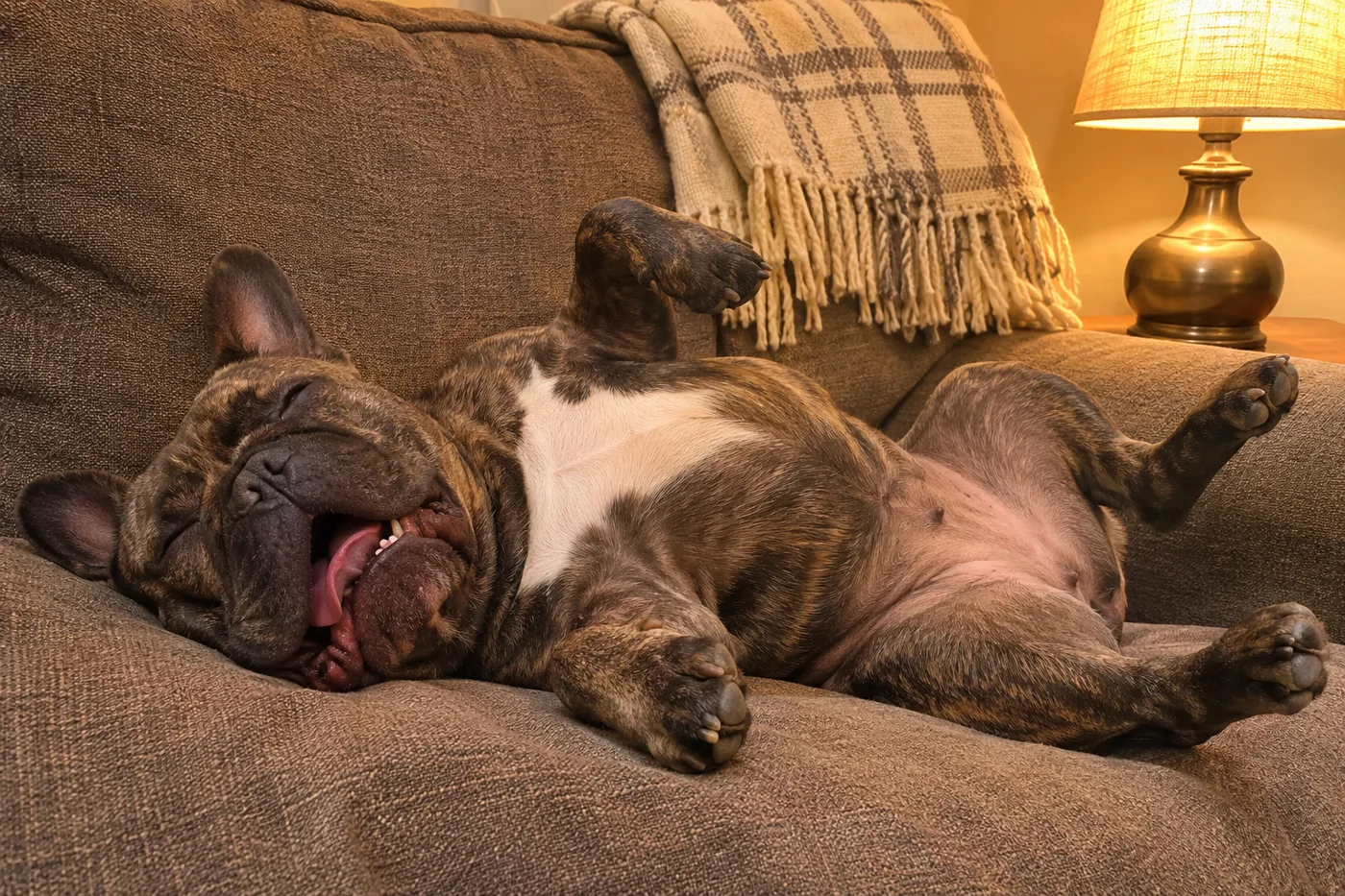
America’s favorite breed is also one of its noisiest sleepers. The French Bulldog is the AKC’s #1 breed for the fourth year in a row, and a survey of 452 French Bulldog owners in Denmark found how most of those nights sound:
| What owners noticed | Share of owners |
|---|---|
| Snoring in sleep | 72.6% |
| Grunting | 62.4% |
| Struggling in the heat | 48.0% |
| Wheezing | 12.2% |
Then the funny part: 64% of those owners said their own dog was healthier than other Frenchies. Everyone’s dog is the healthy one.
The snoring isn’t her fault, and it isn’t yours either. It comes from the flat face she was bred to have. In a 2015 study of English vet clinics, 20% of French Bulldogs had at least one upper-airway disorder. In UK vet records, the breed’s life expectancy at birth was 4.53 years, the shortest of any breed studied.
The one thing to do: get the breathing noises checked. In the Danish survey, only 60.4% of owners who noticed breathing problems had taken their dog to a vet about them. Know going in that a full answer may mean anesthesia: the American College of Veterinary Surgeons says the floppy throat tissue behind that snoring can only be diagnosed for sure with the dog under.
And the cushions? In a 2026 UK furniture retailer’s survey of 1,000 dog owners, 76% of Frenchie owners reported wear or damage at home, the highest of any breed. That covered everything from chewed cushions to muddy pawprints on the sofa.
#1 Doodle mixes clinging and costing a fortune
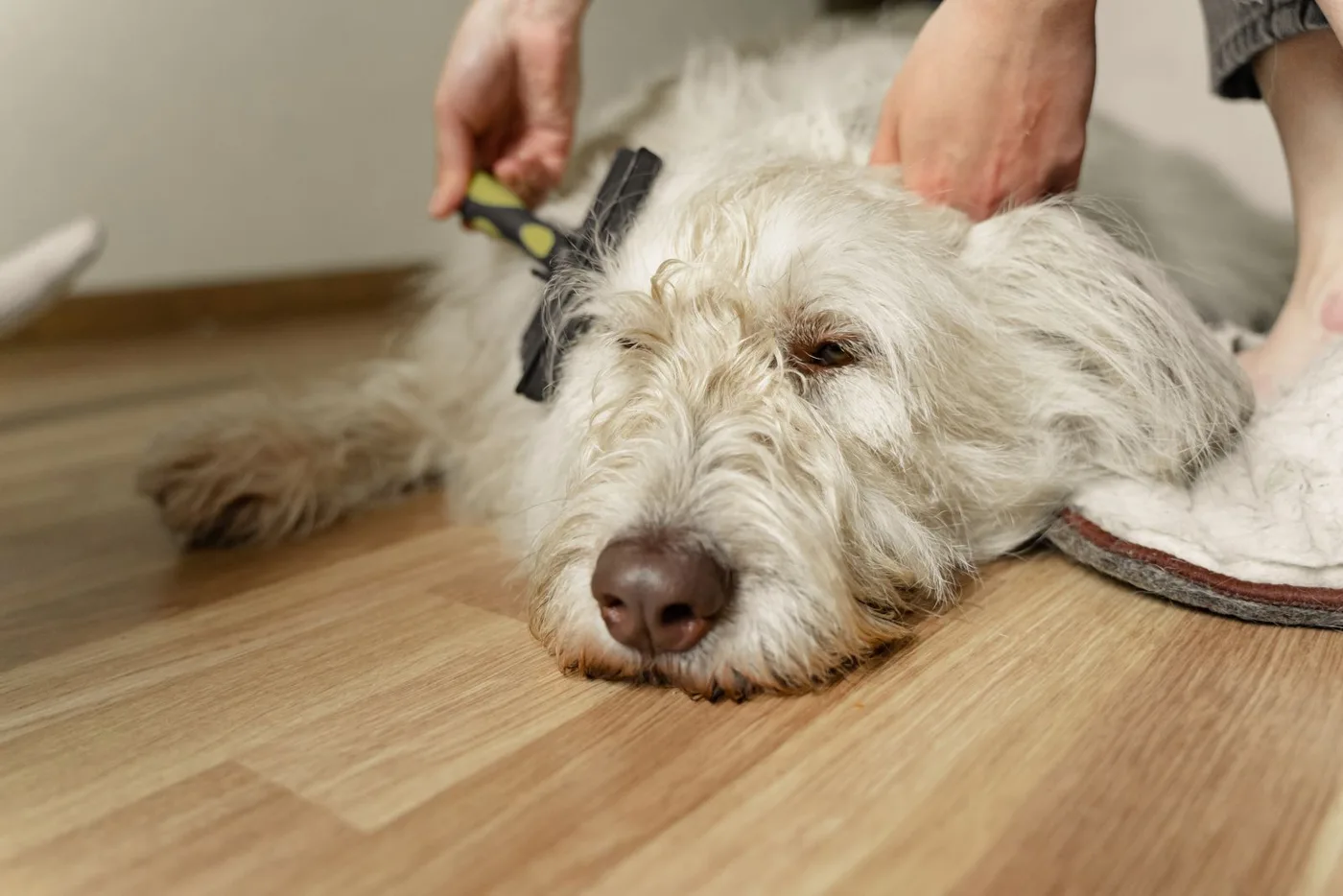
The doodle sounds like the answer to everything above: friendly, family-minded, easygoing. A Royal Veterinary College survey of 9,402 UK dogs, published March 19, 2026, found the opposite on the habits that drive owners up the wall.
The researchers compared Cockapoos, Labradoodles and Cavapoos with the breeds they come from. All three mixes showed more separation-related behavior and more excitability than their non-Poodle parent breeds. Across every comparison, the doodles came out worse more than four times as often as they came out better.
Even the man who started it has regrets. Wally Conron bred the first Labradoodle in 1989 as a guide-dog breeder in Australia. Thirty years later he said:
“I opened a Pandora’s box and released a Frankenstein monster.” Wally Conron, speaking to TODAY in 2019
The dogs are often lovely. The clinging is what you live with: the dog pressed against the bathroom door, crying, while you’re gone for four minutes.
If you have one, build up alone time in small doses, and pay attention to her when she’s calm rather than when she’s frantic. If you’re choosing and those habits matter to you, the study points you toward the non-Poodle parent breed.
Then there’s the coat, which needs a professional every couple of months. Here’s what one Bernedoodle grooming price guide lists, and what it adds up to:
What a full groom could cost a year (an estimate) – Full groom every 6 to 8 weeks: $75 to $150 – De-matting: $10 to $30 for every 15 minutes – Full grooms alone: about $490 to $1,300 a year, before de-matting or tips
Ask a local groomer for their price before you bring a puppy home. Ask too how often they find a matted coat on a doodle.
The bottom line
Think about the breed that sounded most like yours, and sort her habits into two piles. One pile is the job she was built for: the Shepherd’s window watch, the Beagle’s song for her missing pack, the Pyrenees on night patrol. You manage those, and you’ll never fully erase them.
The other pile is what she learned from living with people. That’s the shriek that got a laugh one day and a scolding the next, and the bark that earned a pet on the head. You can change those, often faster than you expect.
The second pile is usually smaller than you fear and bigger than you’d like.
Next time she goes off, notice what you do in the first three seconds: the “hush,” the hand on her head, the laugh.
Bonus: four checks before the next bark or the next dog
- Look up your city or county barking rule. Since 2022, Atlanta has fined owners whose dogs bark continuously for 10 minutes, starting at $150 and running as high as $1,000.
- Prop your phone on a shelf and record the first half hour after you leave. One bark at the mail truck and a nonstop howl need different fixes, and you can’t tell which you have from the driveway.
- When a stranger reaches for a dog who’s already wound up, you can say “not today.” The AKC says people should always ask first, and if the answer is no, “respect that and let the dog be.”
- Before you pick a breed, read the breed club’s own page for would-be owners. The Pyrenees and Husky clubs were blunter than any seller would be.
Questions people also ask
Which dog breeds bark the most?
There’s no official ranking, but among popular breeds, VCA Animal Hospitals gives the Beagle its top barking rating, 4 out of 5. VCA puts the Chihuahua and Husky at 3 out of 5. The Great Pyrenees club says its dogs “are barkers, especially at night.” How much any one dog barks still depends on its training.
Is an annoying dog the breed’s fault or the owner’s?
It’s both, and the research backs each side. In a Penn study of 14,020 dogs, genes explained 60 to 70 percent of the differences between breeds in traits like trainability and attention seeking. That describes breeds as groups, not your individual dog. A Vienna survey also linked inconsistent owners and punishment to more anxiety in small dogs.
How do you stop a dog from barking without a shock collar?
The ASPCA’s method is to let the dog bark three or four times, calmly say “Quiet,” then praise and treat the moment it stops, and never reward barking with attention. The goal is “to decrease, rather than eliminate” barking. The ASPCA warns that dogs become “collar-wise” with anti-bark collars and start barking again once the collar comes off. The American Veterinary Society of Animal Behavior says electronic collars, prong collars and choke chains “should not be used under any circumstances.”
What are the quietest dog breeds?
Greyhounds and Whippets are the breeds most often named as naturally quiet. Greyhounds “are generally not barkers,” but they have a strong prey drive and little or no recall, so they need to stay on a leash. The AKC says Whippets aren’t known for excessive barking, though they still need about one to two hours of activity a day.
Do dogs get less annoying as they get older?
Partly. In a Vienna study of Border Collies, activity dropped throughout life, most sharply between puppyhood and ages one to two, and curiosity about new things began fading around age three. Sociability stayed the same. Adopting an adult dog skips the puppy stage, and the ASPCA’s Rena Lafaille told AARP that senior dogs “don’t require much potty training.”