From the choke chain to the alpha roll, here’s what changed, why it changed, and what to do with the dog on your couch now.
Stay for #1: the wolf scientist who kept asking his publisher to take back his own famous book.
The training paperback had a sitting dog on the cover and a spine that fell open at the chapter on corrections. You read it with the leash coiled in your lap, and you did what it said, because that’s what good owners did.
Some of those old dog training methods hold up fine. Others make today’s trainers wince, and some of the trainers wincing hardest used to teach them.
If you only have a minute – #3, if your dog has ever growled at anyone – #9, if a dog who used to listen has suddenly turned “stubborn” – #1, for the best story in the bunch
Table of Contents
#23 Swatting With a Rolled-Up Newspaper
The morning paper had two jobs in plenty of houses. Headlines at breakfast. By afternoon, rolled tight and parked within reach for the next puddle.
The swat backfired on the bond itself. In a 1995 Deseret News column, Matthew Margolis put it bluntly: “the newspaper looks like your arm, so every time you try to pet him after you’ve hit him with a newspaper, he’s going to associate your hand with punishment and not praise.”
The dog learned to watch your hand. The rug stayed in danger.
There’s a harder number behind it. University of Pennsylvania researchers surveyed 140 owners at their veterinary behavior clinic, and owners said 43% of the dogs reacted aggressively to being hit or kicked. These were dogs already brought in for behavior trouble, so it’s a warning about risk more than a forecast for every dog. Lead author Meghan Herron called such techniques “fear-eliciting.”
The vets who specialize in behavior, the American Veterinary Society of Animal Behavior (AVSAB), spelled out where they stand in 2021. Their statement recommends “that only reward-based training methods are used for all dog training.”
If your dog still ducks when you reach over his head, let that hand bring good news for a while: a bit of cheese, a scratch under the chin, coming in low from the side.
#22 Rubbing the Puppy’s Nose in Its Mess

It doesn’t work, even five minutes later. AVSAB says a punishment has to land “while the behavior is occurring, within 1 second” for the dog to connect the two. The Merck Veterinary Manual is plainer still: the dog “will not associate the punishment with having eliminated in the house previously.”
What the puppy does learn is worse. American Humane says rubbing a nose in it teaches fear, so dogs start hiding when they need to go. That’s the puppy who sneaks behind the recliner, or the grown dog who won’t go on leash while you’re standing there.
The house training routine that replaced it, from American Humane:
- Catch it in the act? Interrupt calmly with a clap and “Ah ah!” No yelling.
- Carry the pup straight outside.
- Say a cue like “go potty” as it starts.
- Praise and treat right away, right there.
- Feed on a schedule, and pick up whatever’s left after 20 minutes.
That’s positive reinforcement at its plainest: the dog gets paid for using the right spot. As one dog owner in Reddit’s r/OpenDogTraining forum asked: “Like is consistent potty breaks, watching queues, and rewarding for going outside such a complicated option?”
#21 The Choke Chain Sold as a “Training Collar”
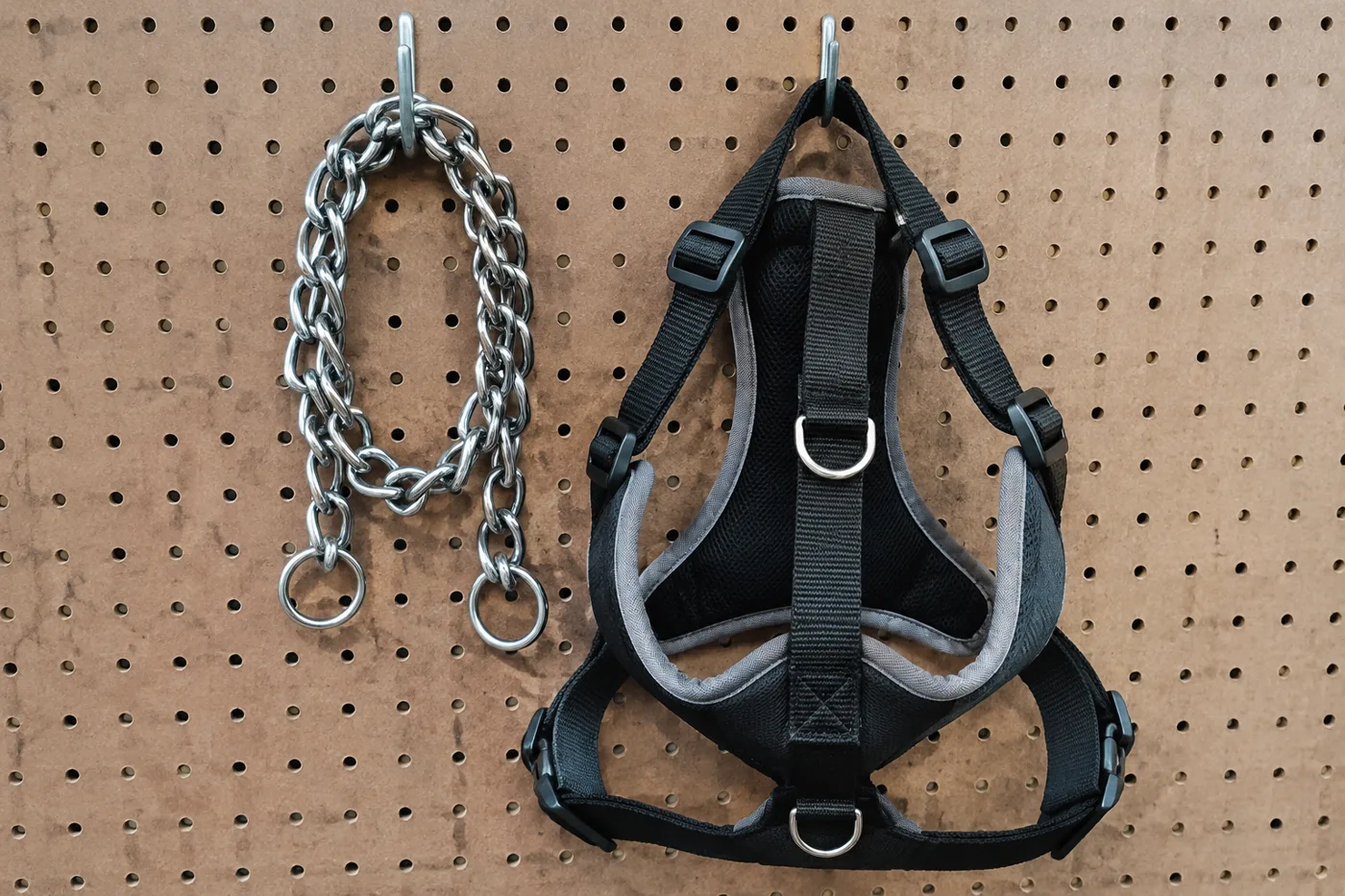
It slid over the head with a sound like loose change in a pocket. Slate’s history of US dog training sums up the method Blanche Saunders taught this way: “No treats, but it’s OK to praise. Look for the dog to do something wrong and jerk on a choke chain.” Slate says that stayed standard into the 1970s.
The surprise from the lab is that the chain isn’t the only problem. Researchers put a check chain and a range of ordinary collars on a model dog’s neck and pulled: gently, hard, and with a sharp tug. Every one of them, flat collars included, hit pressures linked to tissue damage in people. Dr Anne Carter, who led the work: “for a dog that pulls, there is no such thing as a good collar.”
A 2026 veterinary review by Marcella Ridgway of the University of Illinois still ranks unlimited-slip (“choke”) collars as the riskiest type, because nothing stops them tightening. In fairness to the chain, the same review found no documented windpipe injury from ordinary training use, despite the stories.
Pulling against a collar, though not a harness, also raised pressure inside dogs’ eyes in the research it cites. If your dog has an eye condition, ask your vet whether a harness is the better choice.
Michelle Borchardt, now a behavior technician and trainer at the University of California, Davis’ behavior service, trained with a choke chain before switching. Her reason is the best summary of where traditional correction methods ran into trouble:
“When I used a choke chain, I’m sure there were training sessions where my timing was off, but you can’t take back a correction.” Michelle Borchardt, The Crossover Trainer
The real enemy is the pulling, not the collar type. Every collar tested hit damaging pressure under a hard pull, but a loose leash can be taught.
#20 The Leash Jerk to Teach Heel
From 1962 on, the book on the shelf was William Koehler’s The Koehler Method of Dog Training. Slate calls it “the bestselling obedience title in the U.S. for two decades.”
Koehler came to pet dogs from war dogs. He’d been principal trainer at the War Dog Training Center in California during World War II, and later trained dogs for Walt Disney Studios. His book called for “explosive” leash jerks, and he held that “the greatest of all physical and psychological cruelties was under-correction.”
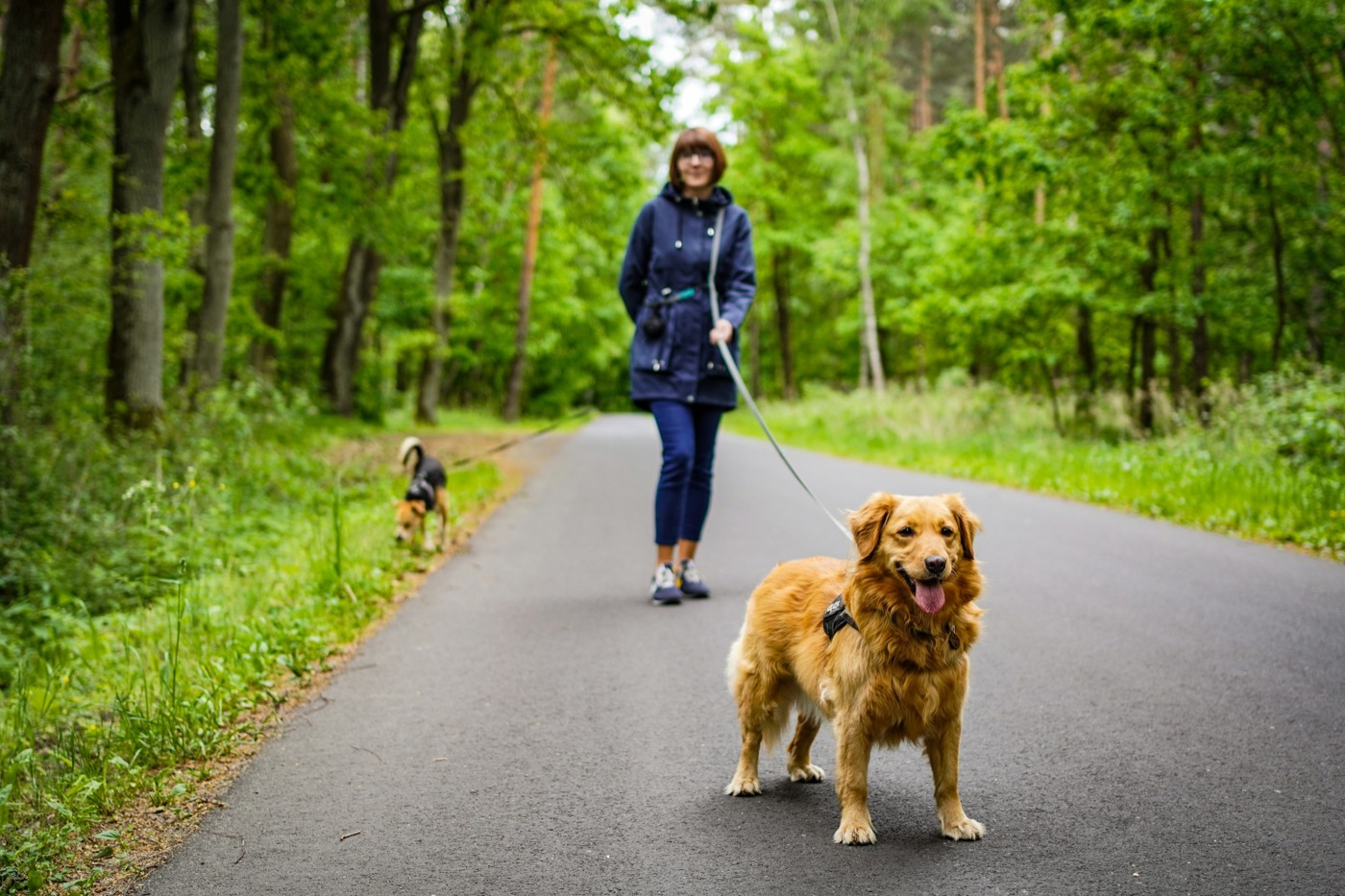
The no-jerk version that replaced it is almost comically simple. The moment the leash goes tight, you stop. When the dog comes back to your side, you reward it there. The AKC calls it “be-a-tree,” and Jasey Day, who has worked at the AKC since 2007, doesn’t pretend it’s fast: “You may need to ‘be-a-tree’ 20 times to travel even a single block.”
Trainer Cody Axthelm puts the idea in one line: “The best way to stop a dog from pulling you on the leash like this is to make the wrong thing hard and the right thing easy.”
Now the honest part. Under that same video, plenty of owners report that their dog learned a new game: pull, swing back, collect the cookie, pull again. Others say progress was so slow they barely left home, and a couple say their dog just plants itself and stares. The usual fix is where you pay: reward while the dog is walking at your side, not the instant it turns around.
And some trainers still defend the jerk. Garrett, a balanced trainer (one who mixes rewards with corrections) at American Standard Dog Training, teaches a leash pop on a prong collar. He says timing beats force: the pop is a quick correction, not a pull to drag the dog along. He adds: “He may yelp and that’s par for the course.” Partners Dogs, a Phoenix-area school founded in 1997, argues that “A conditioned training tool communicates. Abuse is unconditioned pain with no teaching behind it,” and that a harness can let a large dog pull harder on an older owner.
If you’re tempted by the pop, notice what its defenders themselves stress: timing. That’s the exact thing Borchardt admitted she sometimes got wrong, and a correction can’t be taken back.
#19 Waiting Until Six Months to Start Training
You spent the puppy’s first half year replacing slippers, because class wouldn’t take him yet. Before 1982, according to Ian Dunbar’s own Dog Star Daily, “you had to wait until your dog was six-months- to a year- old before attending class.” That year, by his account, he taught the first off-leash puppy classes.
SIRIUS, a San Francisco Bay Area puppy school founded the same year, describes what came before as “rote-learning by repetitive, on-leash, obedience drills, with little verbal instruction or praise, but lots of leash-corrections,” reserved for adult dogs.
What waiting can cost fits in one sentence. AVSAB’s position, reported by dvm360: “More deaths in dogs under the age of 3 are attributed to behavioral issues than they are to infectious disease.”
The socialization window – Behaviorists at VCA hospitals put it between 3 and 16 weeks of age – VCA warns it may be over by the time the vaccine series is finished – AVSAB says socialization can start as early as 7 to 8 weeks, once the puppy has had one set of vaccines and a deworming at least 7 days earlier, with other puppies in class also disease-free and up to date
If a puppy ever comes into your life again, look for a class that takes them young.
#18 Strict Heel, No Sniffing Allowed
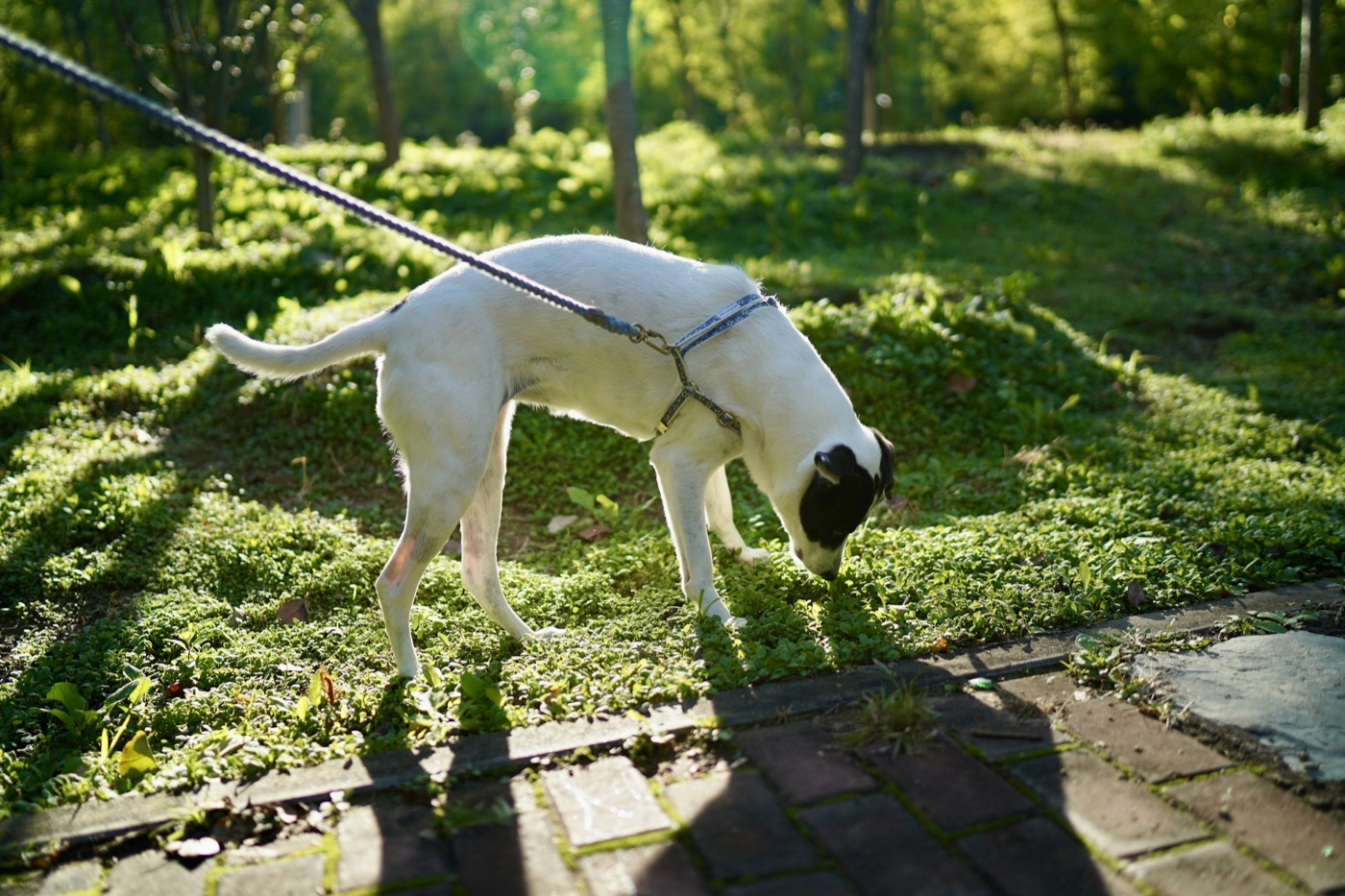
Nose drops to a fence post. “Leave it. Heel.” Nose drops again. You both knew the routine.
Sniffing turns out to do something for a dog’s mood. In a 2019 study by Charlotte Duranton and Alexandra Horowitz, 20 pet dogs spent two weeks either doing scent games or heelwork, both with treats. Only the sniffers came out more “optimistic” on a test researchers use to read a dog’s outlook. It was a small study of structured scent games, not walks, but it points one way.
And sniffing tires a dog out. Staci Lemke, quoted by the AKC, says “Dogs can get a whole lot of sniffing done in 20 to 30 minutes and be just as tired as an hour walk without sniffing.” The AKC suggests a 10 to 15 foot long line so the nose has room.
A trainer in r/OpenDogTraining says it from the dog’s side: “Sniffing is what walks are for, not exercise in your pups eyes.” In Reddit training threads, owners say the same.
Let the walk belong to the nose.
#17 Shaking the Puppy by the Scruff
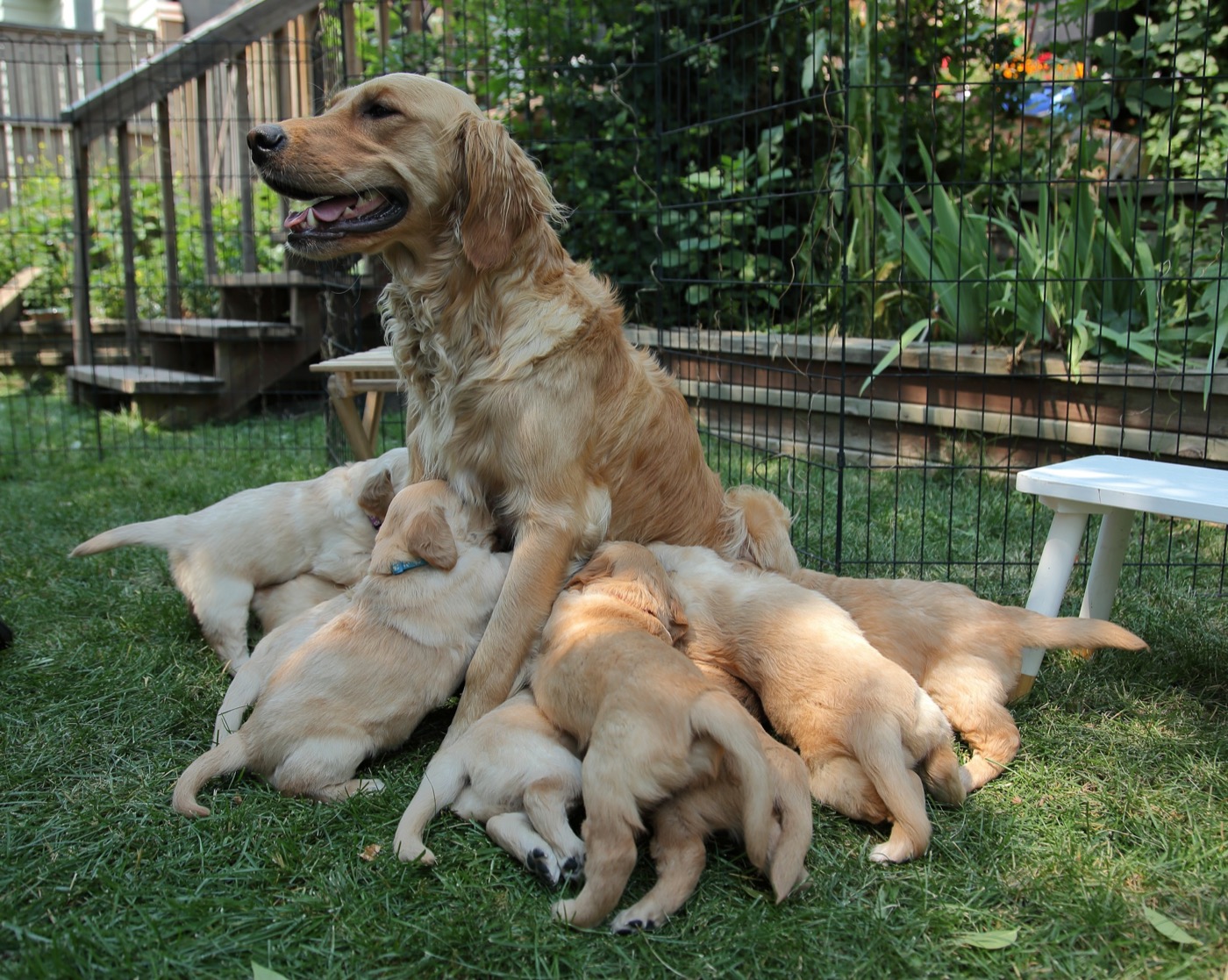
The logic was that mother dogs do it, so you’re just speaking dog. Mother dogs, it turns out, essentially don’t.
Trainer Adrienne Farricelli cites a 1990 study in which 97.2% of 190 breeders had never seen a mother dog shake her puppies by the scruff. Behaviorist David Ryan, quoted in the same piece: “Bitches do not discipline puppies by scruffing them.”
In the University of Pennsylvania survey, owners said 26% of their dogs reacted aggressively to being grabbed by the jowls and shaken.
Canada’s national veterinary association now strongly discourages scruffing, because it creates fear and never gets at why the puppy did it. If he’s into something he shouldn’t be, lift him away calmly and hand him something he’s allowed to have.
#16 The Shake Can Full of Pennies

A soda can, a handful of pennies, tape over the hole. It lived on a shelf by the TV, and one rattle sent the dog scrambling.
That scramble is the problem. AVSAB warns that fear caused by punishment “can generalize to things that sound or look similar”. Think about what rattles in an ordinary day: car keys, ice in a glass, coins in a coat pocket.
Noise fears are already common. A 2023 review by Stefanie Riemer says they affect between a quarter and half of pet dogs.
The same review holds the good news. Over 70% of owners reported success with counterconditioning, which in plain words means pairing the scary sound with something the dog loves, starting quiet and far away. If your dog bolts at thunder, play a recording of it very low while he gets a favorite treat, and turn it up only a little at a time. VCA’s behavior guide gives the warning sign: if he stops taking the treat, you’re going too fast, and pushing on can make the fear worse.
#15 Eat First, Go Through Doors First
You ate dinner before you filled the bowl. You stepped through the gate first. The dog had to learn who was pack leader.
The rule rested on a hierarchy that may not exist. The Merck manual notes that “one study found no evidence of a dominance hierarchy in dogs and thus between dogs and human companions.” AVSAB keeps a whole position statement on dominance, written to “dispel some myths.”
A dog who waits at an open gate is safer and better company. Teach it as manners. Dinner order can be whatever suits your evening.
#14 Scolding the Dog When It Finally Comes
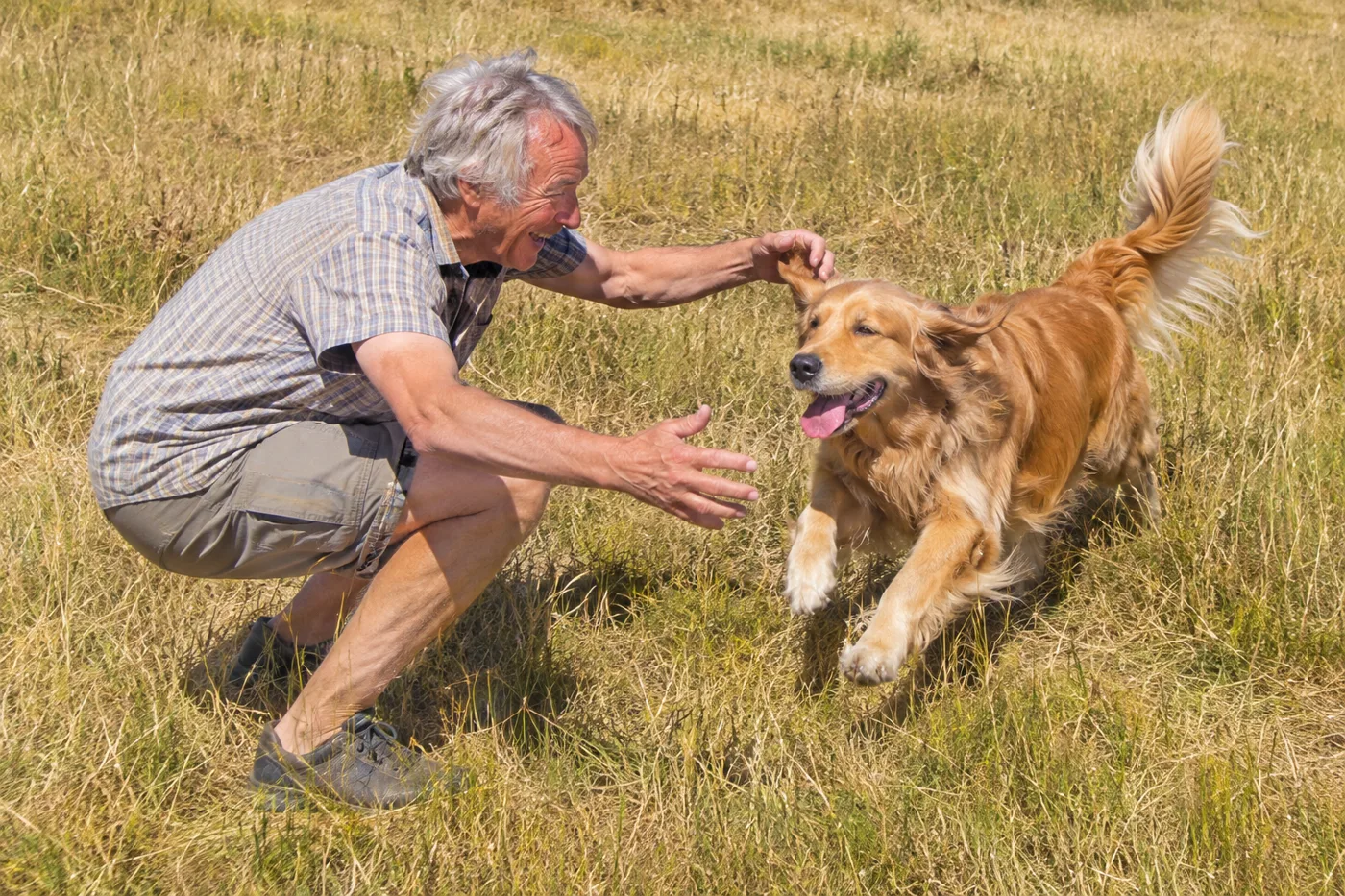
Twenty minutes of calling across the field. The dog finally trots up, tongue out, delighted with himself, and gets grabbed by the collar and scolded, which is exactly what the old advice said to do.
From the dog’s side, that’s a lesson about coming, not about running off. The AKC’s Sassafras Patterdale, a certified trainer, has one rule for it: “Always, always praise a recall.”
When a word has been followed by trouble often enough, trainers call it a “poisoned” cue. It “takes on a negative association,” and the dog hesitates every time he hears it.
The fix costs nothing: “Change your verbal cue to something new and start fresh.” If “Come!” has a history, try “Here!” and pay it every single time, starting in the living room.
#13 Saying the Command Louder and Louder
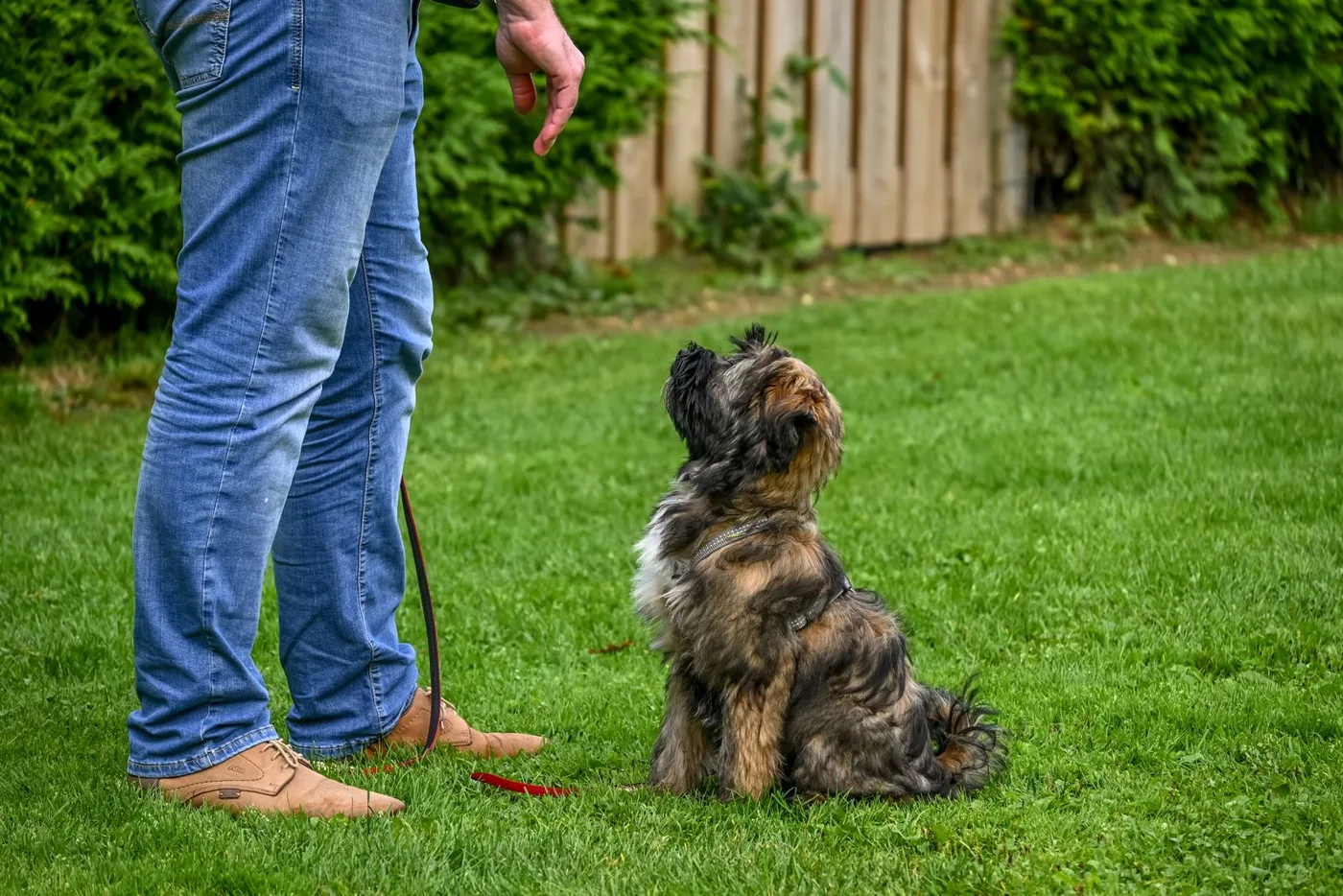
“Sit. Sit. Sit. SIT!” By the fourth one, the dog had learned that the first three were optional.
Even a balanced trainer agrees on this one. Garrett at American Standard Dog Training says that repeating a command the dog was never taught just trains the dog to tune you out, because the words stop meaning anything.
Agility trainer Susan Garrett (no relation) teaches the opposite habit: “You want the dog to learn that one cue will prompt one response.” Say it once, quietly, and wait. If you keep needing to repeat it, the AKC says the setting may simply be too distracting, so practice somewhere duller.
Here’s the bonus. Pair every cue with a hand signal now. If your dog’s hearing fades later, the AKC says “if they already know hand signals, the transition to deafness will be far easier for you both.” It suggests a thumbs-up as the “yes” marker. A senior dog who already knows a flat palm means “sit” won’t miss a beat.
#12 Reeling the Dog In on a Leash
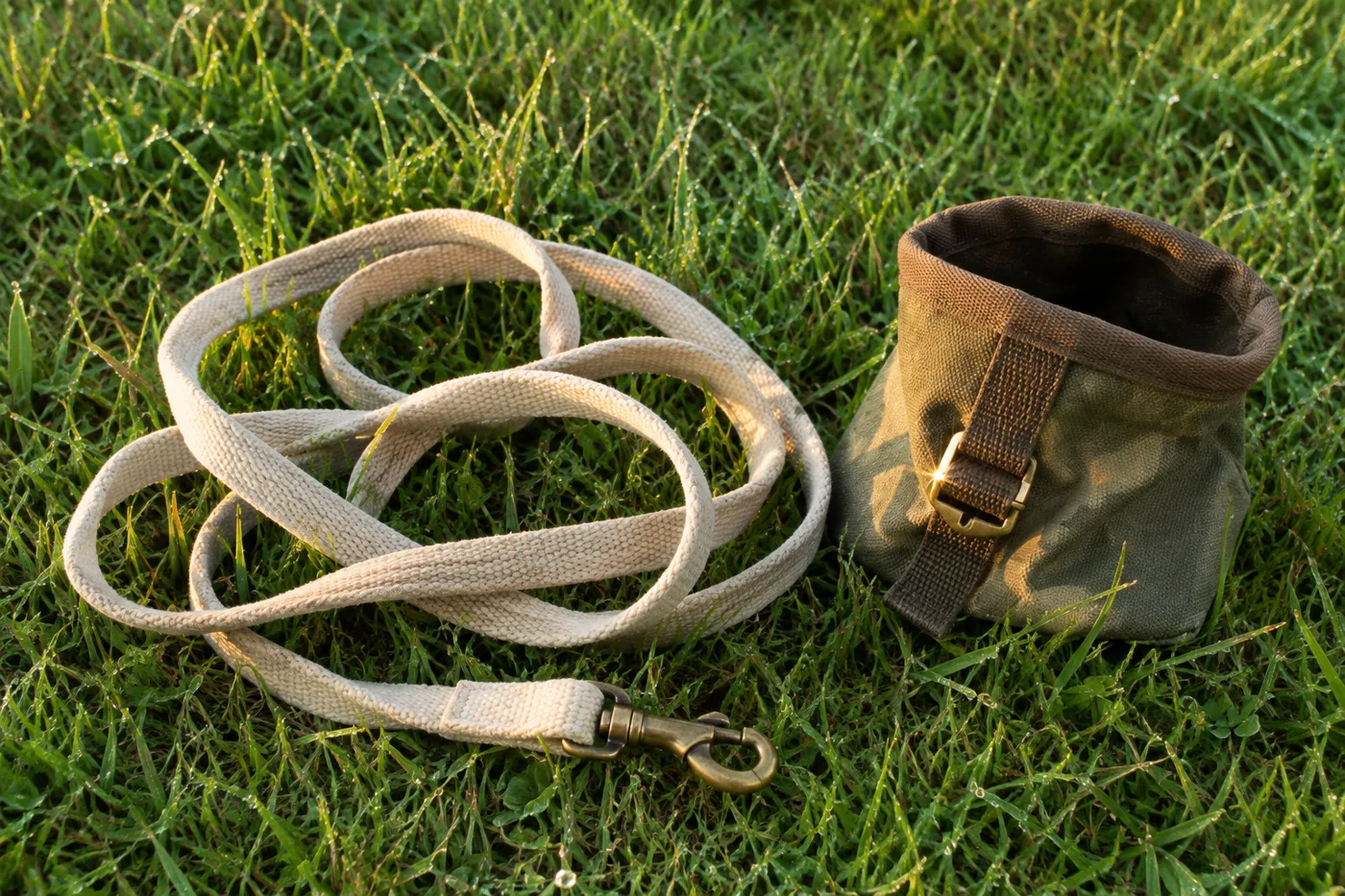
The old way to teach “come”: say it, then haul the dog in hand over hand like a fish.
Trainer Abby, a Karen Pryor Academy certified training partner, explains why that collapses: the dog learns to answer the pull, not the word. “And the problem with that is when your dog’s off leash, you can’t use leash pressure.”
The safer practice tool is a long line, which the AKC puts at 15 to 20 feet, so the dog can choose to come while you still have a backstop.
A 2014 University of Lincoln trial in England tested 63 pet dogs referred for poor recall, with two 15-minute sessions a day for four or five days. About 92% of owners reported improvement whichever method they used, shock collar or not, and the dogs in shock collars spent significantly more time tense.
It matters beyond your own dog. Under Abby’s video, owners of nervous, reactive dogs say off-leash dogs with no recall have set their training back.
#11 Filling the Dug Hole With Water
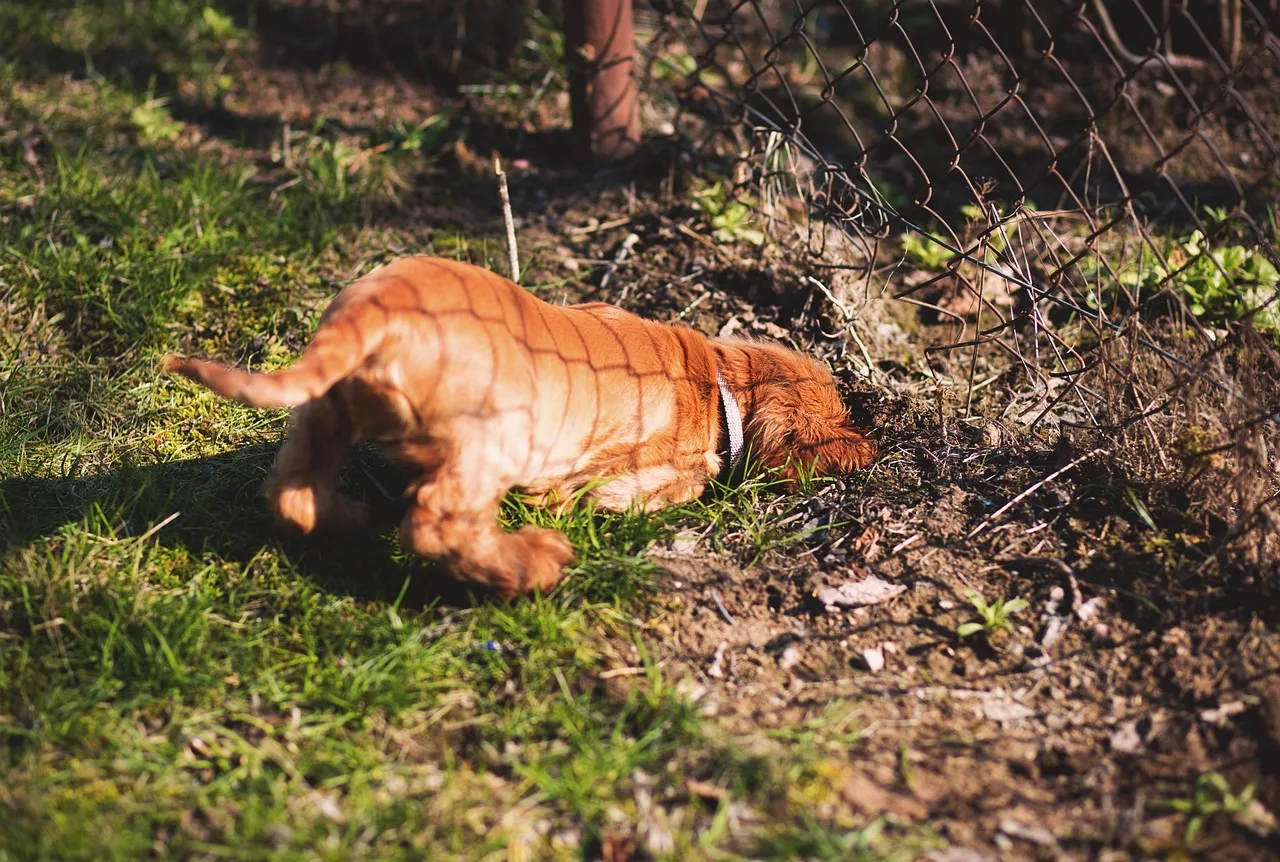
Garden hose, a hole the size of a mixing bowl, fill it to the brim. The dog would surely be sorry.
Humane World for Animals, formerly the Humane Society of the United States, now says outright: don’t fill the hole with water, and don’t stake the dog out next to it.
Digging usually has a reason, and some of it is breeding. The AKC notes that terriers are “earthdogs”, bred to follow prey into tunnels, and that Northern breeds dig cool beds in hot weather. Behaviorists at VCA warn that stopping all digging without dealing with why the dog does it “could result in new behavior problems.”
The swap that works with the instinct:
- Pick one corner and give it soft dirt or sand. The AKC says “A sandbox can work wonders.”
- Bury a few toys there and let the dog find them.
#10 The Crate Called “Cruel,” the Basement Called Fine

Back then, a wire crate looked like a cage to plenty of owners, while a night in the basement or the garage seemed perfectly normal. Today the thinking has flipped, with one firm limit on the clock.
Seattle Humane’s guide says a puppy should be crated “a maximum of one hour per month of age.” So a 3-month-old gets about three hours at a stretch. A grown dog, a year and up, shouldn’t go past eight hours.
That eight is a ceiling, not a target. If your days run long, a neighbor or dog walker at midday matters more than the crate.
The rule that ends the old use entirely is the one Seattle Humane writes in capitals: never use a crate for the purpose of punishment. Toss in a chew and leave the door open on lazy afternoons.
#9 Writing Off “Stubborn” or “Dumb” Breeds
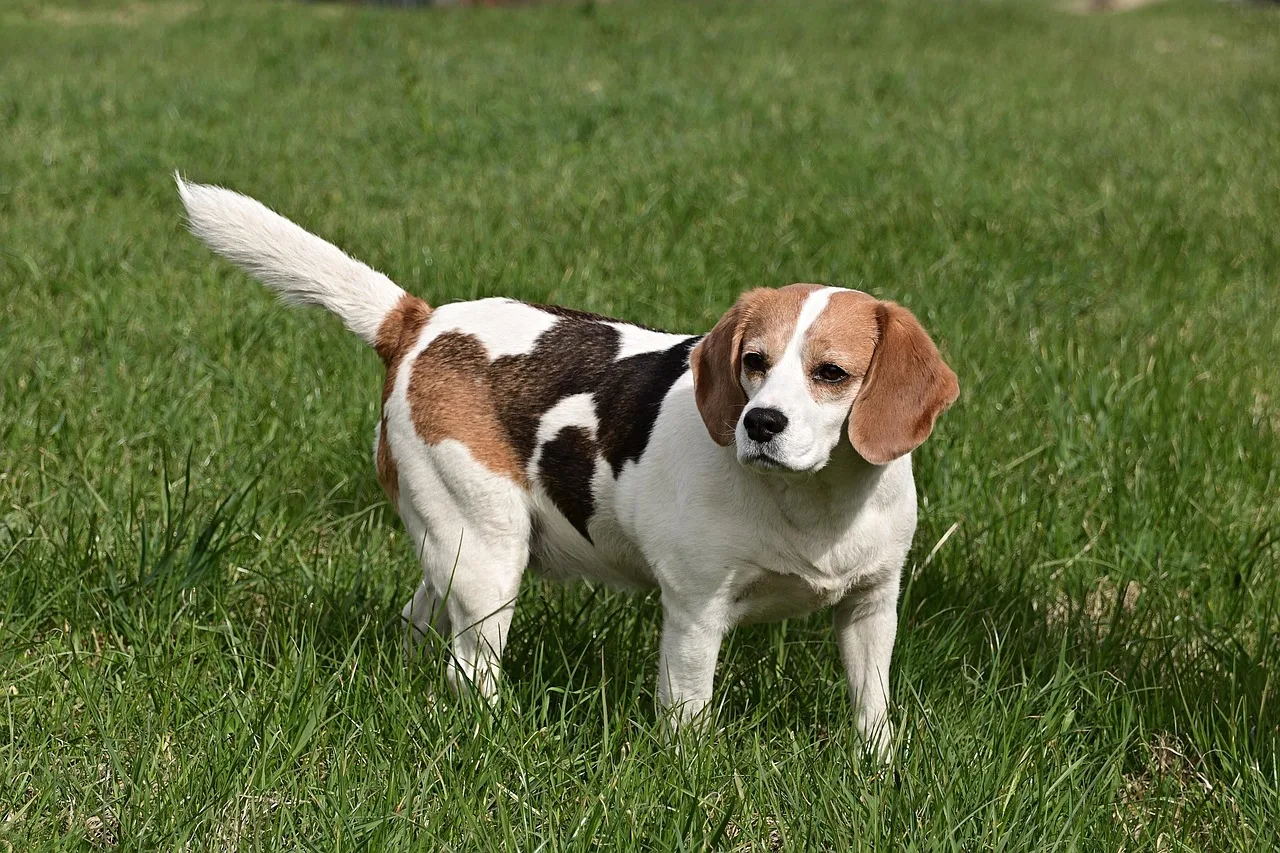
Every neighborhood had a breed joke. The hound who wouldn’t come. The one who’d sit when he felt like it.
Some of that is breeding, and owners do well to know it. The AKC calls the beagle “happy-go-lucky” and notes it was “bred to hunt in packs.” A beagle with its nose on a rabbit trail is doing the job it was built for, not ignoring you out of spite.
The bigger surprise is what’s behind a lot of “stubborn.” A 2020 review of behavior cases sent to specialists by Mills and colleagues gives “a conservative estimate of around a third” involving some painful condition, and says the figure may be nearly 80%. That’s referred cases, not every dog, but it’s a striking range.
Happy Hounds Dog Training starts every case the same way: “Before starting any training, there’s two things that I suggest ruling out. First: is your dog in pain?”
If an older dog who used to sit happily now won’t, see the vet before the trainer. A sore hip makes “sit” a very reasonable thing to refuse.
#8 Early Shock Collars for Hunting Dogs
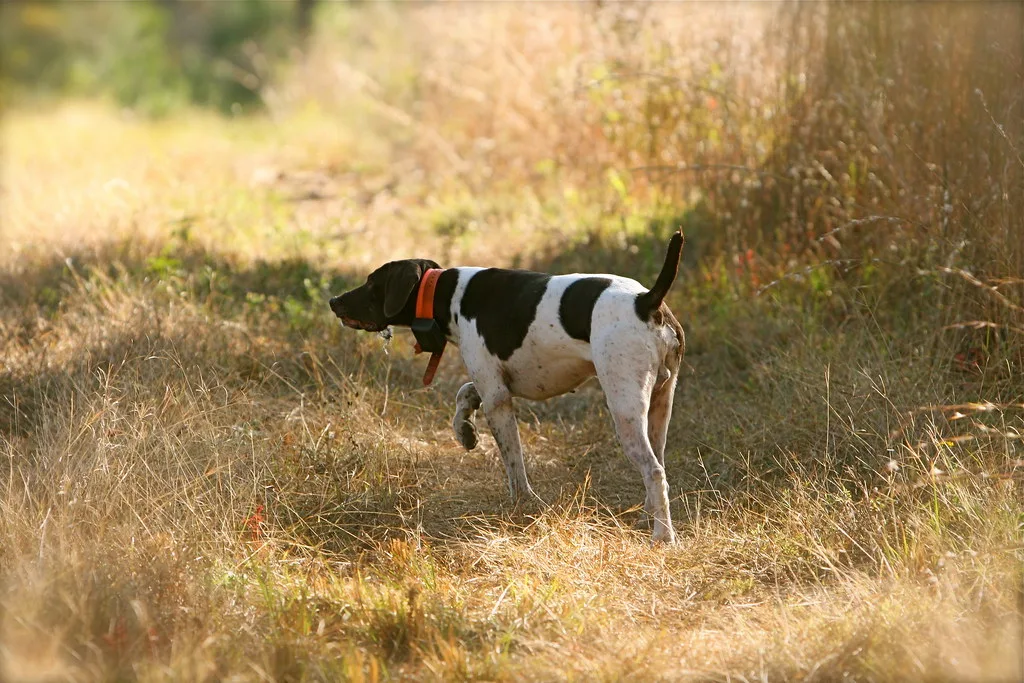
They arrived in the field before the living room. Shock collars were first built in the 1960s for training hunting dogs, and early ones had a single power level.
The design a trainer’s blog describes from a 1985 magazine story sounds almost quaint now: push a button on a hand-held, battery-powered transmitter, and a radio signal reached a box on the dog’s collar.
The debate never went away. A 2020 study followed 92 dogs at seven training schools in Porto, Portugal. Dogs at schools using aversive methods showed more stress behaviors and bigger jumps in cortisol, a stress hormone, after training. The design can’t prove cause, but it’s the kind of finding behind AVSAB’s view that aversive methods “should not be used under any circumstances.”
Balanced trainers, Garrett at American Standard Dog Training among them, still use modern remote collars and argue that reward-only training breaks down around distractions.
If a trainer recommends one for your dog, ask them to show you how they’d teach the same thing without it, and watch the dog’s face while they do.
#7 A Ring of Dogs on Choke Chains
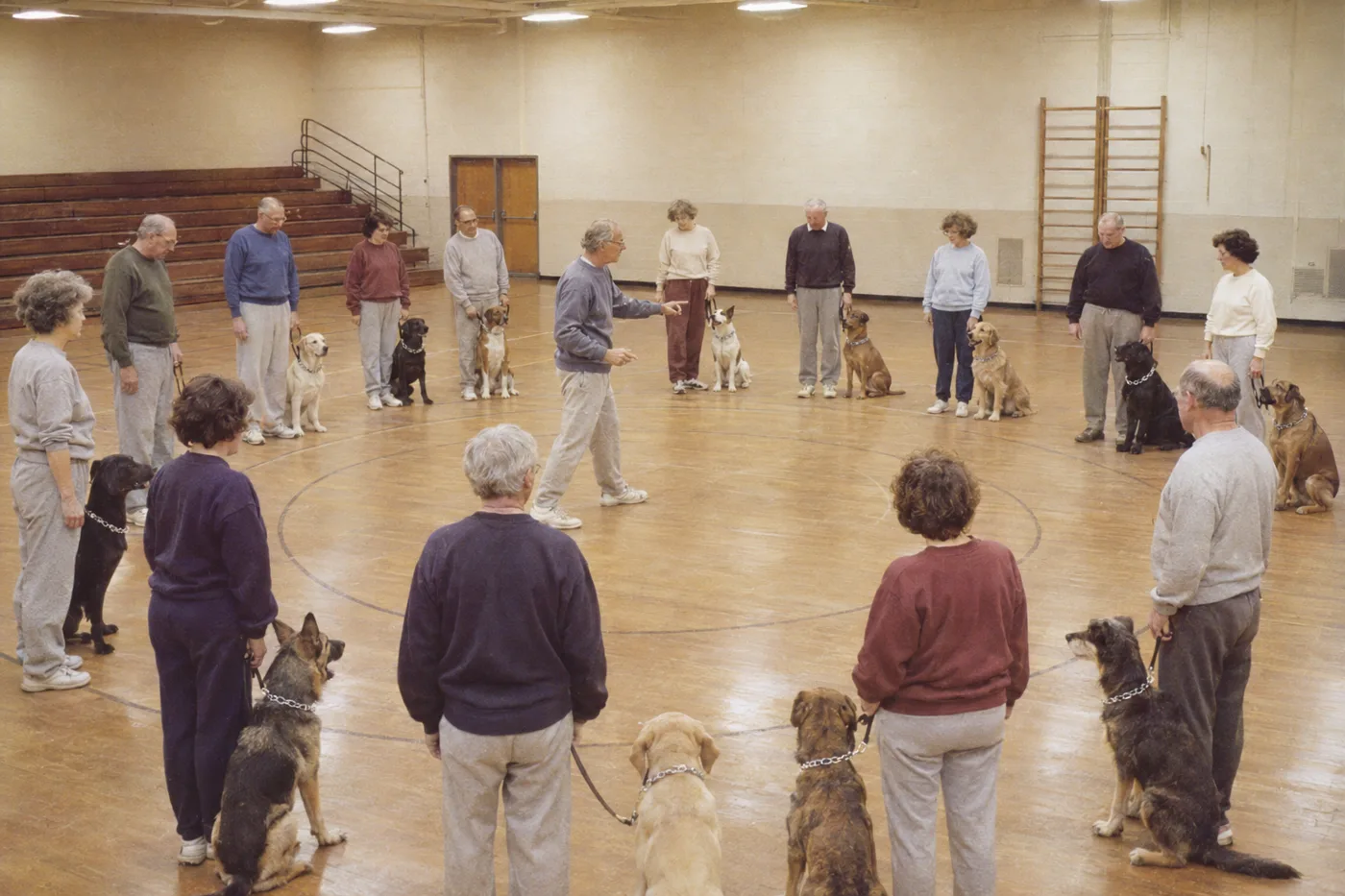
Saturday morning in a school gym or a fairground barn. A big circle of dogs, every one in a chain, the instructor in the middle, the whole room pivoting on command.
The format is older than most people guess. The first US obedience test was held in October 1933 in Mt. Kisco, New York, with eight dogs. The AKC approved its first obedience rules on March 10, 1936.
Then came the war. Dogs for Defense, set up by AKC president Harry I. Caesar, aimed for “at least 125,000 of the nation’s pet dogs” and sent dogs home to their families afterward. William Koehler, the leash-jerk author, came out of military dog training too.
Trainers today are refreshingly candid about all this.
“Everyone of us trainers can look back and cringe over a method we tried because we didn’t know better/were following the lead of a trainer.” A trainer in Reddit’s r/Dogtraining forum
Others in that thread say they used harsh methods themselves, one citing advice from the early 1990s, and have since changed.
The catch for you now is that a good referral isn’t enough. Trainer Abby learned it the hard way when a trainer made her dog worse. “Don’t just hire somebody because somebody recommends them,” she says.
The trainer check – No license is required to call yourself a dog trainer in the US; certification from associations and trade schools is voluntary – Animal trainers held about 47,800 US jobs in 2025, roughly 1 in 9 animal-care jobs, and that count includes horse and marine-mammal trainers – Ask what tools they use and what happens when a dog gets it wrong – AVSAB’s guide to choosing a trainer lists green flags and red flags
#6 Making Him Face It Till He’s Over It
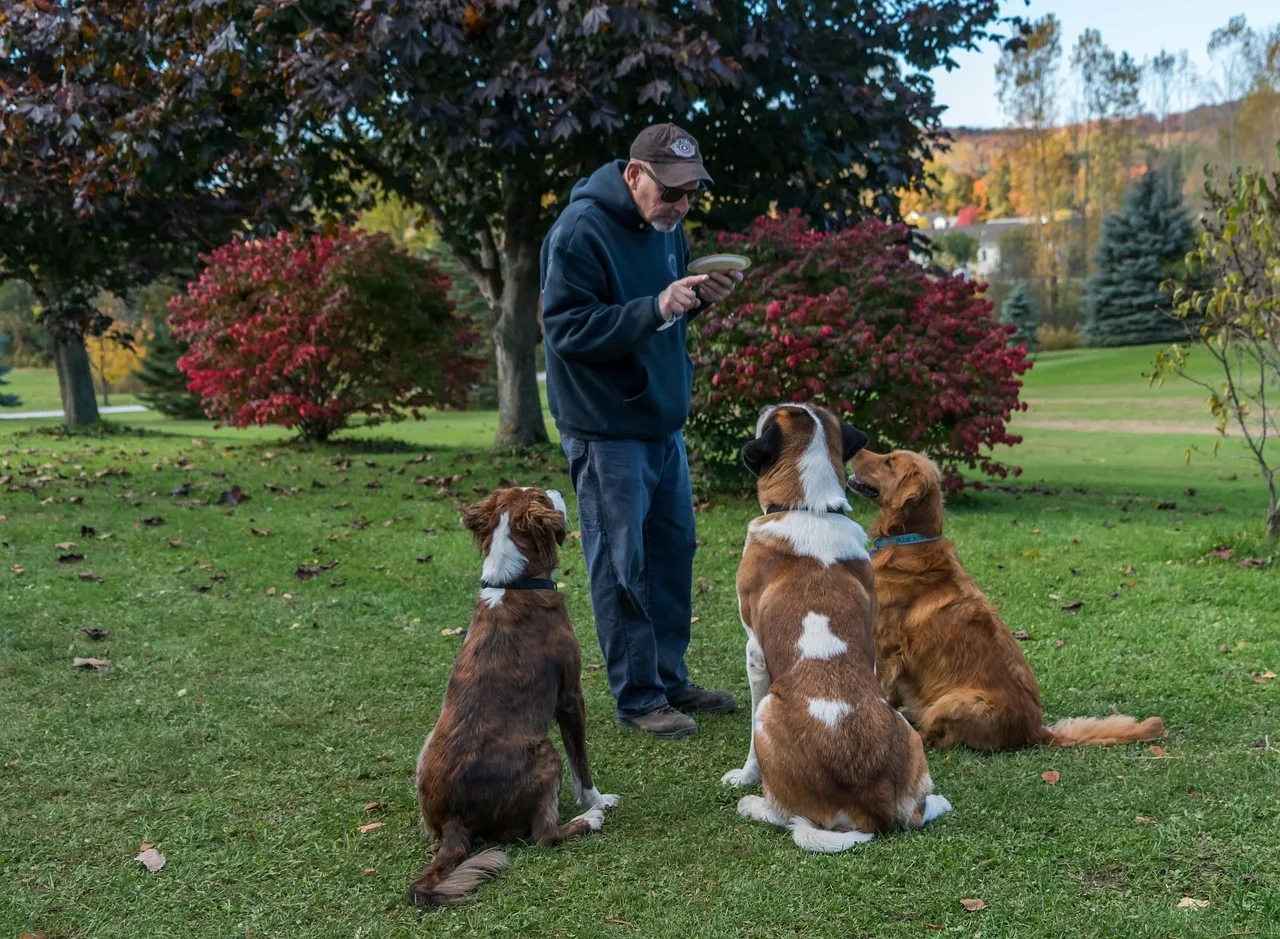
The dog was scared of the vacuum, or the mailman, or the big dog two houses down. So you held the leash short and made him stand there until he got over it.
Trainers have a word for that: flooding. The Merck manual says “Flooding is not recommended… if done improperly, flooding can increase problem behaviors (sensitization).” Sensitization means the dog gets more frightened, not less.
Andre Yeu, a certified trainer and founder of When Hounds Fly in Toronto, looked back at old TV training and called it “A dangerous combination of flooding and punishment.”
Here’s the part that puzzles owners. Lots of them, in comments under a video from trainer Abby, say their dog won’t take even a favorite treat outside or near other dogs. That’s a sign, not stubbornness. Tressa Fessenden-McKenzie, a Karen Pryor Academy certified training partner, explains: “A dog who is over threshold may not be able to eat or take treats.” Over threshold means too upset to think.
So the modern version starts with distance. Back away from the trigger until the dog will eat, then pair the scary thing with food, what Merck calls counterconditioning. Abby’s goal sounds backward until you think about it: “Reactivity training should really not ideally involve your dog having any reactions at all.”
#5 Treats Are Bribery; Praise Is Enough
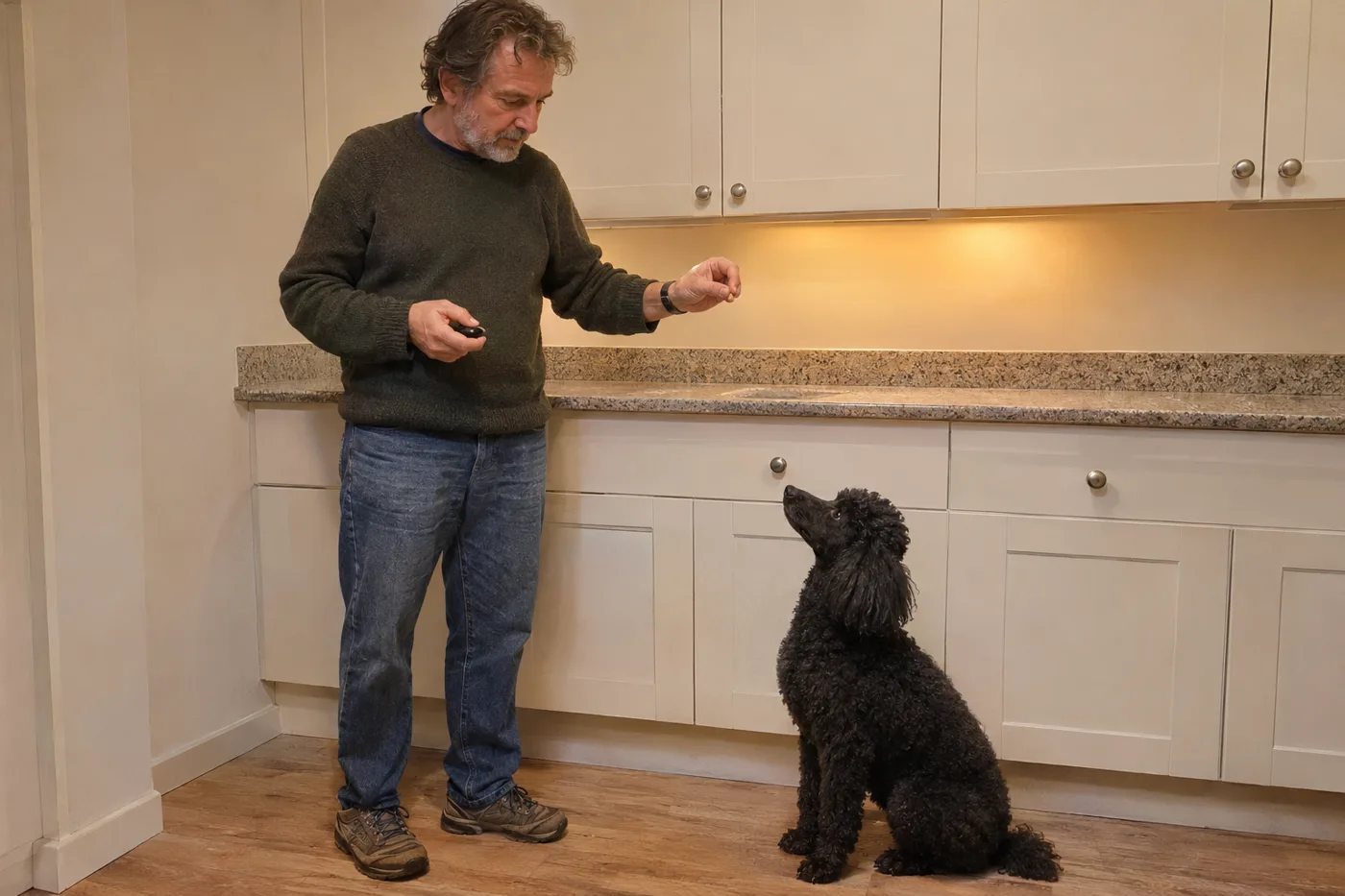
A dog should work for love: you heard that in class, and Koehler’s 1962 book went after “tid-bit training techniques” by name.
The turn came with a book. Karen Pryor’s Don’t Shoot the Dog came out in 1984, and Mary Burch of the Cambridge Center for Behavioral Studies put the change simply: “Before Karen Pryor, animal training was typically coercive and correction based.”
The bribery charge isn’t entirely wrong, and one trainer says so on camera. Happy Hounds Dog Training admits: “Yes, technically lure training is bribery because the treat is being shown to get the desired behaviour.” A lure is food held up to coax the move. The answer is to stop showing it fast: “It’s really crucial to phase out that treat lure as quickly as possible.”
The AKC’s Stephanie Gibeault gives the two steps:
- “Lure with an empty hand. Once your dog starts to catch on, produce a hidden treat as a reward.”
- Then reward at random, the way slot machines keep people pulling the lever.
Mark and reward fits in between: a click or a quick “Yes!” the instant the dog gets it right, then the treat. Save the high-value treats, the bits of chicken, for the hard stuff like coming away from a squirrel.
And if praise-only still feels purer, a dog owner in r/OpenDogTraining has a reply: “I don’t go to work because I want to make my employer happy; I go because they pay me.”
#4 The Guilty Look That Wasn’t Guilt
You walk in. The wastebasket is on its side, tissues everywhere, and the dog is low to the floor with his ears back and his eyes sliding away. He knows what he did.
Maybe not. In Alexandra Horowitz’s 2009 study, the guilty look “did not appear more when the dogs had done something wrong. Instead it popped out in full form when the owner scolded.” The innocent dogs who got scolded looked the guiltiest of all.
A follow-up tested 96 dogs and owners in Croatia, with owners told to keep a neutral face. Asked whether their dog had eaten forbidden food, owners guessed right no more often than chance.
The look is the dog reacting to your face and your voice, not to what he did. Pick up the tissues, and buy a wastebasket with a lid.
#3 Punishing the Growl

The old rule said a growl was back talk, and back talk got corrected. Today’s trainers count it among the most dangerous of the old habits.
Punishing a warning removes the warning. The danger stays. Best Friends Veterinary Center puts it plainly: “In many cases, a dog that seemingly ‘bites out of nowhere’ has a history of having been punished for aggressive warnings, like growling.”
AVSAB says punishment risks “suppressing or masking the outward signs of fear,” so a dog may attack “with fewer warning signs.” Andre Yeu makes the same point: old-school trainers punished warning signs away, when those signs are information.
When your dog growls, stop what you’re doing and give him room. Then work out what set it off, whether that’s a hand near the food bowl or someone leaning over him on the sofa. If children or visitors are around a dog who growls, keep them apart and bring in a vet or a reward-based trainer before something goes wrong.
#2 TV Dogs That Understood Every Word
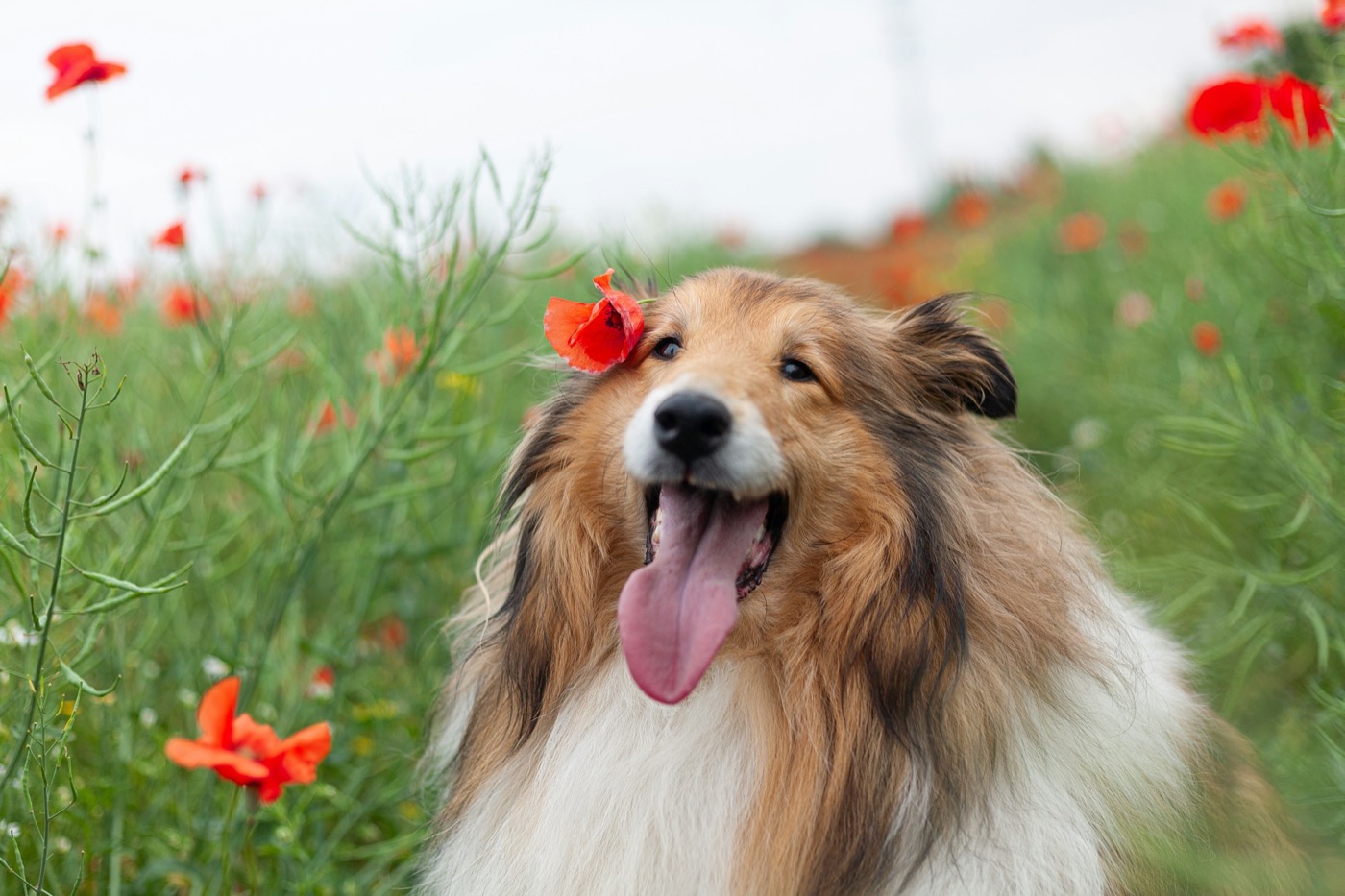
On TV, Lassie heard that Timmy was in trouble and ran for help. Every kid watching was sure their own dog could do it too.
Here’s what was happening just out of frame. A 1949 New York Times piece by Helen Colton describes trainer Rudd Weatherwax standing off camera, gesturing and whispering cues. He kept biscuits in his left pants pocket, and during close-ups Lassie would gaze toward it.
That soulful, faraway look? Quite possibly a dog thinking about a biscuit.
The original Lassie was a collie named Pal, born in 1940, who starred in Lassie Come Home in 1943. Weatherwax’s 1971 book The Lassie Method used a slip collar, and according to one trainer’s review he was “just fine with food rewards as well.”
Some dogs really do learn words. Hungarian researchers found 41 “gifted word learner” dogs who knew an average of 29 toy names. Then they tried to teach 34 ordinary dogs. Shany Dror of Eötvös Loránd University called it “a miserable failure… after three months, they didn’t even know the names of two toys.”
Your dog isn’t failing a vocabulary test. He’s reading your hands, your tone and your pockets, exactly the way Lassie did.
#1 Pinning the Dog on Its Back

The books told us to roll him over and hold him there, staring him down until he went still. That, they said, was what a pack leader does.
That book was How To Be Your Dog’s Best Friend, from the Monks of New Skete, in 1978. The alpha roll came from a 1947 study of captive wolves by Rudolph Schenkel. In their 2002 second edition, the monks withdrew it as “too risky and demanding for the average dog owner.”
The bigger story belongs to L. David Mech, the wolf biologist whose 1970 book The Wolf helped spread the alpha idea. Then he went and watched wild wolves. He followed one pack on Ellesmere Island in Canada for 13 summers and found that dominance fights “are rare, if they exist at all.”
He now writes that “Most wolves who lead packs achieved their position simply by mating and producing pups.” In other words, the pack is a family.
“What would be the value of calling a human father the alpha male? He’s just the father of the family. And that’s exactly the way it is with wolves.” L. David Mech, wolf biologist, to Scientific American
Mech asked his publisher again and again to stop printing his own book. In 2022, he finally got The Wolf taken out of print. It had been on shelves for half a century.
Meanwhile, the dogs had been answering the question for themselves. In the University of Pennsylvania survey, owners said 31% of dogs reacted aggressively to the alpha roll.
So much for “you can’t teach an old dog new tricks.” A scientist decades into his career changed his mind about the most famous idea he ever had. Your dog can manage it too. In a Vienna study of 95 Border Collies up to 13 years old, every dog learned new tasks; the older ones just needed more tries. On one logic task, researcher Friederike Range said, “The older the dog, the better it performed.”
The bottom line
The dog on your couch doesn’t know which decade’s book you read. He knows what your raised hand usually means, what happens after “come,” and whether his growl gets listened to.
If he grew up on the old rules, he isn’t ruined. He’s had years of practice at one set of habits, and he’ll need a little more repetition to pick up new ones, the way the Vienna dogs did.
Start with the word that makes him hesitate, the one that used to mean trouble. Retire it, pick a fresh one, and teach it with something he’d cross the yard for.
Bonus: Five swaps for the old habits still lying around
- Put the squirt bottle away and teach a “place” cue instead. The AKC’s advice is to “teach them to go to their place as an alternative response” rather than trying to stop the annoying thing.
- Skip the knee to the chest for jumping up. The AKC’s sit-to-greet rule: “When their butt is on the floor, attention comes their way. But when they get up, the attention all stops.” If the dog stands, turn and walk back to where you started.
- If a puppy nips, don’t slap. The ASPCA says slapping can make puppies bite harder; give a high-pitched yelp, then walk away and ignore the puppy for 30 to 60 seconds. Baby teeth should be gone by about 6 months, so it does end.
- Still have a puppy on newspaper? Carry the soiled paper to the outdoor spot so the smell draws the pup there, and take breaks right after waking and eating, as often as every 10 minutes for the youngest.
- Say “train the dog you have” out loud the next time you compare yours to the neighbor’s. Owners in Reddit training threads say accepting a quirky or shy dog brought more progress than forcing him to be someone else.
Questions people also ask
Is it too late to train an old dog?
No, it isn’t too late. In a Vienna study of 95 Border Collies aged 5 months to 13 years, every dog learned new tasks, though older dogs needed more repetitions. Because a third or more of behavior cases sent to specialists involve pain, a vet check makes sense before you decide a senior dog is just stubborn.
Are choke chains bad for dogs?
They’re the riskiest collar type, according to a 2026 veterinary review, because nothing stops them tightening. The same review found no documented windpipe injury from ordinary training use. In a model-neck test, every collar type hit damaging pressure when a dog pulled, so teaching a loose leash matters more than which collar you pick.
Does rubbing a dog’s nose in pee work?
No. A dog can’t connect a punishment delivered after the fact to the accident, says the Merck Veterinary Manual, and American Humane says it teaches dogs to hide when they need to go. Interrupt calmly, take the dog outside and reward it there.
Is the alpha dog theory debunked?
Its science has been withdrawn. The idea came from a 1947 study of captive wolves, and biologist L. David Mech, who helped spread it in 1970, spent 13 summers watching a wild pack and found dominance fights rare. He got his own book taken out of print in 2022, and the Merck manual notes a study finding no dominance hierarchy between dogs and people.
Will I need to carry treats forever?
No, not if you fade them. The AKC says to lure with an empty hand and hand over a hidden treat afterward, then reward at random until the dog listens with no food in sight.
How do I find a good dog trainer?
Start by asking which tools and corrections a trainer uses, because “dog trainer” isn’t a licensed job in the US and certification is voluntary. AVSAB’s guide to choosing a trainer lists green and red flags. A friend’s recommendation isn’t enough on its own: trainer Abby learned that the hard way when a recommended trainer made her dog worse. Watch a class yourself before you book.