A countdown of quiet dog breeds and what each one does instead of barking, from the Greyhound’s 18-hour nap to the Shiba scream.
The surest quiet dog of all is at #1, and it’s the only one you can listen to before you bring it home.
The box thumps onto the porch. The doorbell goes. Behind you, a dog lifts its head, thinks it over, and lays it back down on the cushion.
That dog exists. But a dog that seldom barks is never completely silent. It snores, it yodels, it screams at the nail clippers, or it cries at the door within ten to twenty minutes of the latch clicking shut. Which noise you get depends on which dog you bring home.
Table of Contents
#15 French Bulldog, the Country’s Favorite Snorer
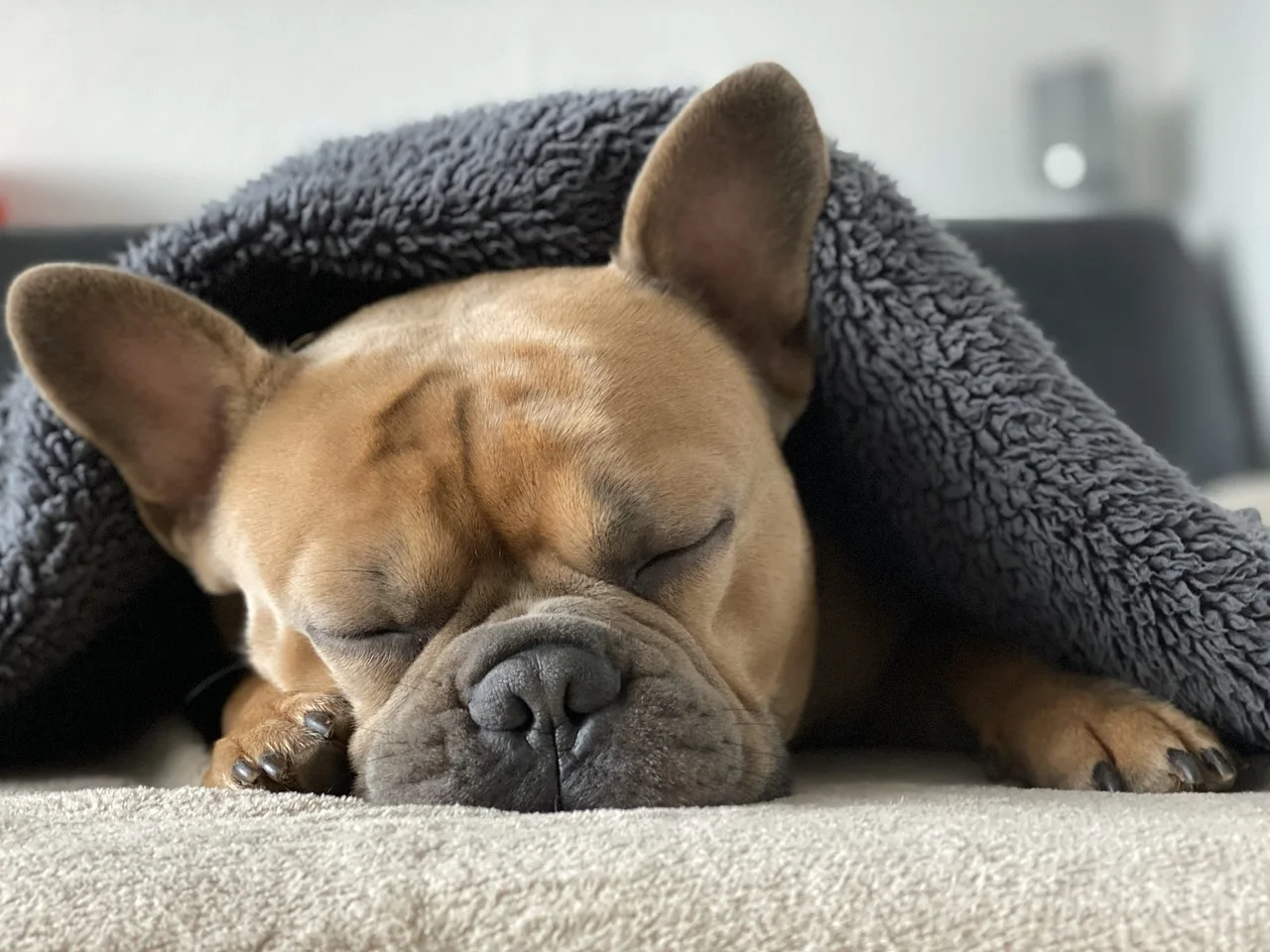
Most of the noise a French Bulldog makes comes out of its nose: the snort when it greets you, the grunt when it flops down, the snore you can hear from the kitchen.
It’s a sound plenty of Americans live with. The Frenchie was No. 1 in the AKC’s 2025 breed rankings, and many owners find the snoring endearing. Dr. Dan O’Neill doesn’t. He’s a Royal Veterinary College epidemiologist who chairs the UK’s Brachycephalic Working Group (“brachycephalic” just means flat-faced), and in 2025 he put it bluntly:
“Owners need to recognise that it is never ‘normal’ or healthy.” Dr. Dan O’Neill, on dogs that breathe noisily at rest or on light exercise (ICECDogs)
His group counts snoring, snorting and wheezing in that warning. The problem behind them is BOAS, short for brachycephalic obstructive airway syndrome: an airway squeezed so tight that every breath takes work. When UK researchers examined French Bulldogs a year and older, 58.9% had a case serious enough to matter.
That airway is also how a dog cools itself, which is why summer is rough. In UK vet records, French Bulldogs had about six and a half times the odds of heat illness that Labradors did. Across all breeds, about 1 in 7 dogs that got heat illness died of it. UK records put the breed’s median lifespan at 9.8 years.
If you’re choosing one, look at the nostrils first. In that UK exam study, narrow, pinched nostrils were the single strongest predictor of breathing trouble. Open nostrils don’t guarantee anything, but slits are a warning you can see across the room. In North America you can also ask whether the parents were graded under the Orthopedic Foundation for Animals’ breathing scheme, which scores breathing from 0 to 3 and posts Grade 0 and Grade I results on its website.
#14 Cavalier King Charles Spaniel, the Clingy Lap Dog
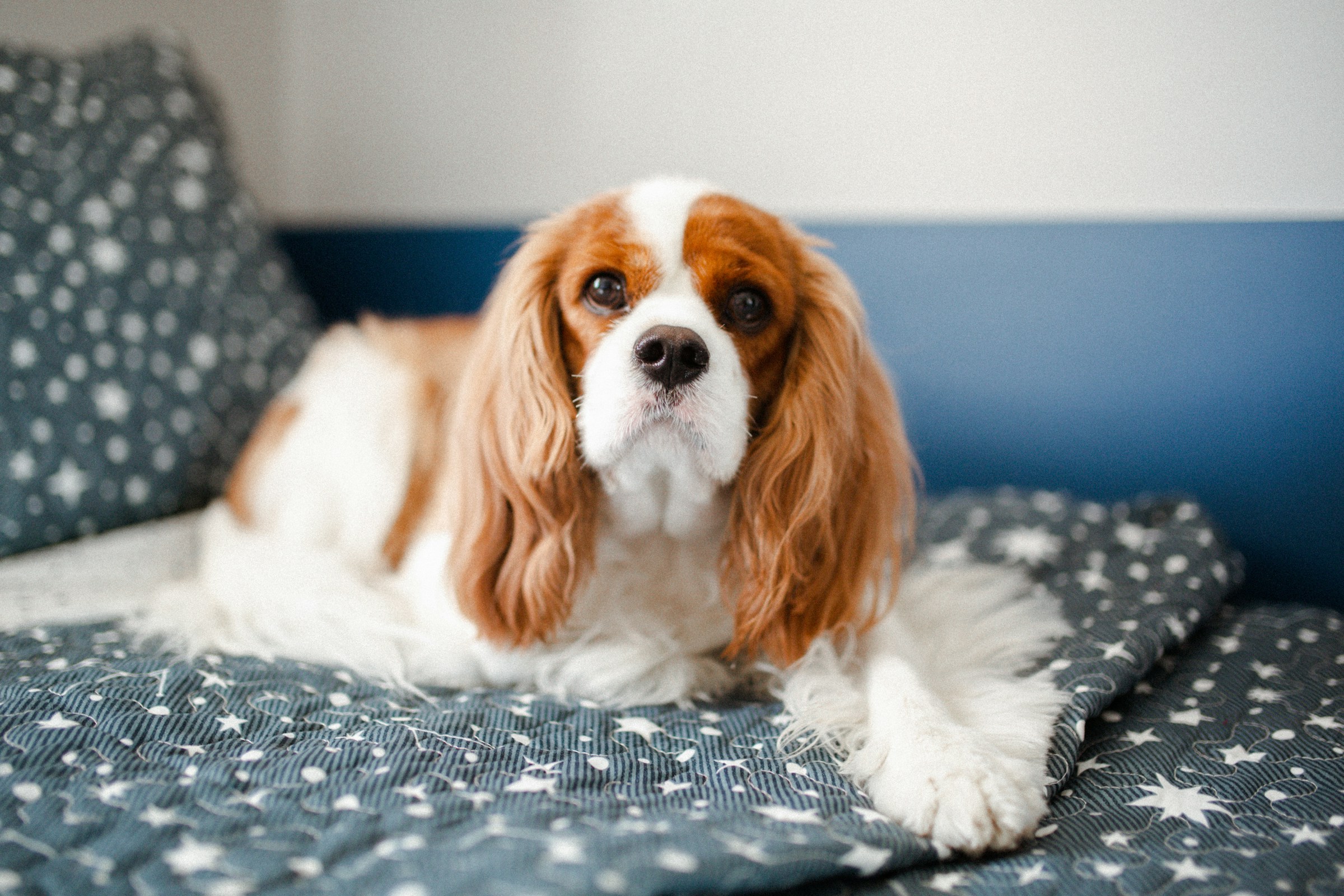
Even the vet’s office barely ruffles a Cavalier. Dr. April Lynch, a veterinarian at Bluegrass Veterinary Hospital in Gallatin, Tennessee, says of the breed: “In my hands, they’re almost always extremely docile, even in the veterinary hospital when they might be stressed or nervous.”
Owners say it shorter. From a Cavalier owner on r/dogs: “I call my cavalier King Charles spaniel a great old ladies dog. I am an old lady.”
America’s No. 12 breed in 2025 comes with two catches, and neither is barking.
The first is the heart. Mitral valve disease, a leaky heart valve, affects “over half of all cavalier King Charles spaniels by age 5 years,” according to CavalierHealth.org, a site run by Cavalier owners. By age 10, it says, that’s “nearly all cavaliers.” It’s the breed’s leading cause of death worldwide.
The breed’s calm makes it sneaky. A UK study of 126 Cavaliers aged 8 and up found the disease in every one of them, yet only 19% of owners had noticed a sign, usually a cough. A vet with a stethoscope heard a murmur in 89%. So the most useful habit takes about a minute: ask your vet to listen to the heart at every visit, and ask what they hear. If you’re buying a puppy, ask to see the parents’ heart certificates. The Cavalier King Charles Spaniel Club, USA says both parents should ideally be cleared by a board-certified cardiologist at age five or older. On Reddit, Cavalier lovers describe giving up on the breed, or losing dogs young, to heart and nerve problems.
The second is being left. PDSA, a UK vet charity, says Cavaliers “will become upset when left alone and can develop separation anxiety,” and tells owners never to leave one more than four hours. Dr. Lynch hears the same: some owners find them “maybe too clingy.”
The crying can start fast. Veterinary behaviorist Dr. Wailani Sung says “the telltale signs of separation anxiety often emerge within the first 10 to 20 minutes after a departure.” That’s before you’ve reached the end of the block.
#13 The Pug’s Snore, by the Numbers

Pug snoring sounds like a sweet joke until you see the odds. In 2016 UK vet records covering more than 4,300 Pugs, the breed had 53.92 times the odds of a BOAS diagnosis compared with other dogs.
Now the part most buyers never hear. That diagnosis was written down in just 6.6% of Pug records. But when researchers in a separate UK study examined Pugs in person, 64.6% had a significant case. If one needs airway surgery, the University of Illinois veterinary teaching hospital estimates $3,500 to $5,500 for the exam, the workup, the operation and the care right after it.
The Pug’s most common problem in those records wasn’t even breathing. It was weight: 17.4% were obese. Heat is hard on them too, at about three times a Labrador’s odds of heat illness.
The researchers concluded the Pug “can no longer be considered as a typical dog.” That cuts both ways. The same records showed Pugs had lower odds of aggression than other dogs: a sweet temper with a noisy nose, in one compact body.
#12 Great Dane, Loud Only When It Matters
A Great Dane can go days without a word. VCA Animal Hospitals, a US vet chain that scores every breed’s barking from 1 to 5, gives the Dane a 1, the lowest score there is.
Then a stranger comes up the walk. Chewy’s breed guide, reviewed by its veterinarian Dr. Barri Morrison, warns of “a deep, powerful bark that can be jarring for visitors.” One bark from 110 to 180 pounds of dog rattles the storm door in a way a terrier’s ten never will.
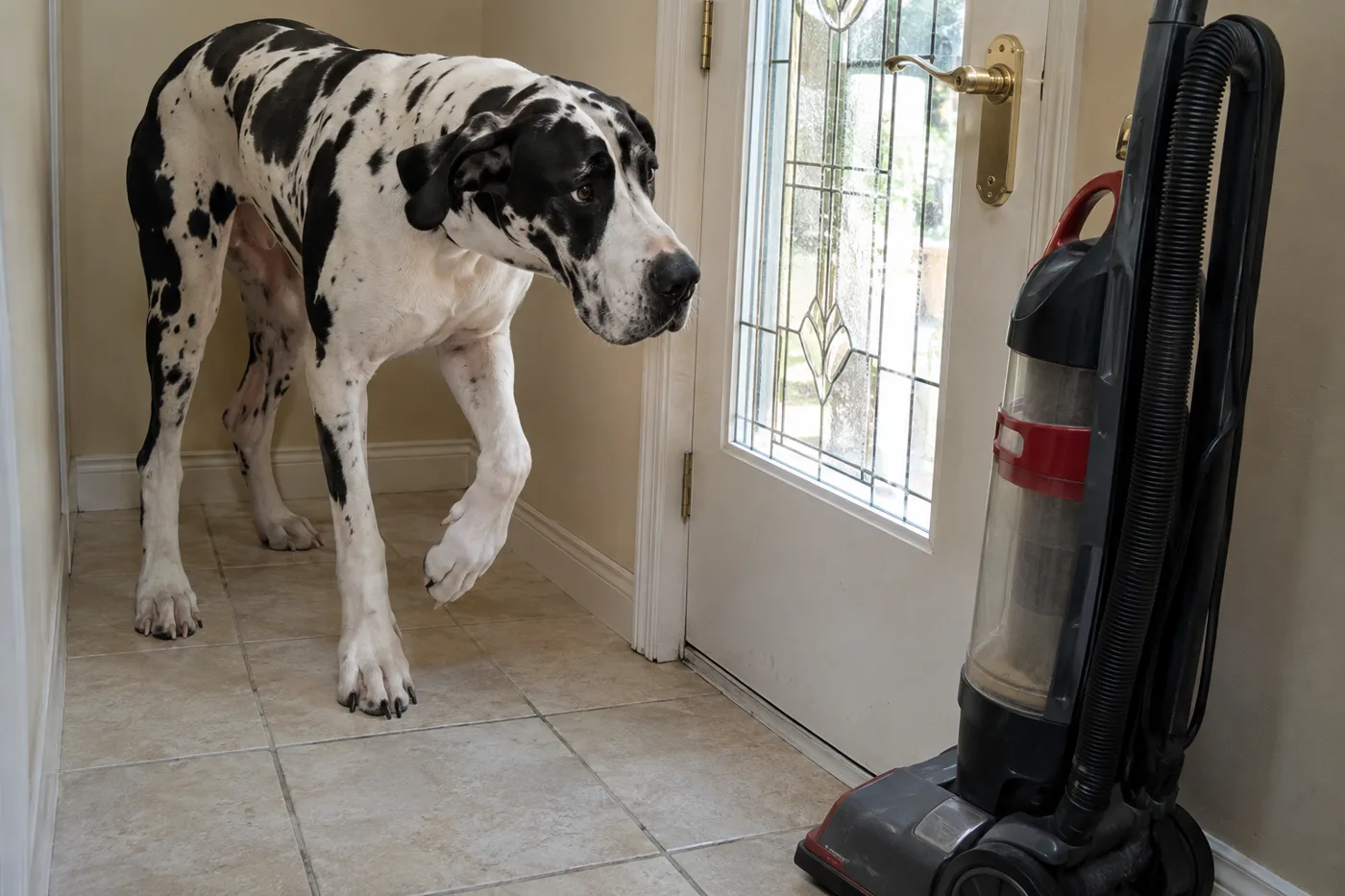
Gentle giants, mostly, and sometimes timid ones. Kevin, a Great Dane from West Des Moines, Iowa, was named the world’s tallest living dog by Guinness in 2024, at 3 feet 2 inches. His owner, Tracy Wolfe, told Guinness: “He is terrified of the vacuum. He won’t let it come within 6 ft of him!”
The real cost is time with them. VCA gives the breed 7 to 10 years, and every one of those days it wants a long walk or a short jog.
#11 Retired Racing Greyhound, the 45 MPH Couch Potato
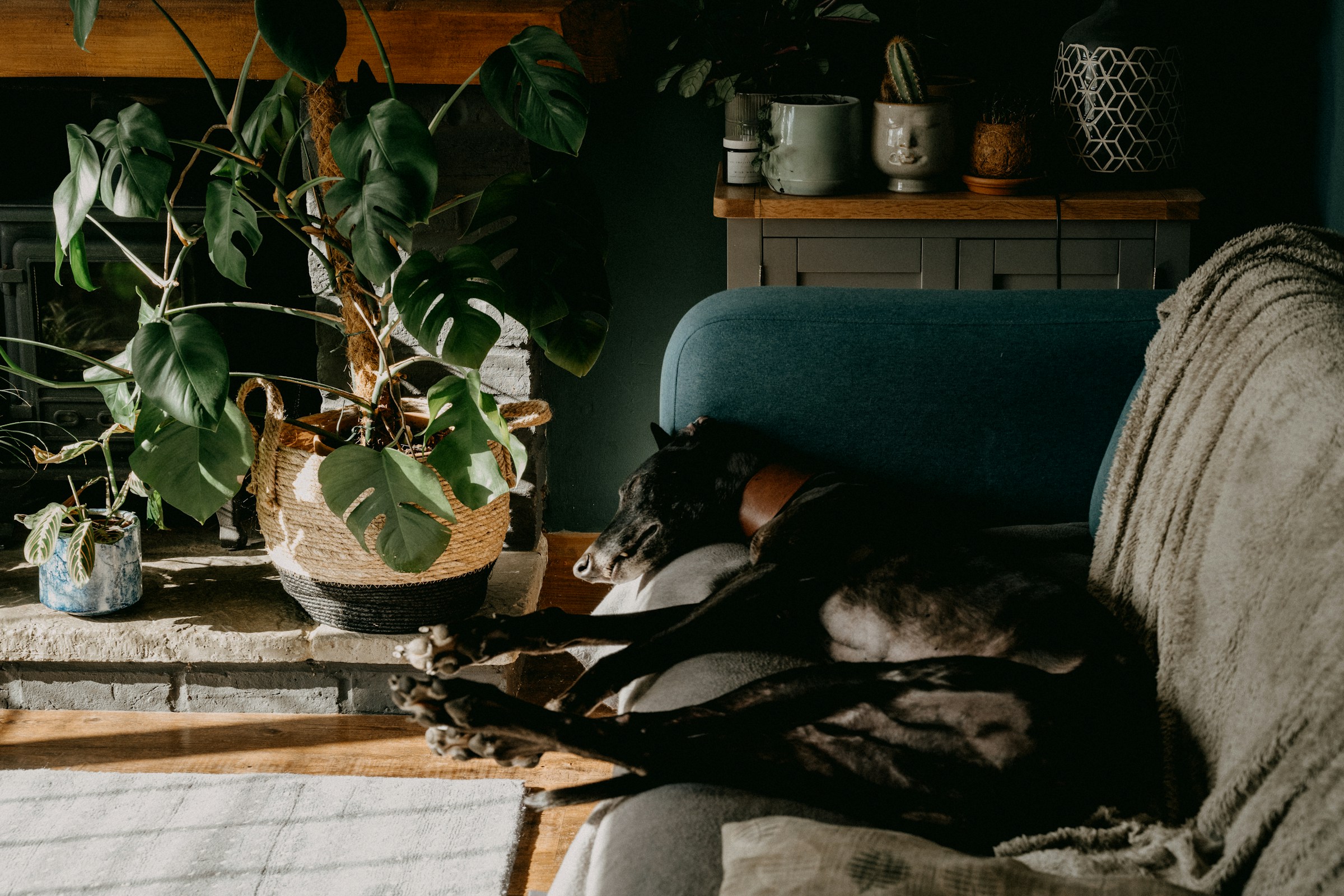
Team Greyhound Adoption of Ohio has the best description of this sighthound going: “45 mile per hour couch potatoes.” They’re sprinters built for a short burst, and between bursts they sleep about 18 hours a day. If you want a lazy dog in the nicest sense, this is it.
A commenter on r/puppy101 whose sister adopted two put it simply: “they are the calmest, gentlest dogs you can imagine.”
One thing almost no quiet-dog roundup mentions: don’t touch a sleeping Greyhound to wake it. RSPCA Australia warns that some snap when woken suddenly, a reaction called sleep startle, and advises gently calling their name from a distance instead. If small children ever visit, that’s the first house rule to teach them.
Before the couch potato moves in – Team Greyhound wants fences 4 to 6 feet tall, and no electric fences – No yard? Plan on 4 or 5 leash walks a day – Coat below 59°F; heat stress becomes a risk above 95°F – Only about 1 in 5 Greyhounds is cat-tolerant
That prey drive is why the Greyhound Adoption League of Texas says a Greyhound must never be off-leash in an unenclosed area. The same group tells adopters to expect about $800 to $1,200 a year for vet care and food. And give it time: RSPCA Australia says a retired racer can take several months to settle into a house that has stairs, a TV and you.
#10 Whippet, Quiet Enough to Vanish Indoors
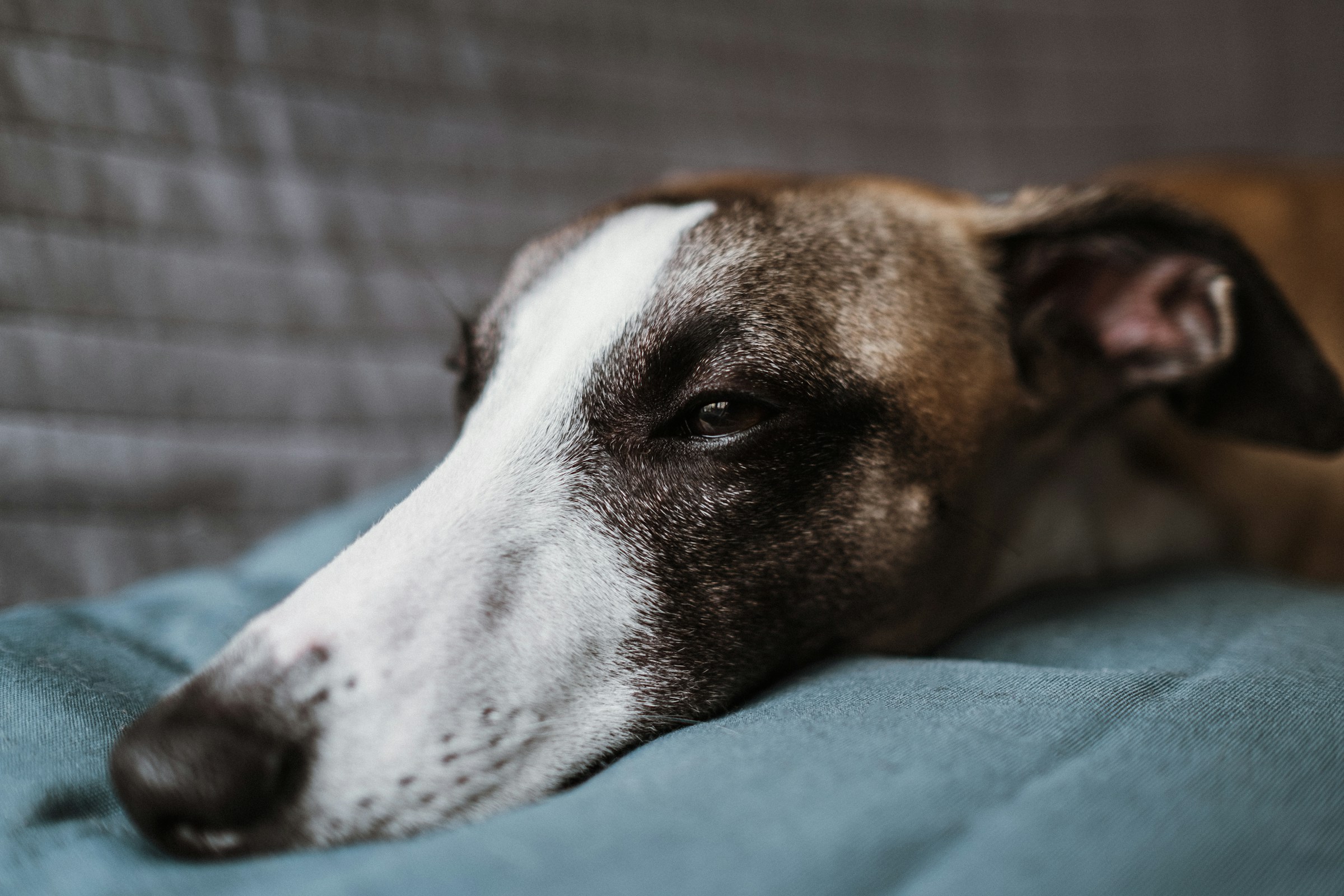
Breed clubs rarely put “non-existent” in writing about anything. The Whippet Association of Victoria, in Australia, does: “In the home the Whippet stands out for its quietness with normal backyard vocalizing of the average dog, non-existent.”
You may find yourself checking whether the dog is still in the house. It is. It’s on the couch, where the club says Whippets are “content to spend much of the day sleeping.”
If you live in an apartment, know this: the quiet indoors depends on short bursts of hard running outdoors, “daily if possible,” ideally in a safely fenced yard. No fenced space nearby, no quiet Whippet.
They’re thin-skinned, too. The club warns that scrapes “which in other dogs would amount to nothing” can turn into nasty cuts. Most live 12 to 15 years. And the club is firm about one purchase: “Wearing a coat is a must in the winter.”
#9 Italian Greyhound, Tiny, Silent and Breakable
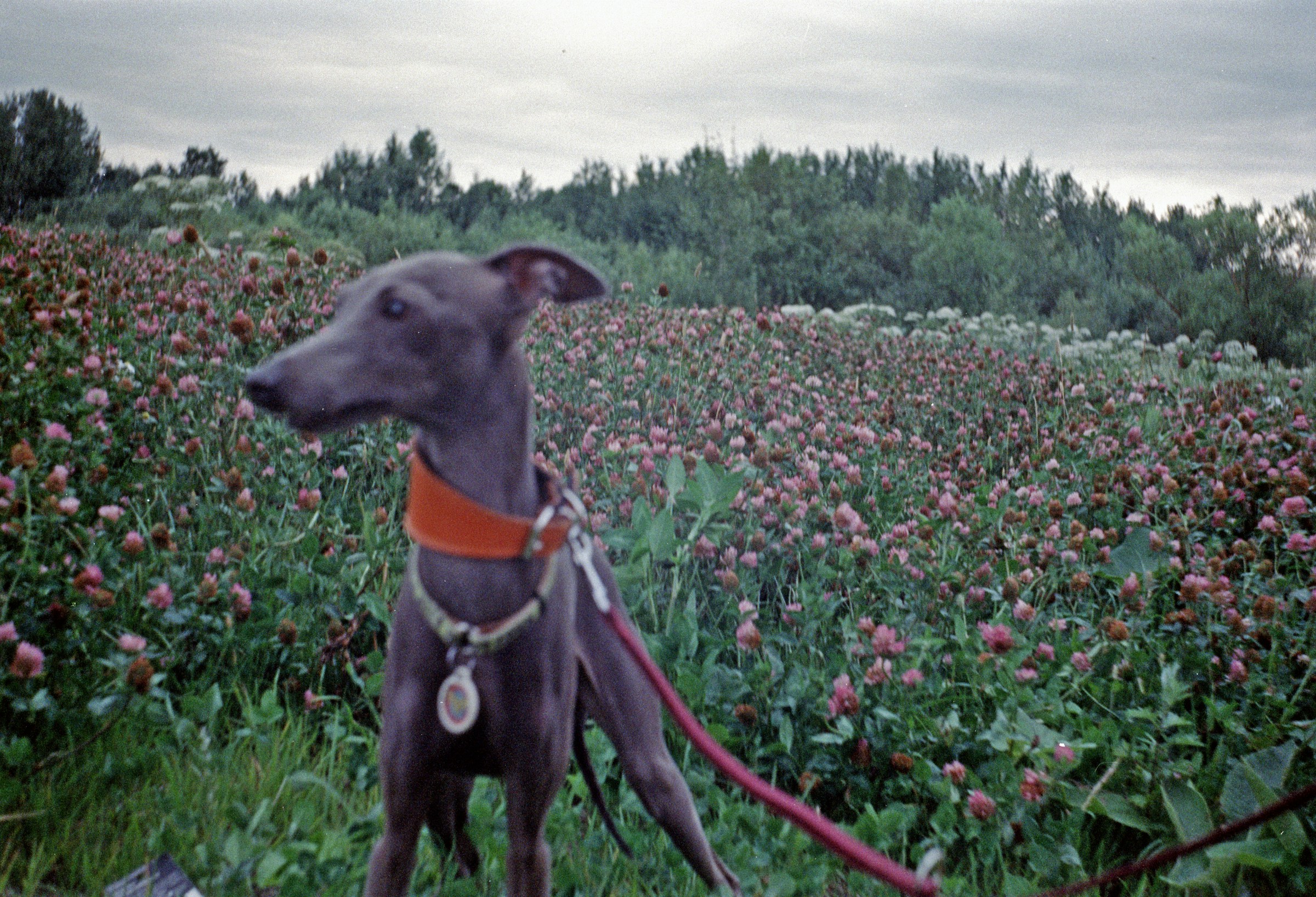
Shrink a Whippet to lap size and you get the Italian Greyhound, the sighthound Reddit commenters keep naming when someone asks for quiet small dogs. What the tip leaves out is the legs.
Dr. Andrew Spanner, a vet in Adelaide, Australia, went through his clinic’s files and found 7 fractures among about 30 Italian Greyhounds. He estimates that between 25 and 45% of the breed break a leg, usually the front leg just above the wrist, in puppies and young dogs. It’s one clinic’s count, not a study, but the detail that sticks is this: most breaks happen during ordinary running around the house. He puts a repair at about 4,000 Australian dollars. In the US, Anicira Veterinary Center lists front-leg fracture repair for a dog under 50 pounds at $2,898.
IG Rescue of Texas adds that “some bloodlines have a predisposition for leg fractures because of lack of bone density.” So if you’re buying a puppy, ask straight out whether any of its relatives have broken a leg.
The rest is good news. The rescue says 13 to 15 years is a normal life. They ask for little beyond a sweater on cold, wet or windy days.
#8 Shiba Inu, Famous for Its Scream
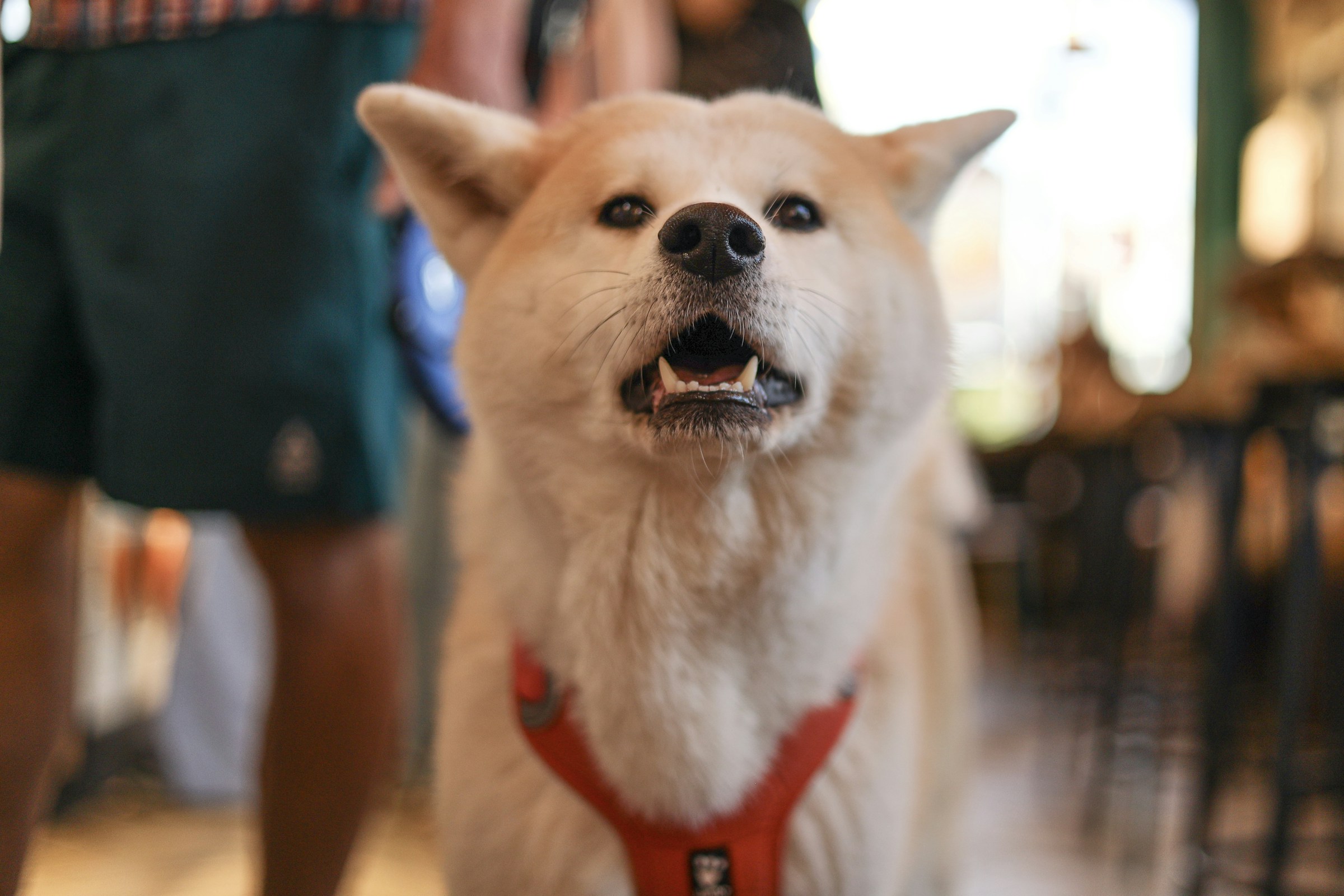
A Shiba Inu may ignore the doorbell entirely. Then you get out the nail clippers.
NorCal Shiba, a breeder, describes the famous “Shiba scream” as “a loud, high-pitched, almost human-sounding vocalization the breed makes when distressed, frustrated, restrained, or sometimes thrilled.” Nail trims, baths and vet visits set it off. So does plain excitement. With the windows open, a Shiba bath can sound to the neighbors like something far worse.
Most of the time it’s drama. The breeder says it’s worth a vet visit if the screaming is “new, sudden, tied to a specific movement or being touched in one spot, or paired with limping.”
The bigger thing to know is temperament. The National Shiba Club of America, the breed’s official club, says “early socialization and neutering are mandatory for the young puppy” and lists aggression toward other dogs as a breed trait. At up to about 25 pounds, it’s a manageable size. The club’s own summary: “Most Shiba owners learn to deal with the difficult aspects of the dog’s temperament.”
#7 Basenji, the Barkless Dog That Yodels Instead
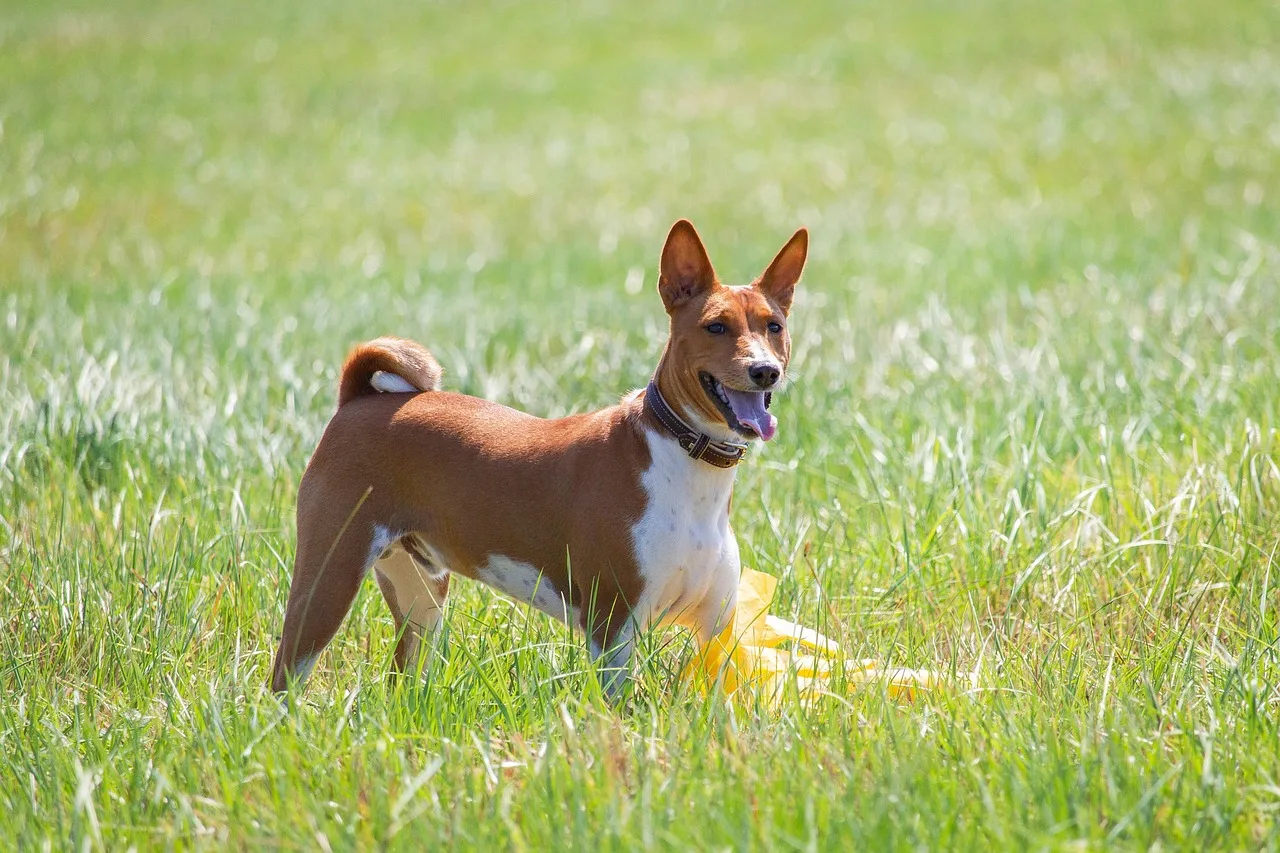
The barkless dog is real, and it is not quiet. The Basenji doesn’t bark like other dogs because of an oddly shaped larynx, the voice box. What comes out instead is a yodel, a “baroo,” a howl, a growl, and a scream.
The breed standard covers it in nine words: “The Basenji should not bark but is not mute.”
“i grew up next to a basenji kennel… while they do not bark, they do make these screaming sounds A LOT.” A commenter on TikTok
Hill’s Pet agrees in politer terms: the yodeling “certainly makes quite a bit of noise.” It also calls Basenjis clever “but not easy to train.”
The anatomy story is thinner than you’d guess. The whole voice-box explanation traces back to a 1979 look at the larynxes of two elderly female Basenjis. Two dogs. Under that same TikTok, commenters from Nigeria say the local dogs there bark plenty.
At 21 to 24 pounds, a Basenji is an easy size. Ask any breeder about Fanconi syndrome, a kidney disorder that’s unusually common in the breed.
#6 Japanese Chin, the Cat-Like Lap Dog

If you want a watchdog that alerts you once and then lets you handle it, meet the Japanese Chin. PetMD’s guide, by Dr. Michelle Diener, DVM, says: “Chin are not known to bark a lot, but they will let their family know when there’s a stranger nearby.”
That’s the alert barking most people want and few small dogs deliver. PetMD calls the breed “cat-like,” and at no more than 11 pounds and 8 to 11 inches tall, it’s a companion breed you can scoop up with one arm.
Two catches. It has a flat face, so expect some snoring and snorting and keep it cool in summer. And it’s uncommon, No. 103 in America in 2025, so finding one can take patience.
#5 Bernese Mountain Dog, Mellow but Short-Lived
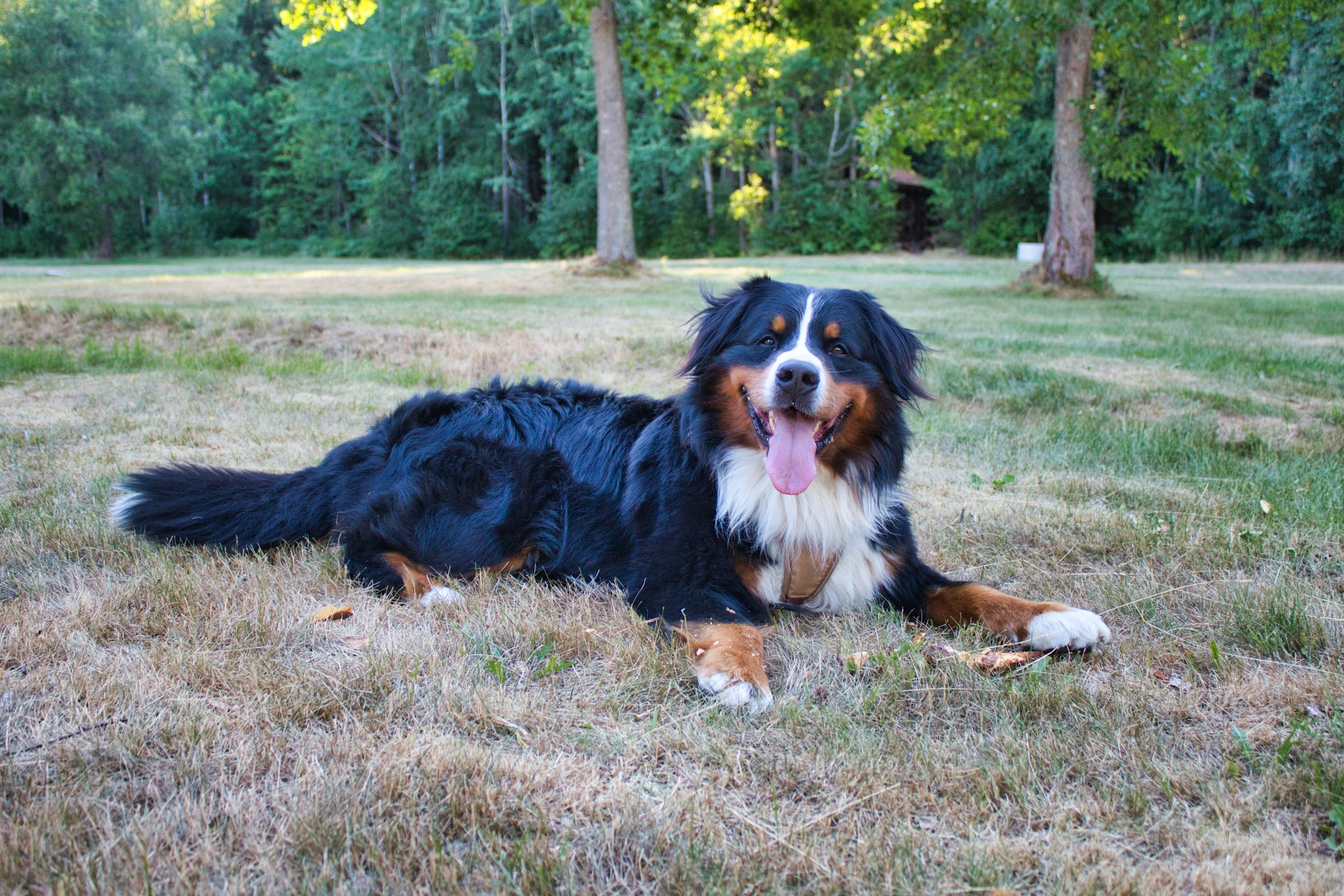
People who want a big, mellow dog keep landing on the Bernese, America’s No. 20 breed in 2025. What they rarely ask about is how long it lives.
A Swiss study followed Bernese Mountain Dogs born in 2001 and 2002 until nearly all had died. The median life was 8.4 years, and cancer caused 58.3% of the deaths. That’s more than half, from one cause.
PetMD names histiocytic sarcoma, an aggressive cancer, among the breed’s main risks, along with bloat. It also calls Berners “heavy shedders year-round” and says they should stay inside in hot weather. At 70 to 115 pounds of fur, that’s a lot of dog on your floor.
Males in the Swiss study had it shorter still: a median of 7.7 years, more than a year less than females.
#4 Saint Bernard, the Gentle Giant Who Drools
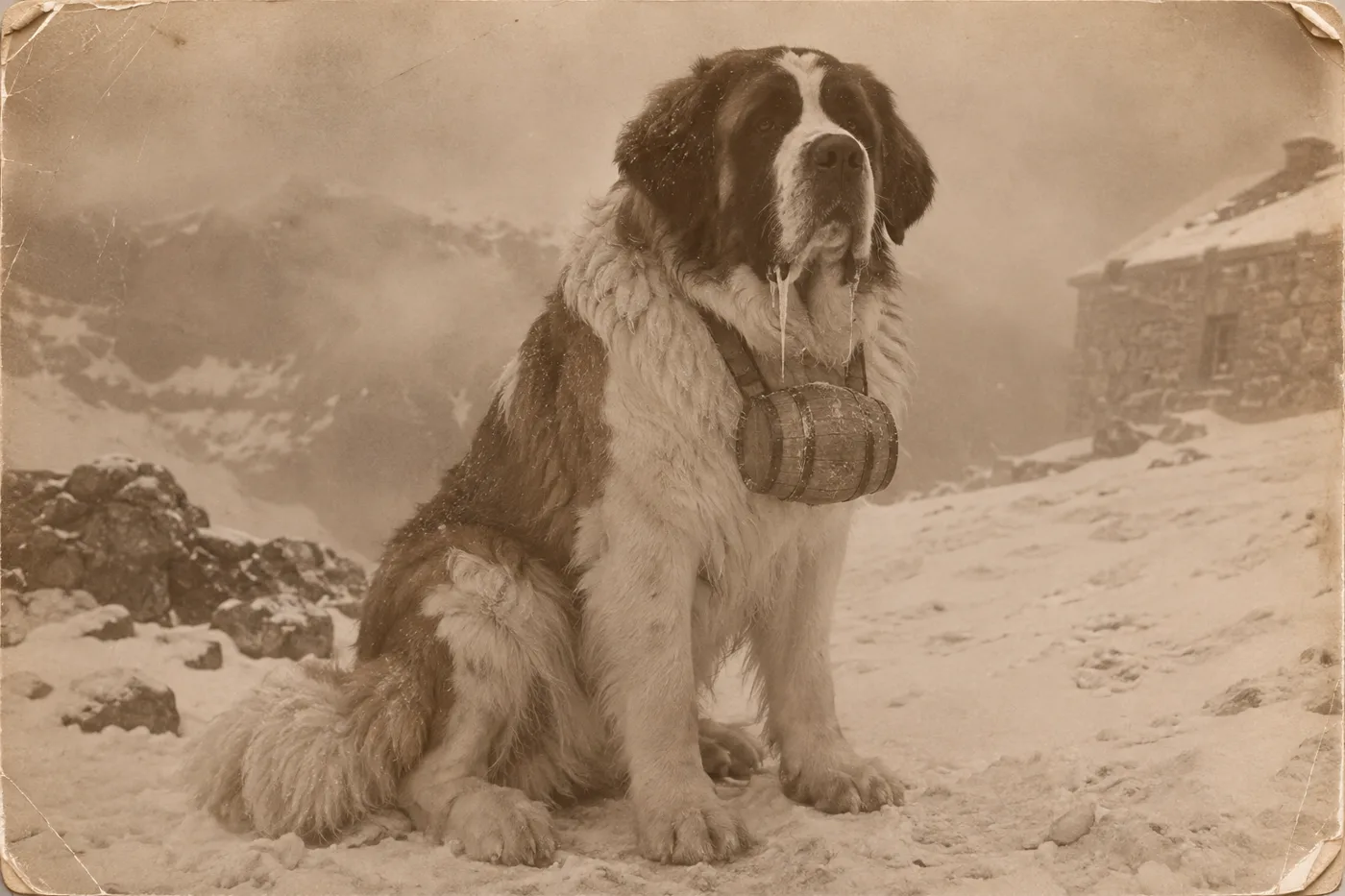
The Saint Bernard scores a 1 out of 5 on VCA’s barking scale. The legend behind the breed is mostly wrong.
Barry, the famous rescue dog at the Great St Bernard Hospice in the Alps, was credited with saving more than 40 people between 1800 and 1814. The story says he died on a rescue. He didn’t. He retired to Bern, and his preserved body is on display at the city’s Natural History Museum.
The bigger surprise is his size: about 88 to 99 pounds. Today’s Saints run 120 to 200.
That modern dog drools heavily, struggles in warm weather and is “somewhat aloof” with strangers, says VCA. Keep a towel by the door. UK vet records put its median life at 9.3 years.
#3 Akita, Quiet Puppy, Serious Adult Guardian
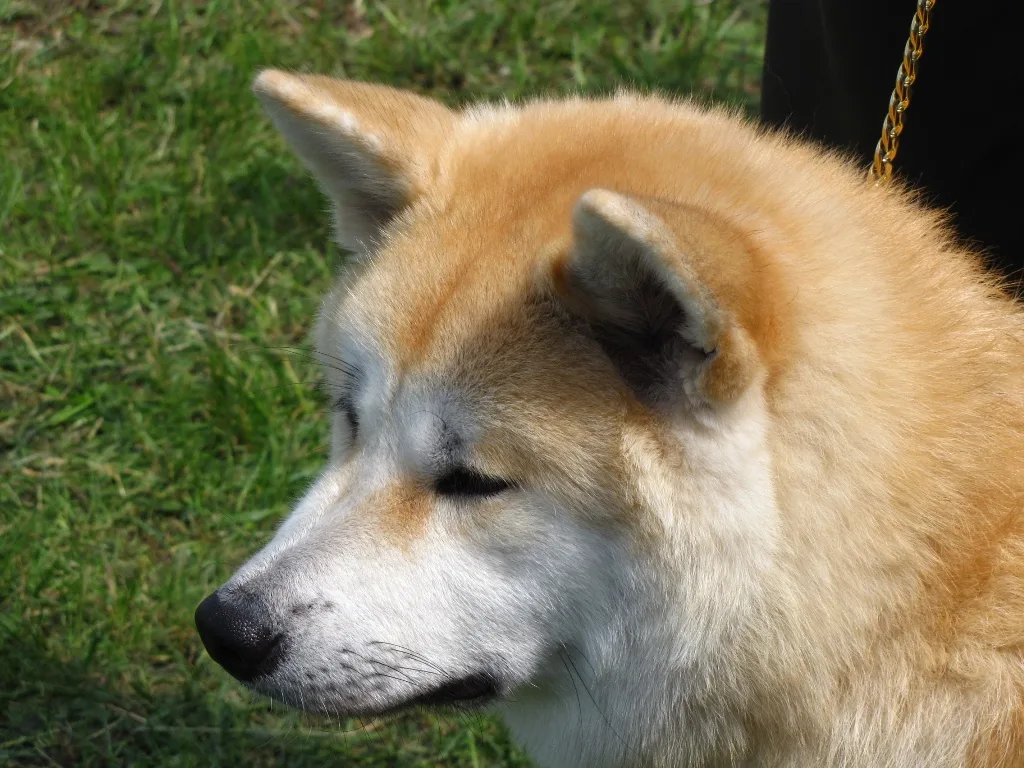
This is the clearest case of a calm puppy turning out to be no promise at all. Tom Davis, a professional trainer who runs the Upstate Canine Academy in New York, says: “The mistake I see constantly with these dogs is owners are charmed by their calm, quiet puppyhood, and they assume calmness means easy.”
In his experience, the guarding instinct switches on in adolescence. The dog stays quiet, a 2 out of 5 on VCA’s barking scale, but quiet and easy turn out to be different things.
VCA calls the Akita “a one family dog, tending to be aloof toward strangers” and “often aggressive toward other dogs and pets,” and says most don’t do well in dog parks. At 65 to 115 pounds, that matters on every walk.
If you have a steady stream of visitors, or a dog-park habit, meet adult Akitas from the same breeder before you fall for a puppy.
#2 Mastiff and Bullmastiff, Silent and Enormous
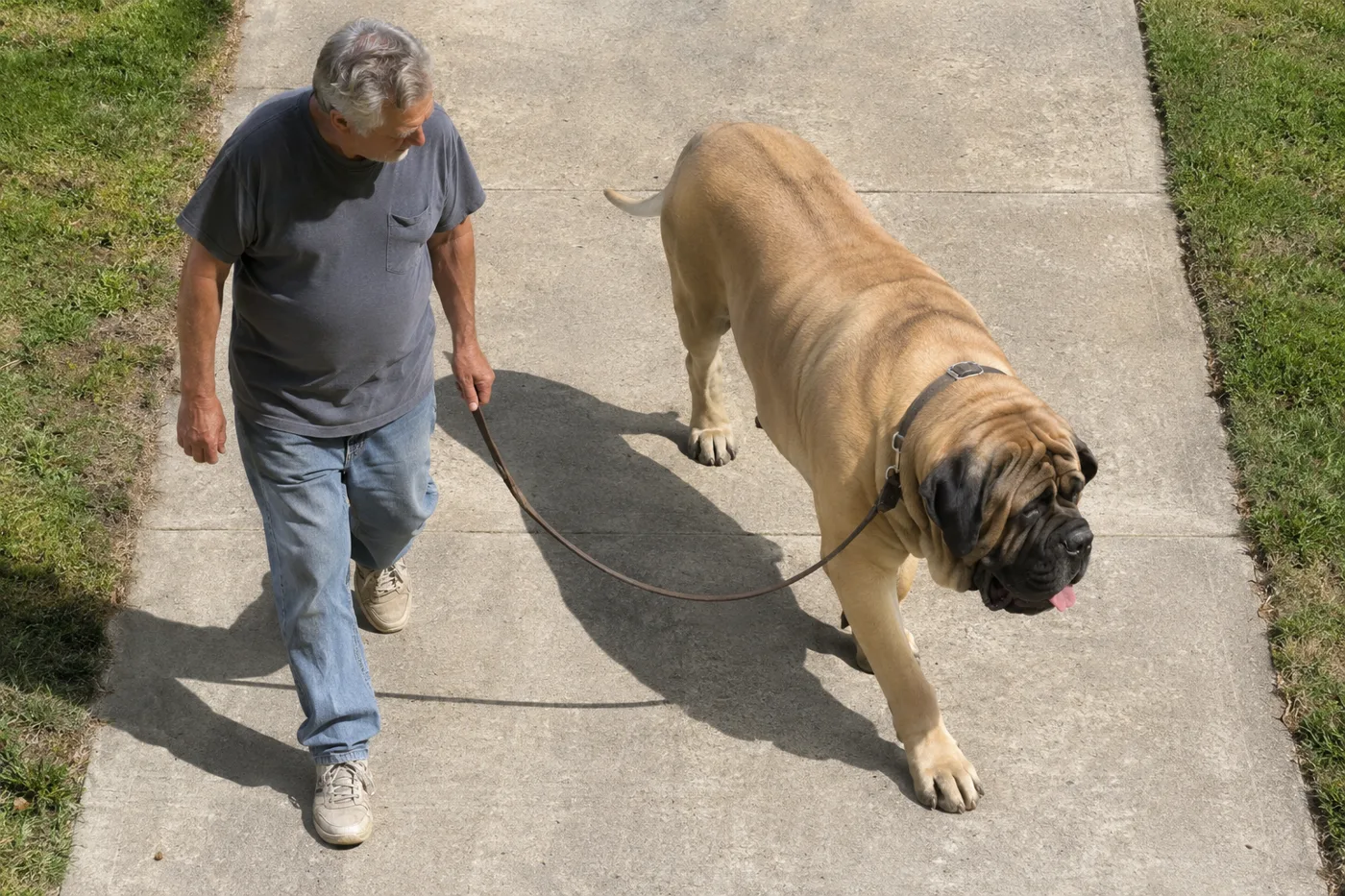
These are about as close to silent as a dog this size gets, which is why they sit this high.
| Breed | Weight | VCA bark score |
|---|---|---|
| Mastiff | 175 to 190 lb | 1 of 5 |
| Bullmastiff | 100 to 130 lb | 1 of 5 |
Two owners in one Reddit thread say their mastiff mixes turned out lazy, cuddly and quiet, just very large. VCA adds that the Mastiff “can be stubborn” and says “be prepared for drool.” The Bullmastiff does best with an owner who can combine reward-based training with good control.
That control is the whole story on a leash. Penn researchers estimated 32,624 fractures from walking leashed dogs among Americans 65 and older from 2004 to 2017. The study didn’t record dog size. The authors suggested obedience training so dogs don’t lunge, or choosing a smaller dog breed.
The AKC says a front-clip, no-pull harness helps with a dog that’s bigger than the person walking it. So a well-trained Mastiff walks like a parade float. An untrained one, at 180 pounds, walks you.
#1 A Grown-Up Shelter Dog, Any Breed
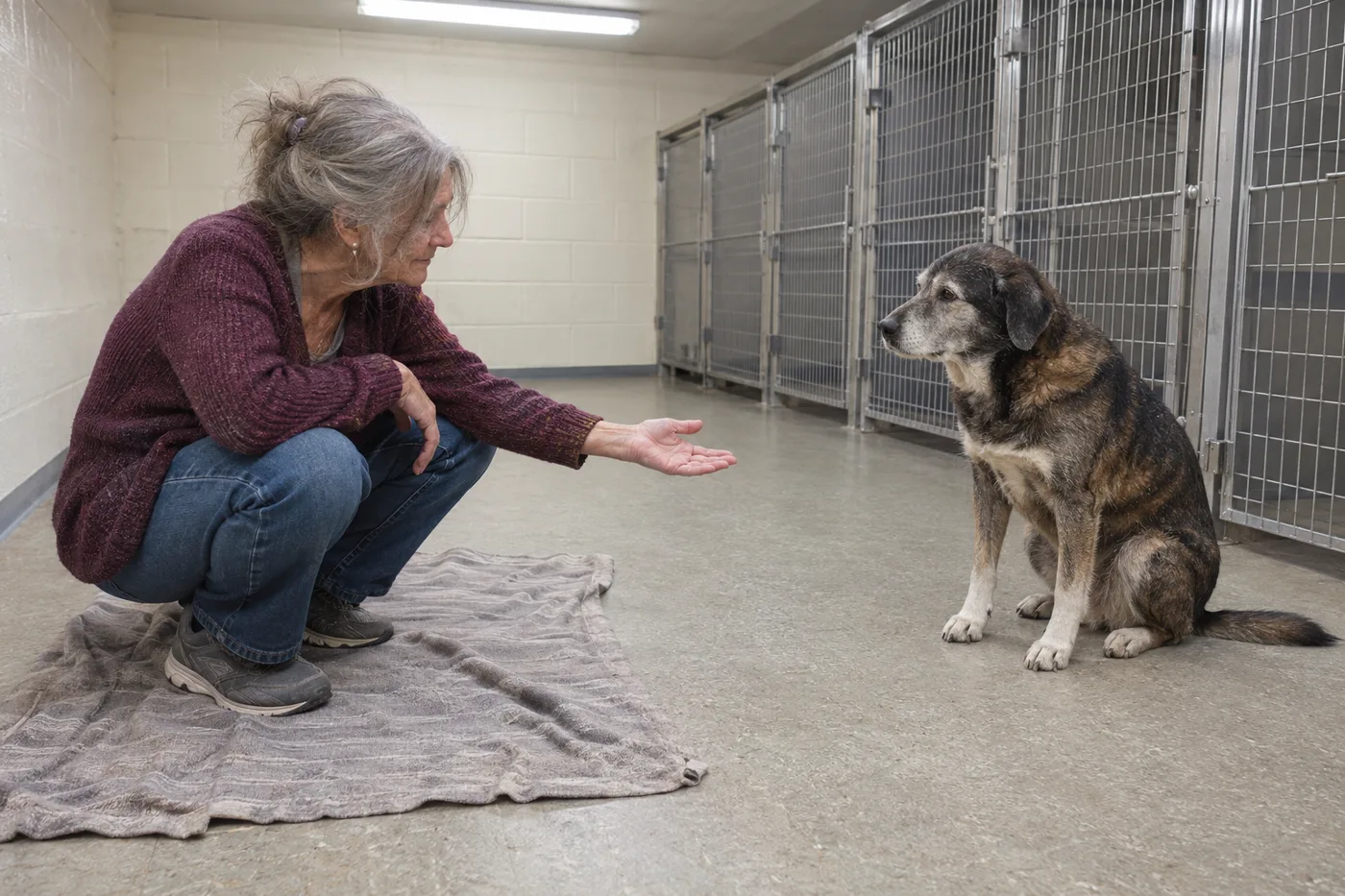
Every breed above is a guess about one dog based on thousands of others. An adult dog’s quiet is something you can watch for yourself.
That’s the answer dog people reach again and again. In several Reddit threads asking for a calm breed, commenters steer people toward an adult or senior dog from a shelter or foster. Dr. Lynch, the Tennessee vet from #14, also recommends shelter mixed breeds.
With a grown dog you can stand by the kennel when a stranger walks past, ring a bell, drop a leash, and see what happens. The ASPCA adds the rest: you know its size and personality, it’s often already house-trained, and the teething is over.
These dogs need you, too. Matt Bershadker, the ASPCA’s president, said in 2014: “Senior animals are typically the last to be adopted and the first to be euthanized.”
Seniors for Seniors programs – Muttville, San Francisco: its $250 fee is waived for adopters 62 and older, with a harness, leash, bowls, food and a bed included (details) – Muttville may also help with gates or stairs at home if needed – Lollypop Farm, Fairport, New York: fee waived for adopters 60 and older taking home a dog or cat aged 6 or older (details) – Not near either? Ask your local shelter whether it runs something similar
One honest caution. A dog that seems calm in a shelter can be shut down instead. Tufts University’s shelter-dog experts say a dog that won’t take treats, avoids people coming up to its kennel, or freezes when you reach toward it is showing fear, not calm. Its real personality may not show until it’s home. Ask whether the dog has spent time in a foster home and what it was like on the couch there. The person who’s heard it at 3 a.m. knows more than any breed chart.
The bottom line
Here’s a twist we found by checking a vet’s list against the AKC’s 2025 rankings. Dr. Lindsay Butzer, a small-animal vet in Boca Raton, Florida, named the 10 breeds that bark the most, with the Shetland Sheepdog at the top. In our own comparison, 8 of her 10 rank among America’s 30 most popular breeds. The Dachshund hit No. 5 in 2025.
The quiet sighthounds rank far lower: Whippet 48, Italian Greyhound 53, Greyhound 151. The dog barking over your neighbor’s fence is popular. The quiet one is easy to miss.
Dr. Butzer herself adds a caution: “I want you guys to take that list with a grain of salt because every dog has their own personality and every owner is going to train them differently.”
So before you pick, decide what quiet means in your house. Is it no barking at the mail carrier? No crying when you go out for groceries? No snoring through the bedroom wall? Each dog above wins at one of those and loses at another.
Bonus: Five quick checks before you trust any quiet-dog list
- Look up the breed on VCA’s breed pages, which score barking 1 to 5. The Basset Hound and Bichon Frise both turn up on quiet-dog lists, and VCA scores both a 4 out of 5.
- Prop your phone on a shelf and record the first half hour after you leave. The RSPCA in the UK says half of dogs who struggle alone show no obvious signs when you get home.
- Want a small dog that talks back instead of barking? Look up the Coton de Tulear. Its US club says most Cotons seldom bark, and the AKC says it’s known for its unique vocalizing.
- Considering a Newfoundland, another 1 out of 5 on VCA’s scale? Read its club’s warning first: “Fur will be on everything you own – house, furniture, car and sometimes in food.”
- Before you fall for a Borzoi, the AKC’s “seldom bark” sighthound, check that you have a securely fenced area where it can run for 30 minutes or more every day.
Questions people also ask
Is it normal for a dog to never bark?
Yes, for some dogs it is. The Basenji’s breed standard says it “should not bark but is not mute,” and a Texas adoption group says Greyhounds bark very little. What vets watch for is a change. PetMD’s Dr. Rhiannon Koehler, DVM, advises calling your vet if “you’re noticing a change in the dog’s voice over time,” since laryngeal paralysis, a nerve problem in the voice box, can permanently change how a dog sounds.
Will a quiet puppy stay quiet as an adult?
Not reliably. In a UK and Ireland study of young dogs, owners reported barking as a problem in 7.9% of dogs at six months, rising to 13.4% at twelve months. PDSA says adolescence starts around 8 to 12 months, when dogs may start barking at things that never bothered them. A Boxer owner on Reddit summed it up: “Mine was quiet for the first year then found his voice and won’t stop now.”
What small dog breeds can be left alone without barking?
No popular small breed is reliably good at it, and some quiet favorites are poor at it. PDSA says Cavaliers should never be left more than four hours. The UK’s RSPCA says 8 out of 10 dogs find it hard to cope alone, and the ASPCA says distress, including nuisance barking, usually starts within minutes of you leaving. The ASPCA advises ruling out medical causes first and never punishing it.
Why did my quiet dog suddenly start barking?
A sudden change is a reason to see your vet first. Dogs Trust, the UK’s largest dog-welfare charity, says “Sudden changes in behaviour can mean there’s a medical problem,” naming joint pain and doggy dementia, and notes some dogs grow sensitive to sounds when they hurt. In a video interview, veterinary behaviorist Dr. Chris Pachel of Portland, Oregon, says that not every cause of a behavior change is visible even on a thorough physical exam, so it’s worth pressing on if the first visit finds nothing.
Do Basenjis really not bark at all?
Basenjis don’t make a normal bark, but they’re far from silent. They yodel, howl, growl and scream instead, and Hill’s Pet says the yodeling “certainly makes quite a bit of noise.” The usual explanation, an unusually shaped voice box, comes from a 1979 study of just two dogs.