Seventeen specific changes in an old dog’s body and mind, plus the five-favorite-things list and the good-day calendar that help you tell a bad day from a real turn.
Save a little attention for #1. It’s tied to the regret one veterinarian says he hears most often.
The phone is the only light in the room. You’ve typed signs your dog is ready to be put down, deleted it, and typed it again. Somewhere near your feet there’s a snore you’d know anywhere.
What you want is one sign so clear you can’t get it wrong in either direction. Old dogs rarely give you that. They give you a pile of small ones, and a few of them fib.
Table of Contents
#17 Skipping meals, even favorite treats
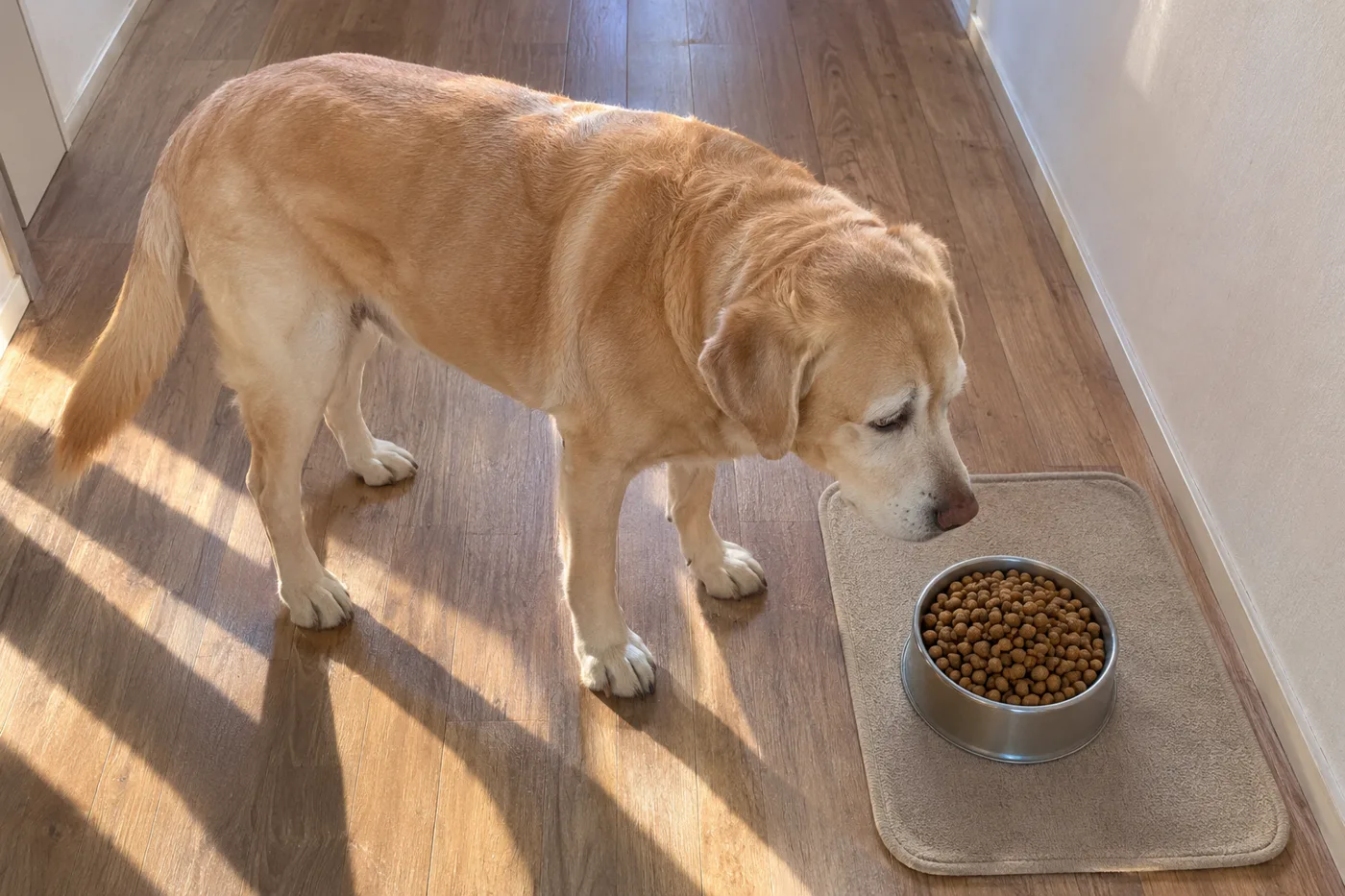
An old dog who stops eating needs to see a vet within a day. South Pasadena Animal Hospital says senior dogs who stop eating should be seen within 24 hours. If vomiting comes along with it, they should be seen the same day.
Before you fear the worst, check the reason that clinic calls the most commonly missed: teeth. A dog who has spent a decade treating every dropped crumb as a personal gift can turn down a chicken strip because chewing hurts. That one can often be fixed.
The rest of the clinic’s list is harder: nausea, kidney or liver disease, Addison’s disease, cancer and pain. Those causes also explain the crash that blindsides so many owners.
Kidneys are the clearest example. Signs of serious kidney disease only appear after 75% of the kidneys’ function has already been lost. So “fine last week” can be true, and “not fine today” can be true as well.
One gray area is hand-feeding, which still counts as eating. Zen Dog Veterinary Care draws the line at needing to be coaxed through every meal, or turning away from lifelong favorites.
If the treat bag rustles and nobody comes, make the call.
#16 Back legs giving out when trying to stand
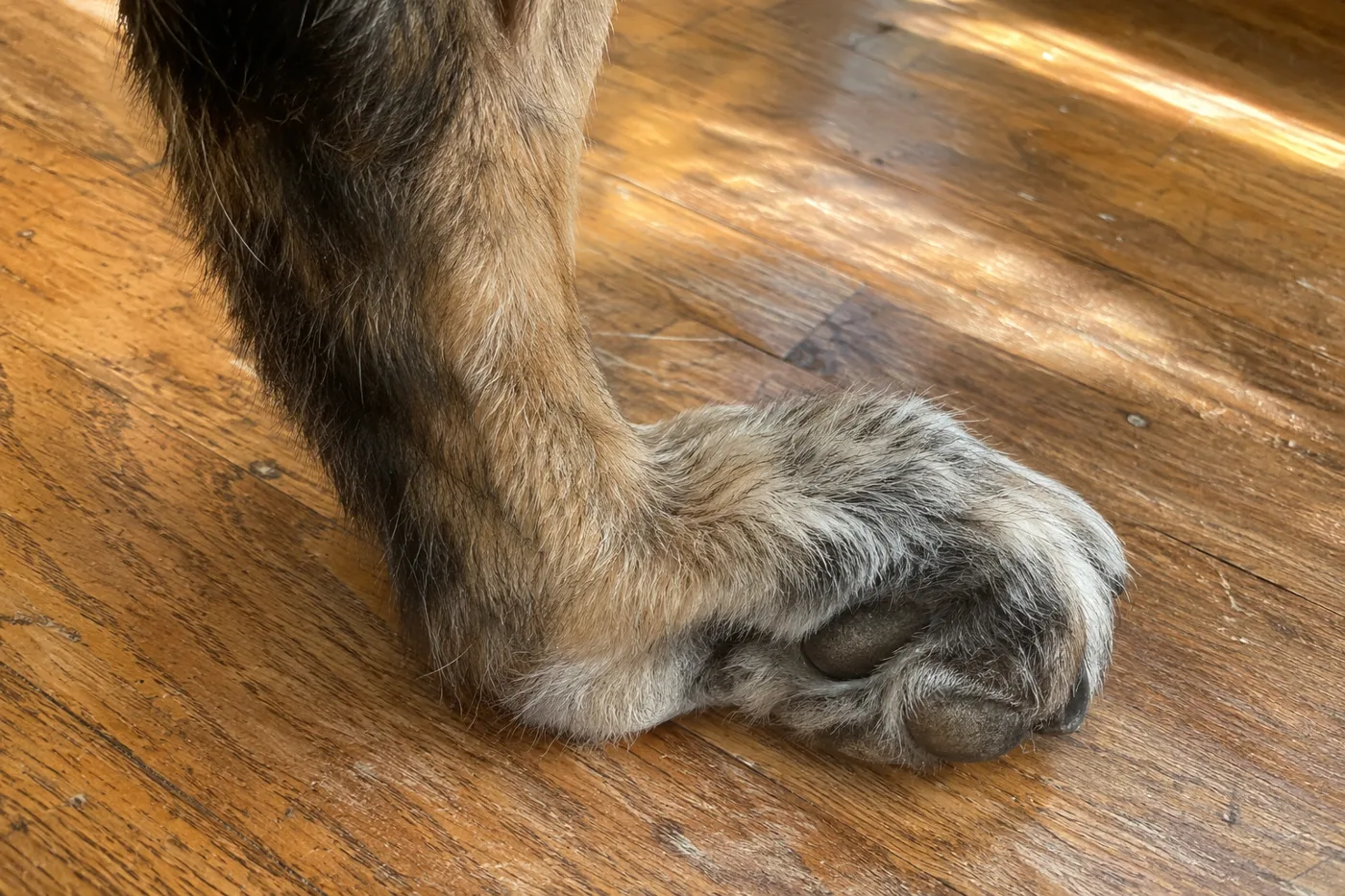
When the back end starts to sink and one hind paw scuffs along the floor, ask your vet about degenerative myelopathy. It’s an inherited disease of the spinal cord that usually shows up around eight years of age or older, and it often starts in just one back leg.
You may hear it before you see it: a toenail scraping the floor on every step, or the nails on one foot worn down flat. Other early signs are trouble getting up, wobbling, and the muscle over the hips melting away.
Cornell’s canine health center names the breeds most at risk:
- German Shepherd Dogs
- Boxers
- Pembroke Welsh Corgis, who can show signs earlier than the rest
- Chesapeake Bay Retrievers
- Rhodesian Ridgebacks
- Bernese Mountain Dogs
If you love one of these breeds, that’s no knock on them. It’s simply what to watch for.
The timeline is short. Cornell says most dogs can’t walk within six to twelve months of the first signs. It also says dogs “are humanely euthanized within six to twelve months after the onset of clinical signs.”
There is one real comfort in it. Dr. Joseph Mankin, a clinical associate professor at Texas A&M’s veterinary college, calls it a slowly progressive, non-painful disease process. The pain comes from coping with it. Dogs who knuckle over drag their paws and can end up with raw spots, cuts and bald patches.
Rugs for grip, ramps, a sling or harness, booties and dog wheelchairs are all on Cornell’s list of aids.
Vets reach this diagnosis by ruling out other spinal problems, with a full nerve exam and often an MRI scan. That adds up: at Colorado State University’s vet hospital, a neurology consult runs $294 and an MRI up to $5,665. Ask your vet what the scan would change before you book it.
Several owners on Reddit’s senior-dog boards say the back legs were the moment they knew, often a morning when the back end just wouldn’t come up off the rug.
#15 New accidents in the house or bed
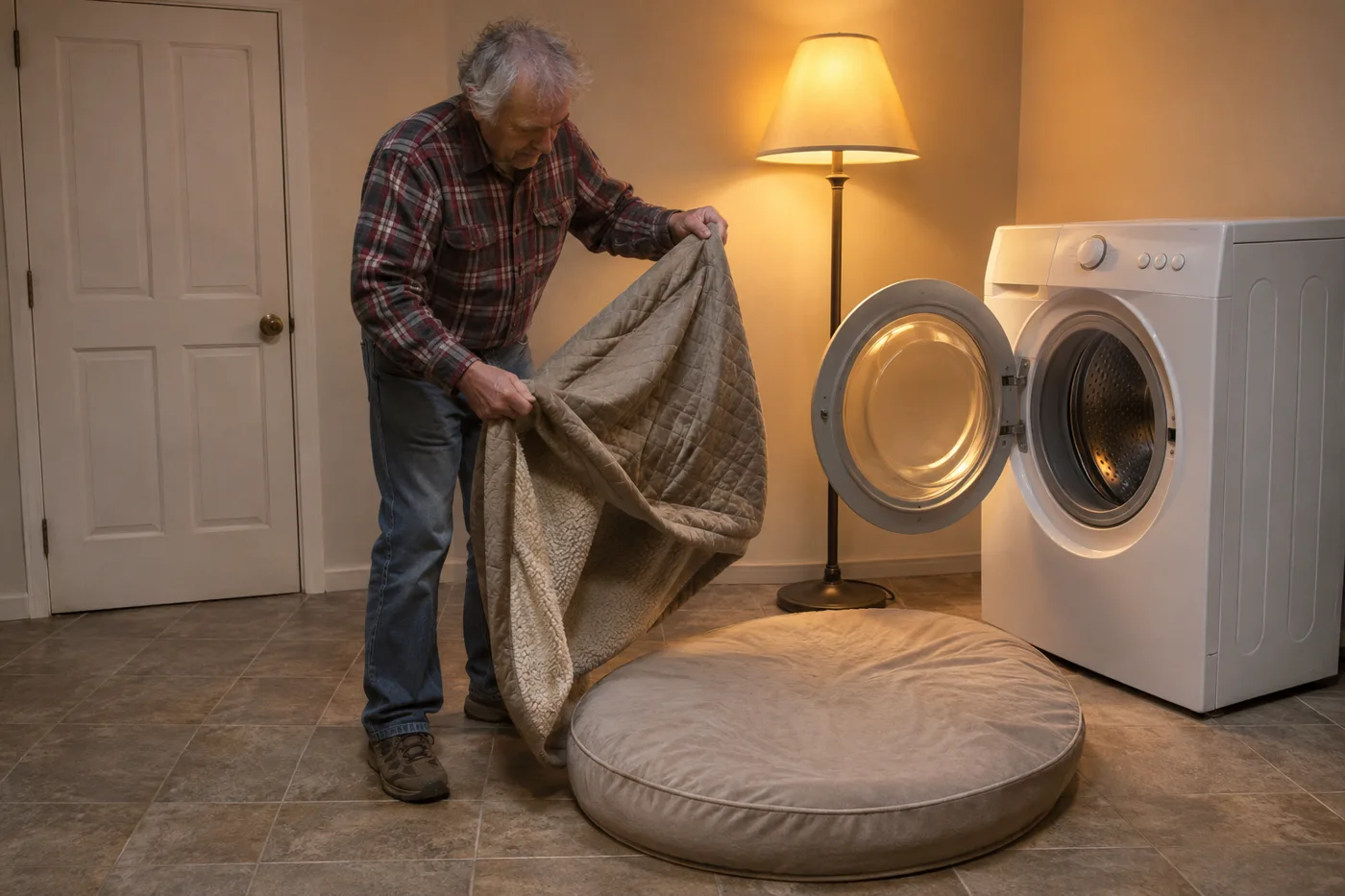
A wet spot on the dog bed is one of the most treatable changes an old dog can show you. VCA Animal Hospitals says urinary incontinence may affect over 20% of all spayed female dogs and up to 30% of large-breed dogs. About 70% of cases respond well to medicine alone.
Two other causes can look the same on the bedspread.
Dementia can make a dog forget housetraining. They aren’t stuck. They just don’t remember to ask to go out. The American Kennel Club lists house soiling among the classic signs of dog dementia.
Pain can do it too. Cornell’s vets count indoor accidents among the daily habit changes that can point to pain.
That’s three causes with three different fixes. So an exam and a urine check come first, and conclusions come later. Owners in Reddit’s dog groups describe all of these: a dog peeing in bed because getting up was too hard, or one that suddenly went wherever was handy.
Strip the bed, toss the cover in the wash, and call the vet before you decide what it means.
#14 Bad days outnumbering good on a calendar
Memory is a bad witness when you love a dog. Dr. Tiffany Boisjolie, a veterinarian with Pets at Peace in Arizona, explains why: “A good afternoon, a wagging tail, a finished meal, a walk to the mailbox, can outweigh a hard week in how we remember things.”
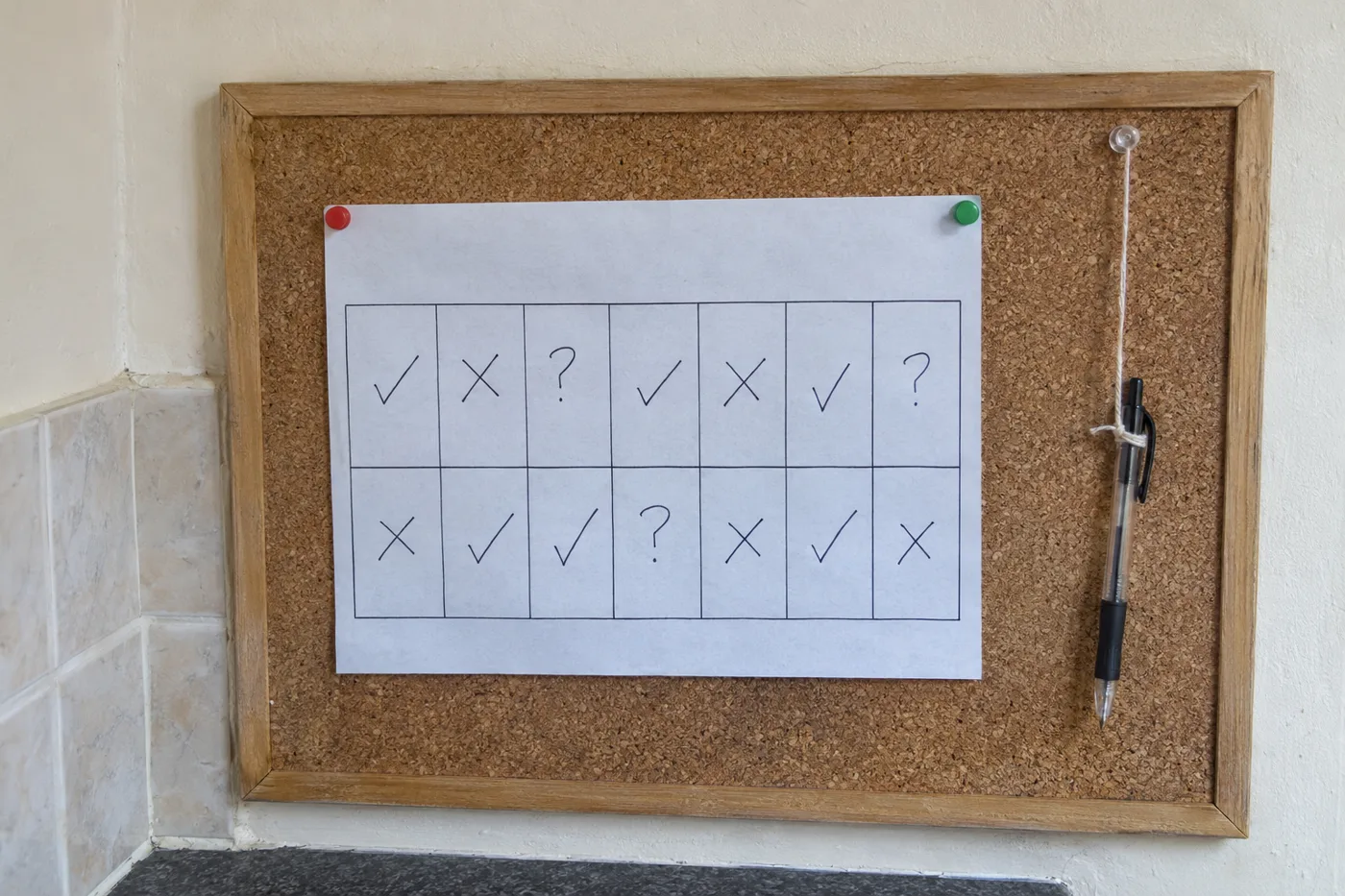
The fix is a paper calendar on the fridge or by the bed, and a pen tied to it.
The good-day calendar – A check for a good day, an X for a bad one, a question mark when you honestly can’t tell – Keep it up for at least two weeks, ideally three or four – Then ask: do the X’s outnumber the checks, and is that getting worse? – Ask too: is your dog’s world shrinking, room by room and walk by walk?
PetMD quotes Dr. Mary Gardner, who puts the line here: “When bad days outnumber good days and your dog’s health and circumstances aren’t expected to improve, it may be time to say goodbye.”
The catch is time. A calendar needs weeks, and a dog in obvious distress doesn’t owe you a full month of data.
If you’d rather not draw your own, Lap of Love, a national in-home vet hospice service, offers a free printable quality-of-life calendar.
#13 Circling, staring at walls, stuck in corners
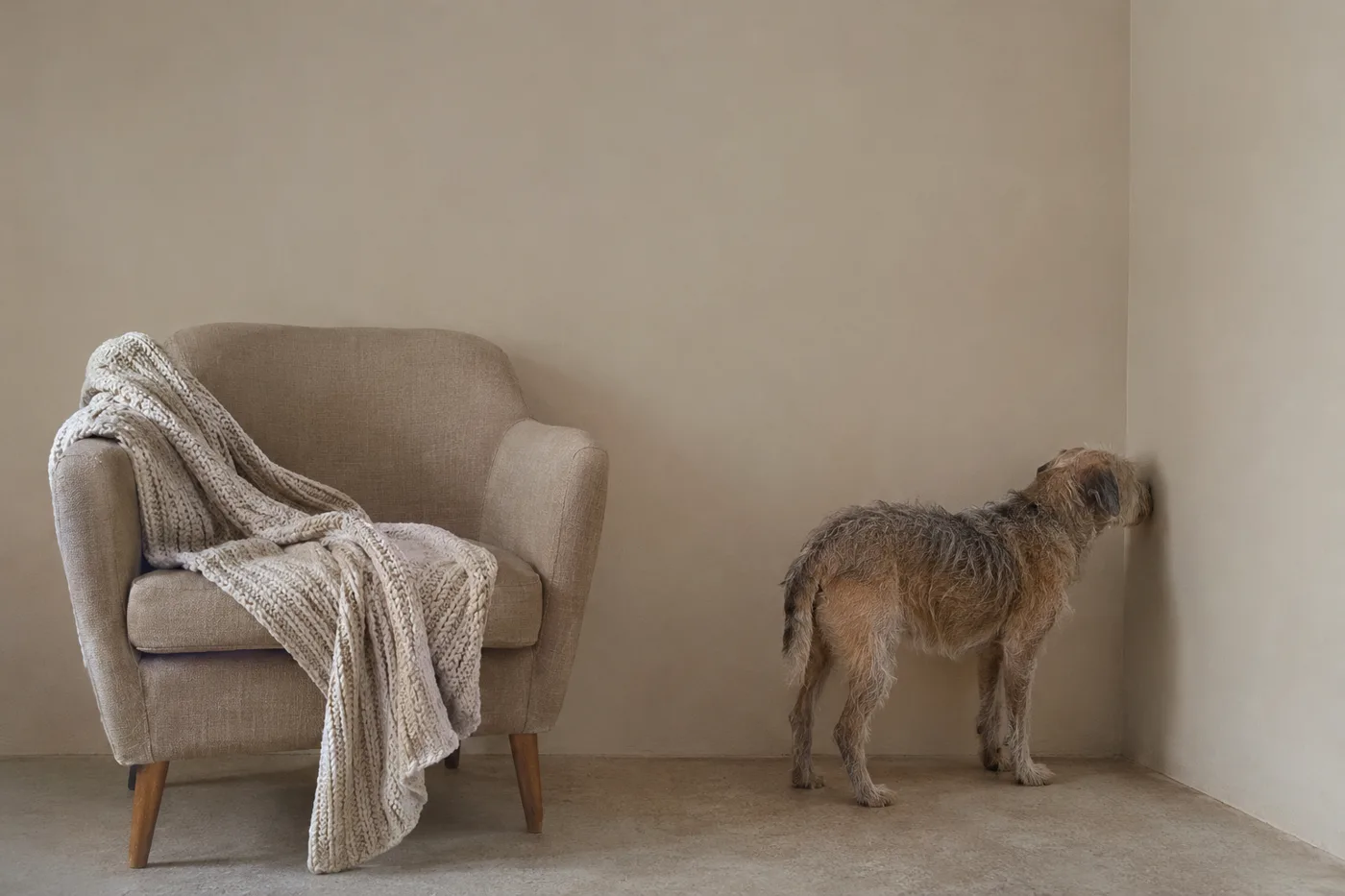
If your dog wanders into a corner and stands there like a kid sent to time-out, or circles the same rug and then stares at the wall, think canine cognitive dysfunction. That’s the vet name for dog dementia.
It’s far more common than the diagnoses suggest. One study of dogs averaging almost 12 years old found signs of dementia in 14.2% of them, yet only 1.9% had ever been diagnosed. The AKC cites research finding at least one sign in 28% of dogs aged 11 to 12, and in 68% of dogs 15 and older.
Why the gap? Partly because nobody asks. In a 2024 survey of Australian vets, 73% said they diagnosed it only a few times a year or less, when the numbers suggest a case every four to ten days. Bring it up yourself.
“Remember these signs will often be very subtle to start with,” says Dr. Alex Avery, the veterinarian behind the Our Pets Health channel.
Your vet will want to rule out arthritis, kidney and liver disease, and urinary problems first, because each can look like dementia. Owners on Reddit describe dogs walking into walls, staring into space, and no longer wanting to sit with the family in the evening.
Then there’s a giveaway most owners laugh at until they see it: a dog standing at the spot where the water bowl used to be, long after you moved it.
#12 Sleeping all day, awake and pacing at night
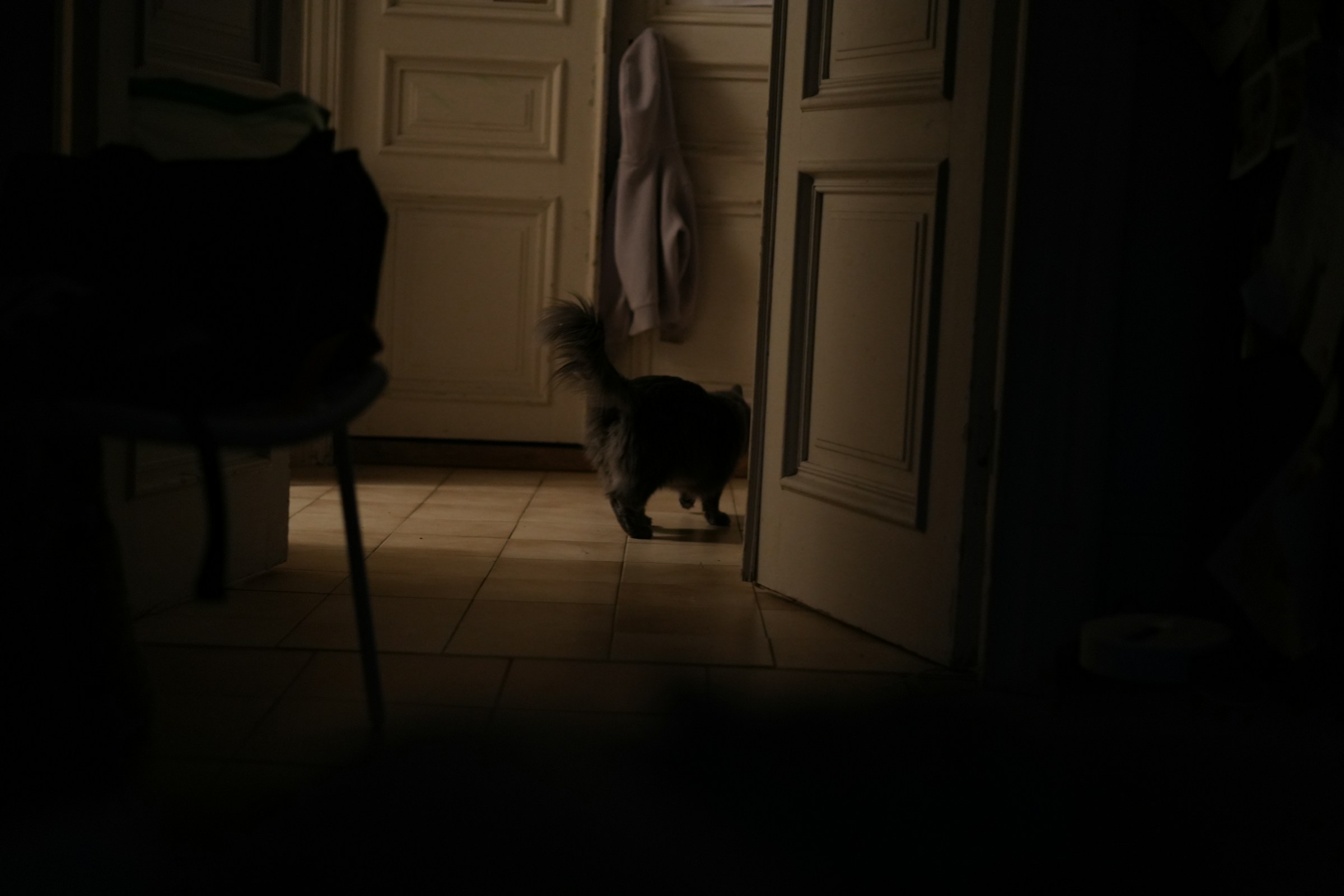
A dog who snores through the afternoon, then clicks up and down the hall at 3 a.m., may have the sleep side of dementia. The AKC says some people call it sundowner syndrome.
There is a medicine for it. Selegiline is the only prescription drug approved by the US Food and Drug Administration for dog dementia. Most dogs show some improvement after about a month, and gains can keep coming for up to 12 weeks.
Three things stand between you and that bottle. It needs a diagnosis first. Night pacing is also a pain sign: VCA lists “restlessness at night (cannot get comfortable)” among them, so pain gets ruled out before anything else. And selegiline doesn’t mix with everything. Its package insert warns against using it with phenylpropanolamine, a common incontinence medicine, or with opioids, antidepressants or the tick-control ingredient amitraz. Bring a list of everything your dog takes, flea and tick products included.
A clue you can watch for tonight: Dr. Avery says a dog pacing from dementia can usually be distracted out of it.
The AKC passes along advice from Dr. Denenberg: mental and environmental enrichment, and exercise on a predictable schedule. Walks and meals at the same times every day cost nothing, so start there.
#11 Panting and restless when the house is cool
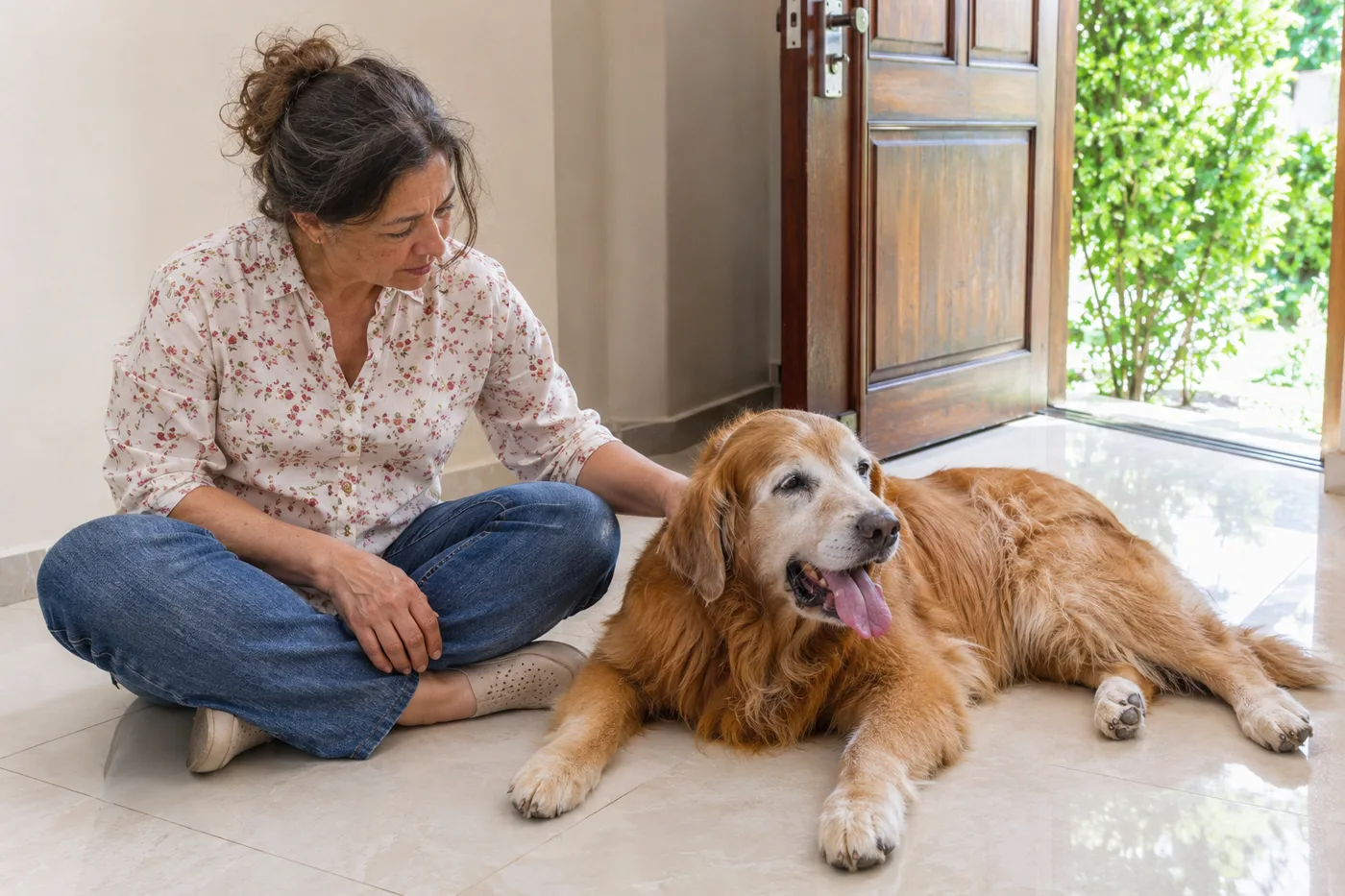
Panting at rest, in a cool room, with no walk behind it, is one of the few ways pain slips past a dog’s poker face. Cornell lists excessive panting even at rest right alongside restlessness and flattened ears.
You’ve probably heard yourself say it: “She’s just getting old.” Maybe. But there’s a fair way to find out. VCA says a short trial of pain medicine from your vet can confirm whether pain is behind the behavior. If the panting and fidgeting ease, you have your answer, and your dog gets relief at the same time.
Expect your dog to act perfectly fine on the exam table. Cornell notes that anxiety in the clinic can hide pain behaviors, which is why what you see at home matters so much.
So take a 30-second phone video the next time it happens on the living room rug, with the thermostat in the shot if you can.
#10 Slipping, stumbling, or collapsing more than once
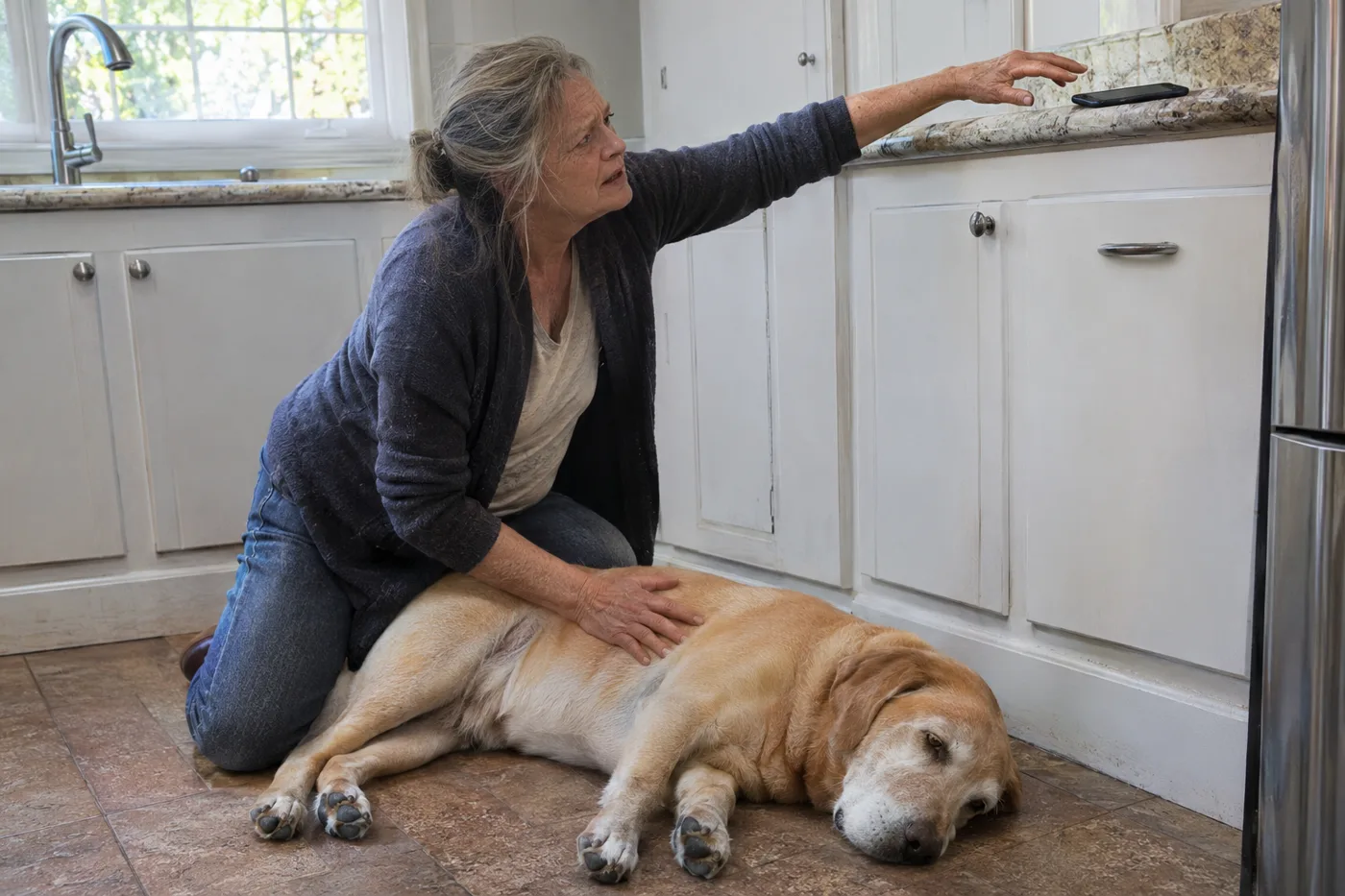
A sudden fall in an old dog can mean two very different things, and both earn a same-day call to the vet.
| Inner-ear balance attack | Bleeding tumor on the spleen | |
|---|---|---|
| What you see | Falling, head tilt, flickering eyes, circling, sometimes vomiting | Sudden collapse, pale or white gums |
| Who gets it | Senior dogs, often with no known cause | Mostly dogs 8 to 12 |
| What usually happens | Better in 2 to 3 days, recovered in 1 to 2 weeks | An emergency |
The first one is geriatric vestibular disease. It looks like a stroke and scares owners half to death. Yet the UK vet charity PDSA says most senior dogs with it improve within two to three days and recover fully in one to two weeks, though some keep a jaunty head tilt for good.
The second is hemangiosarcoma, a cancer of the blood vessels. “Dogs with the most common splenic form of HSA will usually arrive at an emergency clinic having suddenly collapsed and with pale gums due to internal bleeding,” says Kelly Sams, a lab manager at Cornell’s Baker Institute, quoted by the AKC. Golden Retrievers, Portuguese Water Dogs, Boxers and German Shepherds are most at risk.
The AKC adds a detail most owners never hear: it can also cause brief episodes of unresponsiveness that are easy to miss. That might be a brief moment where your dog seems to look straight through you, then shakes it off.
If a fall comes with pale gums, don’t wait to see how the evening goes.
#9 Labored breathing even while lying still
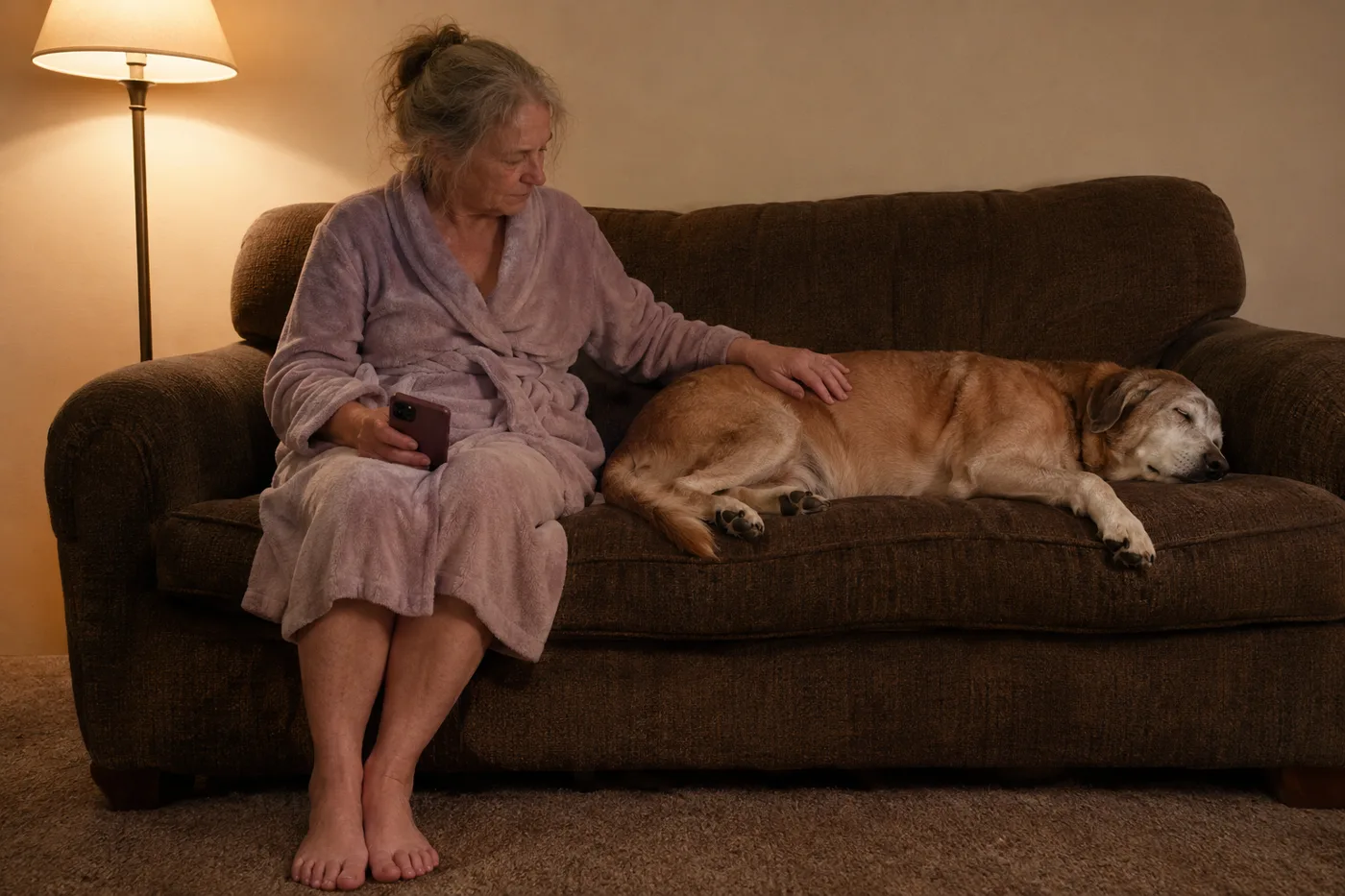
This is a home check that takes 15 seconds. While your dog is relaxed or asleep, count how many times the chest rises in 15 seconds, then multiply by four.
Cornell’s canine health center gives the numbers. A normal rate is 15 to 30 breaths a minute. Above 35 while relaxed or sleeping points to heart problems.
Two things can throw it off. A dog who just finished zooming around the yard or is dreaming about squirrels will run high, so count during deep, ordinary sleep. And one count means little. Several counts over a few days tell you the trend.
The cardiology service at the Ontario Veterinary College recommends a free app called Cardalis for logging the counts. It also lists breathing difficulty, persistent coughing, and weakness or collapse as emergencies.
Then you’ll walk into the vet’s office with a week of numbers instead of “he seemed a little puffy.”
#8 Pain medicine that no longer seems to help
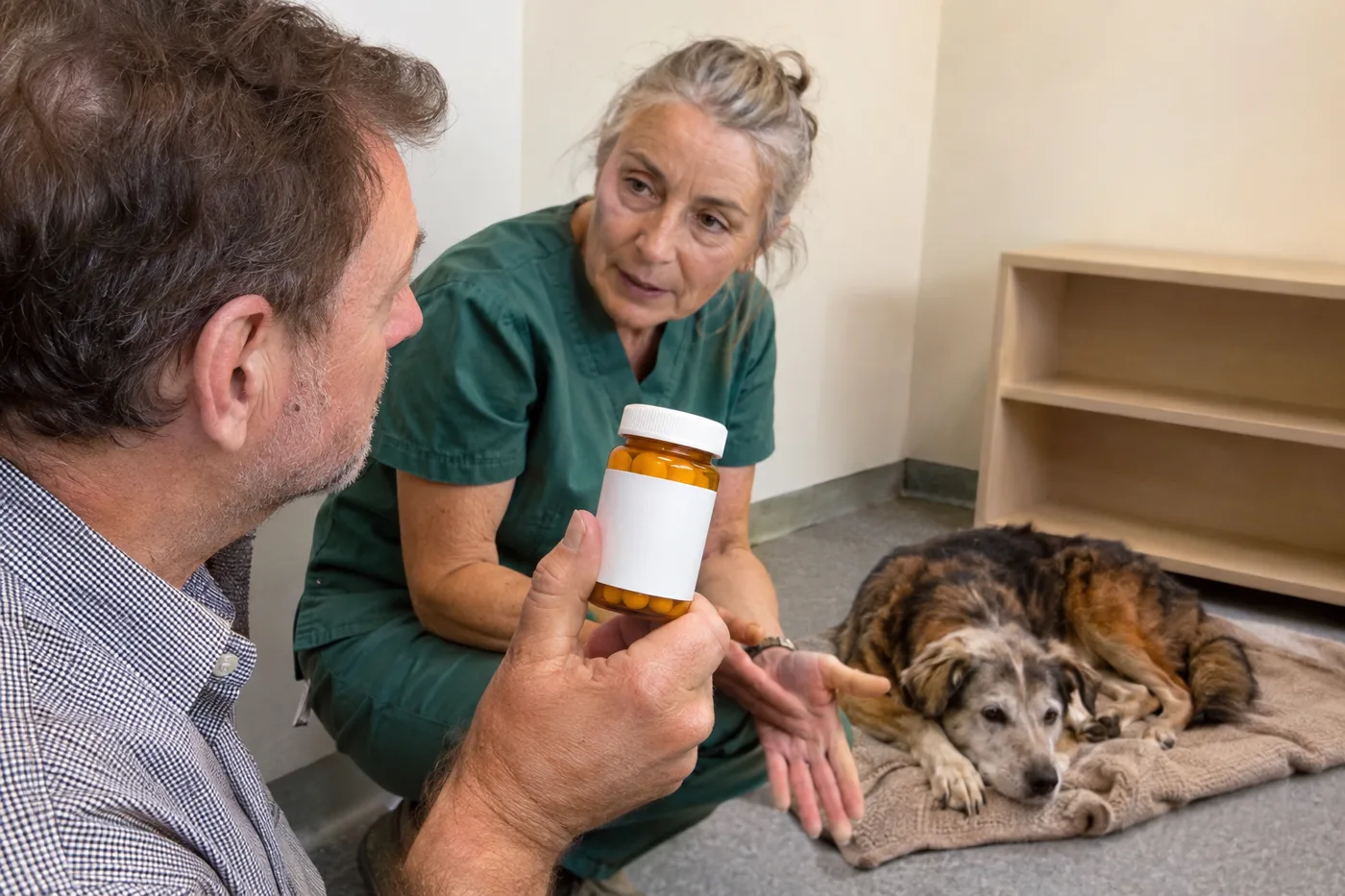
When the pills stop working, ask your vet what can be added before you assume nothing more can be done. “Maxed out” may not be, especially if nerve pain hasn’t been addressed.
Dr. Tamara Grubb, a veterinary anesthesia and pain specialist, explains that anti-inflammatory drugs alone may not completely relieve moderate to severe pain, because they don’t reach pain that comes from the nerves. She suggests adding a second drug, such as gabapentin or amantadine.
In a controlled study she cites, dogs with hard-to-treat arthritis in the back legs got amantadine on top of their usual anti-inflammatory. They were more active and limped less than dogs on the anti-inflammatory alone. She calls amantadine a first choice when pain suddenly gets worse even though the disease hasn’t.
This is a prescription decision for your vet, who knows your dog’s other medicines and organs. Side effects tend to be few. Colorado State University’s vet hospital says gabapentin can cause sleepiness or wobbliness, and amantadine can cause diarrhea, gas or agitation.
“Is there something we can add?” is a fair thing to say at the next appointment.
#7 Snapping or flinching when touched
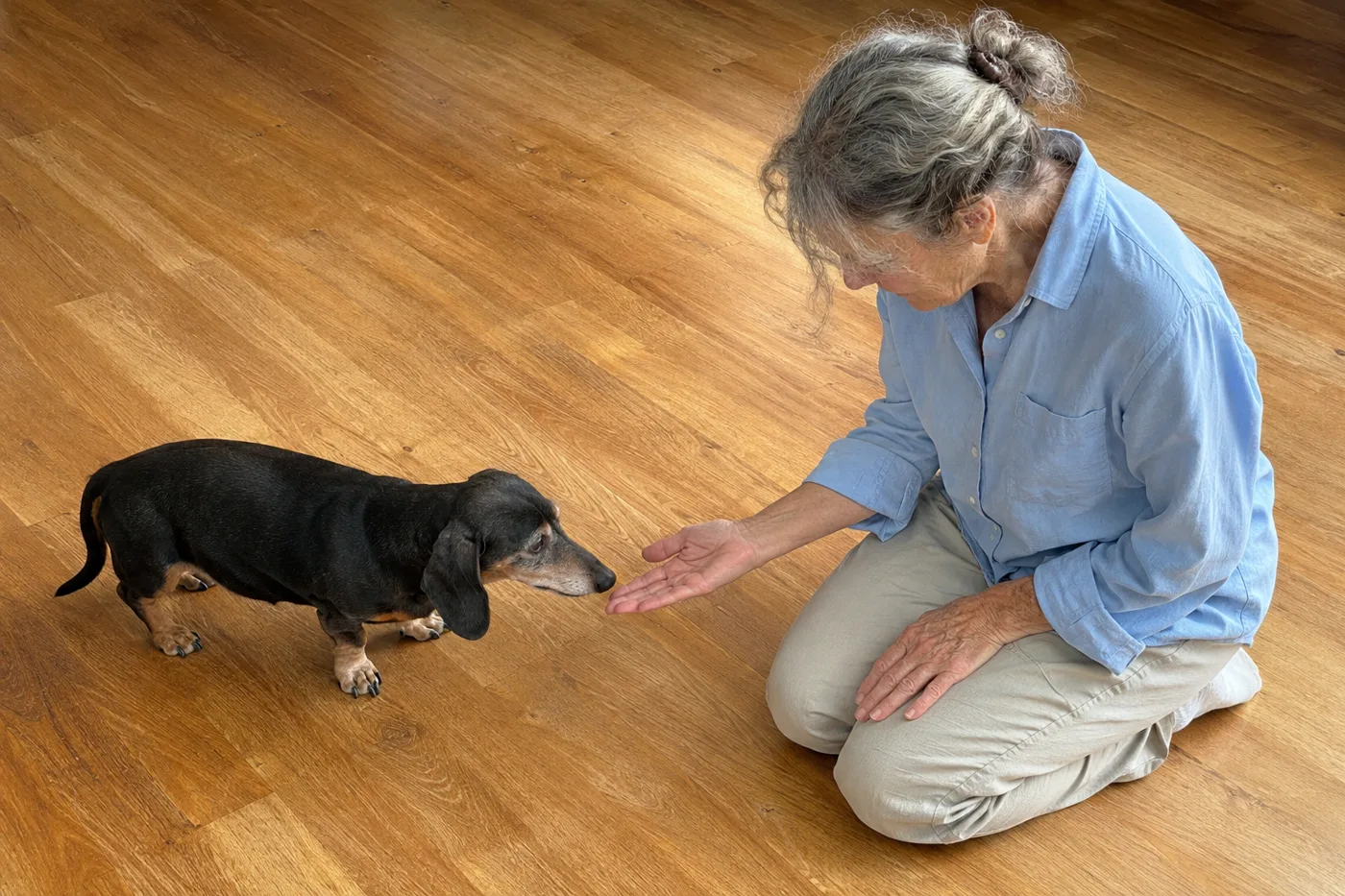
A sweet old dog who suddenly snaps is far more likely to be hurting than turning mean.
Vets at the Autonomous University of Barcelona’s veterinary hospital looked at 12 dogs referred for aggression. Every one of them was diagnosed with pain, and eight had hip dysplasia. The part that should change how you handle an old dog: dogs that had never been aggressive before often attacked “with no prior warning in the form of growls.” It usually happened when someone tried to hold or move them.
VCA says dogs in pain can become sensitive to being picked up, especially small or long-bodied dogs with sore backs. Even brushing can become uncomfortable.
Cornell lists the same shift: “a normally affectionate dog may now react negatively” to touch.
If children visit, a few house rules keep everyone safe:
- No picking up the old dog
- No hugging or lying down next to them on their bed
- Let the dog come to you for pats
Then tell your vet exactly where your dog was touched when they flinched.
#6 You can no longer lift or carry them
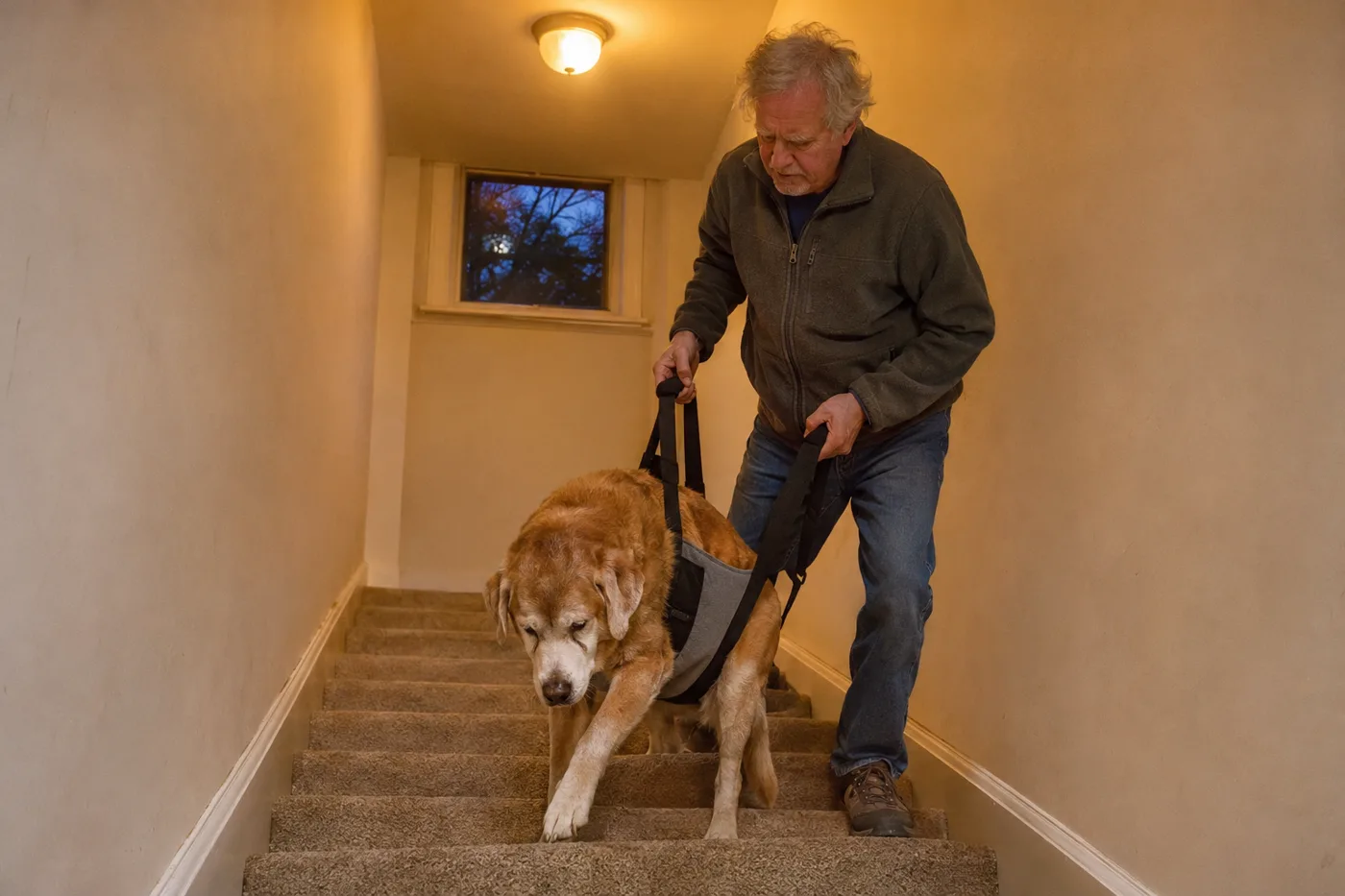
Your stairs, your back and the way your house runs count as real reasons.
The timing is your household’s decision, not your friends’ or the internet’s.
PetMD’s guidance from Dr. Gardner names four factors in the decision. One of them is your caregiving resources: money, time, physical ability and emotional reserves.
Slings, harnesses and ramps can buy real time, and they’re worth trying. They still need someone to work them several times a day, every day, including the icy mornings and the nights you’re sick.
Mary Beth Spitznagel, a Kent State University psychologist who studies people caring for sick pets, has a message for anyone who feels guilty about getting worn down:
“They need to know that it is okay to feel stressed out by the situation. Acknowledging the stress doesn’t mean they love their pet any less.” Mary Beth Spitznagel, psychologist, via EurekAlert
#5 The quality-of-life score falling below halfway
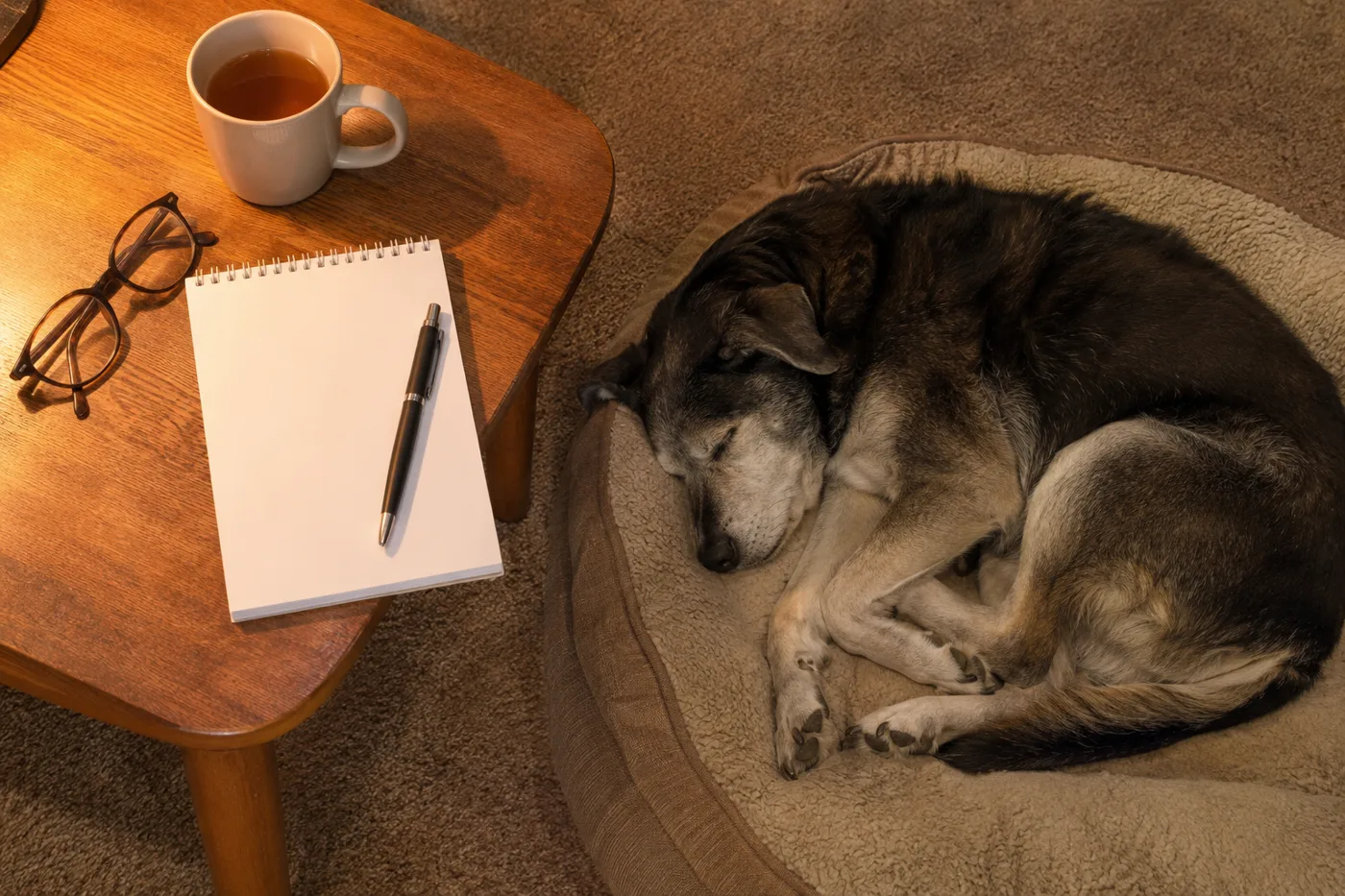
When the score drops to 35 or below out of 70, take it to your vet. One scale vets use is the HHHHHMM scale. Veterinary oncologist Dr. Alice Villalobos created it and published it in her 2007 book. You give each of seven categories a score from 0 to 10.
| Letter | What you’re scoring |
|---|---|
| Hurt | Is pain under control, breathing included? |
| Hunger | Is your dog eating enough? |
| Hydration | Is your dog drinking enough? |
| Hygiene | Can they stay clean and free of sores? |
| Happiness | Do they still respond to you and enjoy things? |
| Mobility | Can they get up and around, even with help? |
| More good days than bad | Do the good days still win? |
A total above 35 generally means acceptable quality of life. The trend over time matters more than any one score. A dog who scored 52, then 46, then 39 is telling you more than one rough Tuesday can.
One weakness: the person holding the pencil loves the dog. If someone else in your life knows your dog well, have them score separately, then compare.
The worksheet is free to print from Zen Dog Veterinary Care. If you’d like to talk to someone, Lap of Love can be reached at (855) 933-5683.
#4 Three of their five favorite things gone
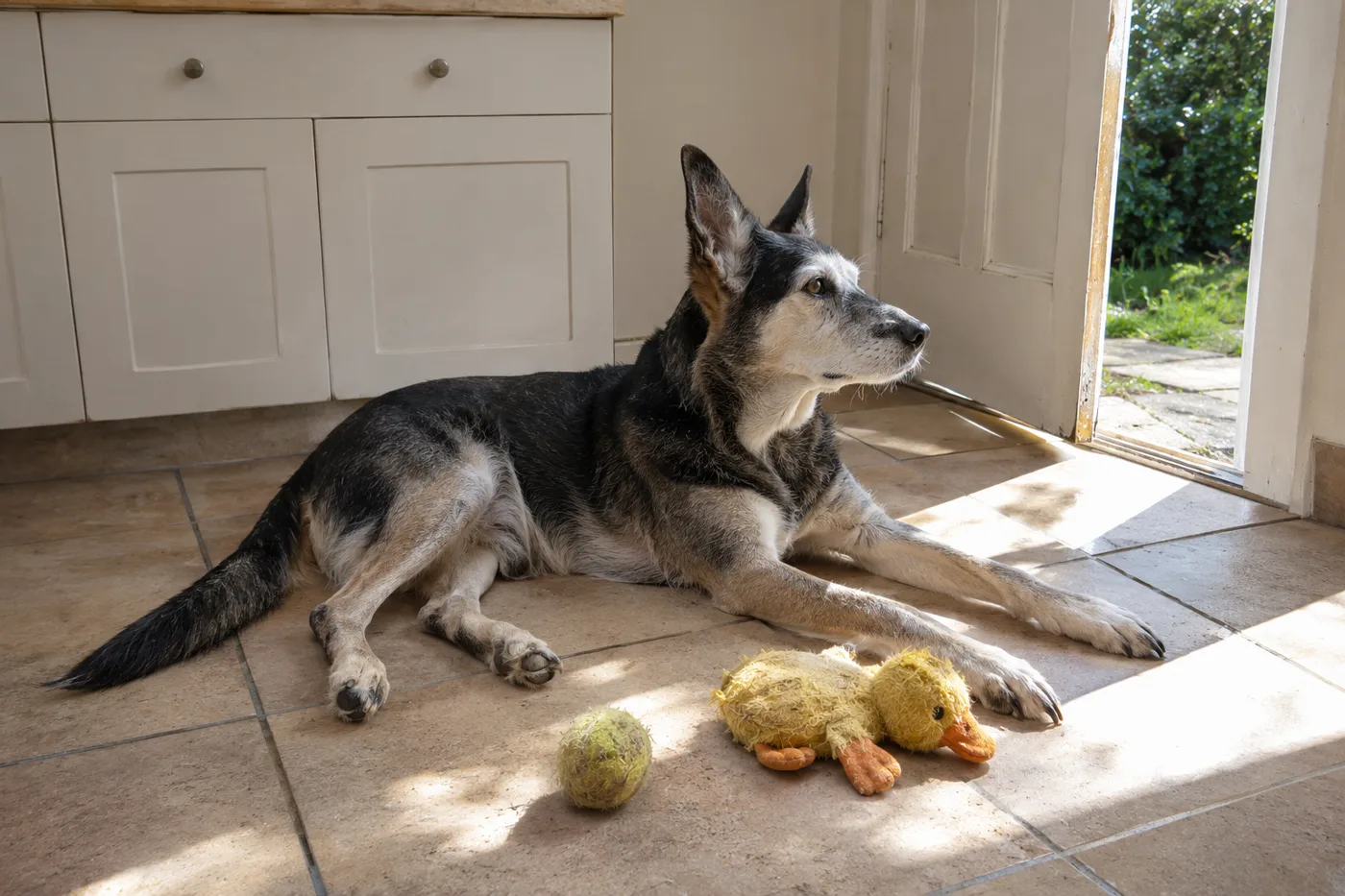
Write down the five things your dog loves most, then watch. Veterinarian Dr. Andy Roark explains how to read it on Vetstreet:
“Pick the top five things that your pet loves to do. Write them down. When he or she can no longer do three or more of them, quality of life has been impacted to a level where many veterinarians would recommend euthanasia.”
The five favorite things test – Make it specific: “barking at the mail carrier,” not “being a dog” – Put the list on the fridge and check it weekly – Note the week each one drops off, so you can see how fast things are going – One or two still showing up on a good day doesn’t cancel the other three
That last line matters, because the most loved thing often hangs on longest. An owner in Reddit’s Yorkie group described their dog eagerly eating a steak meal and wagging to greet the vet on its last day. It was still time. Steak simply outlasted everything else.
Your list might be the couch, the car window, squeaky ducks, the neighbor’s cat, and supper. Watch which ones quietly drop off.
#3 Still wagging and eating, yet clearly hurting
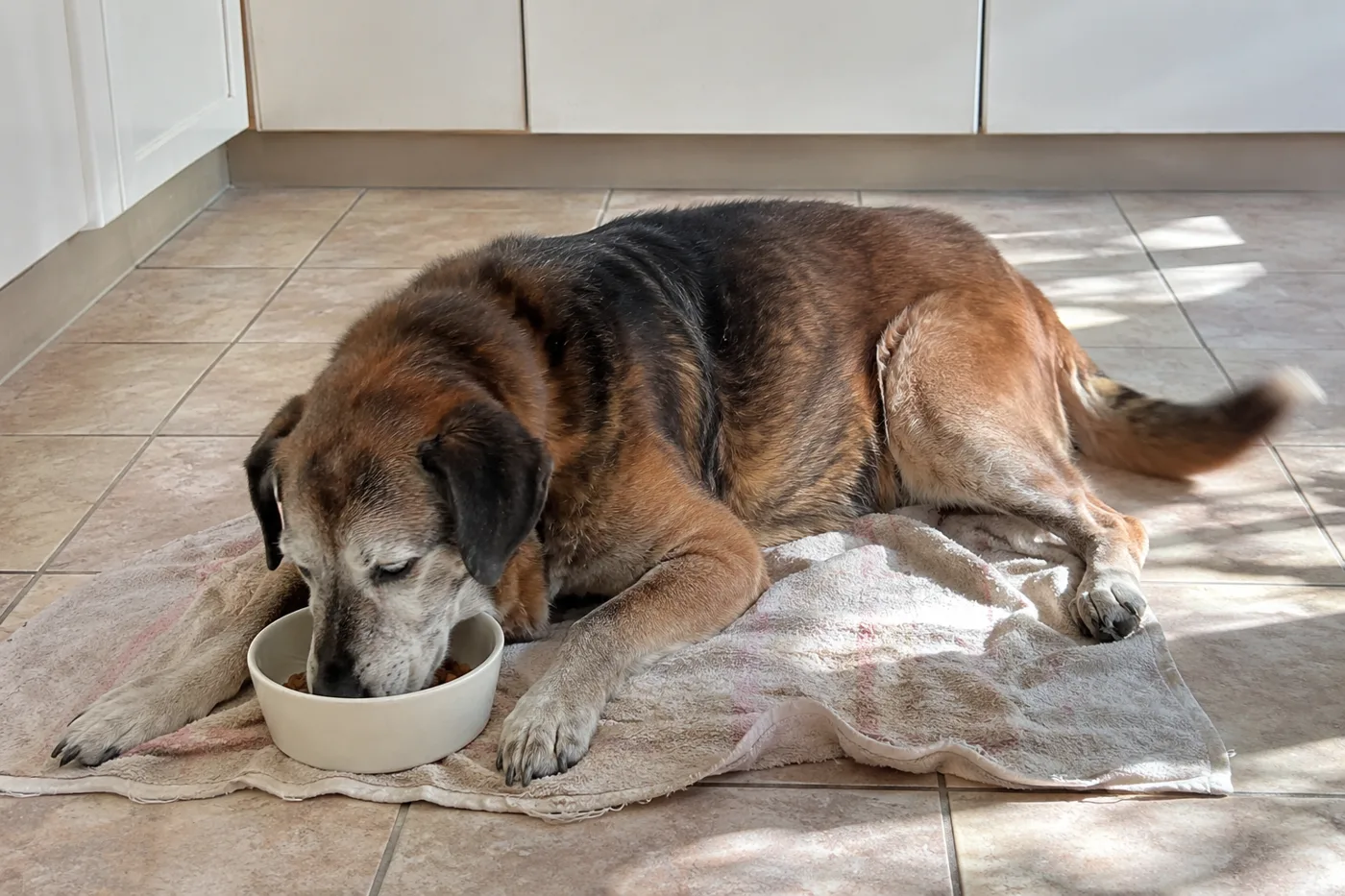
Yes, it can still be time when your dog eats every meal and thumps a tail when you walk in. Dr. JP Shepherd of Bridges Veterinary Care puts it simply: “the drive to eat is instinctual and may not accurately reflect the pet’s true quality of life.”
He suggests looking at mobility, pain and enjoyment instead of the bowl.
This is one of the most argued questions in online dog groups. On Reddit, owners keep describing old dogs who wag, play and beg for treats while their bodies are clearly failing. They say that’s exactly what makes the call so hard.
Vets quoted by Care.com make the key point: a dog doesn’t need to have no good moments at all before euthanasia is considered. A wag and a hard life can live in the same body.
An owner whose Yorkie mix lived to 15 and a half made the same point on r/DogAdvice: doing all those things doesn’t mean a dog isn’t hurting.
Next time your dog wolfs down dinner, watch the ten minutes after it. Look at how they lie down, whether they settle, and where they choose to go.
#2 A bright rally after a bad spell
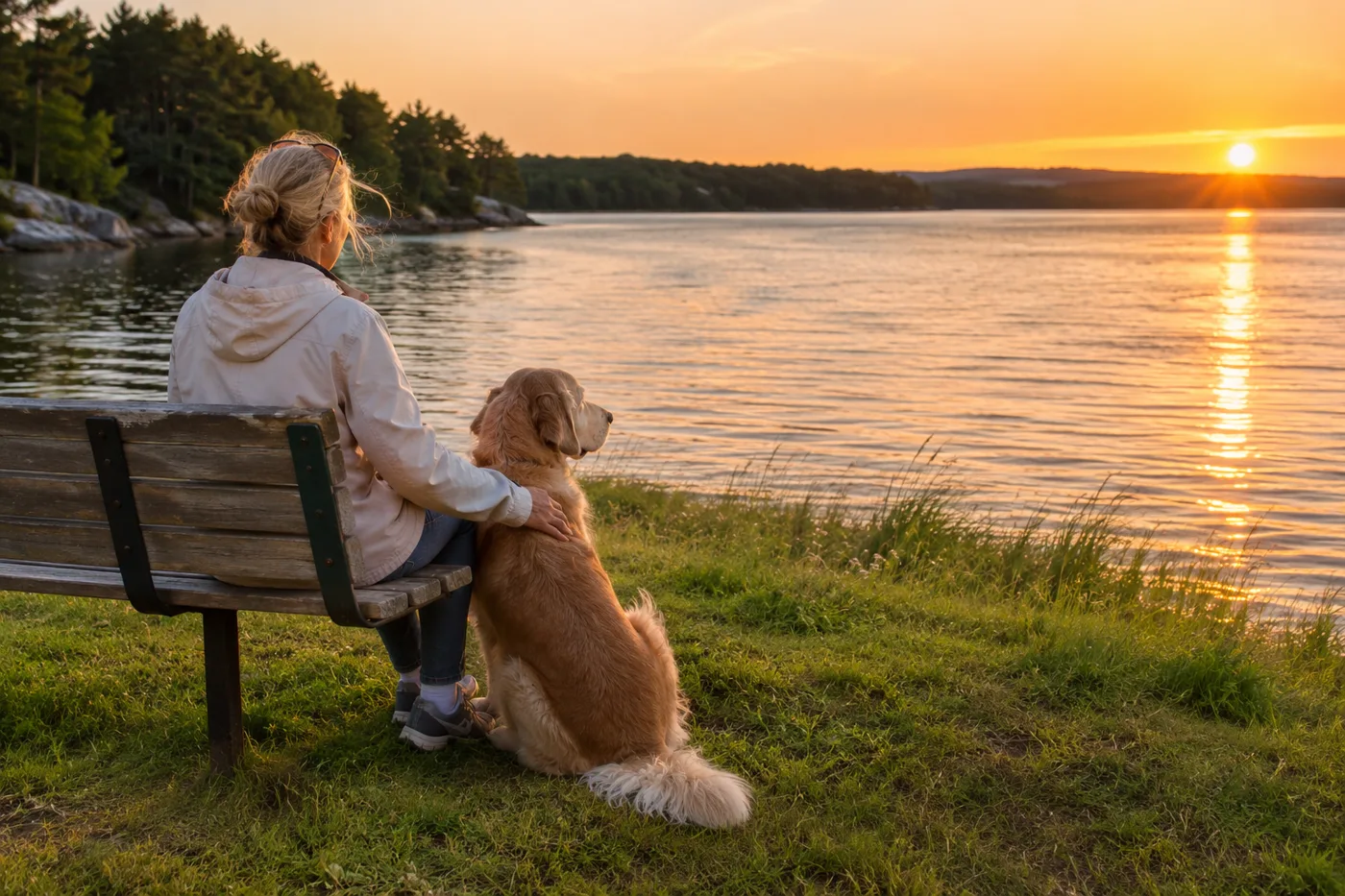
A sudden good day after a bad stretch is common near the end, and it rarely changes the direction things are going. This is the sign that makes owners cancel appointments.
Carlos Megias, a vet with Last Wishes Mobile Vet in South Wales, describes a rally as a brief period of improved energy, alertness, or engagement shortly before death. “Some rallies last only a few hours. Others may continue for several days.”
Owners on Reddit’s senior-dog boards describe the same thing: a dog bouncing back after a stroke, perking up the day after the appointment was booked, or waking bright-eyed at the emergency clinic. In their telling, it didn’t last.
Dr. Jessica Fragola, a home hospice and euthanasia vet in New York City, explains the pattern:
“It’s never a straight line down. There are always ups and downs and at some point they hit a cliff.” Dr. Jessica Fragola, hospice veterinarian, Paws at Peace
Megias’s advice before you cancel: look at whether recent days have been mostly hard, and whether the illness is one that keeps progressing. “A temporary rally does not erase weeks or months of deterioration.”
Fragola also suggests using the ups instead of waiting for a last perfect day: “choose a period during the decline where you can plan some great hours or days.”
If the bounce comes, take the drive to the lake, unwrap the rotisserie chicken, and let it be a good day on purpose.
#1 Quietly wondering whether it’s time

The fact that you’re asking is one of the signs. Dr. Andy Roark says he’s never had an owner tell him they wished they’d waited longer, while many have told him they wished they’d gone sooner.
He felt the same about his own dog, who was almost 16:
“I wish that I had put my dog to sleep sooner.” Dr. Andy Roark, veterinarian, Cone of Shame video
Dr. Fragola, the hospice vet who explained the rally, is just as blunt about her own dog: “I let her suffer in the hospital for a few days before I had the courage to make the right decision for her. I will probably never fully live this down.”
This pattern comes from vets who sit with families at the end, over and over. Lap of Love’s hospice vets put it this way: “It is kinder to say goodbye a little ‘too early’ than even a day too late, to prevent crisis or severe suffering.” Owners on Reddit and TikTok pass along nearly the same words from their own vets. Others describe what waiting cost: a last night of seizures, or a dog who died at home the day before the appointment.
To be fair, some owners carry guilt for years that they went too early. You don’t have to pick the perfect day. You’re trying to spare your dog the worst one.
A major study of how American dogs die points the same way. The Dog Aging Project followed up on 646 dogs that died between late 2019 and early 2021. Among the dogs who were euthanized, pain or suffering was the leading reason, at 48.5%.
So when the question keeps coming back on the drive home, at 2 a.m., and in the moment the leash stays on its hook, bring it to your vet. Say it exactly the way you’ve been saying it in your head.
The bottom line
Knowing when to euthanize a dog rarely comes down to one sign. It’s usually several small ones adding up, plus your own steady sense that something has turned.
Dr. Cherie Buisson, a veterinarian certified in hospice care, suggests a question that cuts through a lot of noise: “What will he be missing if he’s not here tomorrow?” If the honest answer is mostly pain and confusion, you’ve learned something. If it’s still the porch, the ball and your lap, you’ve learned something too.
She also writes, “It’s OK for a pet to pass on a good day.” The end-of-life service Honor puts it the same way, saying it shifts focus to finding the best, not the most perfect, day possible.
Before you call the vet, write down the answer to Buisson’s question and bring the paper with you.
Bonus: Four things to settle before the hard day
Line up photos and videos of your dog from six months to a year ago next to how they move today. Vets quoted by Care.com say gradual decline is hard to see day to day.
If your dog shakes and panics at the clinic, ask your vet whether a medicine given at home before the visit makes sense. VCA describes several of these pre-visit options, some given the night before.
Choose cremation or paw prints, and pay, before the appointment. Dr. Lera, who leads Heron Lakes Animal Hospital in Coral Springs, Florida, recommends settling it ahead so you aren’t making choices afterward.
If you have another pet, it can usually be there if it’s calm. Lap of Love says it is common and healthy for pets to sniff or gently investigate the body after passing.
Questions people also ask
Should I put my dog down if he is still eating?
Eating alone doesn’t rule it out. Dr. JP Shepherd of Bridges Veterinary Care says the drive to eat is instinctual and may not reflect a dog’s true quality of life. He suggests weighing mobility, pain and enjoyment instead. A full bowl can sit right next to real pain.
How do I know if my dog is dying or just sick?
A vet exam is the reliable way to tell, because many signs that look like the end are treatable. Geriatric vestibular disease usually improves within two to three days, according to PDSA, and about 70% of incontinence cases respond to medicine, according to VCA. PetMD, quoting Dr. Mary Gardner, describes the real turn as bad days outnumbering good while health isn’t expected to improve.
What are signs of dog pain?
The clearest signs are panting or restlessness at rest, trouble getting up or climbing stairs, flinching when touched, hiding, and snapping or growling in a dog who never did before. Cornell’s list also includes flattened ears, a grimace or glazed eyes. VCA adds restlessness at night and less interest in greeting family. Dogs often act fine at the clinic, so notes or short videos from home help your vet.
Do dogs know they are being put to sleep?
No. Lap of Love says pets do not understand euthanasia as a concept and don’t know why the vet is there. The visit begins with a sedative, so your dog relaxes deeply and is unconscious before the final drug.
Does it hurt my dog, and what will I see afterward?
It doesn’t hurt, because your dog is sedated and then fully unconscious before the final drug is given. Cornell says that drug comes from the same class of drugs used for general anesthesia. The eyes stay open in most cases. A few reflex breaths, brief muscle twitching, or the bladder or bowels letting go can follow. All of that is normal and happens after your dog is no longer aware.
Is it better to put a dog down at home or at the vet?
Either can be the right choice, depending on your dog and how much notice you have. Zoetis Petcare veterinarian Dr. Heather Berst says home keeps your pet in their familiar environment and lets family and other pets be present, but it may cost more and usually needs booking ahead, with same-day visits not guaranteed. In the Dog Aging Project’s survey, a little over one in five euthanasias happened at home, and most of the rest at a clinic.