From the daily hug to the smoke detector’s chirp, these are the 17 everyday habits that bother dogs most, each one with a simple swap to try instead.
Keep going to #1. It’s the habit nearly everyone has, and its numbers matter most whenever small kids are around the dog.
Your dog is stretched out on the cool kitchen tile, one ear flipped inside out, while you rattle through the junk drawer for the good scissors. Then you do something you’d never think twice about, and the dog gets up, sighs like a put-upon teenager and resettles in the hallway.
Most of the things dogs hate that humans do look exactly like that. They’re small, they’re daily, and they’re done with love. Your dog mostly puts up with them. Nearly every one has an easy swap.
Table of Contents
#17 Rushing the walk with no time to sniff
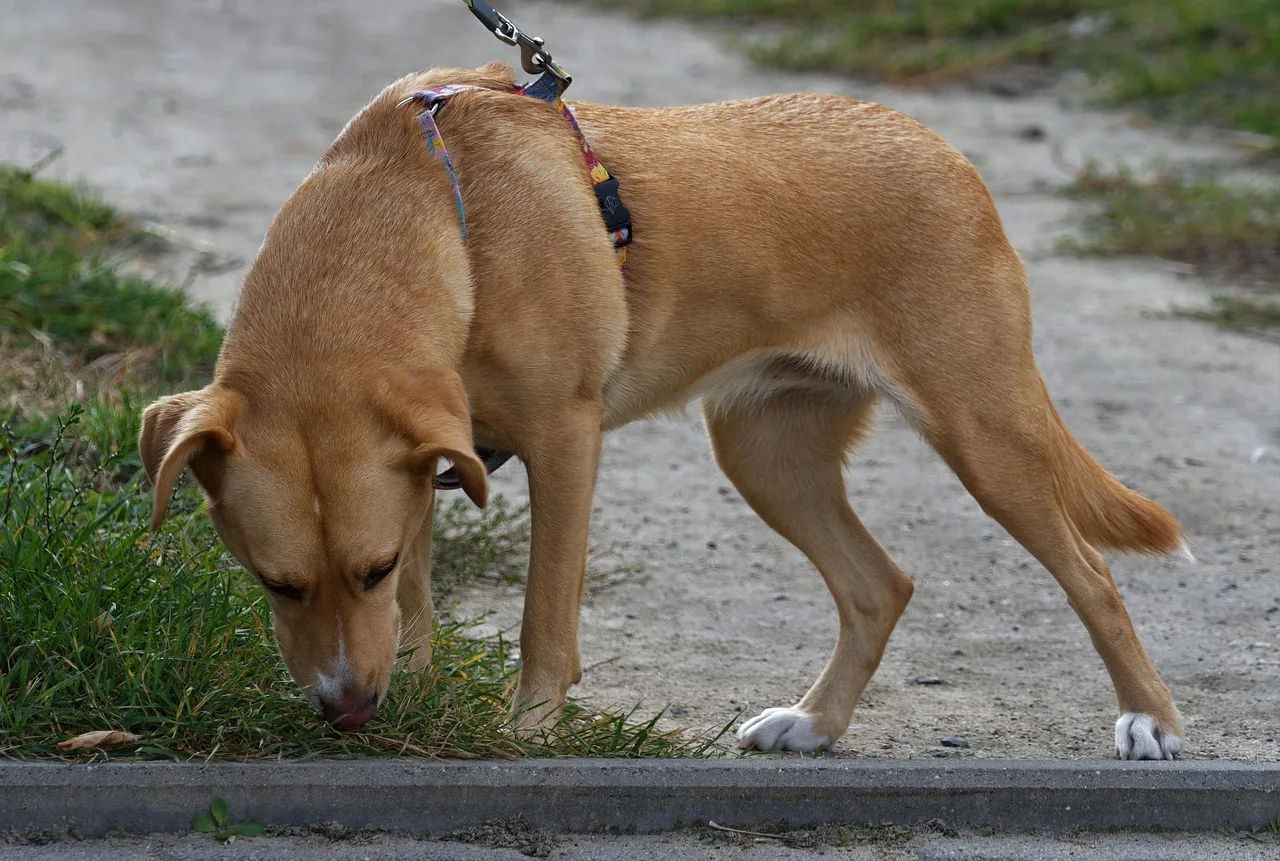
You know the spot. The same mailbox post, the same tuft of grass by the corner, and your dog stands there like it’s reading the morning paper while your coffee goes cold.
Let it read. Sniff time does more for a dog’s mood than for its manners. Dog researchers Charlotte Duranton and Alexandra Horowitz gave 20 dogs two weeks of either nosework, which means following their nose to find hidden things, or neat heeling with no sniffing allowed. Only the sniffing dogs came out more “optimistic” on a test of whether a dog expects good news or bad from something uncertain.
The equipment explains a lot. Veterinarian Dr. Michael Nappier says dogs have up to 300 million smell receptors in their noses, against about 6 million for us.
Horowitz, who runs the Dog Cognition Lab at Barnard College, described the rushed walk better than anyone: “Not letting them sniff is like going to the Grand Canyon and having your head turned away from looking at the giant gorge.“
So give your dog one stretch of every walk to sniff and explore on its own terms. You still pick the route. The dog picks how long the fire hydrant takes. On a short-on-time or sleet-sideways day, a slow, sniffy loop around the block beats a fast march.
If yours treats sniffing as a chance to eat whatever’s in the gutter, keep the leash short past the trash cans and let it out on the clean stretches.
#16 Patting the top of their head
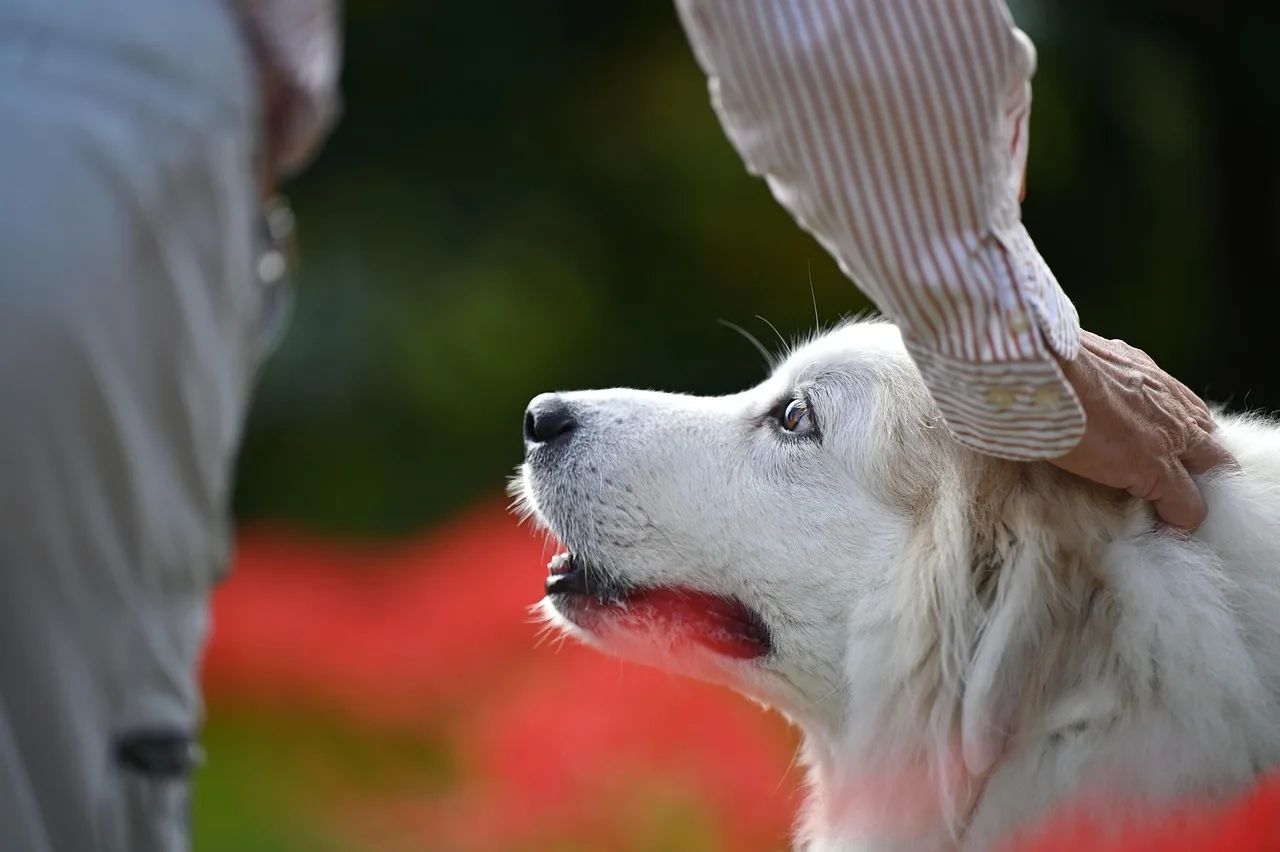
Most dogs tolerate you patting their head. Tolerate is the word. Watch a dog when a stranger’s hand comes down over its face: the head dips, the eyes squint, the whole body tips back an inch.
Veterinary behaviorist Dr. Wailani Sung explains that “a hand reaching toward their head can be perceived as a threatening gesture.” Plenty of dogs accept it from their own family. That’s why your dog may lean into your pat and duck the mail carrier’s.
You don’t have to guess which camp yours is in. You can ask, and get an answer in about two seconds.
The pet-and-pause test – Pet your dog once or twice, then slowly take your hand away. – Leans in, nudges your hand or scoots closer? That’s a yes. – Stiffens, turns away or walks off? Stop reaching toward that spot. – Try again under the chin, along the side of the neck, or on the shoulders or chest.
PetMD’s list of places to go easy on includes the paws, tail, ears, lips and stomach. The stomach will get a laugh from anyone whose dog flops over for belly rubs the second you sit down. Trust the test over the list. A dog showing you its belly has already voted.
#15 Yelling at barking, digging or chewing
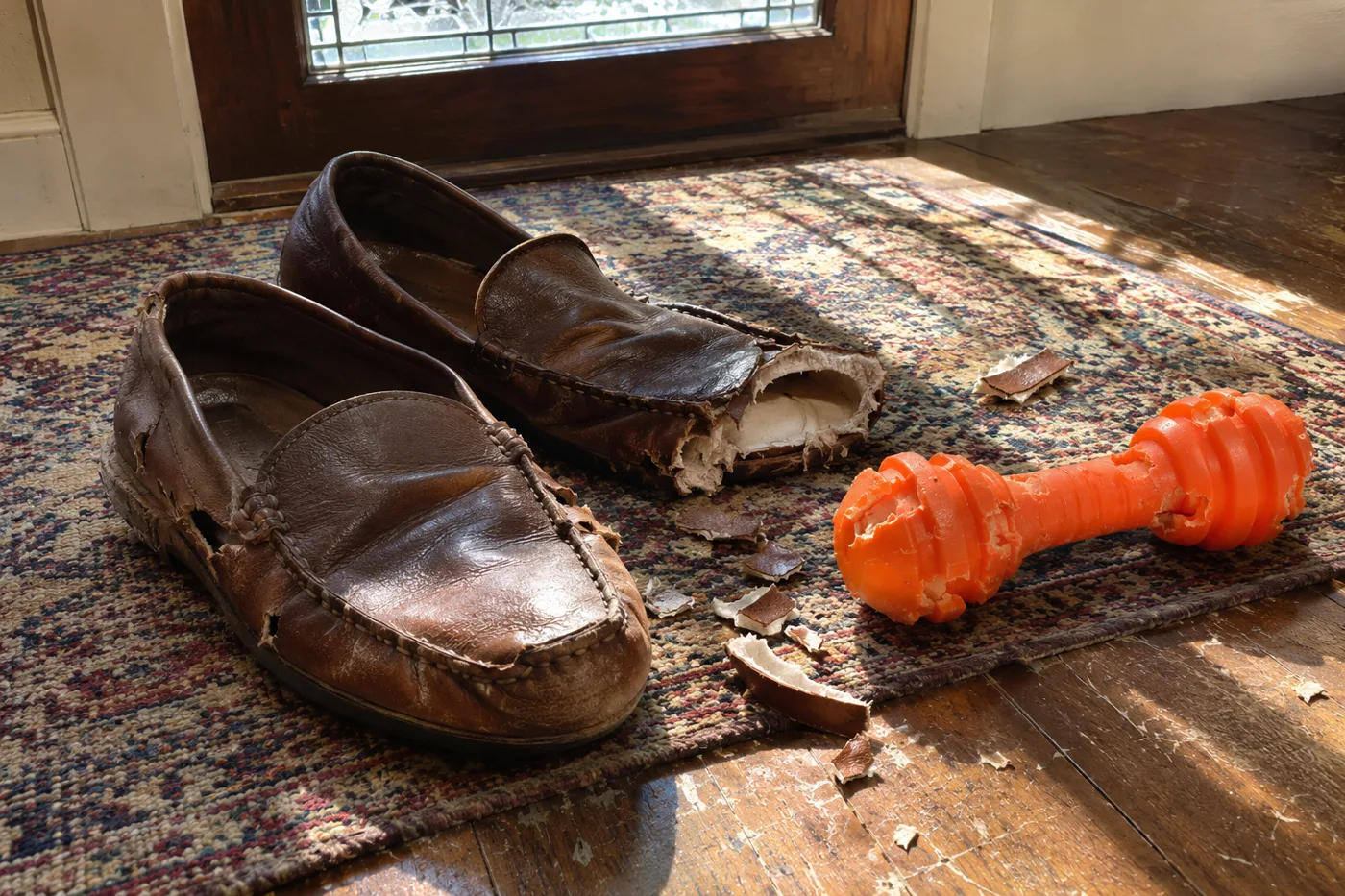
Dogs bark, dig and chew. When it’s your good loafers in pieces on the rug, a yell feels like the only sane response. It does stop the chewing for a second. What it does inside the dog lasts longer.
Researchers in Portugal followed 92 pet dogs at seven training schools around Porto. Dogs at schools that relied mostly on harsh, punishment-based methods licked their lips and yawned more in class, had higher levels of cortisol, a stress hormone, after training, and later made more “pessimistic” choices, as if they expected the worst.
A 2021 University of Bristol study found a similar pattern with other harsh methods, a list that didn’t include shouting but did include water pistols and noise-based tricks meant to startle. Dogs whose owners used two or more of these were slower to walk up to a bowl that might or might not hold food. Yelling and scolding “quickly escalate stress and fear levels” and “may push some animals to show aggression,” warns Ohio State’s veterinary behavior team.
The American Veterinary Society of Animal Behavior, the vets who specialize in behavior, recommends “only reward-based training methods” for all dog training, “including the treatment of behavior problems.”
What works instead:
- Catch the quiet second after a bark and reward that.
- Hand over an allowed chew before the loafers ever hit the floor.
- Give a digger one corner of the yard that’s legal.
None of these work as fast as a yell, and that’s the honest catch. You’re trading a two-second fix for one that holds.
#14 Forcing a hello with a stranger or dog
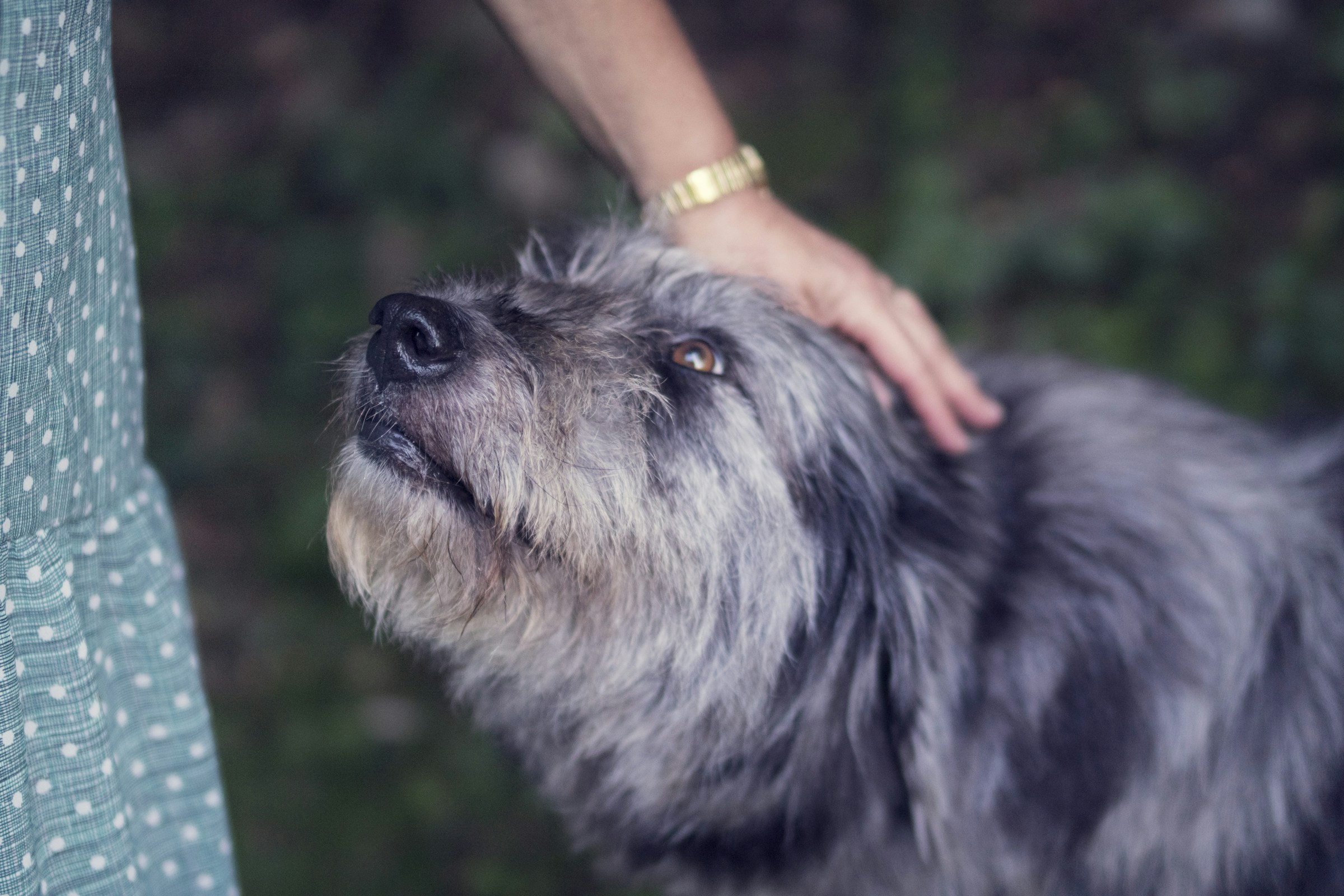
Someone at the farmers market crouches with a hand out: “Oh, he’s adorable, can I pet him?” You say yes before you’ve looked at your dog.
Look first. Your dog’s body language usually answers before you do. The ASPCA lists these signs of a fearful dog:
- Tail low or tucked
- Ears “pinned tightly back against their skull”
- Whale eye, where a crescent of white shows at the edge of the eye
- Lip licking or yawning with the eyes turned away
- Leaning away, a raised paw, or freezing in place
It also says to read “the whole body and the context.” One yawn after a nap means nothing. A yawn while a stranger looms means plenty.
The CDC’s rule for petting any dog is to make sure it “has seen you and sniffed you” before you reach out. A hello rushed on someone else’s schedule skips that step entirely. So the swap is a sentence you say out loud: “Let him come to you.” The stranger stands still, the dog sniffs, and the dog decides. That’s personal space, dog style.
And your dog is keeping score. In a Kyoto University study of 54 house dogs, dogs that watched a stranger refuse to help their owner then avoided taking food from that person. Professor Kazuo Fujita: “dogs evaluate people by watching their interactions.”
#13 Letting house rules change day to day
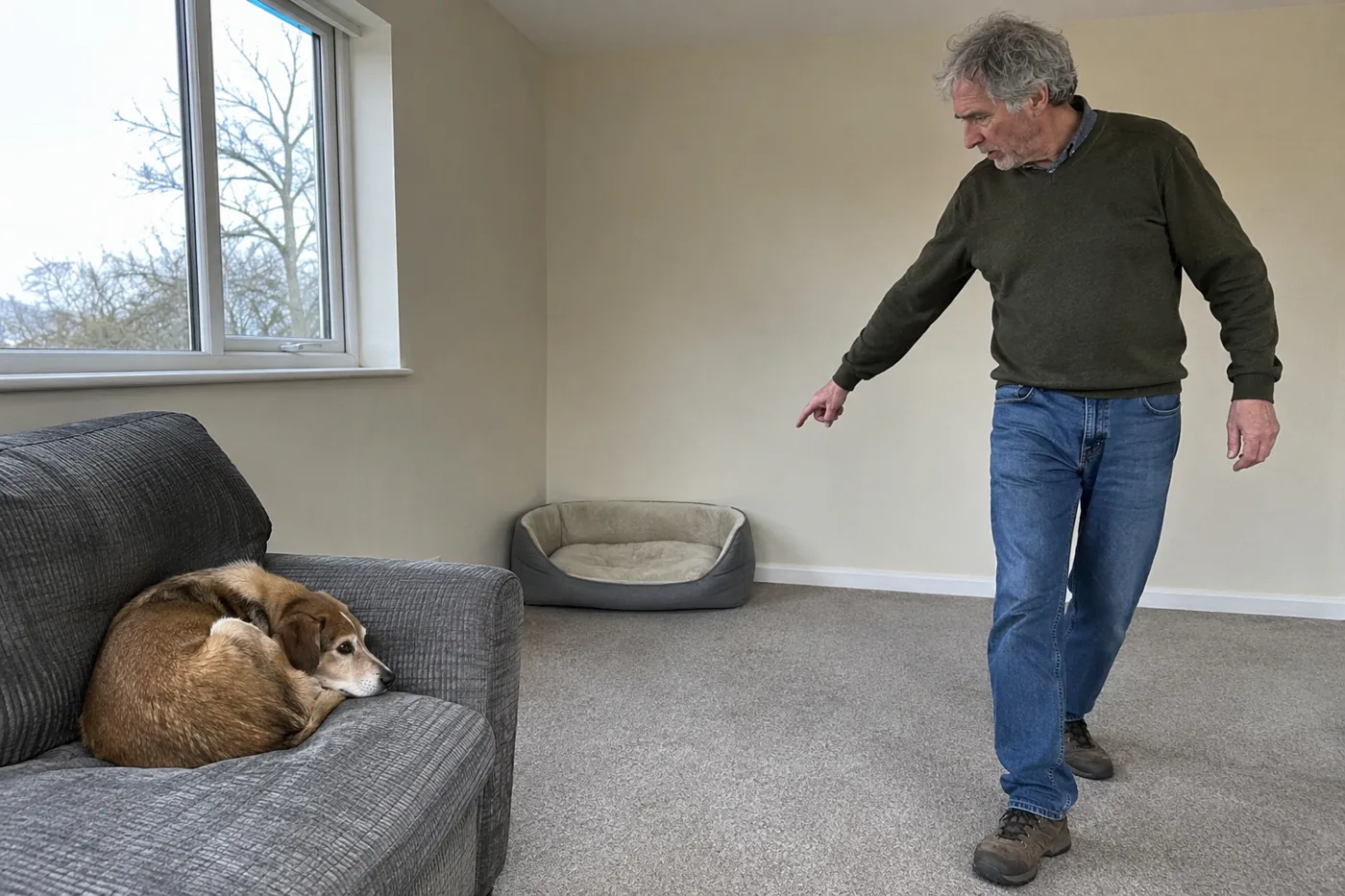
Saturday, the dog is welcome on the couch for the movie. Tuesday, someone shouts “Off!” To the dog, nothing changed. Same couch, same cushion, same dog-shaped dent.
Inconsistent rules are tough on a dog because there’s no pattern to find. A flat no is easier to learn than a “sometimes.” If you like the company on movie night, trainer Ben Randall’s middle ground holds up: the couch is by invitation only, every time.
Words trip dogs up too. The AKC’s trainers put it plainly: if one person says “sit” and another says “siddown!”, the dog takes a long time to learn it. Their fix is for the household to sit down and agree on the cues together.
If you live alone, your household is you on a patient day and you on a tired one. It’s also everyone who visits: the friend who slips scraps under the table, the grandkid, if you have one, who lets the dog up on the guest bed. Tell them the house rules the same way you’d tell them where the clean towels are.
#12 Walking them on a tight leash
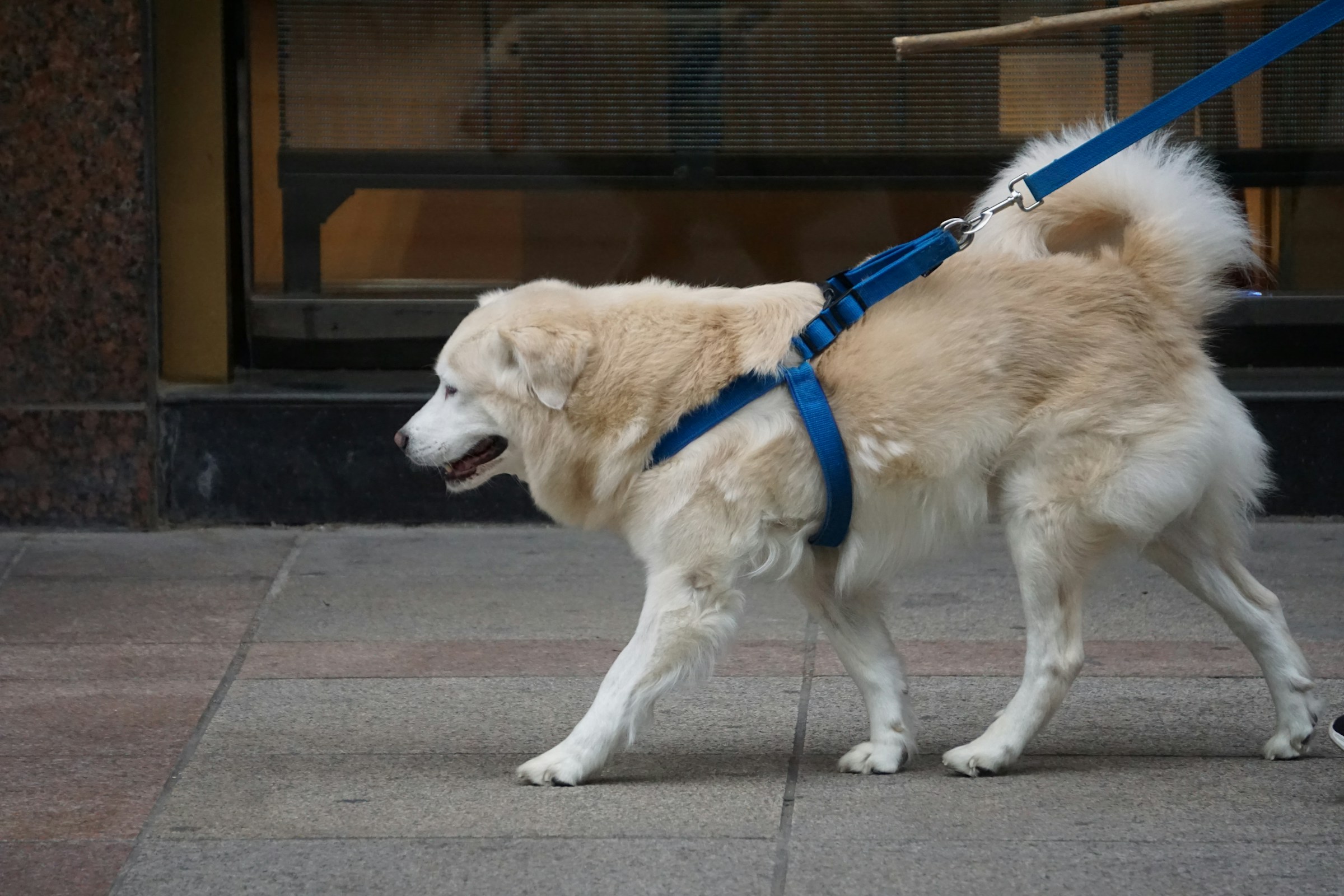
The leash goes taut, the dog leans forward, you lean back, and the two of you go down the block like a tug-of-war with one player per team.
That pressure can hurt, whatever collar you use. In a 2020 study, researchers at Nottingham Trent University and the University of Nottingham fitted collars onto a model of a dog’s neck. Every type of collar could press hard enough to risk injury, even with a light pull. Lead author Dr. Anne Carter’s point was that the pull on the leash matters more than the collar.
So the padded designer collar doesn’t get you off the hook. For a dog that pulls, a non-tightening, front-clip harness looks like the best balance between discomfort and reduced pulling, a 2025 review from the University of British Columbia’s Animal Welfare Program concluded. A back-clip chest-strap or Y-shaped harness suits a dog that doesn’t pull.
A harness won’t teach loose-leash walking on its own. It moves the pull off the neck while you work on it. Aim for a little slack hanging in a smile shape between you, and when the leash goes tight, stop and wait for it to loosen before you move on.
#11 A bath, though they love the rain
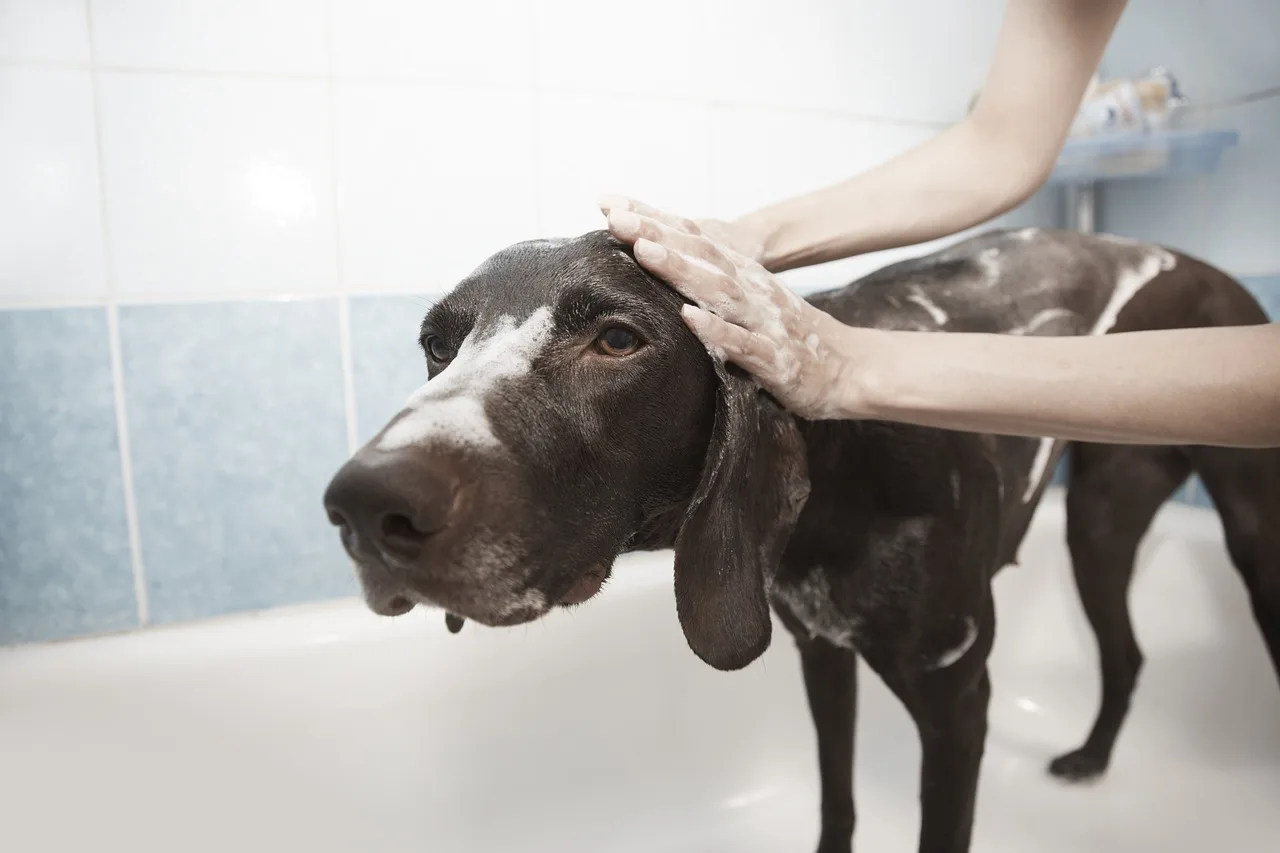
“Play in the cold autumn rain all day – fine. Shower / hose him off – no way.”
A dog owner on Reddit’s r/dogs
If you’ve ever toweled off a dog who spent the morning rolling in wet leaves and then fought you over a five-minute rinse, you’ve met this contradiction.
Look at the two scenes from the dog’s side. In the rain, the dog chose to be there, has four paws on grass and can leave whenever it likes. In the tub, it’s standing on slick porcelain, someone is holding on, and the water comes from where it didn’t ask for it.
So fix the tub, and leave the rain alone. The AKC says to put a towel or non-slip mat on the bottom of the tub or sink and to use “cool or lukewarm water, never hot.” Master groomer Jorge Bendersky suggests keeping a loose leash on the dog so you have something to hold if it tries to bolt. Keep that leash in your hand rather than looped around the faucet. And if yours is a healthy short-haired dog, the AKC says a good rubdown with a damp washcloth can do the job between baths.
#10 Shaking out laundry or tearing foil
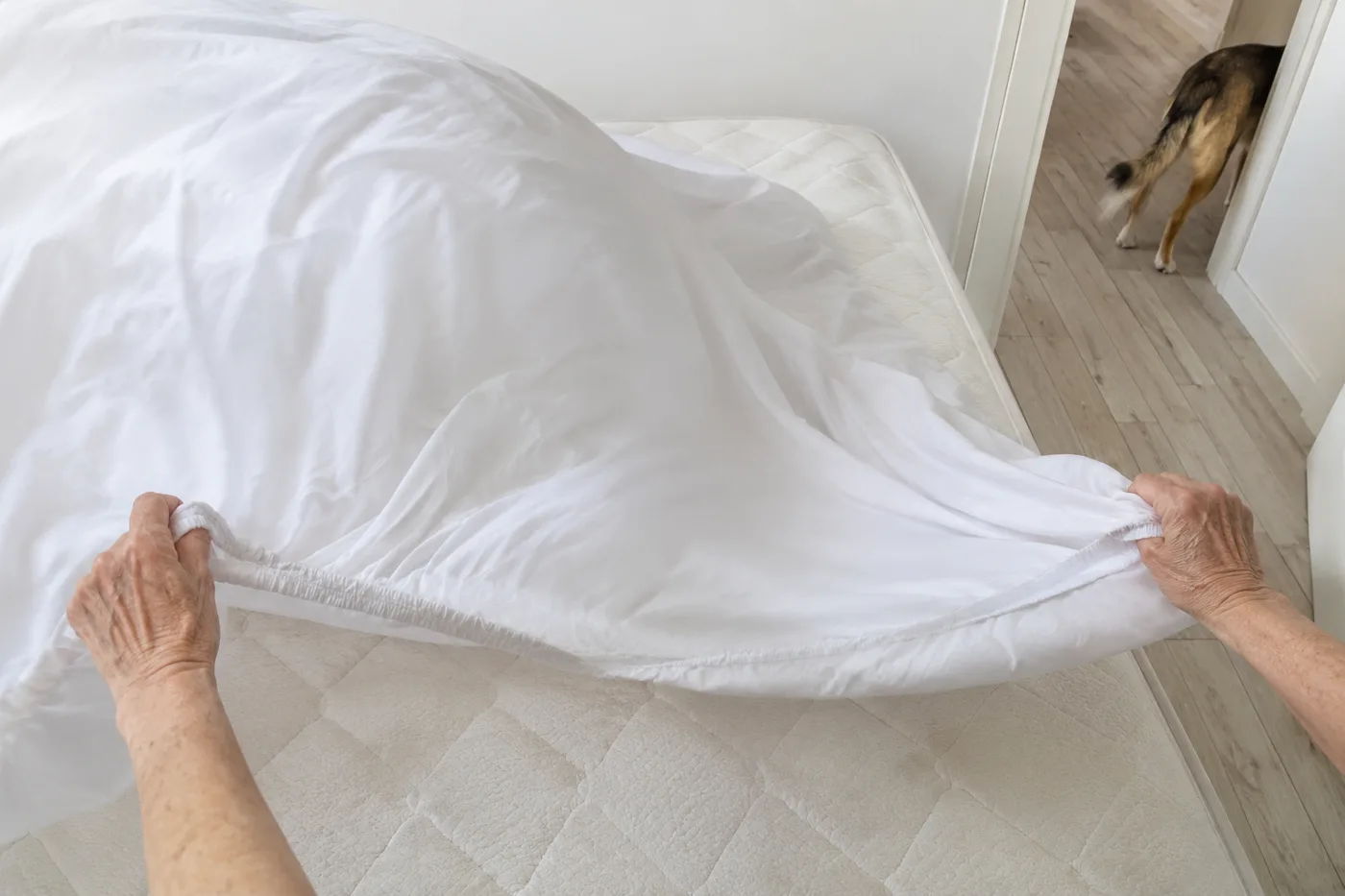
You snap a fitted sheet open over the bed, and the dog is gone, nails skittering down the hall.
You’re in good company. A dog owner on Reddit’s r/DOG wrote, “Mine leaves the room when I remake the bed. Every time.” In the same threads, owners add folding blankets, tearing off foil or plastic wrap, black trash bags and plastic grocery bags.
One owner on r/DogAdvice took a while to pin down the culprit: “I will try and chase a fly out the door waving a teal towel at it – THAT’S what she’s afraid of.”
And from r/dogs, this small mystery: “Doing double jazz hands makes my dog furious. He is fine with a one-handed wave.”
There’s a reason big, flappy motion lands harder on a dog. The AKC says dogs can see a light flicker 75 times a second, where we top out around 60, and their field of view is about 60 to 70 degrees wider than ours. A billowing sheet or a flapping towel fills more of a dog’s world than it does yours.
The swap is mostly geography. Toss a treat into the next room before you strip the bed. Shake out laundry with your back to the dog. And if the dog simply gets up and leaves, let it. That’s the dog fixing the problem on its own.
#9 Sneezing, raspberries and passing gas
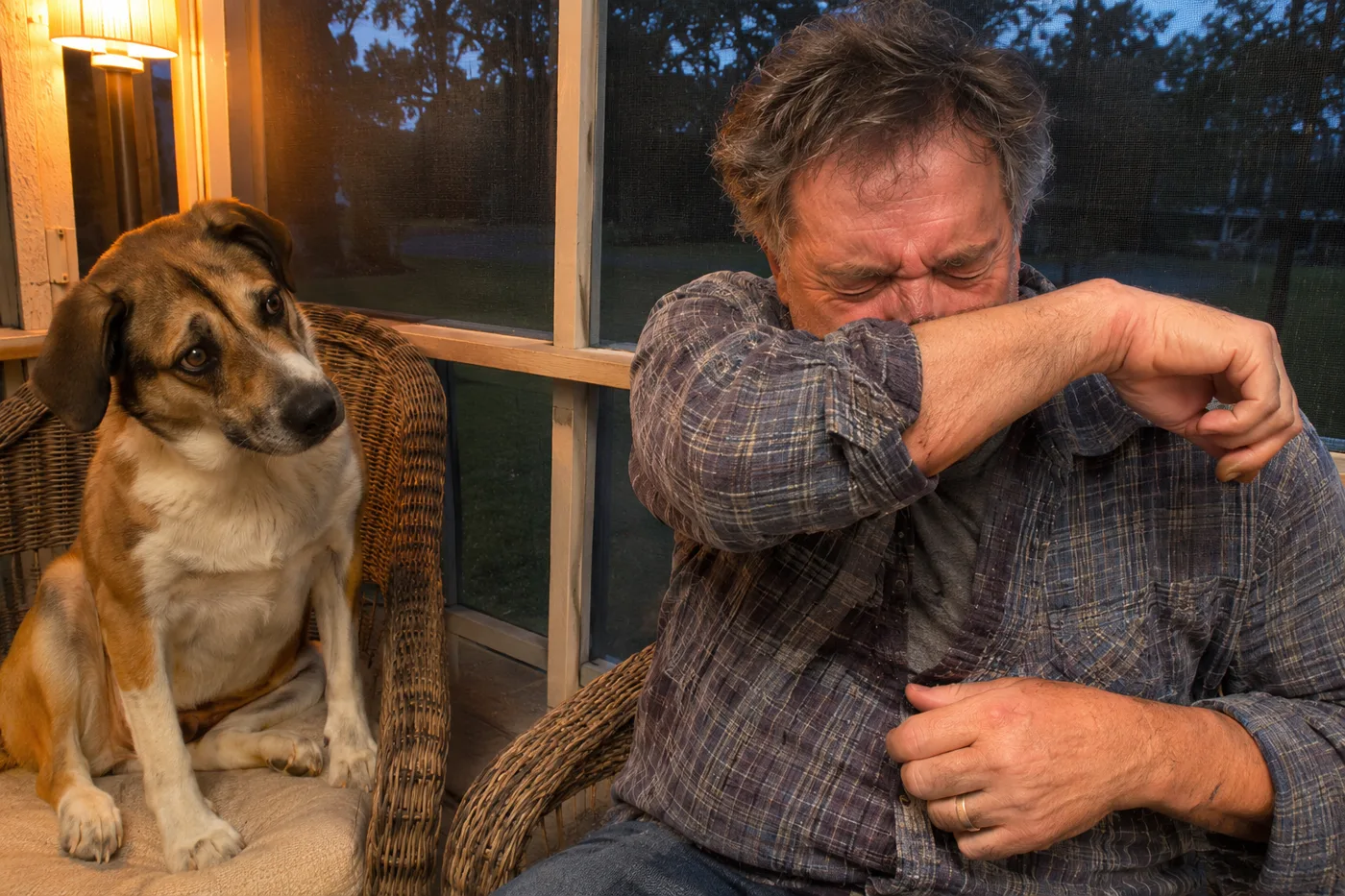
You sneeze, and the dog looks at you like you’ve said something unforgivable.
It isn’t just yours. In several Reddit threads, owners say their dogs run off or act offended when someone sneezes, blows a raspberry or passes gas. A dog-sitter sees the same thing in a dog she watches. Several owners report their dog startling at its own gas, which may be the most relatable thing a dog has ever done.
When viewers of a viral pug video on TikTok played its sound to their own dogs, a few said their dogs didn’t like it. One commenter said their pugs loved it. Dogs, like people, have taste.
Part of it is the ears. Dogs hear sounds from 67 to 45,000 hertz, a measure of pitch, against 64 to 23,000 for us. That’s nearly twice as high at the top end. Whatever a sneeze sounds like to you, your dog is hearing more of it.
Then there’s the twist. The Kennel Club says dogs use play sneezes during rough play to show they’re happy and not being aggressive. In dog, a sneeze means “just kidding.” Yours may just be at the wrong volume.
#8 Waking them up while they nap
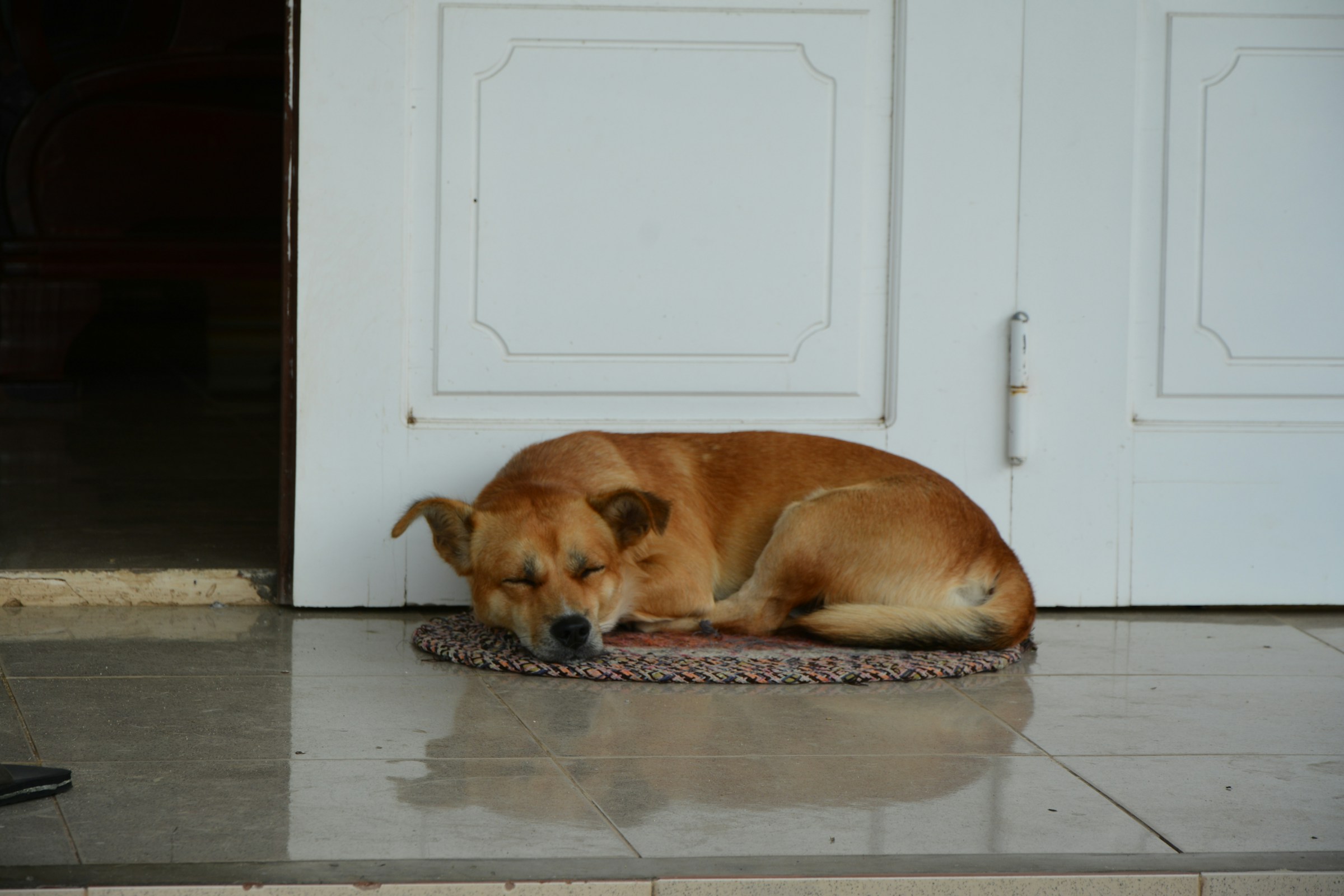
The older dog is curled on the rug by the heat register, gray muzzle tucked into a paw, and doesn’t stir when you walk in. You bend down to stroke its back.
That’s the moment to pause. The CDC’s advice is plain: “Do not disturb a dog while it is eating, sleeping, or caring for puppies.”
With a senior dog, waking them up suddenly carries more risk. Veterinarian Dr. Jennifer Coates calls hearing loss “a very common age-related change in senior dogs,” and her rule is “Never sneak up on a dog with hearing loss.” A dog startled out of sleep can hurt itself scrambling up, or bite before it’s awake enough to know it’s you.
VCA’s behavior team has the swap. Wake the dog “gently by stomping on the floor to create a vibration they can feel,” and always touch the same spot, such as the right shoulder. Over time, that one touch comes to mean “it’s only me.”
If the dog naps on your bed, a gentle press on the mattress does the stomp’s job. If kids are visiting, teach them the sleeping-dog rule before they ever reach the rug.
#7 Picking up a paw for a nail trim
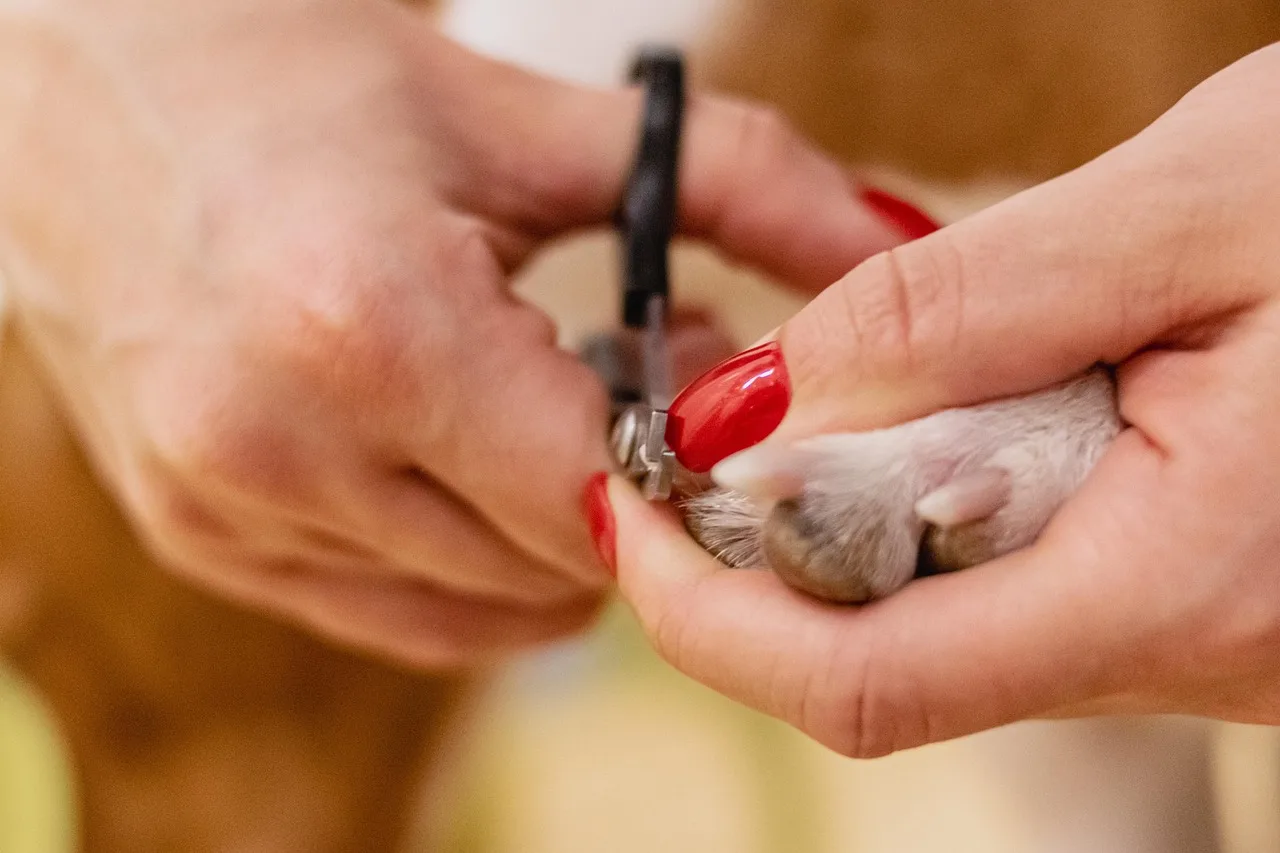
The clippers come out of the drawer and the dog is suddenly under the dining table. Half the battle is the grab.
VCA’s behavior team says to “use a gliding touch to reach the paw rather than picking up the paw directly.” Run your hand down the shoulder and leg like one long stroke and end up at the paw. Start with sessions of a few seconds and build up to 1 to 3 minutes.
Then the trick that takes the guesswork out of where to stop. Cut a thin sliver at a time and look at the cut end. When it turns “slightly shiny, like the inside of a jellybean,” stop. That means you’re close to the blood vessel inside the nail.
Keep styptic powder, a powder that stops bleeding, next to the clippers. If your dog panics no matter how slowly you go, a groomer or your vet’s team can take over while you keep practicing the gliding touch at home.
#6 Wearing a hat, wig or new look
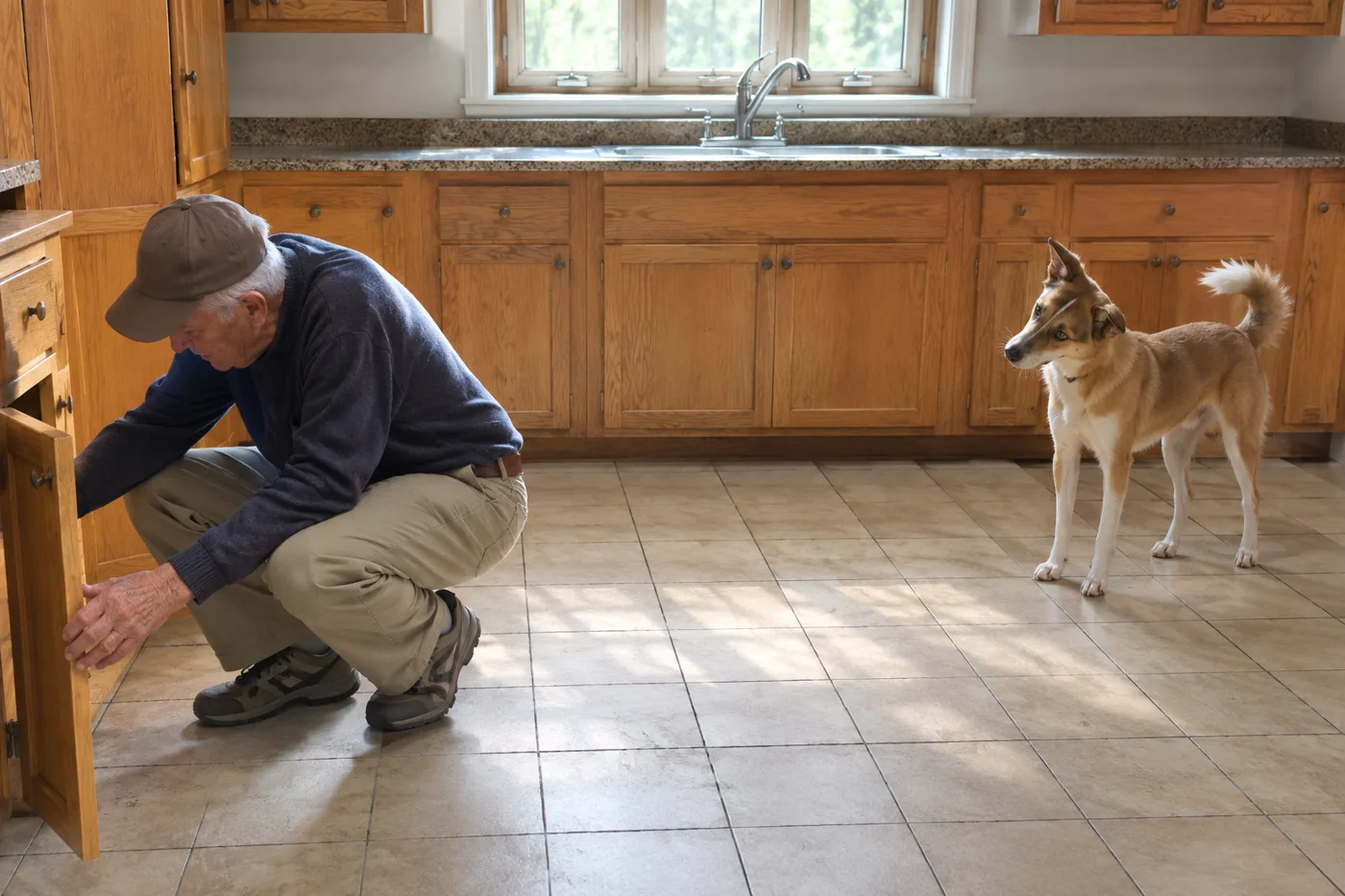
Owners on Reddit list a baseball cap, pajamas, long curly hair and a wig as things that set their dogs barking at someone they know perfectly well. One Akita barked and growled at its owner’s grown son until the cap came off, then warmed right up.
On TikTok, a Rottweiler snubs its owner in a wig, and commenters trade theories about men and short hair. The question that keeps coming up, in one comment with about 49,000 likes: shouldn’t a dog know you by smell?
Smell is only part of it. Dogs lean hard on faces, especially eyes. In a 2014 study, dogs trained on a touchscreen could pick out their owner’s face, and covering the eyes “significantly disrupted” recognition. Covering the nose or mouth didn’t. Researchers at the University of Padua also found dogs paid less attention to their owner when the person’s head was hidden by a hood.
Veterinarian Dr. Kathryn Primm sums it up: “When you have a hat on, your face is shaded and partially obscured, so even with all the other clues to your identity, like your voice and your scent, your dog is confused.“
The swap takes five seconds. Say your dog’s name in your everyday voice and tip the brim up or push the hood back so your eyes show. Then put it back on. Do it a few times, and the hat starts to matter less.
#5 Doorbells and alerts from the TV or phone
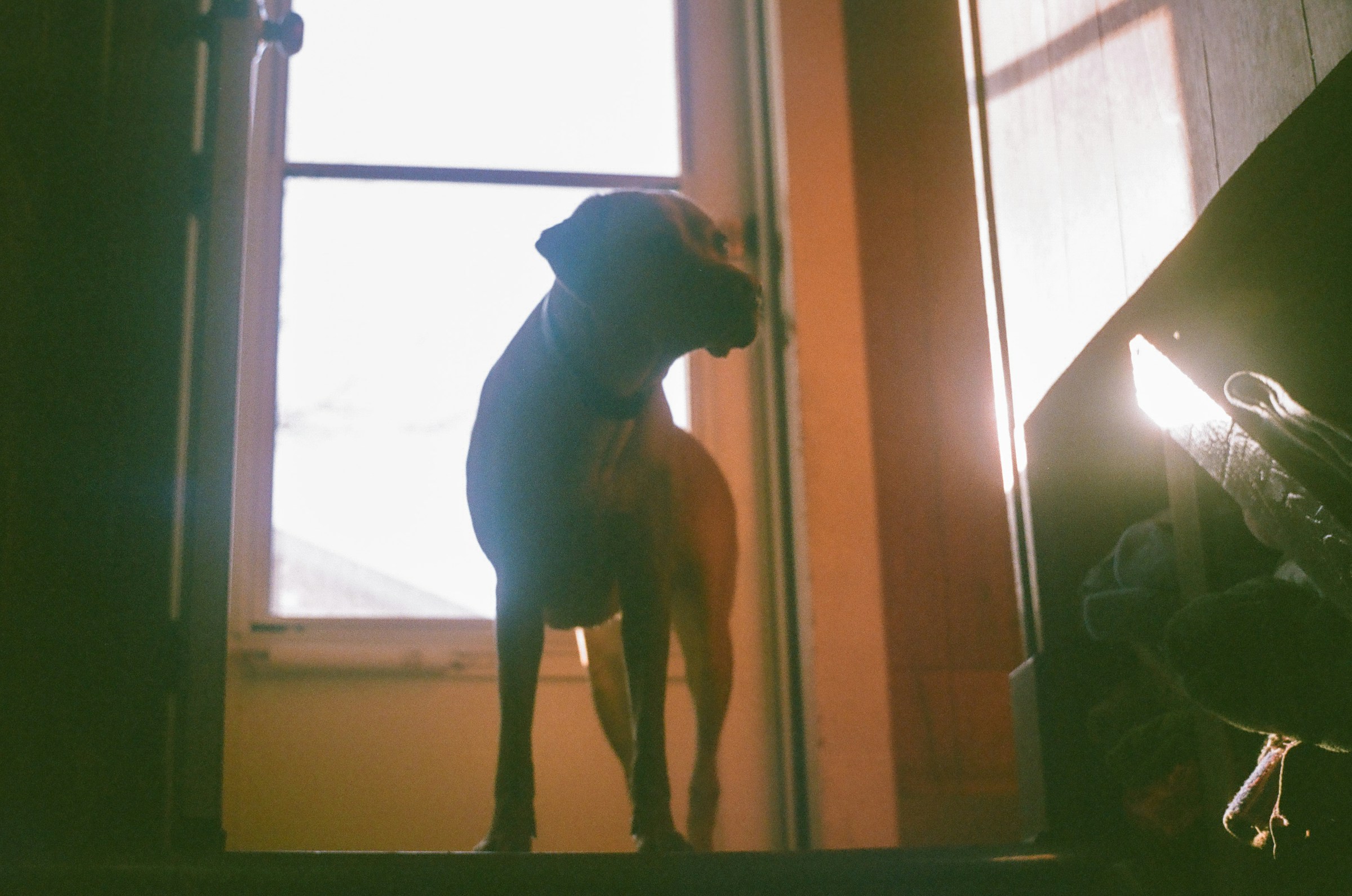
A doorbell rings in a TV commercial, and your dog launches at the front window to bark at nobody.
TV doorbells are a big deal to dogs. In a 2025 Auburn University survey of 453 owners whose dogs watch TV, only about 11% of the dogs perked up for human voices, and doorbells and car horns grabbed more than that. The biggest draw of all was other dogs, at 78%.
Can a dog even tell a recording from the real thing? Recorded sound isn’t the same to them. In a 2025 study at Eötvös Loránd University, 33 dogs followed live spoken cues almost perfectly but were about 70% less successful when the same words came from talking buttons, the soundboards some owners teach dogs to press. Recording loses some of the frequencies dogs rely on. That study was about words, so treat it as a clue: the TV doorbell may sound a bit off to your dog, and it reacts anyway, because doorbells have meant “someone’s here” its whole life.
Owners on Reddit add a game-show sound effect, a phone’s text alert and the voices in a language-learning app. Their dogs shake, hide or leave the room.
The fixes are all in your settings:
- Change your text and alarm tones to something low and soft.
- Turn the TV down during ad breaks, when doorbells and horns pile up.
- Use headphones for the language lessons.
#4 Fake throws and treats pulled back
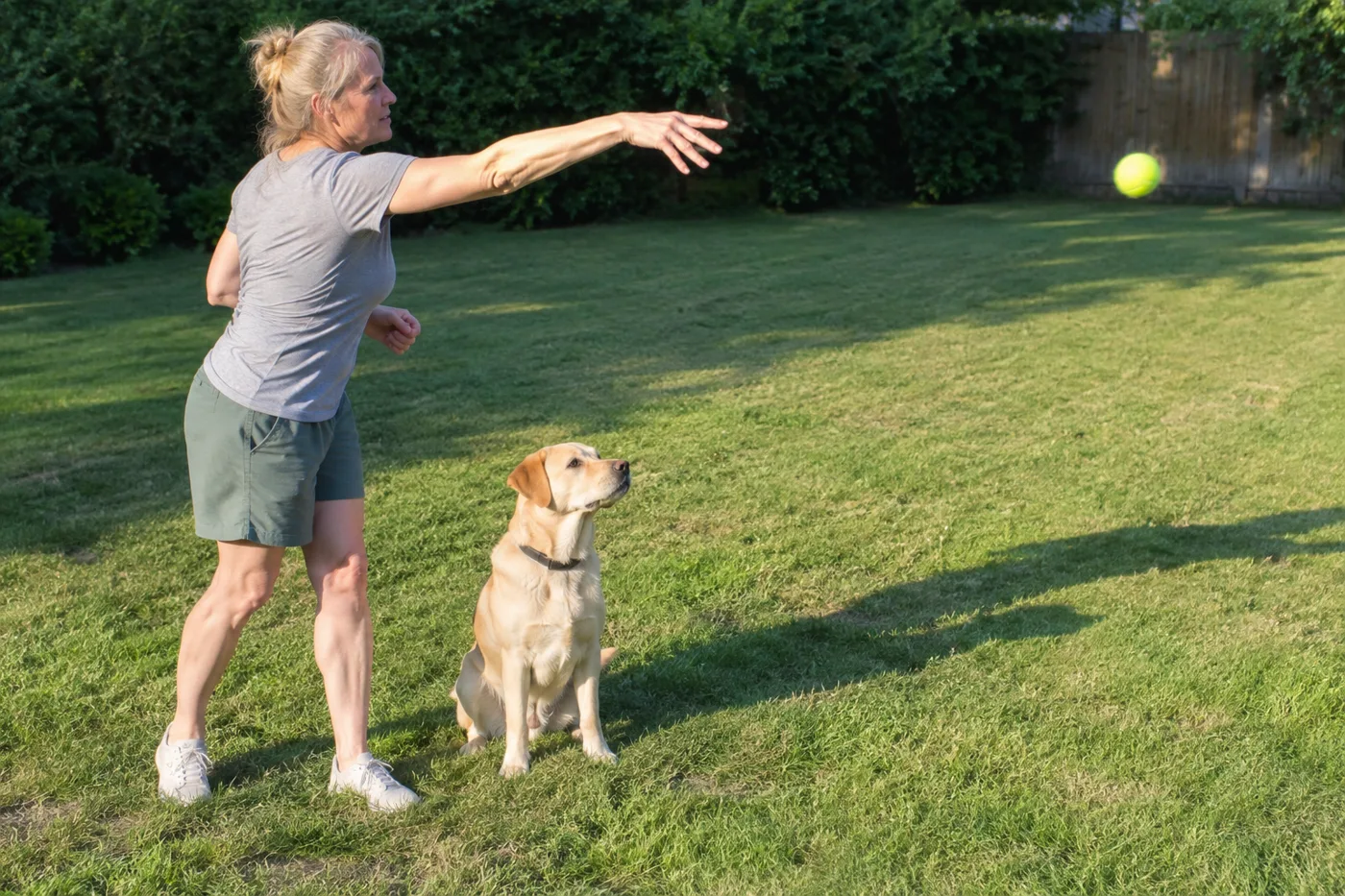
Arm back, big wind-up, and the dog tears off across the yard, then turns around to find the ball still in your hand. Funny the first time. Maybe the second.
Trainer Mikkel Becker, answering a parent whose son liked to pretend to throw a ball and then hide it, warned that a teased dog “may become frustrated, frantic and agitated.” She counts a treat offered and pulled back as teasing too. The jumping, whining and barking that look like excitement during the game are, in her view, signs of stress.
Science backs her up in the toughest dogs around. In a 2025 Virginia Tech study, 12 search-and-rescue dogs were teased with a toy they couldn’t reach, or had attention held back, before a search. Afterward they worked slower, made more errors and their heart rates went up. Study lead Sally Dickinson: “We often think of frustration as a motivator, but our findings show that it can backfire.” Those were working dogs on the job. Your dog’s job is fetch, and it takes it just as seriously.
Tom Davis, who describes himself as “a professional dog trainer with over a decade of experience,” keeps the rule simple in his video on the subject: “If you show them the ball, then throw the ball.”
Becker’s version adds a little structure: ask for “drop it,” then a calm “sit” or “down,” then throw for real. If kids are playing with the dog, teach them that order. It’s the same game with no tease in it.
#3 The smoke detector’s low-battery chirp
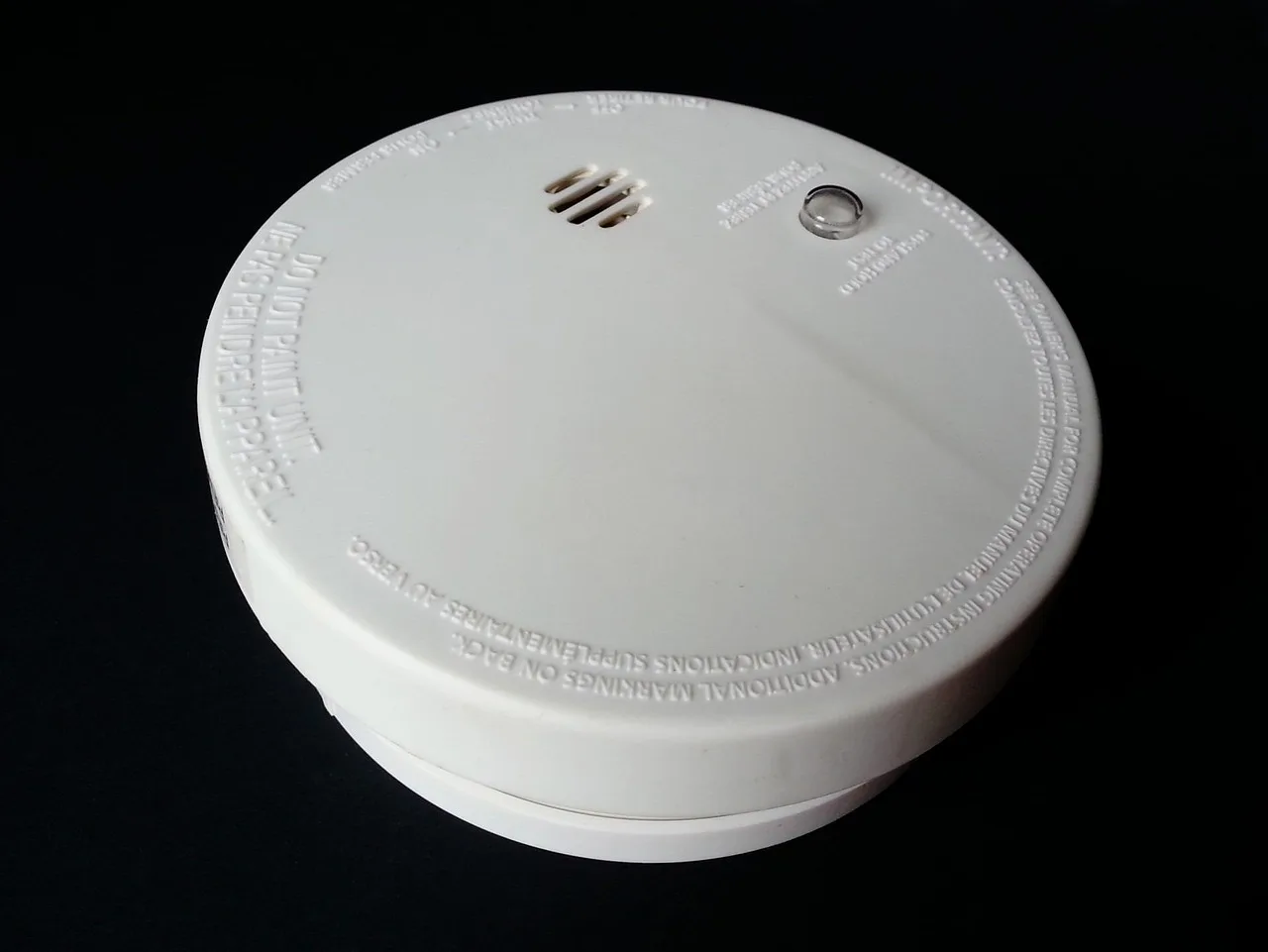
It’s 3 a.m. One high chirp from the hallway ceiling. Just as you drift off, another. And somewhere in the dark, the dog is trembling behind the toilet.
UC Davis researchers surveyed 386 owners, found mostly through Facebook, and studied 62 online videos. High-pitched, on-and-off sounds like a battery warning were more likely to make dogs anxious than low, steady ones. Their paper says smoke detectors built around 3,000 hertz are likely “painfully loud to most dogs.”
Here’s the part that stings. In those videos, 45.6% of people reacted to their frightened dog with amusement. Only 17.5% showed concern. Lead author Emma Grigg: “we underestimate their fearfulness to noise we consider normal because many dog owners can’t read body language.” Trembling, panting and backing out of the room are on her list.
Her swap couldn’t be easier: change the batteries more often, before they get the chance to chirp at 3 a.m.
Before the next chirp – Test every alarm once a month. – Swap 9-volt batteries at least once a year. – Replace the whole alarm 10 years after the date it was made. – A chirp means a dead or missing battery, so treat it as a same-day errand.
That schedule comes from the US Fire Administration, and it keeps you safe too.
#2 Staring deep into their eyes
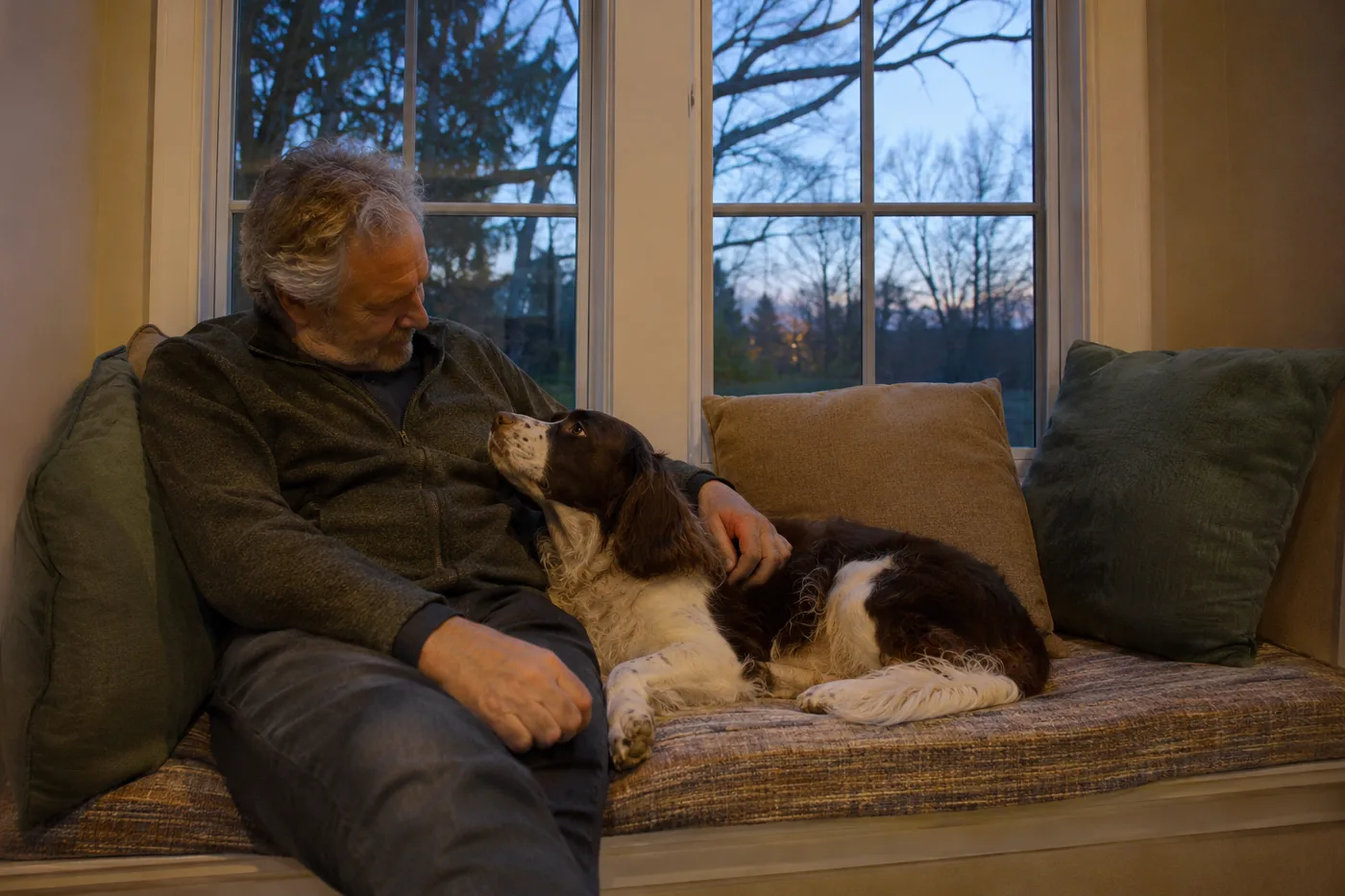
There are two kinds of looks, and your dog knows the difference.
The soft one happens on the couch. In a 2015 study led by Miho Nagasawa, 30 owners spent half an hour with their dogs. When the dogs gazed at their owners, the owners’ oxytocin, a hormone tied to bonding, went up. The owners then touched and talked to their dogs more, which raised the dogs’ oxytocin too. A loop. Eleven hand-raised wolves in the same study showed no such loop.
Larry Young of Emory University explained why: “among wolves, eye contact is a threat, which is why they rarely look directly at each other.”
That’s the second kind of look. AKC trainer Sassafras Patterdale says that for a dog, “a stranger staring at them might be seen as a challenge, threat, or something to make them uneasy.” A hard stare comes with a stiff body and eyes that don’t blink.
So direct eye contact from you, relaxed and blinking, feeds the loop. A long, fixed stare, especially from someone the dog doesn’t know, can feel like a dare. The AKC’s swap is a “watch me” cue: say it, and the moment your dog glances up at you, hand over a treat. You build the good kind of gaze on purpose. And when friends want a staring contest with your dog, offer them the treat bag instead.
#1 Wrapping them in a tight hug
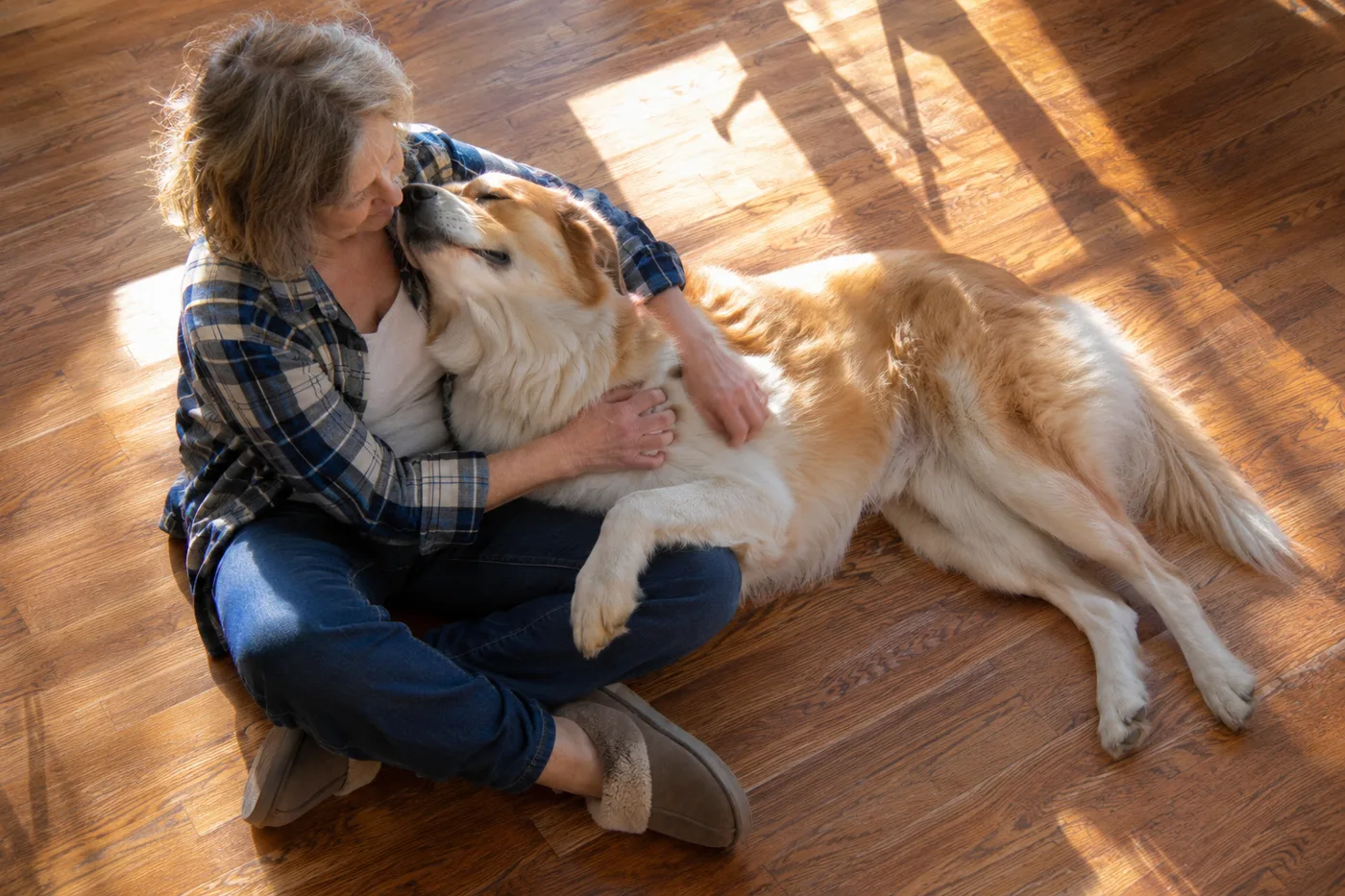
Every instinct says hug. Arms around the neck, face in the fur. To a dog, it can feel like being pinned.
Tom Davis says in his video: “A tight hug can make your dog feel trapped and anxious, especially if maybe they’re insecure about things in general.”
Psychologist Stanley Coren points out that dogs are “cursorial” animals, built for running. A dog’s first move when it’s uneasy is to get away, and a hug takes that option off the table. When he looked at 250 online photos of people hugging dogs, 81.6% of the dogs showed at least one sign of stress: head turned away, ears back, lip licking, or “half-moon eyes,” where the white shows. Only 7.6% looked comfortable.
A 2024 follow-up went further. Elizabeth Ann Walsh of the Cork Pet Behaviour Centre analyzed 80 popular videos of people hugging dogs, the kind that get shared because they look sweet. In 67.5% of them, the dog nipped or bit.
Hugging your dog matters most when a child is doing it, because of where a child’s face ends up. CDC estimates from 2001 emergency room data show it clearly:
- About 368,245 people were treated in US emergency rooms for dog bites that year, and 42% were children under 14.
- In children under 4, 64.9% of injuries were to the head or neck.
- Across all ages, that figure was 22.8%.
That makes a bitten child under 4 about 2.8 times as likely as the average patient to be hurt on the head or neck. And the CDC’s current guidance says most bites to young children happen during everyday activities with familiar dogs. Best Friends Animal Society advises teaching children not to hug dogs, since a hug restrains the dog and puts the child’s face right by its mouth, and not to climb on any dog, the family dog included.
Older dogs have their own reason to dodge a squeeze. VCA Animal Hospitals says osteoarthritis affects “at least 20% of dogs over one year old and 80% of dogs over eight years old,” and some sore dogs don’t want those spots touched or turn unexpectedly snappy. Arms around stiff hips can find the sore spot for you.
None of this means giving up affection. Coren suggests “a pat, a kind word, and maybe a treat.” Davis likes a chest rub or a scratch behind the ears. And he points out that dogs already have a hug of their own: “And if your dog like leans into you, like some of the bigger dogs do, that’s their version of a hug.”
So sit down on the floor, rest a hand on the dog’s chest, and wait. When your dog leans into you, all its weight against your side, that’s the hug, and the dog chose to give it.
The bottom line
Next time your dog gets up and leaves a room, glance at what you were doing a second earlier. A shaken towel, a phone chime, a hand coming down over the head. It’s the cheapest lesson in dog behavior you’ll ever get, and it’s specific to your dog.
Then notice what your dog never leaves for. The ear scratch it backs into. The slow walk where it gets to read every fence post. Those are the things it’s asking for more of.
Tonight, try the pet-and-pause test twice: once on the spot you know your dog loves, and once on the spot you’ve always assumed it does.
Bonus: four small fixes nobody mentions
- Ask whoever walks your dog when you can’t, whether that’s a neighbor, a relative or a paid walker, to let it sniff on the walk too.
- Next time a sound scares your dog, film it, then watch the replay with the sound off and look for lip licks, a turned head or pinned ears.
- Write your house cue words (“off,” “down,” “leave it”) on a card and stick it on the fridge where pet-sitters and guests will see it.
- Before visitors arrive, give them one line to remember: “Let her sniff you first, then scratch her chest.”
Questions people also ask
Do dogs dislike being pet?
Most dogs like being petted, just not everywhere. PetMD says favorite spots are the chest, shoulders, side of the neck and under the chin, while a stranger’s hand coming over the top of the head can feel threatening. Family members often get away with a head pat. To check your own dog, pet once or twice and slowly pull your hand back: leaning in means more, stiffening or moving away means stop.
Is it normal for my dog to hate one random thing?
Yes, it can be completely normal. Veterinary behaviorist Dr. Leslie Sinn writes that “a single traumatic event can have lifelong effects,” especially during a puppy’s fear period at 8 to 10 weeks. A dog owner on Reddit’s r/DOG whose puppy had a tape measure collapse on him put it this way: “It obviously didn’t physically hurt him, but now he is terrified of them.” Everyday sounds like smoke detector beeps, electronic doorbells, microwaves and vacuums are strong triggers for many dogs.
Why does my dog bark at me when I wear a hat?
Your dog relies heavily on your face, especially your eyes, to recognize you, so a hat or hood can leave it briefly unsure who you are. In a 2014 study, covering the eyes disrupted dogs’ recognition of their owner’s face, while covering the nose or mouth didn’t. Veterinarian Dr. Kathryn Primm says your voice and scent don’t fully cancel out the confusion. Tipping the brim up and saying your dog’s name may help it recognize you faster.
Why is my dog suddenly scared of something it used to ignore?
A new fear that shows up later in life can be a sign of pain, so it’s worth a vet visit. In a University of Lincoln study, dogs with muscle or joint pain developed noise sensitivity about four years later in life than dogs without pain, and all the treated dogs improved. Professor Daniel Mills says medical issues should be “carefully evaluated” whenever a behavior problem starts late. In older dogs, hearing loss can also make startling more likely.
Why does my dog not like a certain person?
It’s normal, and your dog shouldn’t be forced to warm up. VCA Animal Hospitals says dogs may avoid someone because of bad past experiences, nervous or threatening body language, or unfamiliar scents, and that dogs watch how their owners interact with others to form opinions. A Kyoto University study found dogs avoided a stranger who refused to help their owner.
Is it OK to let my grandkids hug the dog?
It’s safer not to. In 2001 CDC data, 64.9% of dog-bite injuries in children under 4 were to the head or neck, against 22.8% across all ages. The American Academy of Pediatrics says most bites to young children involve familiar dogs, like the family dog, and advises never leaving a small child alone with any dog. NC State veterinary behaviorist Dr. Barbara Sherman says a child should pet the dog on its shoulder or back rather than its head, and the Academy advises letting the dog sniff the child first.