Choosing between a Mini Labradoodle and a Mini Goldendoodle ultimately depends on your personal preferences and lifestyle needs. These adorable, intelligent hybrids combine the best traits of Labrador Retrievers and Golden Retrievers with those of Poodles, resulting in sociable and low-shedding companions. Understanding the distinctions in temperament, grooming needs, and health considerations is essential for prospective pet parents.
Mini Labradoodles are renowned for their agility and trainability, often being the choice for active families or those seeking an allergy-friendly pet. Mini Goldendoodles, on the other hand, are beloved for their gentle nature and often excel as therapy dogs. This guide delves into each breed’s characteristics, from their exercise requirements to their suitability as family pets, and it outlines the potential health issues associated with each breed.
Keep reading to uncover insights that will help you determine which breed might be your ideal furry friend. Find out which one is likely to fit into your home like a glove and which might be better suited for the great outdoors. With in-depth comparisons and expert tips, you’re one step closer to deciding whether a Mini Labradoodle or Mini Goldendoodle is the perfect addition to your family.
Table of Contents
Mini Labradoodle vs. Mini Goldendoodle – What’s The Difference?

The primary distinction between the Mini Labradoodle and the Mini Goldendoodle stems from their non-Poodle parentage. Each of these breeds shares one parent from the Poodle family, but while the Mini Labradoodle is sired by a purebred Labrador Retriever, the Mini Goldendoodle’s other parent is a purebred Golden Retriever.
For both parent dogs to qualify, they must be officially registered as purebreds under the American Kennel Club (AKC) standards. Offspring of these two mixed breeds are commonly known as F1 Doodles.
Mini Labradoodle vs. Mini Goldendoodle – Parent Breed Comparison
So, both mix breeds have a Poodle parent, but it’s the other 50 percent of the puppy’s genetic profile that makes the difference between the two dogs.
The Labrador Retriever
The Labrador retriever was bred for use as a bird dog, assisting hunters of waterfowl by retrieving shot birds from marshes and bodies of water. As you might expect, Labs are very strong swimmers that are drawn to water on trips to the lake or to the beach.

These dogs are bred to have a “soft mouth.” That means that the dog won’t damage the hunter’s prey, and you don’t need to worry that your Lab will bite you. These dogs are generally very friendly and not prone to snapping.
Labradors first appeared in England during the 1830s, and in 1903, the Lab was recognized by the UK Kennel Club and classified as a Gun dog. Today, Labs are often seen working in their traditional role as hunters’ companions, but also as service dogs and as much-loved family pets.
The Golden Retriever
Just like the Lab, the Golden retriever was traditionally used to accompany waterfowl hunters, having a soft mouth and being an excellent swimmer.
These powerful, athletic dogs might have originated in Russia, where they were used as trackers. But the modern Golden was created by Baron Tweedmouth of the Dudley Marjoribanks estate in Bonny Scotland. These dogs have amazing stamina, and their flat, double coat enables them to handle the hostile weather of the bleak, rugged Scottish Highlands.
Like the Lab, the Golden was recognized by the UK Kennel Club in 1903 as “Flat Coats,” although it wasn’t until 1908 that the Golden Retriever was renamed as such.
The Poodle
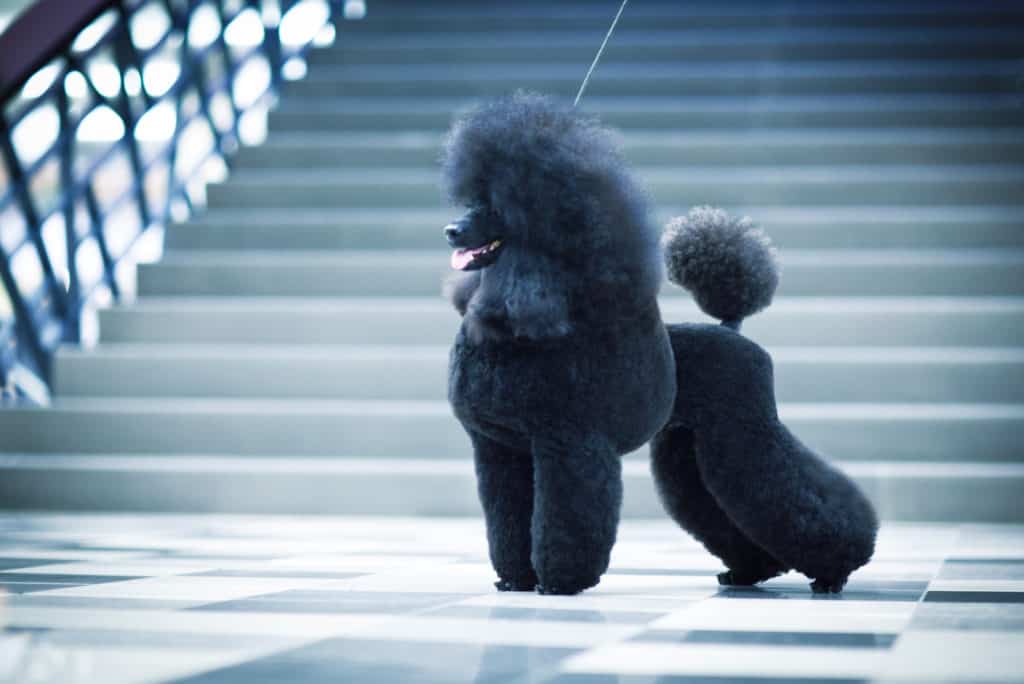
The Poodle comes from France or Germany and is also a working breed. However, today, most Poodles are kept as pets.
There are three sizes of Poodle, mini, toy, or standard. It’s the smaller types that are used to create Mini Doodles.
What Are the Key Differences Between Mini Labradoodles and Mini Goldendoodles?
Here’s an at-a-glance comparison of these two gorgeous Doodles:
Summary Table
Features
Mini Labradoodle
Mini Goldendoodle
Height:
14 to 16 inches
16 to 19 inches
Weight:
15 to 25 pounds
20 to 30 pounds
Type of Coat:
It can be short, wiry, and wavy. Low-shedding
Generally longer, straight, or curly coat. Low-shedding
Color:
Chocolate, black, cream, blue, parchment, golden, red, apricot, chalk, cafe, lavender, silver, merle
Cream, black, brown, white, golden, red, sable, silver, merle
Lifespan:
12 to 15 years
12 to 15 years
Health:
Hip dysplasia, patellar luxation, hyperthyroidism, PRA, cataracts, Addison’s disease
Hip dysplasia, patellar luxation, PRA, cataracts, skin conditions, cancer, epilepsy
Intelligence:
High
High
Temperament:
Highly trainable, and friendly but can be wary of strangers
Extremely affectionate, sociable, wants to please
Diet:
Depends on the size of the dog
Depends on the size of the dog
Exercise requirements:
Needs plenty of outdoor walks and exercise. Loves swimming.
Needs plenty of outdoor walks and exercise. Loves swimming
Price:
$2,500 and upward
$2,500 and upward
Mini Labradoodle
Height:
14 to 16 inches
Weight:
15 to 25 pounds
Type of Coat:
It can be short, wiry, and wavy. Low-shedding
Color:
Chocolate, black, cream, blue, parchment, golden, red, apricot, chalk, cafe, lavender, silver, merle
Lifespan:
12 to 15 years
Health:
Hip dysplasia, patellar luxation, hyperthyroidism, PRA, cataracts, Addison’s disease
Intelligence:
High
Temperament:
Highly trainable, friendly but can be wary of strangers
Diet:
Depends on the size of the dog
Exercise requirements::
Needs plenty of outdoor walks and exercise. Loves swimming.
Price:
$2,500 and upward
Mini Goldendoodle
Height:
16 to 19 inches
Weight:
20 to 30 pounds
Type of Coat:
Generally longer, straight or curly coat. Low-shedding
Color:
Cream, black, brown, white, golden, red, sable, silver, merle
Lifespan:
12 to 15 years
Health:
Hip dysplasia, patellar luxation, PRA, cataracts, skin conditions, cancer, epilepsy
Intelligence:
High
Temperament:
Extremely affectionate, sociable, wants to please
Diet:
Depends on the size of the dog
Exercise requirements::
Needs plenty of outdoor walks and exercise. Loves swimming
Price:
$2,500 and upward
Mini Labradoodle vs. Mini Goldendoodle: Direct Comparison
Now, let’s take a look at these two breeds in more detail in this side-by-side comparison.
Size and Average Weight
These two hybrid canines share similarities in stature, typically falling into the medium-sized dog breed category.
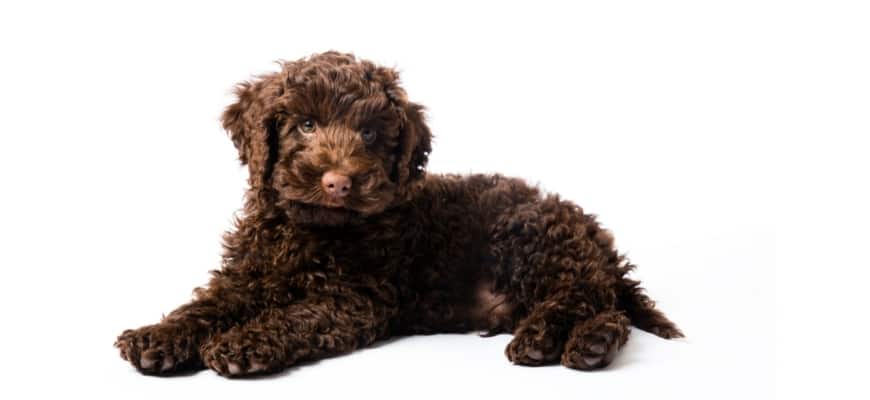
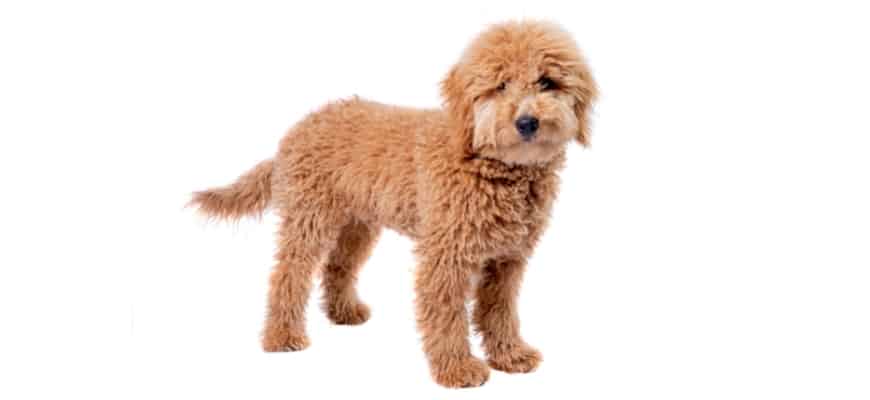
The Mini Labradoodle tends to be slightly more petite, with an average height ranging from 14 to 16 inches and a weight that varies between 15 and 25 pounds. On the other hand, the Mini Goldendoodle usually stands a bit taller at 16 to 19 inches with a weight spectrum of 20 to 30 pounds.
Homelife
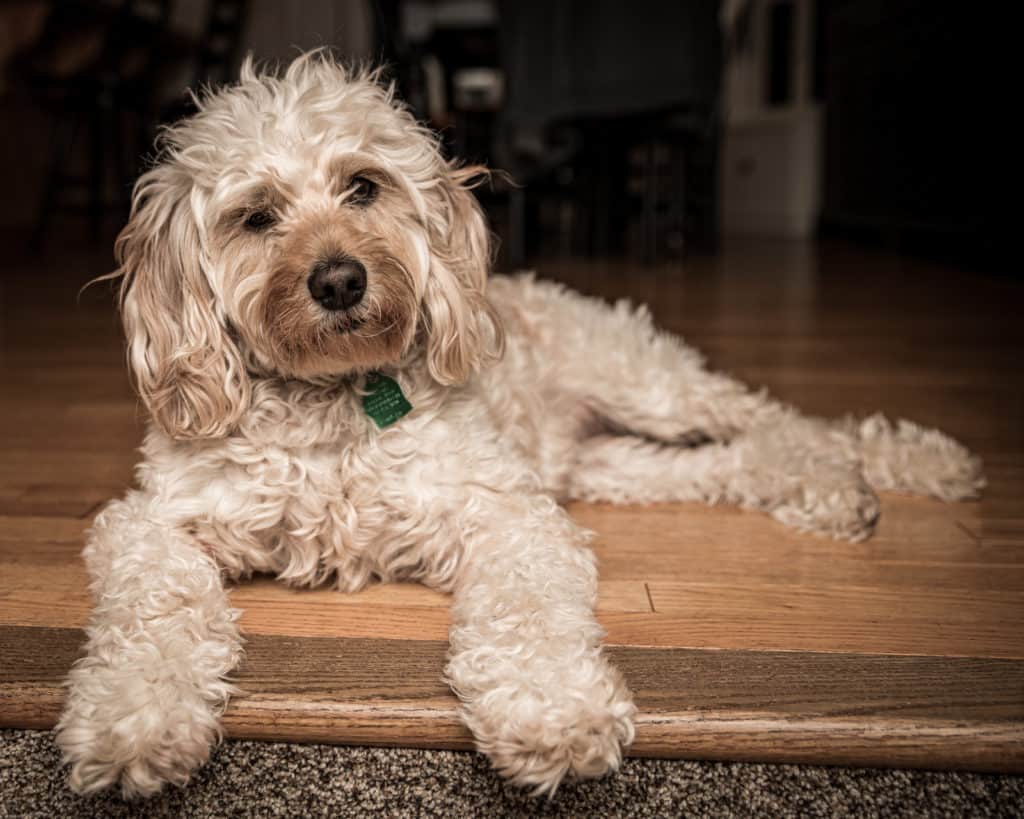
Both these Mini breeds can do fine in an apartment setting, provided that they get plenty of regular exercise each day.
As they both suffer from separation anxiety when left alone by their human family, neither of these breeds does well when kept in an outdoor kennel. Ideally, your Doodle needs to live indoors as part of your family.
Coat Type
The Mini Labradoodle usually sports a shorter, wirier coat, in contrast to the Mini Goldendoodle, which tends to have a longer and wavier coat. Despite common misconceptions, both breeds have double coats and are light-shedders.
Mini Labradoodle vs. Mini Goldendoodle: Hypoallergenic Qualities
Mini Labradoodles and Mini Goldendoodles are often chosen for their hypoallergenic traits, yet both breeds do shed to a certain extent. These breeds possess a double coat, which leads to seasonal shedding of their soft undercoat during the transitional periods of spring and fall, correlating with changes in daylight. Doodles that are several generations removed from the original crossbreed, with a higher percentage of Poodle DNA, will typically shed less due to the Poodle’s minimal-shedding single coat.
Contrary to what many believe, pet allergies are not solely caused by hair but rather by pet dander, which includes dead skin cells and dried saliva; a specific protein in the saliva actually triggers allergic reactions.
Coat Colors
Both Mini Labradoodles and Mini Goldendoodles come in a variety of coat colors.
Mini Labradoodles can be chocolate, black, cream, blue, parchment, golden, red, apricot, chalk, cafe, lavender, silver, and merle. Mini Goldendoodles can be cream, black, brown, white, golden, red, sable, silver, and merle.
Both breeds can change color as they get older, so you never quite know what color your Doodle will finish up!
Mini Labradoodle vs. Mini Goldendoodle: Health Issues
Mini Labradoodles and Mini Goldendoodles are relatively healthy mixed breeds that both enjoy a good life expectancy of between ten and 15 years.
However, both of these mixed breeds can be vulnerable to a few inherited health risks. That’s why you must always buy your puppy from a reputable breeder that has its breeding dogs screened for the health conditions that can affect the breed. Always ask the breeder to show you health certificates for both parent dogs that cover the most common health risks associated with these breeds.
The most serious common health issues that can affect Doodles include:
- Hip dysplasia and patellar luxation affect the dog’s hip and knee joints respectively. Both these hereditary health issues are extremely painful and debilitating for the dog, but they can be treated with pain management drug therapy. However, more severe cases can require expensive surgery.
- Progressive Retinal Atrophy (PRA) is a serious eye condition that eventually causes blindness.
- Mini Labradoodles can be susceptible to hormonal disorders, including hypothyroidism and Addison’s disease.
- Mini Goldendoodles can be prone to developing epilepsy and some forms of cancer.
- Both breeds are susceptible to skin irritation.
Generally, healthy parents breed healthy puppies. So, steer clear of puppy farms and backyard breeders that often use dogs that carry genetic diseases.
Training
Both breeds are highly intelligent and are generally easy to train. That’s why both Mini Labradoodles and Mini Goldendoodles can be trained as service dogs in various roles, including search and rescue dogs, disability assistance dogs, and medical alert dogs.
Both varieties of Doodles respond best to positive reward training methods. Be sure to include fun training sessions in your dog’s weekly exercise regimen.
Temperament
Labradoodles and Goldendoodles both have a reputation as being very friendly, sociable breeds that get along well with people and other pets and make wonderful family dogs. That’s definitely true, although the Labradoodle can be somewhat aloof with people he doesn’t know well.
Both breeds are usually trustworthy with kids, love receiving attention from humans, and neither are known to be barkers. However, I always advise would-be dog owners to make sure that their pets are well-socialized from day one.
One downside of owning such a people-oriented dog breed with an easygoing temperament is that both these types are prone to becoming anxious when separated from their beloved human family for too long. That often results in destructive behavior and barking.
Do Mini Doodles Get Along Well with Other Pets?
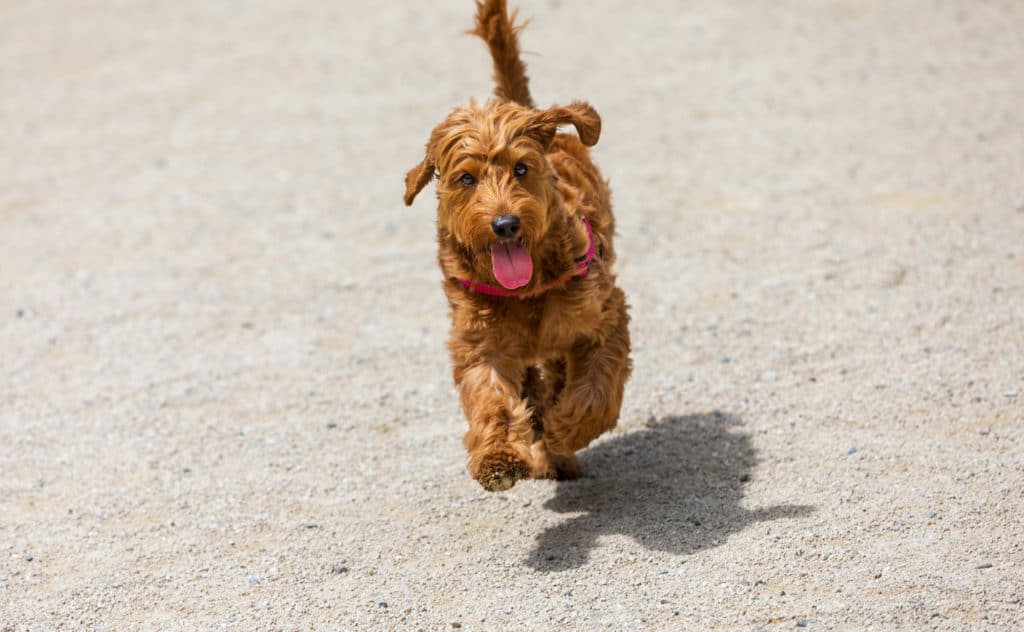
Yes, Mini Doodles typically exhibit a friendly temperament that allows them to get along with other pets. However, it’s essential to introduce early socialization as their parent breeds have a high prey drive, which could lead to chasing smaller animals like cats or rabbits if not managed from a young age.
Exercise Requirements
Mini Goldendoodles and Mini Labradoodles require daily exercise, ideally one hour of walking plus additional playtime.
As descendants of active working dogs, these breeds thrive on physical activity, including swimming and games, to maintain their health and happiness. Keep in mind their love for water when choosing your walking routes, as they’re naturally drawn to ponds and ditches
Diet And Nutrition
Mini Goldendoodles and Mini Labradoodles need a balanced diet tailored to their size, activity level, and health needs. High-quality dog food that fulfills the nutritional requirements of small to medium-active breeds is recommended for these energetic dogs.
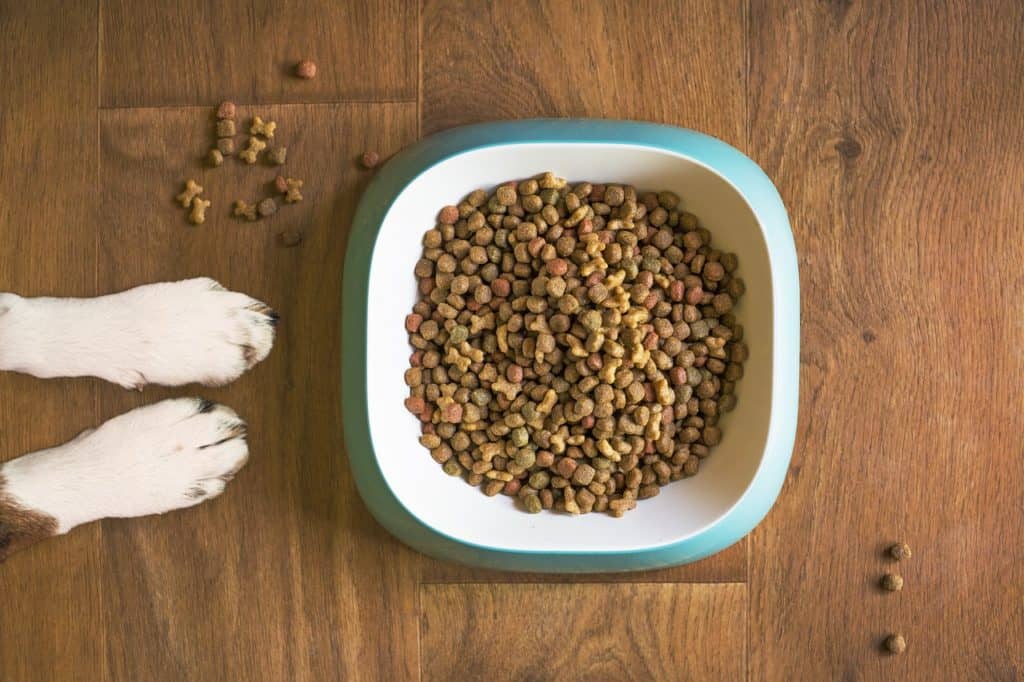
Always refer to the food manufacturer’s guidelines on the product packaging when calculating how much to feed your dog.
What Are the Main Differences Between Mini Labradoodles and Mini Goldendoodles?
Both these hybrid breeds are pretty similar. However, there are a few differences between them that you need to know about before you make your choice:
- Mini Goldendoodles generally have longer fur. That means that these pups typically need more brushing and tend to shed a little more than Mini Labradoodles.
- Both these Mini Doodles are lively and can be excitable, but Mini Goldendoodles tend to be more relaxed around other pets and visitors to your home than Mini Labradoodles.
- Mini Labradoodles are highly trainable and they love to work. So, this breed is more suitable as a service dog or hunting companion than the more happy-go-lucky Mini Goldendoodle.
Why Should You Consider a Mini Doodle as Your Next Pet?
Mini Labradoodle
Here are the main good points of a Mini Labradoodle:
- Loyalty and intelligence
- They make excellent service dogs for those with disabilities
- Friendly, outgoing, joyful dogs that love to be around family
- Get along great with other pets and kids
- High-energy pets that are ideally suited to life with an active, outdoorsy family
- Low-shedding dogs that can be suitable as pets for those with minor pet allergies
- Excellent, non-aggressive temperament
- Suitable for life in an apartment or small home
Mini Goldendoodle
Both these medium-sized breed dogs have a lot to offer. Now, here are the main good points of a Mini Goldendoodle:
- Low-shedding coat
- Curly-coated types are hypoallergenic
- Highly trainable
- Energetic and friendly, making an excellent family dog
- Very sociable and loves to please their human family
- Adaptable to most climates
- Very affectionate and loyal dogs that love to be around people
- Trustworthy with kids and other pets
In Conclusion
If you have your heart set on a Doodle, you’ll be pleased to learn that both the Mini Goldendoodle and the Mini Labradoodle make excellent family pets. These breeds thrive in families that spend time outdoors and enthusiastically join in on hikes, camping, and sailing trips. Both breeds are highly trainable, making them a good choice as service dogs.
Both these Doodle breeds need plenty of exercise every day, and they can suffer from separation anxiety if they are left alone for long periods without sufficient mental and physical stimulation. These low-shedding dogs are suitable for life in a home with allergy sufferers.
In our opinion, a Mini Goldendoodle is the best choice as a family pet, whereas the Mini Labradoodle would be a better fit as a working companion to join you in the hunting field or as a service dog.
Ready to welcome a Mini Doodle into your heart and home? Connect with reputable breeders, consider adoption, and prepare to embark on a wonderful journey with your new fluffy friend. The perfect Mini Doodle awaits to start its loving life with you.

Very insightful article. I own a black female labradoodle with wavy-curls hair, just turned 1 year old today, March 13. Her temperament, intelligence, features are exactly what you have described. Super intelligent dog which can also read your body languages. Highly trainable. Only one year old, she has already mastered well all basic commands such as sit, stay (for over 3 minutes or more), fetch, come, walk on loose leash, crate and bed (her resting cushion) training, etc. She has been trained not to come to our table when we are having dinner or go into our bedrooms, laundry room or bathrooms. Never had any destructive behaviors as chewing shoes, slippers, furniture. Lovable, affectionate, playful, the best pet you can have.
The breeder is Copper Canyon in Chemainus, B.C. Canada. They specialized in Australian labradoodles, a very reputable breeder.