Yes, Goldendoodles can swim, and many of them absolutely adore the water! As a delightful mix of Golden Retrievers and Poodles—both breeds known for their swimming prowess—Goldendoodles are often natural swimmers.
This article dives into what makes these furry friends potential aquatic aficionados. From their breed characteristics and affinity for water to safety tips for your first dip together, we cover all the bases. We’ll also touch on how to introduce your Goldendoodle to swimming and how to make water activities a safe, enjoyable experience for your pooch.
So, whether you’re looking to share beach days with your buddy or simply curious about your Doodle’s potential to paddle, stay tuned to become an expert on Goldendoodles and their swimming capabilities.
Table of Contents
Can Goldendoodles Swim Well?
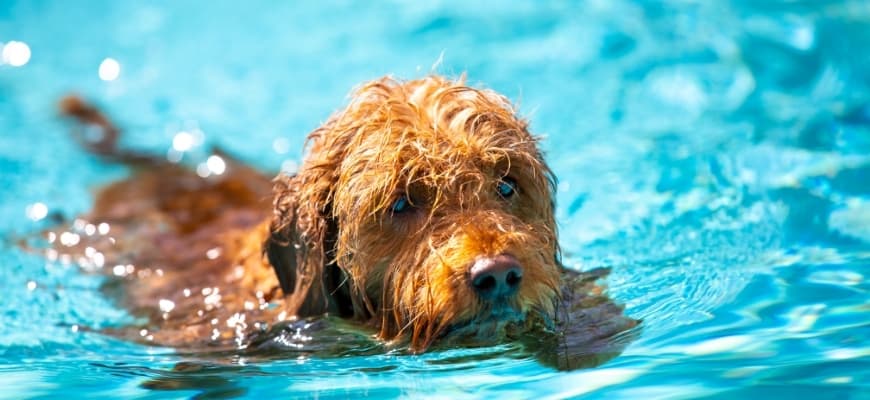
Yes, Goldendoodles are pretty good natural swimmers, and many of them just love to spend time in the lake.
So, why do Goldendoodles love the lake so much? It comes from both sides of his parentage and has largely to do with genetics.
As you know, all Goldendoodles, regardless of their generation, are part purebred Golden Retriever and part purebred Poodle. Since both these breeds are known to be avid water lovers, it’s no surprise that Goldendoodles usually love water, too.
You may also like: Are Goldendoodles Easy to Train? Useful Training Tips
Are Golden Retrievers Natural Swimmers?
Yes, Golden Retrievers are natural swimmers, bred with water-retrieving in their DNA. Originally, they were bred to locate and gently return waterfowl without damaging it, a task often requiring a swim.
Their double coat, with a warm underfur and water-repellent outer layer, allows them to swim in cold water comfortably, while their athletic build and long legs give them a strong and efficient swimming stroke.
Do Golden retrievers enjoy swimming? Check out this video to find out!
What About Poodles?
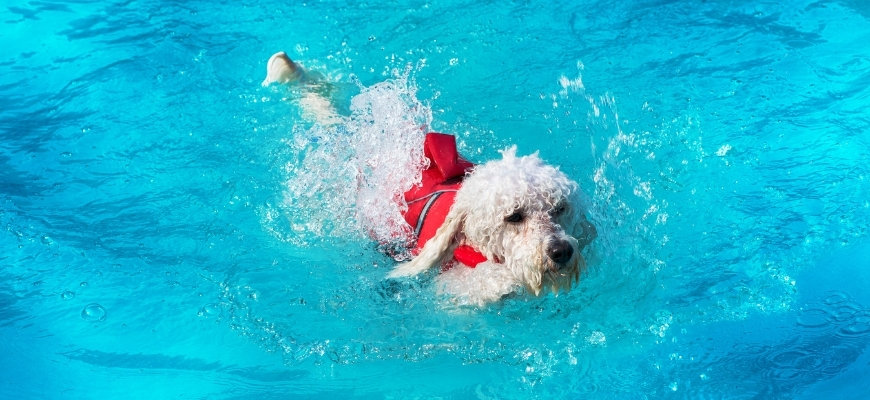
Certainly, Poodles are also among the dog breeds that are excellent swimmers. Their history as water retrievers gives them a natural inclination for swimming. Poodles have a moisture-resistant coat and webbed feet, both of which are physical traits that support their ability to swim well. Whether in a pool, a lake, or the sea, Poodles often take to the water with enthusiasm and skill.
In this video clip of a Dock Diving competition, you can see just how efficient the Poodle is at swimming and retrieving, making these ideal dogs for water sports and other kinds of water activities.
Are Goldendoodles Capable Swimmers Like Their Parents?
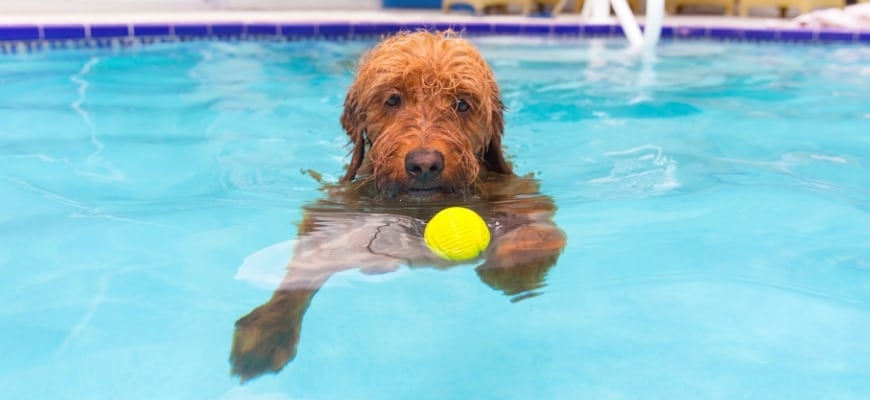
Indeed, Goldendoodles typically inherit their passion and aptitude for swimming from their Golden Retriever and Poodle ancestry. Both parent breeds are known for their love of water and their swimming prowess. A Goldendoodle’s athletic build, buoyant double coat, and subtly webbed feet are physical traits that contribute to their swimming abilities.
With such a lineage, it’s no surprise that Goldendoodles often relish in the joy of splashing around and taking a swim.
Exceptions To The Rule
All that said, it’s important to understand that there are exceptions to every rule and not all Goldendoodles enjoy the water, especially when it’s bath time and the shampoo comes out!
If your furry friend is happy to watch from dry land or from your boat while you take a cooling dip, that’s fine. You should never try to force your dog to swim if he really doesn’t want to.
What’s the Best Way to Get Your Goldendoodle Comfortable with Water?
Don’t rush things when introducing your Goldendoodle to water for the first time. Although many dogs just can’t wait to dive right in and start splashing around, some don’t, and you could frighten your pet if you try to hurry him.
The best approach to making your Goldendoodle comfortable with water is a gradual and positive one. Start with short, enjoyable sessions in shallow water, where they can feel the bottom, using plenty of praise and their favorite treats or toys as positive reinforcement.
Equip them with a well-fitting life jacket to boost their confidence, especially in deeper water. As your Doodle becomes more accustomed to the sensation of water, slowly encourage them to explore further, but always prioritize their comfort and readiness.
Remember, patience is key—never force your pet into a situation that causes fear or distress, as this could create a long-lasting aversion to water.
How Can You Give Effective Swimming Lessons to Your Goldendoodle?
After your Goldendoodle has become comfortable with the feel of shallow water, it’s time to transition to swimming lessons.
At What Age Can A Goldendoodle Puppy Learn To Swim?
It’s generally recommended that puppies should be three to four months old before they learn to swim. Again, that really depends on the individual dog’s personality and whether he wants to play in the water or not.
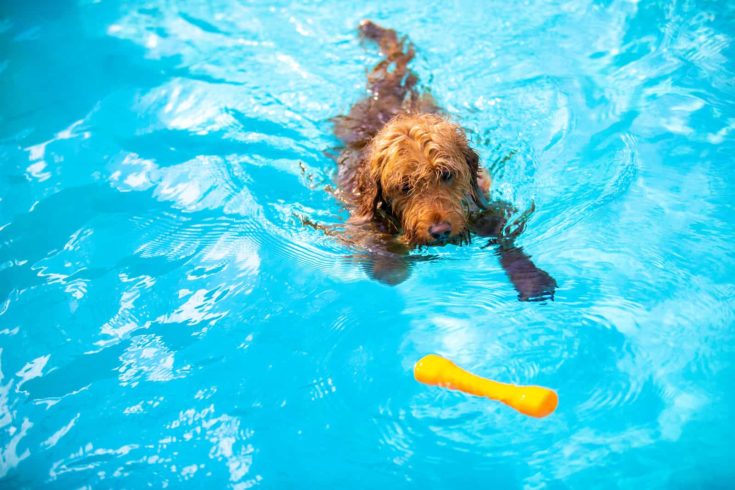
I advise you to check with your vet on what age they recommend teaching your Doodle puppy to swim.
In the meantime, you can introduce your pup to an experience with water by filling your bathtub or a kiddie’s paddling pool with a few inches depth of water and putting a few of your Doodle’s favorite toys in there. That way, your puppy can safely have fun paddling around without having to swim physically.
You may also like Goldendoodle Training – The Best Way To Train A Dog
Where Is the Best Place to Teach Your Goldendoodle to Swim?
For teaching your Goldendoodle to swim, prioritize safety and start with calm, shallow environments. Avoid deep, rough waters, as young or inexperienced dogs may struggle and develop a fear of swimming.
For puppies, an inflatable kiddie pool is ideal. Adult Goldendoodles can progress to larger pools with easy entry and exit points.
Always use positive reinforcement and never forcibly introduce your dog to deep water, as it can be traumatic.
How to Conduct a Successful Swimming Lesson for Your Goldendoodle?
Here’s a step-by-step guide on how to teach your Goldendoodle to swim like a true water baby!
Your Goldendoodle will need to wear a fabric harness and leash, and you should get kitted out in clothes that are suitable for taking a dip!
Step 1 – Introduce Your Dog To The Water
Have your Goldendoodle on his harness and leash so that you can lead him into the pool, using a treat or toy to encourage him if necessary. Let your dog splash around for a while so that he gets used to feeling the water around him.
Step 2 – Go Deeper!
Once your dog seems happy, lead him a little deeper.
Stay beside your dog at all times so that you can hold and support him if necessary. Your pet will most likely start paddling with his front legs first. That’s okay, but it can be very tiring for your dog.
Step 3 – Swimming!
Go into deeper water until your dog is all the way in. Hold your pup around his belly.
Once your dog is completely out of his depth, he’ll begin kicking with his back legs, as well as paddling with his front legs. So, now your Goldendoodle is swimming!
Take Things Slowly
Throughout the process, be ready to take a step or two back. If your dog becomes at all anxious or seems to be afraid, immediately lead him out of the water and back onto dry land.
Once your dog is swimming confidently, remember that swimming is hard work for a newbie. Again, insist that your pet takes plenty of breaks to recover before allowing him to go back into the water.
What Are the Essential Safety Tips for Goldendoodle Swimming?
No matter how good a swimmer your dog is, the water can still be a dangerous environment, and the safety of you and your pet is paramount.
Stay in Shallow Water: Always stay within a depth where you can comfortably stand. This ensures that if your dog becomes anxious or attempts to climb on you, you won’t be at risk of being submerged.
Invest in a Dog Life Vest: Utilize a properly fitted canine life jacket for added buoyancy and security. It not only supports your dog in the water but also conserves energy, making the swimming experience less taxing and safer for both of you.
Prepare for Emergencies: When engaging in water activities like boating or kayaking with your Goldendoodle, a life vest is crucial. Ensure you have the strength to lift your dog from the water back to safety if an emergency arises.
What Are the Considerations for Goldendoodles Swimming in Oceans, Lakes, and Rivers?
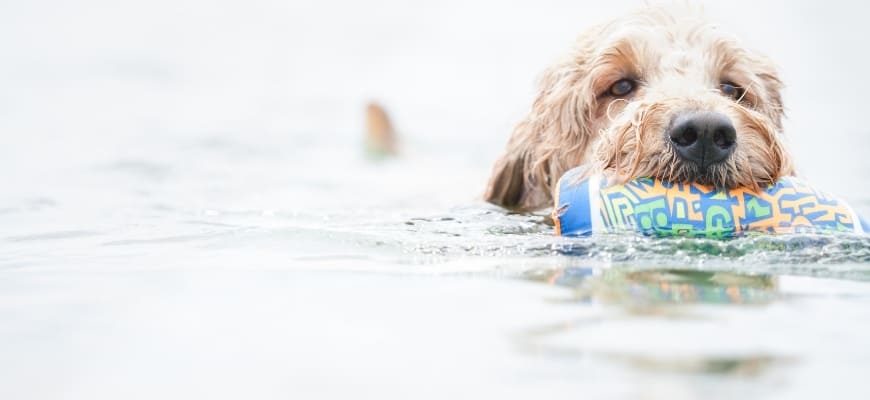
Swimming in oceans, lakes, and rivers presents unique challenges for Goldendoodles, such as varying currents and water quality, so close supervision and awareness of local conditions are essential.
It’s important to know the specifics of each environment to ensure a safe and enjoyable swimming experience for your pet.
Rough Water
Whether you’re at the beach, the lake, or by the river, water can be unpredictable. Sudden squalls can blow up, creating waves, and riptides can lurk unseen beneath the surface. Before you head to the beach, check the tide tables for the current strength at that spot, and ask lifeguards about the present conditions and whether it’s safe to swim.
As a general rule of thumb, the tides and surf levels should be safe enough for small kids before you consider taking your Goldendoodle out.
What’s Underneath The Surface?
Even though it might appear calm on the surface, you don’t know what’s hidden underneath. There could be logs, branches, thick vegetation, sharp rocks, or garbage there, all of which could injure your dog or hamper his swimming.
So, never encourage your dog to jump into the water unless you can see exactly what’s underneath the surface.
Leave Wildlife Alone!
Don’t allow your dog to lick jellyfish, sea urchins, dead fish, or any other creatures that you come across during your visit to the water.
Discourage Your Dog From Drinking The Water
If possible, don’t let your dog drink the water. Ocean water is very salty, potentially causing dehydration and diarrhea.
Lakes, ponds, and rivers can harbor dangerous bacteria that could make your pet sick. So, take fresh water with you for your dog to drink rather than letting him lap water from a river or lake.
Blue-Green And Red Algae
If lake water is a blue-green color and has scum on the surface, keep your dog out! It’s likely that the water has a bloom of potentially toxic blue-green algae that could harm your pet.
At the ocean, red tides sometimes occur, which are basically blooms of dangerous algae. Again, keep your Goldendoodle out of the water.
You might also like to read about Goldendoodle Potty Training.
In Conclusion
To answer the question that many Goldendoodle owners ask: yes, Goldendoodles typically can swim and often display a natural affinity for water. They inherit this trait from their Poodle and Golden Retriever lineage—both breeds known for their swimming skills. Throughout this article, we’ve navigated the key considerations for introducing your
Goldendoodle to the water, emphasizing the importance of patience, safety, and positive reinforcement. From selecting the right environment—a controlled backyard pool—to preparing them with a snugly fitted life vest for open-water excursions, these steps are critical for a safe and enjoyable swimming experience.
Did this guide shed light on the aquatic potential of your Goldendoodle? If it provided you with valuable insights, we encourage you to spread the knowledge by sharing this guide with fellow Doodle owners.
Engage with our community by commenting below about your Goldendoodle’s swimming adventures or any additional tips you may have for water-loving dogs.
Let’s dive into the discussion and create ripples of support and information to help all Goldendoodles and their owners make the most of their time in and around the water. Share your experiences, and let’s keep our furry friends safe, happy, and healthy in the waves!
