The transformation from a fluffy, soft baby coat to a mature, adult coat is a natural part of your Goldendoodle puppy’s development. It’s a fascinating journey that marks a significant milestone in their growth—a Goldendoodle puppy coat transition. In this comprehensive guide, we’ll define what this transition entails and explore the steps involved in moving from the irresistible teddy bear cuteness to the sleek sophistication of an adult Goldendoodle’s coat.
Prepare to navigate through the stages of coat change, grooming tips, and health implications with ease. We’ll discuss what triggers the transition, how to maintain your puppy’s coat health during this phase, and what to expect in terms of texture and grooming needs. So, stay with us as we delve into the world of Goldendoodle coat evolution, ensuring you and your furry companion emerge from this transition as smoothly and stylishly as possible!
Table of Contents
When Do Goldendoodle Puppies Shed Their Coat?
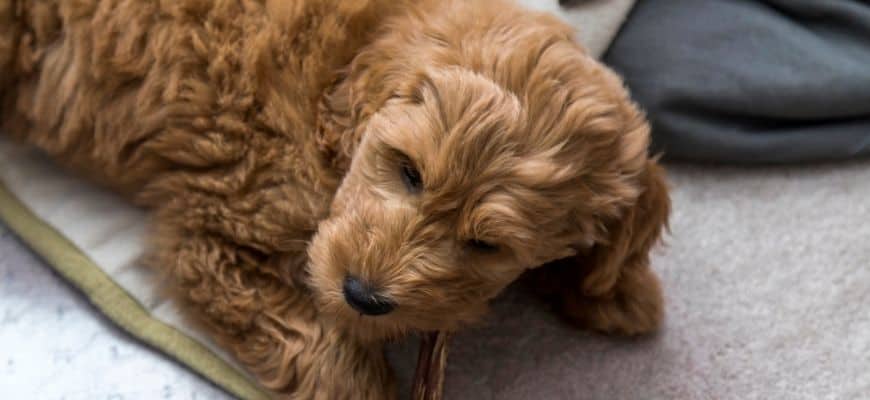
Goldendoodle puppies typically begin shedding their soft, fluffy baby coat and transition to their adult coat around the age of six to eight months.
However, the exact timing can vary depending on the individual dog and its specific mix of genetics. During this transition period, their adult coat starts to grow in and replaces the puppy coat, which may result in increased shedding. This is a natural process and varies from one Goldendoodle to another due to the variation in their Poodle and Golden Retriever ancestry.
What Will Your Goldendoodle Puppy’s Adult Coat Look Like?
The adult coat type of your Goldendoodle puppy can typically be determined by looking at the characteristics of its puppy coat, as well as considering the genetic contributions of its parents. Generally, Goldendoodles can have three main types of adult coats:
- Straight Coat: Resembling the Golden Retriever side of the family, it’s less common and can be slightly wavy.
- Wavy Coat: Often referred to as a “shaggy” coat, this type is the most common among Goldendoodles, offering a nice balance between the breeds.
- Curly Coat: Similar to a Poodle’s coat, this type is likely to be the most hypoallergenic and is ideal for those with allergies.
To predict the adult coat type, consider the coats of the puppy’s parents, and observe the texture and appearance of the pup’s coat as it begins to mature. A knowledgeable breeder can also provide guidance based on their experience with previous litters.
Curly Coat
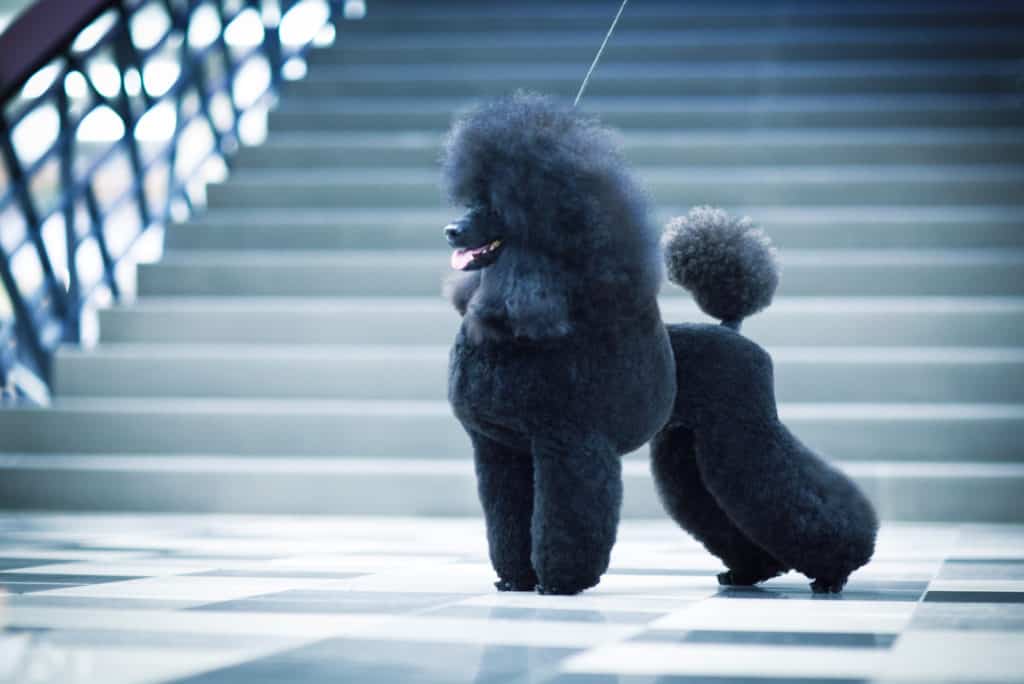
Curly-coated Goldendoodles take mostly after their Poodle parent. The fur grows in dense curls that can be tight, kinky curls, or loose barrel curls.
Generally, curly coats have virtually no doggy odor and are usually very low shedding.
Wavy Coat
English Goldendoodles have wavy coats that are also sometimes referred to as fleece coats. This coat type is typically very low shedding, but it does need plenty of regular grooming to prevent matting.
Straight Coat
Goldendoodles with straight coats take mostly after the Golden retriever parent. These Doodles are the heaviest shedders, making them unsuitable for life in a home with allergy sufferers.
These coat types tend to need a little less brushing than the curly or wavy-coated types, and they are slightly less prone to tangling and matting.
What Does a Goldendoodle Puppy’s Coat Look Like?
A Goldendoodle puppy’s coat is a unique combination of its Poodle and Golden Retriever lineage, typically characterized by a soft, fluffy texture that varies from wavy to curly. This initial coat is known for its plushness, which gradually transitions to the dog’s adult coat as it matures.
Uh Oh, What’s That Mat?!
Suddenly, mats appear in your puppy’s beautiful soft coat!
When the puppy’s coat begins transitioning, you’ll discover a few mats starting to form. The usual areas where mats form are underneath the puppy’s armpits, under his ears, and beneath his collar.
If you’ve not owned a Goldendoodle before, you’ll be amazed just how much hair your puppy loses when he’s getting his adult coat. Brushing your puppy removes loose, dead hair that would otherwise turn into immovable mats.
So, even though one of the reasons that Goldendoodles are so popular is that they are extremely low-shedding, they do shed. For that reason, you will need to brush your puppy as soon as you spot that he’s begun to change his coat.
Do All Goldendoodles Get Puppy Coats?
Yes, all Goldendoodle puppies, irrespective of their size or generation, undergo a coat change from their initial softer, fluffier puppy coat to their adult coat.
This transition occurs in all Goldendoodles; however, owners of F1, F1B, or F2 Doodle puppies frequently report that the shift can be quite subtle. These generations often have soft adult fur that closely resembles their puppy coat, making the change less discernible to many Goldendoodle parents.
Interestingly, lifestyle factors such as frequent swimming and the consequent need for regular baths can cause the puppy coat to fade gradually and often unnoticeably. In such cases, the natural activities of the Goldendoodle can lead to a coat transition that occurs without much fanfare, as the puppy coat sheds subtly over time.
What’s the Difference Between Puppy and Adult Coats?
The primary difference between puppy and adult coats in Goldendoodles, and dogs in general, lies in texture, density, and growth patterns. Puppy coats are typically soft and fluffy, designed to provide warmth and protection during the early stages of a dog’s life. As the dog matures, its puppy coat is replaced by the adult coat, which has a different structure and is adapted to the dog’s adult size and lifestyle.
Adult coats can vary significantly more in texture and may become wavy, curly, or straight, depending on the breed and individual genetics. They are usually denser and may have a protective undercoat. The adult coat is also more resilient and capable of withstanding various weather conditions. For Goldendoodles, particularly those with more Poodle genetics, the adult coat is often hypoallergenic and sheds less, which can be a significant factor for pet owners with allergies.
What Does It Mean When Your Goldendoodle Puppy Sheds His Baby Coat?
When your Goldendoodle puppy “blows his coat,” it means he is shedding his initial soft, fluffy baby coat and transitioning to a thicker, more mature adult coat. This natural process often begins when a puppy is around six months old and may be accompanied by increased shedding and a change in the coat’s texture and appearance. During this time, it’s essential to keep up with grooming to manage shedding and ensure the new adult coat grows in healthy.
Where Do Mats Form?
Mats generally form in areas of friction. Particular hotspots include:
- Under the collar
- Under the armpits
- Under the ears
- Around the base of the tail
- Around the dog’s rear end
- The back of the elbows, haunches, and legs
Although these areas are prime candidates for mats to form, you must check all over your puppy for tangles and remove them before mats can form.
When Should You Begin Brushing Your Goldendoodle Puppy?
You should begin brushing your Goldendoodle puppy from the moment you bring them home. Early brushing helps to acquaint them with the grooming process, which is an important part of their care routine, especially as Goldendoodles have coats that can mat and tangle easily.
Starting early also ensures that your puppy will be more comfortable with brushing as they grow and begin to undergo their coat transition. It’s advisable to brush your Goldendoodle puppy at least a few times a week to promote healthy coat growth and to reduce the amount of fur around the house.
Goldendoodle Puppy Brushing Tips
Here are a few tips on how to introduce your Goldendoodle puppy to being brushed.
Make Brushing Fun!
Wait until you have plenty of time to brush your puppy. Every step should be taken slowly. Be patient, and use plenty of praise, treats, and fuss so that your furbaby learns that brushing is a fun, enjoyable experience.
Gentle Brushing
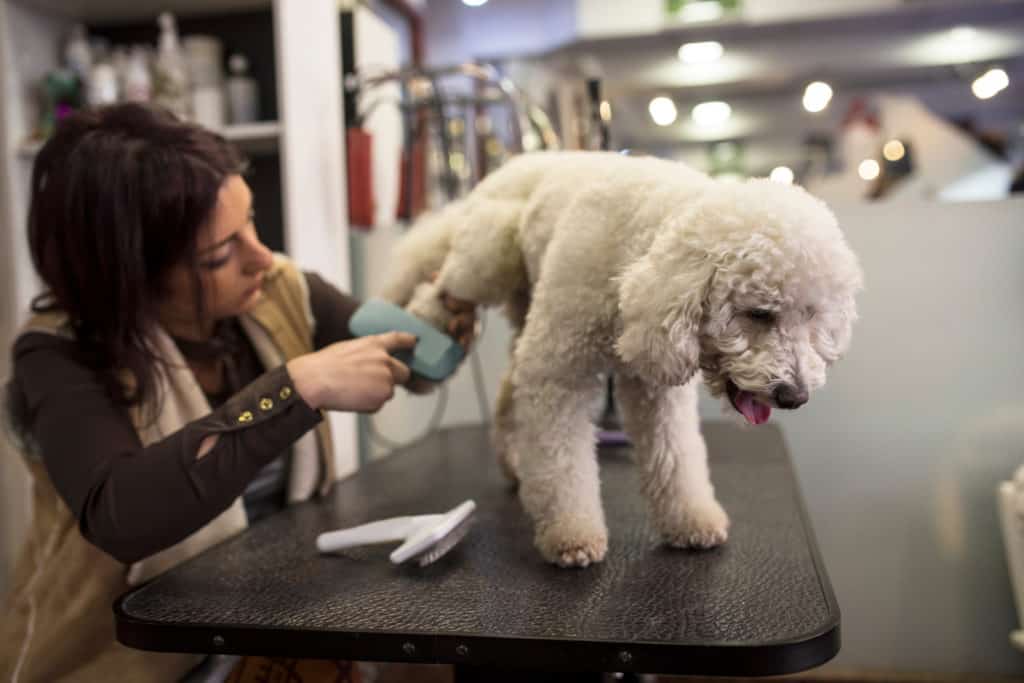
Start by running your fingers through your puppy’s coat, gently teasing away any tangles, and taking great care not to pull at the hair.
If you encounter any stubborn tangles or mats, use a detangler spray or some cornstarch to soften the hair, and then gently comb the hair out.
Goldendoodles are naturally curious pups, so allow your dog to sniff all your grooming supplies and tools before you begin using them on him. Use a soft brush to gently brush your puppy’s coat, taking care not to press too hard and scratch your pup’s skin.
Handle Your Puppy’s Paws
A regular part of being groomed is nail clipping. Many dogs hate having their nails clipped, so the earlier you can introduce your pup to having his feet handled, the easier it will be to clip his toenails.
Take each of your puppy’s paws and gently massage them so that your furry friend learns to accept and enjoy the experience.
Arrange a Visit to the Groomer
As an adult, your Goldendoodle puppy will need to visit the professional groomer every four to six weeks to have his coat clipped, nails trimmed, ears cleared, and bathed.
A lack of grooming or improper grooming can cause your canine companion some nasty health problems, including skin infections. For that reason, it’s a good idea to take your youngster along to the groomer for a social visit so that he’s not stressed when the time comes for a “for real” grooming session.
Generally, your puppy won’t need clipping until he has blown his coat. But if you’re not sure when to take him for his first grooming session, ask your local professional groomer.
In Conclusion
Our exploration of the Goldendoodle puppy coat transition has illuminated that this shedding typically starts between four to eight months of age. The process varies, appearing as a dramatic event for some or a slow, unnoticeable shift for others.
This guide has highlighted key insights into the stages, grooming tips, and what to expect during your Goldendoodle’s transition from a puppy to an adult coat. For personalized advice, reaching out to the breeder can be helpful in anticipating your pet’s adult coat.
If you’re currently guiding your Goldendoodle through this phase, share your story in the comments below. Your advice could be invaluable to others in our community. And if this guide has been helpful, please consider sharing it with fellow Goldendoodle enthusiasts. Your contributions help more pet parents navigate these furry changes smoothly.
Thank you for reading, and we look forward to your engagement as we all learn more about the delightful journey of raising a Goldendoodle.

Oh my goodness! Thank you for this post! Our golden doodles are 7 months old and have been blowing their coats like crazy! I had recently changed foods gradually. So at first, I thought it might be an allergy to the new food and I went back to their previous food. They weren’t scratching or anything and the hair just kept coming out. Now I know why thanks to your post! Thank you. Thank you. Thank you. A trip to the vet was next on my list.