From the backyard chain to the choke chain, here’s how dogs were treated in the ’70s, and what changed it.
#1 is the ’70s favorite whose grandchild you’ve almost certainly met, and the man who bred the first one has regrets.
Supper’s on the table and the dog isn’t home yet. Somebody steps onto the porch, whistles twice and rattles the bowl. A minute later he comes trotting up the middle of the street with burrs in his coat, smelling like the creek, after a day nobody can account for. Nobody asks where he’s been. He was the family dog, and a little bit everybody’s. Nearly all of that changed, and every change had a reason.
Table of Contents
#28 Letting the Dog Roam the Neighborhood All Day
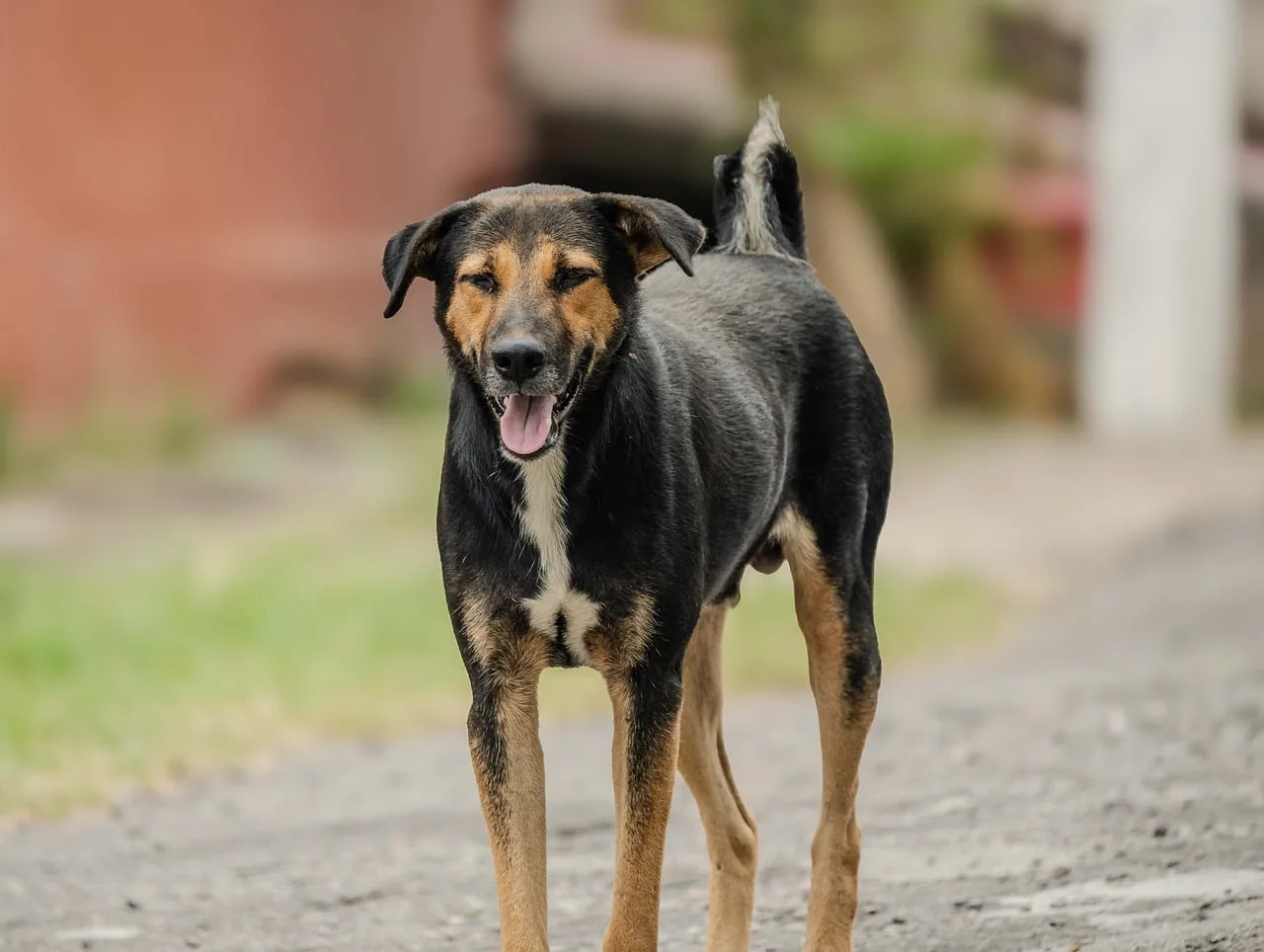
You’d let the dog out in the morning and not think about him again until dark. He had a route. He knew which kitchen handed out crusts and which yard had the cat. Half the street knew his name.
People who grew up that way still shake their heads about it. “In the 60s and early 70s we just opened our front doors and let our dogs out…to roam around freely. Crazy to think about that now,” writes someone who had family dogs in those years, in Reddit’s r/70s.
It was the norm, too. In 1973 the Humane Society of the United States estimated that about 25% of the dog population was still roaming the streets.
Leash laws didn’t arrive just because tastes changed. From 1947 on, towns and states adopted both vaccination requirements and leash control laws, which the CDC credits with improving rabies control across the country. By the late 1960s, fewer than 500 rabid dogs a year were being reported nationwide. Your dog’s daily rounds came after the worst was already over.
Towns kept tightening anyway, one at a time. Henderson, Kentucky, banned roaming dogs for a month in the spring of 1970, and getting an impounded dog back cost $5. By 1972 the town had a strict leash law with fines of $10 to $25.
The rabies count kept falling. The CDC recorded 170 rabid dogs in 1987, and the strain of rabies that passes from dog to dog was gone from the US by 2004.
#27 Riding Loose in the Pickup Bed
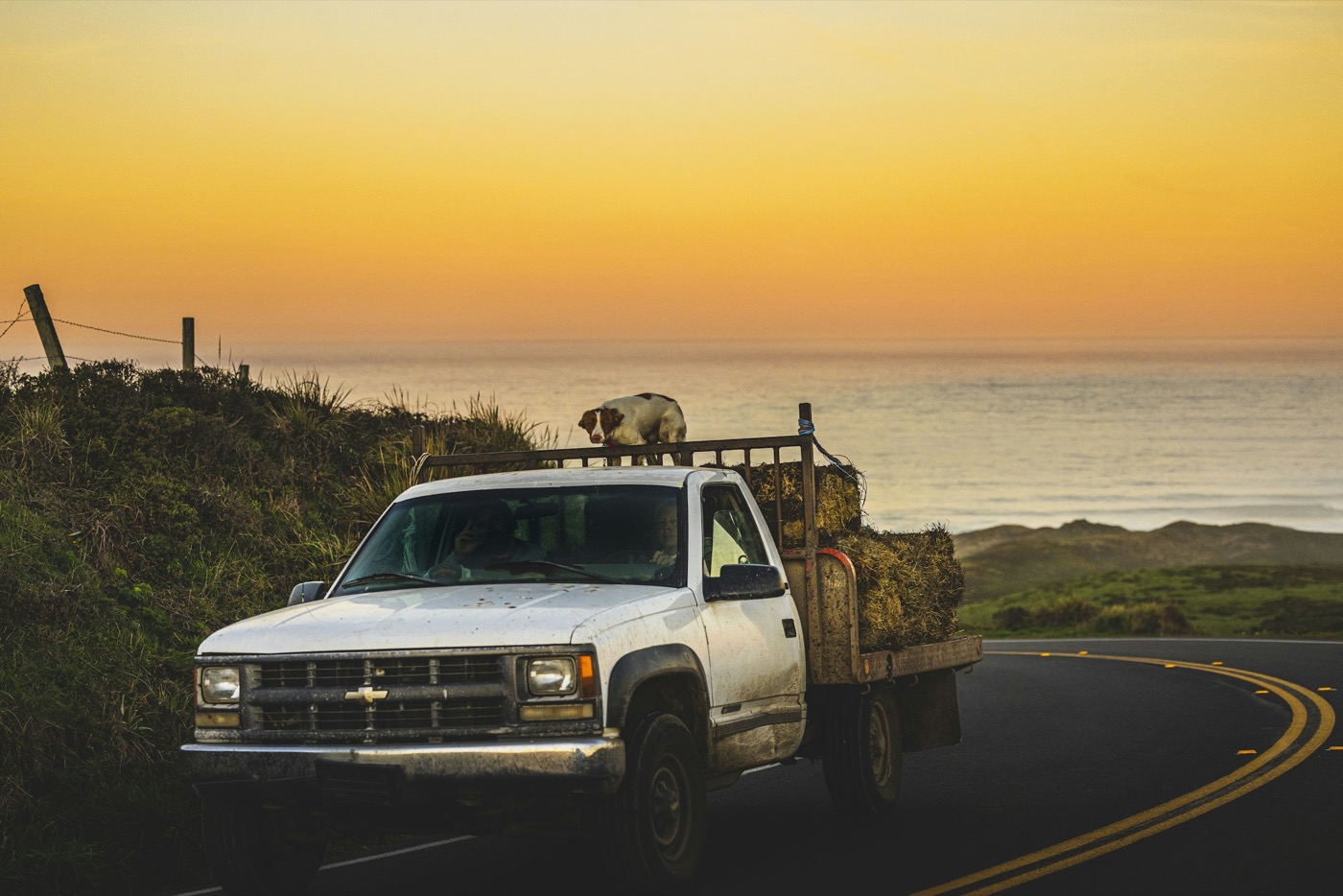
He stood braced against the wheel well with his ears blown inside out, riding to the dump or the feed store like he owned the truck. Nobody tied him. Some days the kids rode in there with him.
The bill showed up at the vet’s office. Before Massachusetts passed its truck-bed law in 1998, a statewide survey found that 71% of the state’s veterinarians had treated animals hurt riding loose in open truck beds. Most were dogs, and the total came to more than 600 of them.
Massachusetts isn’t alone. California, Connecticut, Maine, New Hampshire and Rhode Island also restrict dogs riding loose in open truck beds, so check your own state’s rule. Massachusetts still lets a dog ride in the bed under certain conditions. If yours rides there, the MSPCA’s setup is a harness around the shoulders and rib cage, clipped to a cross-tether that hooks to an anchor on each side of the truck. A collar around the neck alone won’t do.
#26 Table Scraps and the Gravy Plate
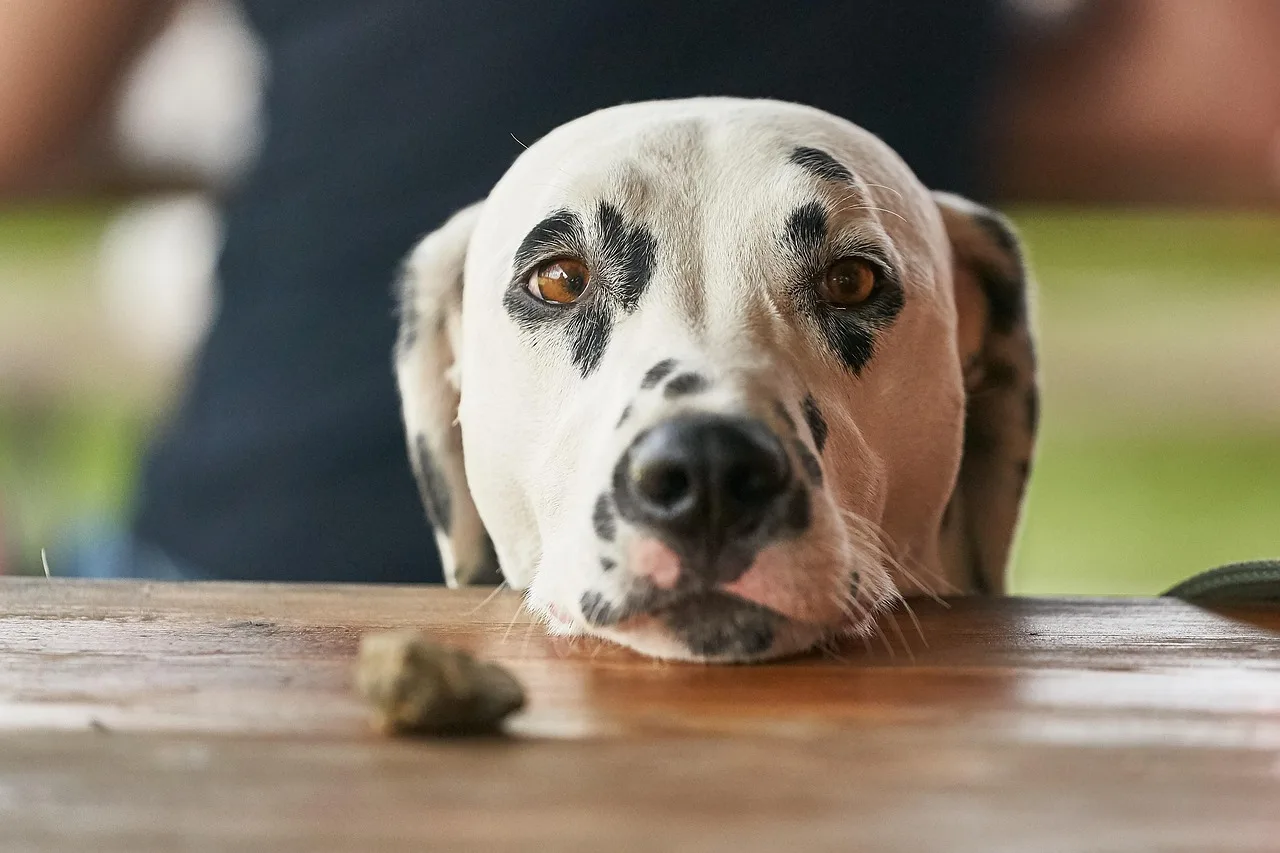
Supper’s over and the dog gets the plate. A smear of gravy, the fat trimmed off the roast, the turkey skin nobody wanted. For a lot of dogs, table scraps were most of the menu.
The scraps he loved most turned out to be the risky ones. The FDA warns that fat trimmings and skin from a roasted turkey or chicken can bring on pancreatitis, a swollen, inflamed pancreas that can kill. It also notes that dogs are “notorious for helping themselves to the turkey carcass or steak bones,” and that sharp pieces of cooked bone can tear up the mouth, throat and stomach.
Some of the danger wasn’t on anyone’s radar until recently. A 2016 review in Frontiers in Veterinary Science says grapes had “previously been considered unlikely to cause problems” and only became a concern in the few years before. The same review says these poisoning episodes resulted from “a lack of public knowledge of the health hazard.” In plainer words, nobody had told us.
If your dog gets into anything here, call your vet right away. After hours, the Pet Poison Helpline answers around the clock at (855) 764-7661, for a $99 fee per case.
Fine on your plate, trouble in his bowl – Onions and garlic, which damage red blood cells through oxidative hemolysis; leeks and chives, also toxic Allium plants – Macadamia nuts and alcohol – Chocolate and xylitol – Corn cobs and avocado pits, which can get stuck in the gut
#25 The Doghouse Out in the Yard
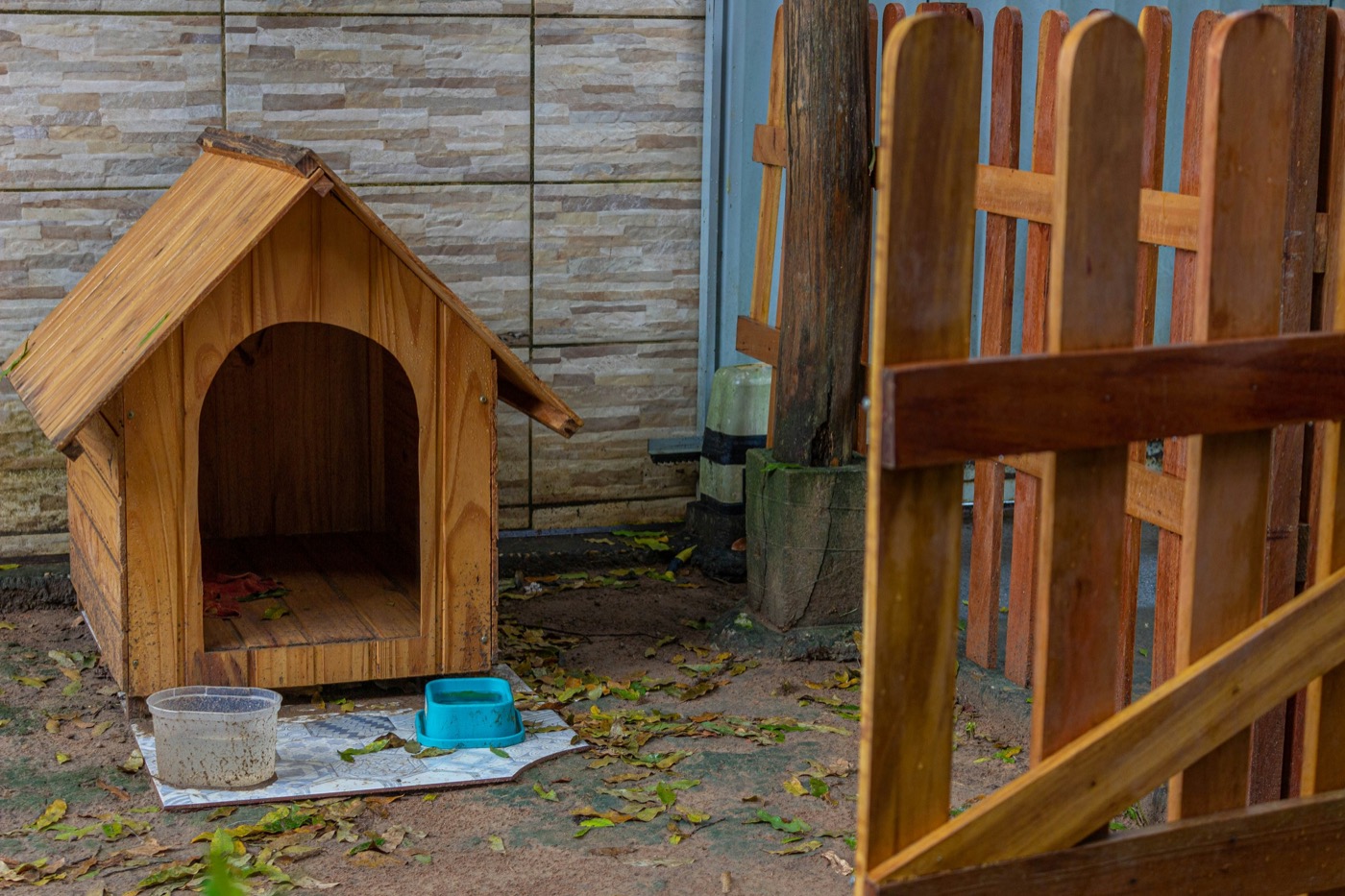
It was plywood, with leftover shingles on top and an old blanket inside for winter. Sometimes his name was painted over the opening. The house was for people.
People trading memories on Reddit say the family dog never came inside at all. He lived in a doghouse or a kennel run, and some nights he was tied to it.
Now look at where dogs sleep. In an AKC survey, 45% of owners said their dog sleeps in their bed. Another 20% crate the dog at night and 17% use a dog bed. Only 4% use an outdoor shelter.
That’s yard to pillow inside one lifetime. Call them pampered pets if you like. Humane World for Animals, the group formerly called the Humane Society of the United States, recommends that dogs live indoors. And a review of decades of research found that 95% of people now count their pets as family.
If yours is hogging the pillow tonight, he’s in the biggest group.
#24 The Backyard Chain and the Clothesline Run
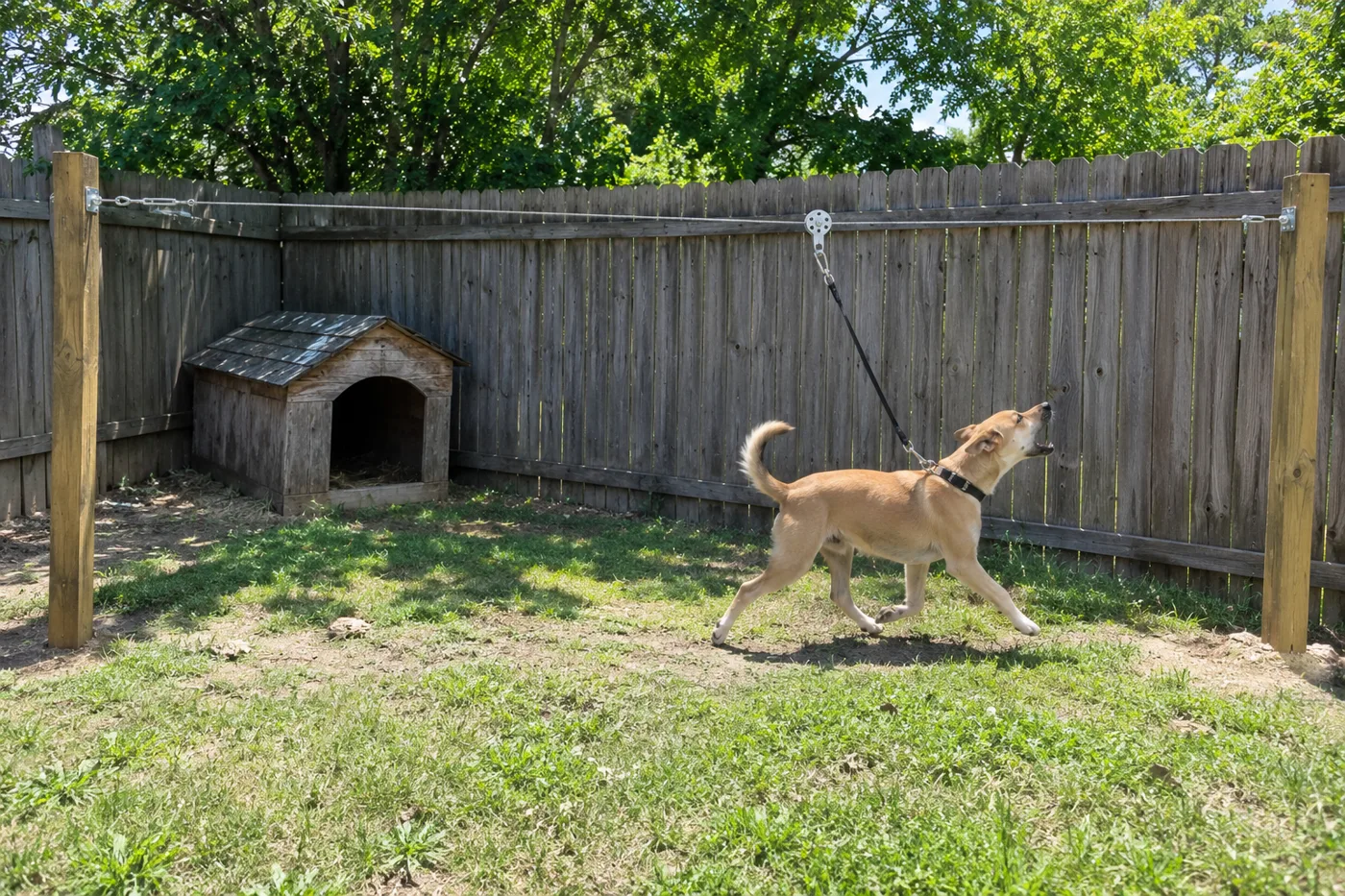
There were two setups. One was a chain to a stake by the doghouse. The other was the clothesline run, a cable strung between two posts with the leash on a pulley, so he could trot the length of the backyard and bark at the whole world at once.
Humane World for Animals warns that dogs kept tied up all the time can become “neurotic, unhappy, anxious and often aggressive.” It also calls tethering a high-risk factor in serious dog bites.
That’s why chaining went from household habit to legal question in some places. California went first in 2007, and it put a number on it: no tying a dog to a doghouse, tree, fence or anything else fixed for more than three hours in 24. A ticket can run up to $250. The worst cases can bring up to $1,000 per dog, six months in jail, or both.
The clothesline run survived, though. California still allows a trolley or pulley run, as long as the dog isn’t in a choke or pinch collar. Humane World says the same goes for any tie-out: never with a choke chain.
#23 Dog Food From a Can You Opened Yourself
The can opener ground its way around the rim, and the food slid out in one solid cylinder with the ridges of the can printed on it. You mashed it up with a fork. The dog thought you were a genius.
| Brand | Where it started | Where it ended up |
|---|---|---|
| Ken-L Ration | 1922, made with horse meat | Sold by Quaker Oats to Heinz in 1995; name revived in 2015 |
| Alpo | Allentown, Pa., 1936; short for Allen Products | Bought by Nestlé in 1995; Purina makes it now |
| Gravy Train | General Foods, 1959 | Bought by Post Consumer Brands in 2023 |
Each one had its hook. Alpo had Lorne Greene on TV. Gravy Train was the first dry food to turn into brown gravy when you poured warm water on it. Ken-L Ration sponsored the dog kennel at Disneyland, called Ken-L Land, until 1968. Its “My dog’s better than your dog” jingle was based on a Tom Paxton song, and it later turned up as oldies music in the 1993 movie Demolition Man.
Then there was the Purina Chuck Wagon. A tiny horse-drawn wagon with a red-and-white checkerboard cover came racing through living rooms and kitchens from the early ’70s into the early ’90s. In 1983 there was even an Atari 2600 game, Chase the Chuck Wagon, and the only way to get it was to mail in proofs of purchase.
As for the food itself, the writer who looked back at those ads put it simply: “I do not believe it is currently around.”
#22 Nobody Picked Up After the Dog
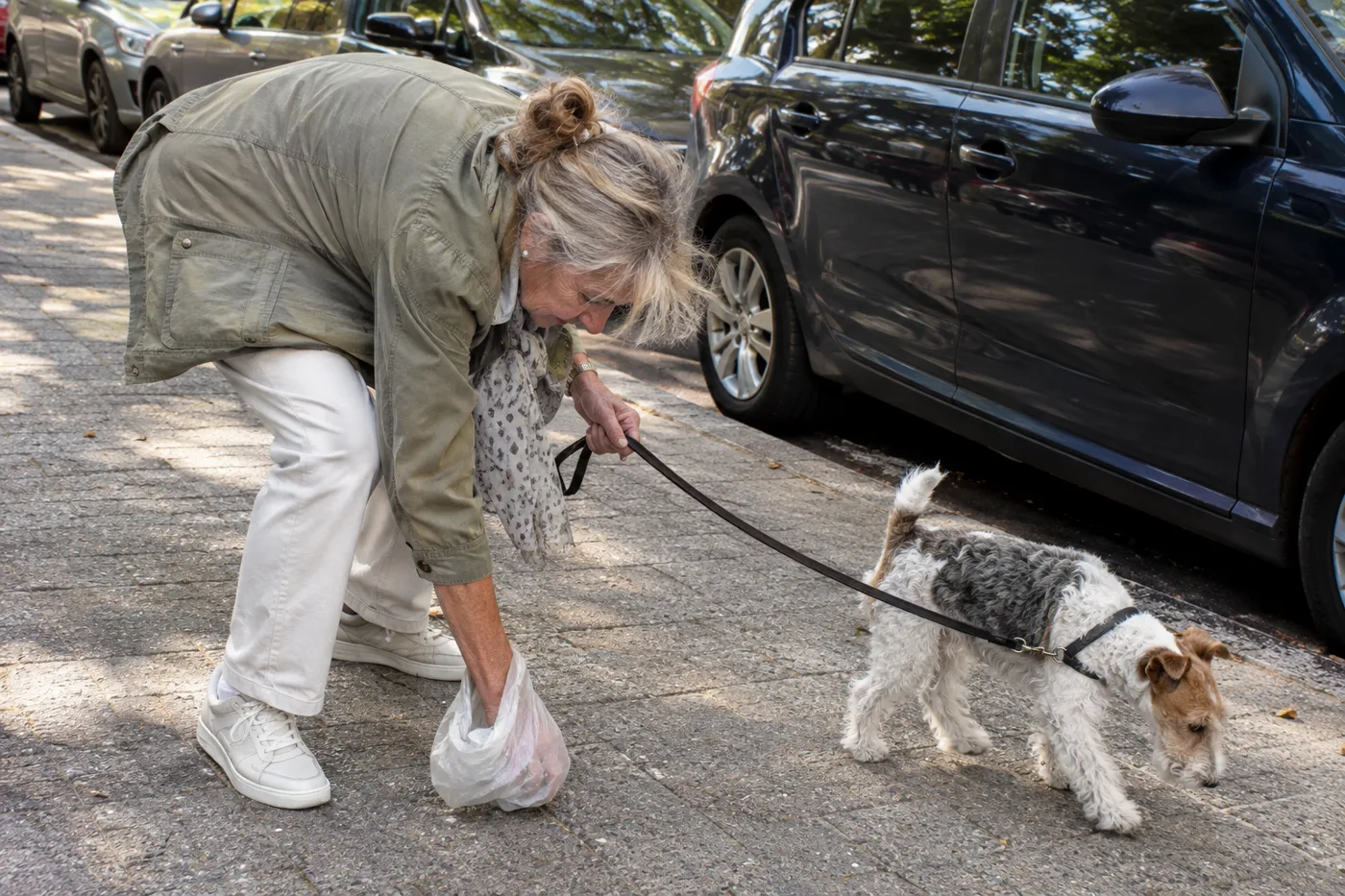
You stepped in it. Everybody did. You scraped your sneaker on the curb and kept walking. People in Reddit’s ’70s threads say stepping in it was just part of the day.
New York tried asking nicely first. In 1973 the city put out a Dog Owner’s Guide to Scooping that appealed to owners’ “respect of property and good manners.” That didn’t work.
So in August 1978, a state law took effect in cities of 400,000 people or more: clean up after your dog on sidewalks, streets and gutters. San Francisco passed its own law the same year. The ASPCA opposed New York’s at first, worried it would be “unenforceable or would lead to pet abandonment.”
The city did enforce it. After a three-month grace period with 7,000 warnings, 1,616 people had been ticketed by 1979. By 1985 the totals had reached 18,230 summonses and more than $435,000 in fines.
Michael Brandow, who wrote a book about the law, says the real change was in people’s heads: “It was about public education and changing our perception of what our individual duties were.”
There was a health reason underneath the manners. Dog roundworm eggs left in the soil become infectious in two to four weeks, can last for months or years, and do the worst harm to young children playing in the dirt, sometimes including vision loss. The CDC’s advice is to pick up after your dog every day and bag it for the trash.
#21 White Dog Poop Dotting Every Lawn
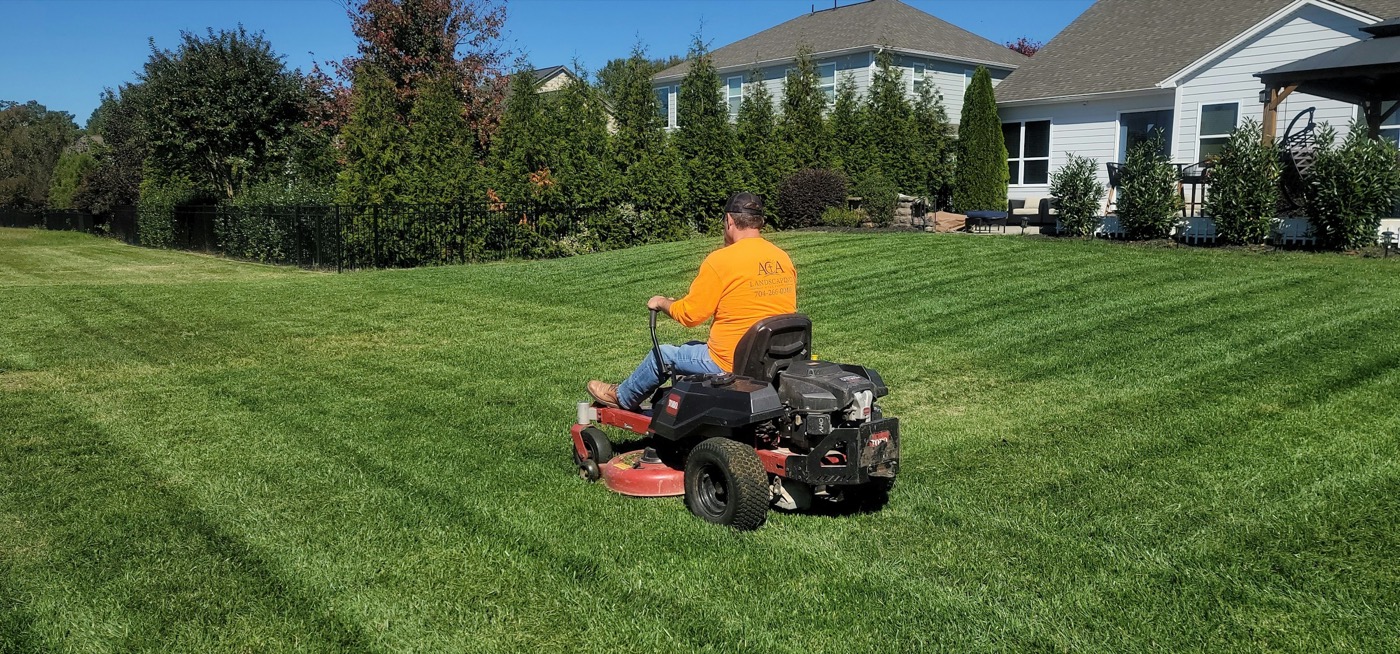
It was chalky. It crumbled when the mower hit it. People in Reddit’s ’70s threads remember it well, and one connects it to the ground bone in the dog food.
That’s the explanation that gets passed around. As Mental Floss tells it, older foods leaned hard on meat and bone meal: “Whatever the dog couldn’t process ended up in its feces, and as the wet matter dried out in the sun, the hard calcium stuck around.” Dog food makers later cut the calcium, added fiber and became less likely to rely on bone meal as cheap filler.
The other half of the answer is #22. Most of it gets picked up now, so it never sits in the sun long enough to bleach.
#20 Lassie on CBS Every Sunday Night
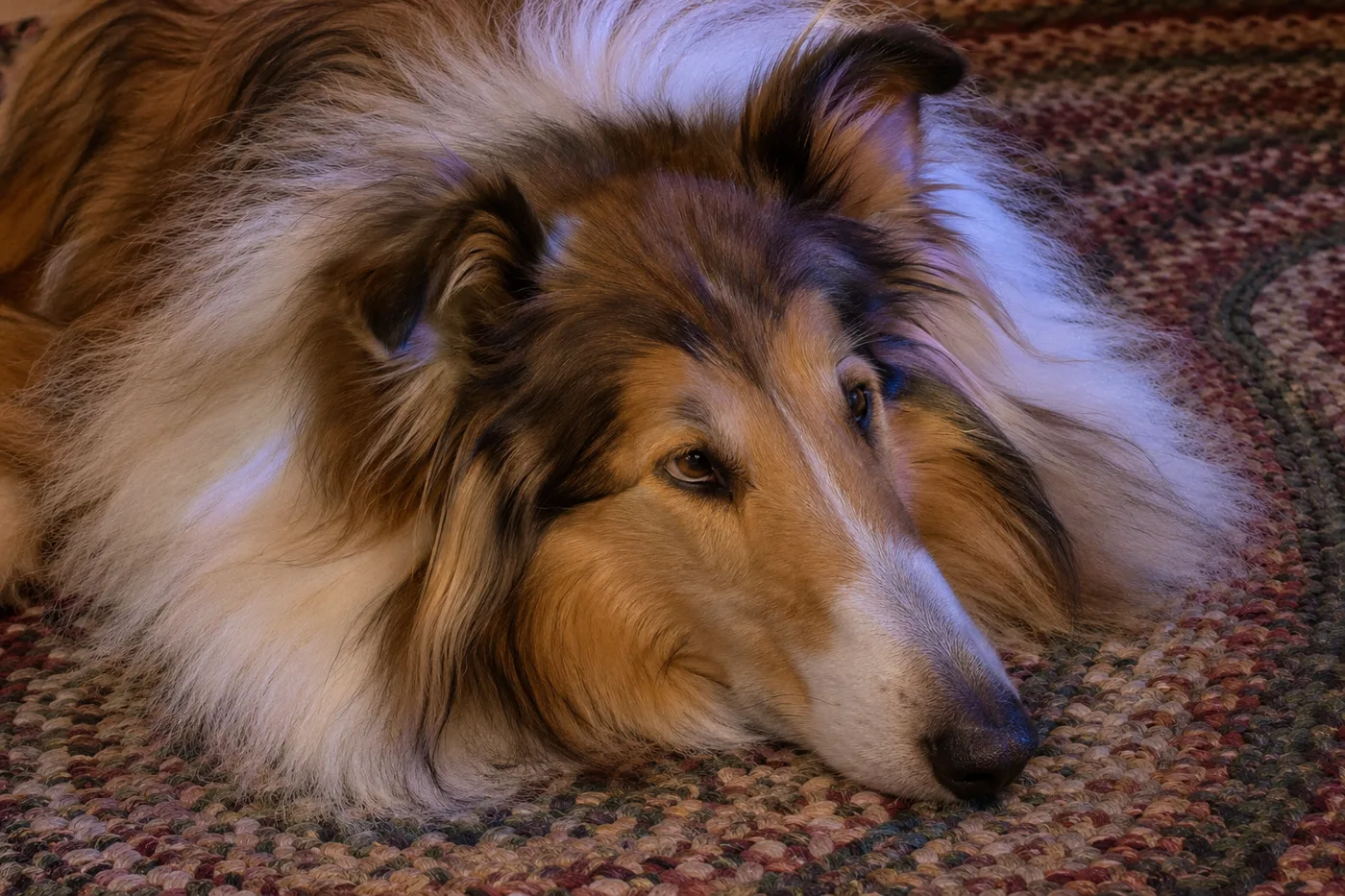
Campbell’s Soup paid for it and CBS ran it at 7 p.m. Eastern on Sundays from 1954 to 1971. Reruns kept it going until 1973, for 591 episodes in all. Jon Provost played Timmy from 1957 to 1964.
The line everyone quotes? “Timmy’s in the well” was never said on the show. Provost used it as the title of his autobiography, as a joke, because a well was the one place Timmy never fell into.
Lassie also sold a lot of dogs. A 2014 study of 87 dog movies found that Lassie Come Home (1943) was followed by a 40% jump in Collie registrations within two years. Collies, Dobermans and Irish Setters were all among the popular dog breeds from the 1970s. Here’s how the AKC’s top dogs of that decade rank in 2025.
Where the ’70s favorites stand now – Doberman Pinscher: No. 3 for the 1970s, No. 15 in 2025 – Irish Setter: No. 6 for the 1970s, No. 73 in 2025 – Collie: No. 10 for the 1970s, No. 39 in 2025
 You might also like30 Things Everyone Believed About Dogs Back Then (And What Vets Know Now)
#19 Old Yeller and the Movies That Wrecked Us
Disney released Old Yeller on Christmas Day 1957, and it made over $8 million the first time around. If you were too young for that, you may have caught it when it came back to theaters in 1965 or 1974. The dog who played him was named Spike.
Here’s what the ending was really about. Old Yeller catches rabies after fighting off a wolf to protect Mrs. Coates. The movie that taught a generation to cry over a dog was a rabies story, made only ten years after the leash and vaccination laws in #28 started spreading.
Then came 1974 and Where the Red Fern Grows, made from Wilson Rawls’s novel about two coonhounds, Old Dan and Little Ann. Old Dan is mortally wounded fighting a cougar, and Little Ann dies on his grave. It made $5.85 million in the US.
That was also the year Old Yeller was back in theaters. A kid in 1974 could have gone through both in one year.
#18 Benji, the Shelter Mutt Who Became a Star
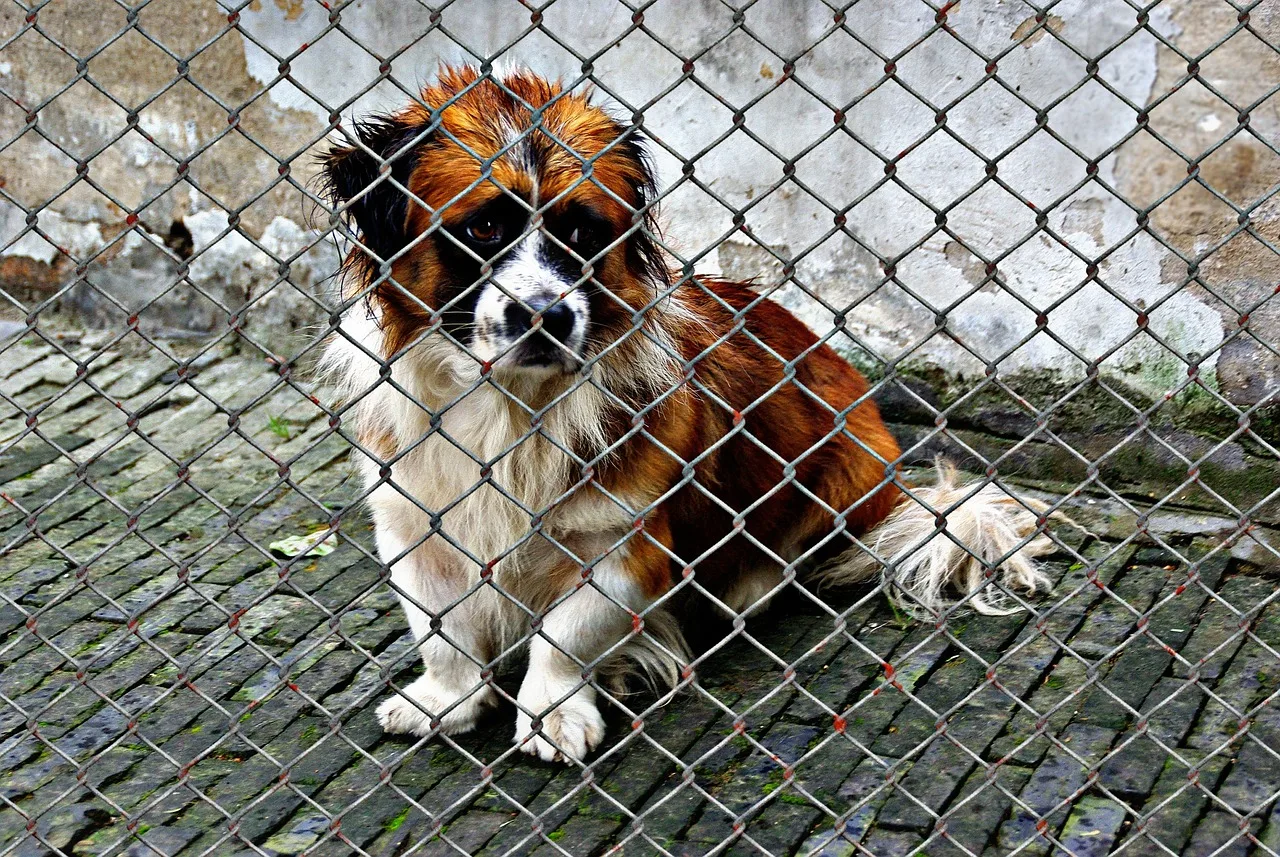
Every studio in Hollywood turned it down, so director Joe Camp started his own company to get Benji into theaters. It opened in Dallas on May 22, 1974. It cost $500,000, earned $45 million worldwide, and was the ninth-biggest movie of the year. Charlie Rich’s theme song got an Oscar nomination.
Benji played a scruffy, rough-and-tumble mutt. The dog playing him was a working pro. Higgins came from the Burbank Animal Shelter, where trainer Frank Inn found him as a puppy. He was a mix, possibly Miniature Poodle, Cocker Spaniel and Schnauzer, and he already had 149 episodes of Petticoat Junction behind him. When Higgins died in November 1975, his daughter Benjean took over the role.
The mutt is hardly a long shot now. Mixed breeds make up somewhere between 44% and 53% of American household dogs, depending on who’s counting.
#17 Snoopy, Underdog and the Saturday Morning Dogs

The popular cartoon dogs from the 1960s and 70s started with a Beagle who’d been around since 1950. The AKC says Snoopy “no doubt played a large role” in pushing the Beagle to the top of its charts in 1953. It even gave him an honorary registration number, Beagle-1, “and only Snoopy.” Beagles still ranked No. 7 in 2025.
Underdog landed on NBC in 1964 with Wally Cox’s voice and a line every kid could recite: “There’s no need to fear, Underdog is here!”
Then there’s the question people still ask: what breed is Scooby-Doo? He’s a Great Dane, and he was drawn wrong on purpose. Designer Iwao Takamoto said he “decided to go the opposite and gave him a hump back, bowed legs, small chin.”
Don Messick voiced Scooby from 1969 to 1996. He was also Astro on The Jetsons. Same man, two cartoon dogs, both of them begging for snacks.
#16 The Dog Catcher’s Truck and the Pound
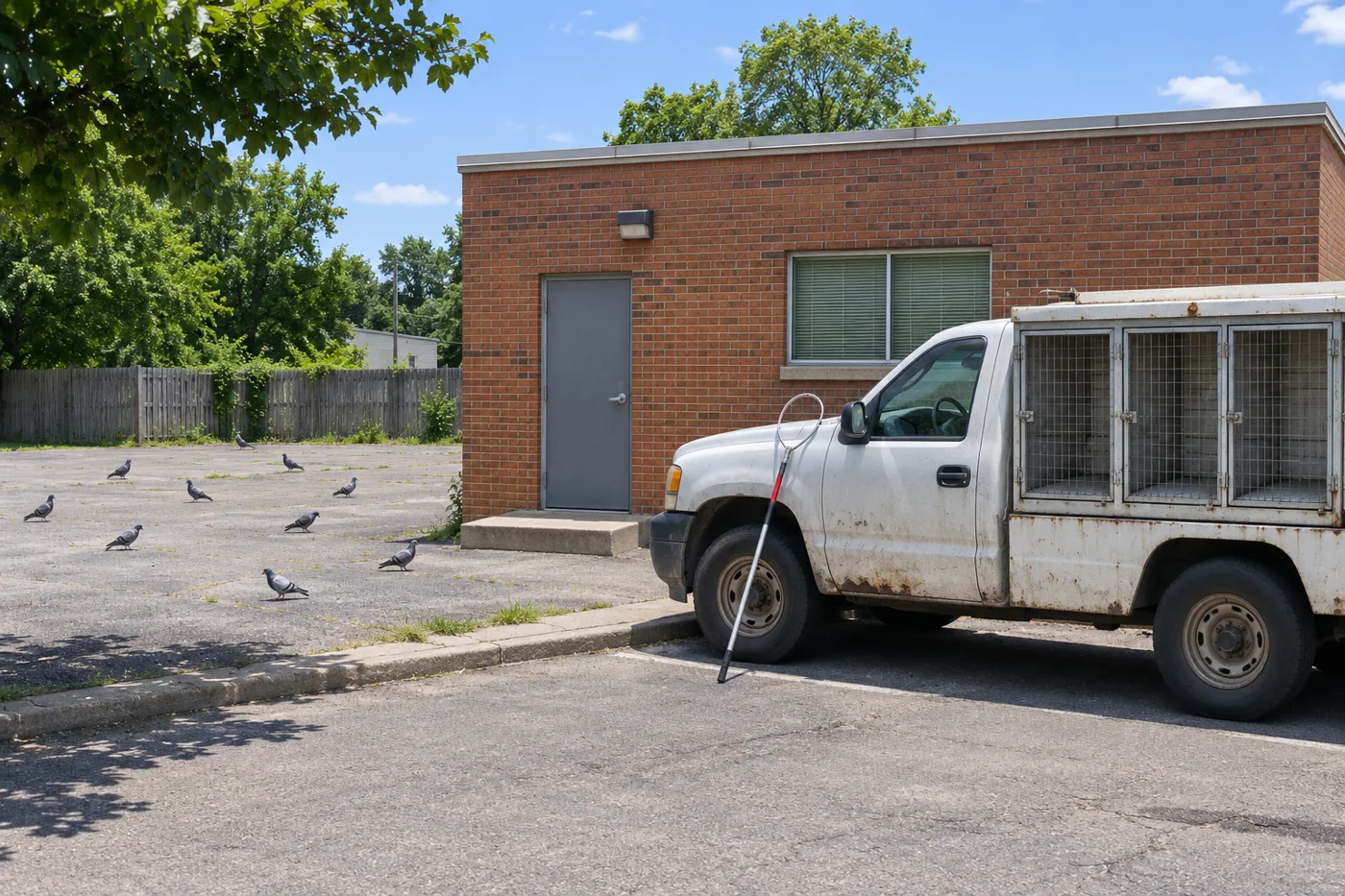
You knew the truck: the cages on the sides, the long pole with the loop on the end. If your dog went missing, the pound was the first call. If you got there in time, you paid and took him home.
Plenty never went home. In 1973 the Humane Society estimated that about 13.5 million dogs and cats, roughly 20% of the pet population, were put down in US shelters that year.
How it was done is the part most people never knew. Many pounds used decompression chambers, which were phased out city by city. Berkeley abolished its chamber in 1972. That same year Virginia passed the first law letting shelters buy euthanasia drugs for injection directly. Richard Avanzino of the San Francisco SPCA scrapped his chamber on his second day on the job in 1976. Portland banned them in 1977.
By 1985, not one was left in use anywhere in the country.
#15 The Rabies Tag Jingling on the Collar
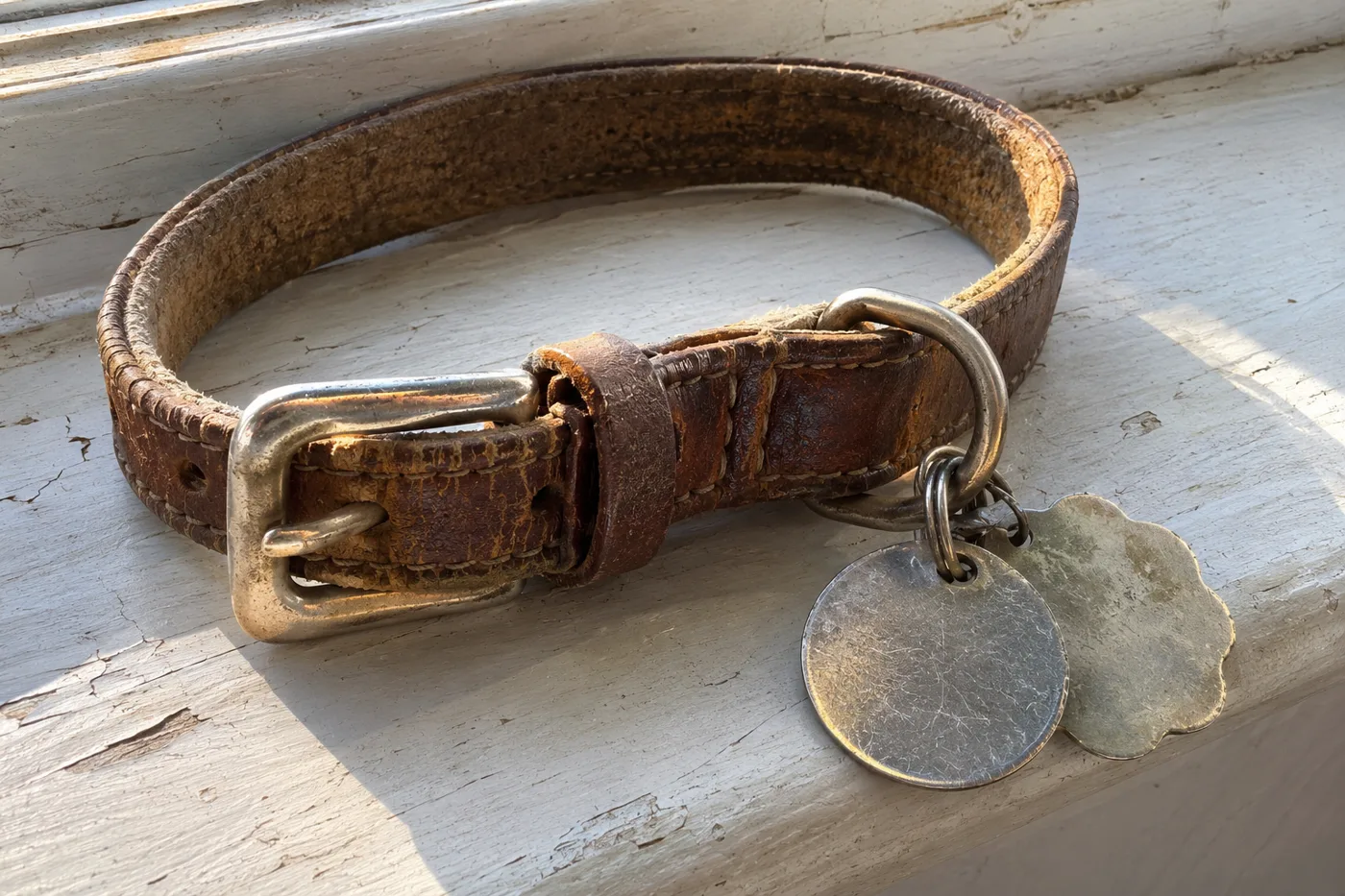
You could hear him before you saw him: the license tag and the rabies tag clinking together on his collar. The dog license itself was old news. A 1919 New York City pamphlet told owners to “procure a yearly license” and pay $2 for each dog.
The rabies tag did more of the work. New York State’s health lab says required shots after the war controlled rabies in dogs by the early 1950s. We added up the CDC’s counts of rabid animals reported across three years to show how far it shifted:
| Year | Rabid pets and farm animals | Rabid wild animals |
|---|---|---|
| 1938 | 9,321 | 44 |
| 1960 | 1,619 | 1,836 |
| 2017 | 399 | 4,055 |
Household and farm animals went from about 99.5% of reported cases in 1938 to 9.0% in 2017, with 1960 as the year the two sides ran nearly even (CDC data). Rabies didn’t vanish. It moved out to the wildlife, which is why the shot still matters for a dog who meets one.
About ten states have no statewide rule requiring the shot: Colorado, Hawaii, Idaho, Kansas, Minnesota, Missouri, Montana, North Dakota, Ohio and South Dakota. Your county or city may still require it, and the shot protects him either way. After the first shot and a booster a year later, your dog needs a repeat every year or every three years, depending on the vaccine and your local law.
#14 A Garden Hose Bath With Dish Soap
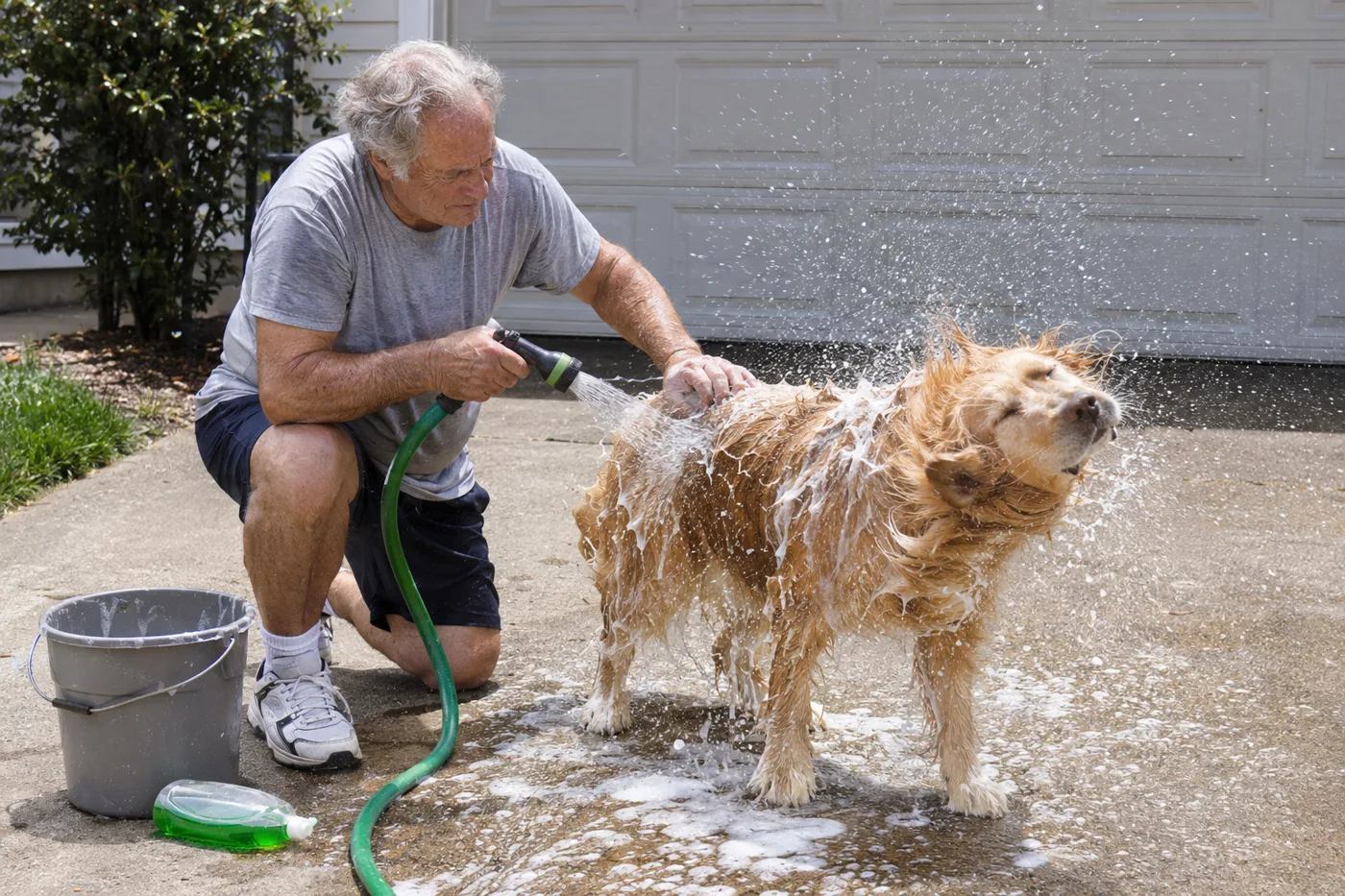
Saturday in the driveway. The hose, the dish soap from beside the kitchen sink, one kid holding the collar and everyone soaked the second he shook.
The AKC doesn’t hedge on this one. Drawing on advice from Teri DiMarino, president of the California Professional Pet Groomers Association, it says dish soap “is not an option. This product’s job is designed to cut grease.”
The surprise is that your own shampoo is a poor fit too. Dog skin is less acidic than ours, measuring 5.5 to 7.5 on the pH scale against roughly 4.0 to 6.0 for people. Soap made for your skin wasn’t made for his.
The hose can stay. The dish soap goes back by the sink.
#13 Waiting in the Car With the Windows Cracked
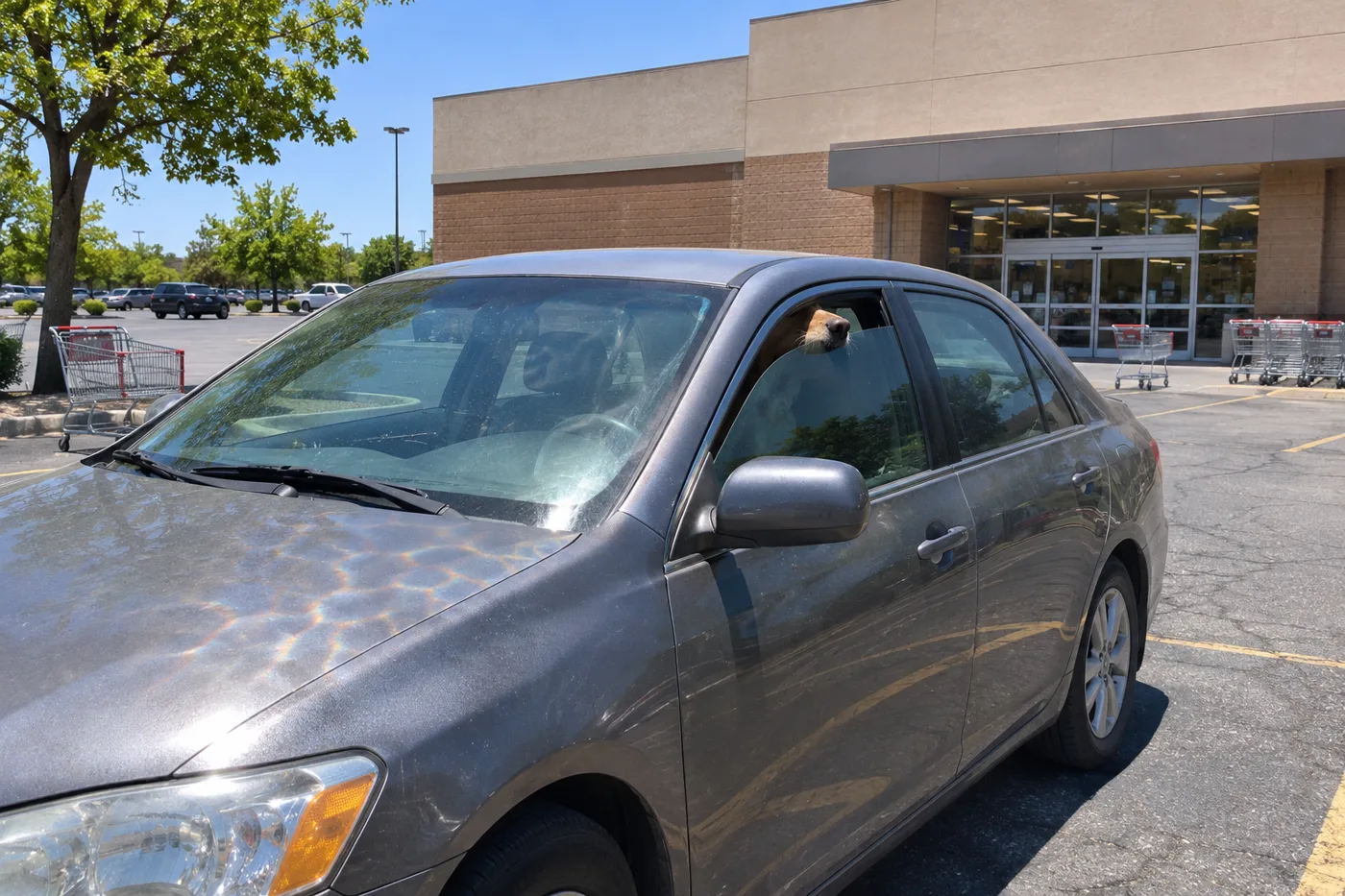
Grocery store parking lot, windows down about two fingers, his nose pressed into the gap. You’d be right back.
On an 80-degree day, the National Weather Service says the inside of a car can pass 100°F in 10 to 15 minutes and climb 30 to 35 degrees in half an hour. Cracking the windows “provides little relief.” The MSPCA puts it at 100°F in 10 minutes, even with the windows slightly open.
A dog can overheat in the time it takes to run in for milk. On a warm day, he’s better off at home.
The law has noticed. About 32 states have laws about animals left in parked cars, as of 2025.
#12 Milk-Bone, a Tennis Ball and an Old Sock
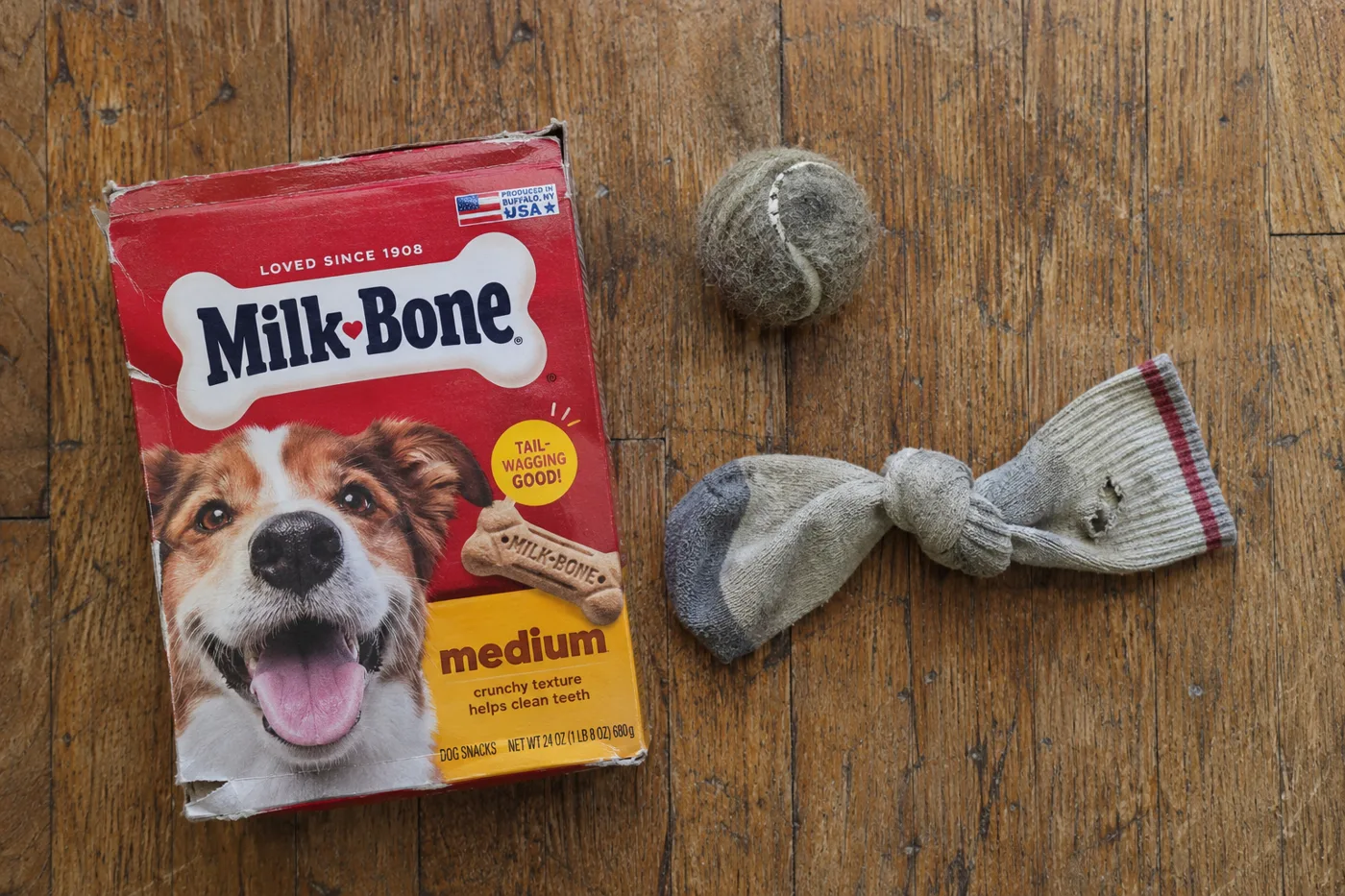
That was the whole toy chest: a Milk-Bone from the pantry shelf, a tennis ball worn bald and an old sock knotted in the middle.
The Milk-Bone was older than most of the people handing it out. A New York bakery on the Lower East Side made the first ones in 1908, under the name “Maltoid Milk-Bone.” The “Maltoid” was dropped in 1915.
The tennis ball has a catch nobody mentioned back then. Dr. Thomas Chamberlain, a board-certified veterinary dentist, says the fuzz “is actually quite abrasive” and slowly files teeth down. The AKC’s advice is to use tennis balls only during supervised play.
Fetch is fine. It’s the dog who lies on the rug gnawing a ball for hours who wears his teeth down, so put the ball up high when the game is over.
#11 Ear Cropping and Tail Docking as Routine
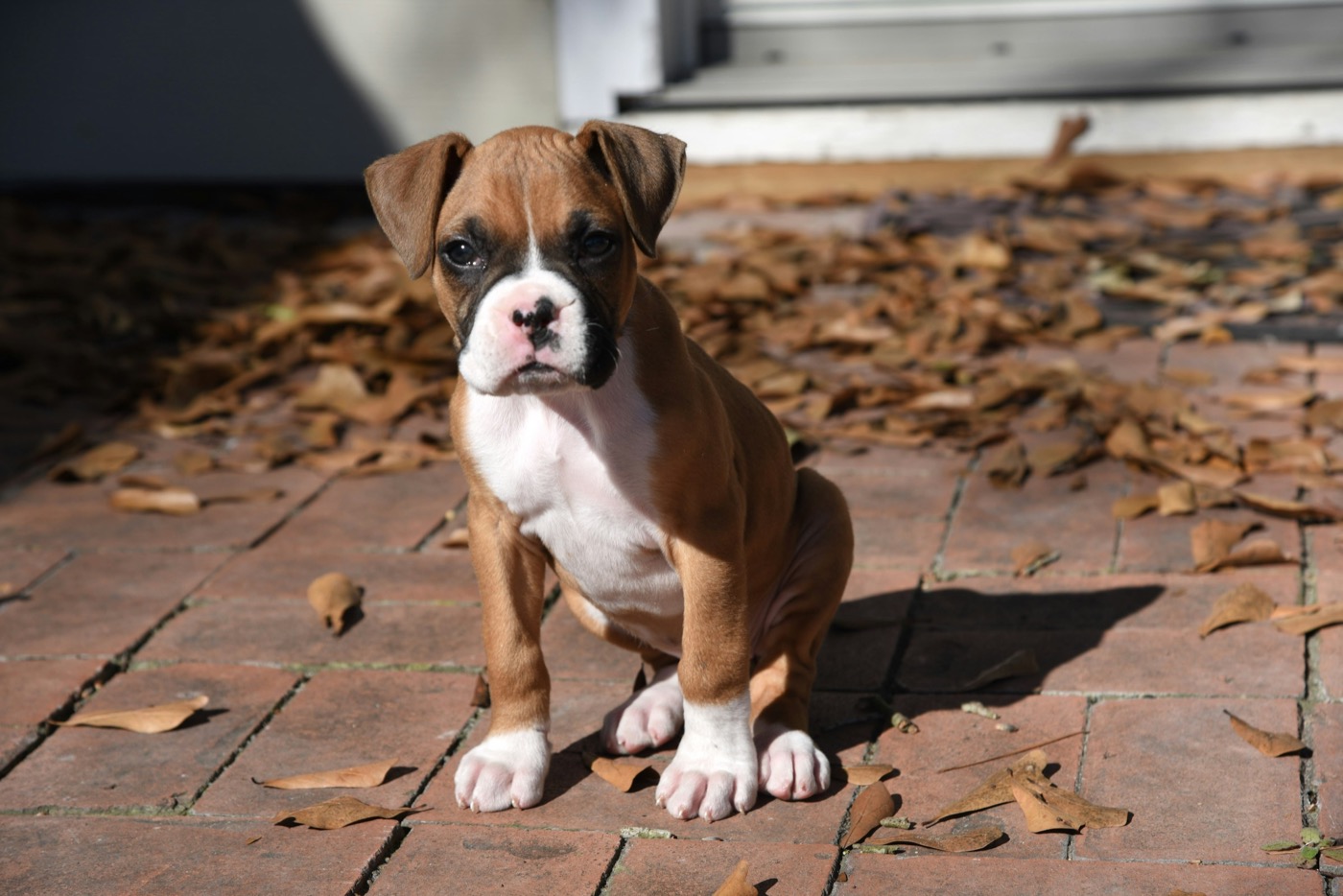
If you brought home a puppy of certain breeds, the ears came taped upright and the tail was already short. Nobody asked about it. That was simply how those dogs looked.
The vet profession’s official view shifted in 2008. On November 26 of that year, the American Veterinary Medical Association said it opposes ear cropping and tail docking “when done solely for cosmetic purposes.” Its CEO at the time, Dr. Ron DeHaven, said the group had long acknowledged that both “are not medically indicated.”
The American Kennel Club disagreed, calling them “acceptable practices integral to defining and preserving breed character.” The vets and the breed registry still don’t see it the same way.
If you’re buying a puppy of a breed that’s traditionally cropped, ask the breeder early what they do with their litters. Whichever way you lean, you’ll want to know before the puppy is picked out.
 You might also like21 Dog Breeds That Were Everywhere When You Were a Kid
#10 The Doberman Gang and the Doberman Boom

The Doberman Gang opened in Atlanta on May 26, 1972. In it, a trainer uses six Dobermans to rob a bank. It had three sequels: The Daring Dobermans (1973), The Amazing Dobermans (1976) and Alex and the Doberman Gang (1980).
The breed broke into the AKC’s top ten for the first time in the 1970s, and the people who knew it best weren’t celebrating. Faye Strauss of the Doberman Pinscher Club of America told the AKC: “There were movies featuring Dobermans, and the breed was used by law enforcement. They were the dog of the day.”
Then came the part worth knowing if you’re eyeing one:
“Serious breeders became alarmed to see our breed becoming the dog for everyone; we knew they aren’t that.” Faye Strauss, Doberman Pinscher Club of America, to the AKC
That comes from people who love the breed. Ask a breed club what kind of home suits the dog, and listen to the answer.
#9 Dogs Chasing Bikes and the Mailman

You pedaled hard with a dog snapping at your ankle and prayed the chain wouldn’t slip. People in Reddit’s r/AskOldPeople remember getting chased and bitten, often on a bike, and one adds: “It was rare back then (1970s) to call the police about a dog unless there was a mauling.”
The mailman had it worse. A dog repellent called Halt went on sale in 1963, and a year later, when the Postal Service became a customer, letter carriers were suffering more than 7,000 dog bites a year. To prove the spray was harmless, the Miami postmaster sprayed some on a garden salad and ate it.
Bites dropped from over 7,000 in 1983 to 2,541 in 1998, which the Postal Service credited to stricter leash laws and more cooperation from owners. Carriers today carry a cayenne pepper spray, but it doesn’t replace a blunter rule: a carrier can stop delivering to a house where a dog is a threat.
It still happens. The Postal Service reported more than 5,200 dog attacks on its employees in 2025. If yours greets the carrier like Halt was invented for him, keep him inside when the mail comes.
#8 The Lost Dog Poster on the Telephone Pole
Marker on poster board. “LOST” in capitals, a snapshot that was mostly blur, a phone number, and staples into a pole already thick with old ones. Then you waited for the phone to ring.
Today a dog who slips away gets scanned for a microchip. A study of 53 shelters in 23 states found that microchipped dogs went home 2.5 times as often as stray dogs overall. In 2025, US shelters returned 542,000 dogs to their owners, about 19% of the dogs that came in.
There’s a catch, and the study’s lead author spelled it out:
“The chip is only as good as my ability as a pet owner to keep my information up to date in the registry.” Linda Lord, Ohio State University, on the microchip study
If you’ve moved or changed numbers since your dog was chipped, the chip is still pointing to your old life. Update it with the registry today.
#7 The Puppy in the Pet Shop Window
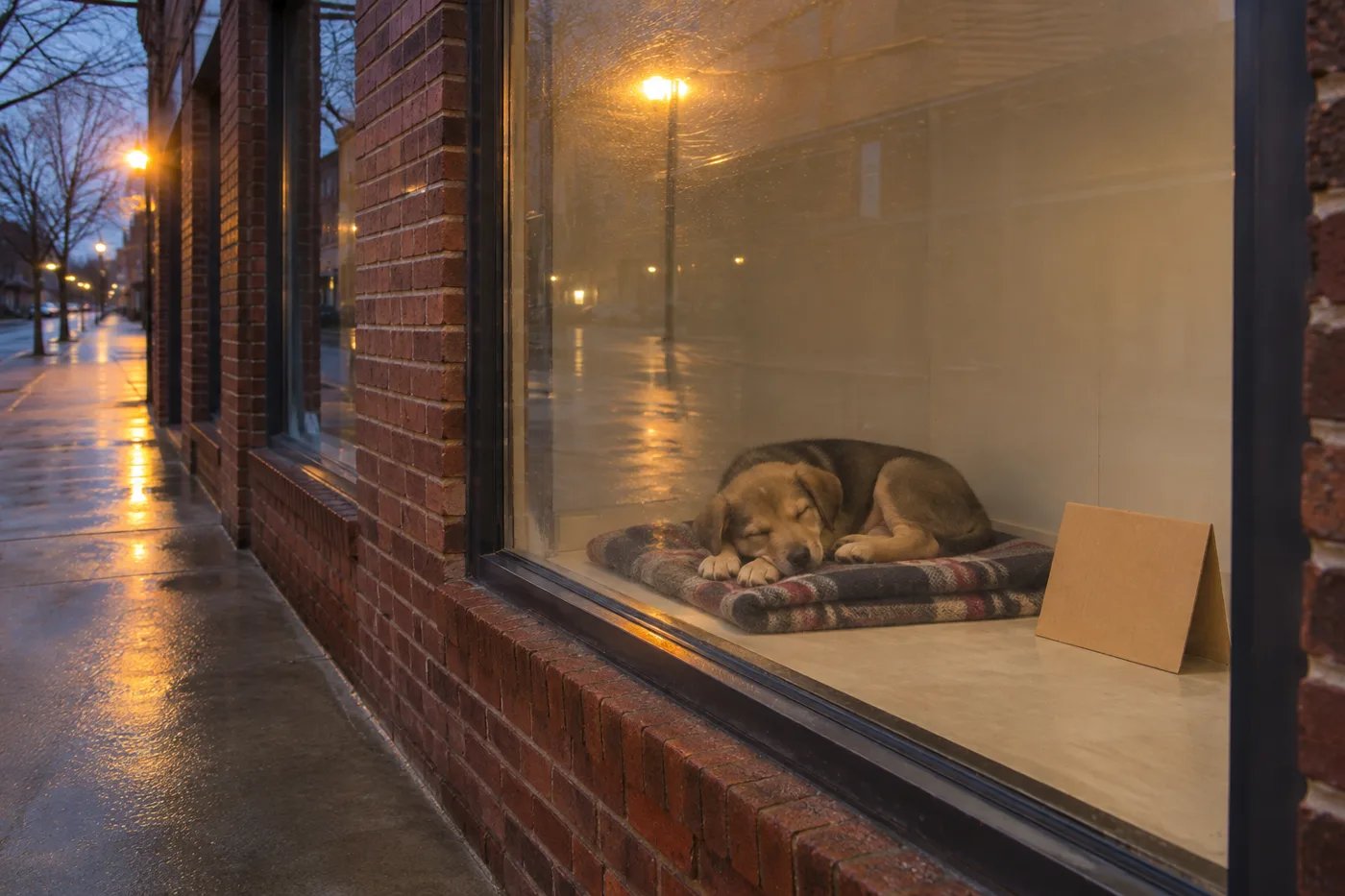
Patti Page’s “(How Much Is) That Doggie in the Window?” hit No. 1 on April 4, 1953, and stayed there eight weeks. It sold over 2 million copies. Mercury Records was flooded with requests for free puppies, and AKC registrations jumped 8% that year.
For decades after, the puppy behind the glass at the mall was a normal way to find your next dog.
In a lot of the country now, that puppy can’t legally be for sale. California’s law took effect in 2019. Pet stores there can only offer dogs, cats and rabbits from shelters or rescues, with a $500 penalty per animal. As of September 2026, ten states have similar bans: California, Maryland, Maine, Washington, Illinois, New York, Oregon, Vermont, Colorado and Delaware. The ASPCA counts close to 300 cities and counties with bans of their own.
So in those places, the doggie in the window is very likely a rescue.
#6 Flea Collars and the Summer Flea Dip
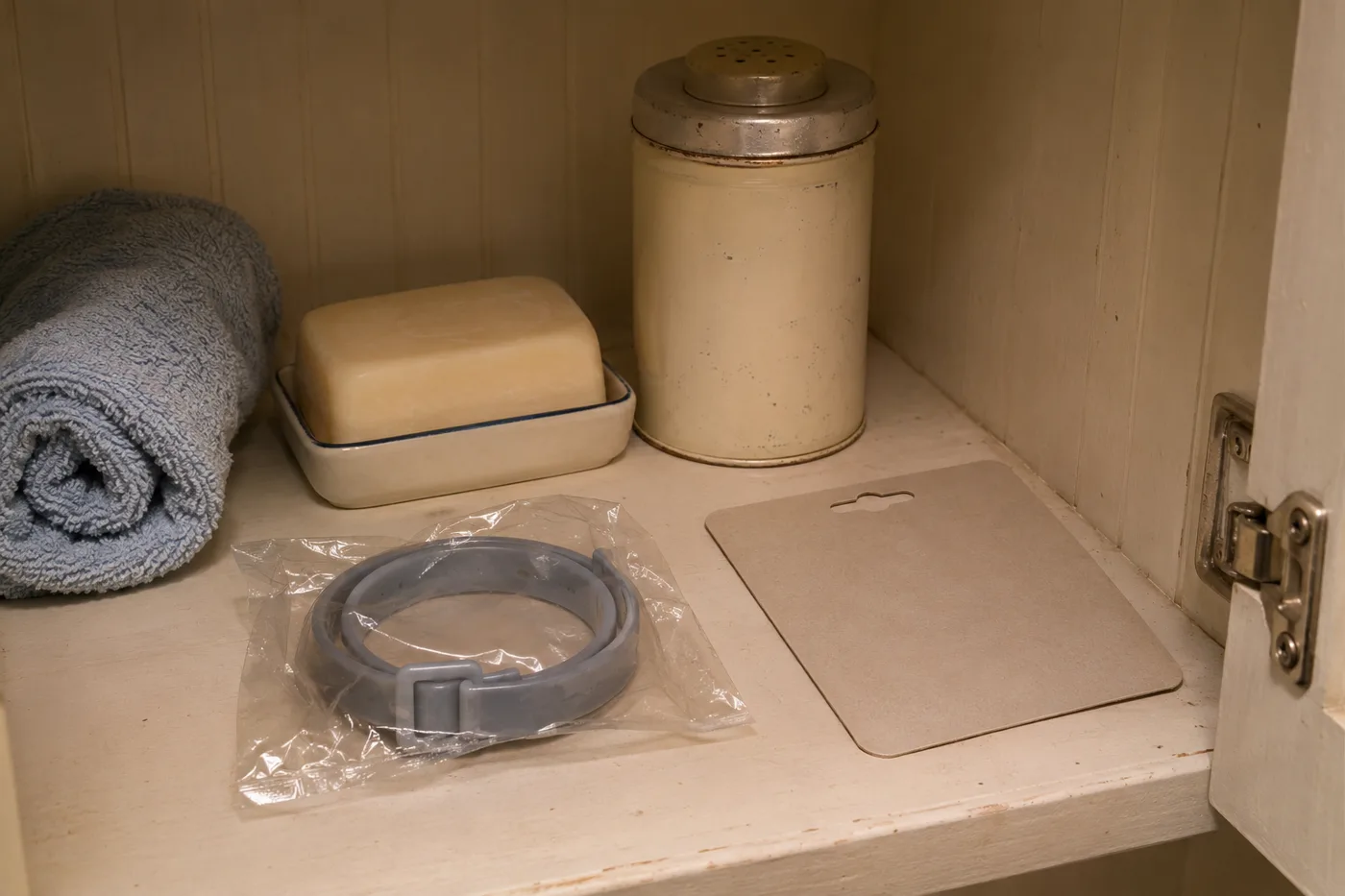
You could smell a new flea collar from across the room. In summer the dog got dipped or dusted with powder, and he hated both.
Many of those early products came from two families of bug-killing chemicals. Dr. Sophia Yin, a veterinarian and behavior specialist, wrote that they were “among the first class of products used on pets.”
One ingredient got pulled, and the worry was the kids. In 2014 the EPA and the makers agreed to stop selling pet collars containing propoxur because of “risks of concern to children”, who crawl around and put their hands in their mouths. Production ended in 2015 and sales in 2016. The brands named included Sergeant’s Dual Action and Sendran collars.
If there’s an old flea collar in a kitchen drawer, read the label. If it says propoxur, don’t just toss it in the trash. Ask your local trash or recycling office how to get rid of it, since the label says to consult your local solid waste agency for disposal instructions and treats the trash only as a last resort.
The newer drops that go between the shoulders got their own shake-up in 2010, when the EPA ordered clearer labels and dosing. Match the dose to your dog’s weight and read the whole package, because the EPA’s advice was to “carefully read and follow all labeling.”
#5 The Once-in-a-While Vet Visit
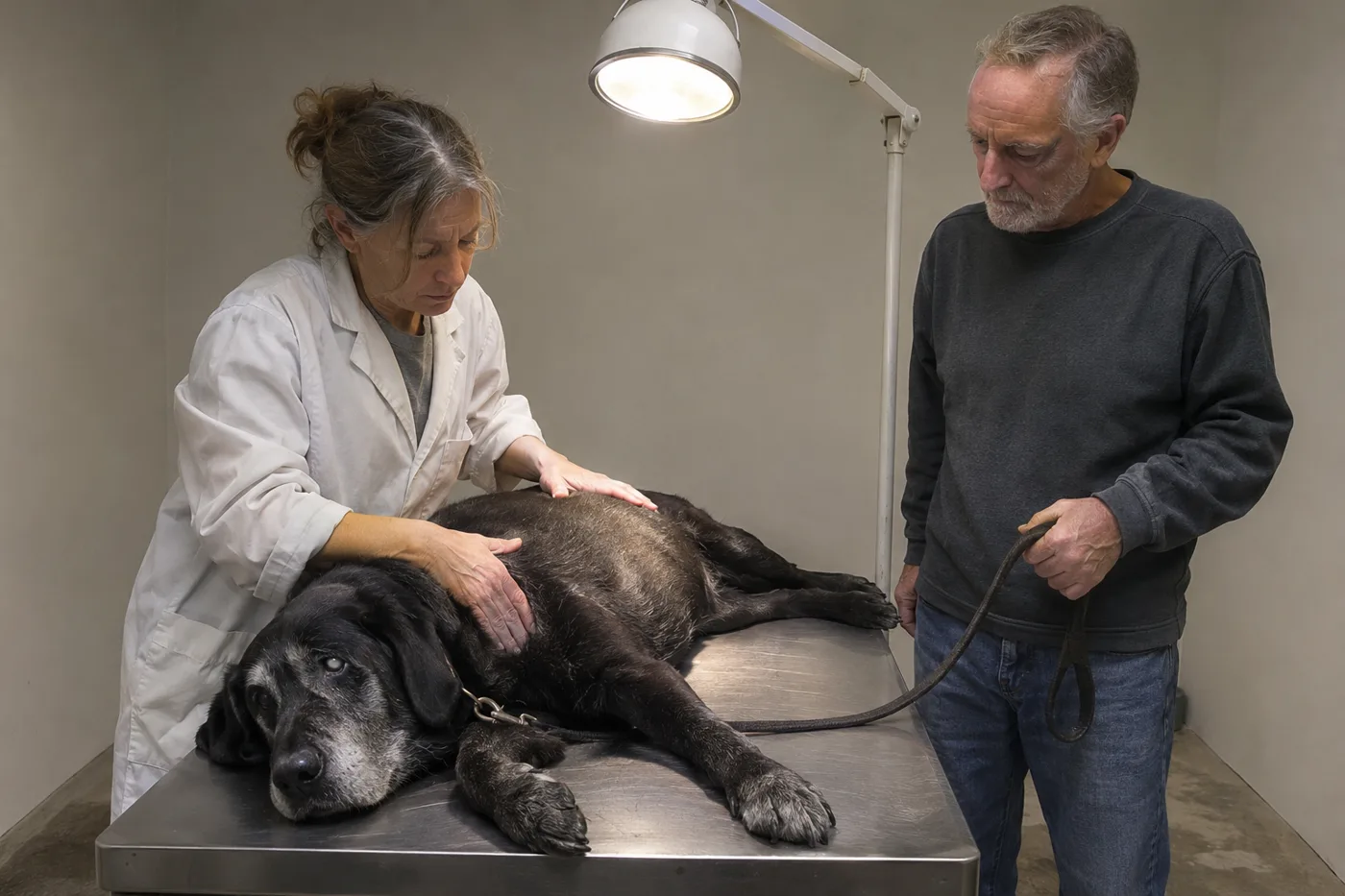
In Reddit threads about growing up with ’70s dogs, people say vet visits were rare or never happened. For at least one family, the only trip was the last one. Dogs died of accidents and illnesses, and nobody spent big money trying to stop it.
Dog care then and now looks most different at the vet’s front desk. The pet products trade group puts recent US pet spending at about $158 billion, with $41.0 billion going to vet care and product sales. In 1994 the whole industry came to $17 billion. That’s roughly nine times as much, before inflation.
Pet insurance is still rare. The insurers’ trade group counted about 6% of US dogs insured in 2025. Its president, Sammi-Jo Nevin, says “it’s the common issues like ear infections and skin conditions that make coverage so essential.”
If you’re weighing a policy for an older dog, read what it excludes before anything else. Anything a vet gave advice on, treated or noticed signs of before the policy’s effective date, or during a waiting period, usually counts as pre-existing and isn’t covered. Under the insurance regulators’ model law, insurers may apply a waiting period to illness coverage but not to accident coverage. For an 8-year-old dog, average accident-and-illness premiums ran about $102 (Pets Best) to $131 (Spot) a month in 2026, depending on the company. Some insurers, such as Trupanion, only enroll pets before their 14th birthday.
#4 Free Puppies Outside the Grocery Store
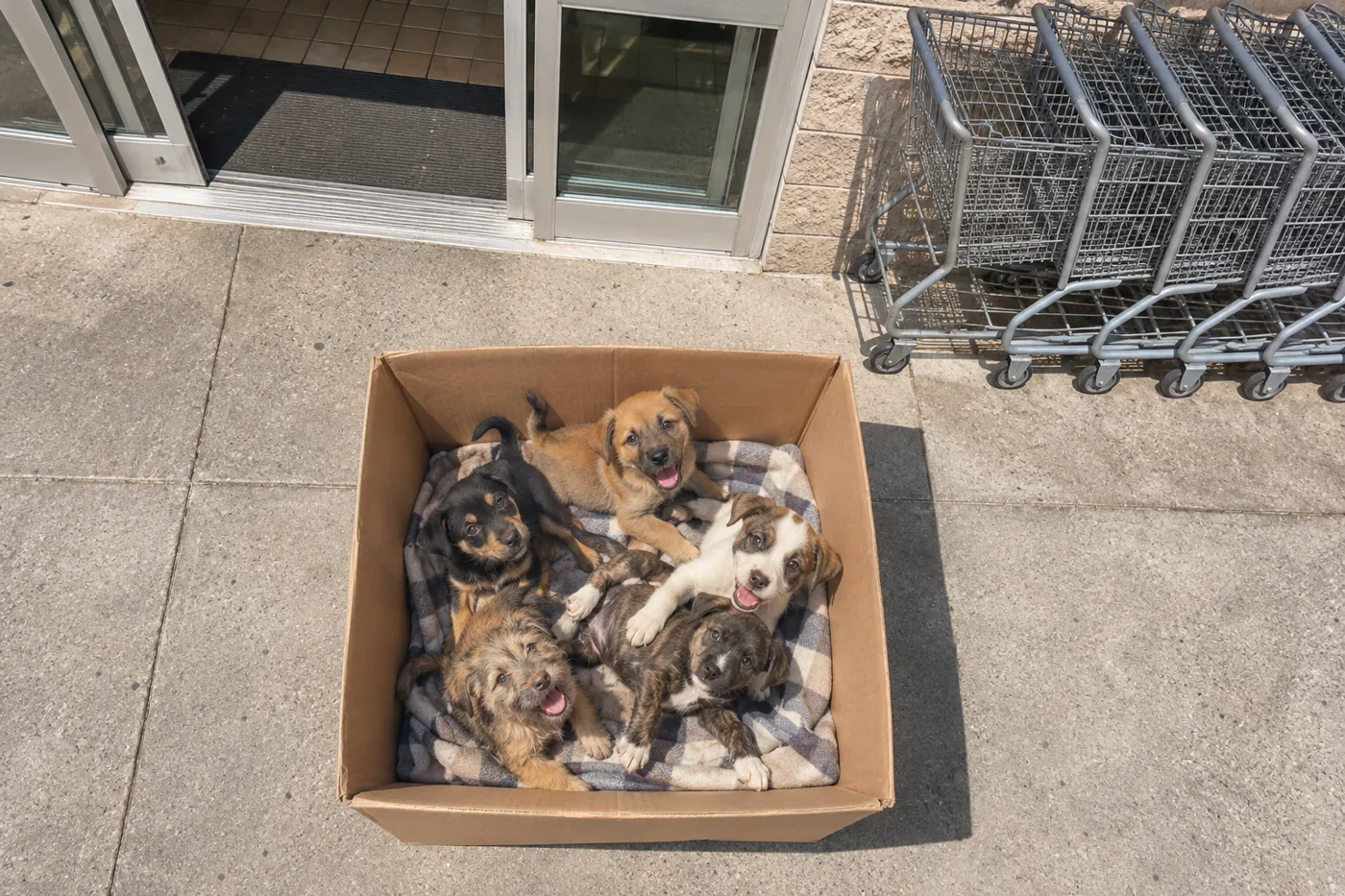
“On weekends, grocery stores did have a kid sitting outside the doors, with a box of puppies or kittens to give away.” Someone who got pets in the 1970s, in Reddit’s r/70s
Those puppies came from a dog nobody had spayed, because hardly anyone did. In Los Angeles, the share of licensed dogs that were fixed went from 11% in 1971 to nearly 50% by 1975, and it’s about 100% now. In New Jersey, low-cost spay and neuter clinics were followed by a 70% drop in dogs impounded and a 90% drop in dogs put down between 1984 and 2014.
That changed where dogs come from. The share bred at home fell from 5% to under 1%, while the share adopted rose from 15% to 35%. Researchers Andrew Rowan and Tamara Kartal credit the drop in shelter numbers to “sterilization, dog containment, and pet identification.”
There are still plenty of dogs waiting. In 2025, 2.8 million dogs entered US shelters and about 2 million were adopted. The kid with the puppies just moved inside.
#3 Parvo Arrives in the Late ’70s
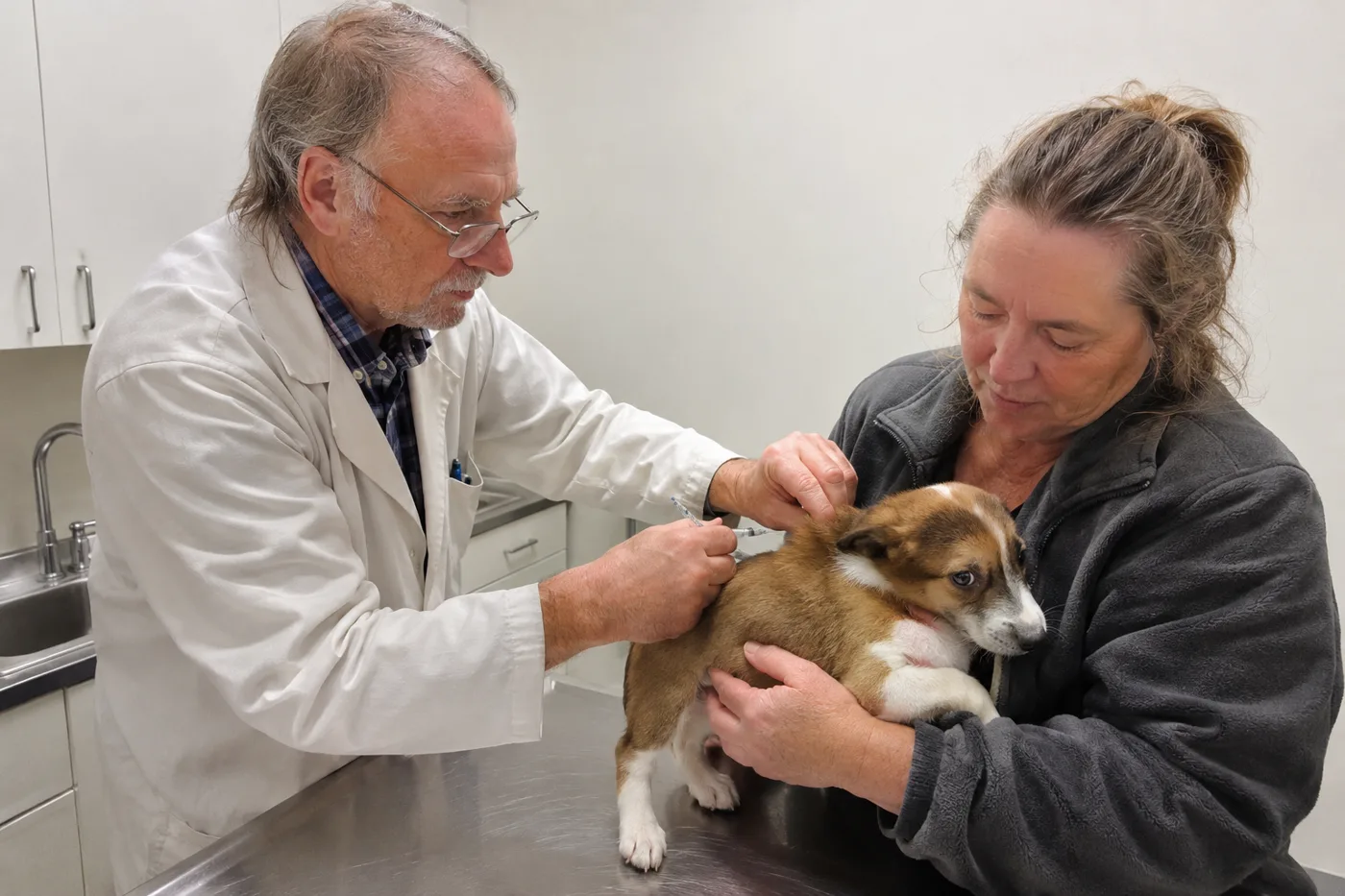
In the summer of 1978, puppies started getting sick and dying fast, and vets had no name for it. Litters were wiped out. Nobody knew what was going on.
It was a brand-new virus. Cornell says canine parvovirus first showed up in dogs in Europe around 1976. Dr. Max Appel identified it that summer of 1978, and his lab fielded more than 10,000 calls and letters about it in a single season.
Science moved fast. Appel and Leland Carmichael had the first vaccine by 1979 and a better one by 1981. It went on to become Cornell’s biggest source of patent income.
The vaccine works, but only if the puppy finishes the series. Cornell virologist Colin Parrish says puppies need several doses starting around 8 weeks, and that “All the currently available modified live vaccines are very good.” If you bring home a puppy, keep every appointment on that schedule.
#2 The Choke-Chain Obedience Class
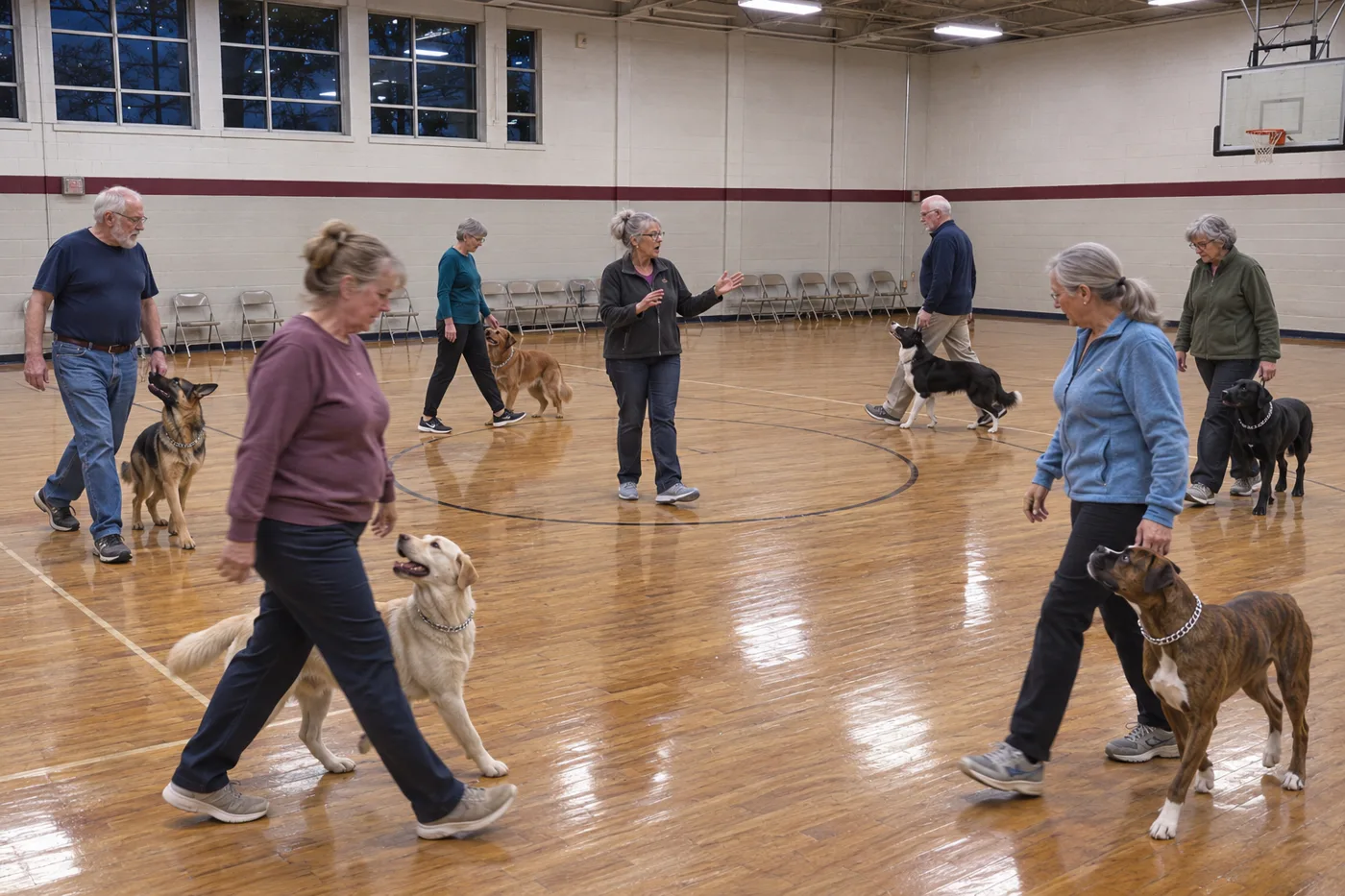
A school gym, folding chairs along the wall, a ring of dogs and owners, and a trainer calling “Heel!” At each wrong step you snapped the chain. That was obedience class.
The book behind it all was The Koehler Method of Dog Training. First published in 1962, it was the best-selling obedience title in the US for two decades. Then in the early 1980s a British vet named Ian Dunbar started pushing ideas that sounded odd at the time: socializing puppies, training off leash, and handing out food rewards by the fistful.
Paul Moran, a Los Angeles trainer certified to teach police patrol and drug-detection dogs, made a training tape in the 1990s that still shows a “correction collar or choke chain”. His main point there holds up: even a fully off-leash-trained dog belongs on a leash near the street.
“A dog is a dog. They are not infallible. They make mistakes.” Paul Moran, dog trainer, in his training video
The research has moved on from the snap-the-chain part. A 2020 study of 92 young dogs at seven training schools in Portugal found that dogs at schools using corrections showed more stress signs, like lip licking, and bigger jumps in cortisol, a stress hormone. They also made gloomier choices on a test away from class. Those were young dogs in one city, so the study says nothing about the dog you raised in 1975.
If you’re signing up for a class now, ask the trainer what they use when a dog gets it wrong.
#1 The Poodle at No. 1, and the Doodle That Followed

The ’70s Poodle came home from the groomer with pompoms on its legs and a topknot, looking like it was going somewhere better than you were. Poodles were America’s top dog for the second decade in a row in the 1970s, the AKC says.
The Poodle’s coat is also the thread to today. In 1989 Wally Conron, breeding manager at Australia’s Royal Guide Dogs Association, crossed a Poodle with a Labrador for one reason: “I bred the labradoodle for a blind lady whose husband was allergic to dog hair.”
That was the first Labradoodle litter. Years later, after watching what came of it, he said this:
“I opened a Pandora’s box and released a Frankenstein’s monster.” Wally Conron, who bred the first Labradoodles, to ABC News Australia
Whatever you make of his regret, if there’s a curly dog snoring on your rug, he didn’t ask for any of it.
The original is doing fine too. In 2025 the Poodle ranked No. 6, one spot behind the Dachshund.
Keep reading
 20 Prices That Show What a Dog Cost in 1970 vs. TodaySee all 20 →
More you’ll enjoy
 16 Things the Family Dog Ate in the 1960s, and What We Do Today
 23 Pieces of Old-School Dog Training Advice That Trainers Now Cringe At
 27 Dogs That Were a Status Symbol in Their Decade, and What They Are Now
The bottom line
Your childhood dog had a whole life you never saw. Eight or ten hours a day, on a route only he knew, past porches and ball fields and the butcher’s alley. Nobody will ever know exactly where he went.
The dog near you now has a smaller world, and you know every inch of it. Old-fashioned dog care had its rough edges, and most of the changes came from rabies counts, new viruses, city fines and a few people who decided things could be done another way.
What’s left of that older dog is the stories. If there’s someone younger in your life, they’ve likely never seen white dog poop, a Chuck Wagon commercial or a puppy in a pet shop window. Tell them. Start with his name.
Bonus: Five things to look up, check or play
Find the old Lassie theme, Les Baxter’s “Lassie Main & End Title,” and listen for the whistling. That’s Muzzy Marcellino, and you may find you can still whistle along.
Play Patti Page’s “Doggie in the Window,” then the version she recorded in 2009 for the Humane Society, “Do You See That Doggie in the Shelter?”
Look up Ken-L Ration’s old “Dog Hero of the Year Award” and see what kinds of rescues earned a dog the title.
Call the phone number on your dog’s tag. If your own phone doesn’t ring, order a new tag.
Ask whoever handles your dog’s paperwork, whether that’s your vet or your county, when the rabies certificate and the license each run out. In New Jersey, for example, a dog license must expire no later than June 30, separate from the rabies vaccine’s own anniversary date, so the two don’t always match.
Questions people also ask
How were dogs treated in the 70s?
Many family dogs roamed freely, slept outdoors and rarely saw a vet. In 1973 the Humane Society of the United States estimated that about a quarter of American dogs roamed the streets and that roughly 20% of the pet population was put down in shelters that year. Spaying, keeping dogs contained and pet ID later cut both numbers sharply (Rowan and Kartal, 2018).
When did leash laws start in the US?
There’s no single national start date, because towns and states adopted leash laws one at a time. The CDC says that beginning in 1947, vaccination and leash control laws improved rabies control nationwide. By the late 1960s, fewer than 500 rabid dogs a year were being reported. Your own town’s rules may have come years earlier or later.
When did people start picking up after their dogs?
In New York, it became law in August 1978 for cities of 400,000 or more people, and San Francisco passed its own law the same year. New York had asked owners to scoop voluntarily in a 1973 guide, with little effect (NYC Municipal Archives). Elsewhere, local rules came at different times.
Why was dog poop white in the 70s?
The popular explanation is that older dog foods used a lot of meat and bone meal, and the calcium dogs couldn’t absorb stayed behind as droppings dried white in the sun. Food makers later cut the calcium and added fiber, and owners now pick up sooner (Mental Floss). The explanation comes from popular publications, not food-science studies.
Did dogs live longer in the 1970s?
No reliable evidence shows that dogs lived longer in the 1970s, and the oft-repeated claim of 17 years has no solid source. A study of 13.3 million dogs at Banfield pet hospitals put average life expectancy at birth at about 12.7 years. It also found life expectancy rising each year from 2013 to 2018 for dogs of every size group.
What were some popular cartoon dogs from the 1960s and 70s?
Snoopy, Underdog and Scooby-Doo are three of the best remembered. Snoopy first appeared in 1950 and holds the AKC’s honorary registration Beagle-1 (AKC). Underdog premiered on NBC in 1964, voiced by Wally Cox, and Scooby-Doo debuted on CBS in 1969 (Wikipedia).