From the head tilt to the growl when you move him off the couch, here’s what his everyday habits really mean, and which ones are worth a call to the vet.
Hang on until #1. It explains why your dog seems to understand you best when you haven’t said a word.
You’re rinsing a coffee mug at the sink when you feel it. Two brown eyes from the kitchen doorway, ears half up, tail making slow sweeps across the linoleum. “What?” you ask, out loud, as if he’ll answer in English.
He already did. Working out what your dog is trying to tell you means reading the ears, eyes, tail and weight together. Most of it is a pleasure to watch. A few of the quietest signals are worth a phone call.
Worth a call to the vet – A social dog who suddenly hides or wants to be alone (#4) – Standing still with the head hung low (#3) – A new growl when you move or lift him (#2) – Licking one spot raw, or scratching that won’t quit (#10, #11)
Table of Contents
#30 A loose wag versus a stiff, high wag
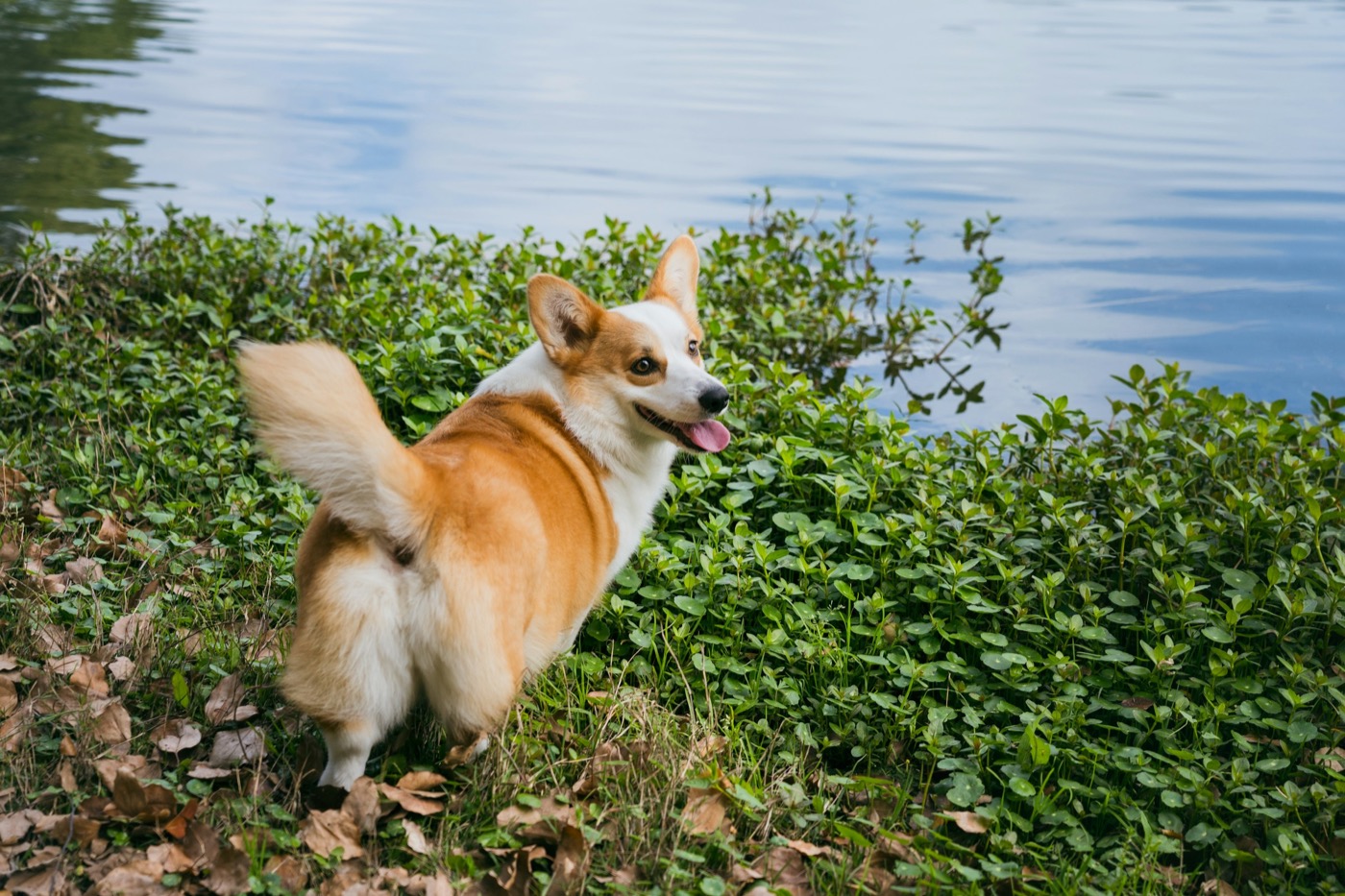
A wagging tail tells you your dog is feeling something. How it wags tells you what.
| What the tail does | What it usually means |
|---|---|
| Full, sweeping, hips swinging along | Friendly, glad to see you |
| Held high and stiff, still or barely vibrating | Tense; give him room |
| Spinning in a circle like a helicopter | Usually happy, but check the rest of him |
Dr. Brittany Grenus, a vet writing for PetMD, describes the friendly wag as “full, sweeping side-to-side movements.” The threatening tail is “very stiff and may be still or practically vibrating with tight, small wags.” Even the cheerful helicopter can show anxiety, she notes, which is why the whole body matters.
Direction counts too. When Italian researchers filmed 30 dogs, the wags leaned to the dog’s right when it saw its owner, a stranger or even a cat, and leaned left at the sight of an unfamiliar, dominant dog. You won’t catch that from across the room, though a slow-motion phone video might.
One more thing to know, especially once your dog has some gray in his muzzle. The Merck Veterinary Manual says “a dog might still wag its tail and greet people in spite of being in pain.” A happy hello doesn’t rule out a sore hip. Watch how he gets up from it.
#29 Rolling onto their back, belly up
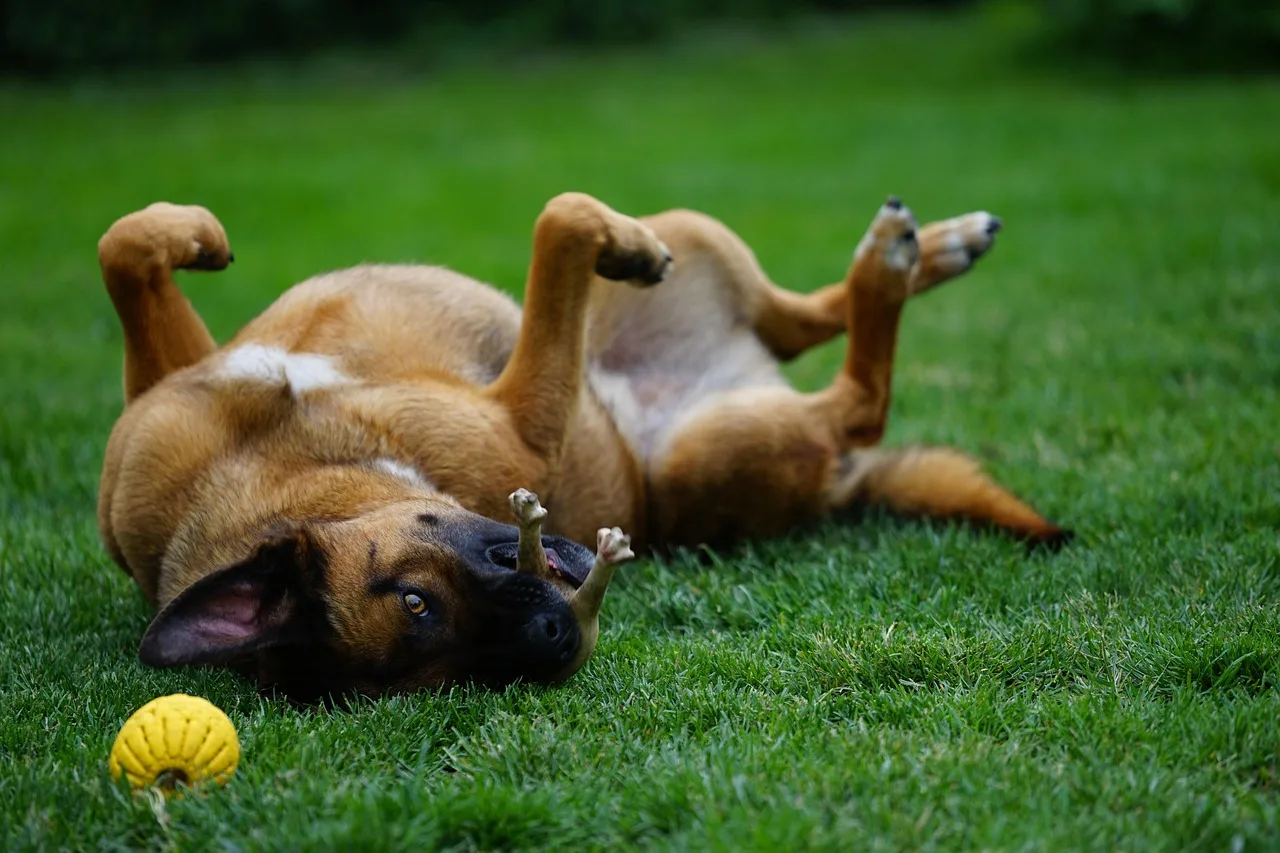
Sometimes it’s a request for a belly rub. Sometimes it means “please don’t.” Timing tells you which.
Dr. Margaret Gruen, a veterinary behaviorist at NC State, says dogs show their bellies “as part of a submissive display, sometimes during play, and with people they are comfortable with.” The flop he does on his own, around people he knows, is the relaxed kind. Rub away.
The roll that happens the instant someone leans over him is a different message, especially with a tucked tail or quick lip licks. Gruen’s fix is easy: sit down and call the dog over instead of bending toward him.
If you ever heard that you should roll a dog over to show who’s boss, let that one go. The ASPCA says “alpha rolls” make it very likely “your dog will get worse rather than better.”
#28 Tilting their head when you talk
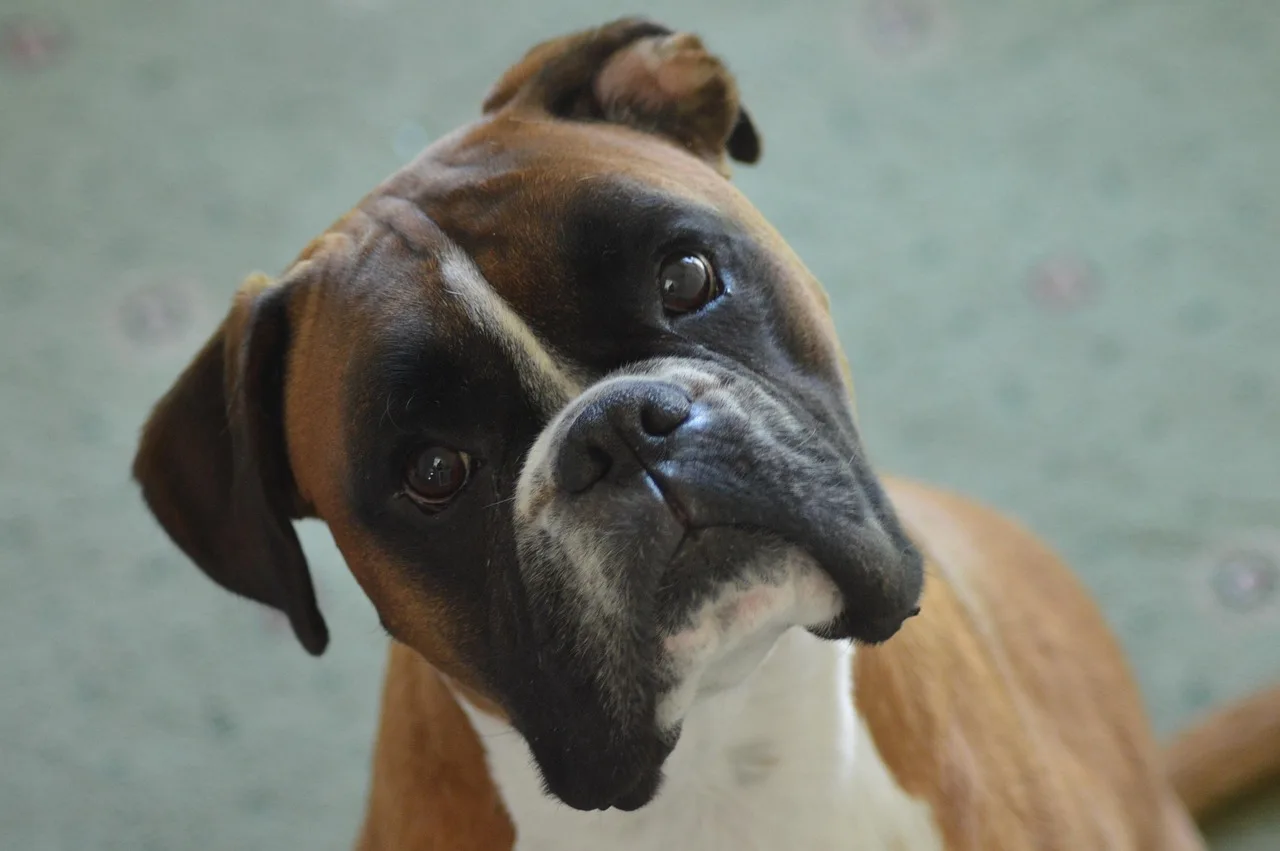
The head tilt has real science behind it, and it’s better than the memes.
In a 2021 study from Eötvös Loránd University in Budapest, researchers watched 40 dogs as their owners asked for a toy by name. Seven were “gifted word learners,” dogs that can fetch a toy by its name. Those seven tilted their heads in 43% of trials. The typical dogs tilted in 2%.
Co-author Shany Dror put it this way: “It seems that there is a relationship between success in retrieving a named toy and frequent head tilts upon hearing its name.” In plain words, the tilt seems to show up when a word means something to your dog and he’s hunting for it in his memory.
The fun part: each dog tilted to the same side every time, across experiments that spanned over 24 months. And it didn’t matter where the owner stood, so it’s probably not about locating a sound.
Next time you say his favorite toy’s name, note which way the head goes. Left-tilter or right-tilter, that’s likely his side for good.
#27 Grabbing a shoe when you walk in
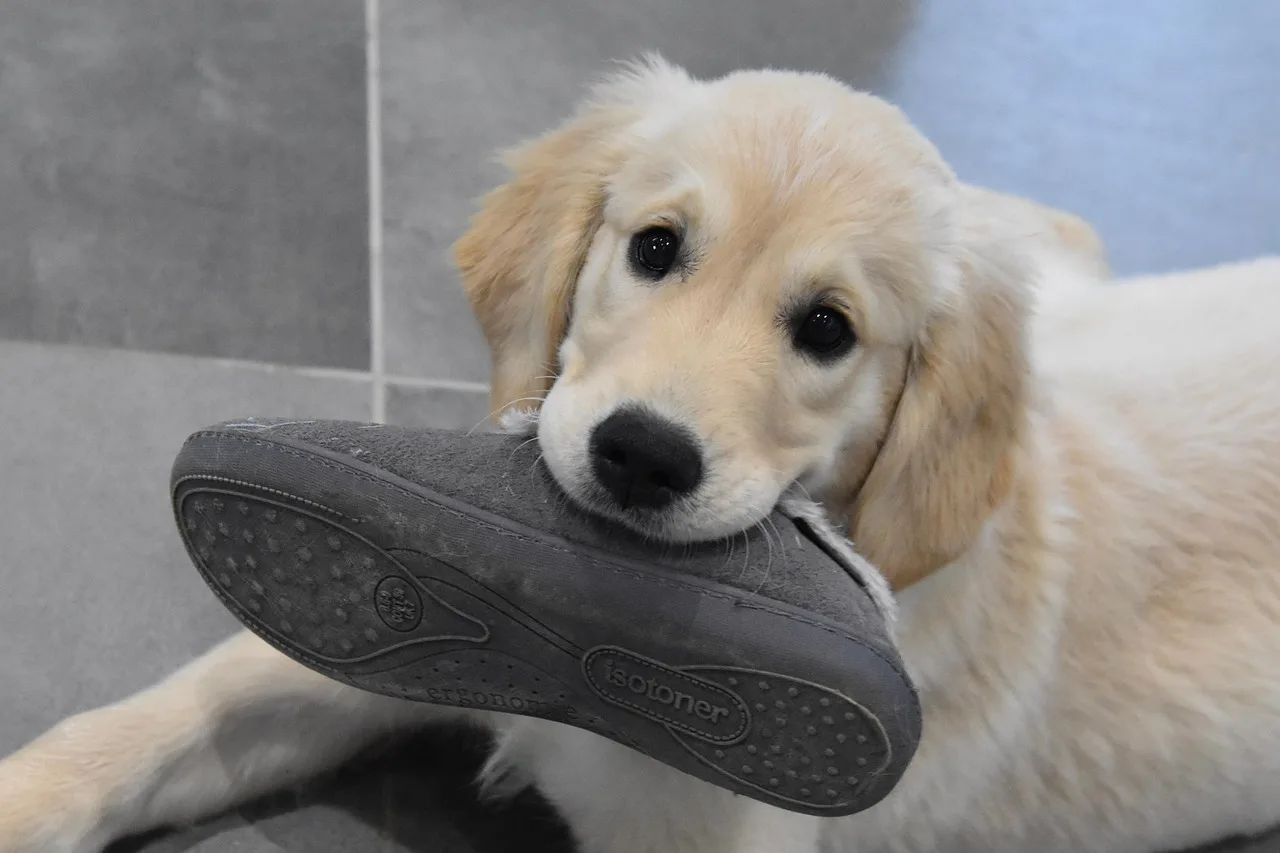
You’re barely inside and he’s parading past with your loafer in his mouth, very pleased with himself.
Behavior expert Susan Nilson told Newsweek, “It’s a way of redirecting their excitement and energy.” He’s bursting with joy, and carrying something gives all that joy a job.
Why a shoe and not the remote? Shoes carry your strong scent, which Nilson says can give a dog “a sense of safety and security.” Then habit takes over. A dog who gets your attention by picking up a shoe will “most likely keep doing it because attention is rewarding.”
If you’d rather he carried a toy, keep one near where you come in and hand it over first thing. And whatever you do, don’t chase him for the shoe. You’ve just invented his favorite game.
#26 A play bow, and bowing back to you
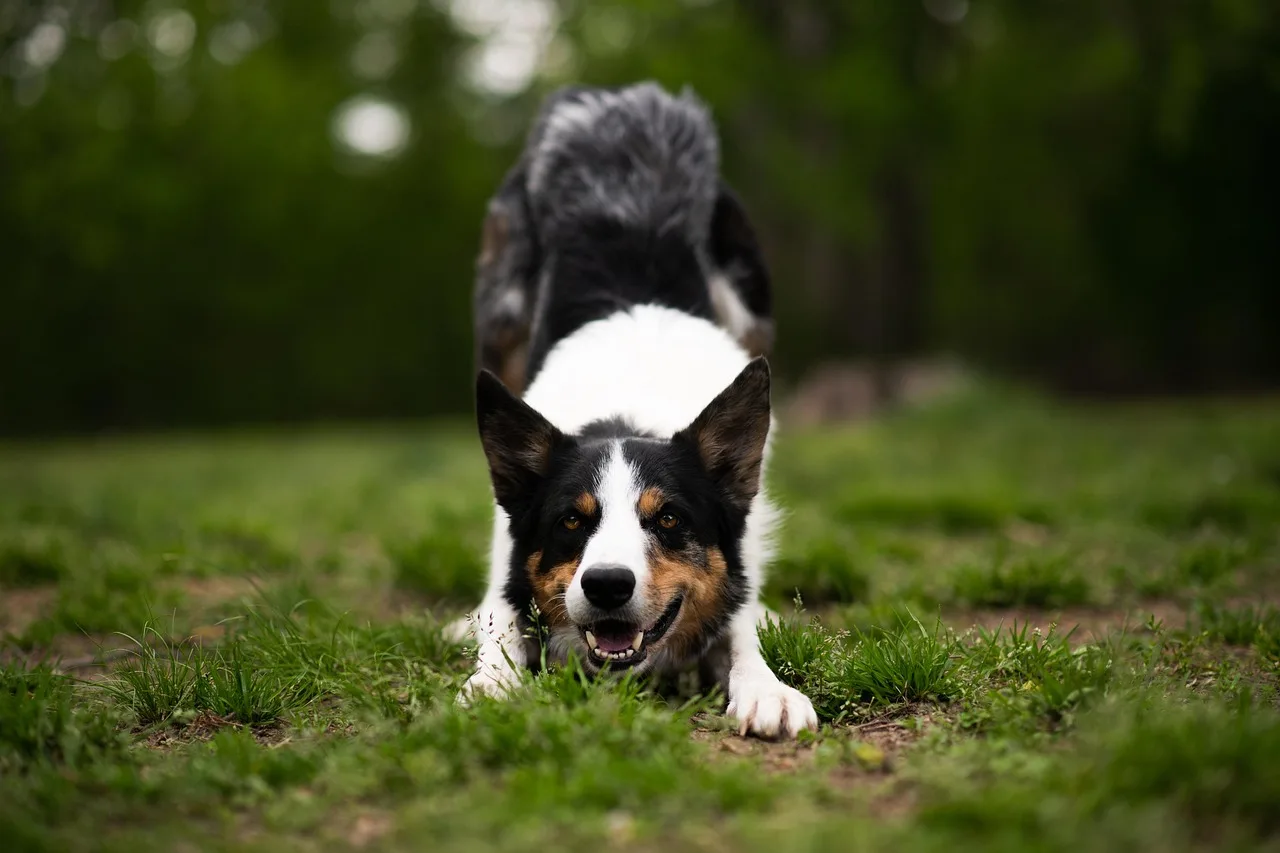
Chest down, rear end up, tail going: the AKC calls the play bow an invitation to play. The surprise is how badly people answer it.
In a 2001 study, researchers filmed owners playing with their dogs for five minutes and logged 35 different human play signals. Some worked far better than others:
- Chasing or running away from the dog: play followed every time
- Lunging forward: every time
- Patting the floor, the signal people used most: 38% of the time
- Picking the dog up and kissing it: never
A human play bow was one of the signals that worked. The researchers’ dry verdict: “humans often use ineffective signals.”
A dog owner on r/coolguides put it to the test, play bowing to their dog just to see if he would understand. He did, and returned it.
The kiss is still lovely. It just won’t start a game of tug.
#25 Sudden zoomies around the house
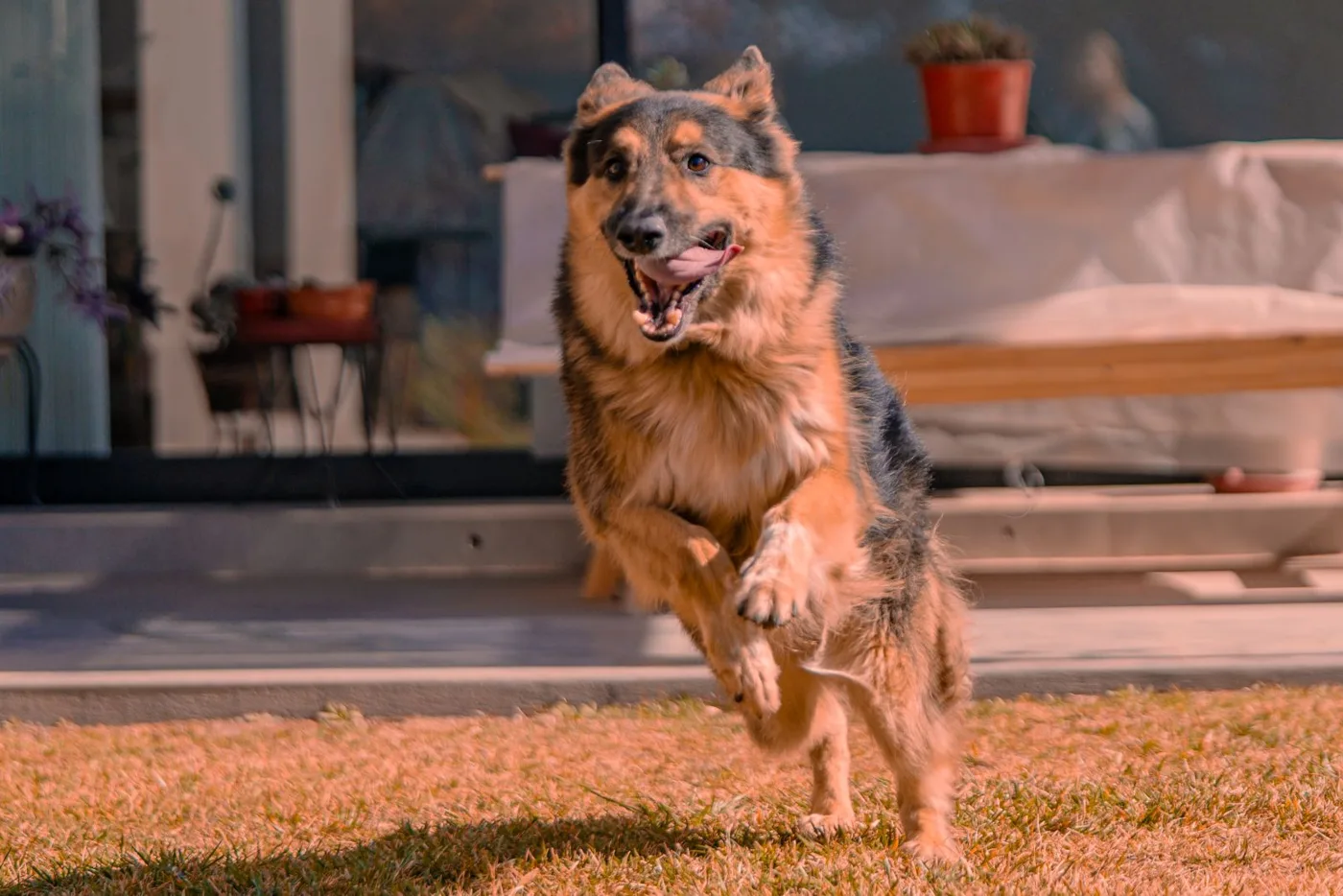
Vets have a name for those wild laps: FRAPs, short for “frenetic random activity periods.” Cornell’s canine health center quotes Dr. Pamela J. Perry: “There is no known specific cause of FRAPs in dogs. However, they appear to be a way to release pent-up energy, or perhaps, to alleviate stress.”
The usual launch times are when you get home, late in the evening, after play or training, after anything exciting, and, famously, right after he poops. Puppies and young dogs do it most, so an older dog tearing around the dining table is having a very good day.
Where he runs matters. Cornell says to keep a zooming dog away from “stairs, slippery floors, obstacles and the road,” with grass the best surface. If the running looks frightened or pained instead of giddy, that’s a vet visit.
#24 A long, soft stare across the room
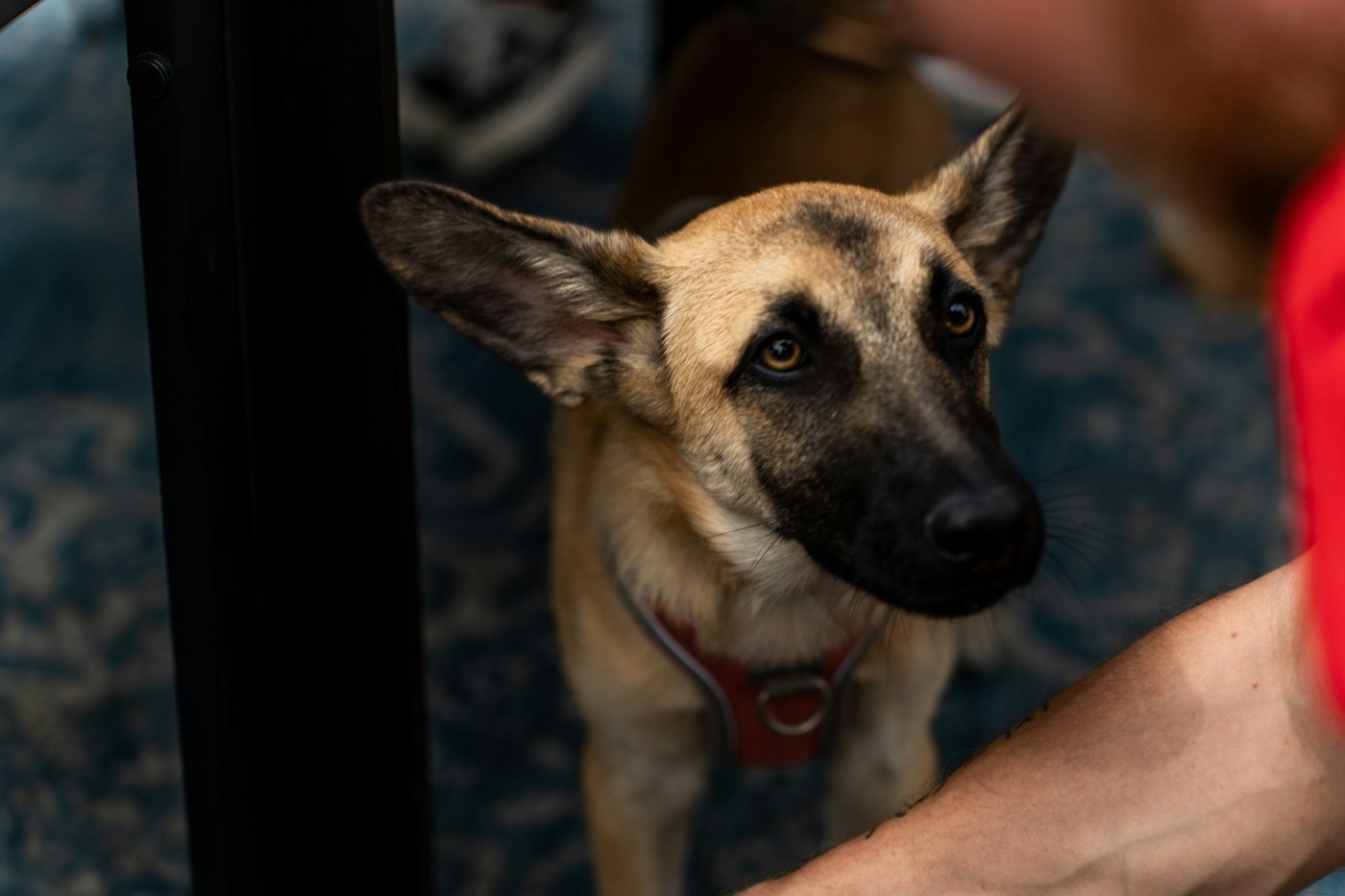
You look up from the crossword and he’s already looking at you. Soft eyes, loose face, nothing asked for.
That look does something to you, chemically. In a 2015 study in Japan, 30 owners spent half an hour with their dogs, and the dogs that gazed longest had owners with the biggest rise in oxytocin, a hormone tied to bonding and trust. Eleven hand-raised wolves showed no such effect.
In a follow-up, female dogs given oxytocin gazed at their owners more, which in turn raised the owners’ oxytocin too. Duke researchers Evan MacLean and Brian Hare called it “a powerful mechanism through which dogs win our hearts.”
So stare back. A soft stare is a cuddle from across the room. A hard, fixed stare over a bone is a different conversation, and you’ll find it at #5.
#23 Rolling in something that stinks
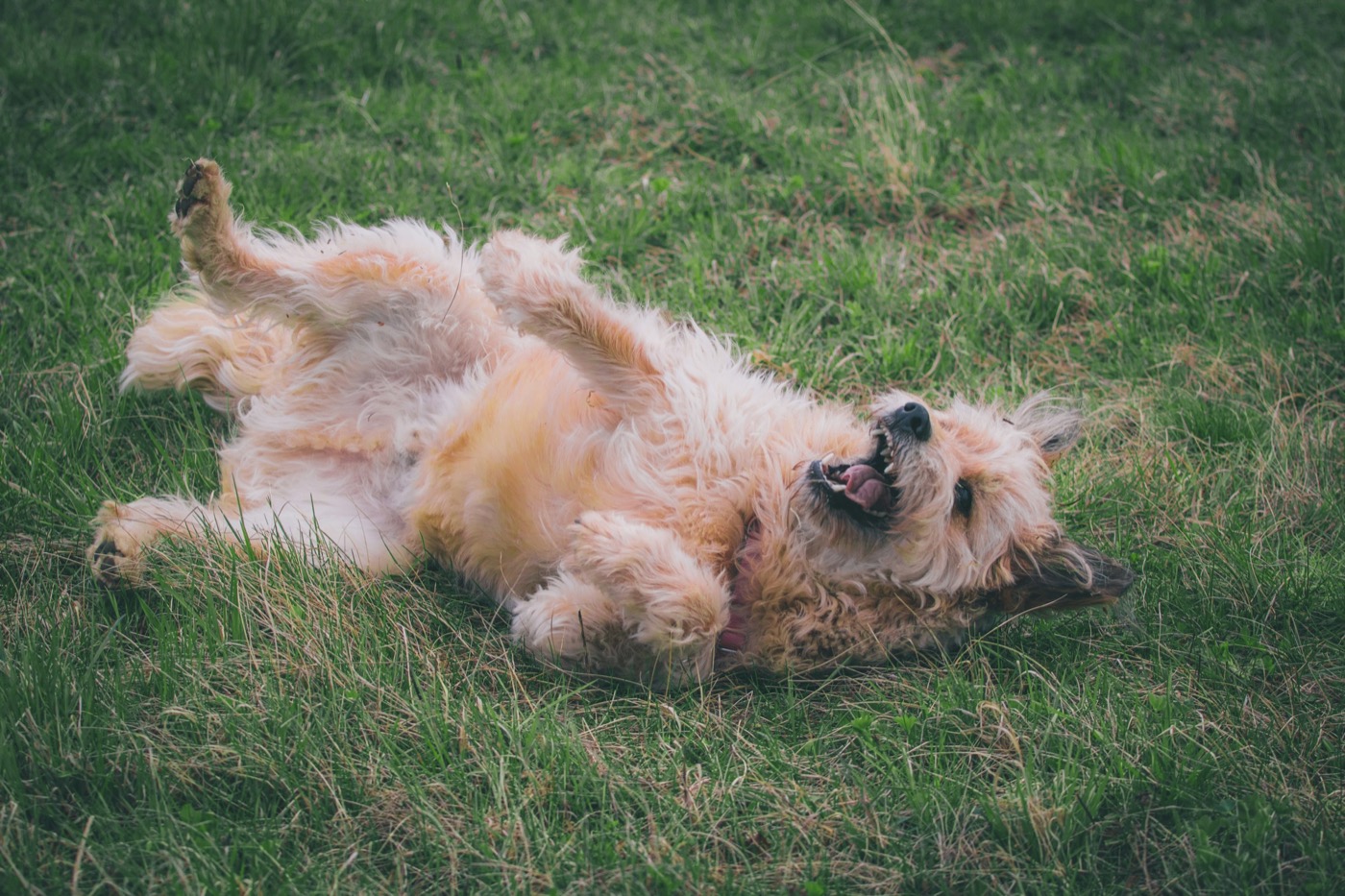
Nose down, one shoulder drops, and he’s rubbing himself into something you’d rather not identify.
VCA’s vets offer three theories. He’s hiding his own “perfumy scent” to sneak up on prey. He’s “collecting smelly information to share with you.” Or he just likes it.
Wolves cast doubt on the first one. The AKC points to research finding wolves preferred rolling in perfume and motor oil, even over sheep manure or pork. A wolf trying to hide its scent would hardly pick perfume. Your dog may simply have strong opinions about fragrance.
The fix happens before the roll. A solid “leave it” or “come” lets you stop him, as VCA puts it, “before they drop and roll.” When his nose locks onto one patch of ground, that’s your moment to call him.
#22 Eating grass on a walk
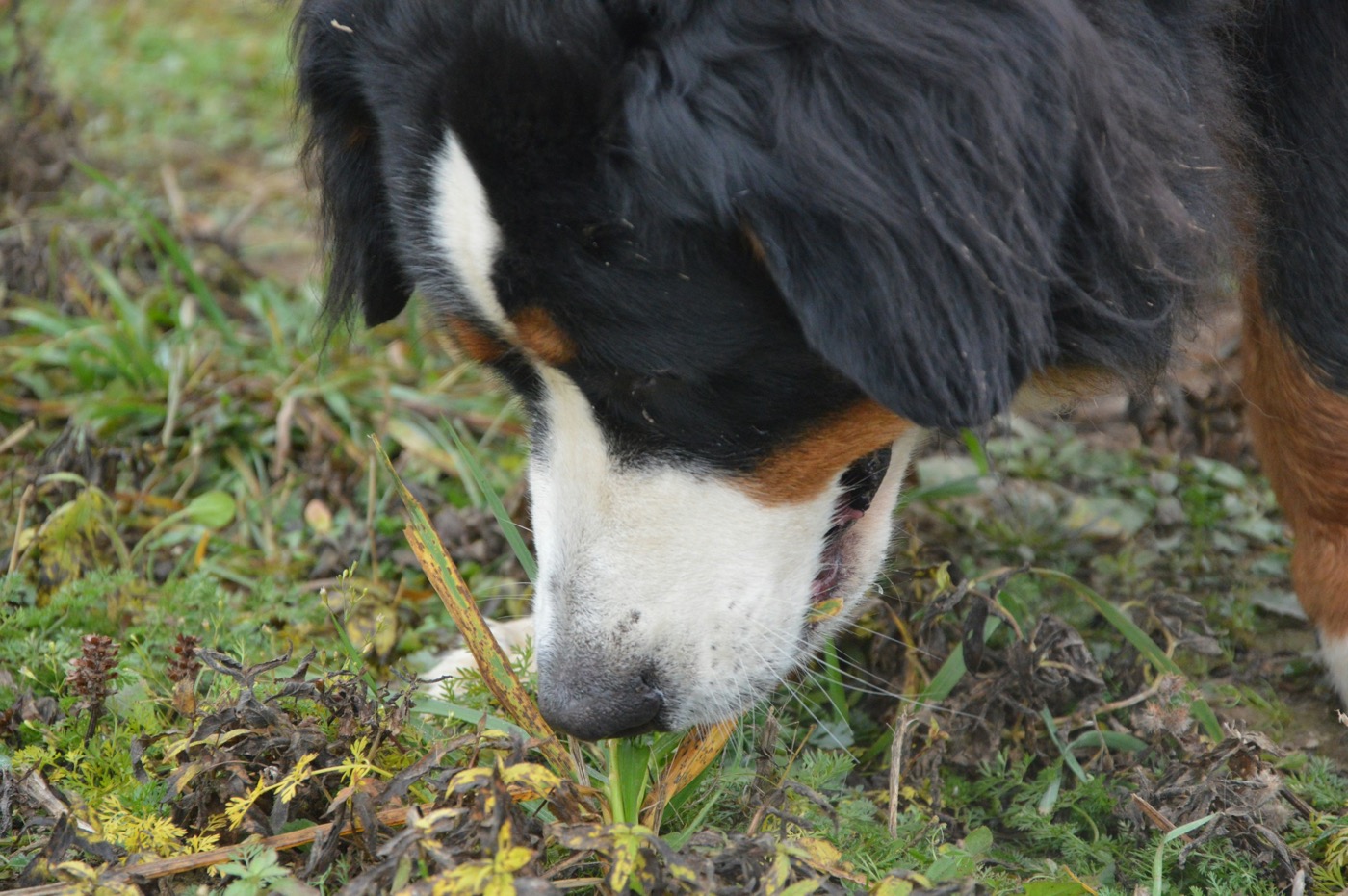
Usually, nothing’s wrong. VCA says fewer than 25% of dogs vomit after eating grass. One study counted 374 grass-eating episodes and saw vomiting after just two, and UC Davis vets call plant eating “a normal dog behavior.”
One VCA line may sting a little: grass eating often goes up “as owner contact time decreases.” A grazing dog may be a dog with time on his paws.
Two red flags are worth acting on:
- He seems queasy before he heads for the grass. VCA mentions stomach reflux and pancreatitis, an inflamed pancreas, as possible causes.
- The lawn has been treated with weed killer or pesticide.
The second one is the easier fix. Let him graze where you know nobody sprays.
#21 Circling before lying down
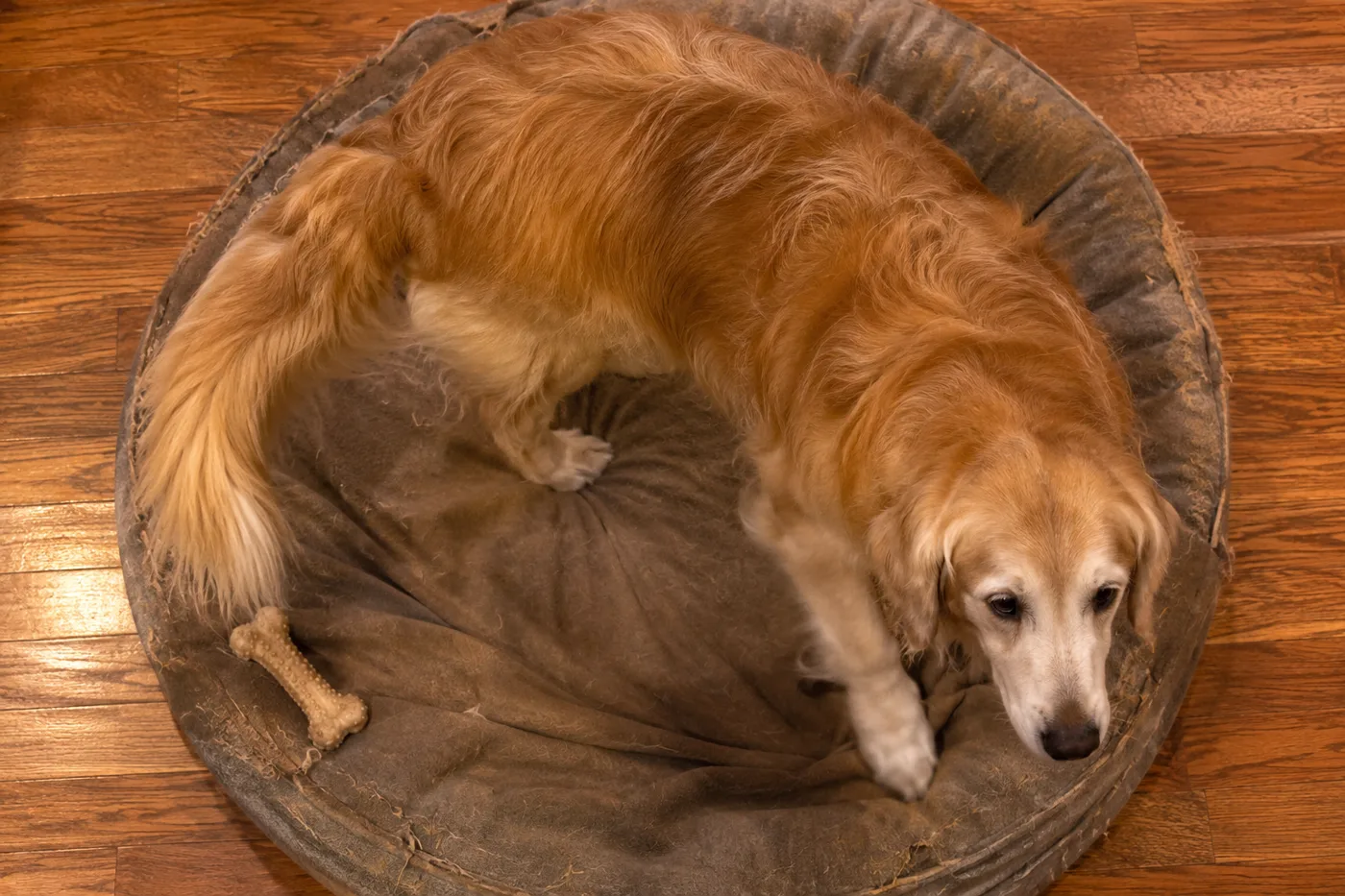
Round once, twice, three times, flop. Dr. Karen Sueda, a veterinary behaviorist at VCA West Los Angeles, says the habit likely comes from ancestors who needed to “stamp down grass, leaves or snow and create a soft, level surface.” Your dog is making a bed out of a bed.
Keep count, though. VCA says “dogs that are in pain will circle excessively” as they struggle to get comfortable, with arthritis and nerve problems among the causes.
A widely cited estimate puts osteoarthritis, the wear-and-tear kind, at 80% of dogs over eight. VCA adds a line worth keeping: “simple aging is not a cause of OA.” “He’s just getting old” isn’t a diagnosis. If three turns have become a dozen, with a groan at the end, tell the vet. Skip your own medicine cabinet in the meantime. The FDA warns that a pain reliever meant for people may not be safe for dogs, and acetaminophen can damage a dog’s liver.
 You might also like17 Everyday Things Your Dog Secretly Hates (And What To Do Instead)
#20 Yawning when they’re not tired
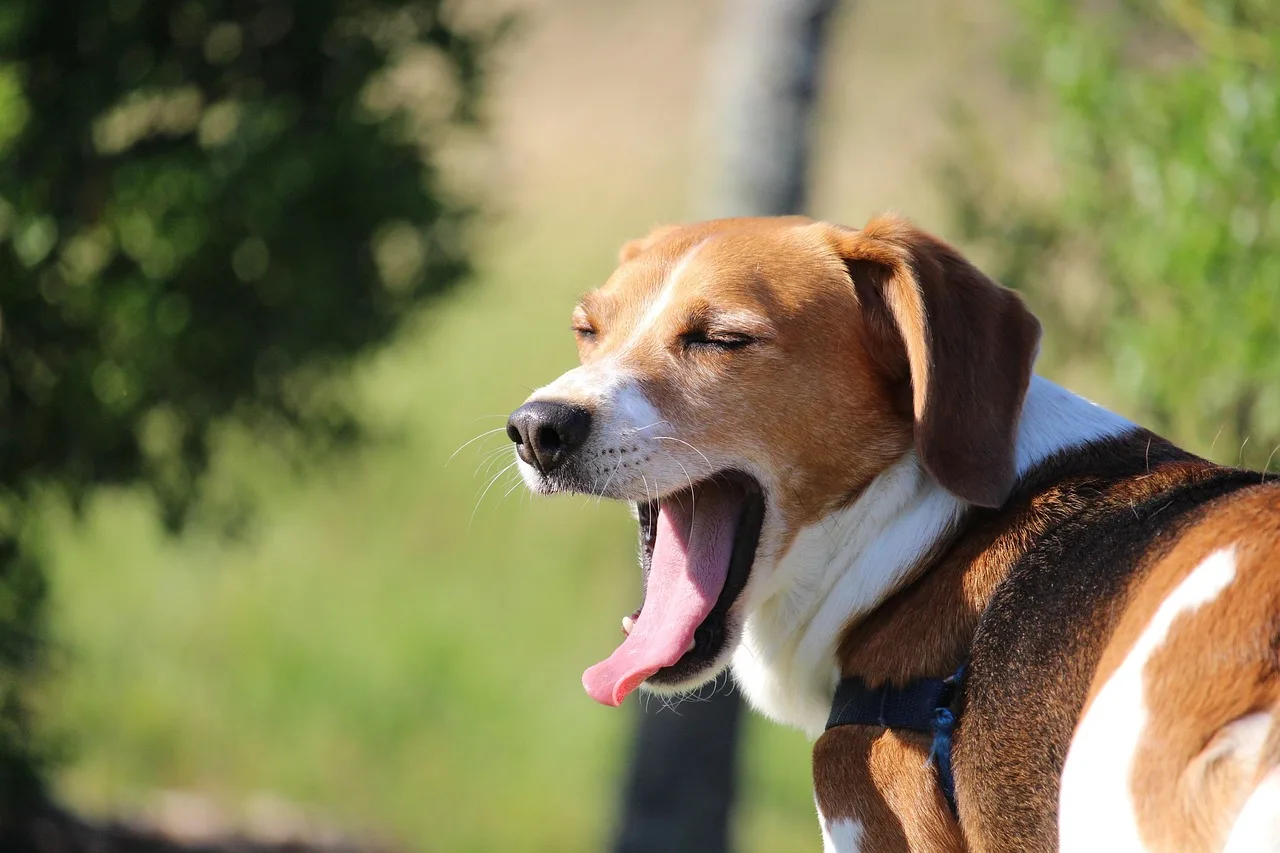
The AKC says dogs yawn when stressed, not just when tired.
But some yawns are about you. In a 2013 University of Tokyo study, dogs yawned more when their owner yawned than when a stranger did, and their heart rates stayed steady, which argues against stress. Researcher Teresa Romero said “contagious yawning in dogs is emotionally connected in a way similar to humans.”
So it comes down to where you are. He yawns two seconds after you do, at the end of a quiet evening? He caught it from you. He yawns in the vet’s waiting room? That’s nerves. Same mouth, two very different sentences.
#19 Whale eye, or just looking up
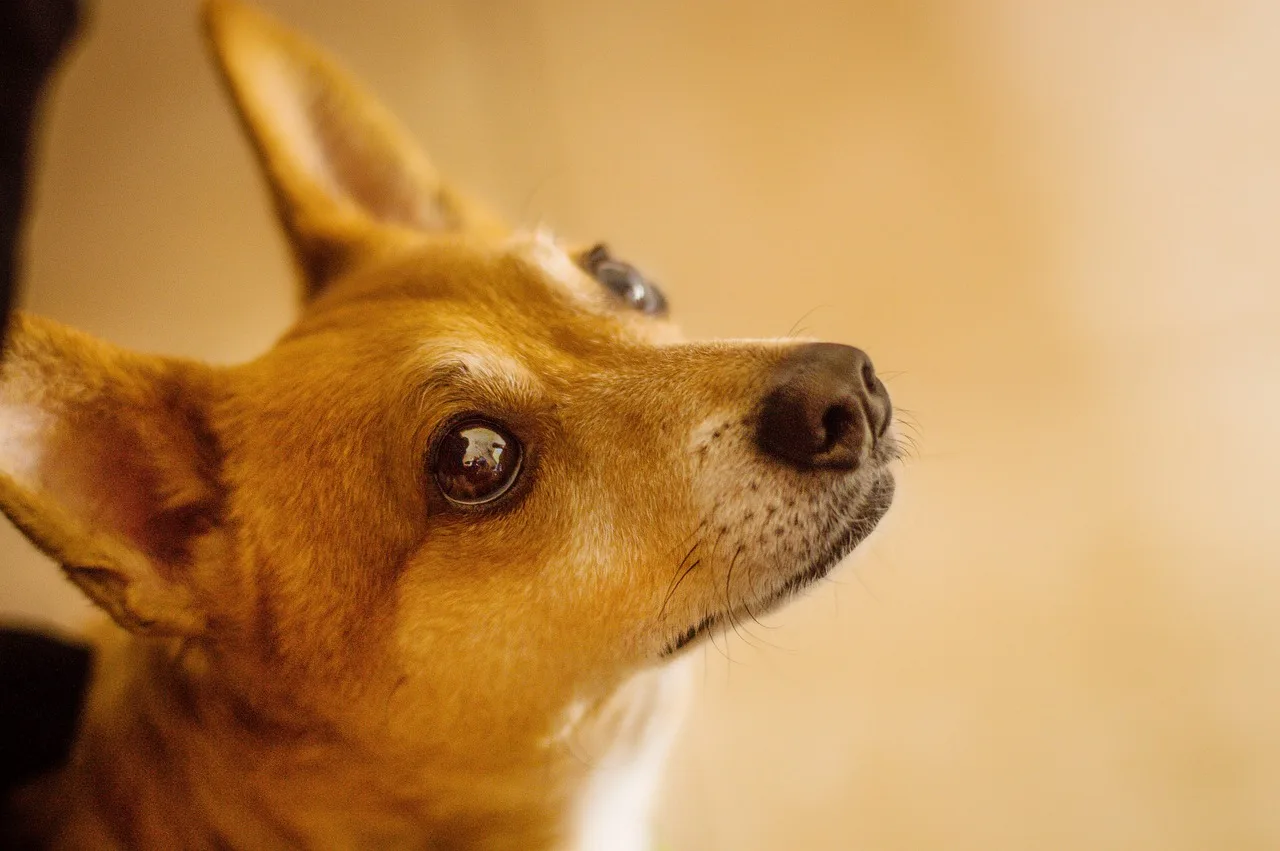
Whale eye is when you can see the white of a dog’s eye. The AKC says “Dogs frequently show whale eye when they feel anxious, worried, or pressured.”
The trouble is the charts. Owners on Reddit’s r/coolguides say the “whale eye” on popular body-language posters looks exactly like their dog asking for lap time or a belly rub, and that the drawings make it hard to tell real whale eye from a dog simply looking up at you sideways.
What settles it is the company the eye keeps. The AKC pairs whale eye with quick tongue flicks, yawning and a tucked tail. When those come along with it, he’s uneasy, so give him room.
#18 A tail tucked between the legs
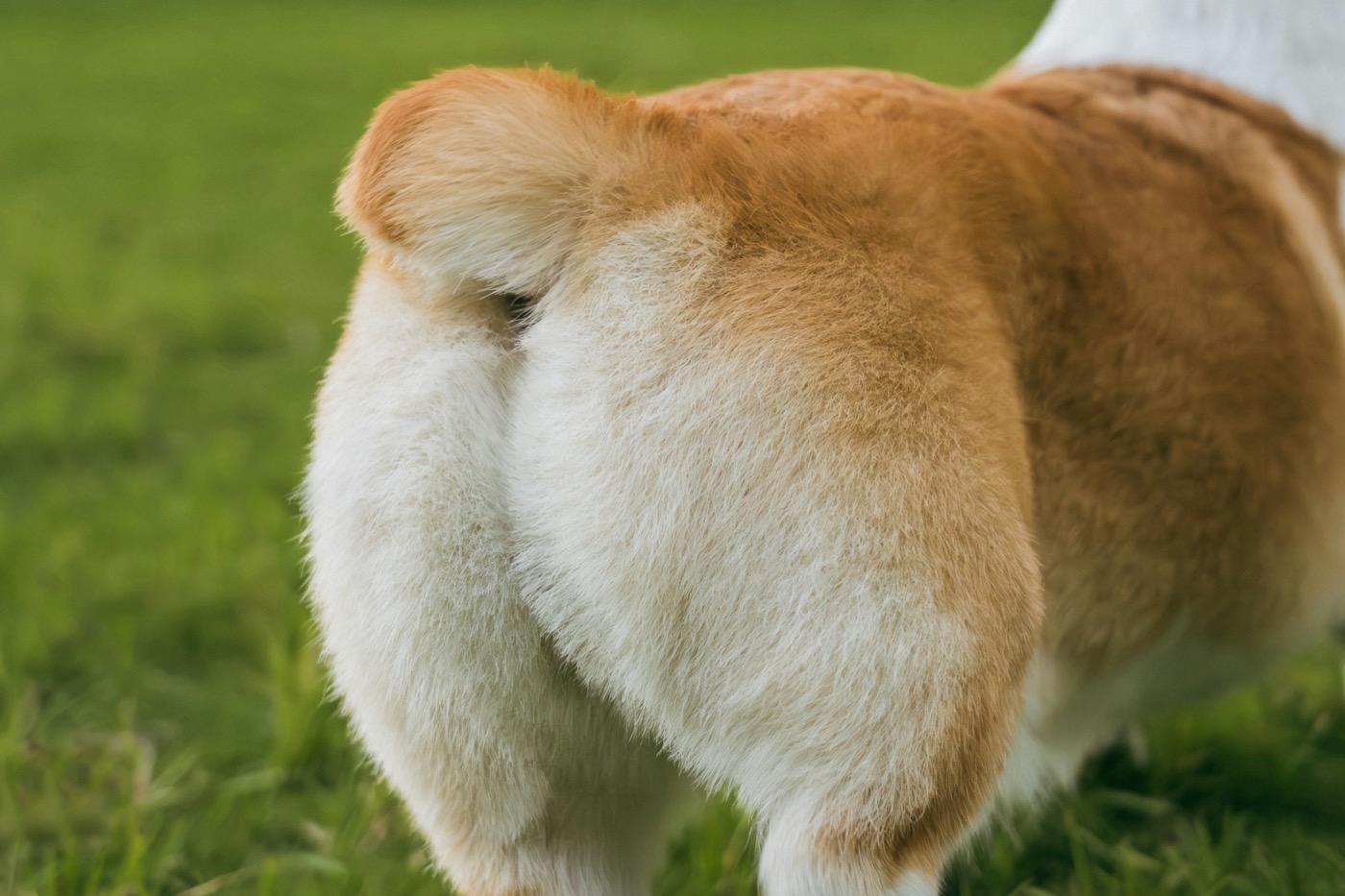
Before you read a tail, learn where your dog’s tail normally sits. The AKC says a high tail suggests confidence and a tucked one fear, but every breed carries its tail differently. A Chow Chow’s rides high. An Italian Greyhound’s hangs much lower. A low tail on an Italian Greyhound may just mean you own an Italian Greyhound.
The real fear signal is more specific. PetMD says a tail “tucked tightly between their legs” with the tip wagging fast “is typically indicative of the dog experiencing a fear response.”
A tight tuck with a busy little tip means he’s scared. Quietly move him away from whatever’s doing it, no fuss and no scolding.
#17 Hackles rising along their back
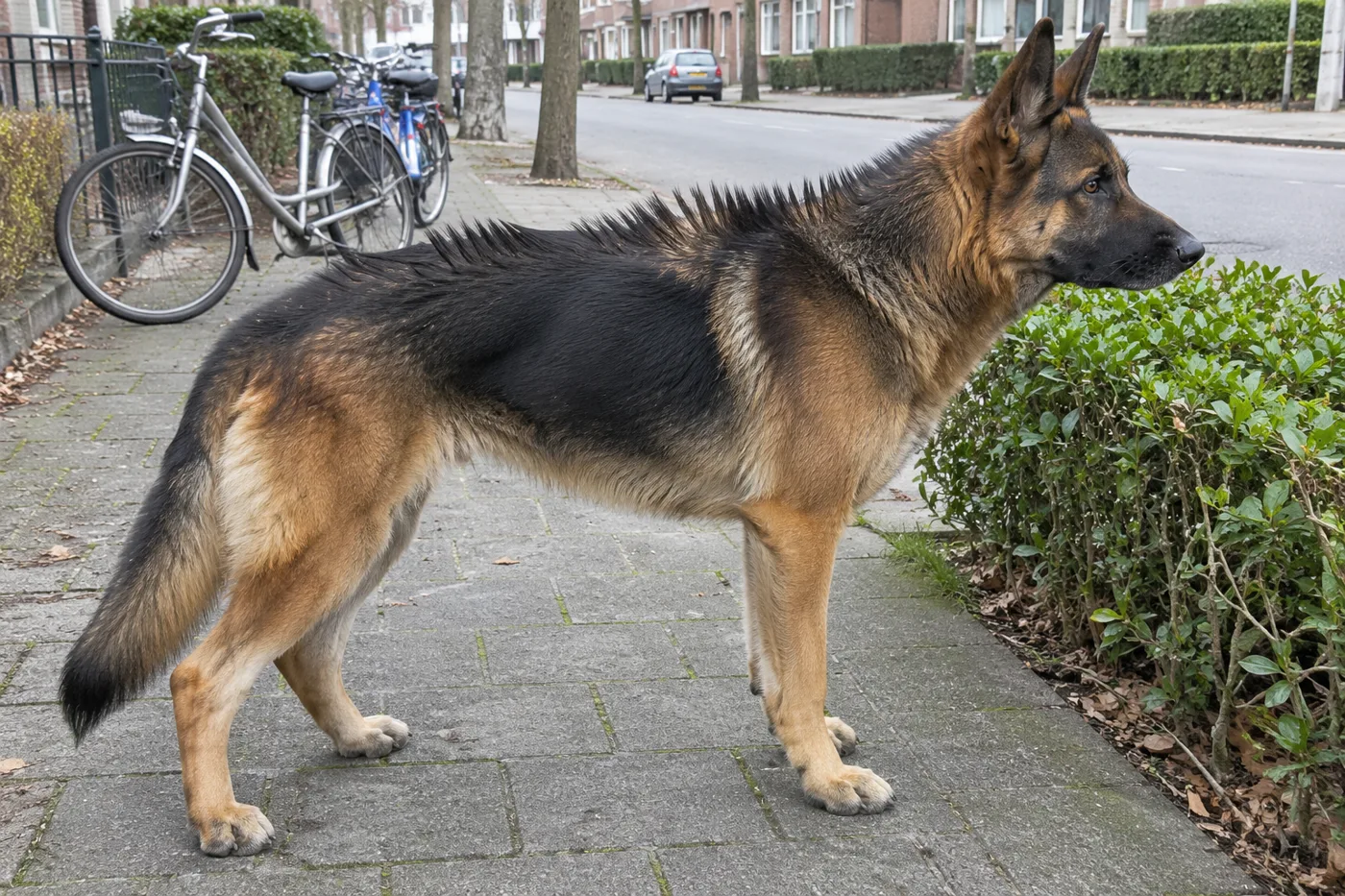
That ridge of hair standing up from shoulders to tail looks like trouble. Often it’s just a dog who’s wound up.
“Piloerection is an indicator of arousal, not potential aggression.” Patricia McConnell, PhD, animal behaviorist, on her blog
Piloerection is the scientific word for hair standing on end. McConnell calls it “an involuntary response of the sympathetic nervous system,” the body’s automatic fight-or-flight wiring. The AKC compares it to goosebumps and says the dog may be “stressed, nervous, excited or intensely focused on something.” He can’t switch it off any more than you can stop goosebumps.
So raised hackles tell you how revved up he is. The rest of him tells you about what. Wiggly and loose as a favorite neighbor walks up is joy. Stiff and silent at a strange dog is your cue to change direction.
#16 Licking your face when you wake
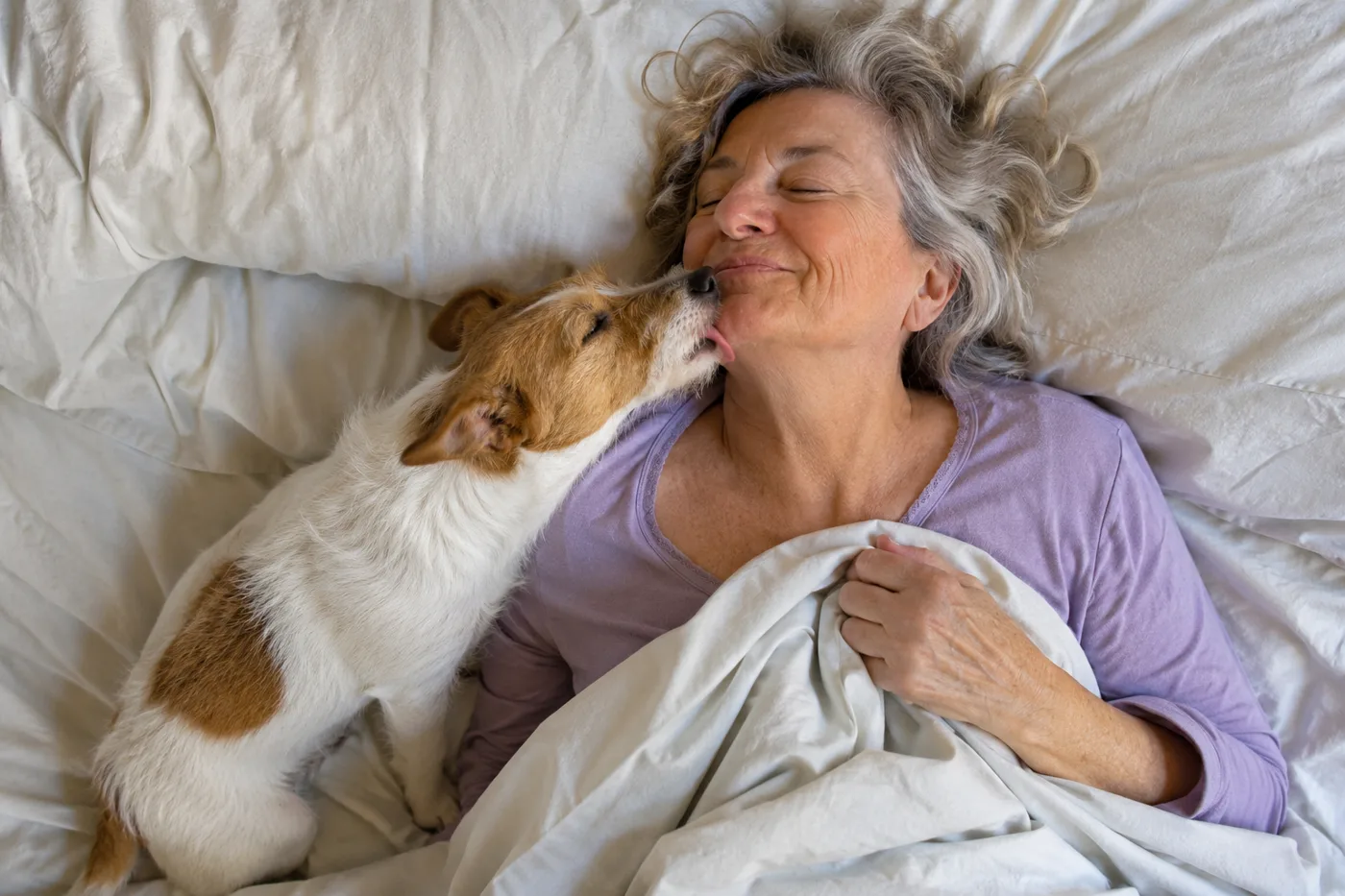
Eyes barely open and there’s already a tongue.
Dr. Alexandra Horowitz, who runs the Dog Cognition Lab at Barnard College, traces it to puppyhood: “Puppies lick the face and muzzle of their mother when she returns from a hunt,” which prompts her to bring up food. Your morning face is getting the grown-up version of “anything for me?”
These days, it’s mostly love. Dr. Mary Burch, a certified applied animal behaviorist, says “Licking can be a sign of affection” that may give a dog a feeling of “security and comfort.”
Licking aimed at you is one thing. Licking aimed at himself, the furniture or the air, over and over, is something else. The AKC says that kind may point to anxiety, boredom, pain or allergies, and a vet check comes first.
#15 Following you room to room, even to the bathroom
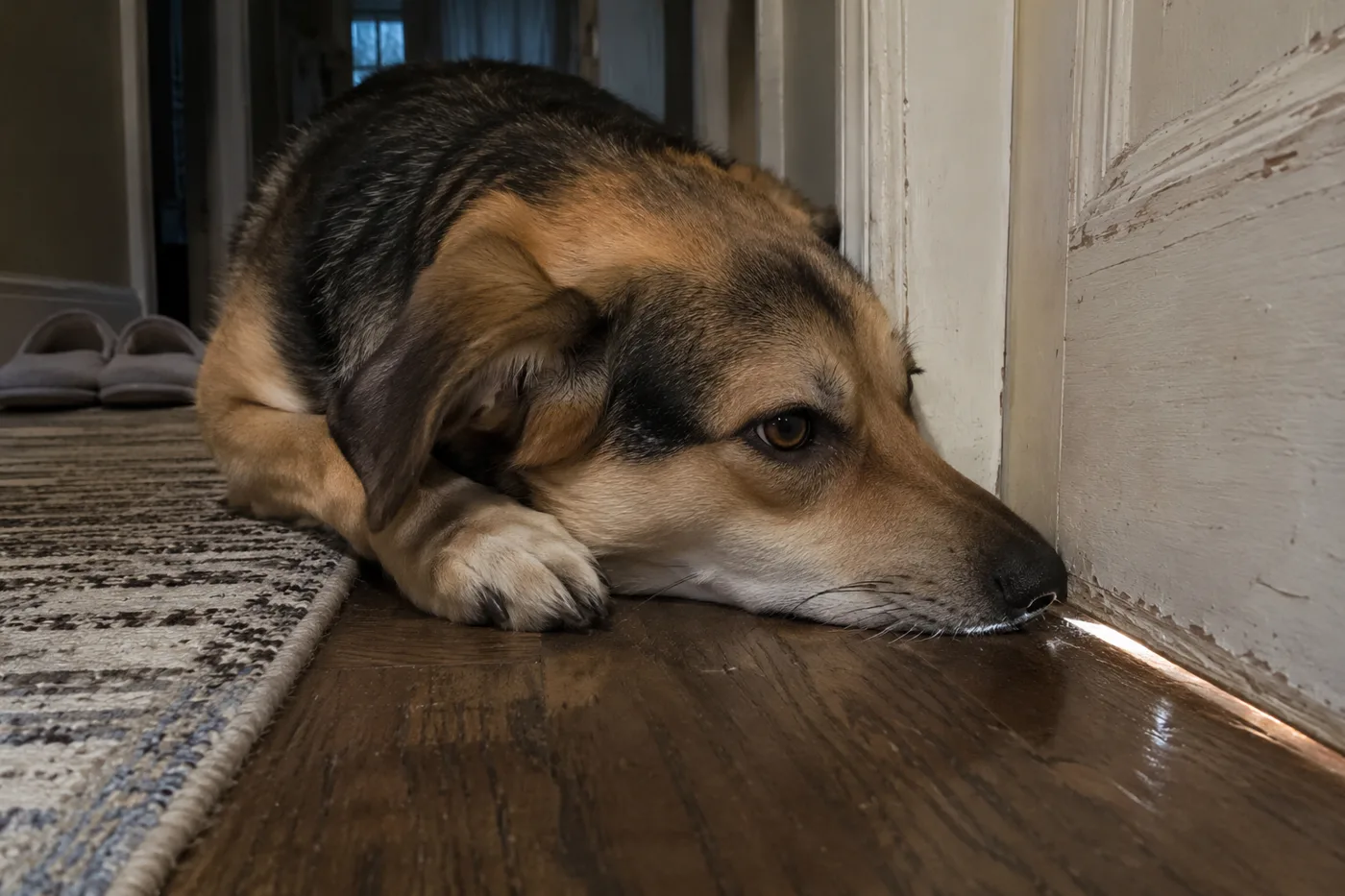
You stand up, he stands up. You close the bathroom door, and a nose appears in the gap underneath.
A 2013 University of Vienna study found dogs kept working at a food puzzle longer when their owner was in the room. A stranger didn’t have the same effect. Researchers called it a “secure base” effect, the same one seen in human babies. You are, scientifically speaking, his safe place.
When does the shadow turn into separation anxiety? VCA says anxious dogs often “follow them from room to room” and “rarely spend time outdoors alone,” but the telling sign is what happens once you’re gone: barking and whining, chewing things up, accidents in the house.
And if those happen even while you’re home, VCA says “other causes should first be considered.” Until then, he’s company. Leave the door open a crack.
#14 Picking one favorite person
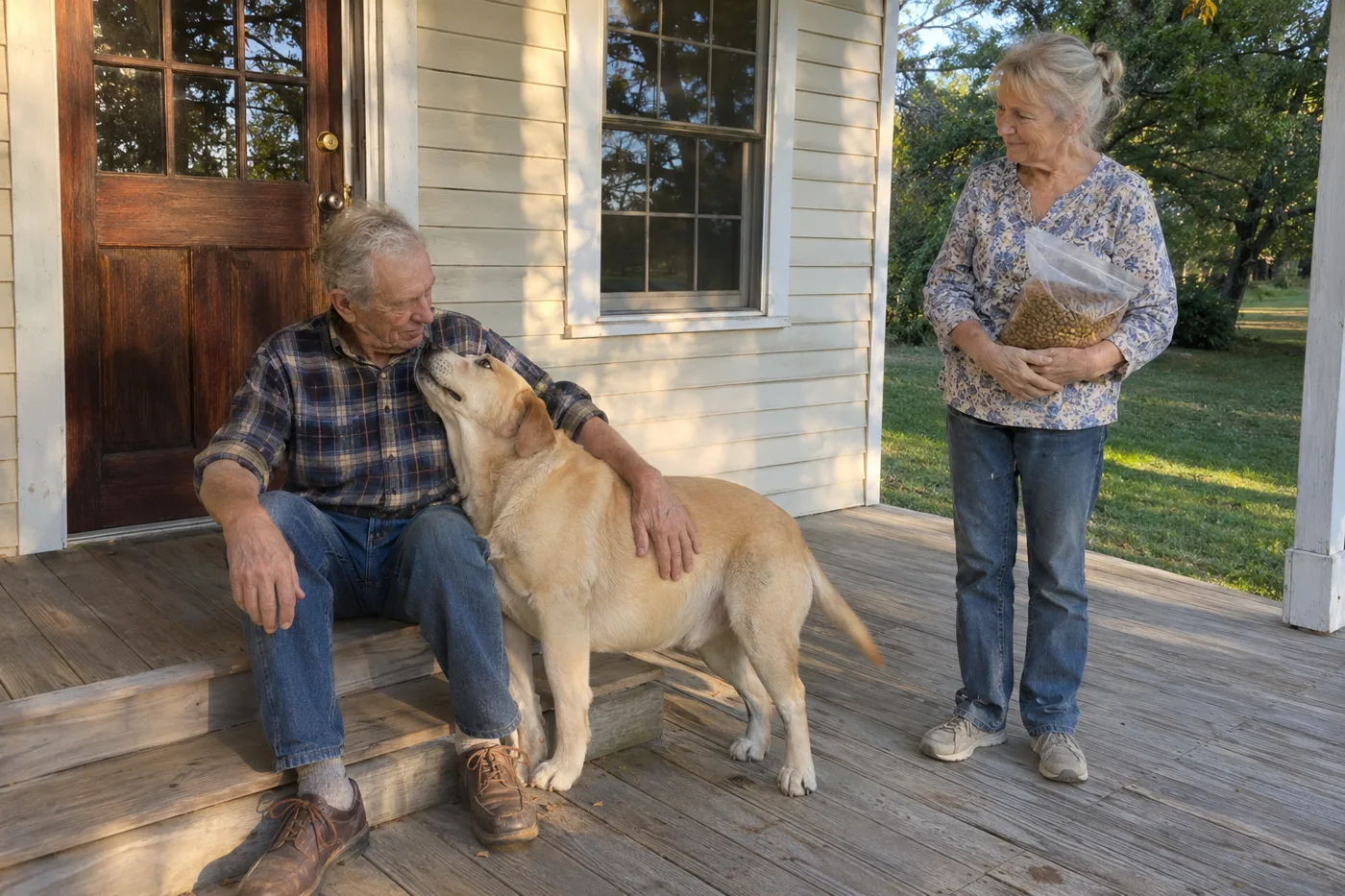
A lot of households settle this argument wrong. The favorite person often isn’t the one with the scoop.
In a 2016 Emory study, brain scans showed a dog’s reward center responded about as much, or more, to praise as to food in 13 of 15 dogs. Those scans even predicted which dogs picked their owner over a bowl of food in a maze.
People still argue about it in TikTok comments, and some insist it’s whoever fills the bowl. One young commenter whose parents feed the family dog says the dog still follows them, which they credit to being the one who taught him his tricks.
Dr. Wailani Sung, a board-certified veterinary behaviorist, says dogs gravitate toward people who provide “food, treats, play, walks, affection, and comfort.” Food is one of six. Chewy adds that many dogs prefer calmer, quieter people. If you’re the calm one in any room, that may be your secret.
#13 Chasing their tail after a long walk
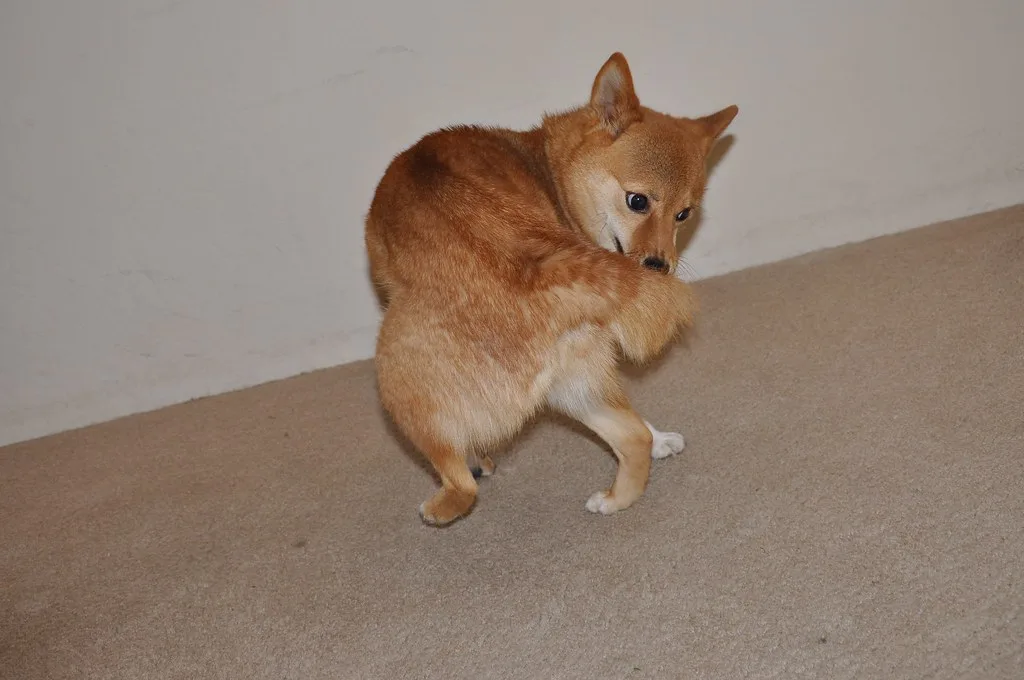
The usual explanation is boredom. Owners in TikTok comments push back: their dogs spin after long walks, fetch and hours outside. The science is with them.
A 2012 University of Helsinki study of nearly 400 dogs, Bull Terriers, Miniature Bull Terriers, German Shepherds and Staffordshire Bull Terriers, found no link between exercise and tail chasing. Being separated from the mother too early was a risk factor instead.
A spin or two after a good day is just silliness. Sudden or frequent tail chasing is a vet visit, says VCA, which lists tail injuries, tapeworms, fleas, food allergies, impacted anal glands and nerve problems among the causes. In an older dog who never used to do it, add cognitive decline to that list.
#12 Getting anxious when you pick up keys
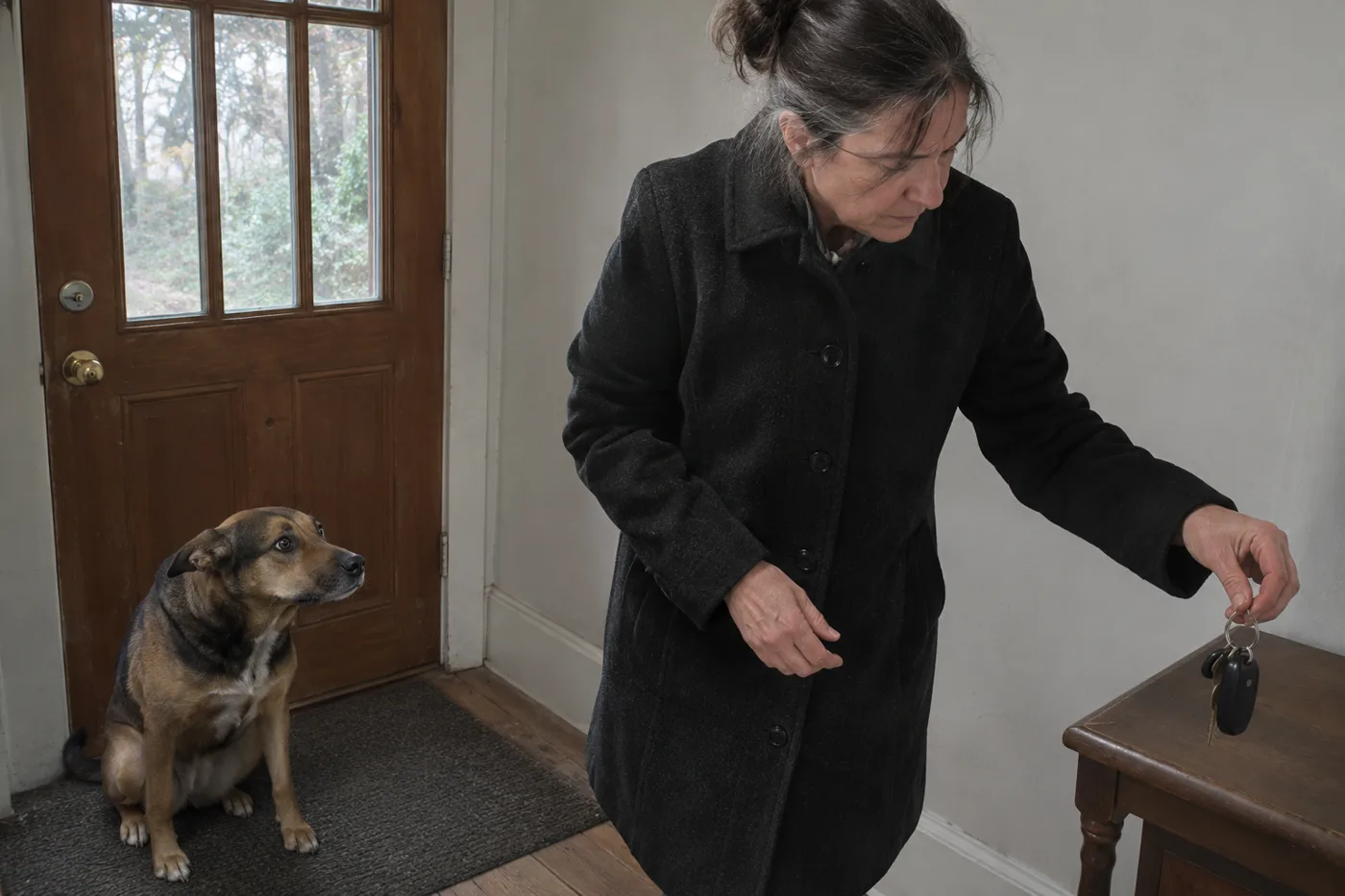
He’s fine all morning. Then you reach for your keys and the pacing starts.
The ASPCA describes it exactly: “a dog might start to pace, pant and whine when he notices his guardian applying makeup, putting on shoes and a coat,” or picking up keys. He’s learned your leaving routine better than you have.
Dr. Scott Miller, a British vet who answers owners’ questions on his Rescue Vet channel, warns owners to avoid giving away departure cues like putting a coat on or jangling keys in front of the dog. Slip the keys into your pocket quietly instead of shaking them like a dinner bell.
Some perspective helps. In a study of 13,700 dogs in Finland, only about 6% showed frequent separation-related behavior. Earlier studies found rates two to three times higher because they counted more loosely. A little worry at the keys is common. True separation anxiety is rarer than the internet suggests.
If he does have accidents or chews things up while you’re out, the ASPCA is firm: “Do not scold or punish your dog… They are distress responses!” Have the vet rule out urinary infections, diabetes and kidney disease first, since those can cause accidents too.
#11 Scratching that won’t let up
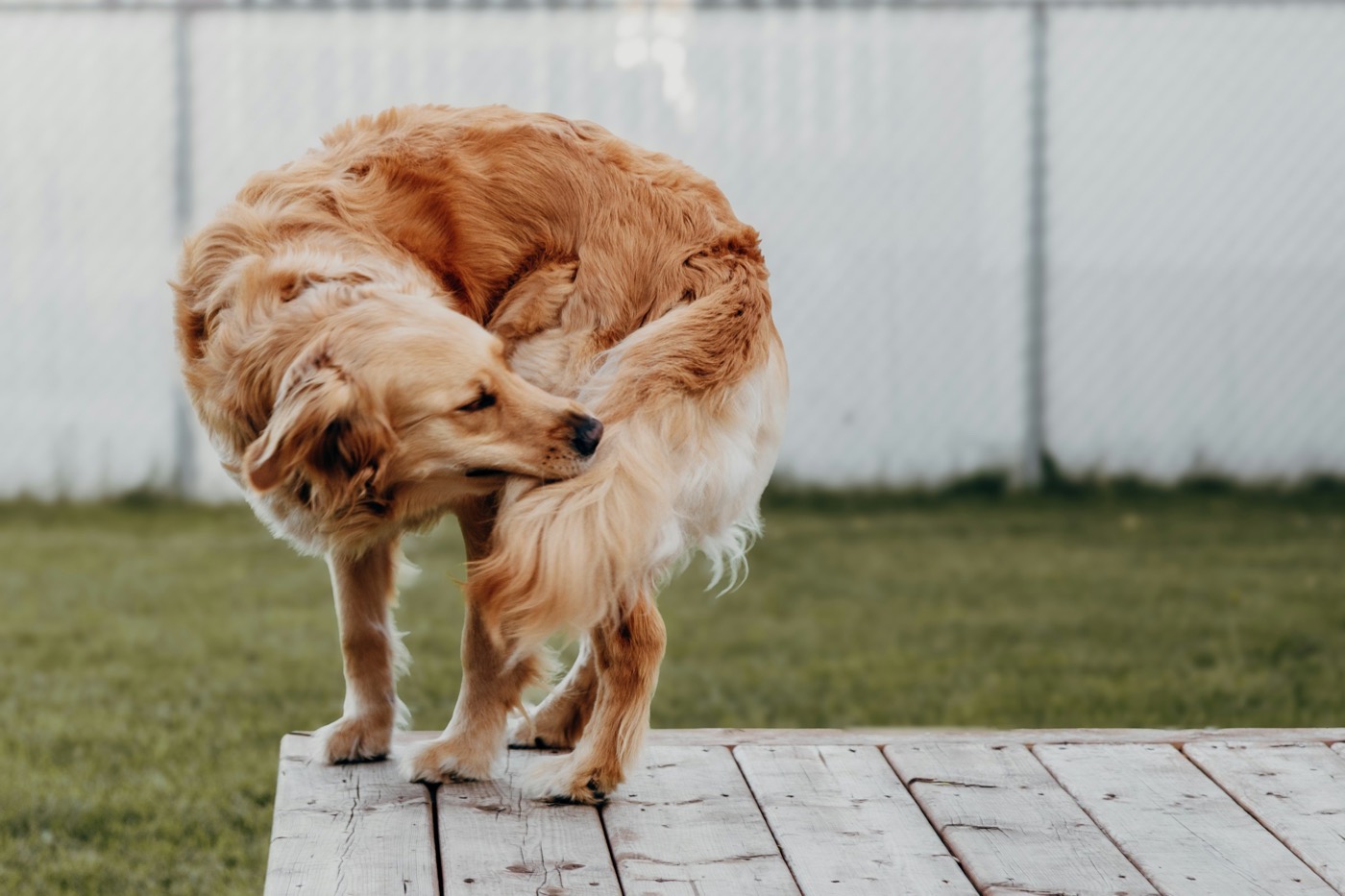
Before anyone says “allergies,” think bugs. The Merck Veterinary Manual says the most common causes of itching are “parasites, infections, and allergies,” and that parasites, including mites and fleas, are “the first possible cause your veterinarian will seek to exclude.”
The classic allergy, atopic dermatitis (an allergy to things in the environment like pollen), affects about 10% to 15% of dogs, according to Cornell, and usually starts between six months and three years old.
That matters if your dog is older. When a dog who has never been itchy starts scratching at ten, a brand-new environmental allergy is a less likely answer than something crawling. Start with the vet, and expect parasites to be the first question, even if he’s on a monthly flea and tick preventive. No product is label-approved for treating or preventing Demodex mites, the Companion Animal Parasite Council says.
 You might also like17 Things Your Vet Notices About Your Dog (and a Few Only You Can Spot)
#10 Licking one paw until it’s raw
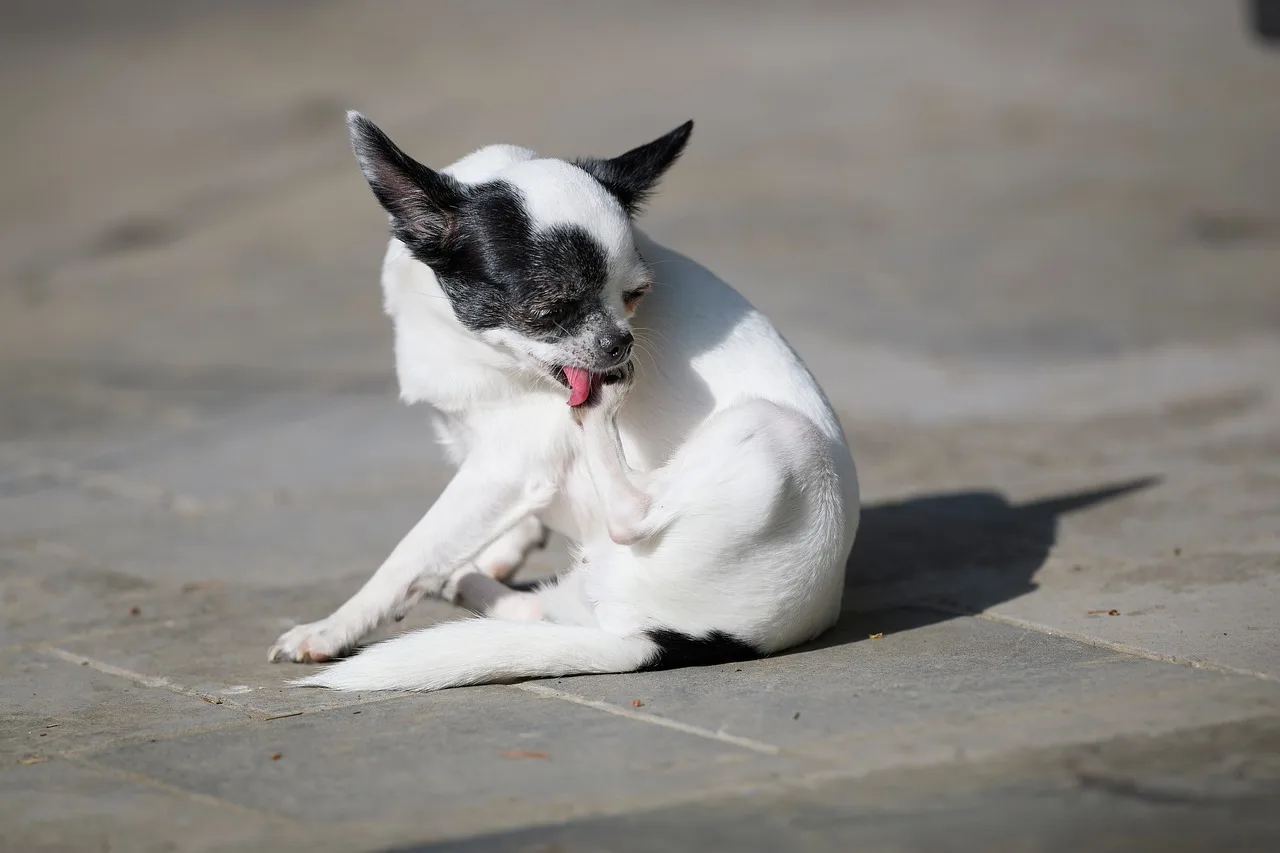
Dr. Jerry Klein, the AKC’s chief veterinarian, says “occasional paw licking is normal.” Frequent, intense licking is another story: “The moisture of constant foot licking can cause a secondary bacterial or yeast infection.”
Keep it up long enough and it can become a lick granuloma, a sore made by the licking itself, usually on the front of a wrist. VCA says it’s more common in Dobermans, Great Danes, Labradors, Weimaraners, Golden Retrievers and Boxers. If one of those lives with you, a licked-bare wrist deserves a look sooner.
Here’s the part that surprises owners: along with skin tests, vets may take X-rays to check for arthritis. A dog licking one joint may be telling you the joint hurts.
#9 Barking at a blank wall at night
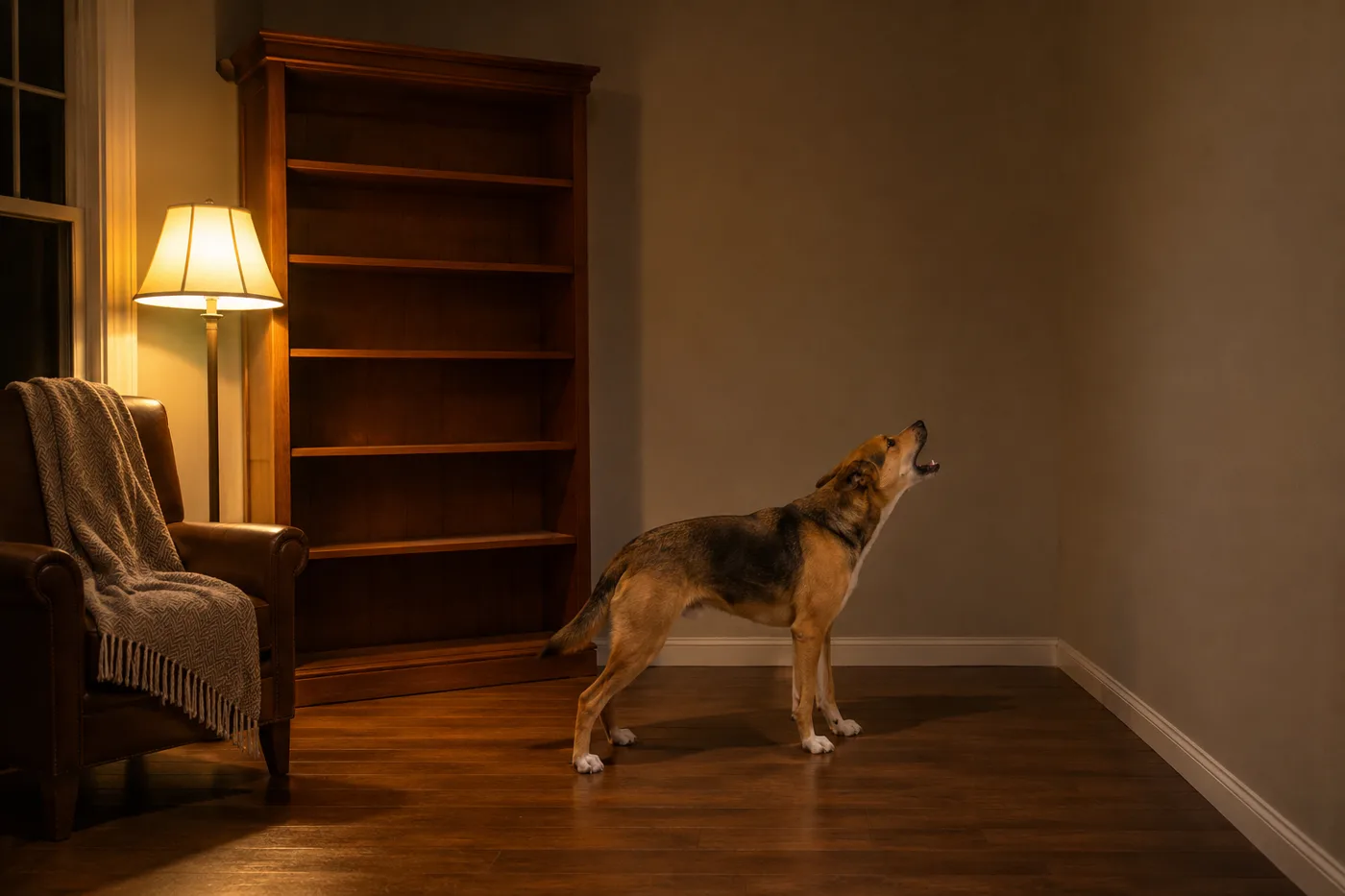
Two in the morning, and he’s barking at the wall by the bookcase. You hear nothing. That doesn’t mean there’s nothing.
LSU’s vet school puts a dog’s hearing at up to 45,000 hertz, against about 23,000 for people. Hertz measures pitch, and the higher the number, the higher the sound. Something in the walls or out past the yard may be making noise only he can catch.
If the night barking is new and your dog is older, there’s another possibility worth knowing: canine cognitive dysfunction, the dog version of dementia.
Signs of canine cognitive decline – It affects an estimated 28% of dogs aged 11 to 12 – That rises to an estimated 68% of dogs aged 15 to 16 – Disrupted sleep and restlessness at night are common signs – New night barking in an older dog is worth mentioning to the vet
Jot down the time and how long it lasted. A vet can do more with “every night around two, for ten minutes” than with “he’s been odd lately.”
#8 Stiffening up before a familiar spot
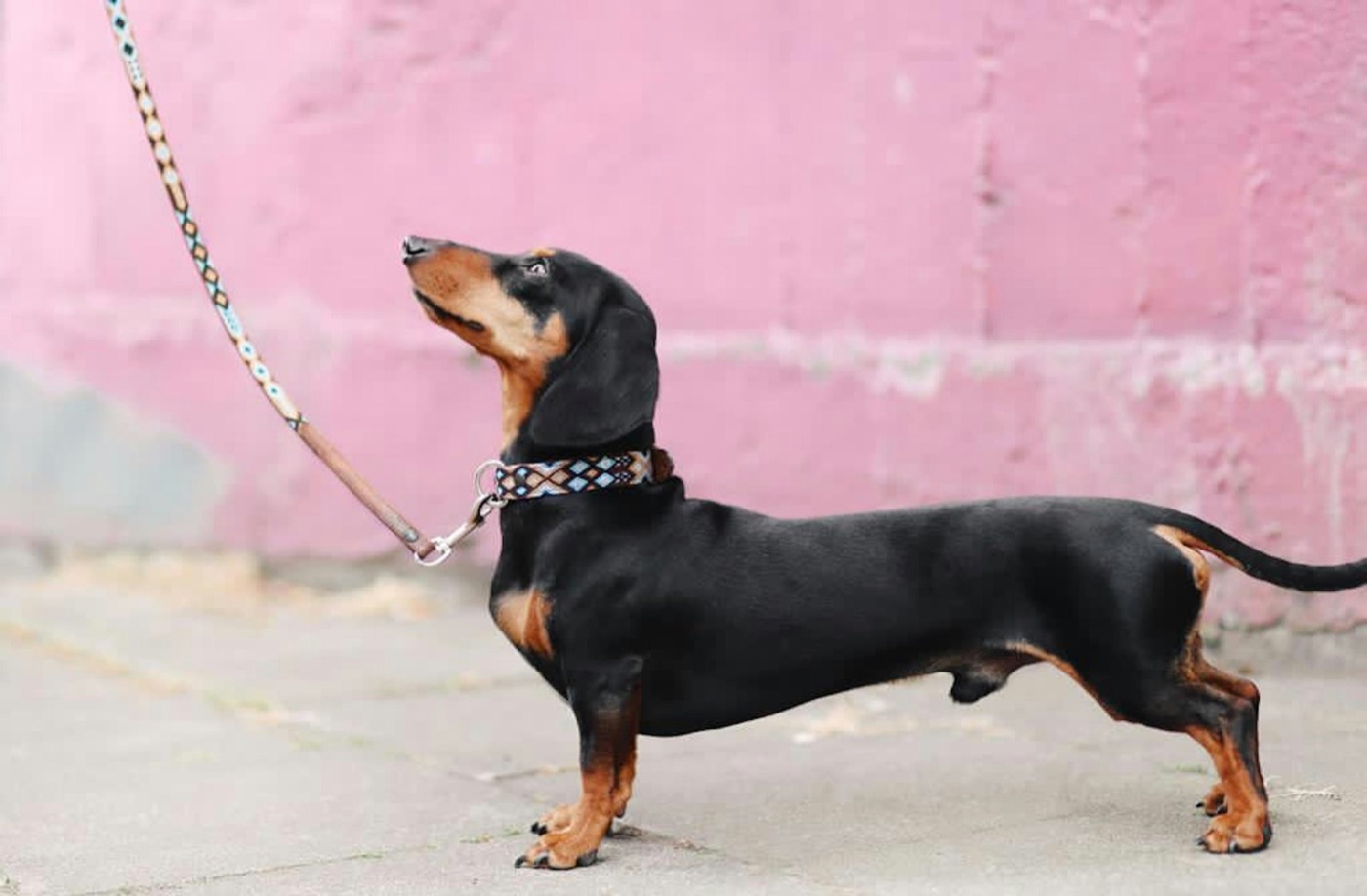
You’re still a block from the house where a dog once charged the fence, and he’s already slowing down, legs gone stiff.
He remembers. VCA explains that a dog may “associate the feeling of fear with being in that place” and “anticipate the unpleasant emotion of fear even when the original trigger is not present.” The fence dog may have moved away years ago. The feeling stayed put.
The fix VCA names is gradual desensitization, which just means getting him used to the place in small, easy doses and stopping before he tenses. Notice exactly where the stiffening starts. That’s how close is too close, for now.
#7 Lunging at dogs long after the fear
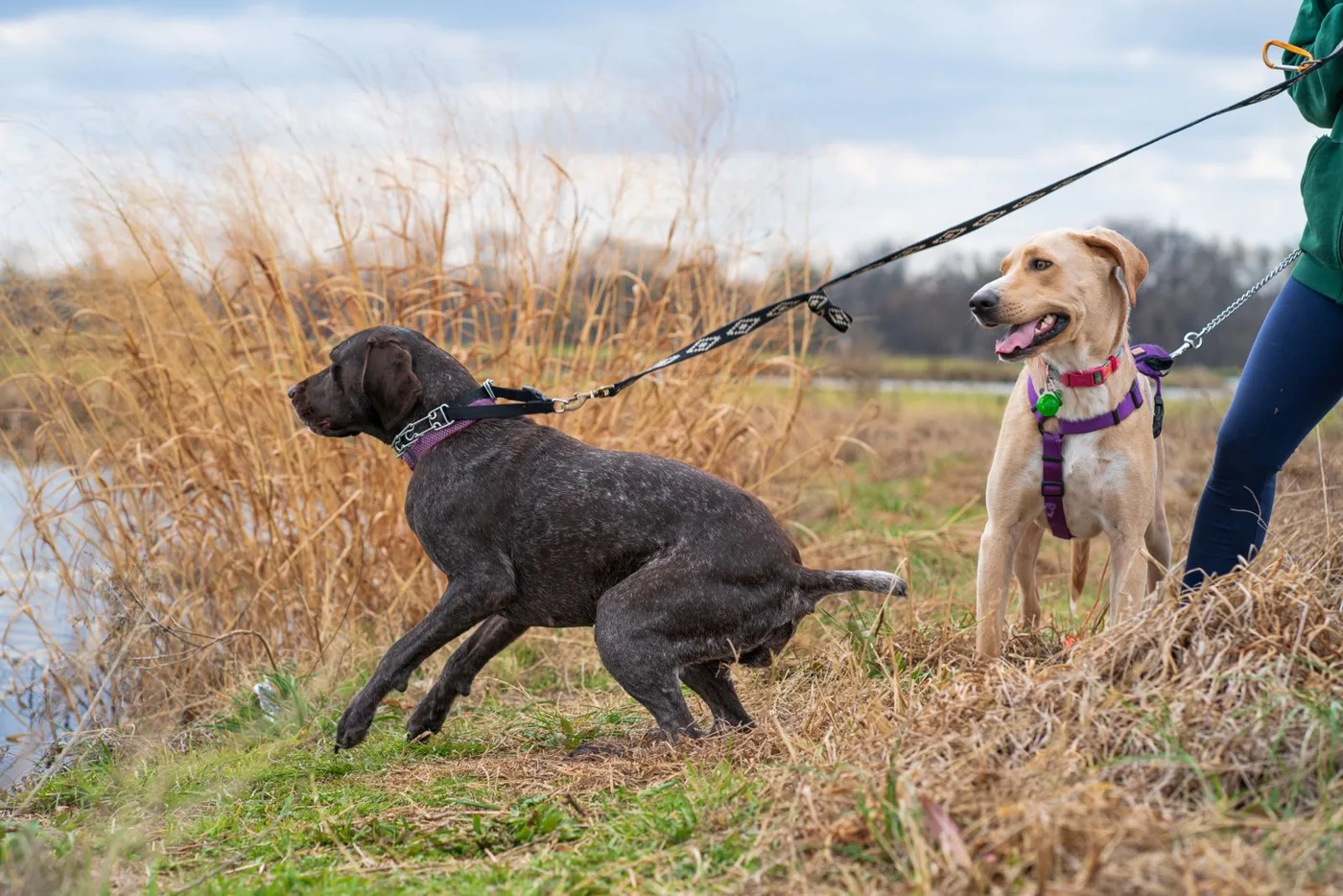
It may have started with fear. Habit can keep it going long after.
Preventive Vet puts it bluntly: “Every time your dog rehearses reactive behavior, it is making that behavior more likely to happen in the future.” They call it “a self-reinforcing behavior.” From his side, the lunge works. He barks, the other dog leaves, and the lesson sticks.
Dr. Tiffany Tupler, a vet writing for PetMD, says to avoid “punishment, yelling, yanking, choking,” because they add fear. What helps is counterconditioning, pairing the sight of another dog with something good like a treat, plus desensitization, starting far enough away that he can stay calm.
The cheapest step costs nothing. Cross the street early. Every lunge he doesn’t get to do is one less rehearsal.
#6 Humping a guest’s leg
Your friend is halfway through a story when the dog decides her shin is the love of his life. Mortifying for everyone except the dog.
Sueda, the veterinary behaviorist from #21, is clear: “Mounting an owner’s leg is not, as some believe, an attempt to dominate.” PetMD agrees it’s usually “not a sign of dominance.”
So no need to put him in his place. Sueda’s advice is to “remove yourself from the scene or ignore the action.” PetMD’s is to give him something better to do, like chasing a ball or doing a sit. Keep a tennis ball by your chair when company’s due, and hand your friend the second one.
#5 Freezing stiff over the food bowl
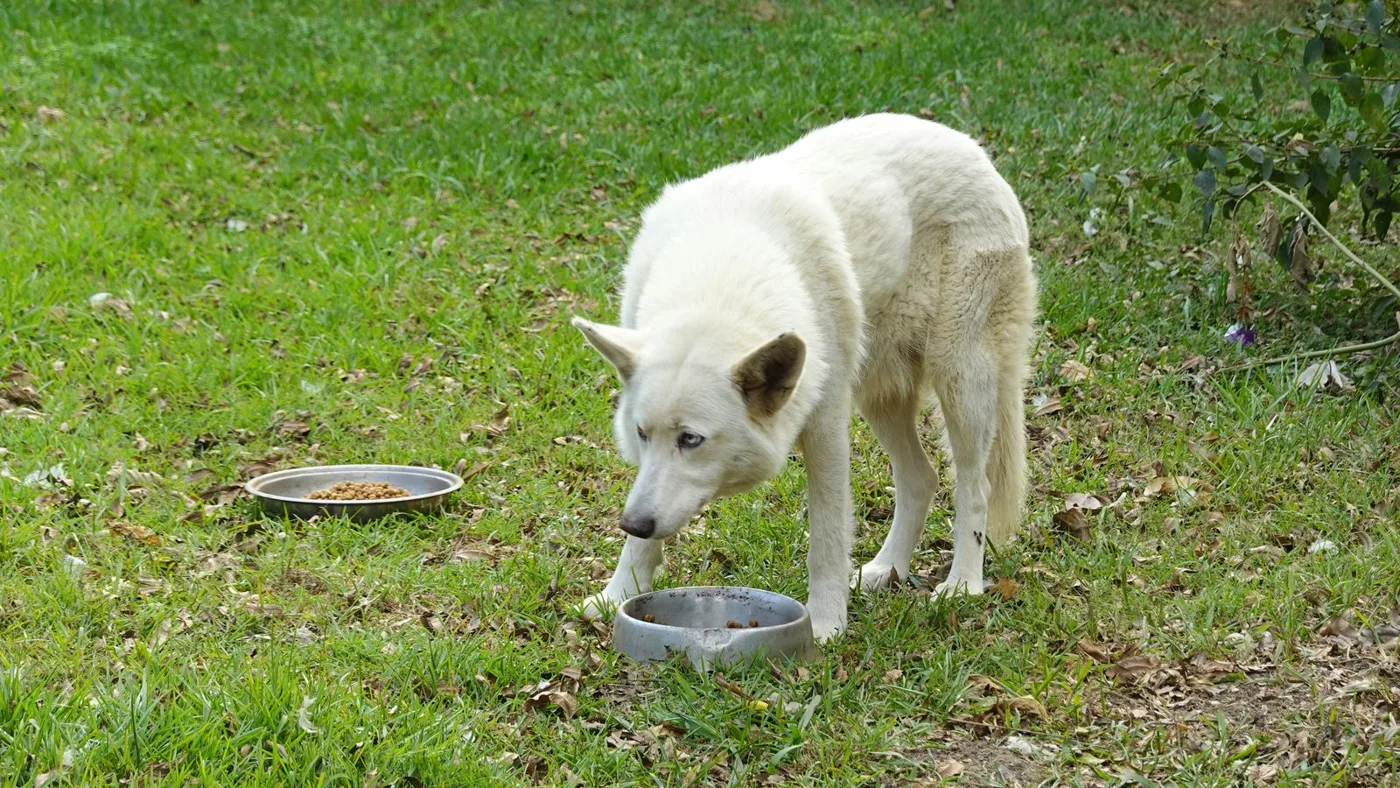
Resource guarding usually starts quietly, long before a growl. The ASPCA lists the early signs:
- Standing stiffly over the bowl
- Gulping the food
- Tensing or freezing as you come near
- Growling or staring
If you grew up hearing that you should take a dog’s food away to show who’s in charge, this is where that advice backfires. The ASPCA says taking food away to “dominate” a dog can “cause resource guarding to get worse.” You’d be proving his worst suspicion: people come near the bowl to take things.
Let him eat somewhere quiet, where nobody has to walk past mid-meal. And if a dog who’s eaten calmly for years suddenly starts freezing over his dinner, treat it as the kind of change #4 describes.
#4 Suddenly hiding or going off alone
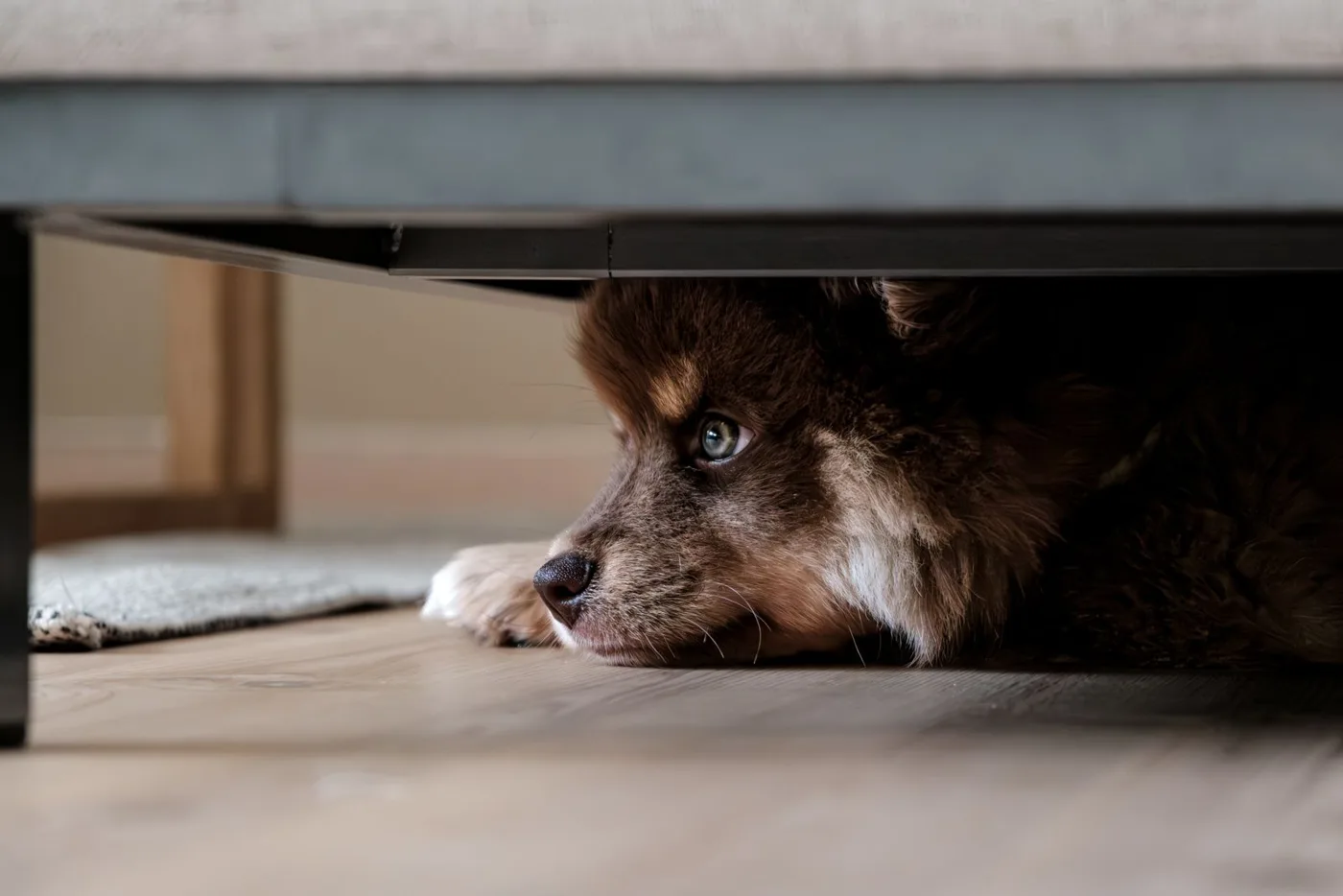
The dog who’s always underfoot has started spending afternoons under the guest bed. Easy to read as a sulk.
The Merck Veterinary Manual lists “hiding or withdrawing” as a sign of pain. Cornell lists it too and adds: “A normally affectionate dog may now react negatively to being touched or held.”
Put those together and you get a dog who’s gone quiet and flinches when you reach for him. It looks like hurt feelings. More often, something hurts.
A sudden behavior change like this in a social dog is worth a vet visit before you put it down to age or mood. Write down the day it started. The vet will ask.
#3 Standing still with their head hung low
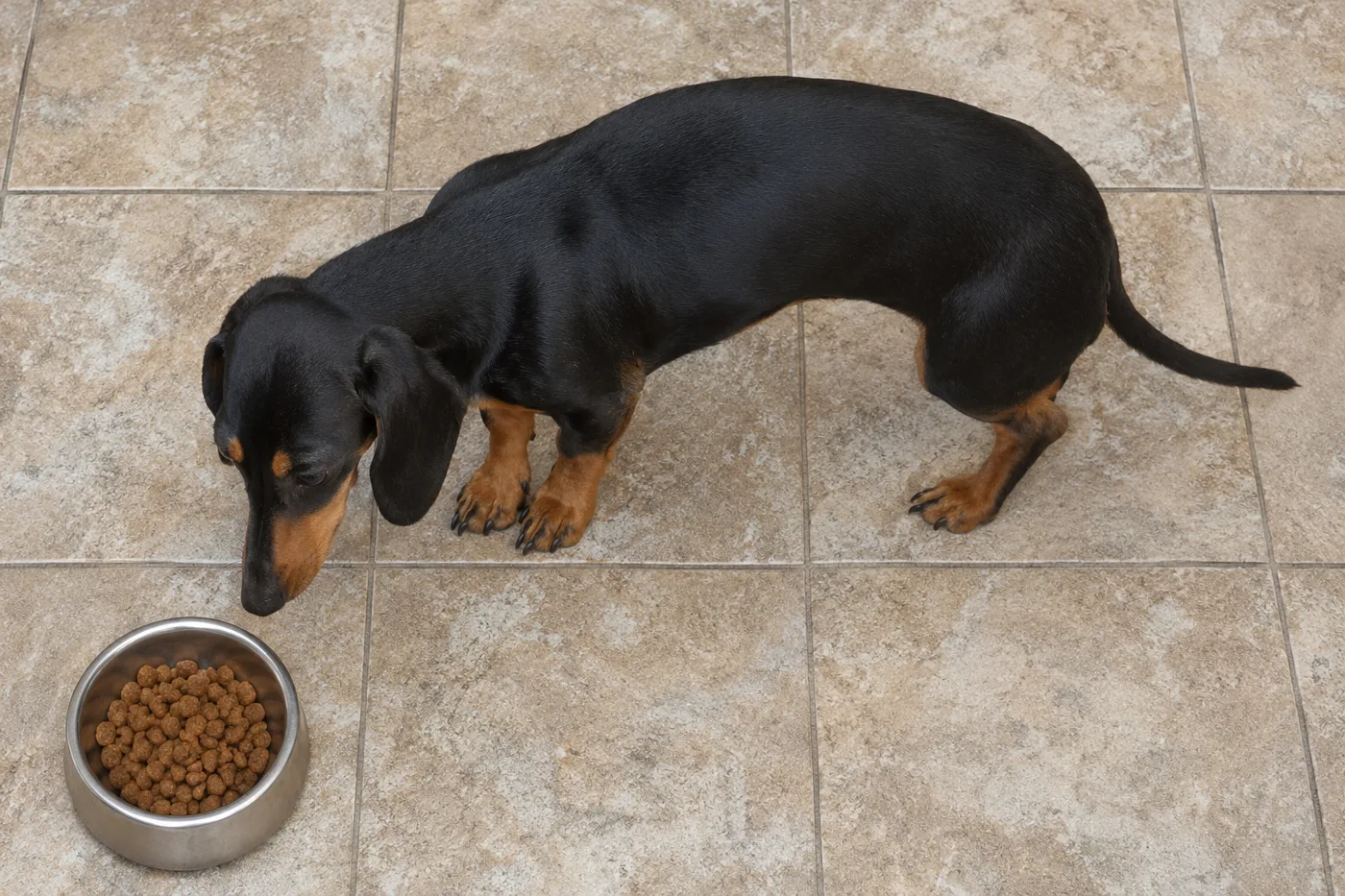
He’s on his feet, not resting, with his head held lower than usual, and he isn’t moving much. It’s an easy one to miss.
Southeast Veterinary Neurology lists it among the signs of neck pain: “Lowered head when standing, stiff neck… reluctance to eat or drink from a bowl on the floor.” Cornell also lists a lowered head among the posture changes that signal pain.
That bowl detail is the giveaway at home. If he stands over his dinner and won’t dip down, or only eats once you lift the dish, his neck may be doing the talking.
Call the vet. If he’s also wobbly, weak in the legs, or crying out, treat it as an emergency rather than waiting for a routine appointment.
#2 Growling when you move them off the couch
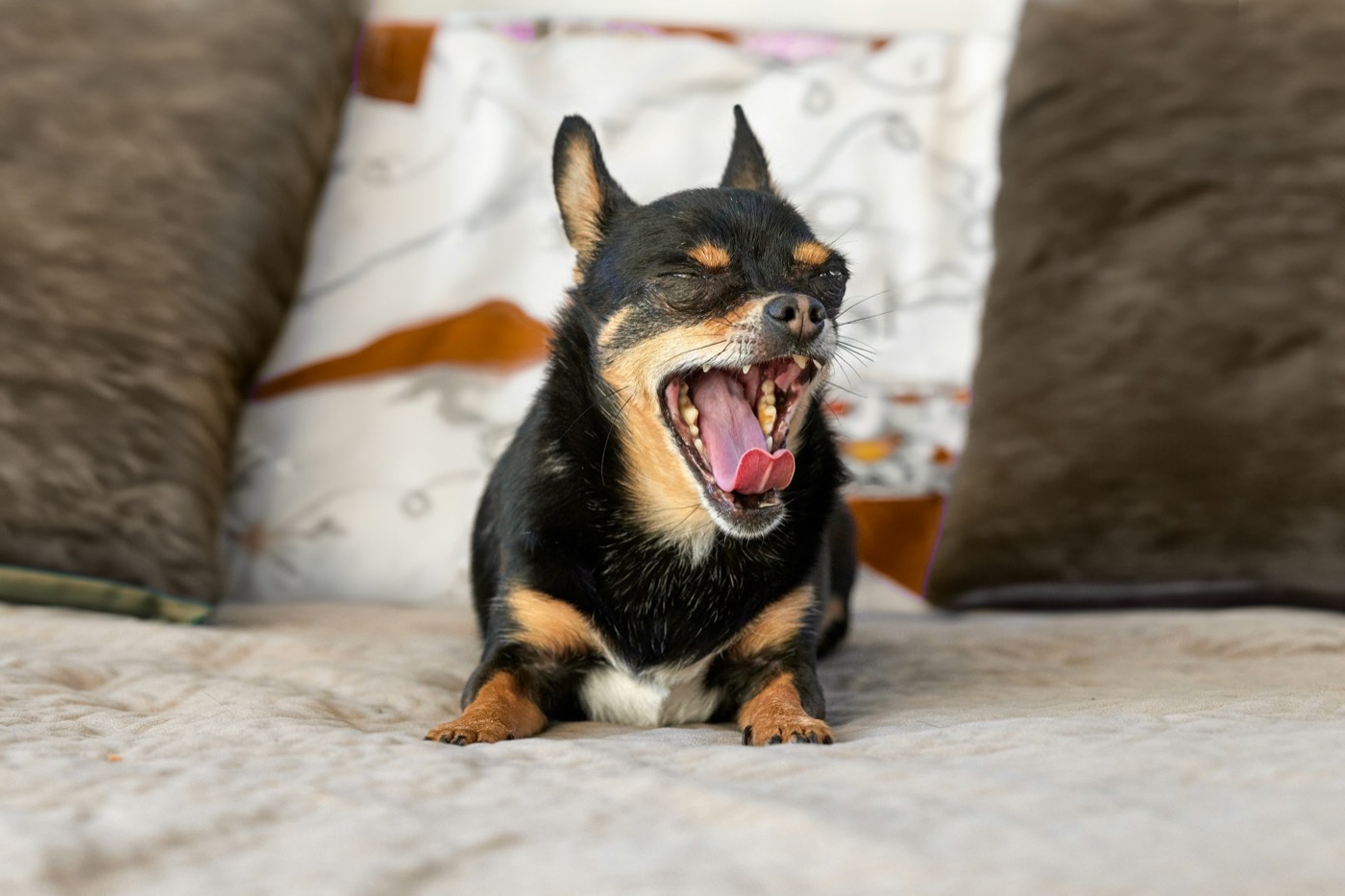
You go to scoot him over and get a low rumble. It’s tempting to call it attitude. Start with pain.
The ASPCA says “An otherwise gentle, friendly dog can behave aggressively when in pain,” and dogs also guard “favorite resting spots, crates, or beds.” The AKC lists “coping with an injury or pain” as one reason dogs growl.
Lifting can be the very thing that hurts. VCA’s vets say small dogs, especially long, low ones, may object to being picked up because the upward pressure hurts their backs. Dachshunds are the textbook case: a 2015 survey of the breed cites a disc disease risk 10 to 12 times higher than other breeds, with an estimated 19% to 24% showing signs in their lifetime.
Two things help. First, leave the growl alone. The AKC’s Stephanie Gibeault: “Punishing the growl may stop the sound, but it won’t address the emotion causing it.” A dog who learns not to growl still feels the same. He just stops warning you.
Second, stop lifting and teach “off.” Say the word with a treat at his nose and lower your hand until all four paws are on the floor, then reward. Chewy’s walk-through is simple. Book the vet check alongside it, because a dog in pain may still not want to jump down. For a long-backed dog, Cornell suggests steps or a ramp so he jumps on and off furniture less.
#1 Tuning out your words, reading your hands
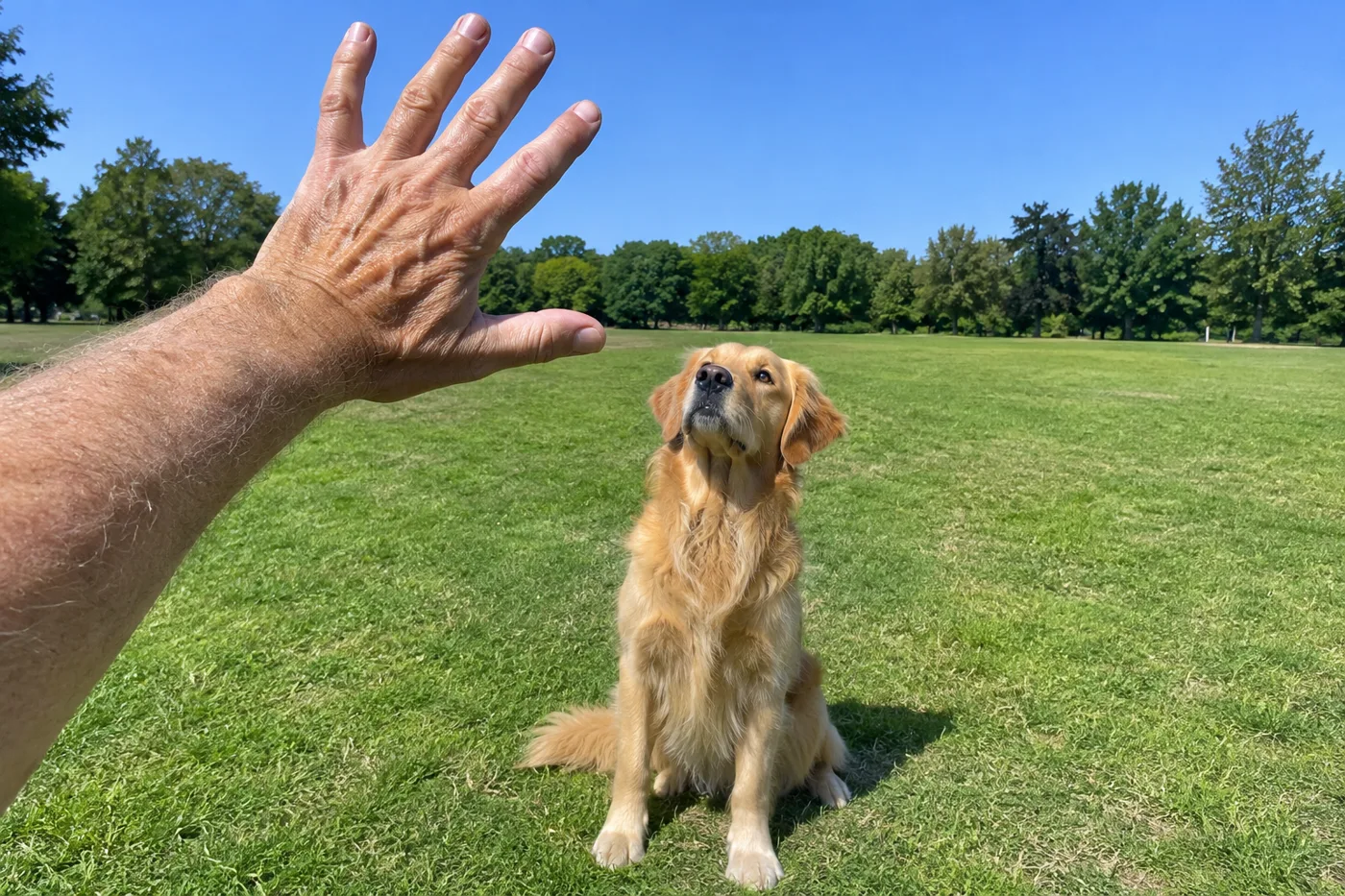
Every item above is about reading your dog’s body. He’s been reading yours just as closely, and when your body and your words disagree, he trusts the body.
In a 2016 study by D’Aniello and colleagues, 25 water-rescue Labradors and Golden Retrievers were given commands by hand signal alone, by spoken word alone, and by both at once, sometimes contradicting each other. Hand signals alone produced a single error. Words alone produced 18. When hand and voice clashed, the dogs mostly followed the hand.
The one exception: a spoken “come” against a hand signal for “stay,” given from a distance. Then 56% went with the word. So your words do count, and “come” from across a field counts most. They’re just second in line.
Trainer Alexandra Bassett says “Dogs are experts at reading body language and picking up on subtle cues that people often overlook.”
Now think about your own kitchen. You say “stay” while leaning toward him with your hand out, and he comes. You say “it’s okay, buddy” at the vet’s with your shoulders up by your ears, and he hears the shoulders. The keys in #12, the hand reaching for the bowl in #5, the lean that sent him belly-up in #29: he was reading your hands the whole time.
Pick the word you use most, “sit” maybe, and give it the same hand signal every single time. Once it sticks, try the word alone with your hands in your pockets, and watch his eyes go looking for them.
Keep reading
 25 Subtle Signs of Dog Stress Most Owners Walk Right PastSee all 25 →
More you’ll enjoy
 25 Classic Movie and TV Dogs, and What Really Happened to Them
 20 Prices That Show What a Dog Cost in 1970 vs. Today
 17 Dog Breeds That Bite the Most, Including a Lap Dog That Out-Bites German Shepherds
The bottom line
Most of what your dog does asks nothing of you but a smile. The tilt, the bow, the stare from across the room: enjoy them.
The handful worth acting on have one thing in common. They’re new. Three turns before lying down has become a dozen. The lap dog now prefers the floor under the bed. A dog who ate in peace for years now freezes when you pass. Nobody knows his normal the way you do, which makes you the one most likely to notice first.
So here’s a question for your own house. If he changed something small, would you spot it this week, or next month? Start at supper tonight: before you set the bowl down, watch where his eyes go and how he carries his head.
Bonus: Four ways to catch what he’s telling you
On an ordinary good day, take a 30-second phone video of your dog getting up, crossing the room and lying back down. When something seems off later, you’ll have his normal to compare it to.
Keep a note on your phone or calendar the day any new habit starts, and what time of day you see it. “Since Tuesday, mostly evenings” is far more useful to a vet than “a while now.”
At the next checkup, ask the vet directly: “Does anything about the way he moves, stands or lies down look like pain to you?”
If you’re reading this missing a dog who’s gone, Cornell’s Pet Loss Support Hotline is 607-218-7457. It’s staffed by trained veterinary student volunteers, and the hours change with the season, so check before you call.
Questions people also ask
How do dogs know you love them?
Mostly through eye contact, your scent and calm, steady attention. When you and your dog look at each other, oxytocin rises in both of you, a hormone tied to bonding. In brain scans, a dog’s reward area responded most strongly to the scent of a familiar person. Behaviorists add that dogs gravitate toward people who offer play, affection and comfort.
Does my dog want a belly rub when he rolls over?
Often yes, if he rolls over on his own around people he already trusts. Rolling over the instant someone approaches, especially with a tucked tail or lip licking, is more likely submission than an invitation. In that case, sit down and let him come to you instead of leaning over him.
Why does my dog follow one person around when someone else feeds him?
Because food is only one of the things dogs value, and praise and attention can matter just as much. In brain scans, 13 of 15 dogs’ reward centers responded about as much or more to praise as to food. Behaviorists also name play, walks, affection and a calm, quiet manner as reasons a dog picks a favorite.
Why does my dog follow me everywhere, even into the bathroom?
Usually because you’re his secure base, and dogs relax and stick with a task longer when their person is nearby. A University of Vienna study found dogs worked at a food puzzle longer with their owner present than with a stranger. It’s only a concern if he shows distress when left alone, such as barking, destruction or accidents in the house.
When is a change in my dog’s behavior a reason to call the vet?
When it’s sudden and new, especially hiding, withdrawing or reacting badly to being touched, because those are recognized signs of pain. Vets rule out health problems first before treating any behavior problem, so a checkup is the right first step. Note when the change started and when you see it.


