From Sunday-roast drippings to individually wrapped Gaines-Burgers, here is what dogs ate in the 1960s and what vets say about each one now.
Stay for #1. A veterinary journal published a warning about it in 2001.
After supper, the plates took a detour on the way to the sink. Each one got a quick scrape of the fork over the dog’s dish on the back porch: the end of the pot roast, a crust, the peas somebody hid under the mashed potatoes. The dog cleaned it up in about four seconds. If your dog lived to a grand old age on that, you’re entitled to wonder what all the fuss is about now. Some of what dogs ate in the 1960s holds up fine. A few things were riskier than anyone could have known.
Table of Contents
#16 Table scraps scraped off the plates
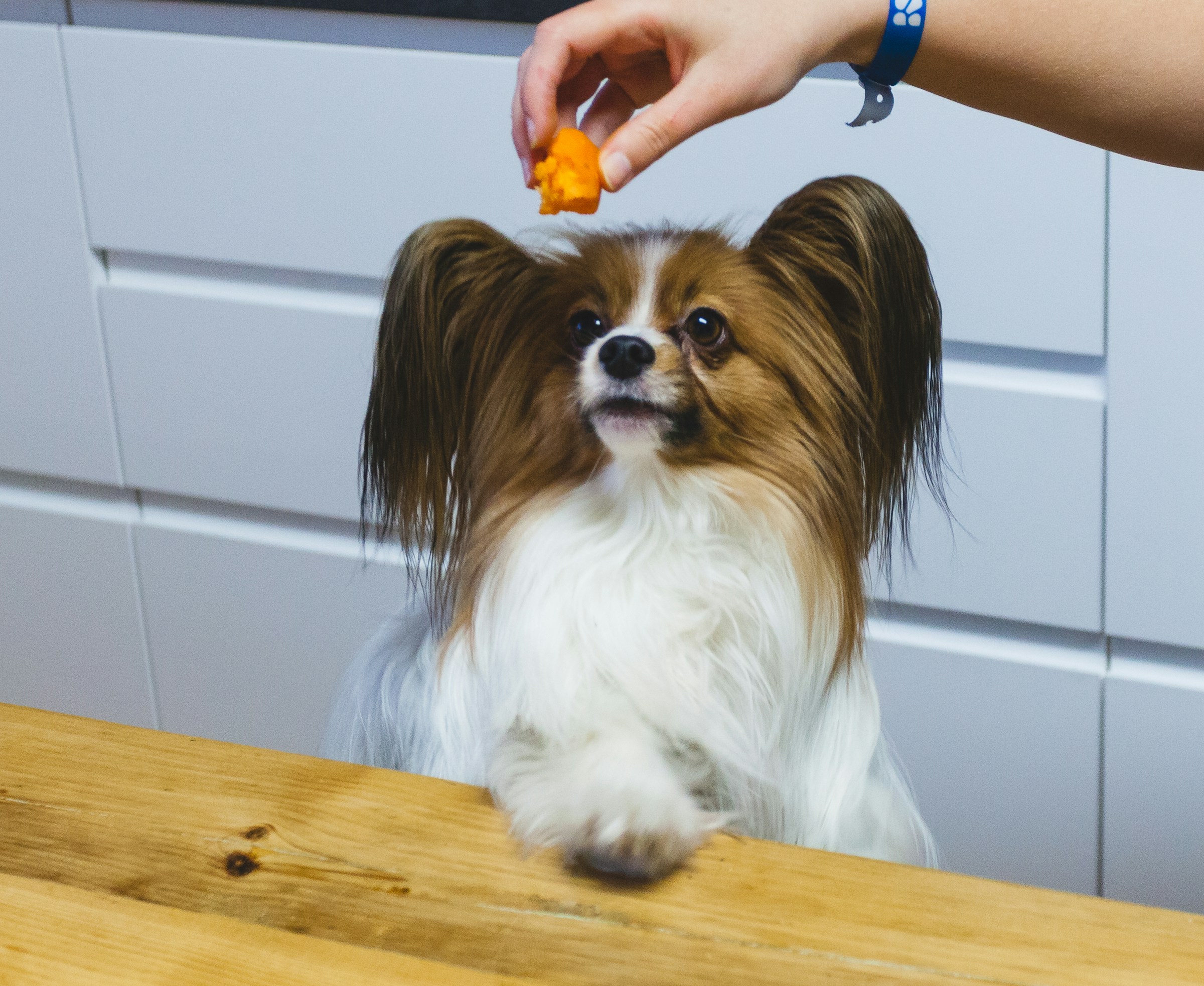
Dog owners on Reddit trade answers about what dogs ate before dog food came in bags and cans, and their answers sound like the kitchen you grew up in. “They scavenged or received table scraps, like organs, bone marrow, stale bread, etc.,” a dog owner on r/dogs wrote. Another, in the same thread, kept it short: “Depends on the dog’s purpose, but typically table scraps and undesirable cuts of meat.”
That’s how dogs ate for a very long time. From the Middle Ages to the mid-1800s, the Pet Food Institute says, dogs got “whatever owners could spare,” such as bones, cabbage, potatoes, onions and bread crusts. By the 1960s you could buy dog food in cans and bags, and the fork still made its trip from the plate to the dish.
So can yours have a bit of what you’re having? Yes, if it’s small and plain. Lisa M. Freeman, a board-certified veterinary nutritionist at Tufts, gives a rule that’s easy to remember: “feed less than 10% of your dog or cat’s total daily calories from treats and table food.” That 10% covers everything extra, the biscuit at the front door included.
The trouble is how fast a few bites add up. “What seems like a reasonable amount for a person might provide one-third or one-half of a dog’s total daily calories!” Freeman warns.
What 10% looks like
- A fairly active 25-pound dog needs about 600 calories a day, so extras stay under 60
- A helping that looks modest on your plate can be 200 to 300 of that same dog’s calories
- Plain foods Tufts lists as fine: apples, pumpkin, carrots, green beans, blueberries
- Your dog’s daily calories may differ from 600, so ask your vet for your own dog’s number
There’s one more reason to keep it light. A 2008 study found dogs that ate table scraps had about twice the odds of pancreatitis. That’s a link the researchers saw, not proof the scraps caused it.
If you want to bring the old habit back, veterinarian Dr. Karen Shaw Becker suggests easing into it: “You don’t just up and decide to change foods tomorrow, but you can begin diversifying your dog’s gut with fresh foods from your fridge and very small amounts.”
#15 Milk-Bone biscuits, “a dog’s dessert”
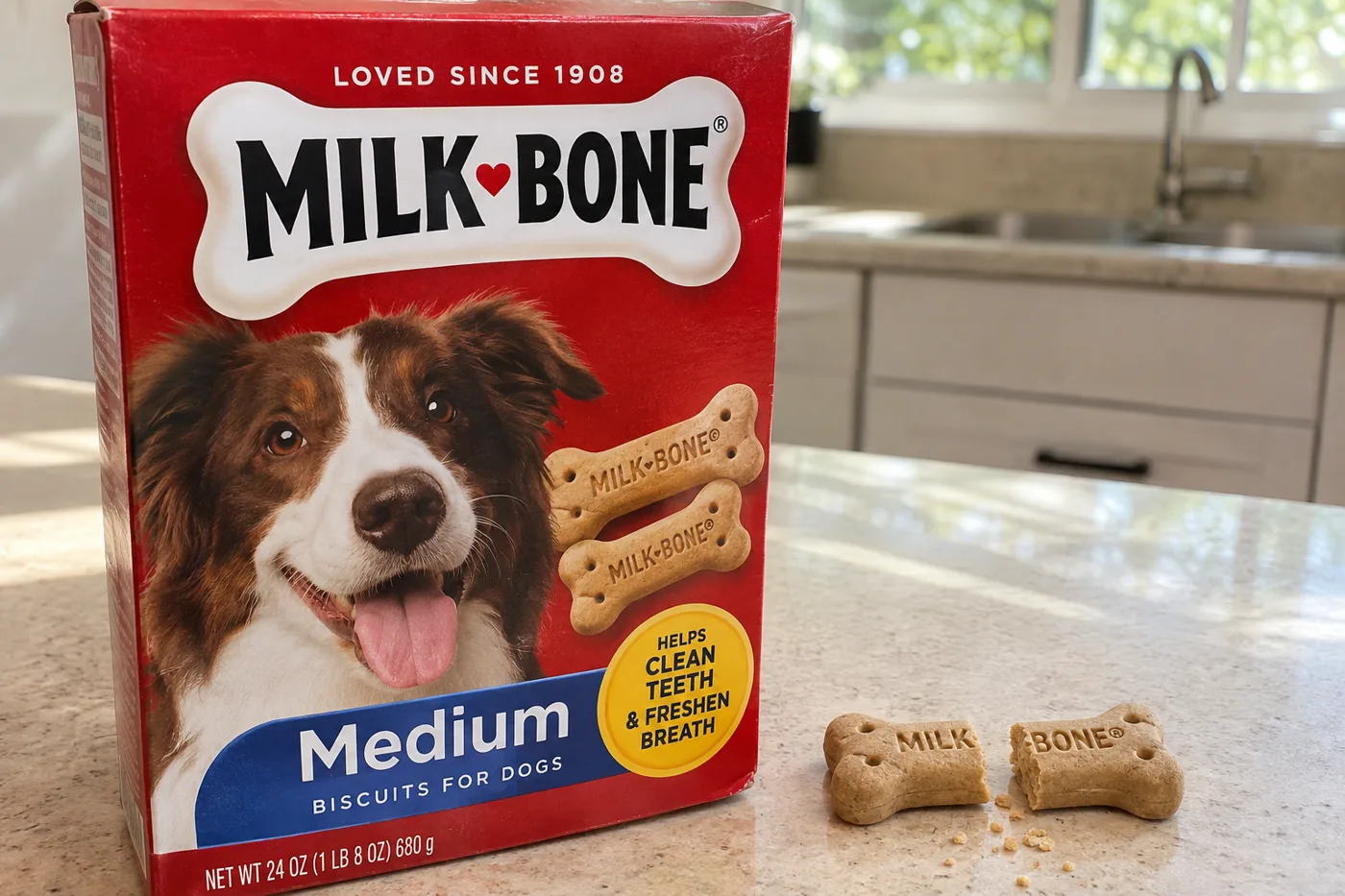
The bone-shaped biscuit in the box on your counter may well be older than your parents. The F.H. Bennett Biscuit Company first baked it in 1908 at a bakery on New York’s Lower East Side, under a name nobody would buy today: Maltoid. The recipe had meat, cereals, milk and liver oil.
Sometime between 1915 and 1926 it became Milk-Bone, after the cow’s milk in it. If you remember a box riding along with the milk delivery, the name must have seemed obvious.
The bone shape was a sales idea. Bennett wanted his biscuit to stand out from Spratt’s, the English dog cake that got there first. Nabisco bought the bakery in 1931 and sold Milk-Bone as “a dog’s dessert,” and Rin Tin Tin appeared in Milk-Bone ads in the 1950s.
It never went away. J.M. Smucker has owned the brand since 2015, and the biscuits are now made in Buffalo, New York.
What’s changed is how owners count them. A Milk-Bone goes in the same 10% as the scraps from #16, and a medium Original biscuit runs 40 calories, two-thirds of that 25-pound dog’s daily allowance for extras. So snap one in half and you get two “good dog” moments for the calories of one.
#14 Sunday roast drippings poured over dinner
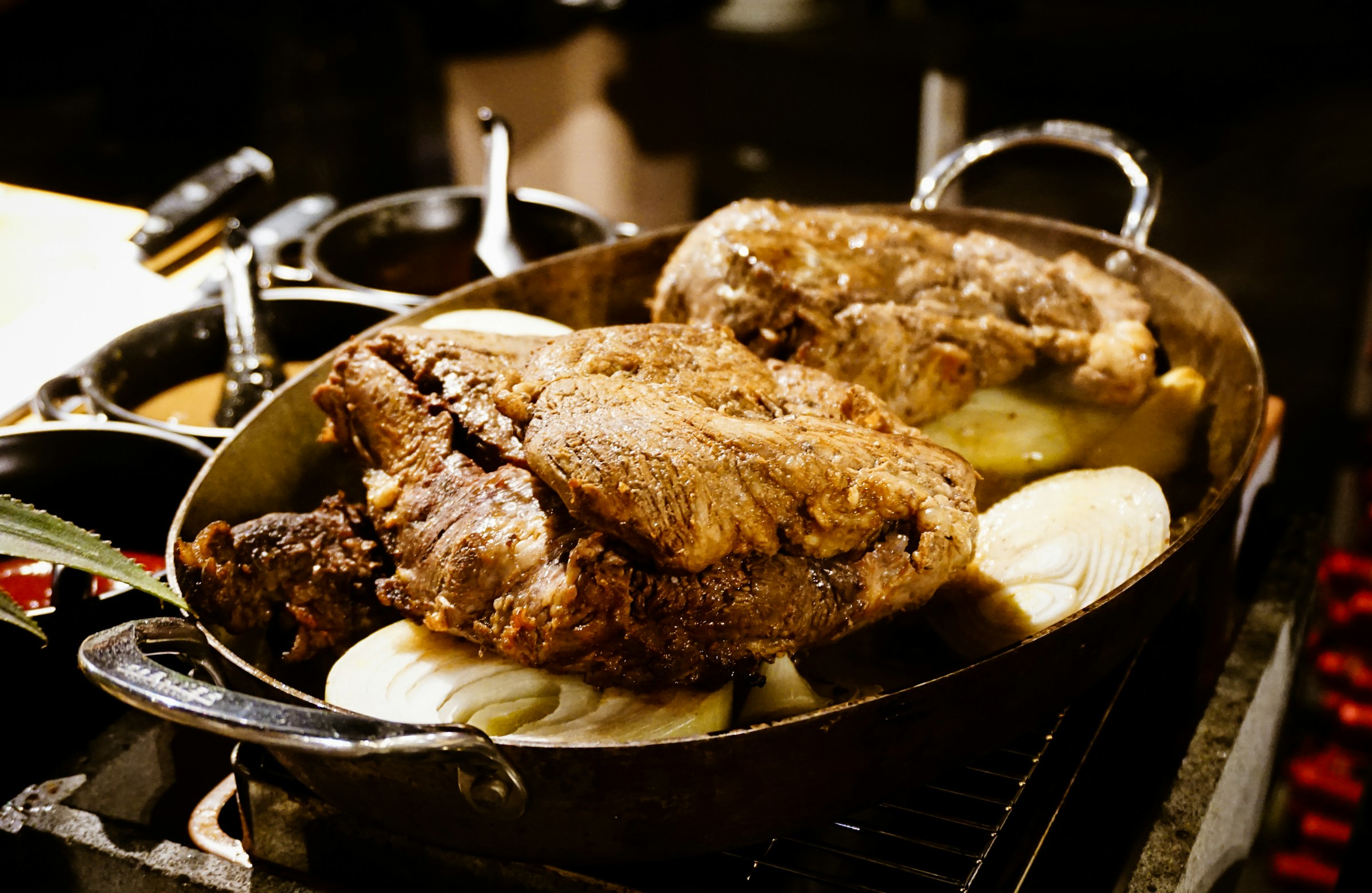
The roast came out of the oven, the pan went on the stovetop, and somebody tipped it so the fat ran into one corner. A spoonful of that, brown bits and all, went over the dog’s dinner. The dog had been leaning on your leg since the oven door opened.
Vets would skip that spoon. Pet Poison Helpline lists “meat drippings/grease” among the fatty foods that “may cause pancreatitis,” and the results run from mild vomiting to “a severe, fatal pancreatitis.” The AKC calls a high-fat diet “one of the most common triggers for pancreatitis” and says that in some dogs, “even a single large serving of fatty food can bring on an episode.”
Miniature Schnauzers are the breed to watch. Both sources name them, and the AKC adds some small toy and terrier breeds.
The science is messier than the warnings make it sound. A 2026 review of the research pointed out that the early studies tying fat to pancreatitis leaned on lab models, small groups of dogs and diets unlike today’s, and recent research has generally not found a simple, consistent link between dietary fat and the start of pancreatitis. That may be some comfort if your dog got the pan every Sunday. Vets still say to leave the drippings where they are.
Hand him a chunk of raw carrot instead. The AKC calls carrots “an excellent low-calorie snack”, and he will look deeply insulted for about a minute.
#13 A soup bone from the butcher
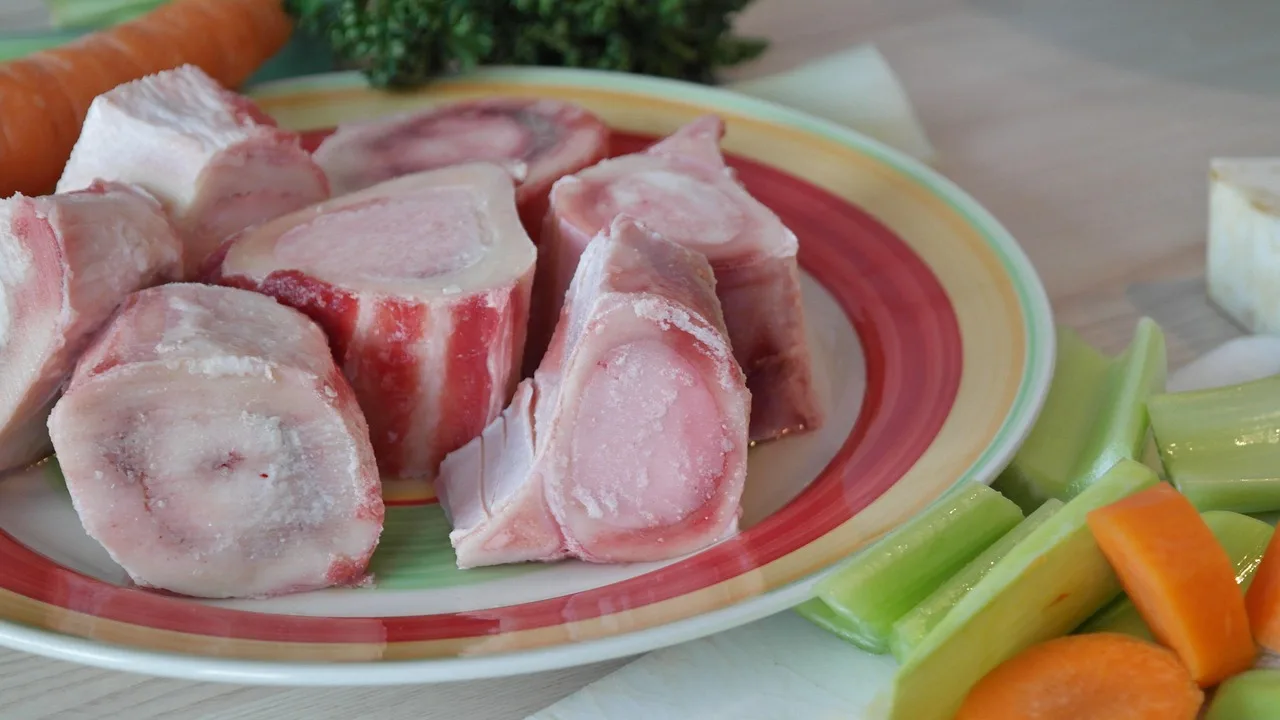
The butcher handed it over in white paper, and the dog carried it under the porch like he’d robbed a bank. Once that bone had been through the soup pot, though, it was a different object.
“Cooked bones tend to splinter more easily and can take longer to dissolve,” emergency vet Dr. Carly Fox of the Schwarzman Animal Medical Center in New York told the AKC.
The bones sold as dog treats have their own record. In 2017 the FDA warned against processed “bone treats” with names like “Ham Bones” and “Smokey Knuckle Bones,” after 68 reports involving about 90 dogs, about 15 of which died. Carmela Stamper, an FDA veterinarian, said one could lead to “a possible emergency surgery, or even death for your pet.”
Then there’s the carcass on the counter after a chicken dinner.
“Even good dogs that are trained cannot resist the lure of a chicken carcass!” Dr. Carly Fox, emergency veterinarian, via the AKC
So the carcass goes straight out to the trash can with the lid on. If the dog gets one anyway, don’t try to make him throw up at home, and get him seen right away if you hear choking sounds or see him stretching his neck or drooling heavily.
#12 Gravy Train, just add water
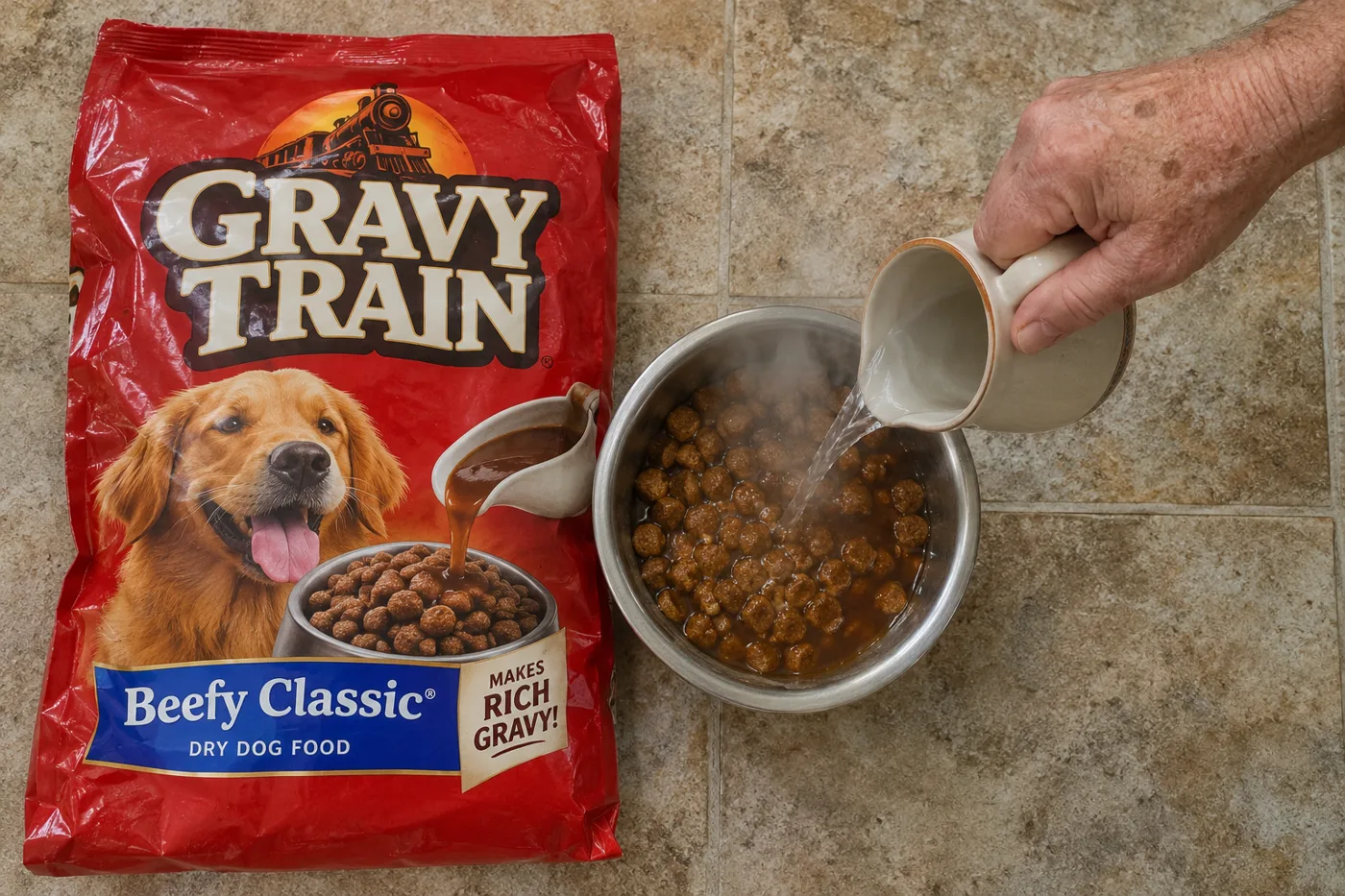
Gravy Train’s pitch was simple: warm water turned the powder coating into gravy. It came out of the Gaines division of General Foods in 1959, and the name was trademarked in 1960. You stirred, it went brown, and the dog acted as if you’d cooked for him.
This piece of vintage dog food is still on the shelf. Post bought the brand from J.M. Smucker in April 2023.
The warm-water habit has a good use today. For a dog with missing teeth, a veterinary dental practice suggests soaking kibble in warm water or low-sodium broth for 5 to 10 minutes to soften it. If your senior dog is down a few teeth, that’s the 1959 move with a better reason behind it.
Here’s when the rest of the pantry showed up, if you’ve ever wondered when dog food came out:
| Year | What arrived |
|---|---|
| 1860 | Spratt’s dog cakes, in England first, in the US by 1870 |
| 1908 | Maltoid, the biscuit later called Milk-Bone |
| 1922 | Ken-L Ration, a canned dog food made mainly from horsemeat |
| 1951 | Friskies’ first canned dog food |
| 1957 (some Purina pages say 1956) | Purina’s first extruded kibble biscuit |
| 1959 | Gravy Train |
| 1961 | Gaines-Burgers |
| Early 1960s | The first food made just for puppies |
| 1969 | An official definition of “complete and balanced” pet food |
 You might also like28 Things Dog Owners Did in the ’60s and ’70s That Would Raise Eyebrows Today
#11 Gaines-Burgers, individually wrapped
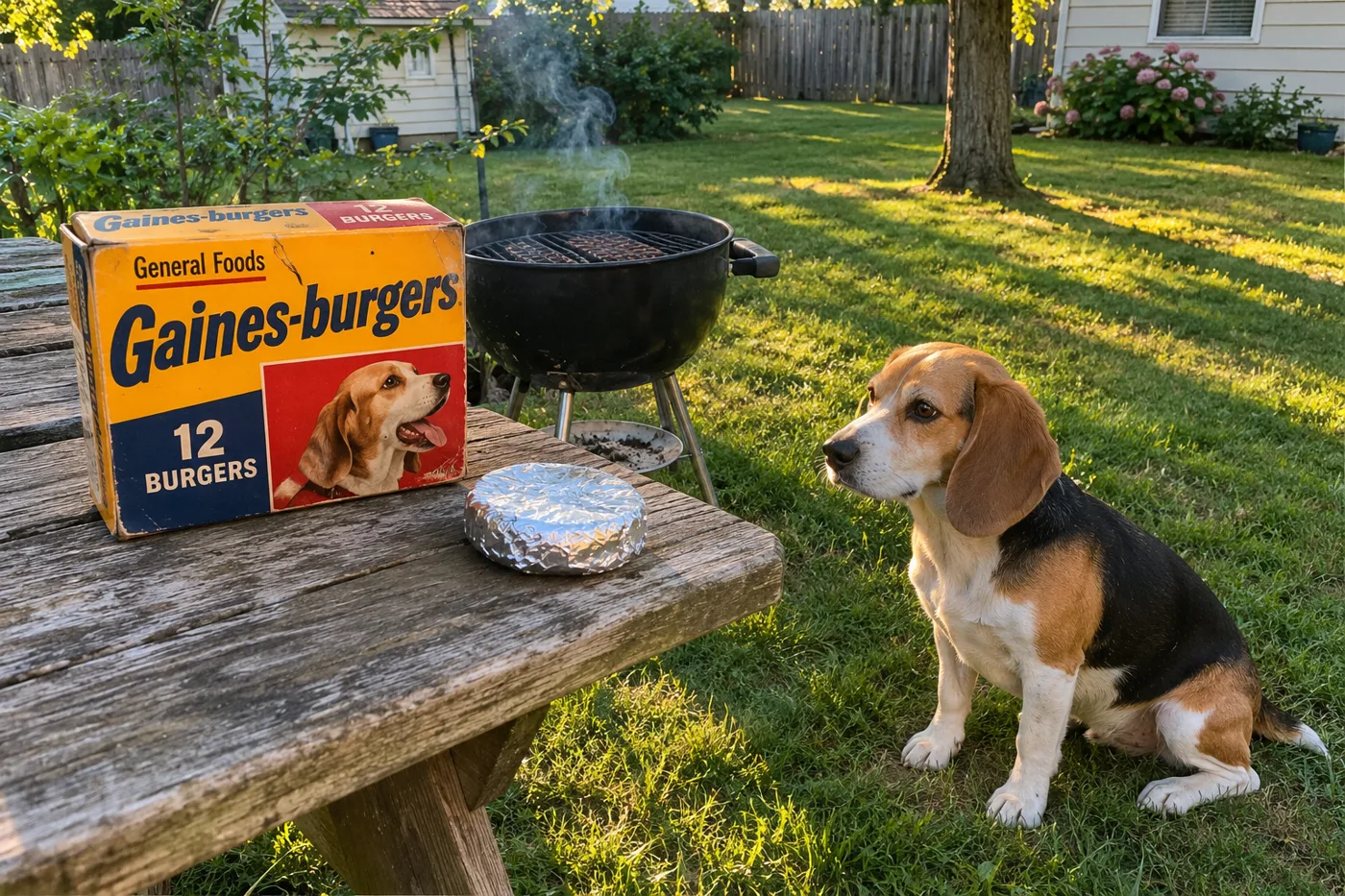
Burgers were going on the grill out back, and the dog was getting one too, or something shaped exactly like one. General Foods launched Gaines-Burgers in 1961: moist dog food pressed into a round patty, each one in its own wrapper. It looked like the patty on your plate, minus the bun.
If you were the kid in charge of unwrapping them, you remember the dog sitting very, very politely through the whole process.
Production stopped in the 1990s. Then, in 2020, a company called dVour Brands started making limited batches, so the burger for dogs is back for anyone who misses it.
If you buy a box for old times’ sake, serve it as the meal rather than on top of the meal. The dog won’t know it’s a collector’s item, only that dinner smells like a cookout.
#10 Leftover spaghetti and onion-heavy casseroles
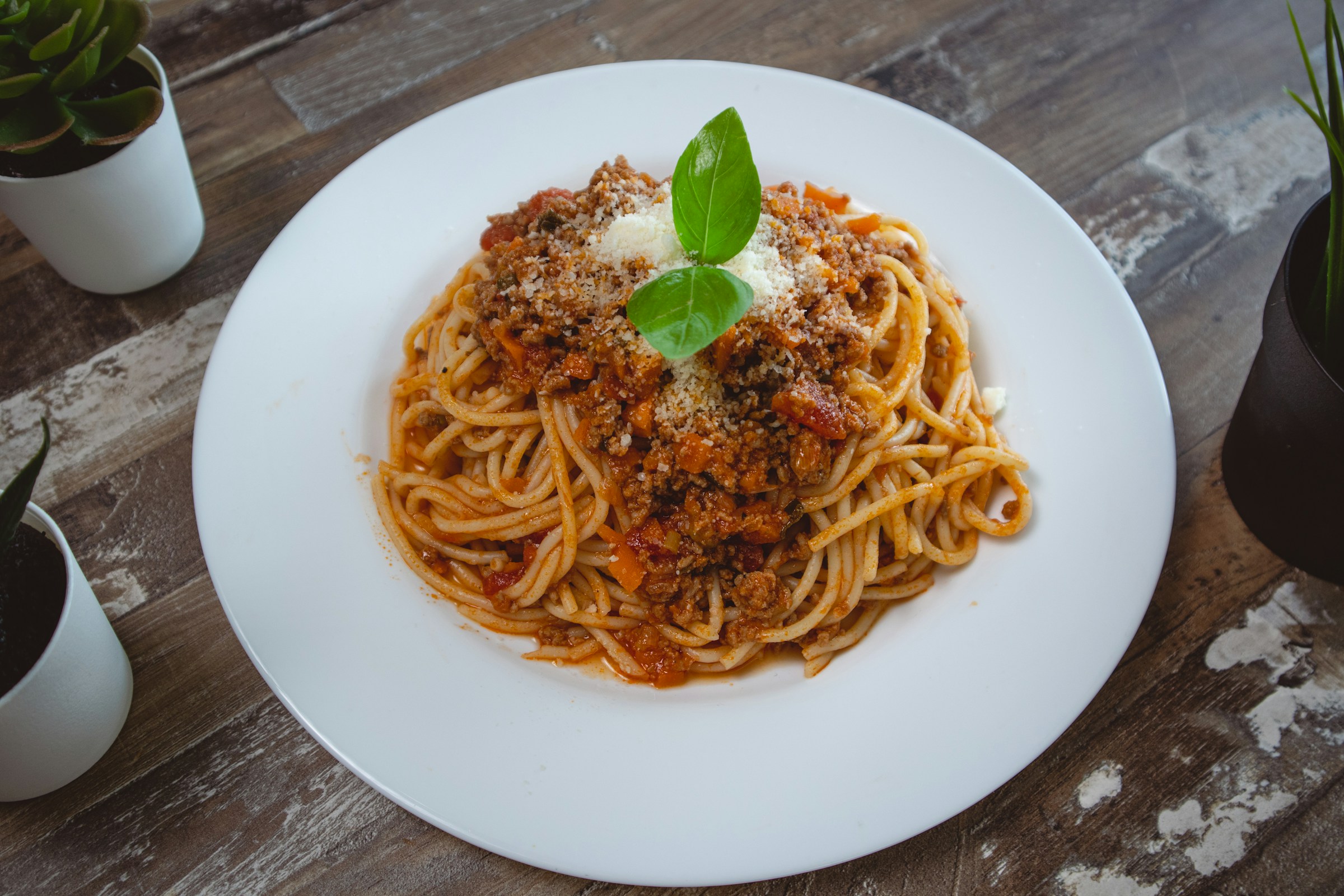
Spaghetti night was the one night the dog’s dinner came out orange.
Nobody gave the sauce a second thought. Today onions and garlic are on the ASPCA’s list of foods to keep away from dogs. The Merck Veterinary Manual says raw, cooked or concentrated forms can cause Heinz body hemolytic anemia, in which the red blood cells break apart.
The sneaky part is the timing. The red blood cells typically break down 3 to 5 days after the dog eats the onion, Merck says.
Cooking doesn’t help. In one small experiment, six healthy Pekingese fed cooked onion two days in a row developed that anemia, and their red cell counts began falling on the first day.
Garlic is worse. The AKC says “Garlic is five times more toxic than onions,” and Dr. Jamie Richardson, a veterinarian at Small Door Vet, puts it in kitchen terms: “Even a small sprinkle of garlic powder could cause trouble for a small dog.”
That includes the green bean casserole with the crunchy fried onions on top. The beans are fine plain, so set the dog’s share aside before anything else goes in. If the dog has already cleaned up a plate of something oniony or garlicky, call the vet even if he seems fine.
#9 Sneaking the cat’s canned food
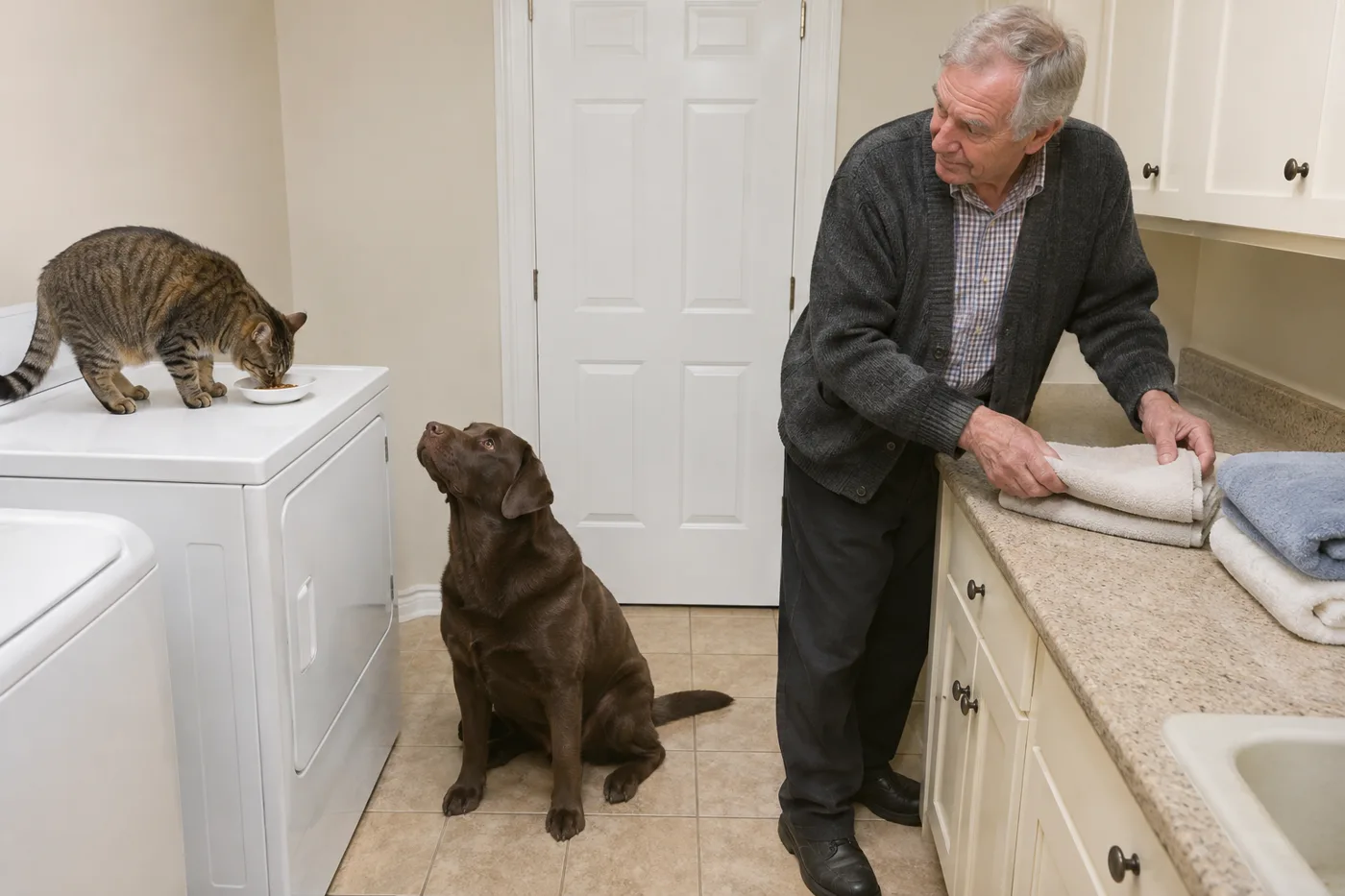
The cat eats the way cats do: three bites, a long look at you, a stroll to the window. The dog, who has been lying in the hallway pretending to sleep, reaches the dish before the cat’s tail clears the doorway.
He has his reasons. “Canned cat food tends to have more protein and often more fat than dog foods,” says Dr. Debra M. Eldredge, a veterinarian writing in Whole Dog Journal. That fat is what she worries about. “The higher levels of fat can lead to gastrointestinal upsets and even pancreatitis in susceptible dogs,” she says.
The fix is geography. Feed the cat where a cat can jump and a dog can’t: the counter, the top of the dryer, a shelf in the laundry room. A pet gate with a small cat door works too.
The dog will keep lying in the hall anyway, just in case.
#8 Licking the last of the ice cream cone
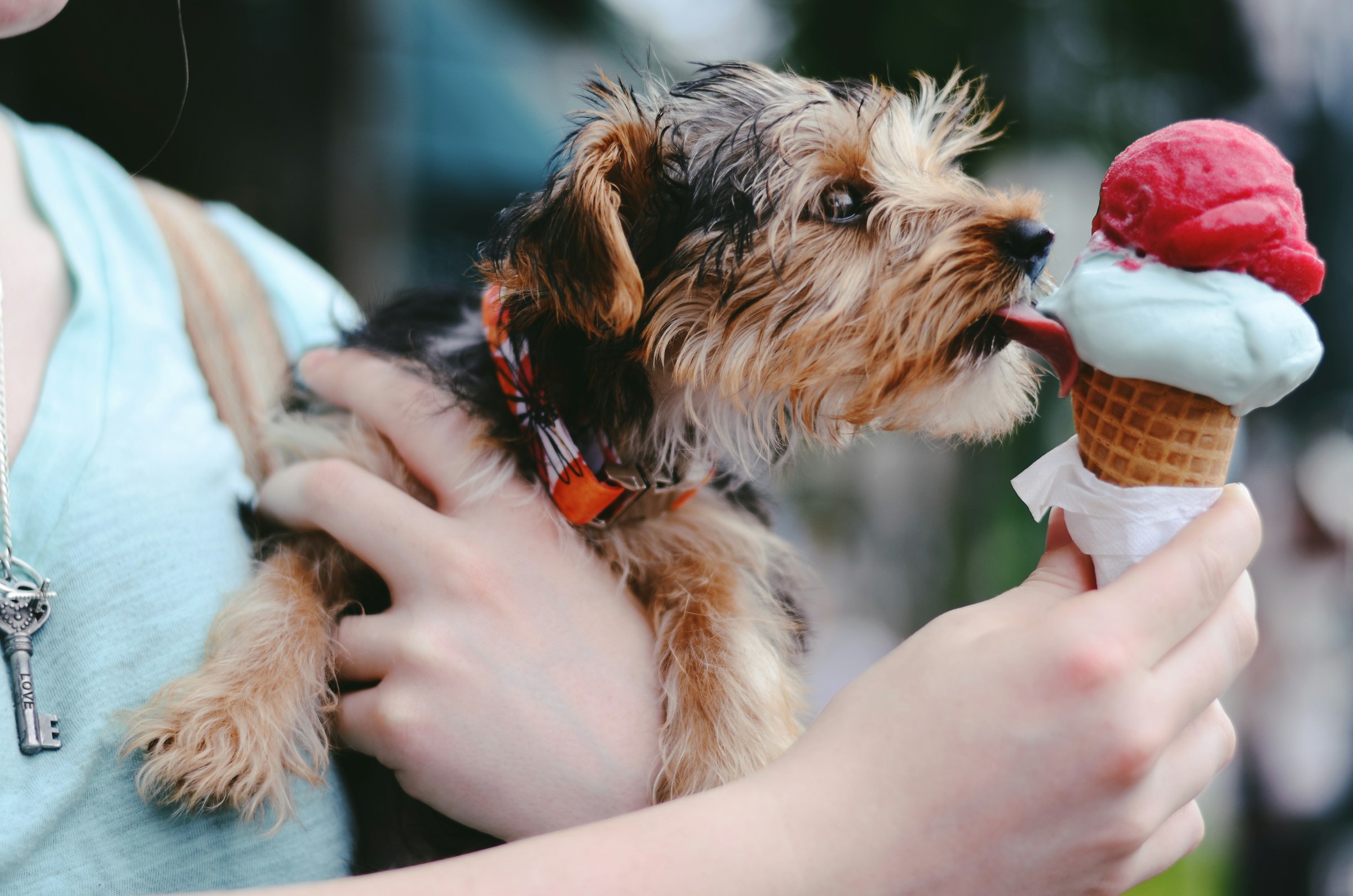
The cone always dripped faster than you could eat it, and the last inch, soggy tip and all, went to the dog waiting by your sneakers.
The AKC’s list of problems is short and clear. Ice cream is “loaded with sugar,” chocolate flavors are toxic, and sugar-free kinds need a label check for xylitol, a sweetener that’s dangerous for dogs. Then there’s the milk itself. “Many adult dogs are lactose intolerant to varying degrees, which prevents them from properly digesting milk products,” says Dr. Jerry Klein, the AKC’s chief veterinarian.
The AKC’s swap: “freezing some fat-free plain yogurt might be a better choice,” though some dogs won’t tolerate even that.
Dogs got their own frozen treat sooner than you might think. In 1979, Dr. William Tyznik, an animal science professor at Ohio State, created a frozen dog treat first called “Pet79.” It became Frosty Paws, and Nestlé bought it in 1991. The original had lactose in it. Today’s doesn’t.
#7 A spoonful of cod liver oil for the coat
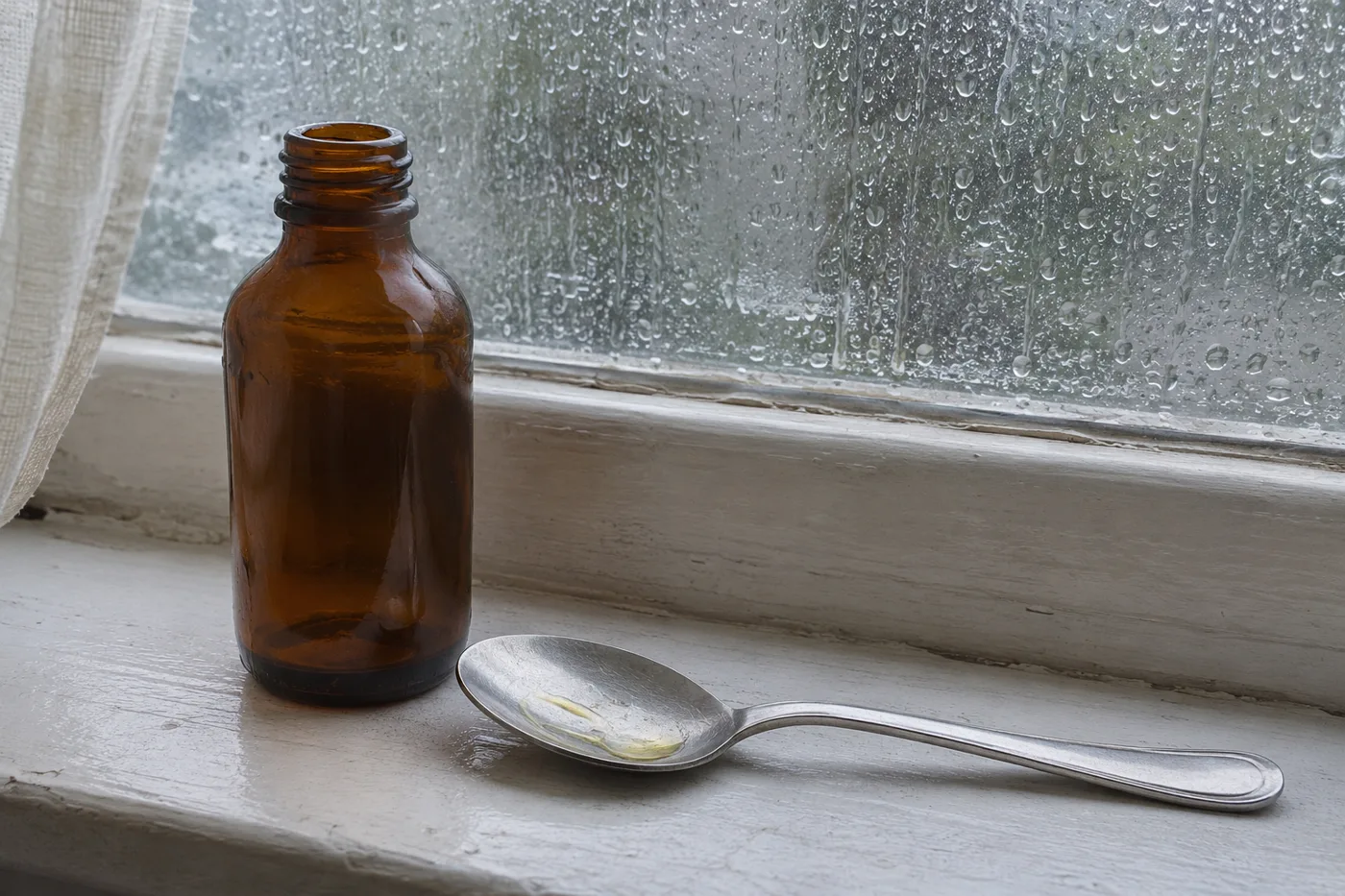
If you had to take cod liver oil as a kid, you may remember the dog getting a spoonful from the same brown bottle, for his coat.
Vets who suggest fish oil are after two fatty acids, EPA and DHA, and cod liver oil is short on those and long on something else.
Isuru Gajanayake, writing for Improve Veterinary Education, says “cod liver oil is not suitable as it contains insufficient EPA and DHA,” plus “relatively high amounts of vitamin D and A, which can be toxic.” The Merck Veterinary Manual calls vitamin A poisoning “after consumption of large amounts of cod liver oil” well documented.
If you’d like to give your dog fish oil, ask your vet which one and how much. The amount goes by the dog’s weight, so a Chihuahua and a Labrador shouldn’t share a spoon.
 You might also like30 Things Everyone Believed About Dogs Back Then (And What Vets Know Now)
#6 Cheap liver and organ meats
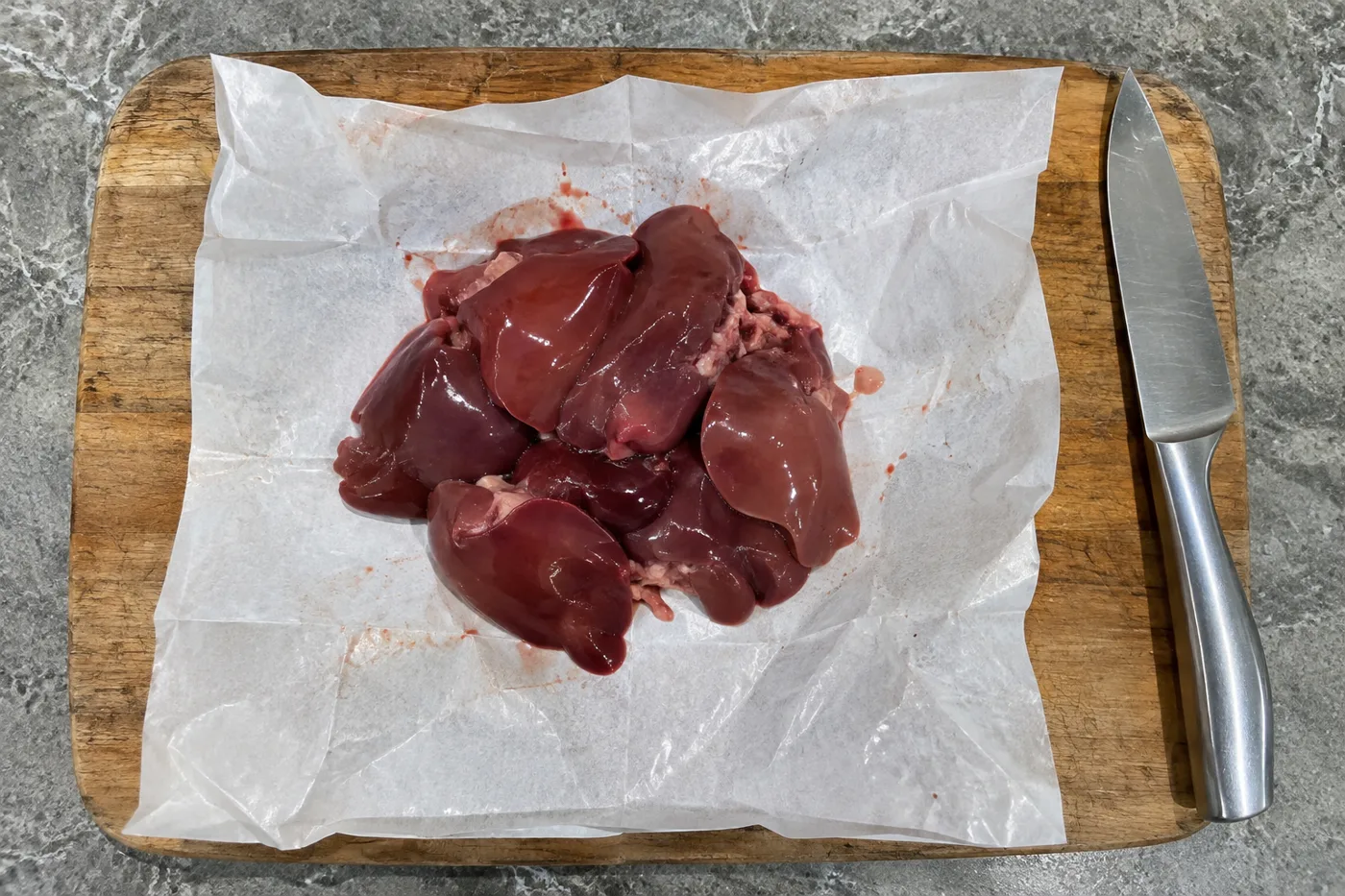
Liver came home in butcher paper, dark and slippery, and sometimes heart or kidneys came with it. It cost so little that the dog’s share was never in question.
Liver can work, but the amount matters. The Merck Veterinary Manual says “Feeding only liver can induce vitamin A toxicity in both dogs and cats,” so liver belongs on the side.
- Keep it to no more than 5% to 10% of the diet. That’s the range Whole Dog Journal gives, citing companion animal nutritionist Dr. Cope.
- If you’re choosing, go for chicken liver. “Beef liver is more likely to be higher in vitamin A than poultry liver,” the same article says.
- Cook it. Cornell’s Riney Canine Health Center advises cooking raw meat to an internal temperature of 165°F before feeding it to a dog. Cooking addresses the bacteria risk, and the limit in step 1 still stands.
- Cut it small and use it as a topper or a reward, and count it with the other extras from #16.
A dog will sit beautifully for a piece the size of your thumbnail.
#5 A raw egg cracked into the bowl
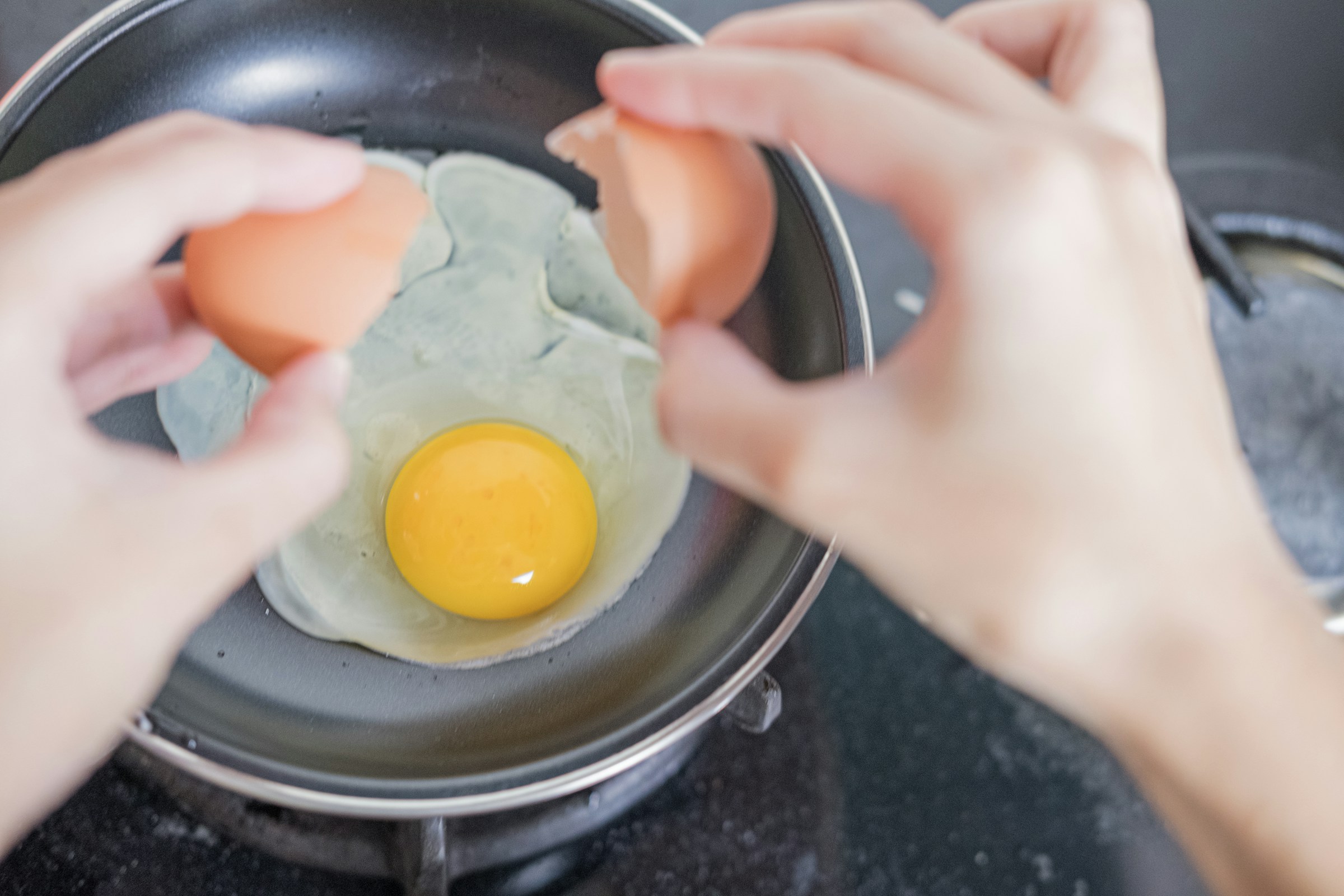
A raw egg went right over the dog’s food, shell into the trash, because it was supposed to make the coat shine. The egg itself was a fine idea. Leaving it raw was the problem.
The white is the first reason. The Merck Veterinary Manual explains that raw egg whites contain avidin, a protein that “binds biotin and prevents its absorption.” Biotin is one of the B vitamins.
The second reason affects whoever cracks the egg. The ASPCA says raw eggs can carry bacteria such as Salmonella that are “harmful to pets and humans alike.”
“Cooking eggs neutralizes avidin, making them a safer and more nutritious choice for dogs,” writes Dr. Hector Joy, a veterinarian, for PetMD. Plain cooked egg, given once or twice a week:
| Dog’s weight | Plain cooked egg |
|---|---|
| 2 to 10 lb | ¼ egg |
| 11 to 20 lb | ½ egg |
| 21 to 50 lb | 1 egg |
| 51 to 90 lb | 1½ eggs |
| 91 lb and up | 2 eggs |
#4 One big meal a day on the back step
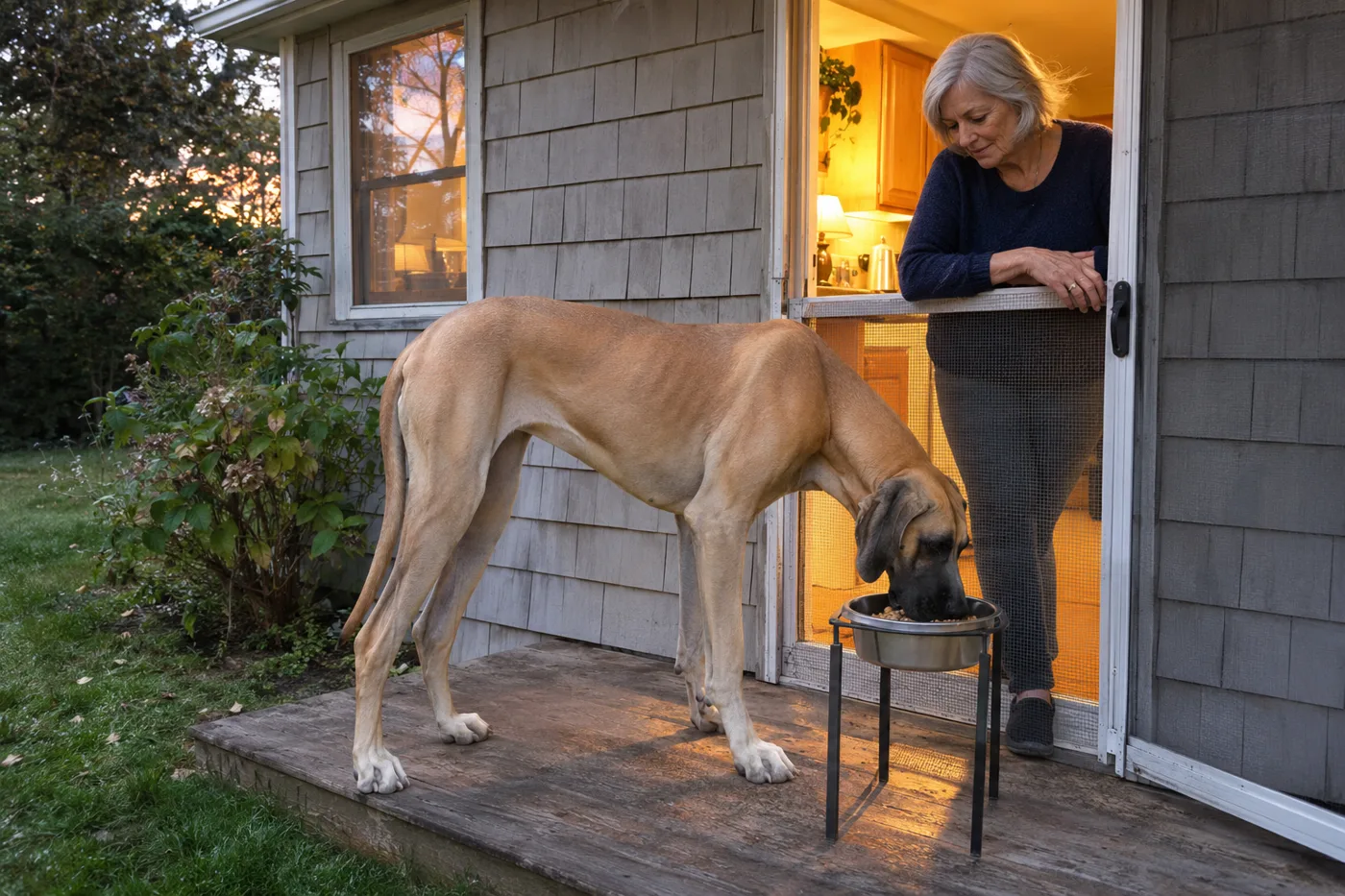
Dinner came once a day, usually late afternoon, on the back step or in a corner of the kitchen. The can opener whirred, the dog came skidding across the linoleum, and that was it until tomorrow.
The usual advice now is two meals. VCA Animal Hospitals and the Canadian Academy of Veterinary Nutrition say “The most common recommendation is to feed your dog at least two meals per day.” VCA also says an empty stomach triggers hunger signals after 8 to 10 hours.
Big dogs have a second reason. VCA lists “Feeding only one meal a day” as a risk factor for bloat. Great Danes, Saint Bernards and Doberman Pinschers are among the deep-chested breeds at risk, and VCA puts the lifetime risk for dogs over 100 pounds at about 20%. A five-year Purdue study of large and giant dogs found the highest risk in dogs fed a large amount once a day, and bigger meals raised the risk however many meals the dog got.
The newest numbers point a slightly different way. The Dog Aging Project, which followed 47,444 US dogs, found meals per day weren’t linked to bloat. What did show up: dogs over about 88 pounds, males, thin dogs and Poodles. Those were owner reports, so treat them with caution.
Our read: if you have a big, deep-chested dog, split dinner in two, because meal size mattered in the large-dog study either way. On two meals, the main thing you’ll notice is a dog who stops staring at you at noon.
Whichever you pick, keep the clock steady. Tom Davis, founder of Upstate Canine Academy in New York, describes what dogs count on: “Meals around the same time, walks they can count on, a predictable rhythm in the day.” He adds one small habit: “Ask for a sit before meals.”
#3 Brewer’s yeast and garlic against fleas
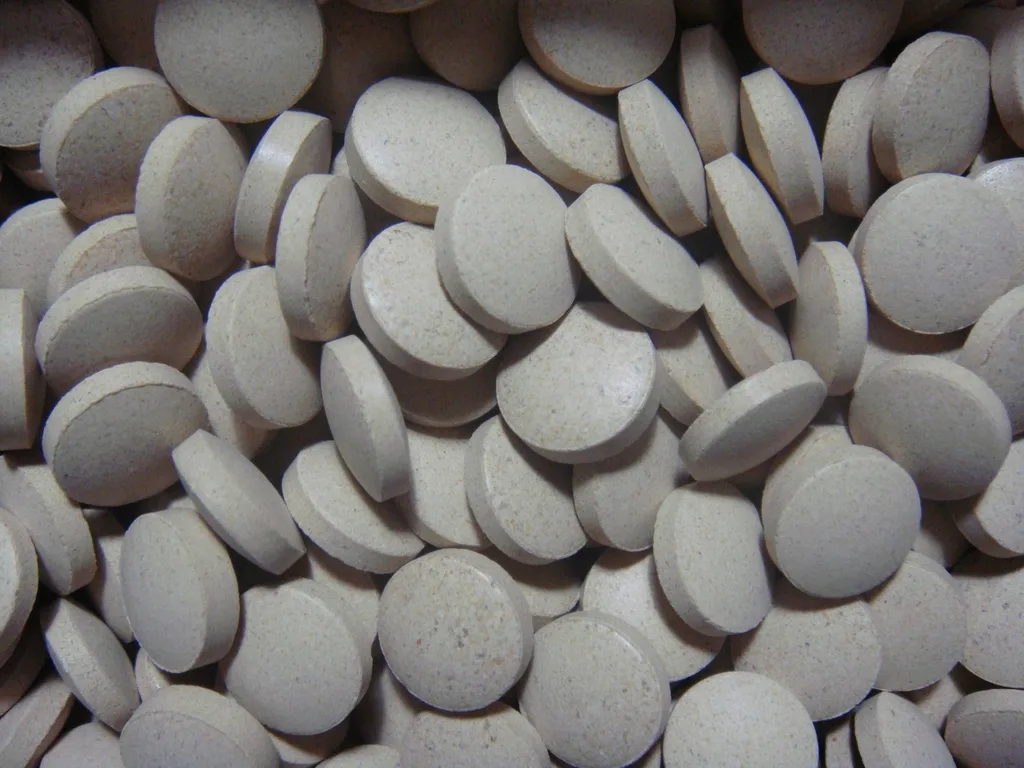
The jar of brewer’s yeast tablets lived next to the dog food, and in some houses a little garlic went in the bowl too, on the theory that fleas couldn’t stand the smell.
Someone actually tested the yeast. In 1983, researchers put fresh fleas on dogs every week for seven weeks, and some of the dogs got a daily dose of brewer’s yeast. The yeast “failed to repel or kill fleas.” The fleas carried on as usual.
Garlic did no better. “Garlic is not an effective flea or tick repellent on dogs or cats, since they don’t sweat like humans,” Dr. Mike Hutchinson, a veterinarian at Animal General in Cranberry Township, Pennsylvania, told PetMD. Dr. Richardson, the vet from #10, agrees: “There’s no solid scientific evidence that garlic repels or kills fleas.” And garlic carries the same risk as the onions from #10, only stronger.
The better choice is a chewable, a topical treatment or a collar your vet recommends, as PetMD advises. Ask rather than grabbing a box off the shelf.
#2 Canned horsemeat dog food
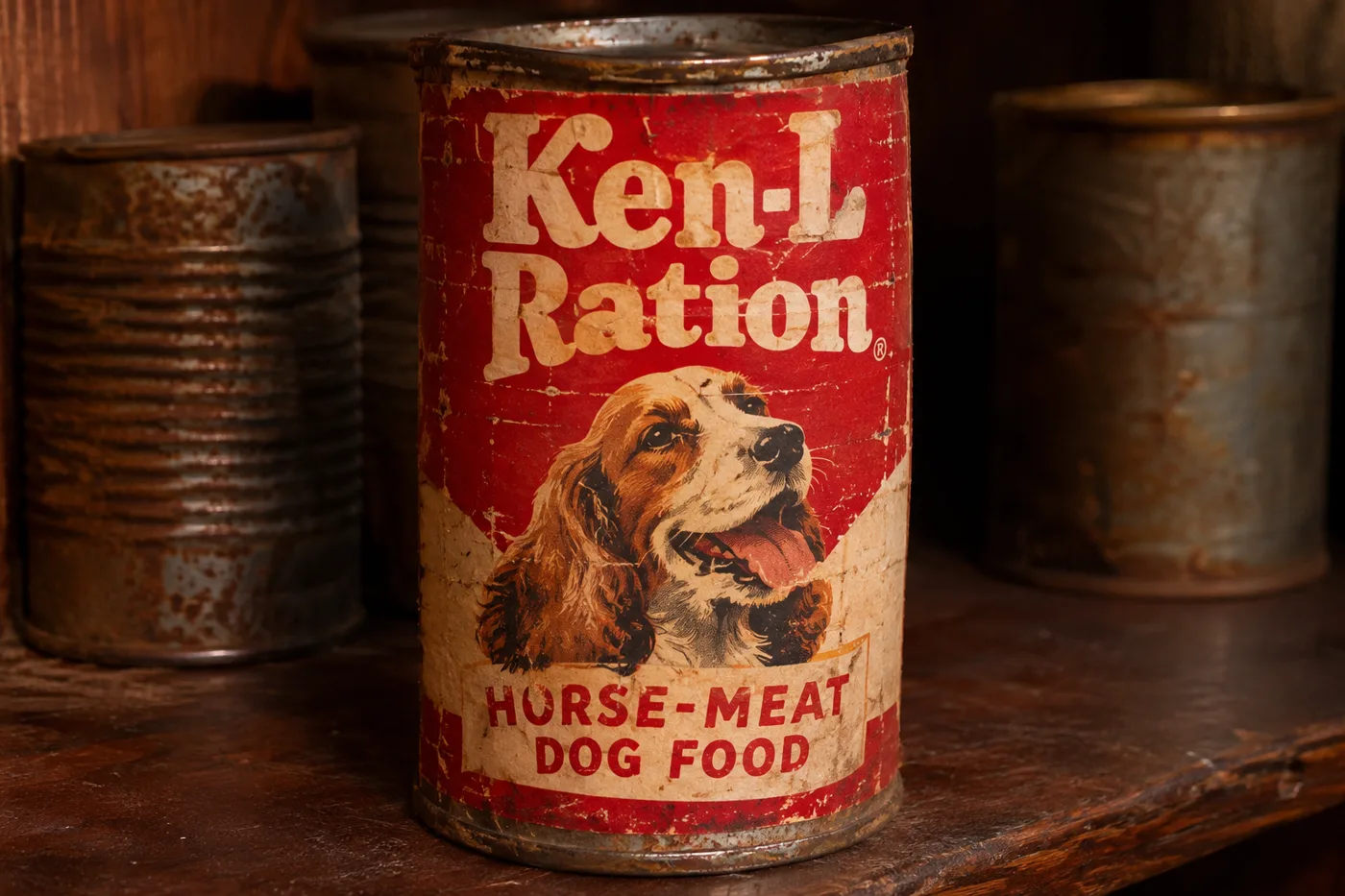
The Adventures of Ozzie and Harriet is on the black-and-white set, and between the family scenes, Quaker is selling you dog food. In the late 1950s and early 1960s, Ken-L Ration was an occasional featured product on the show in weeks when Quaker sponsored it, and horsemeat was a featured part of each Ken-L Ration ad. The dog food ads promised “U.S. Government Inspected horse meat” and called it “lean, red meat.”
Nobody on the couch would have blinked. Ken-L Ration came out in 1922 as the first canned dog food in the US, with horsemeat as the main ingredient, and back then horsemeat “was considered an acceptable ingredient source,” the Pet Food Institute says.
The reason goes back to the slaughterhouses. Marion Nestle, a professor of food studies at NYU, told CBS that slaughterhouses opened pet food companies in the 1920s to get rid of horsemeat, and that it “remained a major ingredient in pet food until at least the 1940s.”
It was still being advertised in 1963. A Friskies ad in Life on June 21 that year sold “Horse Meat with Gravy.”
Quaker sold Ken-L Ration to Heinz in 1995.
Tell someone under 40 that the family dog ate horsemeat from a can advertised on a sitcom, and watch them check whether you’re kidding.
#1 Grapes and raisins as a snack
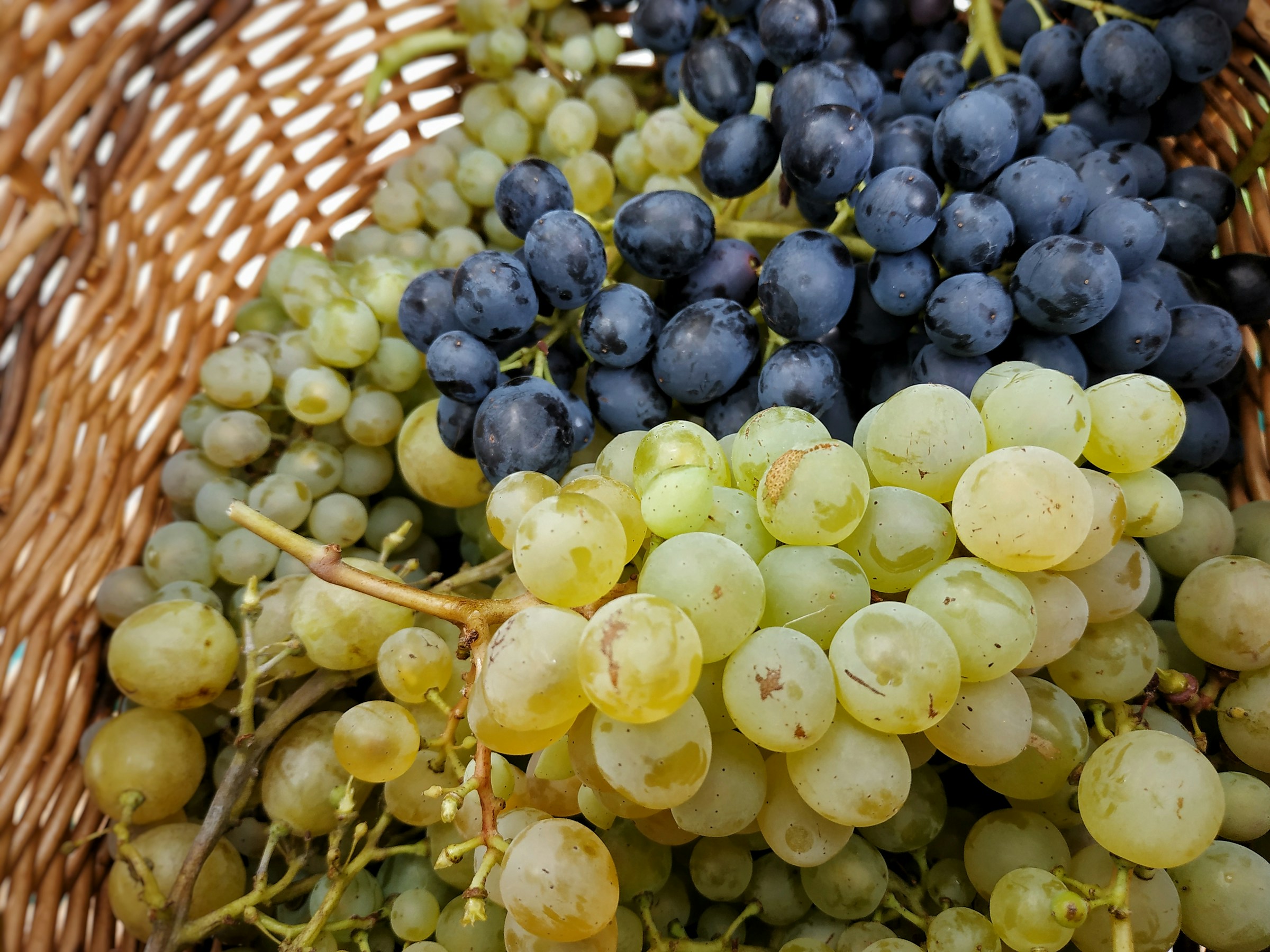
A little box of raisins in a lunch sack. A bunch of grapes in the fruit bowl, with a stray one rolling across the kitchen floor and the dog pouncing on it like a cat. If your family gave the dog grapes or raisins in the 1960s, nobody had published a warning yet.
A 2001 letter in the Journal of the American Veterinary Medical Association reported kidney failure in dogs that had eaten grapes or raisins.
Once vets started looking, the picture turned serious fast. A 2005 review of poison-control records found 43 dogs with kidney damage after eating grapes or raisins, and just 53% of them survived.
A later study is calmer. Of 139 dogs seen at three university hospitals after eating grapes or raisins, 8 of the 120 tested, about 7%, developed kidney injury, and one died. Most of those dogs had been treated, though, so it isn’t a reason to wait and see.
That’s why grapes and raisins now sit beside chocolate on the ASPCA’s list of foods to keep away from dogs. If yours eats some, call your vet or the ASPCA Animal Poison Control Center at (888) 426-4435 right away, even if he looks fine, with a rough idea of how many he got. The line is open around the clock, and a consultation fee may apply.
Whoever tossed the family dog a grape back then did it decades before that 2001 letter. You know now, and the fruit bowl moves to the back of the counter.
Keep reading
 20 Prices That Show What a Dog Cost in 1970 vs. TodaySee all 20 →
More you’ll enjoy
 24 Things That Can Land a Dog in the Christmas Emergency Vet
 21 Dog Breeds That Were Everywhere When You Were a Kid
 17 Easy-to-Miss Slips When Your Grandkids and Your Dog Share a House
The bottom line
Most of what made the old way risky was hidden: fat in the pan, onions in the sauce, a kidney problem nobody had written down yet. The part you could see, a dog fed from the same kitchen as everybody else, is still worth keeping.
Next time the dog is staring at your plate, ask one question: is anything on here plain? If it is, he can have a bite.
Then get one number from your vet at the next visit: how many calories your dog needs in a day. Take a tenth of it. That’s the whole budget for biscuits, scraps and everything in between, and it fits on a strip of tape inside the cabinet where the treats live.
Bonus: five kitchen checks the 1960s dog never needed
- Read the peanut butter label before it goes into a toy or around a pill. The Merck Veterinary Manual lists peanut butter with sugar-free gum, candy, mints and baked goods as sources of xylitol, and signs in dogs can start within 30 minutes.
- Cut cookout hot dogs into small pieces and count them as treats. A vet-reviewed guide from Chewy says their size and shape make them a choking hazard, and they’re “loaded with sodium.”
- Keep turkey skin off the dog’s plate at Thanksgiving. The American Veterinary Medical Association warns that eating turkey skin, sometimes even a small amount, can cause pancreatitis, while Tufts’ Freeman says a little plain cooked turkey breast is usually fine for a healthy pet.
- Set rising bread dough where the dog can’t reach it. Raw yeast dough is on the ASPCA’s list of foods to keep away from pets.
- If you feed raw food from the pet store, wash your hands with soap right afterward, thaw it in the refrigerator, and follow Penn State Extension’s advice: “Do not let your pet lick around your mouth and face after eating.”
Questions people also ask
When did dog food come out?
The first commercial dog food was Spratt’s Meat Fibrine Dog Cakes, which went on sale in England in 1860 and in the US by 1870, according to the Hagley Museum & Library. Ken-L Ration, a canned dog food made mainly from horsemeat, was introduced in 1922, the Pet Food Institute says. Purina produced its first extruded kibble biscuit in 1957 (some Purina pages say 1956).
What did dogs eat before dog food?
Before dog food, dogs mostly ate whatever their owners could spare, such as bones, cabbage, potatoes, onions and bread crusts. That’s how the Pet Food Institute describes it from the Middle Ages to the mid-1800s. Some city dogs in the mid-1800s also ate horsemeat sold for pets.
Were dogs healthier before kibble?
We found no reliable data comparing the health of 1960s dogs with today’s, so we can’t say. What research does show is how much body weight matters. In a Purina-funded study of 48 Labradors fed in matched pairs, the dogs fed 25% less lived a median 13.0 years against 11.2 and developed chronic disease later.
Can my dog eat what we eat for dinner?
Your dog can have small, plain, unseasoned portions, as long as treats and table food together stay under 10% of daily calories, per Tufts. Tufts lists carrots, green beans, pumpkin, apples and blueberries as fine. Keep onions, garlic, chocolate, xylitol, bones and the rest of the ASPCA’s list off the dog’s plate.
Is it safe to give a dog a raw egg?
Vets advise cooking the egg first. Raw eggs can carry Salmonella that can sicken pets and people (PetMD, ASPCA), and raw whites contain avidin, which blocks the B vitamin biotin (Merck Veterinary Manual). Plain cooked egg once or twice a week, sized to the dog’s weight, is PetMD’s guidance.
How do I add fresh food to my dog’s diet safely?
Add very small amounts of plain fresh food as a topper on your dog’s current food, and keep all extras under 10% of daily calories. For a fairly active 25-pound dog, that’s under about 60 calories, per Tufts. Dr. Karen Shaw Becker, a veterinarian, recommends small steps, voicing an owner who starts slowly: “I’m not going to throw my kibble out right now… I’m going to use fresh food toppers.”