Twenty-three things the family dog did every Christmas in the 1960s, from napping under the aluminum tree to howling at Bing, each one brought up to today.
Stay with it to #1, where a social worker at a veterinary college offers three small ways to keep a dog in your Christmas after she’s gone.
Christmas morning. The tree is lit, nothing’s been opened yet, and the dog walks past the big presents to a lumpy little one wrapped in last year’s leftovers. Nobody told her it was hers. She just knew.
If you spent Christmas with the family dog in the 1960s, you remember a dog like that. Half of what she sniffed, chewed and sang along to had a story behind it, and some of it looks very different from where a dog sits now.
Table of Contents
#23 Finding her own present under the tree
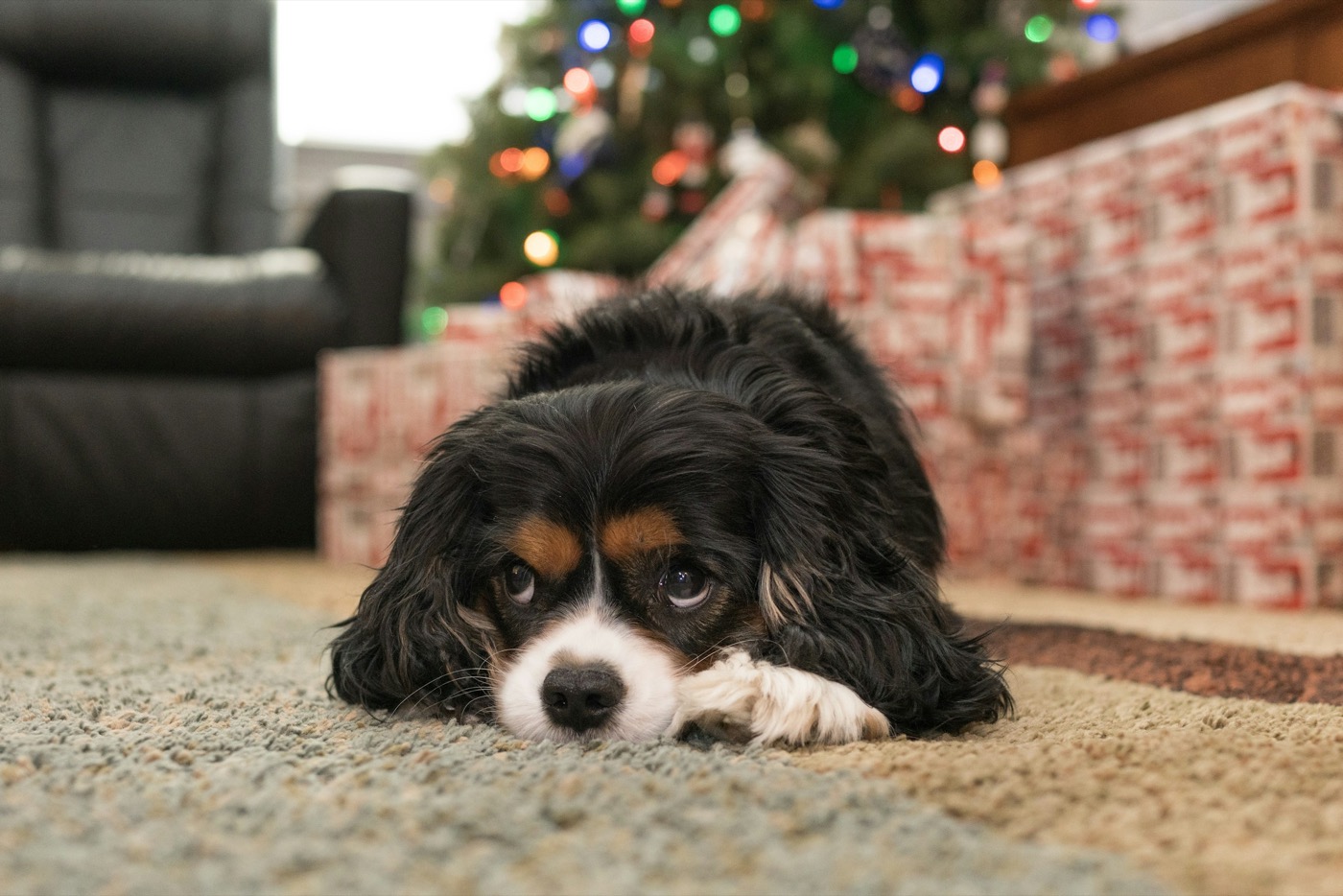
She never needed the tag.
Dog owners on TikTok describe a dog working out which packages under the tree were its own, then dragging them out and opening them. One household now keeps the dog’s presents hidden until Christmas Day for exactly that reason.
The reason your dog was so sure shows up in the shopping data. When Circana surveyed U.S. pet owners in 2023, food or treats made up 68% of the gifts people bought their pets, well ahead of squeaky toys and chew toys at 46% each. The dog wasn’t reading the tag. The dog was reading the rawhide.
You weren’t the only family wrapping one, either. In a 2007 pet industry survey, 56% of dog owners said they bought holiday gifts for their pets. The 2023 survey found 55% of pet owners still did, at an average of 4.42 gifts a year. Shannon Fay, a pet owner interviewed in 2007, put it plainly: “It’s an expression of love. She’s part of the family.”
Dr. Marty Smith, a co-founder of Doctors Foster and Smith, had the dog’s view: “For a dog that hasn’t had a rawhide bone in awhile and gets one, this is a good Christmas.”
#22 Poodle, Beagle, Collie: the 1960s family dog
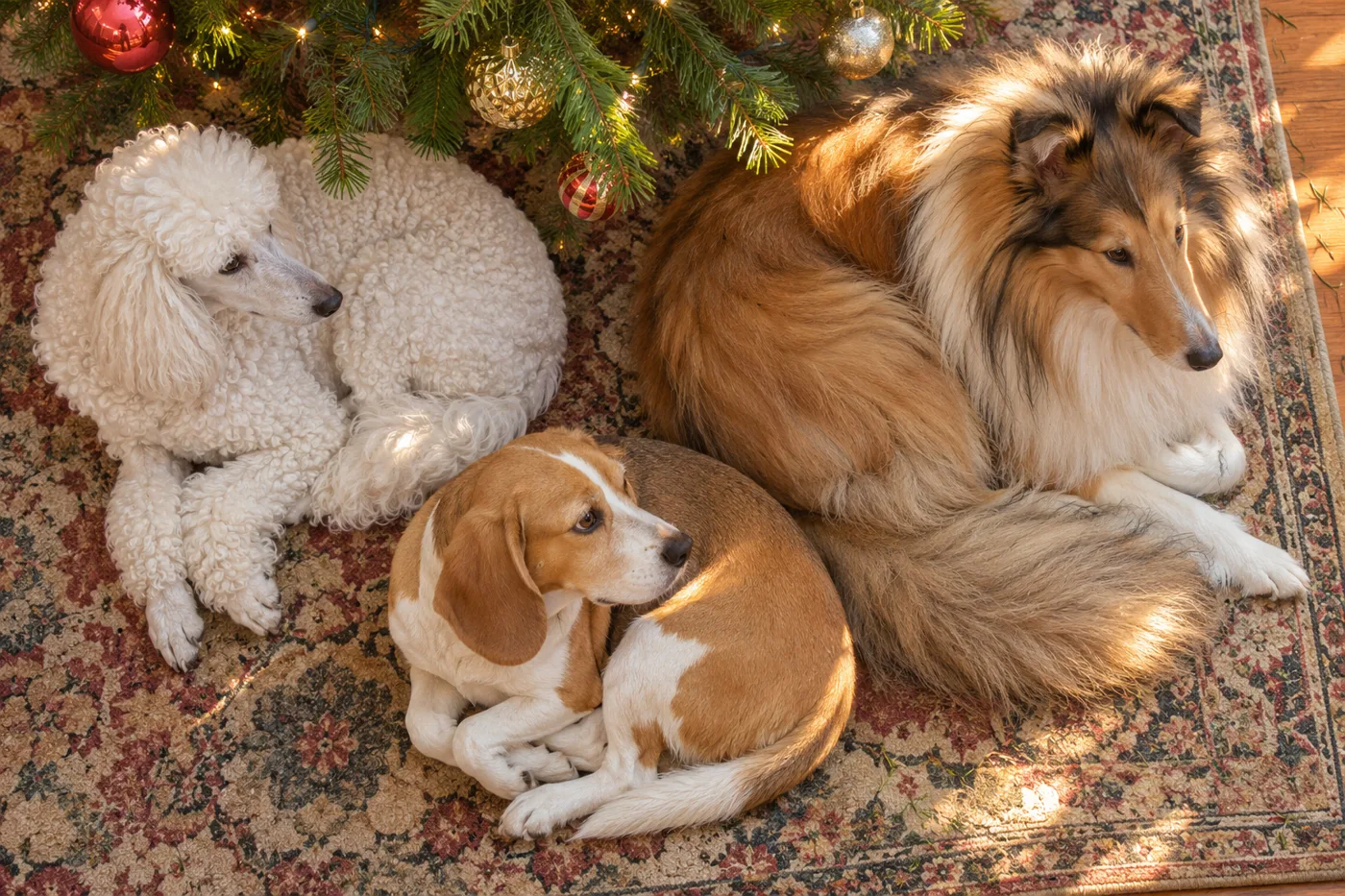
If the dog under your tree had papers, there’s a fair chance its breed is one of these ten. The American Kennel Club, which registers purebred dogs, ranks the most popular dog breeds of the 1960s like this:
- Poodle
- German Shepherd Dog
- Beagle
- Dachshund
- Chihuahua
- Pekingese
- Collie
- Miniature Schnauzer
- Cocker Spaniel
- Basset Hound
The AKC says the Poodle “strutted into the number-one position in the 1960s,” and it became the first breed to hold No. 1 for two decades in a row.
That list only counts registered purebreds, though. The black-and-white pup from a neighbor’s surprise litter, the farm dog who rode in the truck, the mutt somebody swore was “part Collie”: none of them made it in, and a lot of 1960s Christmases belonged to dogs exactly like that.
Two things about the ones that did make it. The Basset Hound’s name comes from the French “bas,” meaning “low thing,” which anyone who has watched a Basset get under a sofa can confirm. George Washington may have owned Bassets after the Revolution.
And the Pekingese, the little “Lion Dog” asleep on the good chair, traces its line to China’s Tang Dynasty.
#21 Shredding the wrapping paper
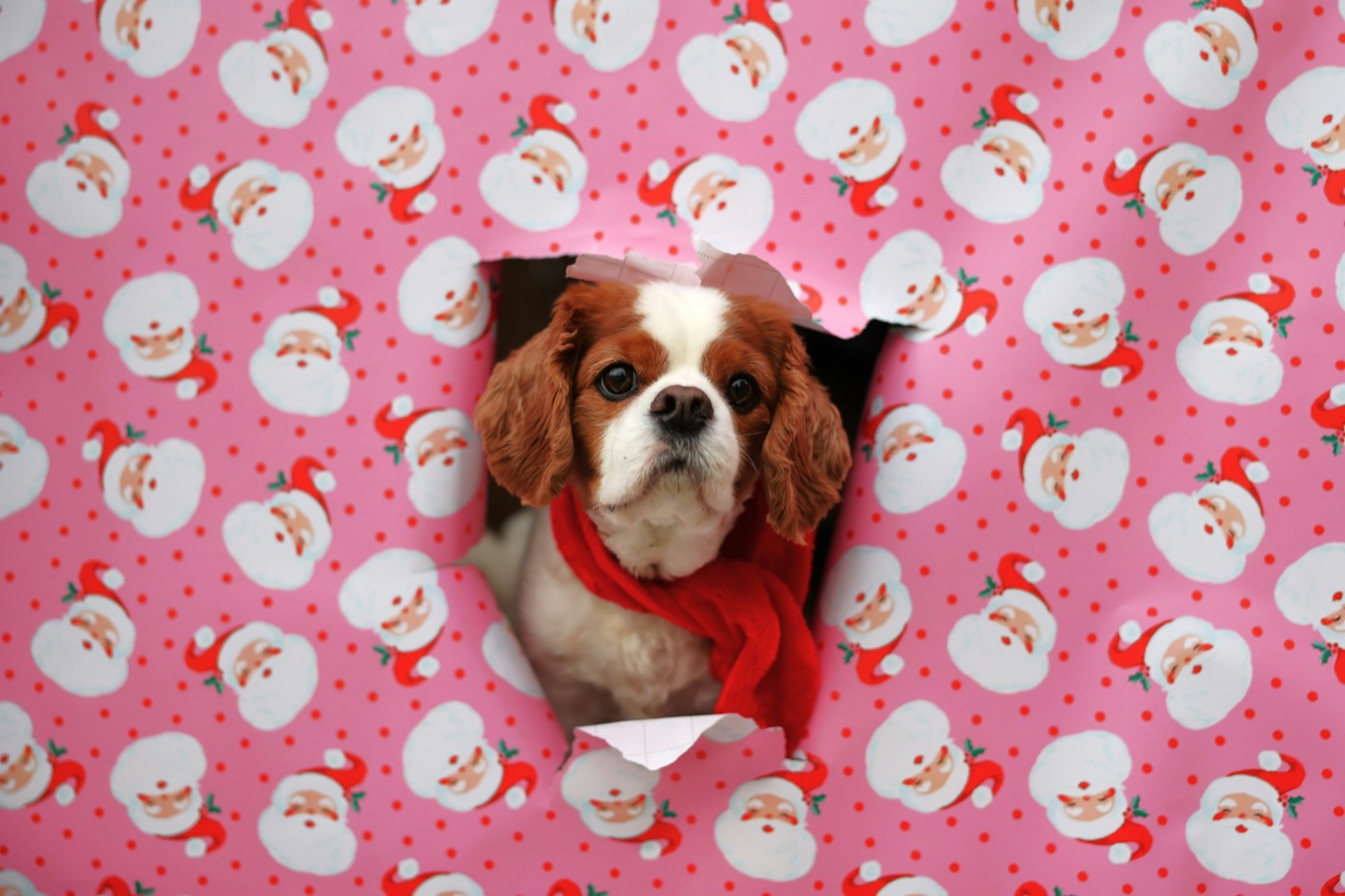
Some dogs ate it. Some went straight through the middle, nose first. And some sat it out: among the owners swapping stories on TikTok, one rescue dog found the paper too scary to go near.
Gift wrap is a newer habit than it looks. Modern gift wrap started at Christmas 1917, when the Hall Brothers’ store in Kansas City ran out of tissue paper and sold fancy French envelope linings instead, at 10 cents a sheet. That business became Hallmark, which in the 1930s came up with a ribbon that stuck to itself when moistened. Every bow your dog ever chewed traces back to a shop that ran short one December.
What matters now is what’s inside. The Pet Poison Helpline says dogs tearing open wrapped food gifts from under the tree “are a common call during the holiday season,” and it suggests keeping those gifts away from pets until they’re opened. In practice:
- Anything edible waits on a high shelf or behind a closed door until opening time.
- A package from a relative who bakes is a food gift until proven otherwise.
- The dog’s own present comes out Christmas morning, not a week early.
None of that stops a dog who has figured out the closet latch. For that dog, the car trunk works.
#20 Blinking at the flashcube in the family photo
Somebody said “Look here!” The flash popped. And the dog, who had sat perfectly still for the whole setup, turned to look at the cat.
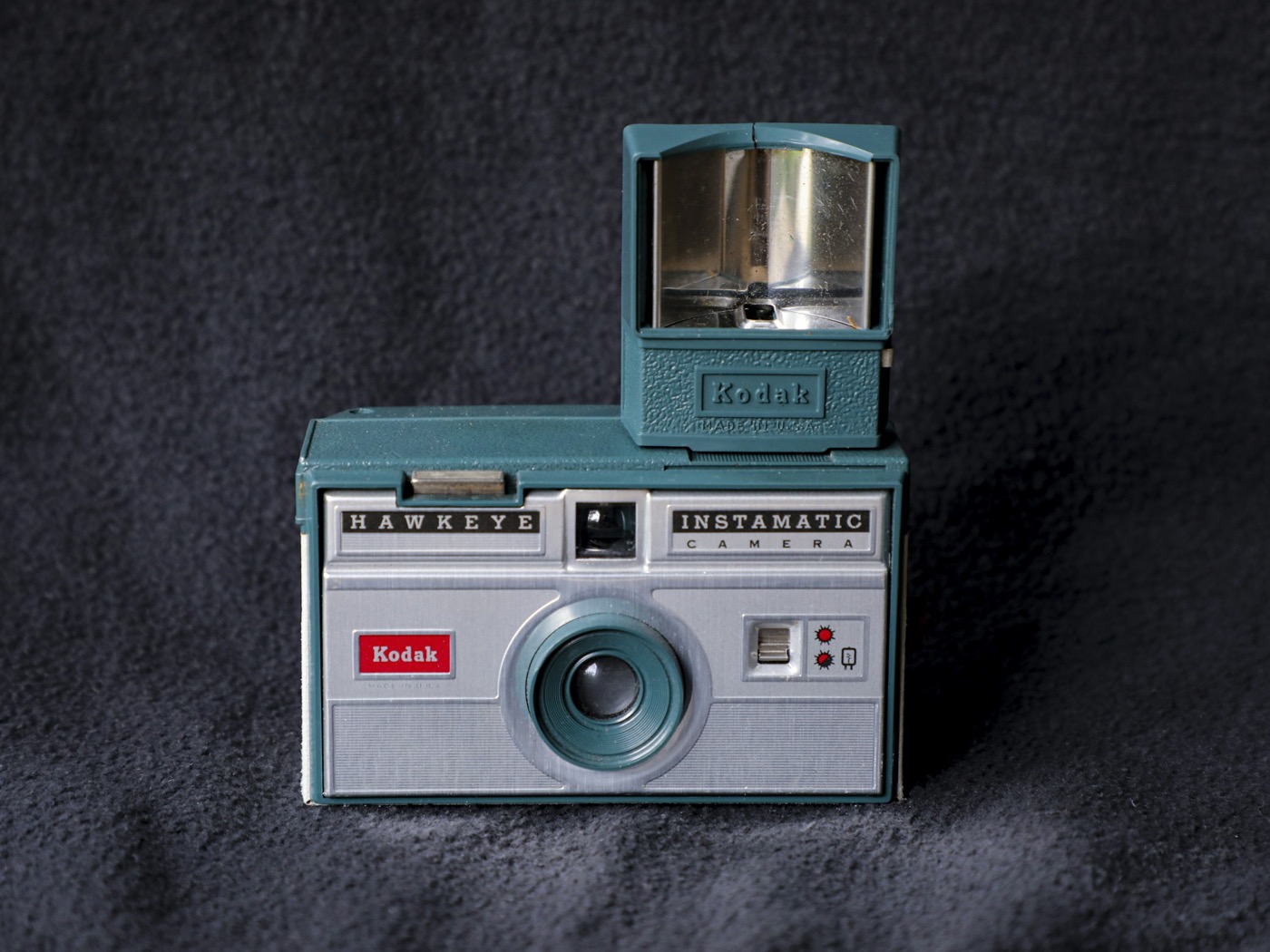
If your family Christmas photo with the dog came out as a little square print with a white border, there’s a good chance an Instamatic took it. The first Instamatics sold for $16 in early 1963. Flashcubes arrived in 1965 on the models whose numbers ended in “4,” like the 104, and by 1970 the Magicube didn’t even need a battery. More than 50 million Instamatics were made between 1963 and 1970, so somebody at your house probably owned one.
That’s why so many 1960s dog-under-the-tree snapshots look the way they do: a bright red bow, a blur where a tail should be, and two glowing dots where the dog’s eyes were.
A phone today can fire off a whole burst of shots in the time that cube took to turn. The dog will still look at the cat.
#19 Sharing the rug with Snoopy
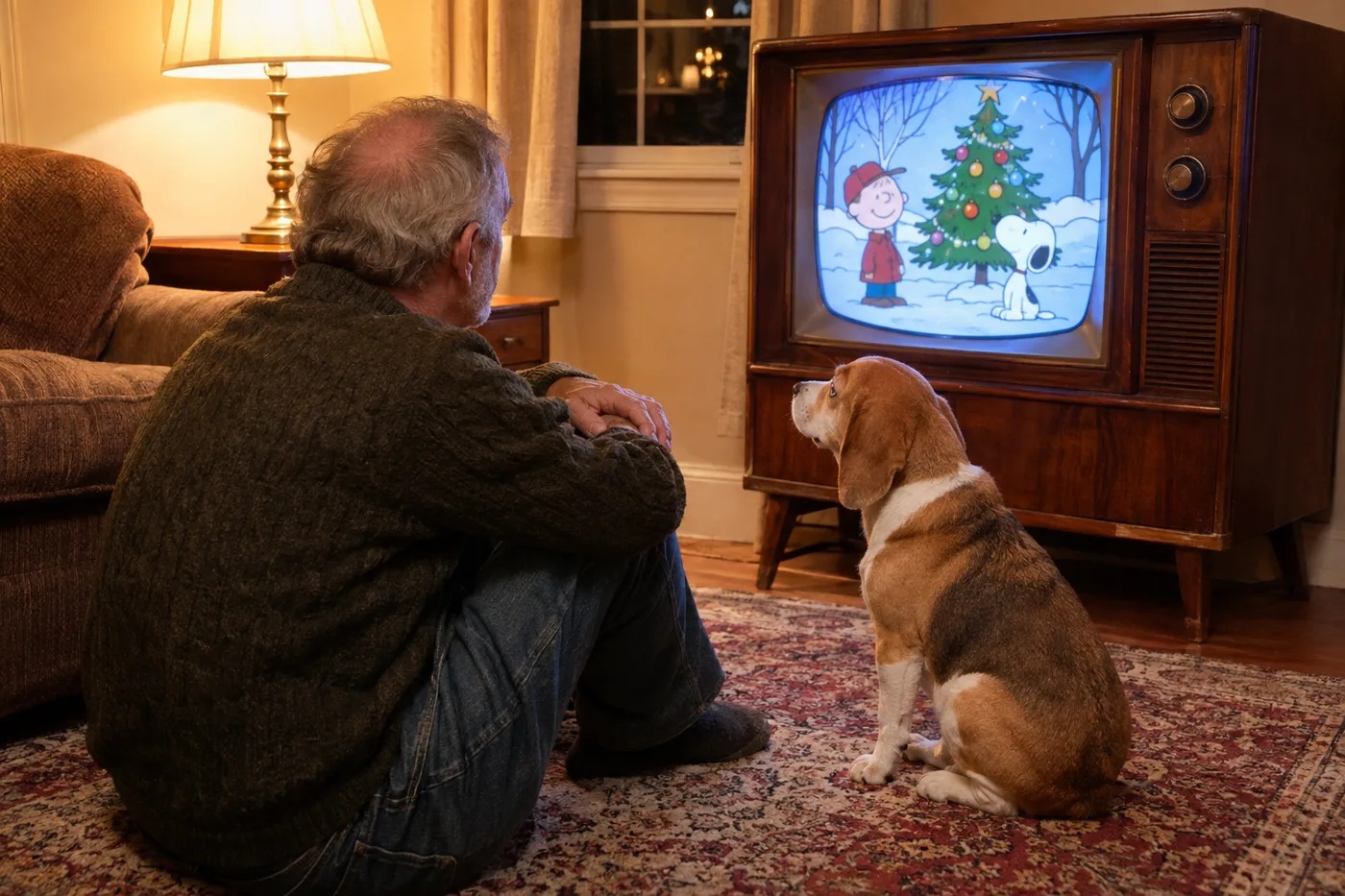
On December 9, 1965, at 7:30 in the evening, family dogs all over the country were stretched out on living room rugs while a cartoon beagle stole the show. A Charlie Brown Christmas drew about 15.49 million homes on CBS that night, 45% of everyone watching TV. Only Bonanza beat it.
Watch it again and the dog’s subplot is funnier than you remember. While Charlie Brown frets about the meaning of Christmas, Snoopy enters his doghouse in a neighborhood lights-and-display contest, and he wins. The dog out-decorated the whole block. Those yelps and giggles came from a grown man, Bill Melendez, and the special went on to win an Emmy and a Peabody.
Snoopy was already selling things by then. Happiness Is a Warm Puppy, the little book, came out in 1962, and the first plush Snoopy followed in 1968. If one sat under the tree that year, the real dog almost certainly gave it a sniff.
One more line to listen for next time: it’s Lucy who wants to get an aluminum tree.
#18 Max hauling the Grinch’s sleigh
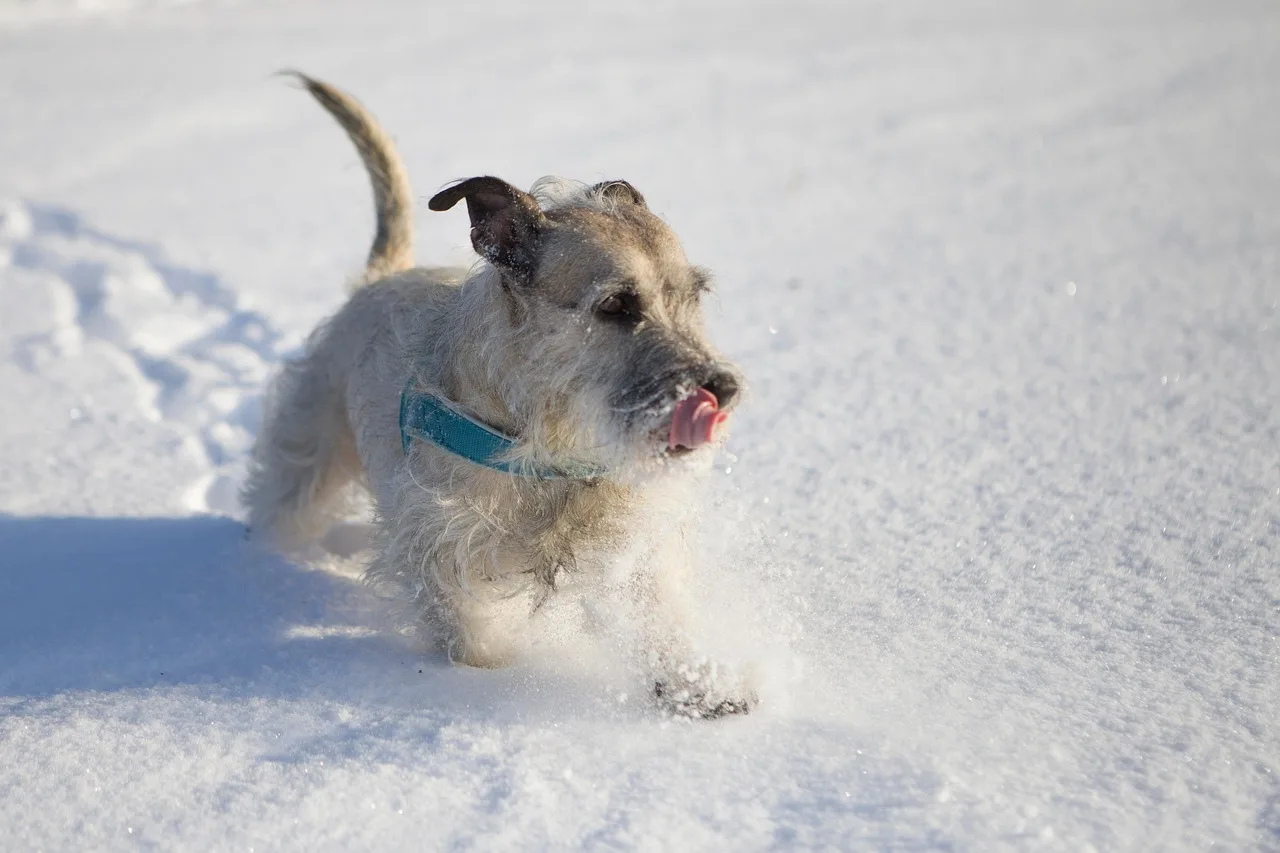
What breed is Max? Fans still ask, and the honest answer is that he doesn’t have one. Neither the book nor the 1966 CBS special ever names one.
What we do know is where he came from. Chuck Jones, who directed the special with Ben Washam, based Max on his own childhood dog, a young fox terrier. That’s the inspiration, not a pedigree, so Max stays a dog of no stated breed, one antler tied to his head and a sleigh far too big for him.
The special first aired December 18, 1966, on a $315,000 budget. Max’s voice came from Dallas McKennon, who didn’t even get a screen credit.
So when somebody at the table insists Max was a Schnauzer, or a terrier mix, or “just like our old Rusty,” nobody can prove them wrong.
#17 Lying under the aluminum tree and color wheel
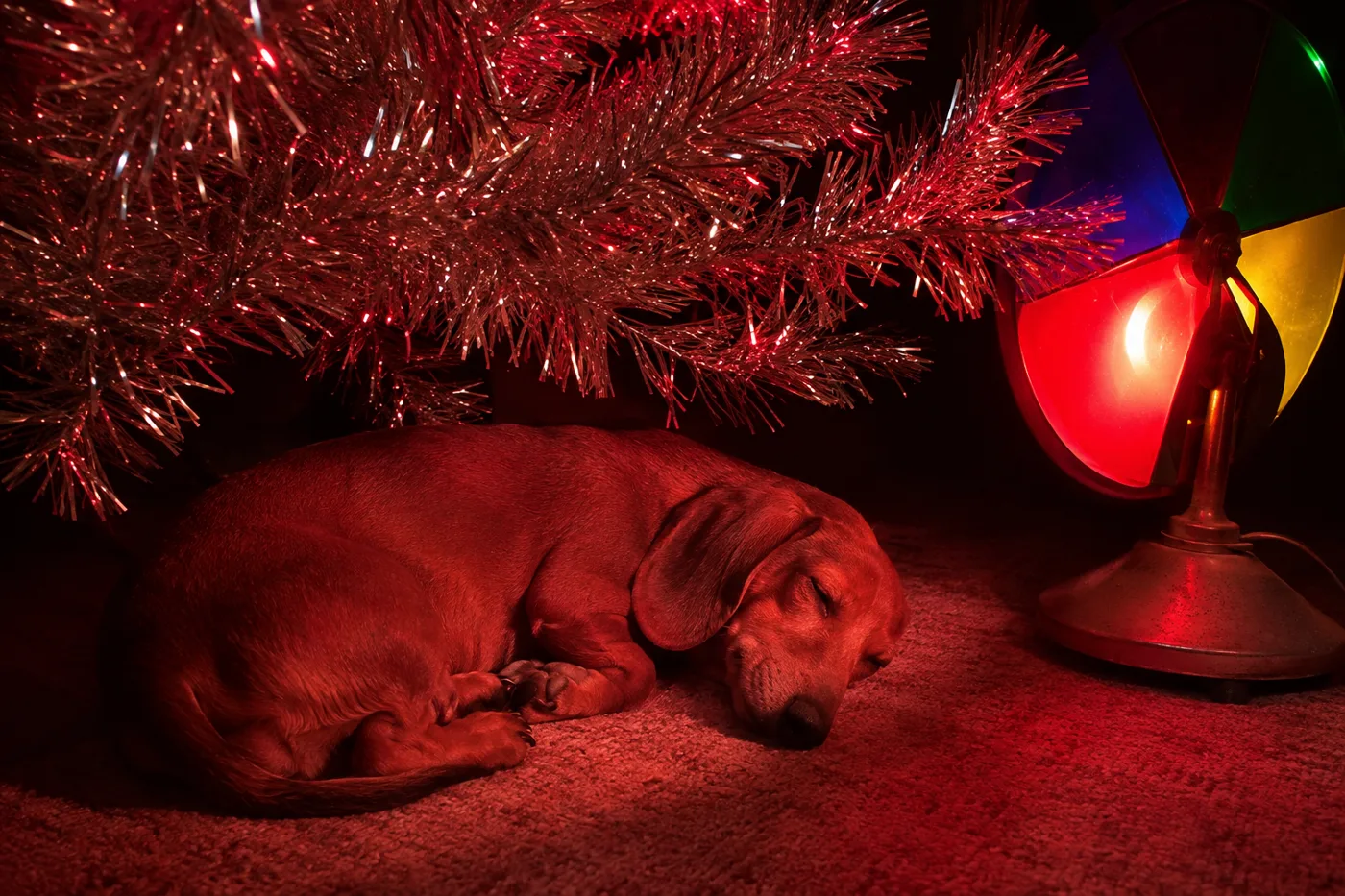
There were no lights on it. That was the rule, and plenty of kids never knew why.
Electric lights strung on an aluminum Christmas tree were a shock and fire risk. So a rotating color wheel sat on the floor and lit the tree from below in changing colors. Whatever dog was sleeping under there turned all those colors too.
The Aluminum Specialty Company in Manitowoc, Wisconsin, made more than a million of these trees between 1959 and 1969, sold as the Evergleam. A 1963 Sears catalog promised: “High luster aluminum gives a dazzling brilliance.” The company’s sales manager, Jerry Waak, explained the shimmer: “You got a reflection of every needle because of the crimping.”
The fad faded, and A Charlie Brown Christmas is credited with helping it along. Now the prices run the other way.
What a silver Christmas cost, then and now – An Evergleam: $5 to $25, from 2 feet to 7 feet tall – A full-size vintage tree today: several hundred to several thousand dollars – A vintage color wheel today: about $200 – A new reproduction wheel: from about $35
If what you miss is the light show, the reproduction wheel gets it back for a fraction of the price. The dog won’t know the difference. The dog never did.
 You might also like28 Things Dog Owners Did in the ’60s and ’70s That Would Raise Eyebrows Today
#16 Wearing a strand of tinsel icicles
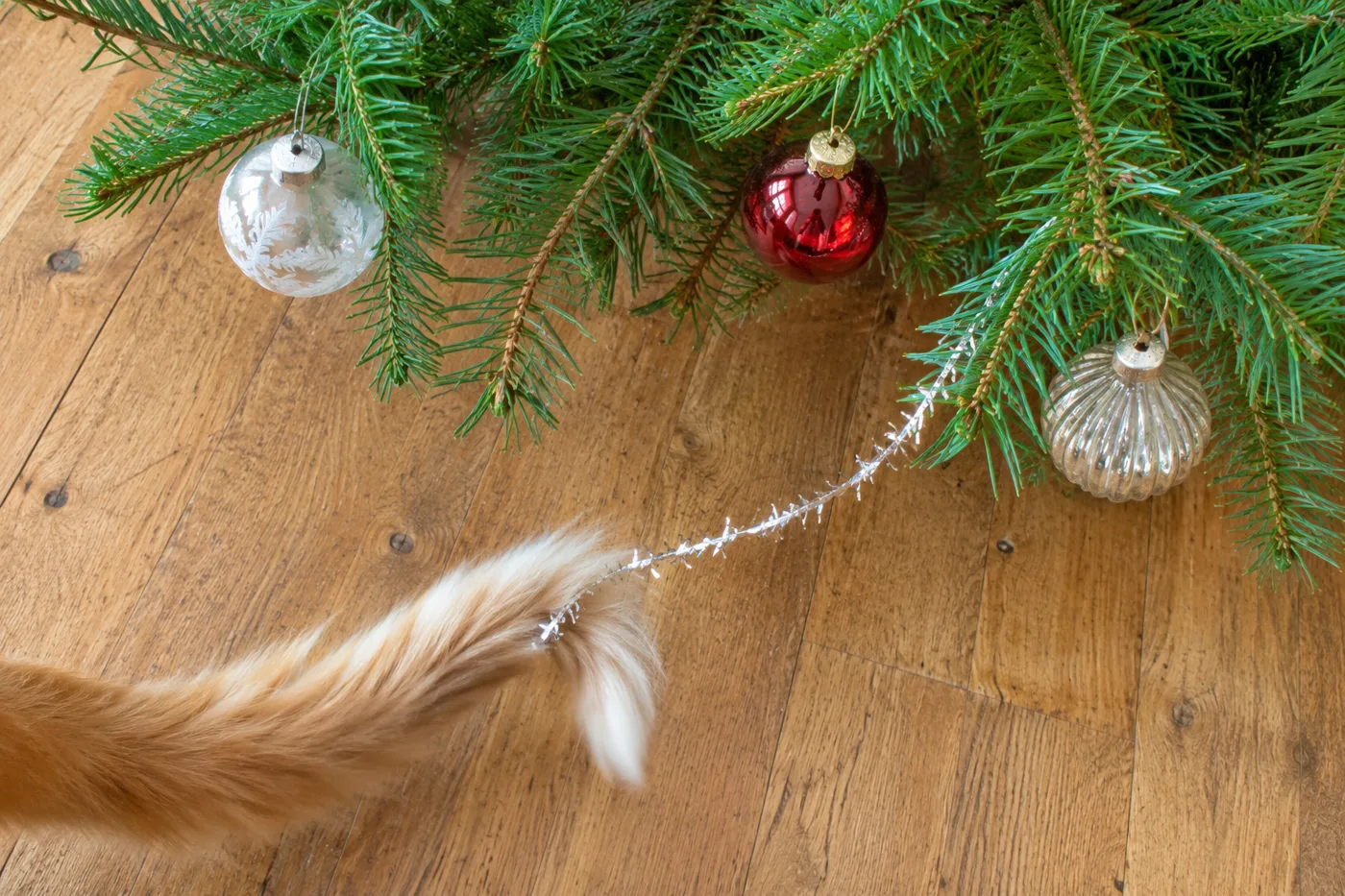
The dog trotted through the living room with one silver strand stuck to its tail, sparkling, completely unbothered.
That tinsel had real weight to it, and there’s a reason. Through the 1950s and ’60s the popular kind was made with lead, and a 1959 newspaper called it “fairly safe.” In 1972 the FDA reached an agreement with manufacturers, and production of lead tinsel stopped on January 1, 1972. Malcolm Jensen, then head of the FDA’s Bureau of Product Safety, told reporters: “There was never any effort to hide it.”
It was an agreement, not a formal ban. Today’s tinsel is PVC plastic.
The lead is gone. The other problem isn’t. A swallowed strand of tinsel, ribbon or twine can catch inside a dog’s intestines and bunch them up along it, which vets call a “linear foreign body,” and veterinary toxicologists at Pet Poison Helpline say it often needs urgent care, so call your vet if you know the dog ate some.
If you love the look, the top half of the tree is a fine place for it.
#15 Wagging Shiny Brite ornaments off the low branches
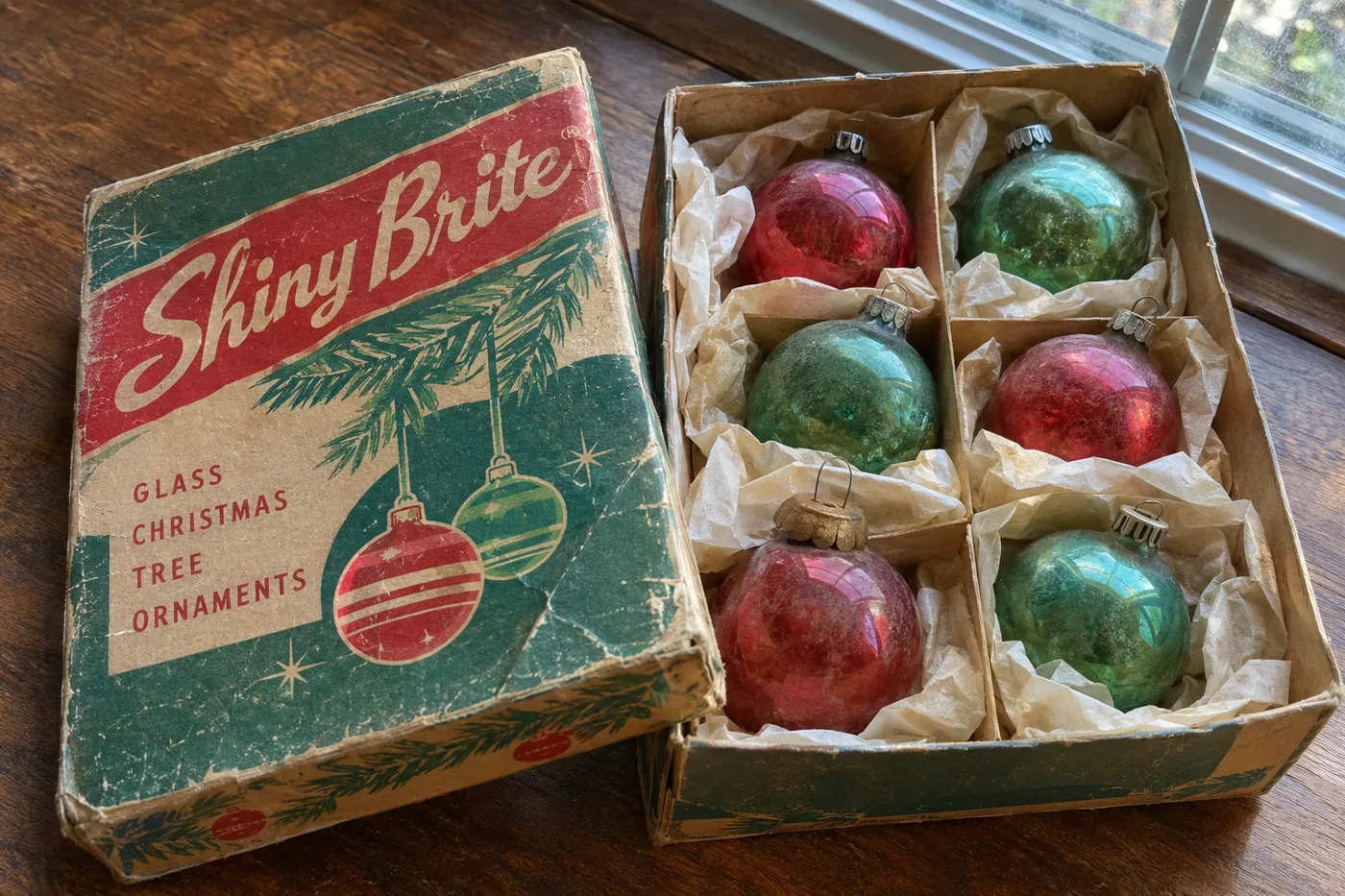
You heard it from the kitchen: a soft little crunch, then a dog suddenly very interested in the hallway.
Shiny Brite ornaments were thin for a reason. Max Eckardt founded the brand in 1937 and worked with Corning, which made them on light-bulb technology, so they were as delicate as a bulb. The first ones reached Woolworth’s in 1939 for between 2 and 10 cents each. During World War II the metal caps were swapped for cardboard, so a paper-capped one in your box is the war showing through.
Something that sold for pennies now goes for about $15 to $20 to collectors, if it’s a stenciled one. Christopher Radko has sold new ones under the old name since 2001.
Old glass gets handed down, too. A commenter on Reddit’s r/ChristmasDecorating says she still hangs a few ornaments from her grandmother’s trees, at 85.
Broken glass can cut a dog’s mouth and skin, VCA warns, and a wagging tail sits right at bottom-branch height. The answer a lot of households landed on still works: heirloom glass goes up high, and the bottom row is for the unbreakables.
#14 Napping by the hot bulbs and bubble lights
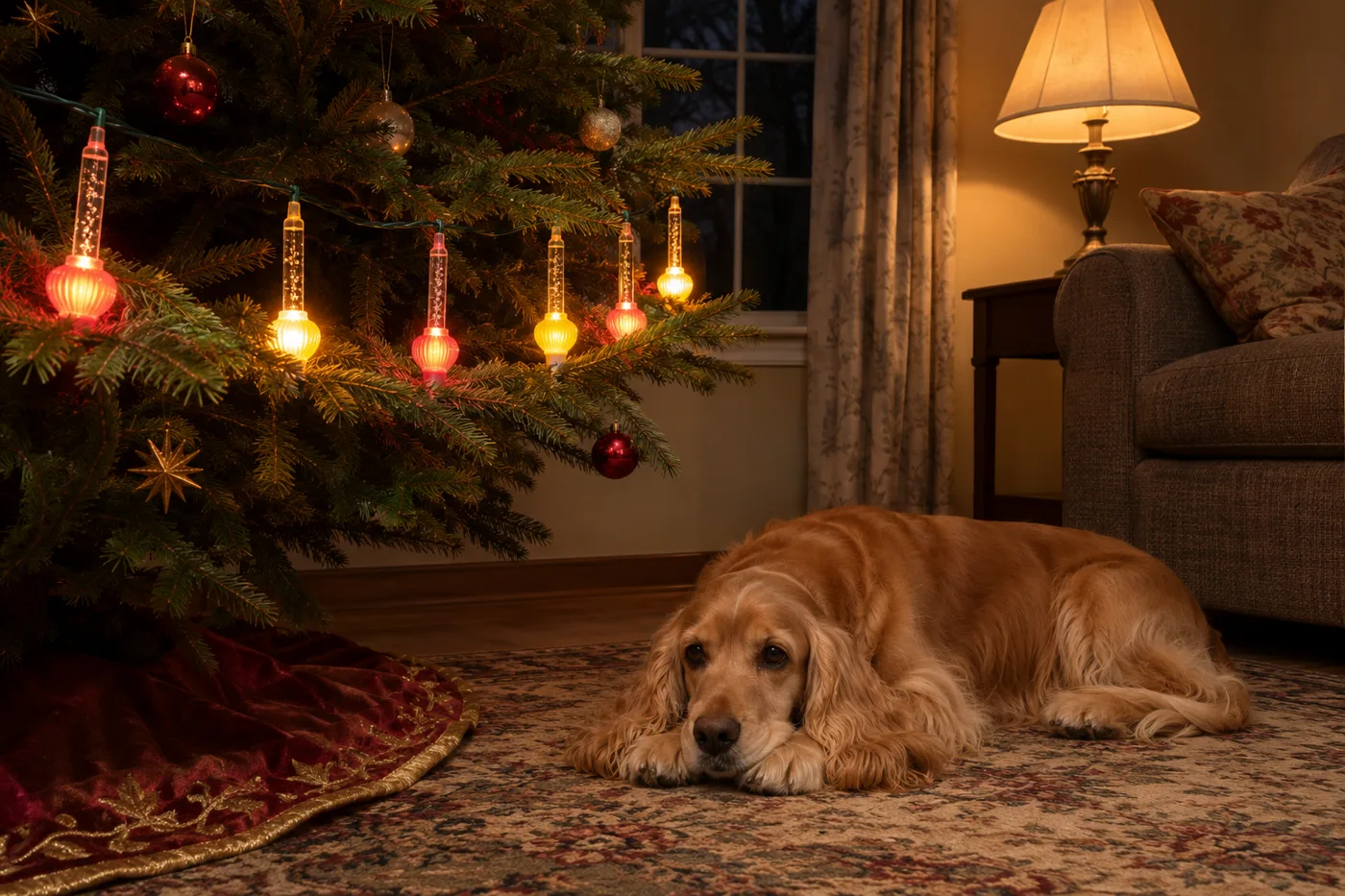
The big old bulbs were warm to the touch, and dogs worked that out fast. If your tree had bubble lights, the dog may have spent a whole evening staring at one, waiting for whatever was in there to come out.
What was in there wasn’t water. Bubble lights, patented by Carl W. Otis in 1944 and sold by NOMA from 1946, almost always held methylene chloride, a toxic solvent the bulb heated until it bubbled. Newer versions use plastic rods and LEDs, which makes them the ones to buy if a curious dog lives with you.
Not every house had the glow. One commenter on the same r/ChristmasDecorating thread says their area had no electricity until they were 8, so the tree had no lights.
Where there were lights, they cost real money to run. The Department of Energy figured that lighting a 6-foot tree 12 hours a day for 40 days costs about $10 with old-style strands and 27 cents with LEDs, in 2015 prices. For the dog, the LEDs also run cool enough to nap beside.
One thing hasn’t changed: a dog that chews a light cord can get electrical burns, so the cords go behind furniture or up out of reach.
#13 Crunching a Milk-Bone on Christmas morning
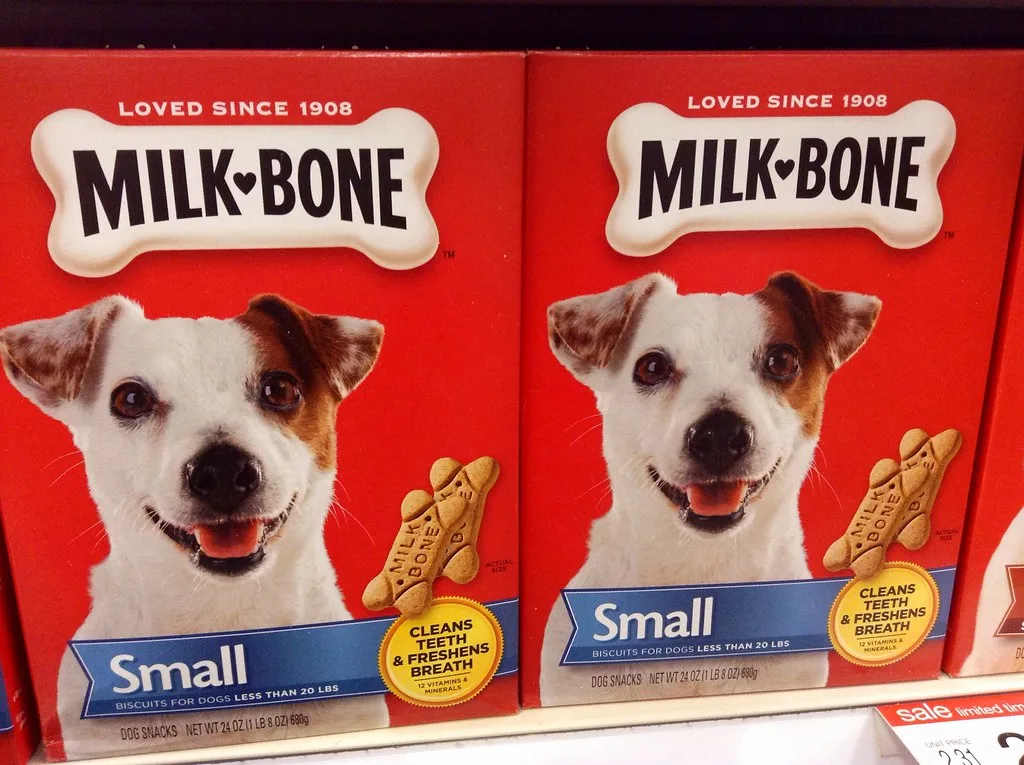
Rattle the box and the dog sat before you said a word. Three brands from that era, and where they ended up:
- Milk-Bone was born in 1908 at a New York biscuit company on the Lower East Side, under the name “Maltoid.” It became Milk-Bone sometime between 1915 and 1926, Nabisco bought it in 1931, and J.M. Smucker has owned it since 2015. U.S. biscuits still come out of Buffalo, New York.
- Gaines-Burgers arrived from General Foods in 1961: moist dog food shaped like hamburger patties, each one wrapped on its own. Production ended in the 1990s, and a new company has sold the brand again since 2020.
- Alpo started in 1936 in Allentown, Pennsylvania. Lorne Greene was its TV spokesman for years and said he fed it to his own dogs. Nestlé Purina owns it now.
So the hamburger-shaped dinner your dog ate on Christmas night has a living descendant.
“Maltoid,” thankfully, never made a comeback.
#12 Begging at Christmas dinner
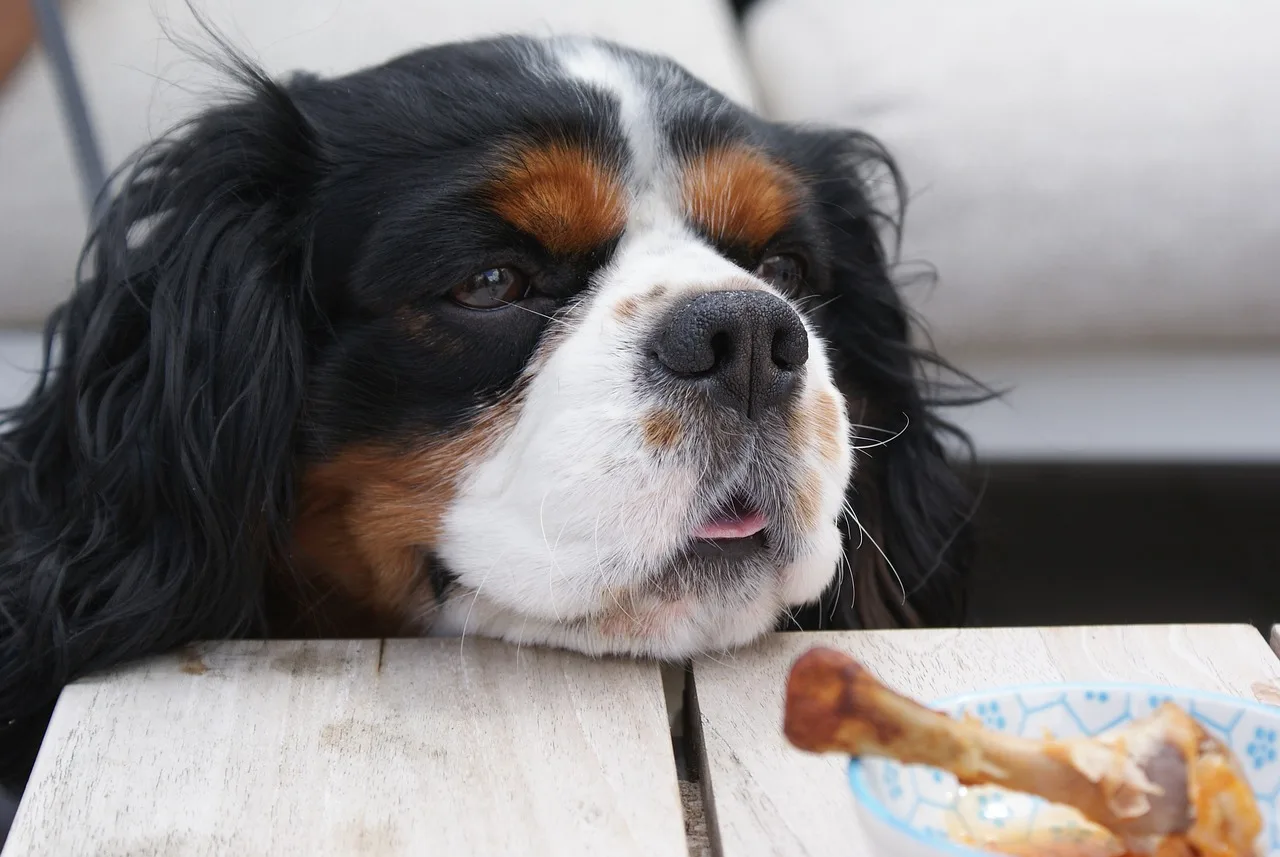
Turkey on the table, ham on the sideboard, and one dog under the table working the room: a chin on a knee, a long sigh, then over to the softest touch in the family.
Plenty of dogs got a plate of scraps after dinner, and nobody thought twice. Here’s what’s known now. Leftover fatty meat scraps can cause severe stomach upset and pancreatitis. Poultry bones, American Humane warns, “may tear or obstruct” a pet’s intestines. If you do share, the ASPCA says to make it a small bite of turkey that’s boneless and fully cooked.
In most homes the bigger risk turns up later, in the kitchen trash on Christmas night, under the turkey carcass.
A tied bag, carried straight out to a can with a lid, takes care of the one gift the dog will try hardest to open.
#11 Checking the stocking on the mantel
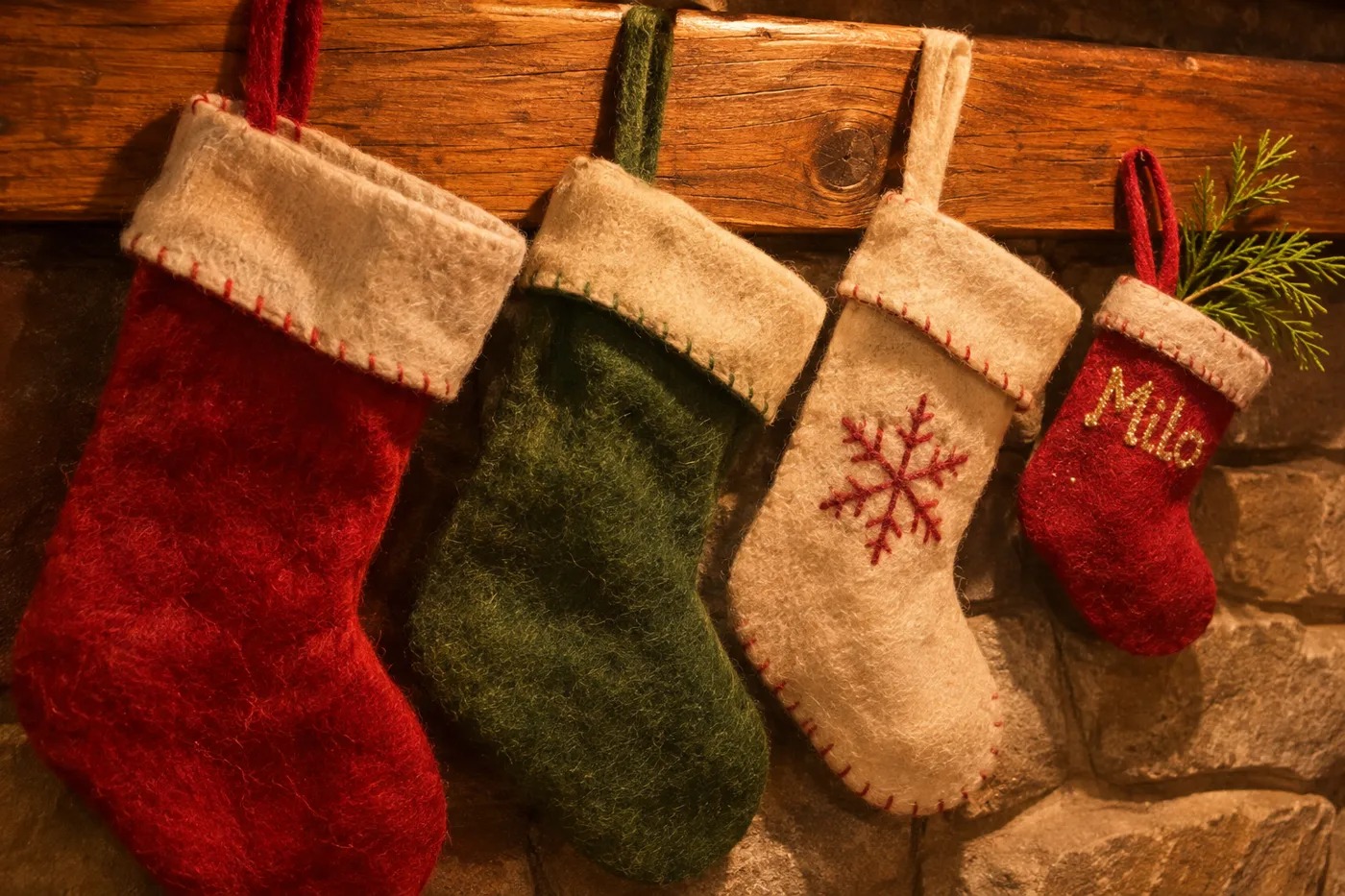
It was usually the smallest one. Sometimes felt, sometimes an old sock with a name lettered on in glitter, hung on the end of the row. And the dog checked on it on every pass through the room.
What goes in it has changed. The FDA has warned that processed “bone treats”, not raw butcher bones, have been tied to dozens of illness reports and some deaths in dogs, and American Humane’s holiday list flags bones too. A squeaky toy fills it just as well, or a chew soft enough to dent with your fingernail, the test Cornell veterinarian Brian Collins suggests.
The dog will check the mantel either way.
#10 Eyeing the popcorn and cranberry garland
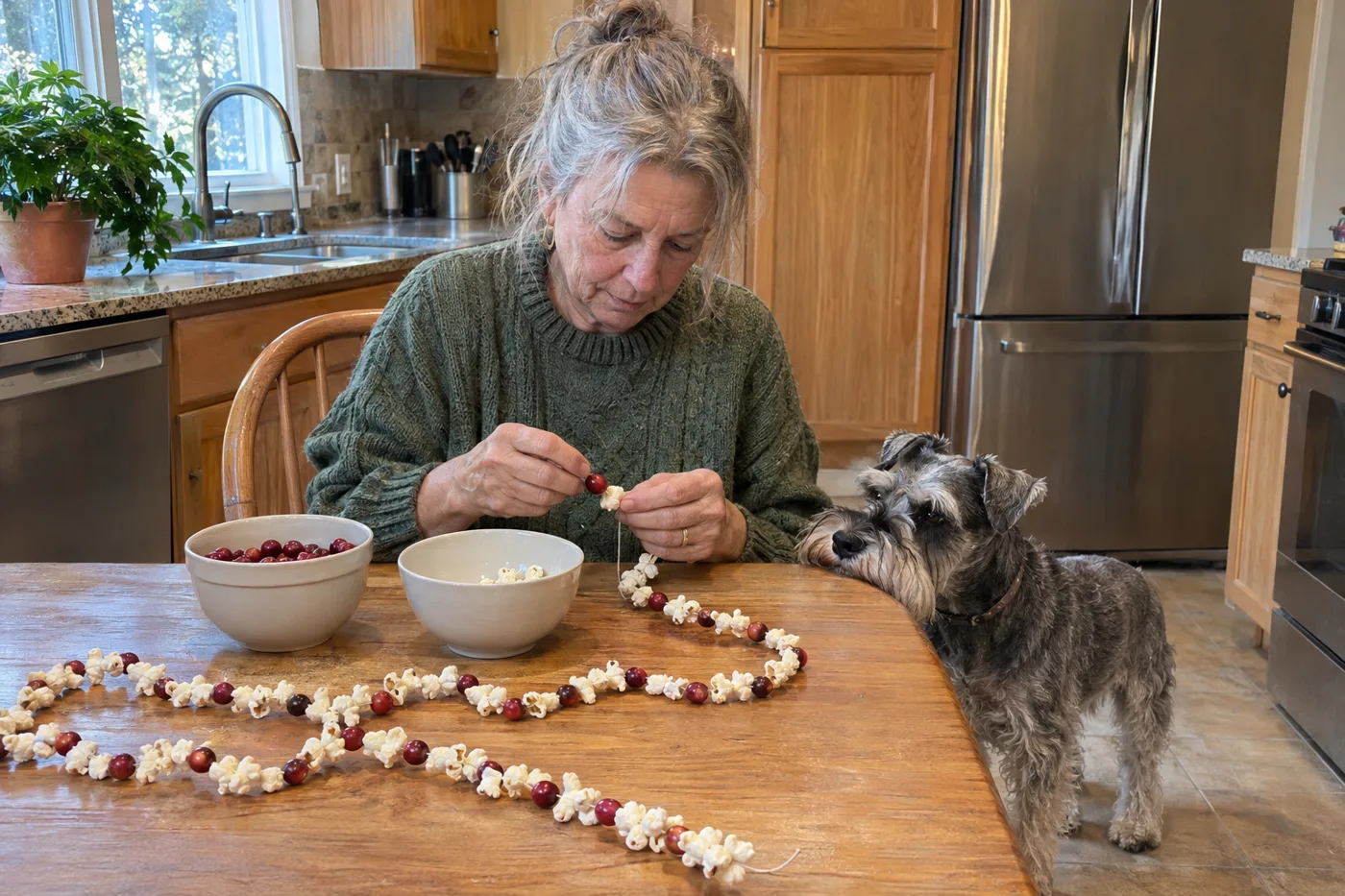
A needle, a spool of thread, two bowls, and a garland that grew a lot slower than the popcorn disappeared. The dog was not the only one eating it.
Good news first: that garland was one of the safer things on the tree. Plain, air-popped popcorn is generally fine for dogs in small amounts, with no butter, salt or seasoning, though unpopped kernels are a choking risk. Cranberries are fine too in moderation. The sugary sauce is the one to skip.
The part to watch is the one nobody thinks about: the thread. A dog that gulps a length of garland swallows the string with it, and string-like things can do the same damage inside a dog as tinsel.
Hang it high, or take it down before the dog does.
#9 Nosing the cookie tins and the fudge plate
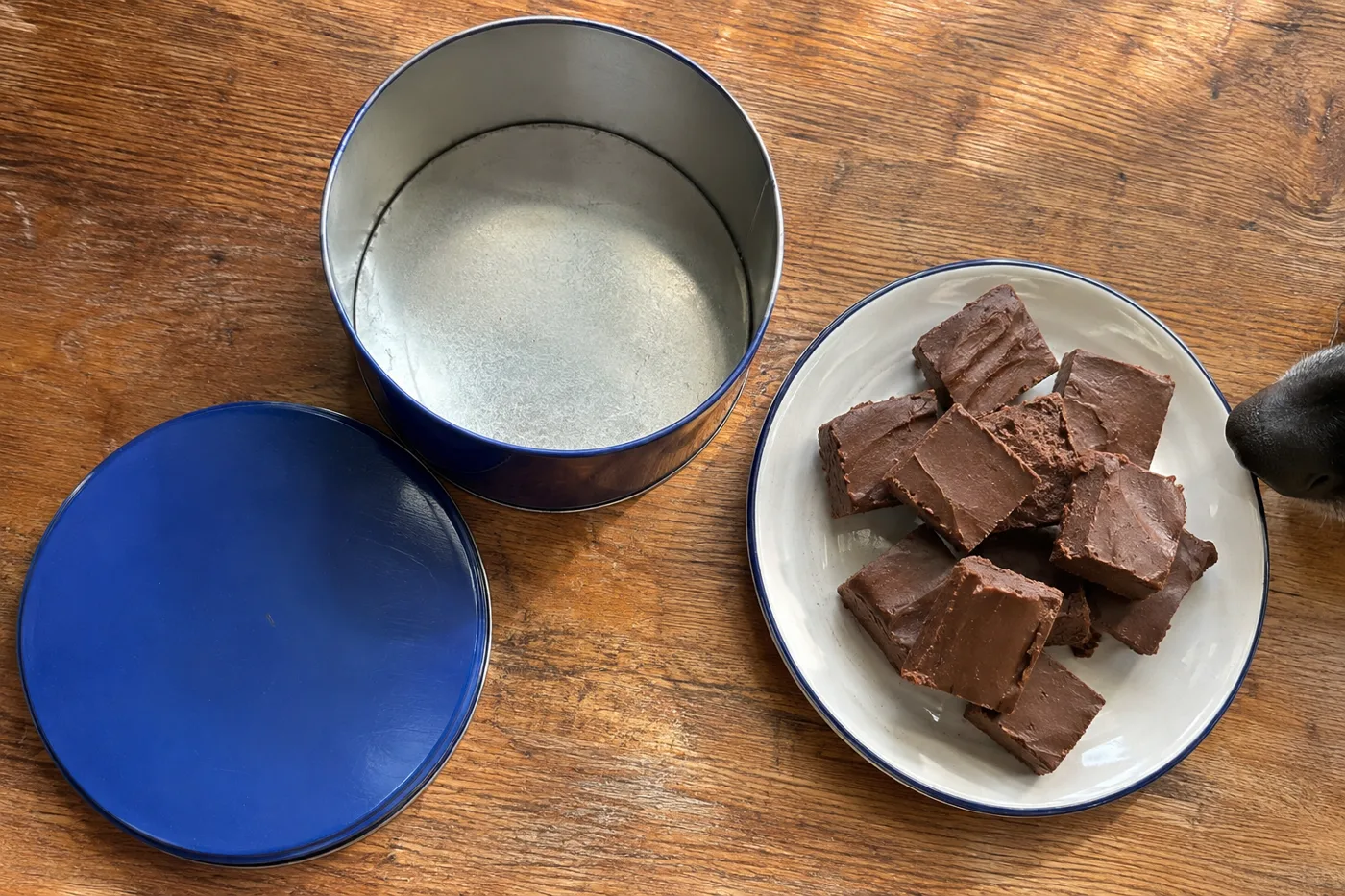
You know the tin. Round, blue, cookies one year and sewing buttons the next. At Christmas it sat on the coffee table beside a plate of fudge, right at nose height.
There’s a number on how much that mattered. A study of UK veterinary records from 2012 to 2017 found dogs were nearly five times as likely to be seen for eating chocolate at Christmas, and dogs under 4 were most at risk. U.S. dogs weren’t in it, but a fudge plate at nose height tempts a dog anywhere.
The newer worry is sugar-free baking. The FDA warns that xylitol, a sweetener, is dangerous for dogs, and the effects can take up to a day to show. It can turn up in cakes, muffins and pies, especially ones made for people with diabetes or baked at home with bulk xylitol. If the dog gets into chocolate or anything sugar-free, call your vet even if the dog seems fine.
The buttons, at least, were never a problem.
 You might also like30 Things Everyone Believed About Dogs Back Then (And What Vets Know Now)
#8 Watching Lassie on Christmas Sunday
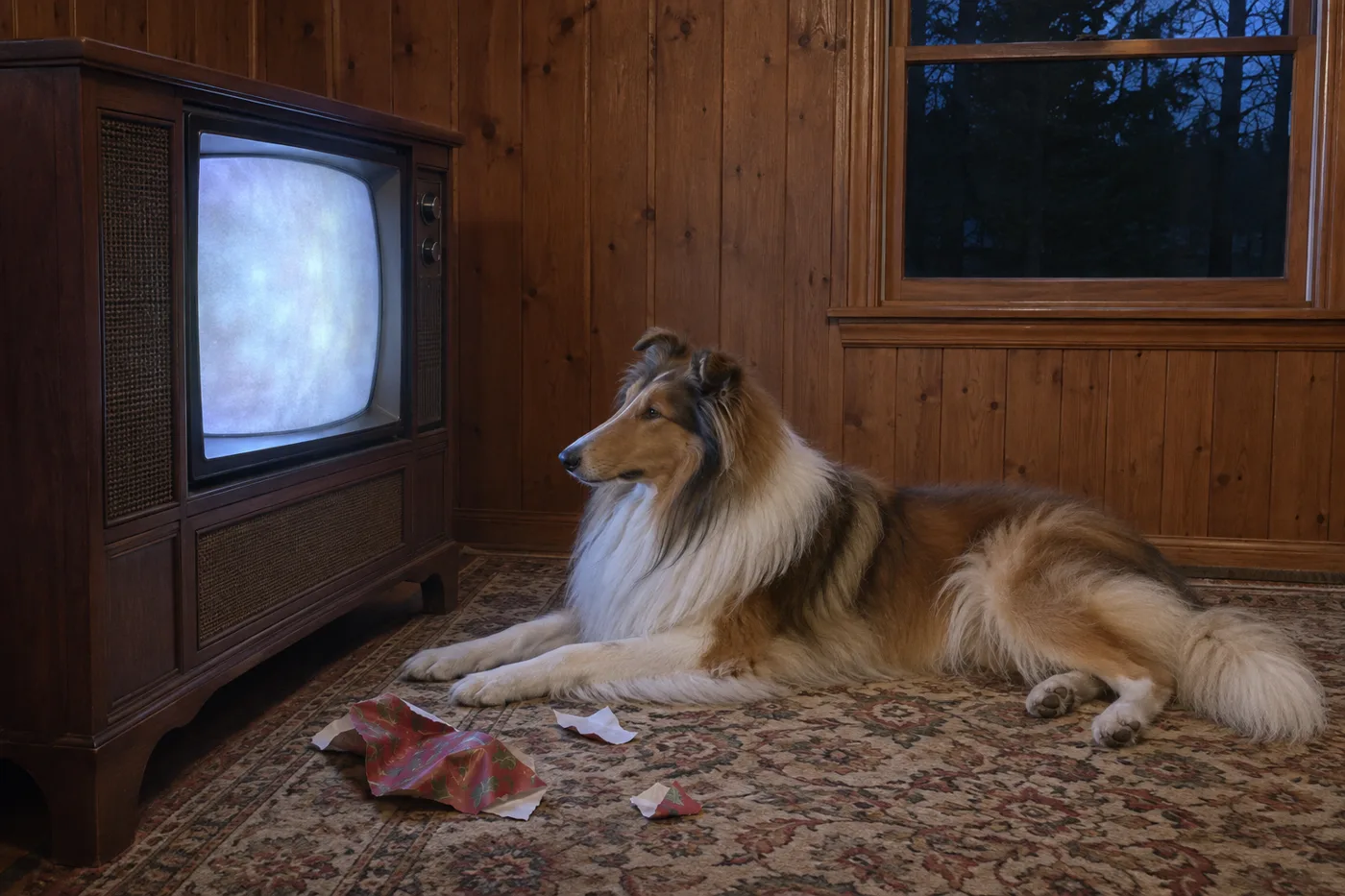
Sunday night meant Lassie, and the family dog often had a front-row seat. Some barked at the screen. Some slept through the whole rescue.
The show debuted on CBS on Sunday, September 12, 1954, sponsored by the Campbell Soup Company. Its Christmas episodes all fell on Sundays too, and two of them landed right on the holiday:
- “The Christmas Story,” December 21, 1958
- “The Christmas Story,” a different episode with the same title, December 25, 1960: Christmas Day itself
- “Yochim’s Christmas,” December 24, 1961: Christmas Eve
- “The Little Christmas Tree,” December 20, 1964
If you remember watching Lassie with torn wrapping paper still on the rug, it may well have been 1960.
#7 Tracking snow in after the Christmas morning walk
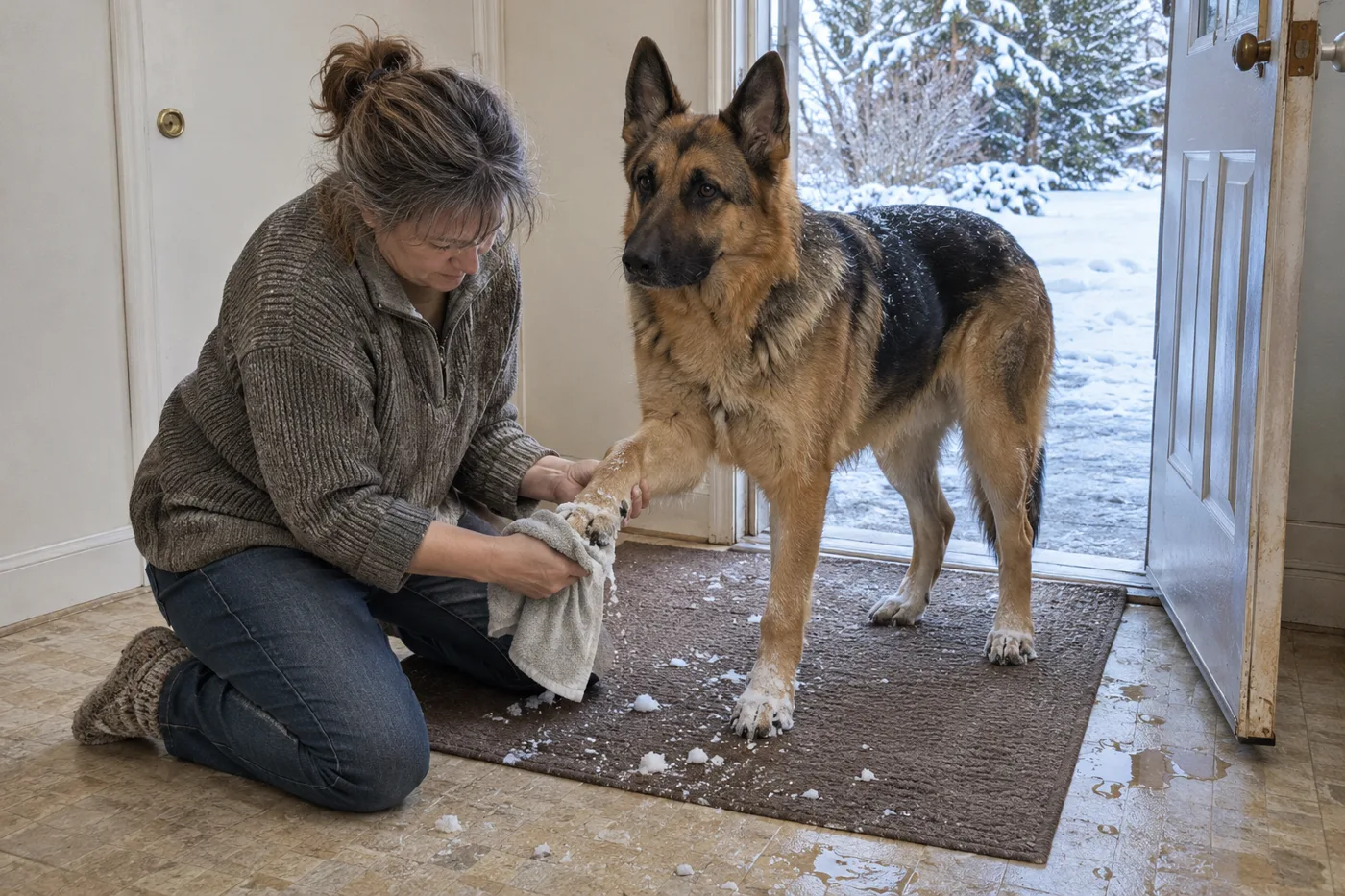
Where Christmas came with snow, the morning walk came back in with it: a dog shaking off in the front hall, ice packed between the pads, a line of prints across the clean linoleum. If your Christmases were in Phoenix or Miami, picture a sunny walk instead.
What nobody worried about much then was what was on the sidewalk. The ASPCA Animal Poison Control Center suggests:
- Wipe the dog’s paws as soon as it comes inside, with a damp cloth or baby wipes.
- Use paw wax or booties before the walk.
- Read the label on “pet-friendly” ice melt. Ones made with urea or magnesium chloride “may also cause stomach upset.”
The catch is the booties. Plenty of dogs take three steps in them and freeze, then high-step down the sidewalk as if it’s hot.
That’s what the paw wax is for.
#6 Barking at the Scottie on the Christmas card
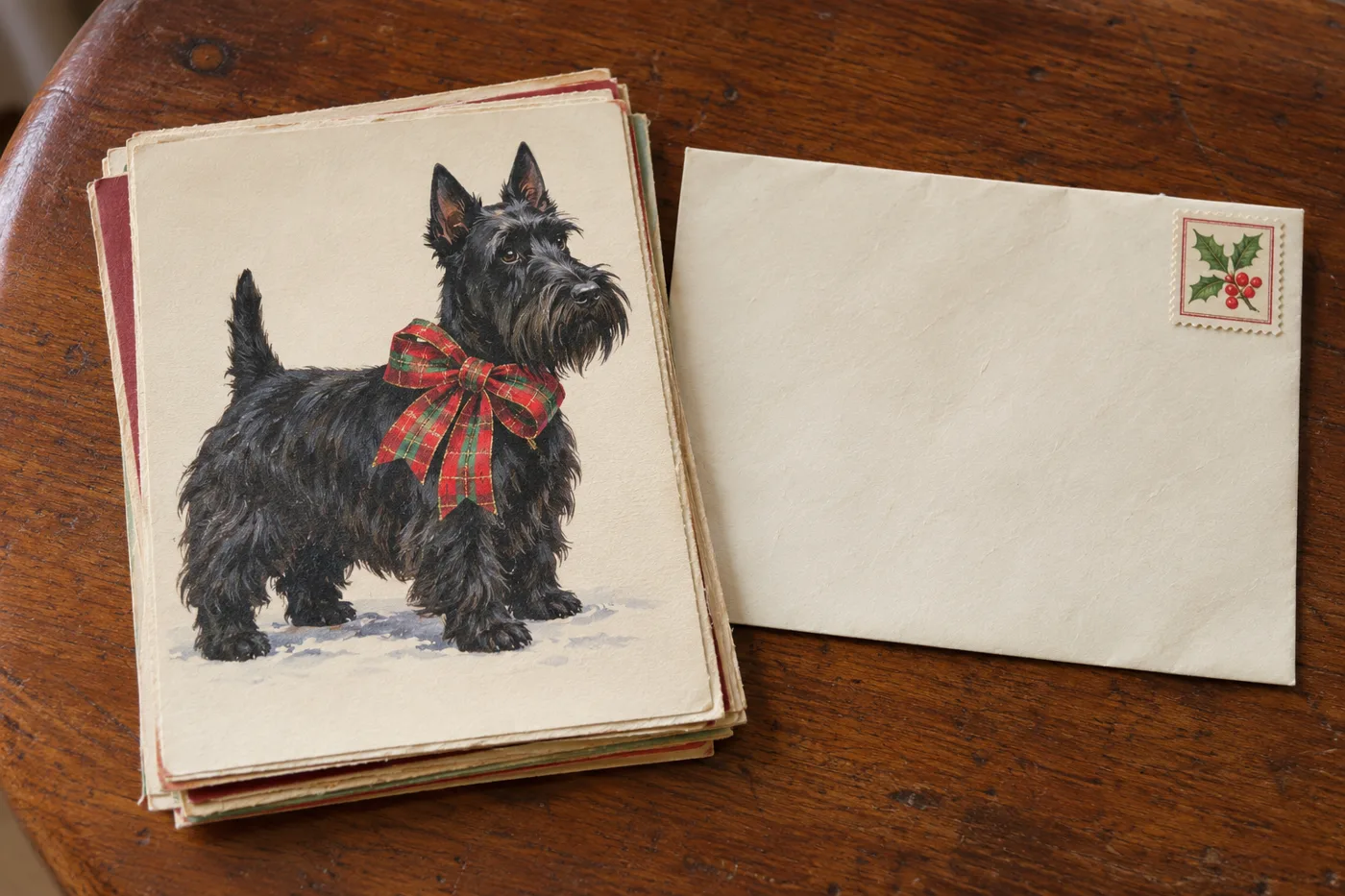
The mail carrier came every day in December, arms full, and the dog took every delivery personally. Inside: cards, and on some of them, a little black Scottie in a plaid bow.
Here’s the surprise. The Scottie’s heyday on Christmas cards and five-and-dime goods was the 1930s and 1940s, not the 1960s. If Scottie cards showed up at your house, they were carrying on a look that peaked a generation earlier. Today the Scottish Terrier ranks 57th among AKC breeds.
The stamp on those envelopes was brand new, though. The first U.S. Christmas stamp, a 4-cent wreath with two candles designed by Jim Crawford, came out November 1, 1962, in Pittsburgh. Nearly 862 million were printed.
That’s a lot of envelopes for one dog to bark at.
#5 Howling along with the Christmas records
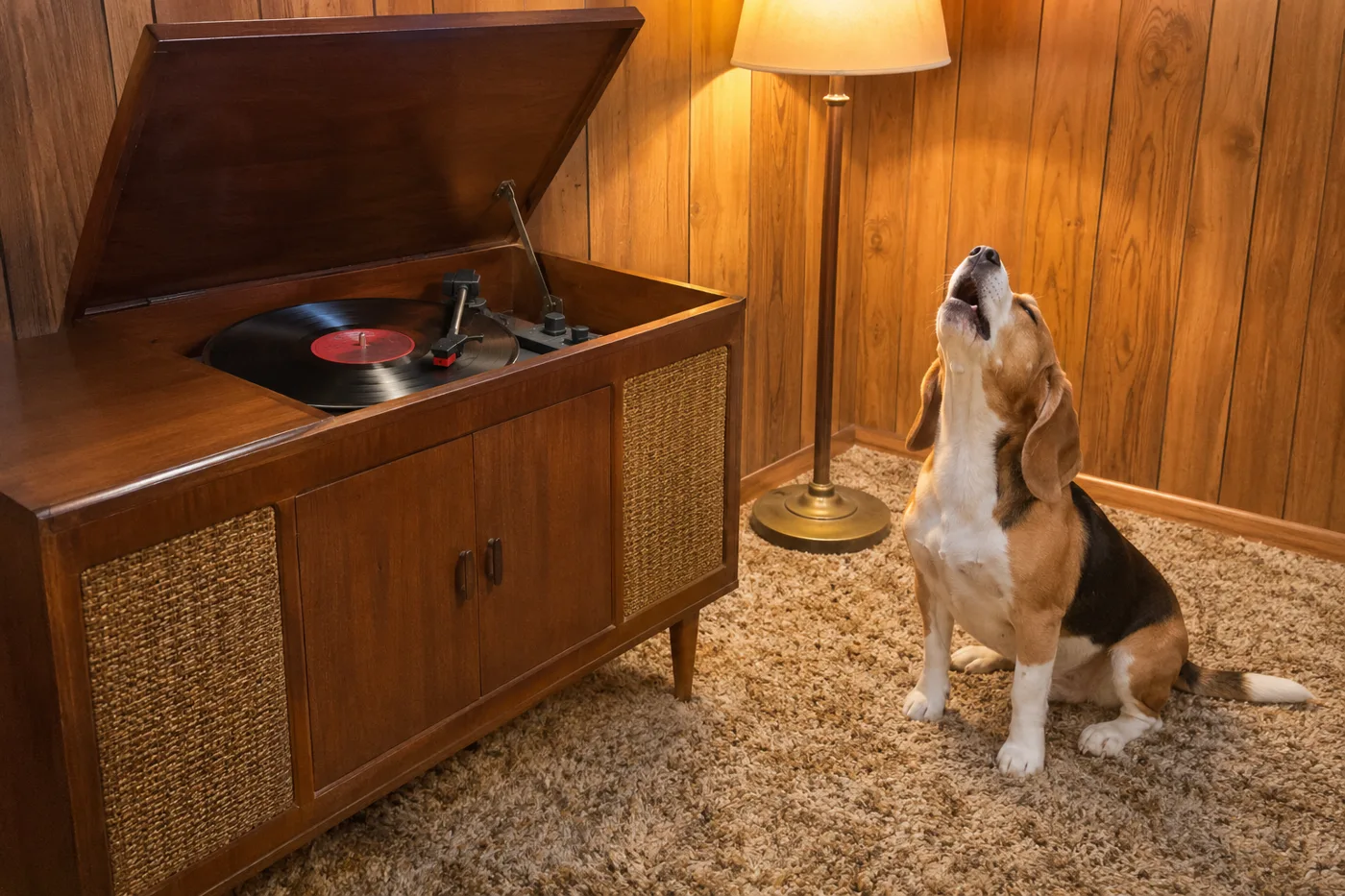
The console lid went up, the needle went down, and somewhere around the first big note, the dog joined in.
That record may well have come from a tire store. Goodyear sold Great Songs of Christmas for $1 against a $3.98 retail value from 1961 to 1977, and moved 1.5 million copies in 1962 and 2 million in 1963. Its advertising director, John P. Kelley, explained the thinking: “There are millions of people who have never been inside a Goodyear store.” A dollar album got them through the door.
If it was Bing Crosby instead, you had company. Guinness lists “White Christmas” as the best-selling physical single by a male solo artist, at an estimated 50 million copies.
As for the dog, veterinarian Jenny Alonge says dogs “have a sense of pitch” and may howl at music or sirens to communicate, an instinct handed down from wolves.
So when the dog hit the high note with Bing, that was a reply.
#4 Arriving as a puppy under the tree
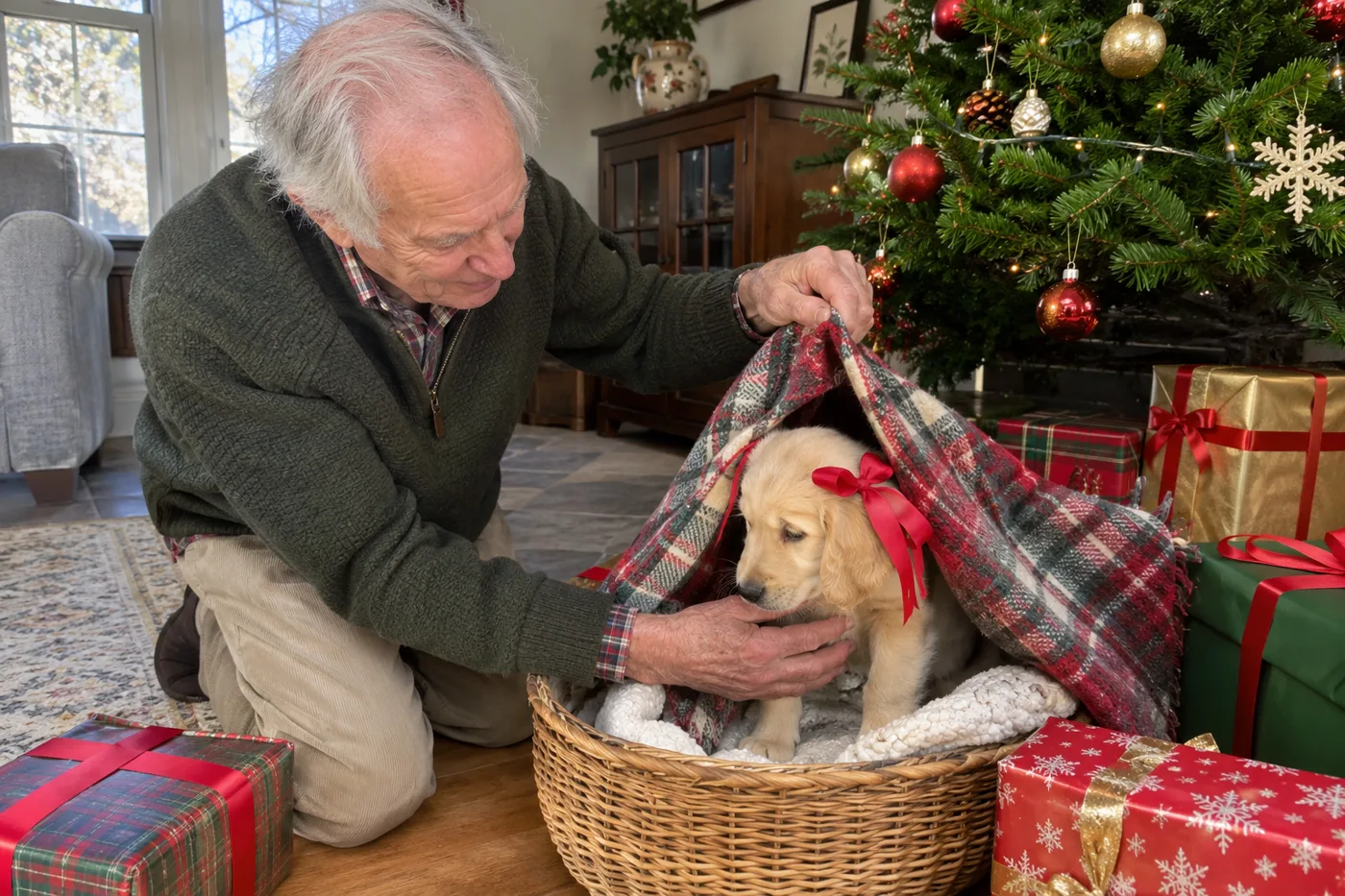
A basket with a blanket in it. A bow slipping off one ear. Somebody saying “Careful, careful.”
Whether a puppy for Christmas is a lovely surprise or a bad idea has been argued for decades, and there’s some real research on it. A 2013 ASPCA phone survey of 222 people who had been given a dog or cat in the previous 10 years found no significant link between getting a pet as a gift and how attached people felt. In fact, 58% said the gift made them more attached. That’s one fairly small study, so it’s a good sign rather than a guarantee.
American Humane still suggests a different route: give the excitement on Christmas morning and the dog later, once the holiday chaos settles. Its version is a wrapped adoption kit.
What goes under the tree instead – Toys, bedding and treats – A leash and a collar – A certificate for the shelter’s adoption fee, anywhere from nothing to a couple hundred dollars – A plan to pick the dog out together after the holidays
Either way, it only works if the person getting the dog has asked for one. A surprise dog for someone who didn’t want a dog is a surprise for the dog too.
#3 Riding along to Grandma’s, or staying home
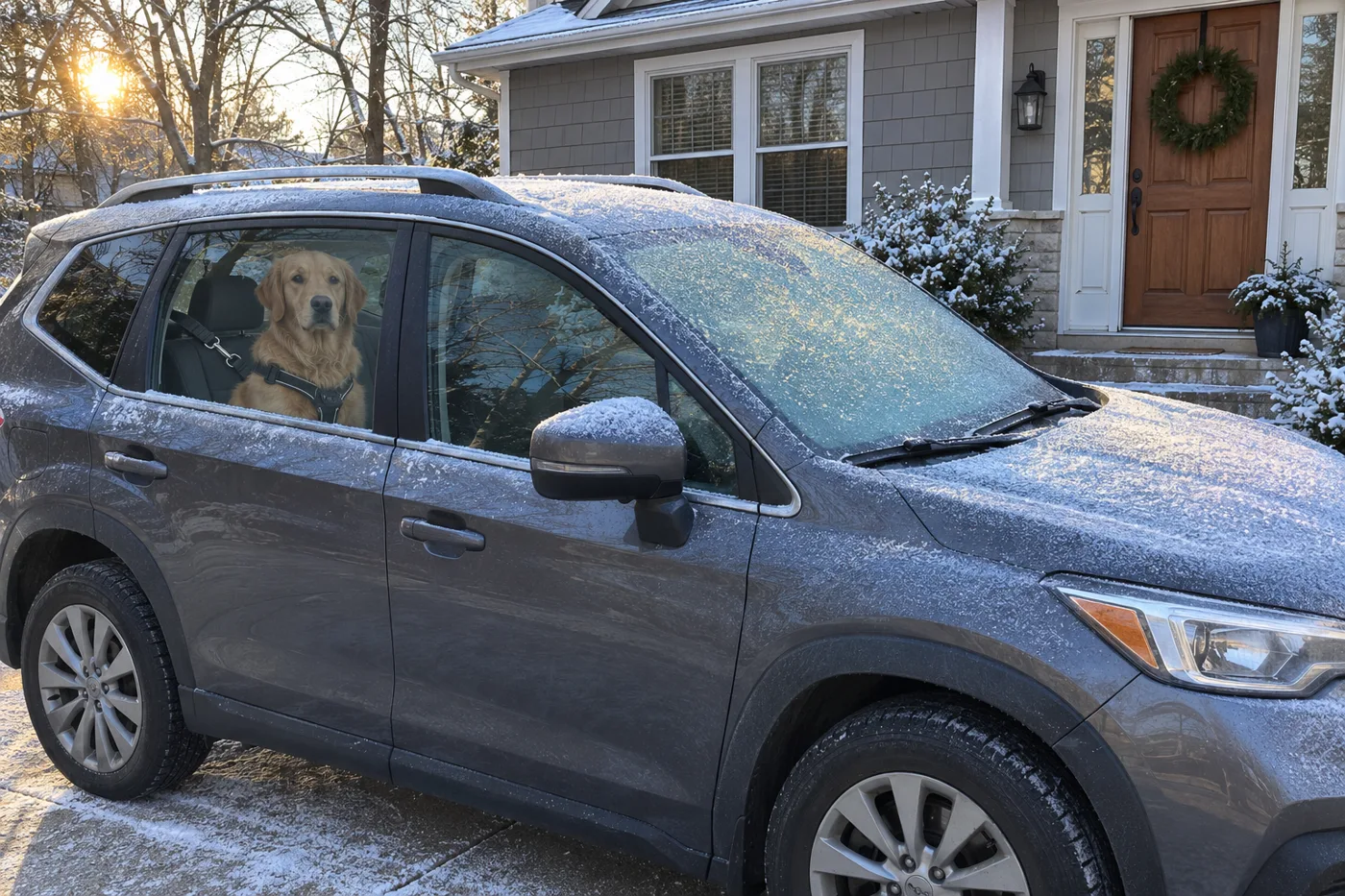
If there was a Grandma’s house on your Christmas map, the dog question came up every year. Some years the dog rode in the way-back of the station wagon. Some years a neighbor came by to feed it. Families never quite settled it.
The AKC’s advice for bringing a dog to a holiday gathering is short: “Keep a leash on her,” and give her somewhere quiet “to escape the chaos.” If the hosts aren’t dog people, it suggests asking a friend to watch the dog instead. That last line settles a lot of arguments before they start.
The ride has changed more than the party. In crash tests by the Center for Pet Safety, many dog restraints failed at 30 mph, so a harness that only looks sturdy may not hold. The center now certifies a short list. One harness, the Sleepypod Clickit Sport Plus, is certified for dogs from 18 to 90 pounds and runs about $103 to $126 on the maker’s site. Certified crates cost more: the Gunner G1 starts at $550 from its maker. The same tests flagged the front seat as unsafe for pets, so the dog rides in the back seat, buckled in.
#2 Where the 1960s favorites rank now
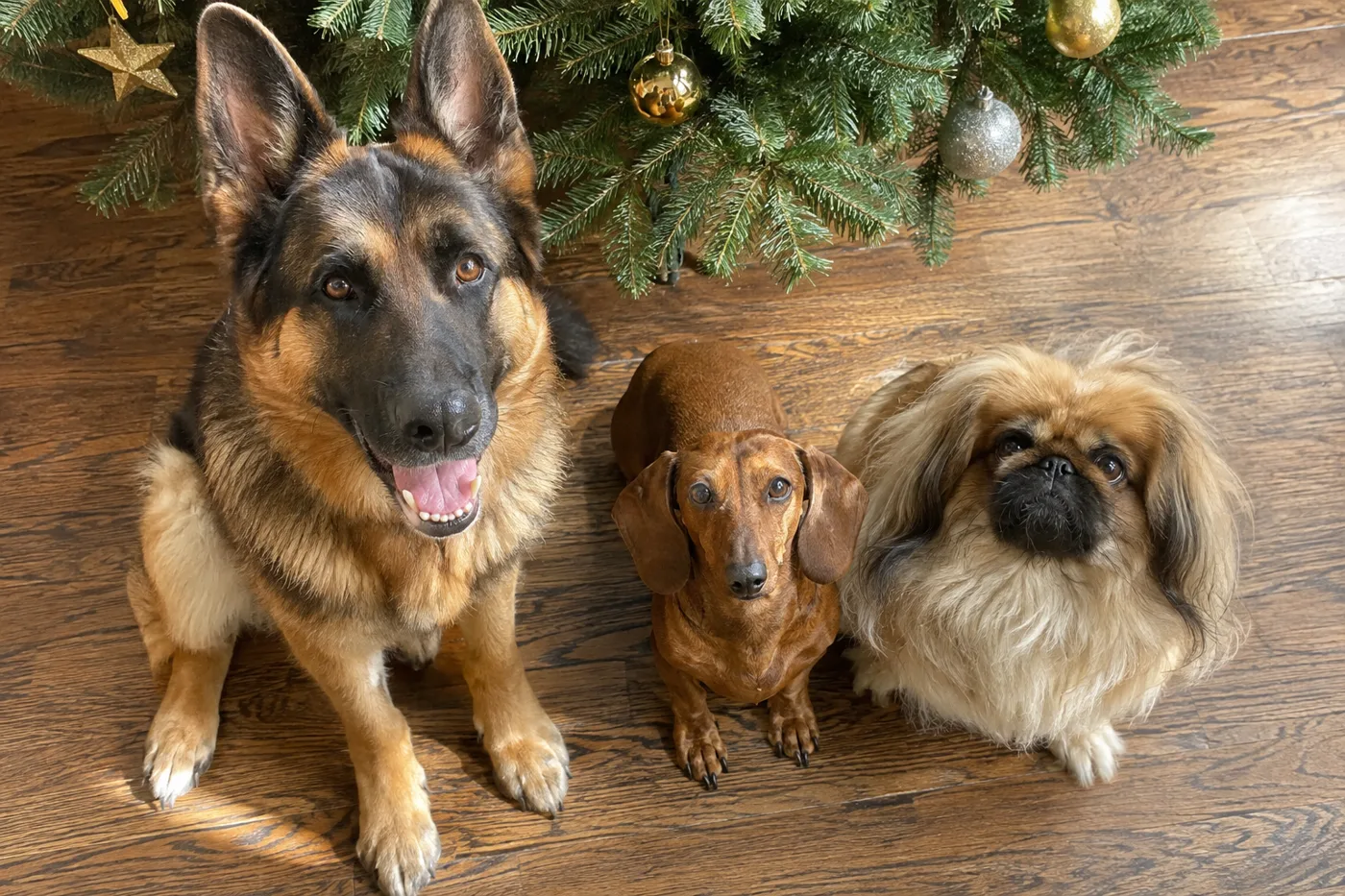
We took the AKC’s top 10 for the 1960s and looked up each breed on its 2025 list, which ranks 202 breeds by registrations. Here’s where the old favorites stand.
| Breed | 1960s rank | 2025 rank |
|---|---|---|
| Poodle | 1 | 6 (down 5) |
| German Shepherd Dog | 2 | 4 (down 2) |
| Beagle | 3 | 7 (down 4) |
| Dachshund | 4 | 5 (down 1) |
| Chihuahua | 5 | 24 (down 19) |
| Pekingese | 6 | 90 (down 84) |
| Collie | 7 | 39 (down 32) |
| Miniature Schnauzer | 8 | 17 (down 9) |
| Cocker Spaniel | 9 | 33 (down 24) |
| Basset Hound | 10 | 34 (down 24) |
Four of the ten are still in the top 10: the German Shepherd, Dachshund, Poodle and Beagle. Five are still in the top 20. Not one ranks higher today than it did in the 1960s. The German Shepherd came closest, slipping just two places.
The biggest fall belongs to the Pekingese, down 84 places to No. 90. If one is snoring beside you, you’ve got one of the less common breeds on the AKC’s list now. The Collie, TV star of the era, dropped to 39th.
The Dachshund is the one climbing lately. In the 2025 rankings, released March 18, 2026, it reached No. 5 for the first time since 2003, nudging the Poodle down to sixth. The French Bulldog holds No. 1 for the fourth year in a row.
Two things to keep in mind. These numbers count registered purebreds only, and the 1960s list covers a whole decade while 2025 is a single year. And if you’re choosing a breed for the years ahead, the AKC’s president and CEO, Gina M. DiNardo, said it plainly: “Popularity does not mean it’s right for everyone.”
#1 Missing the dog from Christmases past
Watch a few videos of dogs tearing into presents and the comments fill up with the same thing: people missing a dog who isn’t here anymore. Under one TikTok of dogs opening gifts, commenters wrote about dogs they’d lost, one of them only days earlier. One dog owner there remembered how her dog knew exactly which gifts under the tree were hers, and would pull each one out and open it. She misses her.
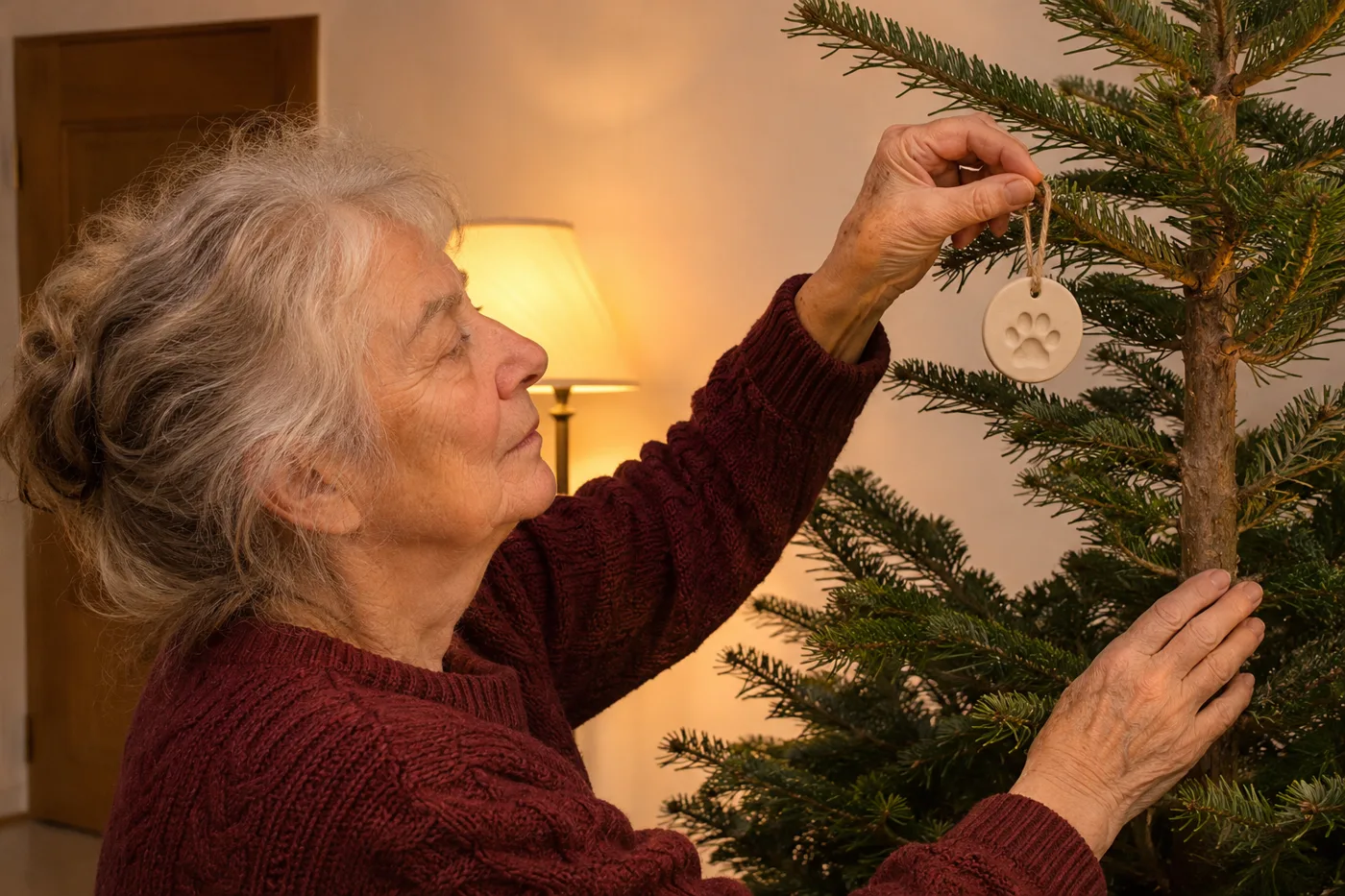
If that one landed hard, there are small, real ways to keep a dog in the holiday. Augusta O’Reilly, a licensed clinical social worker at the Virginia-Maryland College of Veterinary Medicine, suggests three:
- Lighting a candle for your pet
- Hanging an ornament for them on the tree
- Making “a pawprint ornament”
She also puts a name to something people with an older dog often feel and can’t explain: anticipatory grief, “the emotional response to an expected loss.” If the dog beside your tree this year has a gray muzzle and slower mornings, that ache can sit right alongside the fun of watching her go for her present.
And a pawprint ornament doesn’t have to wait. You can press one with a dog who is still here, still nosing past the big packages to find the one that’s hers.
Keep reading
 20 Prices That Show What a Dog Cost in 1970 vs. TodaySee all 20 →
More you’ll enjoy
 21 Dog Breeds That Were Everywhere When You Were a Kid
 16 Things the Family Dog Ate in the 1960s, and What We Do Today
 23 Pieces of Old-School Dog Training Advice That Trainers Now Cringe At
The bottom line
Most of what we remember about a family dog at Christmas is something nobody planned. Nobody photographed it, either. It lives with whoever was in the room.
So who else was in the room? A brother, a sister, a cousin, an old neighbor, if you have one. Their version of that dog will have a detail yours has lost, and the call takes five minutes.
If a dog is sleeping by your tree this year, watch where it goes first on Christmas morning.
Bonus: Four small things to do before Christmas morning
- Put your vet’s after-hours number and the nearest emergency animal hospital in your phone before Christmas Eve, so nobody is searching for them at midnight. Add Pet Poison Helpline, (855) 764-7661, too. It charges $99 per incident, follow-up calls included.
- Write the dog’s name and the year on the back of every Christmas photo with a dog in it. In 30 years, nobody will remember whether that was Duke or Duke II.
- Get the old slides and negatives scanned, so the dog from 1964 can show up on the TV screen this Christmas instead of in a drawer.
- If you’re bringing a dog anywhere for the holidays, ask the host plainly in November. A yes or no now beats a standoff on the front step.
Questions people also ask
What were the most popular dog breeds in the 1960s?
The Poodle was No. 1, followed by the German Shepherd Dog, Beagle, Dachshund and Chihuahua, according to the AKC’s 1960s ranking. The rest of the top 10 were the Pekingese, Collie, Miniature Schnauzer, Cocker Spaniel and Basset Hound. On the AKC’s 2025 list, the Poodle is No. 6 and the Pekingese is No. 90.
Was old Christmas tinsel made of lead?
Yes, lead-foil tinsel was common in the 1950s and ’60s. Under an agreement between the FDA and manufacturers, production stopped on January 1, 1972; it was an agreement, not a formal ban. Tinsel today is made of PVC plastic.
Is tinsel safe for dogs?
No, swallowed tinsel isn’t safe for dogs, even though it no longer contains lead. It can lodge in the intestines as what vets call a “linear foreign body,” which often needs urgent veterinary care. If your dog eats tinsel, ribbon or twine, call your vet.
What kind of dog is Max in How the Grinch Stole Christmas?
Max has no stated breed: neither the book nor the 1966 TV special names one. Director Chuck Jones based him on his own childhood dog, a young fox terrier. That’s where the idea came from, not an official breed.
Can dogs eat popcorn or Christmas cookies?
Plain, air-popped popcorn is generally fine for dogs in small amounts, with no butter, salt or seasoning, says the AKC. Christmas cookies are riskier: chocolate is dangerous to dogs, and so is xylitol, a sweetener used in some sugar-free baking. Call your vet if your dog eats either.
Is it a good idea to give a puppy for Christmas?
It can work if the person getting the dog wants one: a 2013 ASPCA survey of 222 people found no drop in attachment among those who received a pet as a gift. That’s a single small study, though. American Humane suggests a wrapped adoption kit instead, so the family can choose the dog together after the holidays.


