What to move, what to skip, and what to do the moment your dog gets into the tinsel, the batteries or a guest’s purse, counted down from mild tummy trouble to emergency surgery.
You’re halfway through the ornament box, the one with cardboard dividers gone soft at the corners. The dog has settled under the lowest branches like a foreman. He sniffs a glass bell. He sniffs the light cord. He sniffs you. Most Christmas dangers for dogs sit right there at his nose height, and plenty of them never go near the dinner table. Dr. Renee Schmid of Pet Poison Helpline says her line gets “more potential poisoning calls in November and December than any other time of the year.”
Table of Contents
#24 Glass ornament knocked off by a wagging tail
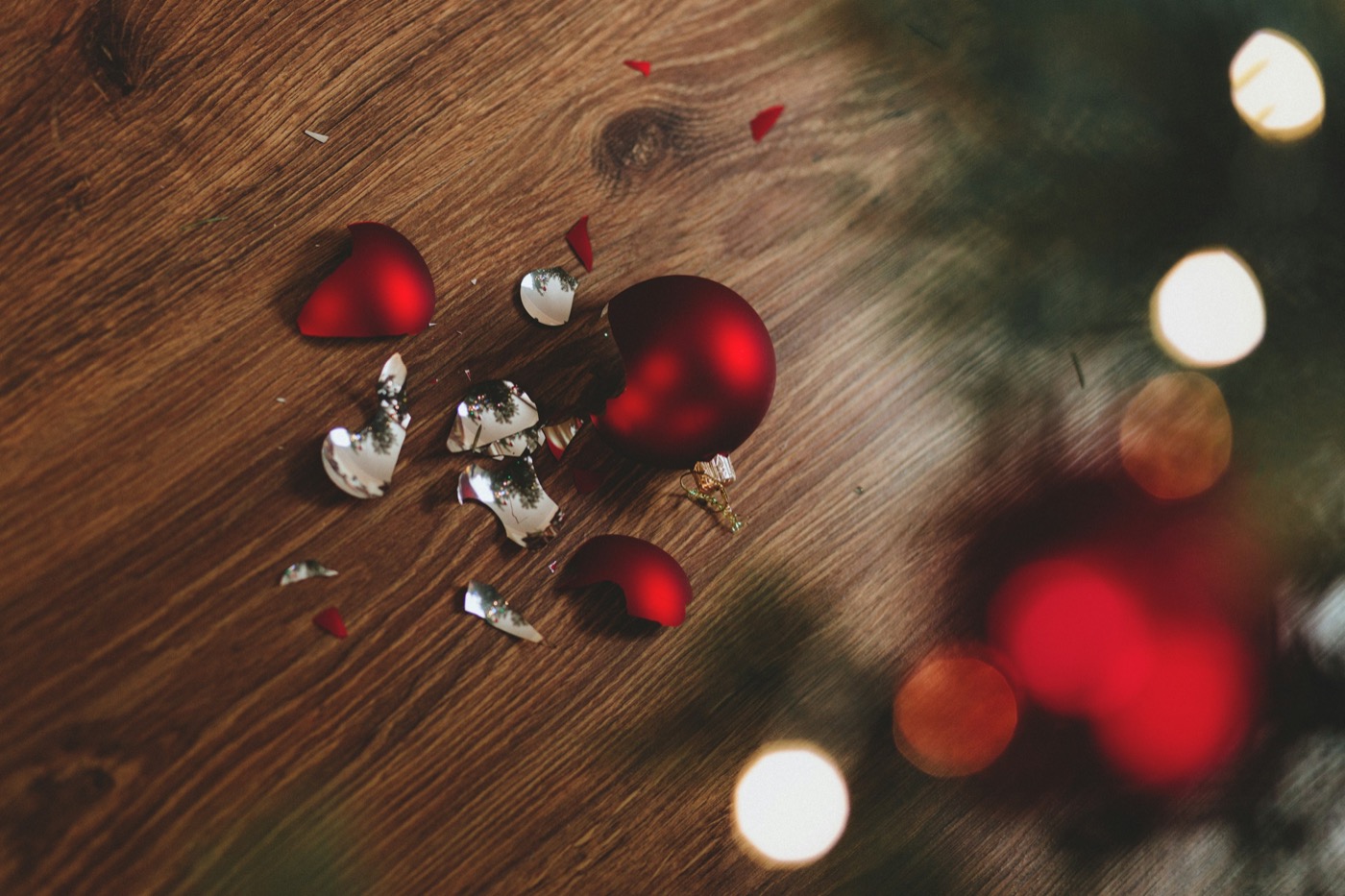
The lower part of the tree is what the Pet Poison Helpline team, writing for PetMD, calls a “high impact zone for excited wagging tails.” Hang shatterproof ornaments down there and keep the glass up high.
If a bell already exploded and the dog got a piece, don’t make him throw up. Veterinarian Dr. Marty Becker explains that “the dog runs a greater risk of injury bringing back up sharp items such as glass or needles.” Call your vet instead. They may suggest bread, pumpkin or mashed potatoes to pad things on the way through.
Small glass pieces usually pass uneventfully, says the National Capital Poison Center. Go in right away if you see straining, blood in the stool, belly pain, a dog who won’t eat or one who just lies there.
The ornaments nobody warns you about are the old family ones. Here’s how they compare with new glass:
| Ornament | What’s inside | Worth knowing |
|---|---|---|
| New glass, even “mercury” style | Just glass | Cuts are the risk |
| Very old or imported painted ones | Possible lead paint | Paint is the worry |
| True antique mercury glass | Small amounts of mercury between layers | New ones have none |
| Bubble lights, 1950s to 1970s | A solvent called methylene chloride | Bubbles mean liquid |
That poison center writes about children, not pets. Take it as a reason to hang the heirlooms where nobody short can reach them, on two legs or four.
#23 The dog drinking from the tree stand
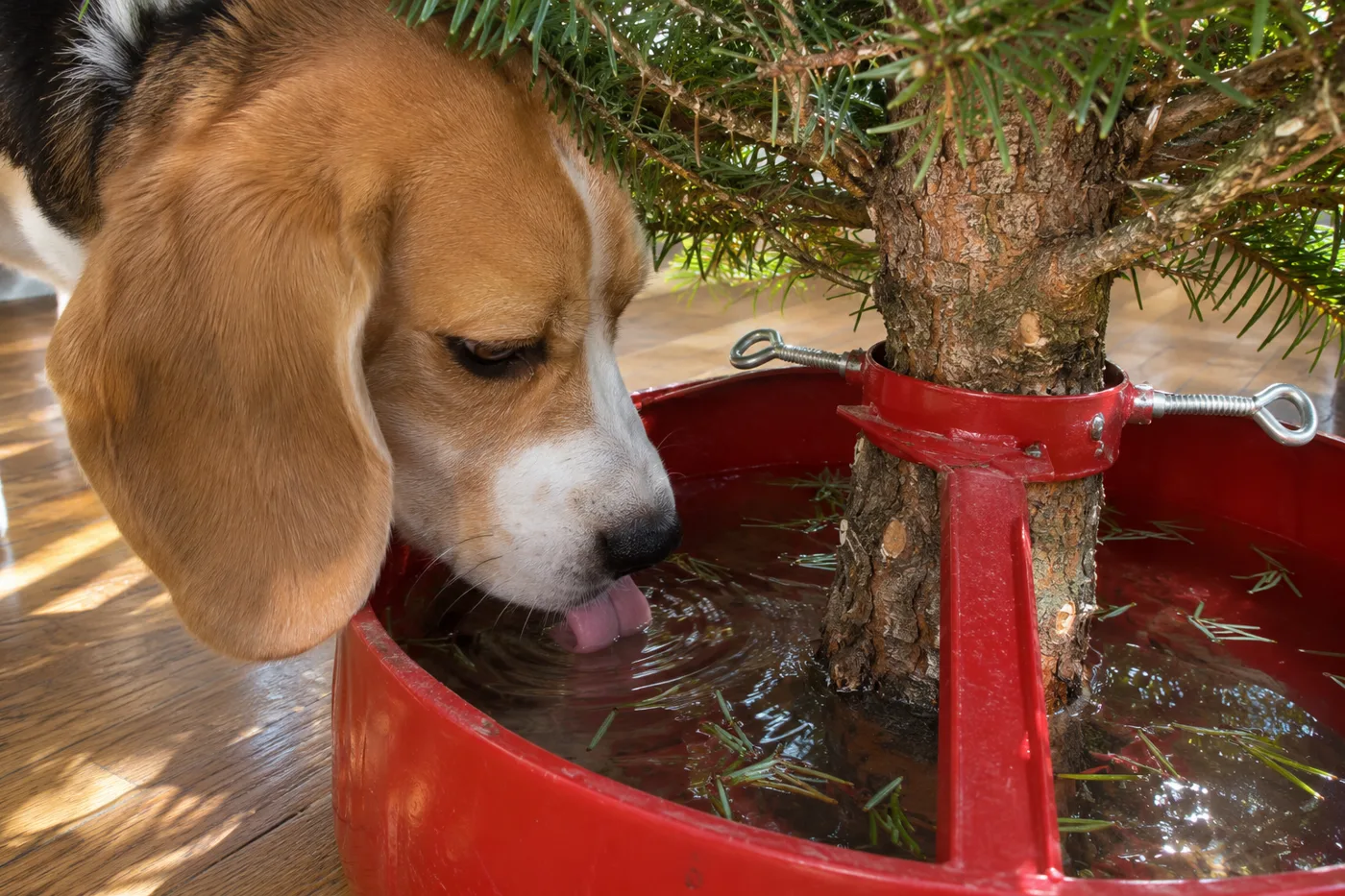
Plain water in the stand is close to harmless. Dogs drink it anyway, and Dr. Jyl Rubin, a veterinarian in Orangevale, California, says it plainly: “The pets like to drink from it and there’s bacteria that can collect in there.” An upset stomach is the usual price.
The trouble is what people pour in to keep the tree “fed.” Homemade recipes passed around for years include soda, sugar and corn syrup, and also “aspirin, bleach, even whiskey.” Those last ones are a different story. And bleach mixed with vinegar or lemon juice makes chlorine gas, which is bad news for you before it’s bad news for him.
Store-bought preservative packets are milder. The same poison center describes a 70-pound dog who drank from a tipped stand and got sleepy. The product turned out to be mostly sugar and water, and no serious poisoning was expected.
Use plain water only, and plenty of it, which is what Christmas tree growers advise anyway. Then cover the bowl, as the ASPCA suggests, or use a stand that blocks the opening, as PetMD suggests. If he already drank, the only question that matters is what else went in there. Plain water: watch him. Anything else: call with the bottle in your hand.
#22 Poinsettia on the coffee table

Every December somebody’s aunt moves the poinsettia to the top of the fridge like it’s a loaded gun. You can relax a little.
Pet Poison Helpline calls “highly toxic” a myth. The milky sap causes “mild and self-limiting oral irritation, salivation, vomiting and diarrhea,” and most cases are handled at home.
So where did the scary reputation come from? A 1919 rumor that a child in Hawaii died after eating a leaf. The story got repeated in a 1944 book on Hawaiian poisonous plants. In 1970 the doctor who wrote that book admitted to Ohio State researchers it was hearsay. A year later, Ohio State fed rats huge doses and found no deaths and no signs of poisoning.
| The reputation | The reality | |
|---|---|---|
| Danger | Deadly | Drool and a sore tummy |
| Where it’s treated | Emergency room | Usually at home |
| When to call a vet | Right away | If signs hang on or get worse |
Keep it up on a shelf anyway, for the sake of your rug.
#21 Mistletoe and its fallen berries
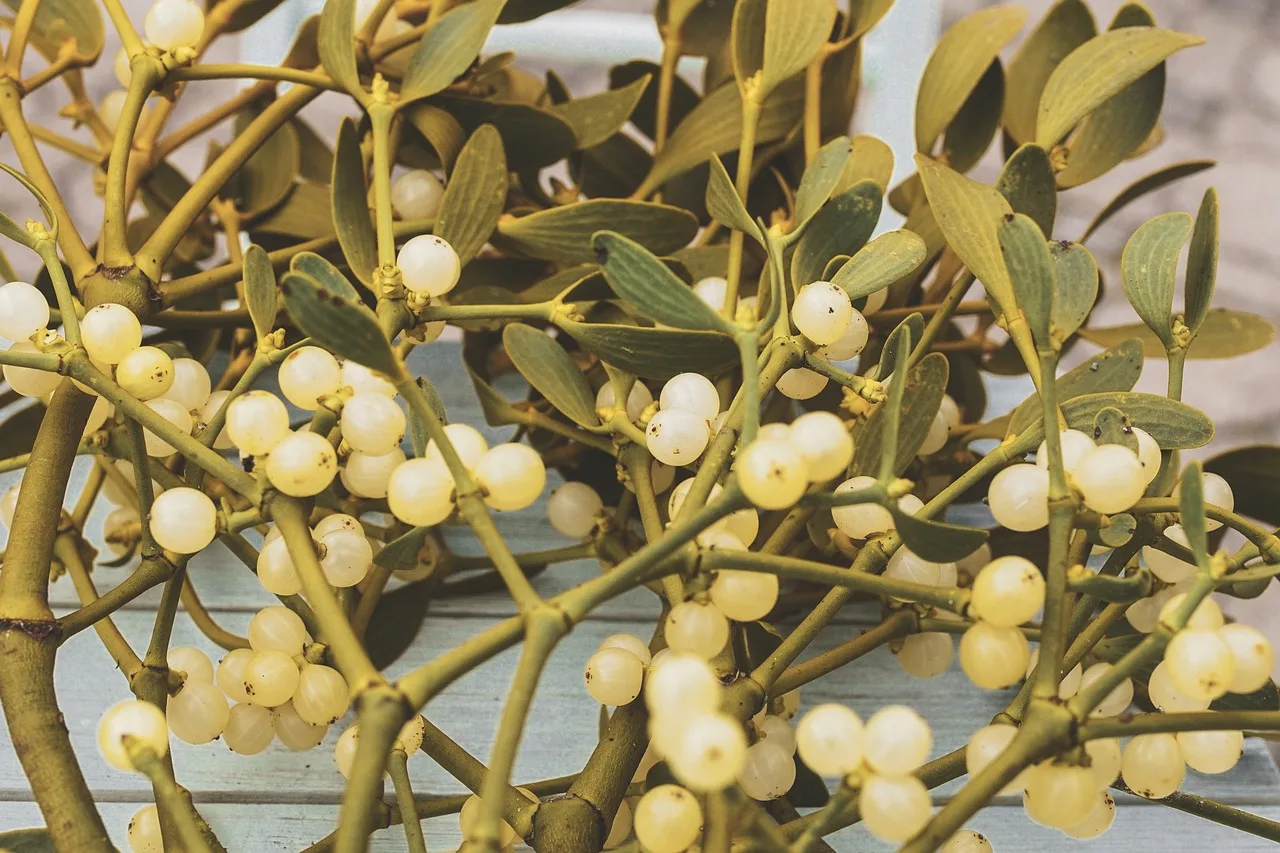
American mistletoe is milder than its reputation. Pet Poison Helpline says the scary stories come from confusing it with European mistletoe, and most American cases are handled at home.
It’s still on the ASPCA’s toxic list for dogs, with vomiting, diarrhea, difficulty breathing, a slow heart rate and, rarely, low blood pressure. And a big helping matters: VCA says large amounts may cause collapse, seizures or worse.
The catch is gravity. A sprig hung over an archway drops its white berries one at a time, right where a dog patrols. Plastic mistletoe kisses just as well.
#20 Holly in wreaths and centerpieces

Even the experts don’t quite agree on this one. The ASPCA lists holly as toxic but notes that “Leaves and berries are low toxicity.” VCA says Christmas holly can cause “severe gastrointestinal upset, thanks to the spiny leaves and potentially toxic substances.”
Read them side by side and they’re closer than they sound. Both point at the stomach. VCA’s “severe” leans partly on those spikes, which are no fun going down or coming up.
Worth knowing when you read wreath labels: the ASPCA counts winterberry and inkberry as holly too. A centerpiece on the coffee table is dog height. On the mantel, it isn’t.
#19 The amaryllis that came as a gift

That boxed bulb kit with the giant red flower on the front is a real poison. The ASPCA lists amaryllis as toxic to dogs, with vomiting, diarrhea, belly pain, heavy drooling, loss of appetite, a flat mood and tremors.
It also travels under other names: Belladonna lily, Saint Joseph lily, Cape Belladonna and Naked Lady. If the tag says any of those, it’s the same plant.
If it’s sitting under the tree in its box, move it up before it gets unwrapped by someone with paws. If it’s already been chewed, call.
#18 Pine needles under the tree
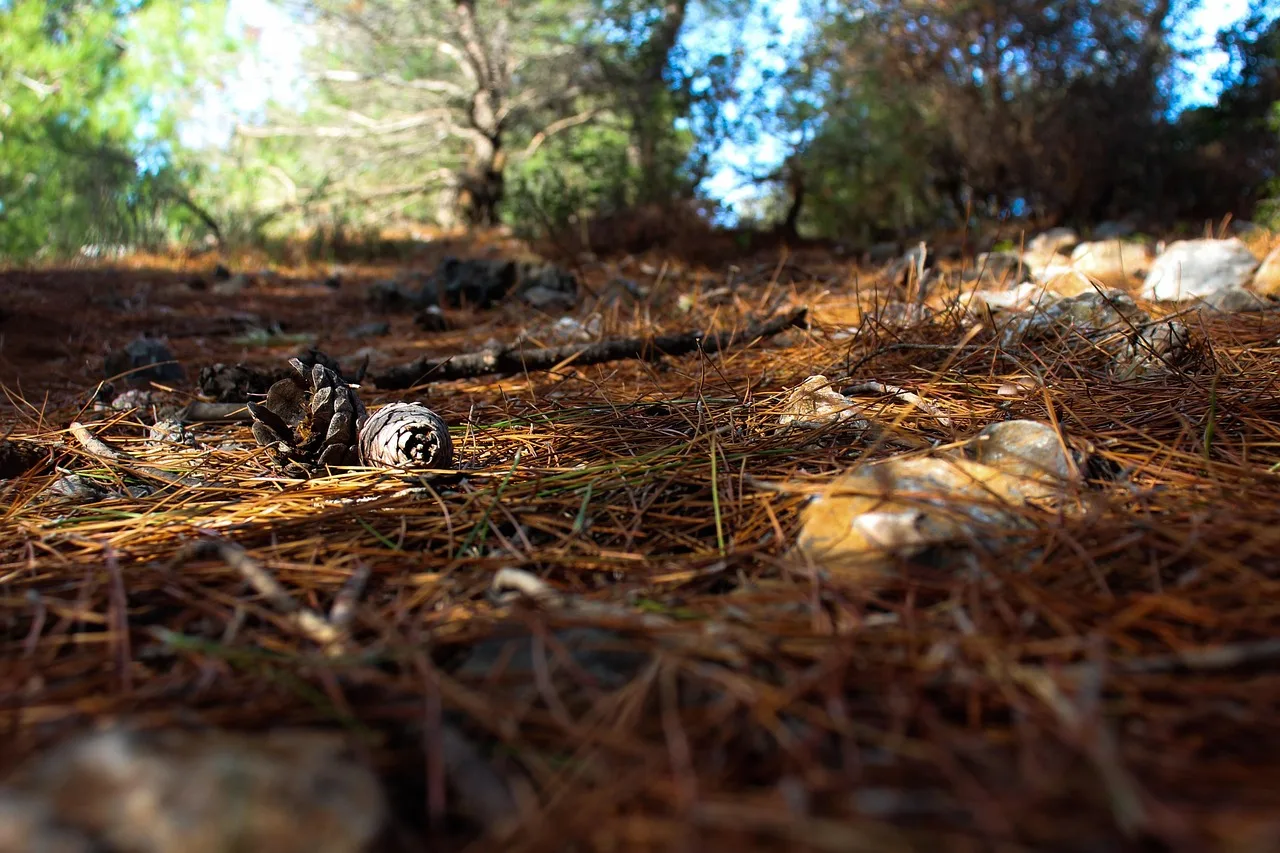
Vacuuming needles is a December sport. They’re worth sweeping for more than looks. The PetMD page from the Pet Poison Helpline team says “The sap and oils found in the tree needles are known to cause drooling, vomiting, and diarrhea in dogs.” The needles are sharp, too, and a swallowed one can puncture the gut.
Sweeping them up often, as the Oregon Veterinary Medical Association suggests, keeps them out of reach.
#17 Candles at tail height

A Lab’s tail swings right at coffee-table height, which is also where the pillar candle sits.
Fire departments know this season well. From 2018 to 2022, US crews handled an average of 835 home fires a year started by decorations other than the tree. Candles started about 32% of them over the year, and 46% of the ones in December, according to the National Fire Protection Association. Christmas trees add about 155 home fires a year, more than 40% involving electrical or lighting equipment.
“The commonality between the vast majority of all these fires is that they’re largely preventable.” Lorraine Carli, NFPA vice president of outreach and advocacy
VCA suggests battery-operated flameless candles and adds a point people miss: “pets have a much keener sense of smell than we do, so even mild fragrances can overwhelm them.” So unscented is kinder. Just keep the battery covers screwed shut and the spare pack put away. See #3 for why.
 You might also like17 Easy-to-Miss Slips When Your Grandkids and Your Dog Share a House
#16 Space heaters and the fireplace
An older dog will find the warmest spot in the house and lean on it. Sometimes that’s a space heater.
Dr. Ann Hohenhaus of The Animal Medical Center in New York warns that pets can tip space heaters over, starting fires or causing burns. Fireplace sparks can burn a dog or set fur alight. And carbon monoxide poisoning “is more common in the winter.”
Put the heater where a sleeping dog can’t press against it or a running one can’t knock it, keep the fireplace screen closed whenever there’s a flame, and if you have a carbon monoxide alarm, press its test button while you’re thinking about it.
#15 Homemade salt-dough ornaments
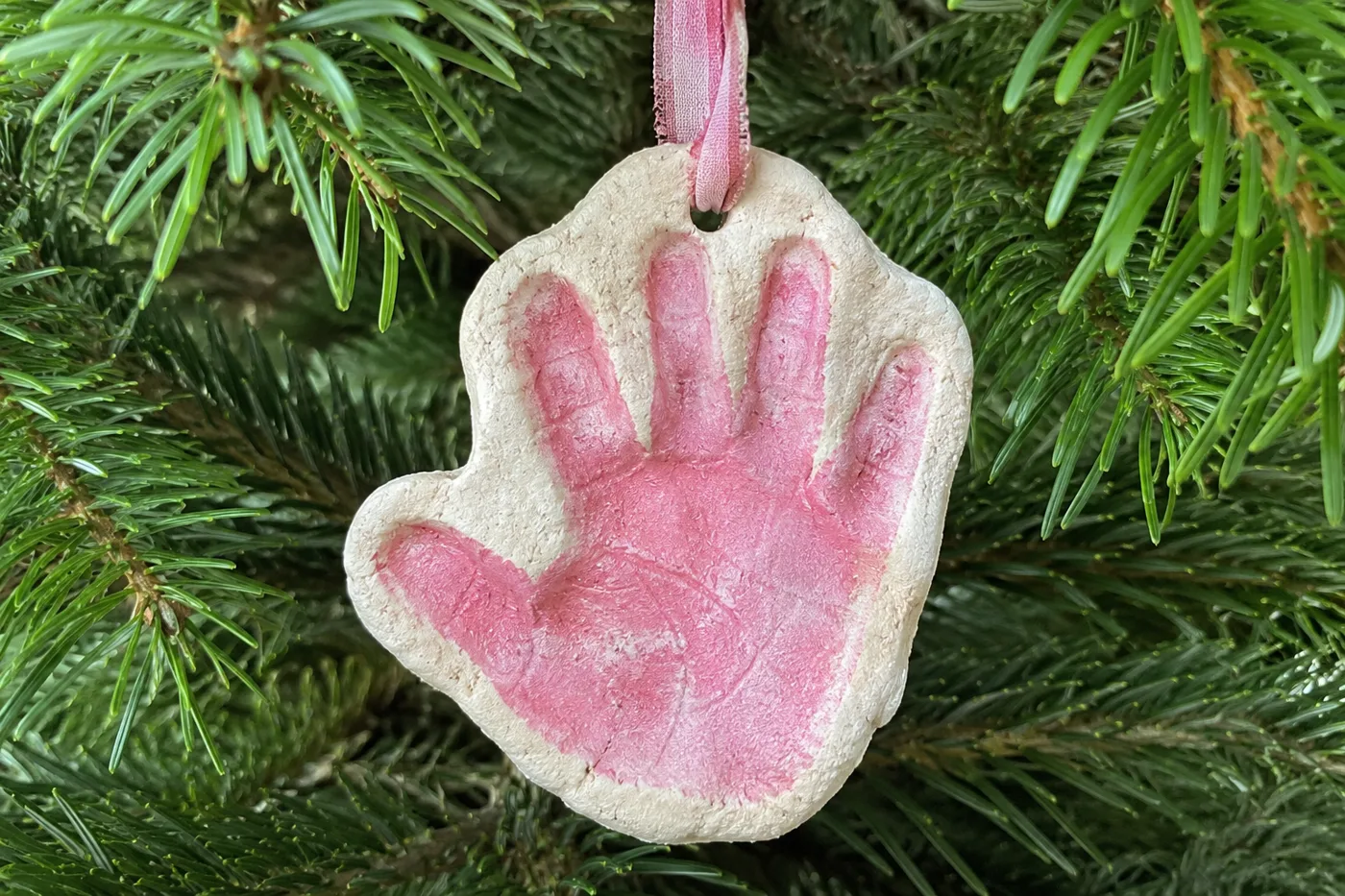
If a child in your life rolled out dough at the kitchen table and pressed a handprint into it, you know exactly the ornament this is. Pet Poison Helpline puts it starkly: “As few as 1-2 ornaments could make your dog very sick.”
The signs aren’t what you’d expect. A salt-poisoned dog may look “trembly and stumble”, like something is wrong with his balance, and VCA notes the nerve signs can show up late. The ASPCA says salt can throw off the body’s chemistry badly enough to be life-threatening. Baked ornaments are also hard to pass, so even a dog who seems fine may end up in pain.
If he ate one: let him drink water if he isn’t vomiting, and call. Then hang the rest high, or keep the handprint in a shadow box where it’s safe forever.
#14 A snow globe that breaks
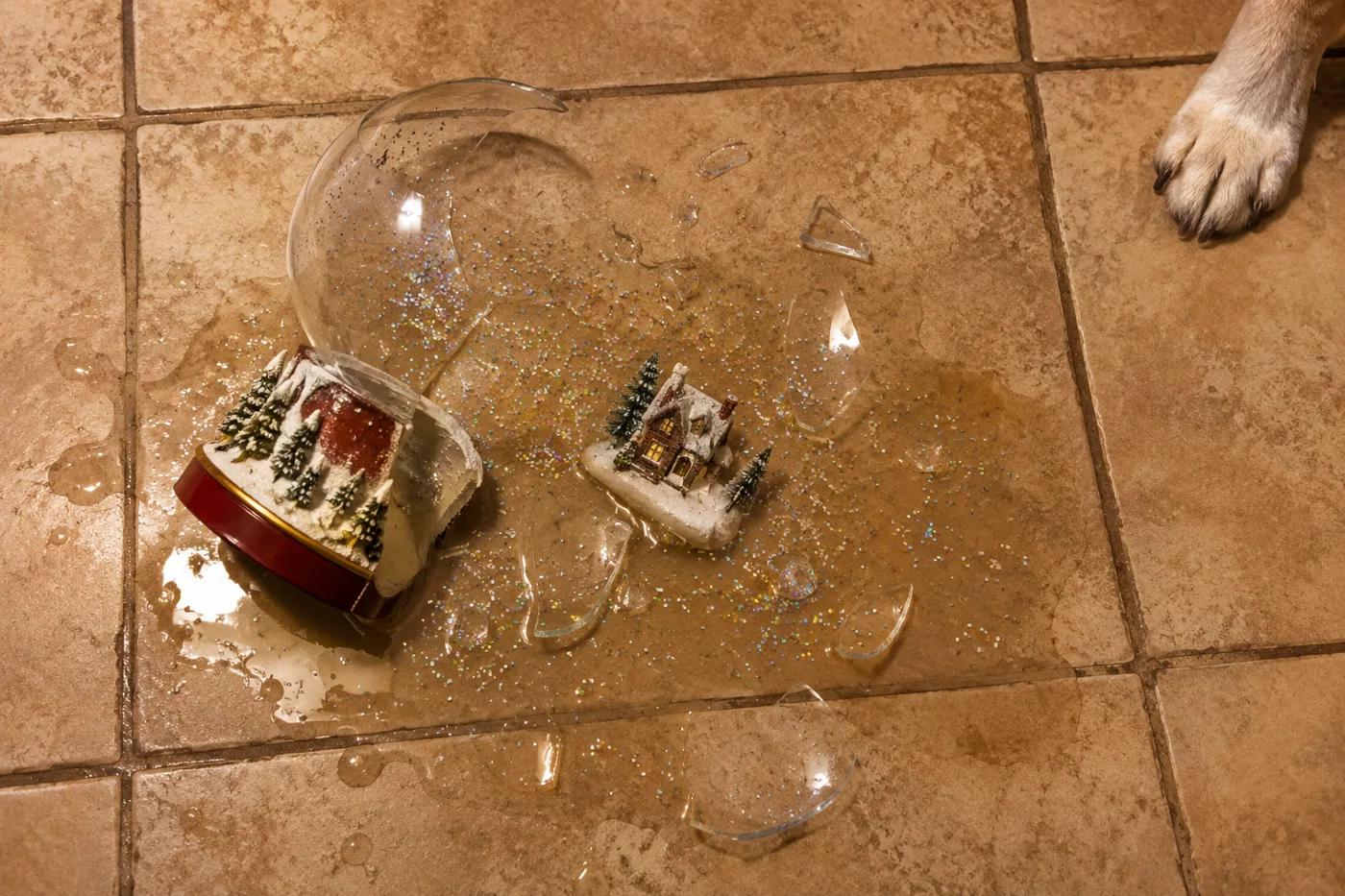
Some imported snow globes still hold ethylene glycol, which is antifreeze. Pet Poison Helpline says the amount is generally quite low, but a broken globe still needs a call. Early signs: “acting drunk or uncoordinated, excessive thirst, and lethargy.”
Why not wait and see? Because antifreeze runs on a sneaky clock. With full-strength antifreeze, the Helpline’s timeline goes like this:
- Treatment needs to start within 8 to 12 hours.
- At 12 to 24 hours the dog can seem to recover.
- At 36 to 72 hours the kidneys can fail.
VCA adds that only a few licks can be fatal to small dogs.
So if one shatters, put the dog in another room before you grab the paper towels, and call even if you only think he licked it. The poison line may well tell you the dose was too small to matter. That’s a call worth making on a hunch.
#13 Liquid potpourri and oil diffusers

Licking or touching spilled oil is the real danger here, more than breathing the scent, say the ASPCA’s poison experts, unless your dog already has breathing trouble. VCA’s list of oils of concern reads like a holiday candle aisle: cinnamon, citrus, peppermint, pine, wintergreen, tea tree, ylang ylang and pennyroyal.
Tea tree oil is the one Pet Poison Helpline sees most often. With liquid potpourri, the Helpline warns, “Even a few licks can result in severe chemical burns in the mouth, fever, difficulty breathing, and tremors.” Cats are hit hardest, but dogs lick spills too.
If he got into it, here’s what VCA says to do:
- Don’t make him vomit and don’t give charcoal.
- Wash any oil off his skin or fur with dish soap.
- Bring the bottle or packaging to the vet.
The line every host should hear before lighting a warmer: “There is no antidote.” Signs can last up to four days. Keep the warmer and the oil bottles on a high shelf.
#12 Rawhide chews in the stocking
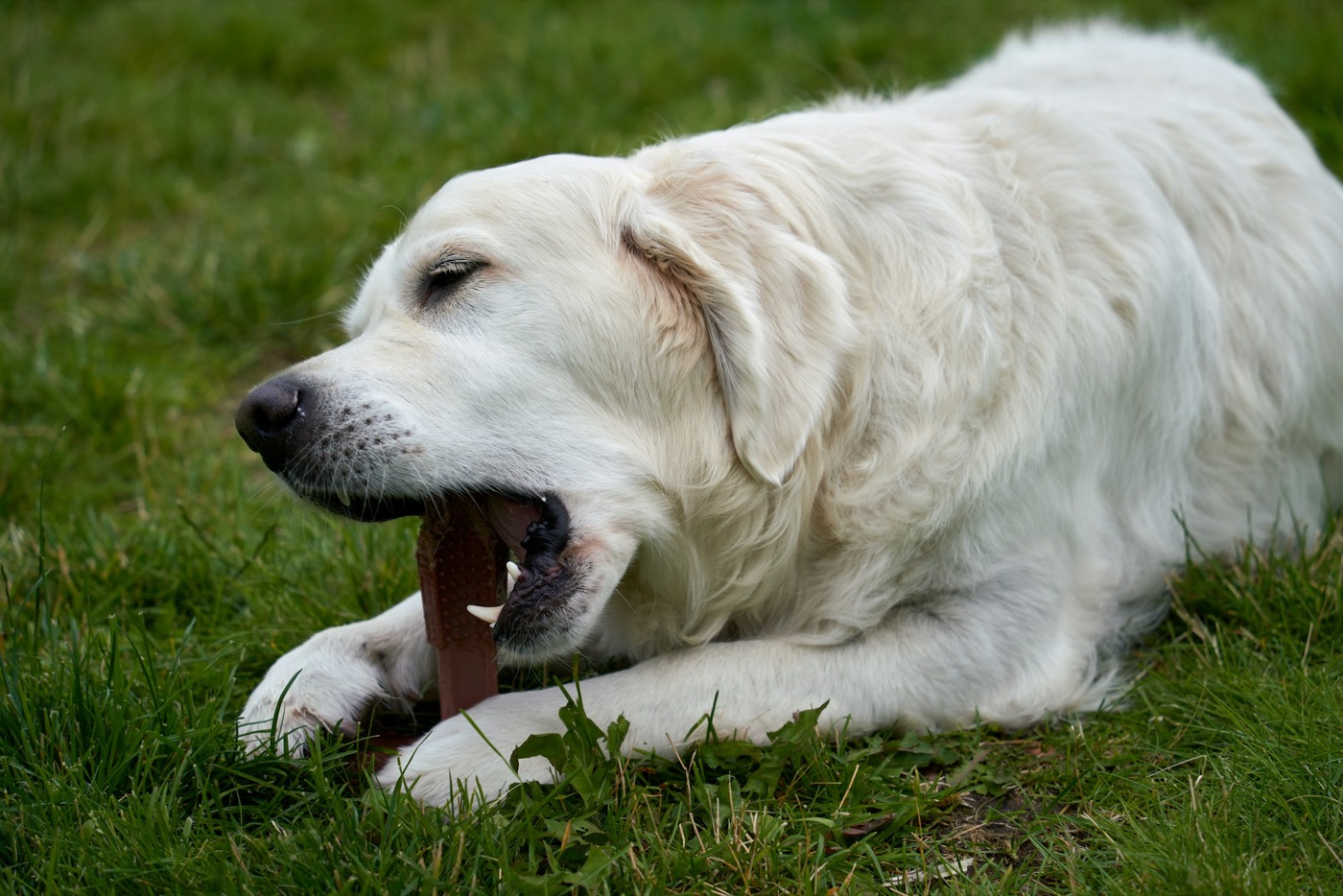
It’s the classic stocking stuffer, and it has a backstory most people never hear. The American Kennel Club says most rawhide is made in China after weeks to months in a salt brine. Then it’s hard to digest: pieces can sit in a dog’s stomach for months. Chunks can break off and choke, and bigger pieces can cause an intestinal blockage.
The AKC says the dogs most at risk are powerful chewers, young puppies, seniors and dogs with touchy stomachs. If yours gulps rather than gnaws, pick something else and ask your vet what they like.
Rawhide stirs up feelings. Commenters under dog trainers’ TikTok videos keep asking why it’s still sold at all. If one goes in the stocking anyway, the AKC’s tip is to rinse it fully in water first.
#11 Driving to the relatives’ with the dog loose
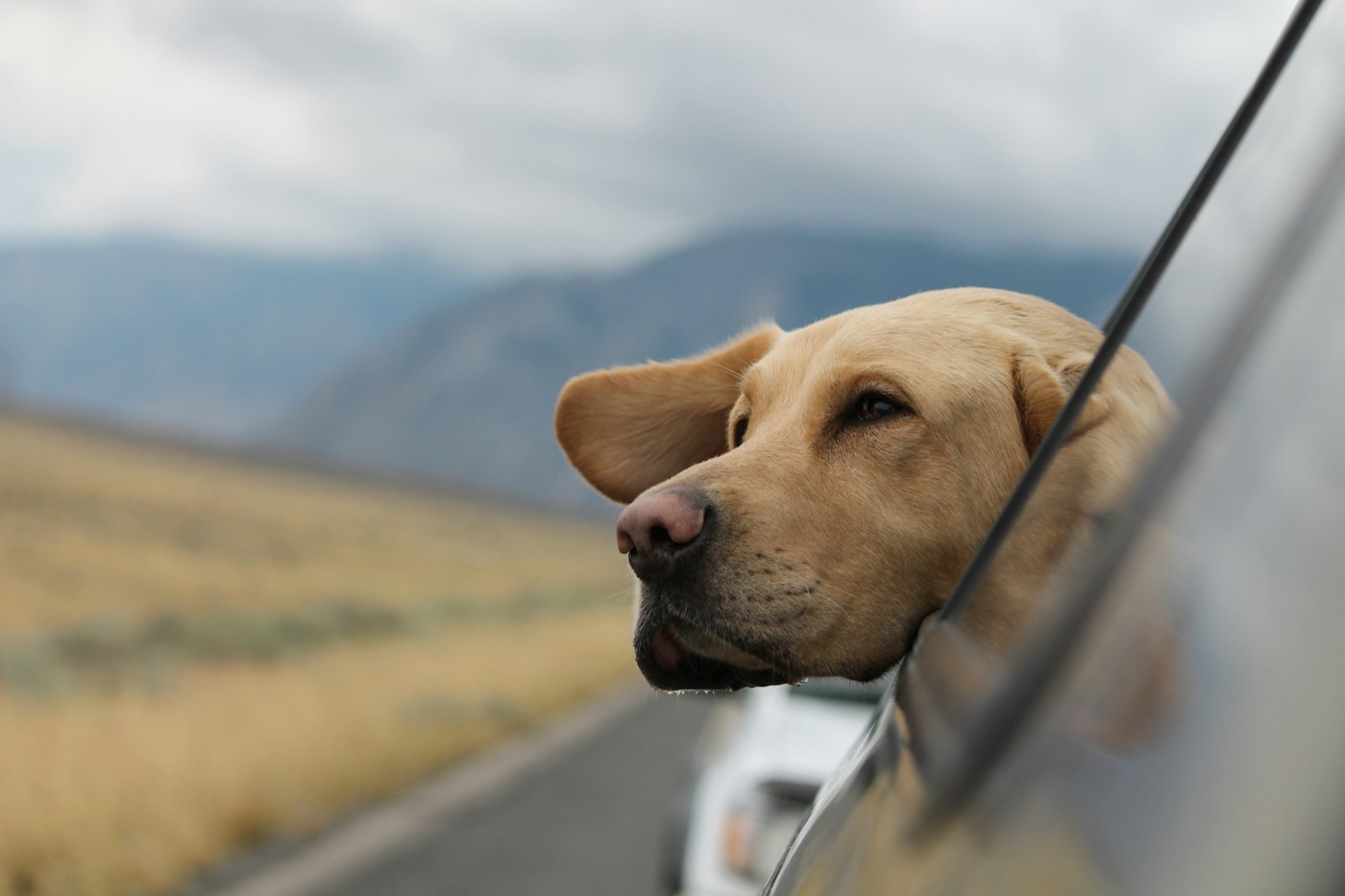
The dog in your lap feels cozy at 5 mph in the driveway. At highway speed, physics takes over. Jennifer Huebner-Davidson, who managed traffic safety programs at AAA, put it this way:
“An unrestrained 80-pound dog in a crash at only 30 mph will exert approximately 2,400 pounds of pressure.” AAA
In a 2011 survey AAA ran with Kurgo, a company that sells dog restraints, only 16% of owners used one. Seventeen percent let the dog ride on their lap, and 23% had stuck out an arm to hold the dog when braking. Meanwhile, looking away from the road for just two seconds doubles your crash risk.
Which restraint, then? The Center for Pet Safety, a nonprofit, actually crash-tests them. In its 2013 harness tests, only the Sleepypod Clickit Utility held up. It also warned that extension tethers and zipline setups raise the risk of injury. Its current certified list includes crates and carriers, such as the Gunner G1 kennel and the Away Pet Carrier, and now a harness too: the Sleepypod Clickit Range passed its crash testing in November 2024 with a 5-star rating for dogs up to 110 lb. It lists at $138.99 on Sleepypod’s site.
One snag: a crash-rated crate eats a lot of cargo space, and the presents need somewhere to ride too. Check the list before you buy, and measure the car first.
#10 Guests coming in, dog slipping out
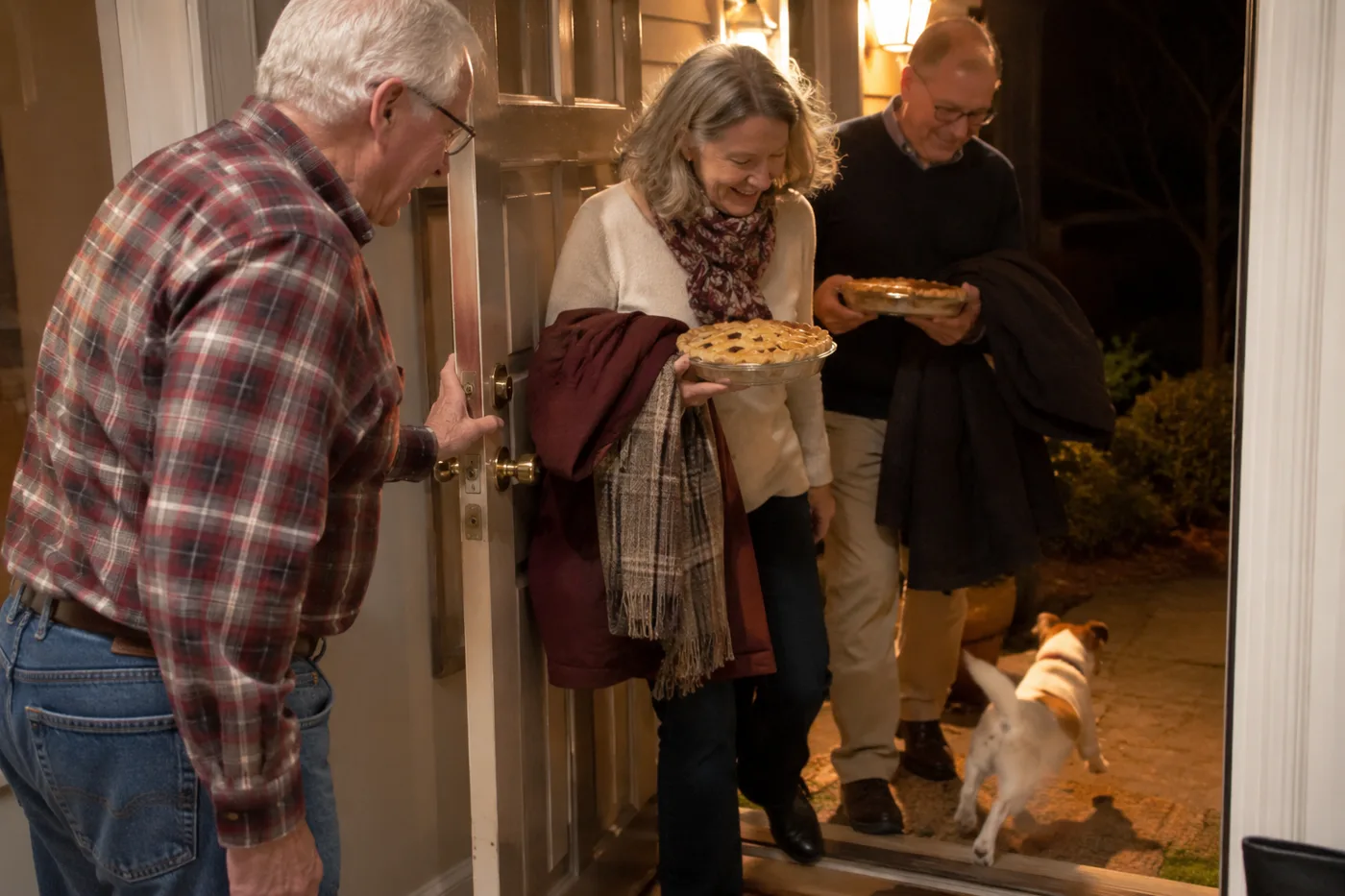
The bell rings, three people come in carrying pies and coats, and somebody’s knee is the only thing between the dog and the yard. Dr. Rubin’s advice is simple: “Try to have ID on them in case they escape through the front door when guests are coming over.” Escaped dogs meet cars and ice, which is how an open door turns into a vet visit.
A microchip helps, but only if it can reach you. In an Ohio State study of 7,704 microchipped animals in 53 shelters across 23 states, shelters found the owner for about 73% of them. Here’s why the rest stayed lost:
- Wrong or disconnected phone number: 35%
- Owner didn’t answer calls or letters: 24%
- Chip registered with a different database: 17%
- Chip never registered: 10%
Linda Lord, the assistant professor of veterinary preventive medicine behind the study, said, “The chip is only as good as my ability as a pet owner to keep my information” up to date.
So look up your dog’s chip registration and check the phone number, especially if you’ve dropped a landline since. Then make sure the collar tag has your cell number on it. A tag works the minute a neighbor picks him up. A chip waits for a scanner.
#9 A guest who is afraid of dogs
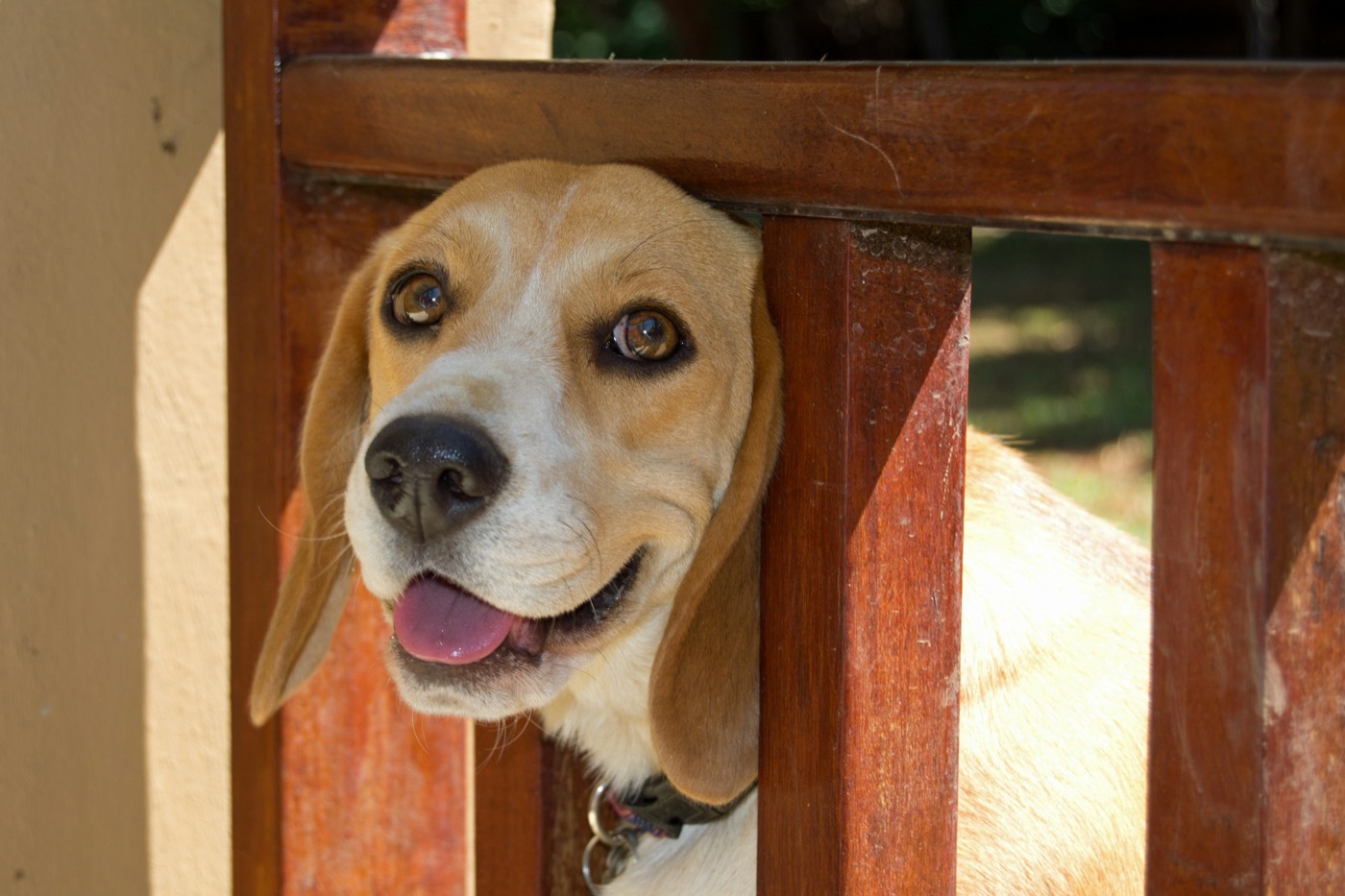
The guest list grows by one, and that one flinches when your dog sneezes. The dog, who has never met a stranger, wants to sit on their feet.
There’s no perfect answer, but there are workable ones. The risk to watch is the hurried one: on the day, the dog gets shut in whatever room is free, and often that’s the guest room with an open suitcase and a toiletry bag on the bed. (More on those in #4.)
Dr. Lori Teller, a clinical professor at Texas A&M’s veterinary school, says some dogs “may be happier staying elsewhere, such as a boarding facility or at a friend’s home.” If he stays home, Fear Free Happy Homes favors a pet gate, which allows controlled contact.
What tends to work when a guest is scared – A pet gate across the kitchen or a spare room, so they can see each other without touching – A bedroom set up as the dog’s own, with his bed, water and a chew, and no luggage in it – The plan agreed by phone ahead of time, not worked out in the front hall
What you can say: “He’ll be in the den behind a gate the whole time. You won’t have to deal with him at all.” Most nervous guests just want to hear there’s a plan.
 You might also like17 Holiday Foods You Should Never Give Your Dog
#8 Relatives who ignore your dog rules
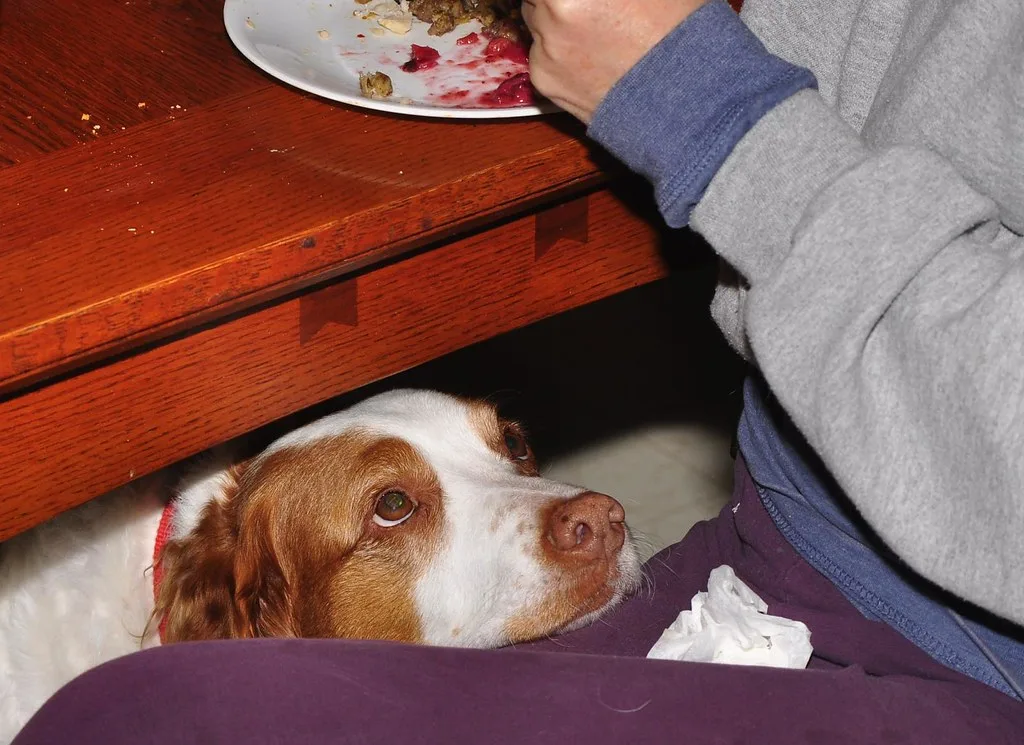
Every family has one. You say no scraps, no chews, no “just a little,” and ten minutes later the dog is under their chair looking extremely pleased with himself. A dog owner commenting on a dog trainer’s TikTok video summed up the whole problem in capital letters:
“MY FAMILY KEEPS GIVING MY DOG COOK BONES AND IM TELLING THEM NO AND THEY KEEP TELLING ME ITS NOT A BIG DEAL”
Being polite doesn’t work. Being specific does. Veterinarian Dr. Cherice Roth, speaking on KATU in Portland, Oregon, suggests telling guests plainly, especially if your dog is on a special diet: “This isn’t just a treat. If you give them something it can actually make them really sick.” She also suggests signs and moving the dog bowls out of the way.
Dog trainer Ben Randall points out the long game: “begging is a learned behavior, so it is important owners don’t show them it works.” One sneaky uncle teaches the dog to work the whole room.
For the relative who simply cannot help it, give them a job instead of a lecture. Hand them a small jar of the dog’s own treats and say, “These are his. Go wild.” Or offer Dr. Teller’s fallback list: “a couple bites of turkey with the skin removed and no gravy, some plain green beans, or a bite of bread can be fine.”
#7 Anxious or older dog with no quiet room
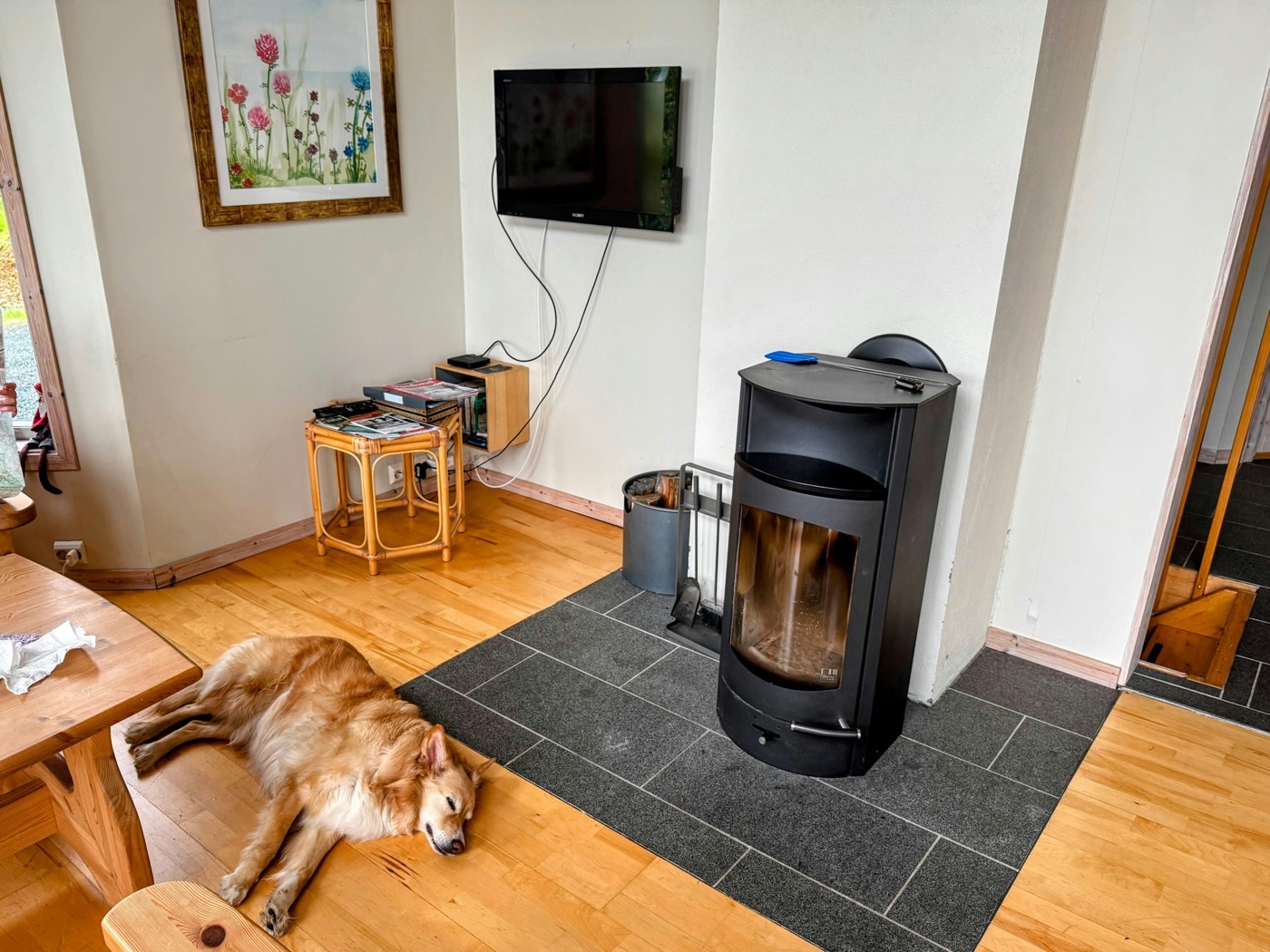
Some dogs love a crowd. Others spend Christmas Day wedged behind the recliner, counting the hours. The second kind is also the dog who bolts when the bell rings, snatches a dropped pill or noses into the coat pile, because the crowd never lets up.
Learn the early signs. Dr. Teller lists them: “Dogs may also show stress by trembling, licking their lips, yawning, or avoiding people and activities.” A yawn at 2 p.m. with a full house isn’t boredom.
Here’s how to set things up:
- Pick the room before anyone arrives. The ASPCA suggests a quiet interior room, away from the noise.
- Keep his day the same. Amy Shojai, a certified animal behavior consultant writing for Fear Free Happy Homes, says to keep feeding times, bowl spots, walks and playtime as usual.
- Don’t make him say hello. Shojai advises against forcing socializing and says to let him take breaks in his own room.
- Know when to send him out. If the quiet room still isn’t quiet enough, Dr. Teller says boarding or a friend’s home can be kinder. That only works for a dog who settles in new places. For one who doesn’t, the closed bedroom wins.
#6 Puppy versus the whole decorated tree
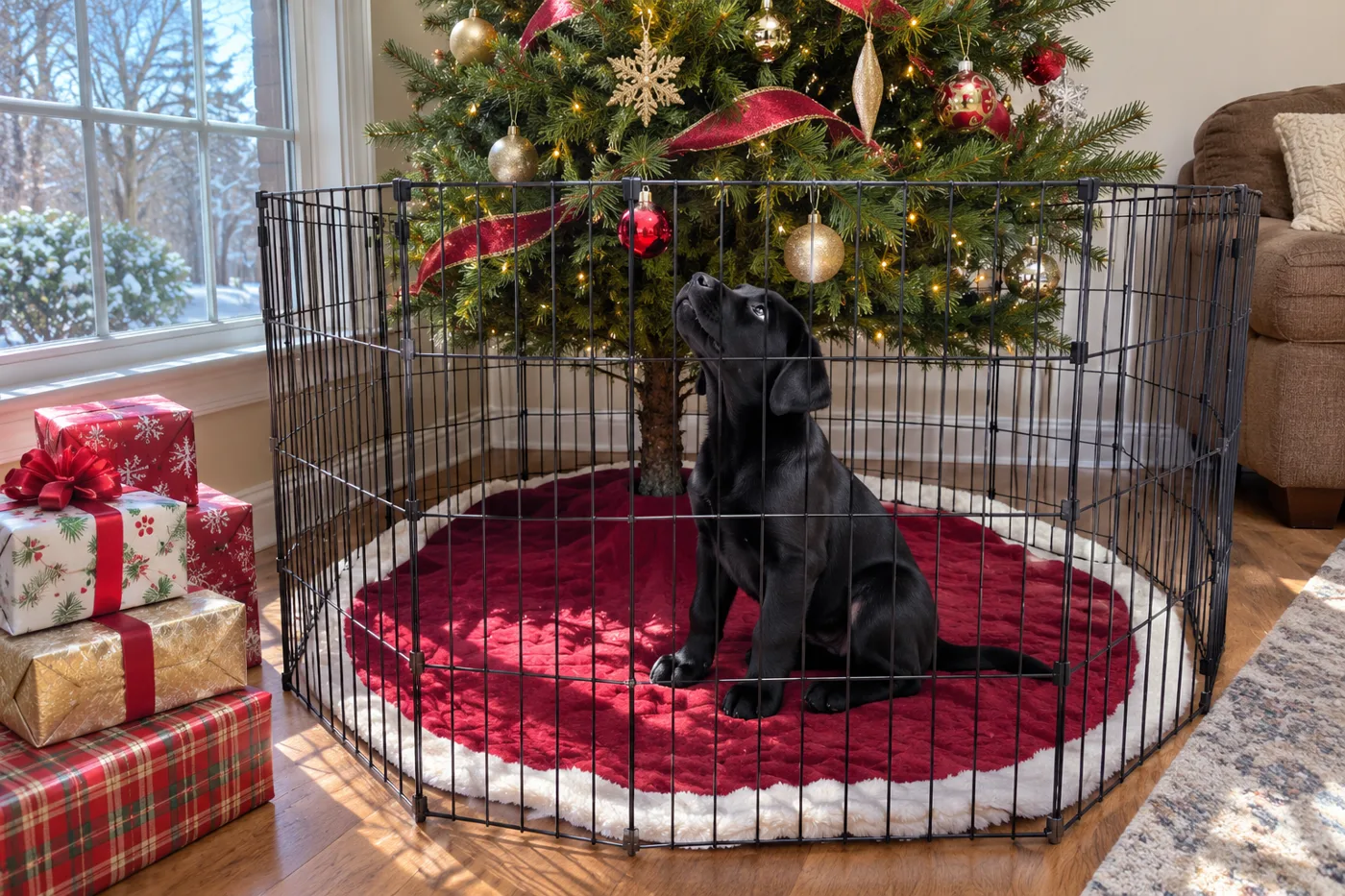
A puppy sees a Christmas tree the way you’d see a buffet with no prices. Owners on Reddit’s puppy forum swap stories about it every year, and one owner of a 7-month-old reported: “The other day he pooped out a small red light bulb from the tree. It was luckily whole.” Another bulb on the same strand got broken.
The fix those owners say actually worked is a playpen. Eryn Rolison, a certified professional dog trainer at Wonderdog Training in Virginia, suggests an “exercise pen around the base of the tree so there is a buffer between your puppy, your tree, and your gifts.” Her timing advice is the best line on the subject: set it up “before your puppy finds out it’s fun to pull your grandmother’s glass ornaments off of the tree.”
Other owners in that thread had luck putting the tree up bare and teaching the puppy to leave it before adding anything that dangles. That matches PetMD’s suggestion of waiting a few days before decorating and supervising your dog around the tree at every stage. One caution from the same thread: a dog who left the first tree alone went after a second one in another room.
Some owners of dogs under a year old skip the big tree for one season and use a tabletop tree or a wreath. The owner of a 10-month-old said it plainly: “Just can’t risk it!” There’s no shame in a small tree on a high table for one year.
#5 Dried berry bunches in a vase
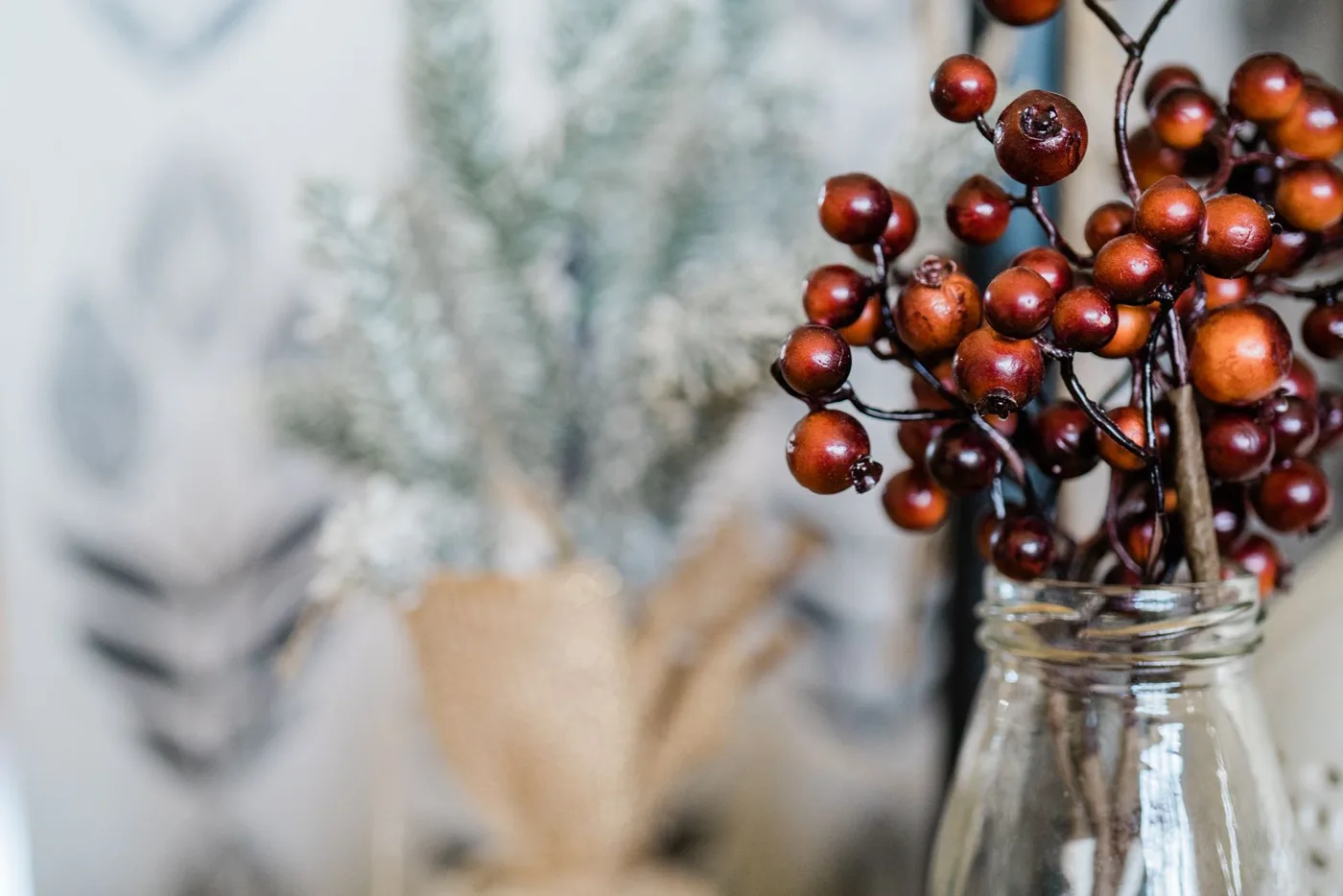
Grocery-store bundles of red berries and twigs look lovely in a tall vase. When those bundles dry out, berries drop where a dog can reach them.
One berry often used in fall and holiday decorating is a known problem: Pet Poison Helpline rates American bittersweet as moderately toxic to dogs, causing vomiting, diarrhea and weakness, with seizures possible if a dog eats a large amount. The Helpline’s description explains the pull: “The plant produces bunches of brightly colored small fruit; these may be attractive to dogs, cats and children.” Winterberry, another favorite, is a holly (see #20).
If your dog eats a berry you can’t name, call a pet poison helpline, and keep the bunch or its sleeve so you can describe it. Better still, check the bunch for loose berries before it goes on a low table.
#4 Guests’ pills in purses and suitcases
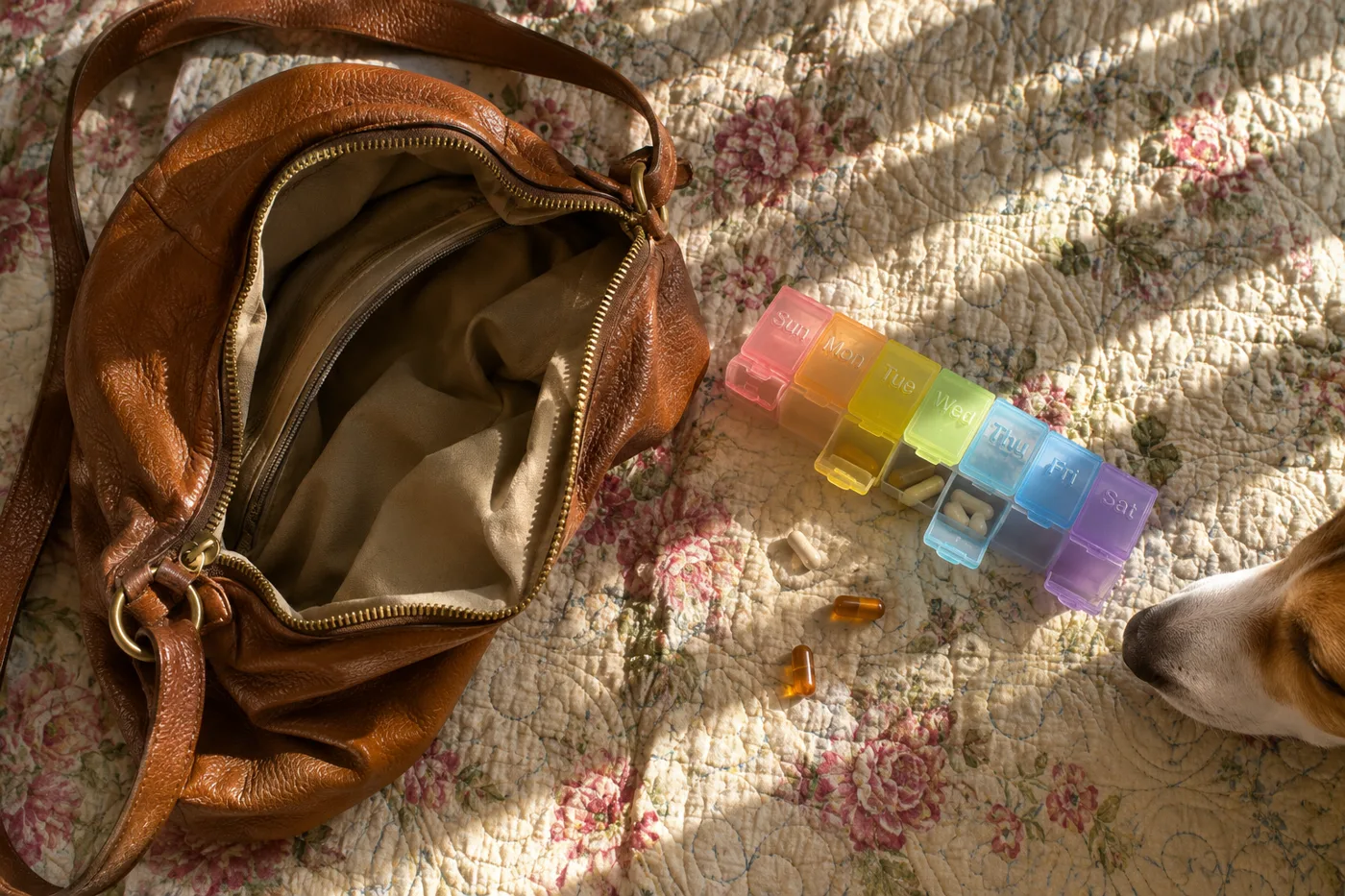
Holidays bring extra handbags, overnight cases and pill organizers into the house, often dropped on a bed or a chair.
Over-the-counter medicine was the top reason people called the ASPCA’s poison line in 2024, ahead of chocolate. The line took more than 451,000 calls that year, according to its yearly report, with vitamins and supplements topping the medicine group and pain relievers like ibuprofen and naproxen also common.
“Of all the calls we receive at Pet Poison Helpline, animals ingesting human medications is one of our most common.” Dr. Renee Schmid, Pet Poison Helpline
Some pills are worse than others. From the Helpline’s list of the most dangerous human medicines:
- Advil, Aleve and Motrin: “Even one or two pills can cause serious harm to a pet.”
- Antidepressants: “Just one pill can cause serious poisoning.”
- Also on it: Tylenol, ADHD drugs, sleep aids, birth control, blood pressure and heart pills, thyroid pills and statins.
The Helpline’s tip is three words: “Hang your purse up.” Put a few hooks in the hall, and close the guest room when nobody’s in it. If the dog already chewed into a bottle, grab it, count what’s left if you can, and call with the label in front of you.
#3 Button batteries in new gifts and remotes
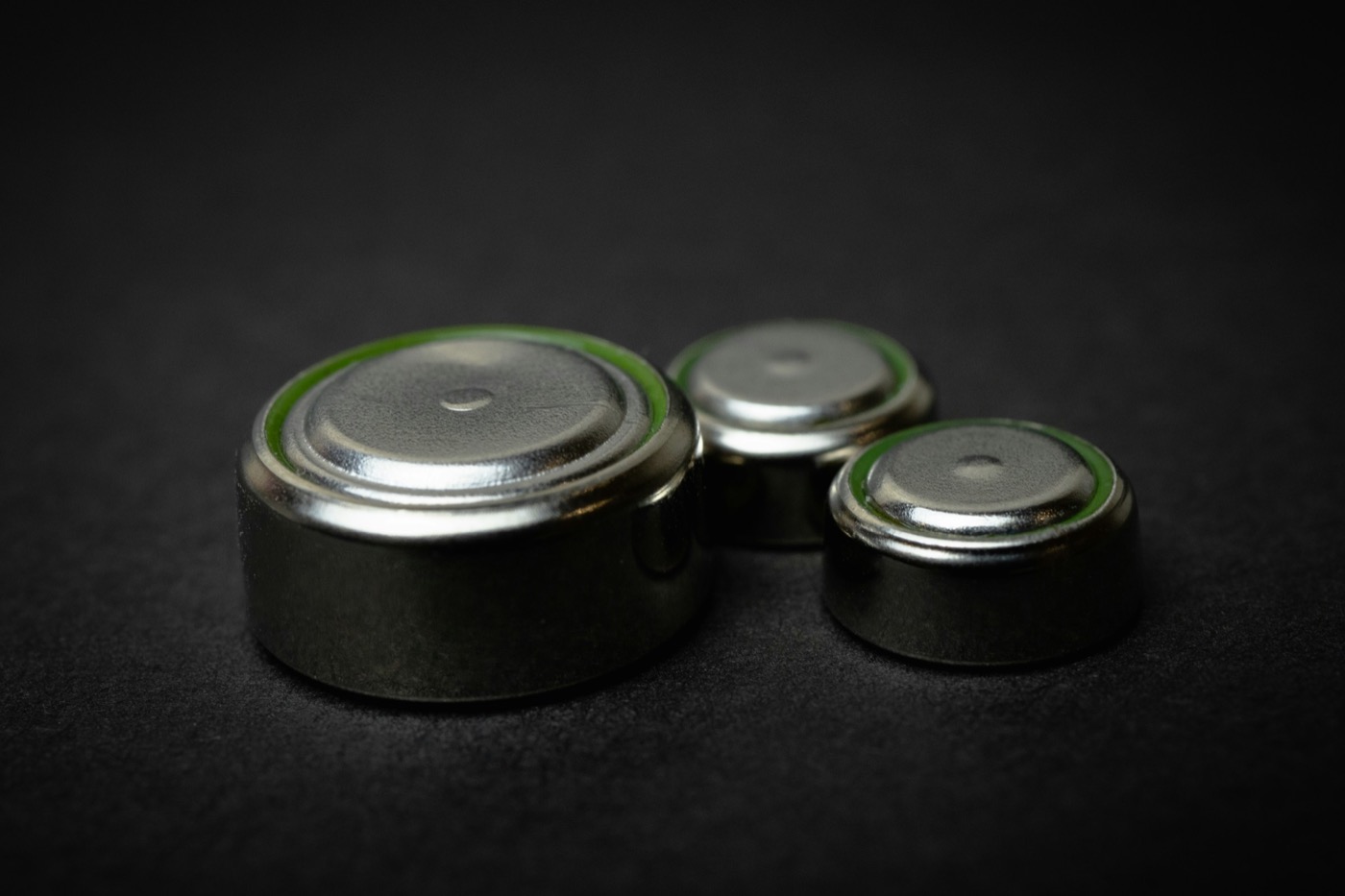
These are the coin-sized ones in toys, greeting gadgets, remotes, key fobs and those flameless candles. Swallowed, they burn fast. Pet Poison Helpline says one 3-volt battery can destroy tissue in the throat or gut within 15 to 30 minutes.
Don’t make him vomit, and don’t try anything at home. The battery can burn the throat a second time on the way up. PetMD’s page from the Pet Poison Helpline team says it flat out: “Do not attempt any treatments at home, such as inducing vomiting or giving any over-the-counter medications.” Call a vet or the pet poison helpline and get in the car.
At the clinic, the vet flushes the mouth with water for 15 to 20 minutes and takes X-rays. Removing it may take a camera tube down the throat, or surgery, then about a week of stomach-protecting medicine. Mouth sores can show up hours later, so a dog who looks fine at first isn’t in the clear.
Christmas morning is battery morning. Gifts come with spare packs, and the blister packaging gets tossed on the rug with the wrapping. Open them at the table, and count the coins back into the box.
#2 Puppy chewing the light cords
You hear it before you see it: a small crunch from behind the tree, then a yelp.
First, unplug the cord before you touch him. Dr. Rhiannon Koehler, a veterinarian writing for PetMD, says, “Do not touch a dog who is still experiencing electric shock. The source of electricity needs to be disconnected before you touch your dog.”
Then look in his mouth. Cord burns “appear pale yellow, tan or gray in color,” says MSPCA-Angell, a Boston animal hospital, and dogs from 8 weeks to 2 years old are the usual patients. The Merck Veterinary Manual notes a telltale line across the top of the tongue that traces the cord. “It may take several days for tissues to show the extent of damage.”
The burn is the part you can see. The bigger danger is that fluid can build up in the lungs 12 to 36 hours later, even in a puppy who’s back to stealing socks. A 2024 vet journal described a 3-month-old Labrador who chewed a household cord and briefly passed out. Within half an hour of reaching the hospital he was struggling to breathe, and he needed six hours on a breathing machine. He went home two days later, fully recovered.
So any cord-chewing puppy sees a vet the same day, even a bouncy one. Afterward, MSPCA-Angell says to watch closely and keep things calm for two or three days. Mouth burns can take 10 to 14 days or longer to heal.
Prevention is cheap. Run Christmas lights and electrical cords up and away from the floor of the room, tape them flat, and slide cord protectors over anything at puppy level.
#1 Tinsel on the lower branches
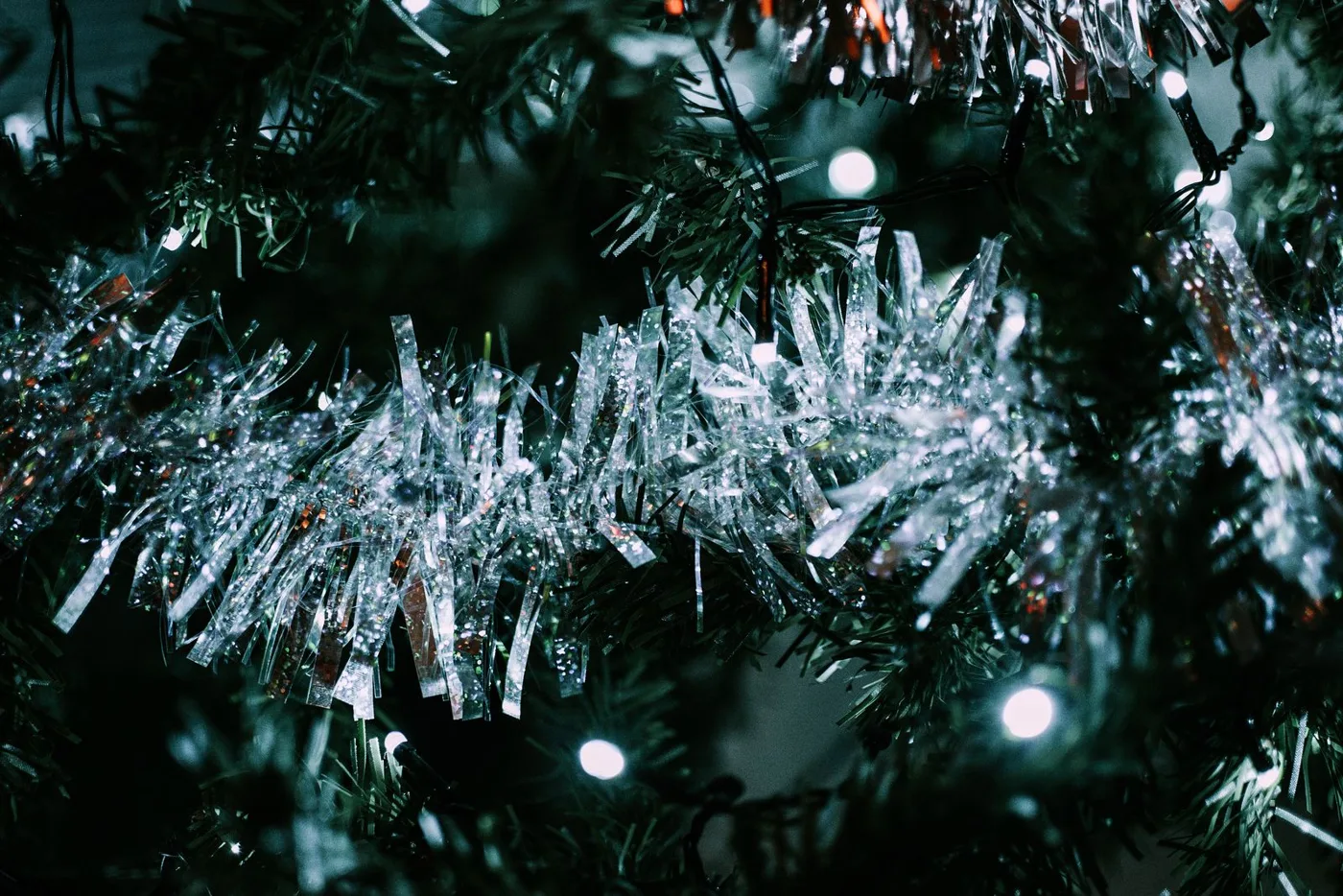
If a strand of tinsel is hanging out of either end of your dog, do not pull it. This is the single instruction most holiday lists leave out, and it matters most.
The Merck Veterinary Manual explains why. One end of a long, stringy swallowed thing often snags, usually at the base of the tongue or in the stomach, while the gut keeps pushing the rest along. The bowel bunches up on it like an accordion. Merck says the string “must never be pulled in hopes of retrieving the foreign body, because it may be embedded in the tissue and pulling may lead to perforation.” A vet cuts it where it’s anchored instead.
Dr. Roth described it on KATU in words you won’t forget: “It actually starts to work as a saw because the intestines are constantly moving, and this is true for dogs as well.” And, about the end you can see: “You don’t ever want to pull if you see some coming out of their butt, not to be gross, but you don’t know what it’s attached to.”
Pet Poison Helpline adds that tinsel and garland, “even small amounts, can lead to gastrointestinal blockage and rupture,” and some contain zinc, which is toxic on its own.
If he’s already eaten some:
- Leave any visible end alone. Keep him calm and away from food.
- Call your vet or a poison line right away.
- Watch for vomiting, refusing food and a sore belly.
It usually takes surgery, and caught early, the outlook is good, says Pet Poison Helpline. A sicker dog means a bigger bill. Here’s what US price guides show for foreign-body surgery in dogs in 2026:
| Situation | Cost | Source |
|---|---|---|
| Planned surgery, one Austin, Texas clinic (published price) | $1,626 to $2,503 | Waggle |
| Early, stable case | $2,000 to $4,000 | SpectrumCare |
| Standard care | $4,000 to $7,500 | SpectrumCare |
| Critical or specialist care | $7,500 to $12,000 | SpectrumCare |
String-type objects can mean removing a damaged piece of bowel, which pushes the bill higher. If you have pet insurance, check how it treats a swallowed object: Trupanion, for one, covers it as an accident, after a 5-day wait on a new policy. A cheap box of tinsel can turn into the costliest decoration in the house once surgery is involved. Skip it. A string of wooden beads or a paper chain hung higher up gives you the sparkle without the saw.
Save these numbers before anything happens – ASPCA Animal Poison Control Center: (888) 426-4435, open 24/7, every day of the year. A consultation fee may apply. – Pet Poison Helpline: (855) 764-7661, open 24/7. $99 per incident, and follow-up calls are included. – 24-hour chains such as VEG are open every day, holidays included, and take no appointments. – Look up the nearest 24-hour emergency vet and how long the drive takes now, while nobody is panicking.
Keep reading
 16 Things the Family Dog Ate in the 1960s, and What We Do TodaySee all 16 →
More you’ll enjoy
 30 Things Your Dog Is Trying to Tell You
 25 Classic Movie and TV Dogs, and What Really Happened to Them
 20 Prices That Show What a Dog Cost in 1970 vs. Today
The bottom line
Almost every hazard here came into the house on purpose: in a shopping bag, a gift box or a guest’s coat. That’s good news. Whatever you carried in, you can carry up a shelf or into another room.
Before the first guest comes, walk into the room with the tree and look only at what’s below your knee. That’s the dog’s half of Christmas. Anything there that sparkles, dangles, sloshes or smells like cinnamon is his business now, unless you move it.
And if he still finds the one thing you missed, you’ll have the number saved, the fee known and the drive timed. A Christmas with a phone call in it can still be a nice Christmas.
Bonus: five small jobs to do before the first guest arrives
Add your dog’s current weight to the phone note with the poison numbers, because how much of something is dangerous often depends on his size.
Keep a zip-top bag near the tree for evidence: the wrapper, the battery card, the plant tag, the broken piece. Vets and poison lines can work faster with the packaging in hand.
Ask anyone mailing you a present to tell you if it’s food, so it doesn’t sit under the tree for the dog to unwrap first. Pet Poison Helpline says torn-open food gifts are a common holiday call.
If your walks cross salted sidewalks, wipe his paws when you get in. The ASPCA notes there are no specific rules behind a “pet safe” label on de-icer.
Ask your regular vet which emergency hospital they send their own patients to over the holidays, and write that name above the chain you found online.
Questions people also ask
What should I do if my dog ate tinsel?
Call your vet or a pet poison hotline right away, and never pull on a strand you can see. The Merck Veterinary Manual says pulling can tear the gut, because the other end may be anchored inside. A vet cuts it free at the anchor point instead. Watch for vomiting, refusing food and belly pain while you arrange care.
Is Christmas tree water bad for dogs?
Plain Christmas tree water usually causes nothing worse than an upset stomach. The National Capital Poison Center says the amounts of store-bought preservative dogs typically drink aren’t poisonous, though bacteria can grow in stagnant water. Homemade additives like aspirin or bleach are the real risk. Use only plain water and cover the stand.
Are poinsettias poisonous to dogs?
Only mildly. Pet Poison Helpline says the sap causes mild, short-lived mouth irritation, drooling, vomiting or diarrhea, and most cases are handled at home. The deadly reputation traces to an unconfirmed 1919 rumor from Hawaii. Call a vet if signs hang on or get worse.
What happens if a dog swallows a button battery?
A single button battery can start burning the throat or gut within 15 to 30 minutes, so it’s an emergency. Pet Poison Helpline says not to make the dog vomit or try any home treatment. A vet will flush the mouth, take X-rays and may need to remove the battery with a camera tube or surgery.
Is a puppy a good Christmas gift?
It can be, if the person receiving it truly wants a dog. The ASPCA’s 2013 research found no higher risk of gifted pets being given up, and 86% were still in the home. The ASPCA suggests a “doggie IOU” so the new owner helps choose, and warns against pet stores and online sellers.
How do I keep my puppy away from the Christmas tree?
Set up an exercise pen around the base of the tree before you decorate. Certified trainer Eryn Rolison of Wonderdog Training recommends it as a buffer between the puppy, the tree and the gifts. PetMD also suggests waiting a few days before adding ornaments, with supervised visits at each stage.


